❌

Reading view

Trump made $1.4bn from crypto in one year. Is Justin Sun the man who helped him do it?

The entrepreneur is known in Washington as the financial power behind the president’s crypto fortune. How did Sun’s business love-in with the Trump family spiral into dueling lawsuits?

The most infamous financial scandal in US presidential history – the 1920s Teapot Dome affair – involved then president Warren G Harding’s interior secretary, Albert Fall, taking roughly $400,000 in bribes. Adjusted for inflation, that’s about $6m today. Last year, Donald Trump made at least $2.2bn; his single year of income is on the order of 200 to 300 times larger than the bribe that defined “presidential corruption” in the American imagination for a century.

It’s taken for granted that Trump flogs items like Bibles and gold sneakers as a way to wring more money from his loyal base. But of the president’s $2.2bn, at least $1.4bn came from his crypto businesses. That’s an extraordinary achievement, even for an unscrupulous sitting president. How exactly did he do it without any prior background in crypto?

Continue reading...

© Photograph: Bloomberg/Getty Images

© Photograph: Bloomberg/Getty Images

© Photograph: Bloomberg/Getty Images

  •  

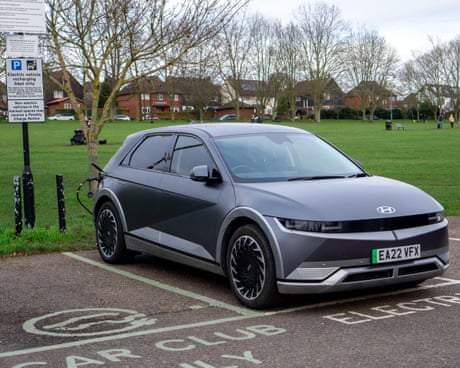
Drivers charging electric cars handed shock parking fines

EV owners were sent hefty PCNs but say some signs in private car parks fail to warn of fees to park and recharge car

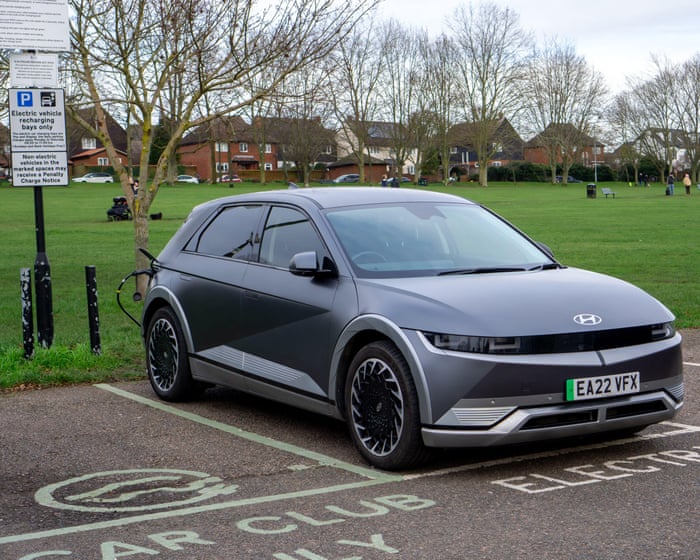
Does refuelling your car class as parking? The answer appears to be yes if it’s an electric vehicle. Guardian Money has been contacted by several readers who were fined after charging their cars away from home.

The motorists report being caught out by signs that fail to make clear that charging points are subject to parking tariffs or to store opening times. Also, they have found some chargers being advertised as available for use when it would be a breach of the car park’s terms and conditions to use them.

Continue reading...

© Photograph: Nigel A Messenger/Alamy

© Photograph: Nigel A Messenger/Alamy

© Photograph: Nigel A Messenger/Alamy

  •  

ScottishPower owes me £1,000 in solar panel payments

For months I’ve been trying to receive my FIT payment, which should be more than £1,000

I moved into my new house 14 months ago, and soon afterwards applied to ScottishPower, with whom the solar panels are registered for a feed-in tariff (Fit), for transfer of ownership of the panels and the tariff.

After many emails back and forth, I got a response saying they had all the information required.

Continue reading...

© Photograph: Timon Schneider/Alamy

© Photograph: Timon Schneider/Alamy

© Photograph: Timon Schneider/Alamy

  •  

US AI Stock Sell-Off Shakes Markets From Wall Street To Asia

An anonymous reader quotes a report from The Guardian: A tech sell-off shook global markets on Tuesday as attention turned away from developments in the US war with Iran and toward the future of AI companies and chipmakers that have driven stock markets to record highs. The tech-heavy Nasdaq index closed 2.2% lower on Tuesday. The S&P 500 was also down by Tuesday afternoon, dropping 1.43% while the Dow remained steady. All three major US indices have hit record highs this year, riding off a rush of funding to support AI technology and infrastructure. Nasdaq is up 10% for the year, while the Dow jumped 6% so far this year, breaching past 51,000 points, and the S&P 500 is up 7.3%. But some economists have warned that the influx of AI spending is a bubble reminiscent of the dot-com bubble that burst in the early 2000s. Seven tech companies make up 30% of the S&P 500's value. The heavy reliance on a single industry and a few key companies has some investors wondering if it's a matter of when, not if, there will be a burst. Those concerns have been heightened by signals from the Federal Reserve last week that it may increase interest rates, and therefore the cost of borrowing, in order to tackle rising inflation. Alphabet fell 5% on Monday. SpaceX plunged 16%. The selloff also spread to Asia, with South Korea's benchmark dropping 10% as SK Hynix and Samsung Electronics each lost more than 12%, while Japan's Nikkei 225 declined 3.5%.

Read more of this story at Slashdot.

  •  

Mark Zuckerberg Directed Meta To Create a Prediction Markets App

An anonymous reader quotes a report from the New York Times: Mr. Zuckerberg, the chief executive of Meta, recently dispatched a small team at his company to create a smartphone app similar to Polymarket and Kalshi, two employees with knowledge of the matter said. Users would not wager money, and the app would probably rely on a video game-like points system instead, one person said, though the company had not ruled out the eventual use of real money betting. The app is internally referred to as "Arena" and would function independently from Meta's social networking apps, which include Facebook, Instagram, WhatsApp and Messenger, said the employees, who spoke on the condition of anonymity to discuss confidential plans. Meta aims to grow the app by leveraging its large social networking audiences and directing them toward using it, they said. The effort, which insiders characterized as experimental but a top priority, is part of a broader push by Mr. Zuckerberg to create new types of apps based on emerging social behavior online. More than 3.56 billion people visit one or more of Meta's apps every day, an amount that has raised questions about whether those platforms have reached a saturation point. Arena is one of a handful of apps that Meta is trying out. Others include one called Meta Photos, another stand-alone app which would create new types of media using artificial intelligence, the employees said. [...] Meta insiders have cautioned that Arena remains in development and may not be released. But as executives search for ways to keep the world's largest social media sites thriving, Mr. Zuckerberg appears to be relying on his well-worn product development strategy: Follow the users.

Read more of this story at Slashdot.

  •  

Student Loan Borrowers Will Get Interest Rate Cut If They Sign Up For Auto Pay

An anonymous reader quotes a report from NPR: Student loan borrowers who enroll in automatic payments will get a much bigger discount on interest starting July 1, the U.S. Department of Education says. Auto pay has long offered a modest discount off borrowers' interest rate -- .25 percentage points -- but after millions of borrowers opted out during the long COVID repayment pause, with some making no payments for years, the nation's student debt portfolio swelled to $1.7 trillion. On Thursday, the department said it will temporarily increase its auto pay interest rate discount to one full percentage point. Practically, that means an undergraduate borrower with a loan at the current 6.39% would see their interest rate drop temporarily to 5.39%. The rate cut will last for two years, from July 1, 2026 through June 30, 2028. Borrowers already enrolled in auto pay do not need to act. They will automatically receive the rate cut. [...] The department says borrowers will have until Sept. 30 to sign up for auto pay and qualify for the two-year interest discount.

Read more of this story at Slashdot.

  •  

California 'Billionaire Tax' Makes Ballot Despite Opposition From Tech Moguls

California's proposed "billionaire tax" has gathered enough signatures to qualify for the November ballot, setting up a major fight between labor unions and some of Silicon Valley's richest figures. From the report: The California Billionaire Tax Act, colloquially known as the billionaire tax, would levy a one-time 5% tax on any California resident worth more than $1bn. The proposal is backed by the Service Employees International Union-United Healthcare Workers West as a means of funding California's strained healthcare and education programs. The proposal has become one of the state's biggest political flashpoints as it gained momentum throughout the year, with prominent billionaires, such as the Google co-founder Larry Page, making moves to cut ties with the state and Newsom vowing to block it from going to a vote. Although it has gained enough signatures for the ballot, the groups backing the measure have until June 25 to decide whether to move forward or potentially strike a deal with the state. While unions backing the group have framed the proposal as a way of getting the ultra-rich to pay their fair share, many of the state's tech elites have condemned the tax and spent millions attempting to crush it. The Google co-founder Sergey Brin has spent $82m alone on efforts to fight the tax, while joining other Silicon Valley billionaires in declaring he will leave California if it goes through. The Palantir co-founder Peter Thiel, crypto billionaire Chris Larsen and Ring founder James Siminoff are among the other tech moguls who have made huge political donations to groups opposing the tax. California has the most billionaires out of any state, many of whom have increased their wealth in recent years amid the AI boom.

Read more of this story at Slashdot.

  •  

California ‘billionaire tax’ makes ballot despite opposition from tech moguls

Wealth tax criticized by billionaires and Gavin Newsom would levy a one-time 5% tax on residents worth over $1bn

A popular proposal in California to impose a wealth tax on billionaires has gained enough signatures to qualify for the ballot in November, state officials announced on Wednesday.

The news is set to intensify an already heated debate around the tax, which has pitted tech moguls and the state’s governor, Gavin Newsom, against the labor union backing the measure.

Continue reading...

© Photograph: Jae C Hong/AP

© Photograph: Jae C Hong/AP

© Photograph: Jae C Hong/AP

  •  

Tim Cook Says Apple Price Increases Are 'Unavoidable' Due To Memory Costs

An anonymous reader quotes a report from MacRumors: Apple is raising its prices to offset the high cost of memory and storage, CEO Tim Cook told The Wall Street Journal. Apple is no longer able to absorb the increased prices and will need to pass some of the cost on to consumers. "Unfortunately, price increases are unavoidable," said Cook. "We're doing our best to mitigate the huge increases that are being passed to us, and we've been trying to shield our customers from the increases, but the situation has become unsustainable." Growing demand for memory and storage chips from AI companies has led to chip shortages and higher costs. The Wall Street Journal suggests Apple will need to increase device costs "substantially" to maintain its current profit margins given the cost of memory chips and SSDs. Research firm TechInsights claims Apple will need to make the iPhone 18 Pro around $270 more expensive to keep its existing profit margin. Apple is struggling more with memory chips, but storage chips are also an issue. "There's less supply at a time when consumers want devices and the memory guys are passing along huge price increases," Cook told The Wall Street Journal. Cook said Apple will use its cash to increase memory supply, but he did not give details on what that means. Apple does not plan to create its own memory and storage factories. "We can't do everything," Cook said. "We know what we're good at." Cook likened the memory shortages to a hundred-year flood. "I've never seen anything like it in any area in over 40 years," he said. Further reading: Smartphone Market To Shrink 15% This Year Due To Memory Crisis

Read more of this story at Slashdot.

  •  

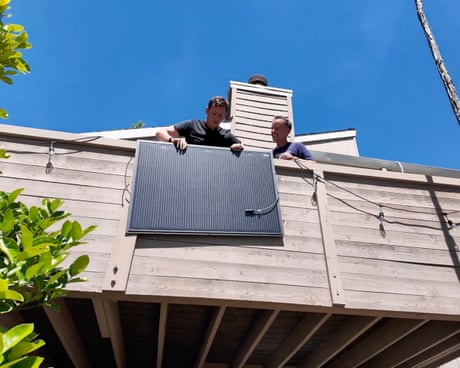
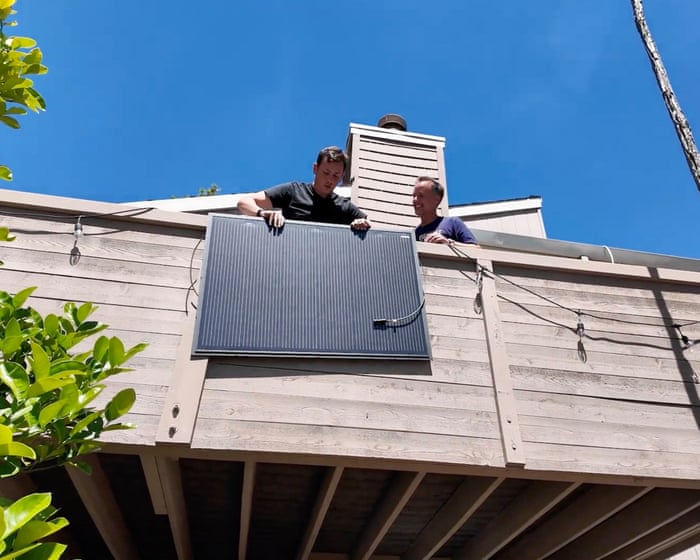
Retail giants join UK government drive to boost ‘plug-in’ balcony solar panels

Asda, Amazon and B&Q among retailers in talks to sell devices that feed into household sockets and can cut electricity bills by 30%

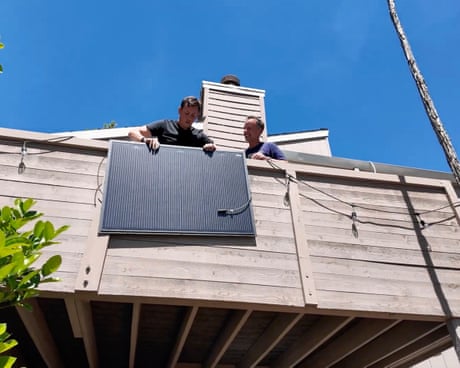
Bosses of some of Britain’s biggest retailers are discussing plans with the government to start selling plug-in solar panels as part of a drive to encourage more UK homes to generate their own electricity.

Executives from brands including Currys, B&Q and Amazon met Martin McCluskey, the minister for energy consumers, on Tuesday to discuss guidelines for selling “balcony solar panels” to the British public.

Continue reading...

© Photograph: Climate Central

© Photograph: Climate Central

© Photograph: Climate Central

  •  

SpaceX IPO Makes Elon Musk World's First Trillionaire

An anonymous reader quotes a report from Reuters: Few business leaders have been as deeply embedded in popular culture as Elon Musk, the ambitious entrepreneur who has become a central figure in internet culture and amassed a fortune that has made him the world's first trillionaire. At a time when concerns about inequality are high and public attitudes toward the ultra-wealthy have soured, Musk has managed to retain a loyal following despite his stratospheric net worth and without the folksy persona that endeared other tycoons such as Warren Buffett to the masses. While admirers view Musk's no-filter style as part of his appeal, critics have accused him of wielding oligarch-like power, raised concerns about governance at his companies and objected to his increasingly partisan political interventions. Still, SpaceX, the sprawling rocket, satellite and AI company that together with electric-car maker Tesla form the center of Musk's empire, raised a record $75 billion in its initial public offering on Thursday, highlighting investor enthusiasm for his business ventures. Prior to the share sale, Forbes pegged his net worth at roughly $780 billion, far ahead of the man next in line, Alphabet co-founder Larry Page. "The second richest person has been hovering around $300 billion, so about less than one-third of what Musk can potentially be worth tomorrow," said Matt Durot, deputy editor at Forbes Wealth. "And only one other person, (Oracle founder) Larry Ellison, has ever been worth $400 billion." Most of Musk's wealth now rests with SpaceX, where he holds a stake worth roughly $866 billion. Along with Tesla and the rest of his properties, his net worth will exceed $1.1 trillion when the stock begins trading Friday, according to Forbes and Reuters calculations based on company filings.

Read more of this story at Slashdot.

  •  

‘Happiness is not just about GDP’: ambitious plan or utopia?

Some will question its credibility – but the alternative future to the one imagined in the Global Justice Report is far more bleak

In our increasingly dystopian world, who wouldn’t want to at least be open to a utopian antidote? The Global Justice Report, published on Thursday, outlines how to build a prosperous, equitable world within safe planetary boundaries. It’s a push from the modern eco-socialist left in a global battle for ideas that will shape the future.

Based on past social achievements and future energy transformation, it indicates that the overwhelming majority of people on the planet could, by the end of the century, work less and earn more – while keeping temperatures down and avoiding much of the current destruction of nature. It is an ambitious, comprehensive and upbeat plan, and a stronger argument around which to build a political campaign than abstract goals of net zero or decarbonisation.

Continue reading...

© Photograph: Emmanuel Croset/AFP/Getty Images

© Photograph: Emmanuel Croset/AFP/Getty Images

© Photograph: Emmanuel Croset/AFP/Getty Images
  •  

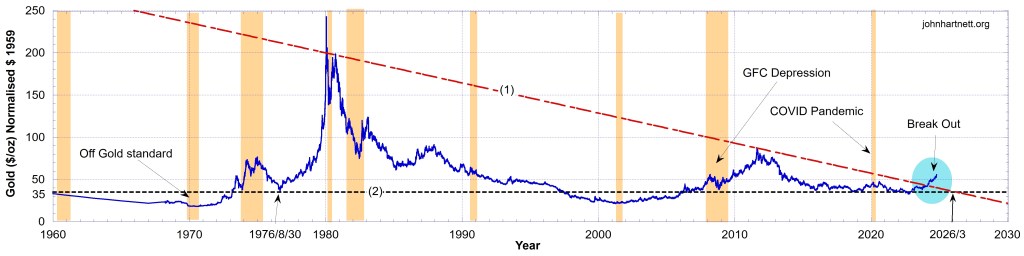
Gold and Silver Real, Uninflated Prices Break Out | How High Will They Go?

The real uninflated prices of gold and silver (in 1959 dollars) have recently surpassed historical resistance lines, indicating significant upward potential. This might signal a moon shot soon as we approach the endgame and the death of dollar.

  •  

Update: Gold and Silver Prices Above Predictions

I update my price predictions for gold and silver, for gold when priced in 1959 dollars, and both when compared to historical trends. Both metals are currently tracking above predictions, suggesting a potential increase. I recommend preparing for economic turmoil as the dollar weakens.

  •  

Power to the people: how ‘balcony solar’ could help fight rising US utility costs

More Americans are using small solar panels in their back yards or balconies as a clean way to cut their electric bills

If you feel like your electricity bill just keeps climbing, you aren’t imagining it. Since 2020, US residential energy prices have surged by about 30%, making power the largest household energy expense behind gasoline, according to the US Energy Information Administration.

But for residents like Alex Curtis, the days of feeling powerless against rising costs are coming to an end. Curtis is waging a war on his electric bill, and his new weapon of choice is a lightweight, thin-film solar panel.

Continue reading...

© Photograph: Climate Central

© Photograph: Climate Central

© Photograph: Climate Central

  •  

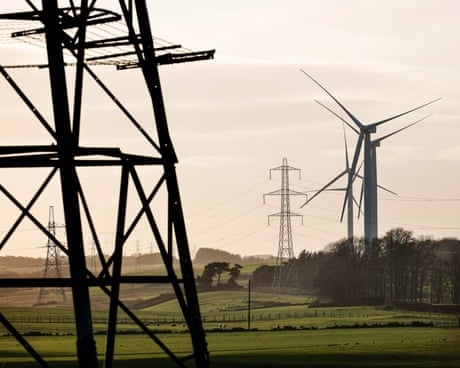
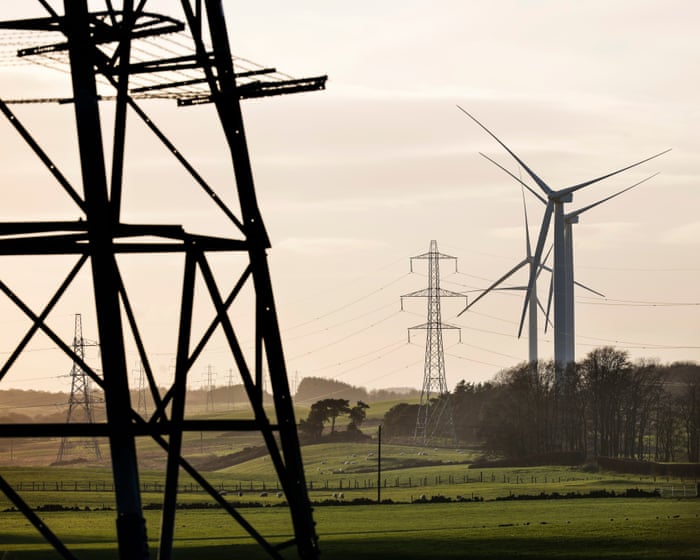
Ofgem should tell it straight: electricity prices are set to stay high for years | Nils Pratley

Regulator could do us all a favour with clear multi-year forecasts and breakdowns of electricity pricing

It is easy to predict where the energy regulator will set the next quarterly price cap on Wednesday. It’s just a matter of tracking wholesale prices in Ofgem’s relevant backward-looking “observation period”. Energy consultant Cornwall Insight thinks the typical household bill be £1,850, an increase of £209 from the previous quarter. It will be surprising if it is out by more than a few quid.

One can also make a fair guess at the regulator’s messaging. It will talk about the unavoidable impact from the surge in energy prices that followed the closure of the strait of Hormuz. It may also say the increase would be even greater than 13% without the additional wind and solar generation on the system these days. Fair enough. Gas sets the wholesale price of electricity only 60% of the time now, down from 90% not long ago.

Continue reading...

© Photograph: Murdo MacLeod/The Guardian

© Photograph: Murdo MacLeod/The Guardian

© Photograph: Murdo MacLeod/The Guardian

  •  
❌