
❌

Reading view

Astronomers Discover and Directly Image Third Planet in Beta Pictoris System
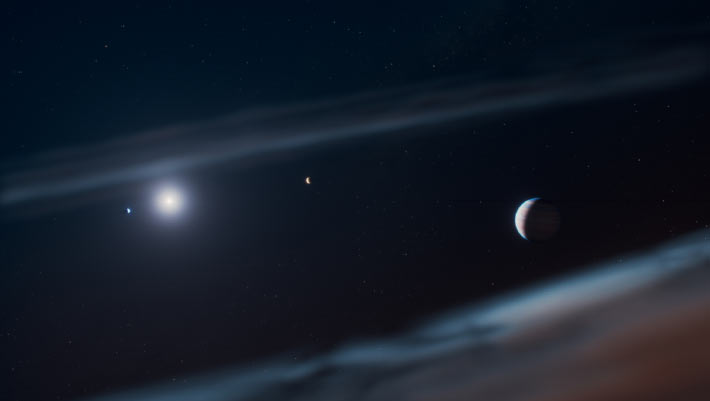
This artist’s concept shows the Beta Pictoris system with the discovered giant exoplanet Beta Pictoris d at the right. Image credit: NASA / ESA / CSA / STScI / Ralf Crawford, STScI.

Named Beta Pictoris d, the newly-discovered world is 100 times fainter than Beta Pictoris b -- the first planet discovered around the A5-type star Beta Pictoris -- and is among the lightest exoplanets ever to be imaged from the ground.

The post Astronomers Discover and Directly Image Third Planet in Beta Pictoris System appeared first on Sci.News: Breaking Science News.
  •  

Astronomers Probe Chemistry of Giant Exoplanet Beta Pictoris b

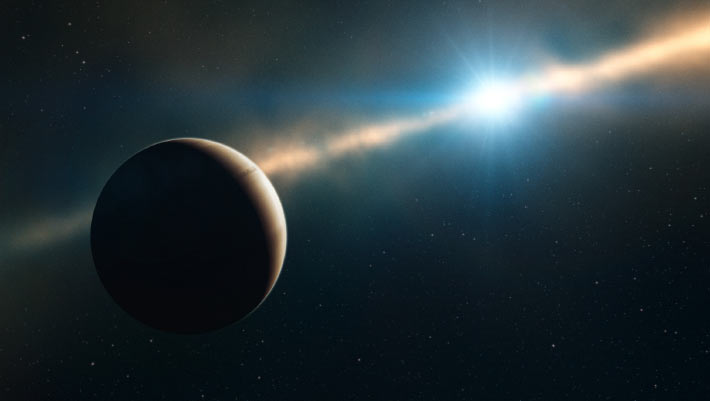
This artist’s impression shows how the gas giant exoplanet inside the disc of Beta Pictoris may look. Image credit: L. CalΓ§ada / ESO.

Using the upgraded GRAVITY+ instrument on ESO’s Very Large Telescope Interferometer (VLTI), astronomers have measured the ratio of carbon isotopes in the atmosphere of the young exoplanet Beta Pictoris, offering new insights into how giant planets form.

The post Astronomers Probe Chemistry of Giant Exoplanet Beta Pictoris b appeared first on Sci.News: Breaking Science News.

  •  

Interstellar Comet 3I/ATLAS Formed Up To 12 Billion Years Ago, New Observations Suggest

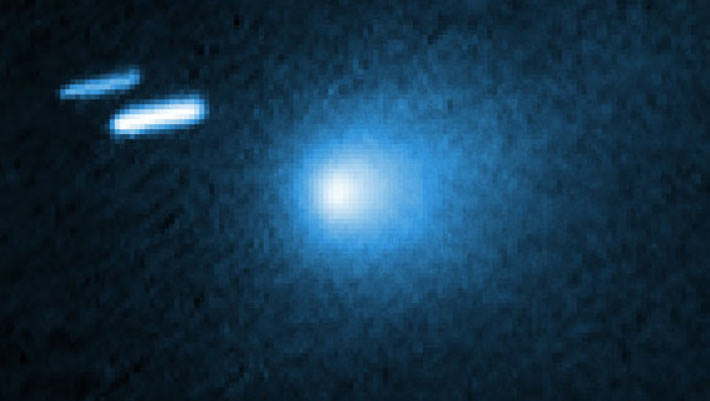
Hubble captured this image of 3I/ATLAS on July 21, 2025, when the comet was 446 million km (277 million miles) from Earth. Image credit: NASA / ESA / David Jewitt, UCLA / Joseph DePasquale, STScI.

The interstellar comet 3I/ATLAS carries a chemical fingerprint unlike anything in our Solar System, and it may have formed 10 to 12 billion years ago, before our Sun even existed, according to two papers published in the journal Nature.

The post Interstellar Comet 3I/ATLAS Formed Up To 12 Billion Years Ago, New Observations Suggest appeared first on Sci.News: Breaking Science News.
  •  

Two Glowing Nebulae Spark Cosmic Pareidolia in New VST Image

This VST image shows Gum 10 and Gum 11, two nebulae in the southern constellation of Puppis. Image credit: ESO / VPHAS+ Team.

Astronomers using ESO’s VLT Survey Telescope have captured a spectacular image of two little-known nebulae: Gum 10 and Gum 11.

The post Two Glowing Nebulae Spark Cosmic Pareidolia in New VST Image appeared first on Sci.News: Breaking Science News.

  •  

Astronomers Detect Clearest Signs Yet of Magnetic Fields on Extrasolar Planets

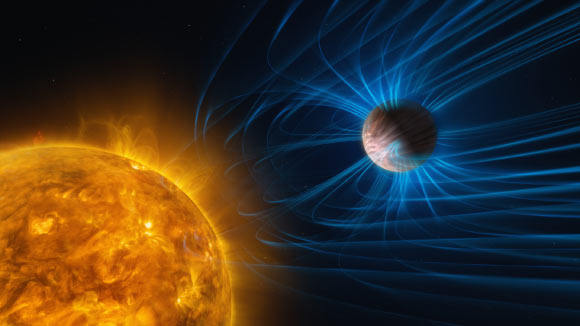
This illustration shows magnetic activity in an ultra-hot Jupiter. Image credit: ESO / M. Kornmesser / L. CalΓ§ada.

By tracking fierce winds racing through the atmospheres of seven ultra-hot Jupiters, astronomers have uncovered the strongest evidence yet that magnetic fields shape weather on worlds beyond our Solar System.

The post Astronomers Detect Clearest Signs Yet of Magnetic Fields on Extrasolar Planets appeared first on Sci.News: Breaking Science News.

  •  
❌