❌

Reading view

Modo de voz do Claude ganha suporte aos modelos Opus e Sonnet

A Anthropic anunciou uma atualização para o modo de voz do Claude, que agora passa a ser compatível com os modelos Opus e Sonnet, ampliando as suas capacidades de funcionamento.

Até então, o modo era compatível somente com o modelo Haiku, voltado a respostas rápidas e com menor tempo de raciocínio. Agora, aqueles que possuem acesso aos outros modelos de inteligência artificial (IA) da Anthropic poderão utilizá-los durante conversas por voz, aproximando a experiência da entrega feita durante as interações por texto.

Segundo a empresa, a novidade permite o uso para fornecer feedbacks sobre a comunicação do usuário, simular apresentações ou até mesmo auxiliar em sessões de pesquisa mercadológica e brainstorming. O modo de voz do Claude também se tornou compatível com a integração de aplicativos como Gmail, Google Agenda, Slack, Canva e Notion, permitindo que a IA altere os horários de reuniões, redija emails ou crie documentos diretamente por comandos de voz.

O recurso também passa a dar continuidade a partir de uma conversa iniciada em texto, utilizando automaticamente o modelo previamente solicitado para manter a fluidez das interações, sem a necessidade de recomeçar uma conversa para iniciar o modo de voz. A cota de uso é a mesma em ambas as formas de uso.

Quanto aos idiomas compatíveis, além do português (do Brasil) e do inglês, temos francês, alemão, hindi, indonésio, italiano, japonês, coreano e espanhol (da Espanha e América Latina). A Anthropic pontua que o idioma deverá ser selecionado manualmente, já que o Claude não é capaz de reconhecer essa informação automaticamente.

No momento, a repaginada do recurso está em versão beta tanto para os usuários do Claude no app mobile quanto nas versões web e desktop — a Anthropic, porém, recomenda o uso principalmente no celular. Até agora, apenas os planos pagos possuem acesso aos modelos Sonnet e Opus, enquanto usuários da versão gratuita permanecem com o Claude Haiku.

  •  

Export Control for Fable and Mythos

Anthropic (tweet, Hacker News):

The US government, citing national security authorities, has issued an export control directive to suspend all access to Fable 5 and Mythos 5 by any foreign national, whether inside or outside the United States, including foreign national Anthropic employees. The net effect of this order is that we must abruptly disable Fable 5 and Mythos 5 for all our customers to ensure compliance.

David Sacks (recently departed AI czar, via Dare Obasanjo, Hacker News):

Fable is Mythos with guardrails. But if those guardrails fail, then you’ve exposed Mythos and its advanced cyber capabilities to people who shouldn’t have them. (Keep in mind that Anthropic itself widely promoted the idea that Mythos was a cyberweapon and needed to be regulated as such. They asked for government regulation of Mythos and championed the guardrails on Fable. If there is a vulnerability — big or small — it is Anthropic’s responsibility to patch.)

A highly credible trusted partner of both Anthropic and the USG who was testing Fable came forward with a jailbreak of those guardrails. The Admin asked Dario to fix the jailbreak or de-deploy the model. Dario refused.

Amrith Ramkumar and Robert McMillan (Hacker News):

The Trump administration’s decision to halt all foreign use of Anthropic’s most-capable AI models was prompted by conversations between Amazon.com Chief Executive Andy Jassy and U.S. officials including Treasury Secretary Scott Bessent, people familiar with the matter said.

Dare Obasanjo:

If Claude Mythos is as powerful and dangerous as Anthropic says it is then export controls are totally reasonable. After all, Biden put export controls on Nvidia GPUs for similar reasons.

That said, banning foreign worker Anthropic employees from Mythos reads more like retaliation than regulation.

Ben Thompson (via John Gruber):

Anthropic went on to make the case that non-universal jailbreaks were inevitable and also narrow, and that there was no evidence of a universal jailbreak; the jailbreak that was found, meanwhile, appears to have been reported by Amazon, which is notable given Amazon is both an investor in Anthropic and a major provider of inference to the company. As I write this, senior Anthropic staff are in Washington D.C. seeking to resolve what they insist is a misunderstanding, and which White House officials are suggesting is insouciance by the company’s leadership to legitimate national security concerns.

I don’t actually have much to add to the current conflict given how many facts are in dispute; what I am not surprised about is the fact that the conflict is happening: I already explained in Anthropic and Alignment why conflict between the U.S. government and Anthropic was inevitable. To that end, people who are arguing that Mythos isn’t powerful enough to warrant the government’s drastic action are missing the point: if it’s not powerful enough now, the next one will be, or the one after that, particularly now that models are increasingly useful in creating their successors.

[…]

The broader takeaway from that previous episode, however, is that Anthropic believes that they are the ones who should have final say over how Anthropic is used; given that they think only they should be developing leading edge AI, they by extension think that only they should have final say over AI generally. When you further combine this realization with the company’s pronouncements about AI’s ability to conduct all economic activity, you realize that Anthropic’s leadership effectively wants to have power over everything and everyone.

Bruce Schneier:

The government’s actions won’t help. The problem isn’t any one particular model; it’s the general trend of increasing AI capabilities. And any real solution requires the sort of collective action that just isn’t possible right now.

[…]

The broader community had only a few days with Fable, but that time we learned some about its capabilities. Its difference is less the new model’s raw analytical and problem solving capabilities, and more that the model doesn’t need that sophisticated harness.

[…]

Human systems rely on so many norms that we scarcely recognize the existence of until they are broken. AIs naturally think outside the box, because they don’t have any real conception of what the box is or why it’s there in the first place.

There is no foolproof way to prevent people from using AI models to complete harmful tasks. There is no way to prevent the models from incidentally causing harm while completing benign tasks. AI models are no longer isolated from the real world. They browse the internet and answer emails.

Hayden Field:

Anthropic declined to comment multiple times this week about the state of the talks, saying there was no news to share. But the lack of news is the story here. After 14 days of high-intensity negotiations, nobody knows when or if Anthropic’s most powerful AI models will come back, let alone whether President Trump could expand his order to more companies with similar tech.

[…]

It’s not clear exactly why Anthropic and the administration remain at an impasse. One problem may be that there’s no clear framework for applying export controls to AI systems. Most companies making dual-use products — civilian systems with potential defense or military uses — can evaluate them using what’s essentially a checklist during the manufacturing and production process. Anthropic, however, is facing a complicated bureaucracy figuring out how to apply its rules from first principles.

[…]

Katie Moussouris, the founder and CEO of Luta Security, viewed a report about the Fable 5 vulnerability at Anthropic’s request. She thinks it’s significantly overblown. In a blog post, Moussouris detailed how researchers jailbroke guardrails that prevent Fable 5 from finding exploitable security holes, one of the unfettered Mythos 5’s scariest capabilities. […] In Moussouris’ eyes, however, this shouldn’t have triggered such a severe governmental action and is in fact an essential tool for AI coding.

Jared Perlo (Hacker News):

The U.S. government is allowing Anthropic to deploy its Mythos 5 model to a select group of customers and partners, according to a letter from Commerce Secretary Howard Lutnick to Anthropic that was seen by NBC News.

In the letter, Lutnick wrote that the government was confident in the guardrails Anthropic had put in place to allow trusted users to access the powerful AI system.

Julie Bort (Reddit):

It is now allowing Anthropic to make Mythos 5 available to more than 100 specific U.S. government agencies and companies, including allowing the non-American employees at those organizations to access to the model, both Semafor and Reuters report. This list also includes Anthropic’s own non-American employees, who were included in the original ban that forbade non-Americans from accessing the models.

[…]

Apparently, the administration did not address the release of Fable 5 in this directive.

It’s unclear what technical changes Anthropic may have made or what else they may have done to change Lutnick’s mind.

Kate Park (Hacker News):

On Wednesday, Chinese cybersecurity firm 360 reportedly unveiled Tulongfeng, an AI tool it says can go head-to-head with Anthropic’s Mythos.

Dare Obasanjo:

It seems inevitable that OpenAI and Anthropic will lobby the U.S. government to ban Chinese models in much the same way car companies effectively got Biden to ban Chinese EVs with 100% tariffs.

This puts them on a collision course with the hyperscalers like Microsoft who’ll happily host GLM & Kimi.

Previously:

Update (2026-07-01): Anthropic (tweet, Hacker News):

As of today, June 30, the export controls on Fable 5 and Mythos 5 have been lifted.

[…]

We have also restored access to Mythos 5 for a set of US organizations, following the US government’s approval on June 26. We continue to coordinate with the government to expand access to the broader set of domestic and international partners in the Glasswing program.

[…]

Importantly, the reported technique did not expose any unique Mythos-level cyber capabilities. The behavior reflected a borderline case for Fable 5’s safeguards—as we will explain below, there are some tasks that are unlikely to be dangerous but are nonetheless blocked by the safeguards out of an abundance of caution. The reported technique allowed access to one such behavior, but it only involved routine defensive cybersecurity work.

Even so, we moved quickly to address the reported bypass. Working closely with the government, we trained an improved safety classifier that targets and blocks the behavior described in the report. Users will be notified if a request to Fable 5 is blocked, and the request will instead be sent to Opus 4.8.

  •  

Claude Code ganha suporte ao iOS Simulator

A Anthropic implementou no Claude Code a possibilidade de testar aplicativos para iPhone em um painel interativo do iOS Simulator.

Aos interessados, será possível construir aplicativos para iPhones diretamente do Claude Code Desktop a partir da versão 1.24012.0 do app. A integração possibilita ainda a utilização de toques, gestos e atalhos da solução nativa da Apple para simular o iPhone.

Claude Code on desktop now works with the iOS simulator.

Build and run your iOS app, and the simulator opens in a panel right next to your conversation. Available today in public beta. pic.twitter.com/su4IguzPVb

— ClaudeDevs (@ClaudeDevs) July 21, 2026
O Claude Code no desktop agora funciona com o simulador do iOS.

Construa e execute seu aplicativo para iOS, e o simulador abre em um painel bem ao lado da sua conversa. Disponível hoje em beta público.

O recurso é exclusivo da versão para macOS do Claude Code (levando em conta, claro, a disponibilidade do Simulator da Apple), e é necessário ainda ter o Xcode com a plataforma iOS instalada.

Para executar um determinado app, basta abrir o projeto na aba “Code” do Claude Code Desktop, pedir à inteligência artificial (IA) para testar o aplicativo e… pronto. É possível que no primeiro acesso o app solicite uma permissão para seguir com a instalação. O painel dispensa o uso do Computer Use (com exceção da versão em CLI), controlando diretamente o uso do iOS Simulator.

Ainda em beta pública, a ferramenta exige sessões locais, pois sessões em nuvem não são capazes de acessar simuladores instalados no Mac. A novidade está disponível para usuários dos planos Pro, Max e Team.

  •  

1Password Now Lets Claude Log In Without Seeing Your Passwords

If you want an artificial intelligence tool to book a flight or buy an audiobook, it usually needs to log into your personal accounts. Sharing your private login details directly with a chatbot feels risky, but a new software update changes that process entirely. The popular password manager 1Password just built a clever way for […]

The post 1Password Now Lets Claude Log In Without Seeing Your Passwords appeared first on The Mac Observer.

  •  

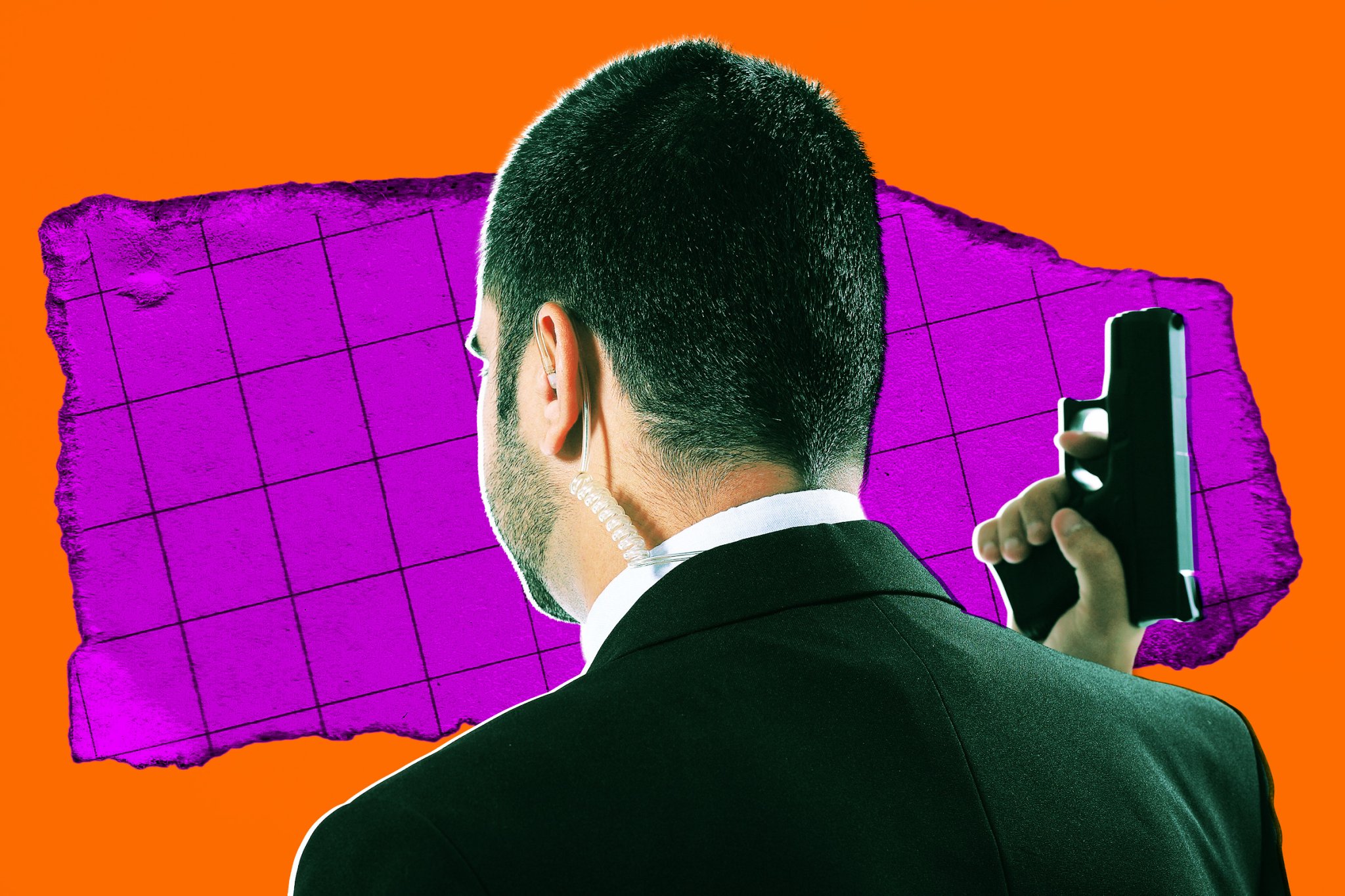
Terrified Tech Execs Are Traveling With Armed Bodyguards as AI Backlash Grows

Public backlash to AI is intensifying — and transforming into real-world attempts at physical violence. Industry leaders are fearing for their lives.

Leading AI companies and their top executives are beefing up security, the Wall Street Journal reports, as escalating anti-AI industry sentiment is culminating in threats and attempts of violence against the people and ventures building leading AI models. Some executives are even traveling with armed guards, while others have taken to keeping a lower public profile.

“Tech CEOs, a few years ago, definitely did not have security,” Dakota Dominguez, an executive at the Silicon Valley-based security firm JPT Security, told the WSJ. “A lot of tech companies now are incorporating that into their budgets.”

Earlier this year, the AI industry was shaken when a 20-year-old anti-AI activist named Daniel Moreno-Gama, armed with a gun and a Molotov cocktail, unsuccessfully tried to firebomb the home of OpenAI CEO Sam Altman. No one was injured, but the high-profile incident followed a string of violent threats and at least one OpenAI lockdown.

OpenAI isn’t alone. Per the WSJ, around the time that Altman’s home was targeted, OpenAI rival Anthropic faced a close call when a man snuck into its headquarters behind an employee carrying an envelope with an executive’s name on it. The man reportedly then told a guard that the executive was “going to be killed.” The man was stopped before anyone got hurt.

All in all, it’s easy to see why tech leaders are budgeting for beefed up security.

Not all anti-AI sentiment has manifested in attempted physical violence. Activists have also shut down data centers, taken down AI-powered surveillance cameras, and protested outside AI company headquarters. As the fight over AI data centers heats up, some polls have shown that AI is less popular with Americans than Immigration and Customs Enforcement. People fear that AI will result in mass layoffs, a further consolidation of wealth and power, or even a catastrophic apocalypse — outcomes that many leaders in the AI industry have issued warnings about.

“That’s why people are setting warehouses on fire,” a former Pinterest employee named Bonnie Kate Wolf, who was laid off during an AI-focused restructuring, told the WSJ. “You can’t go back to serfdom. It really feels like the people in power want to be kings. Historically, that doesn’t work out for kings.”

More on AI tensions: AI Billionaires Are Starting to Get Scared

The post Terrified Tech Execs Are Traveling With Armed Bodyguards as AI Backlash Grows appeared first on Futurism.

  •  

1Password for Claude Lets AI Log In Without Seeing Your Passwords

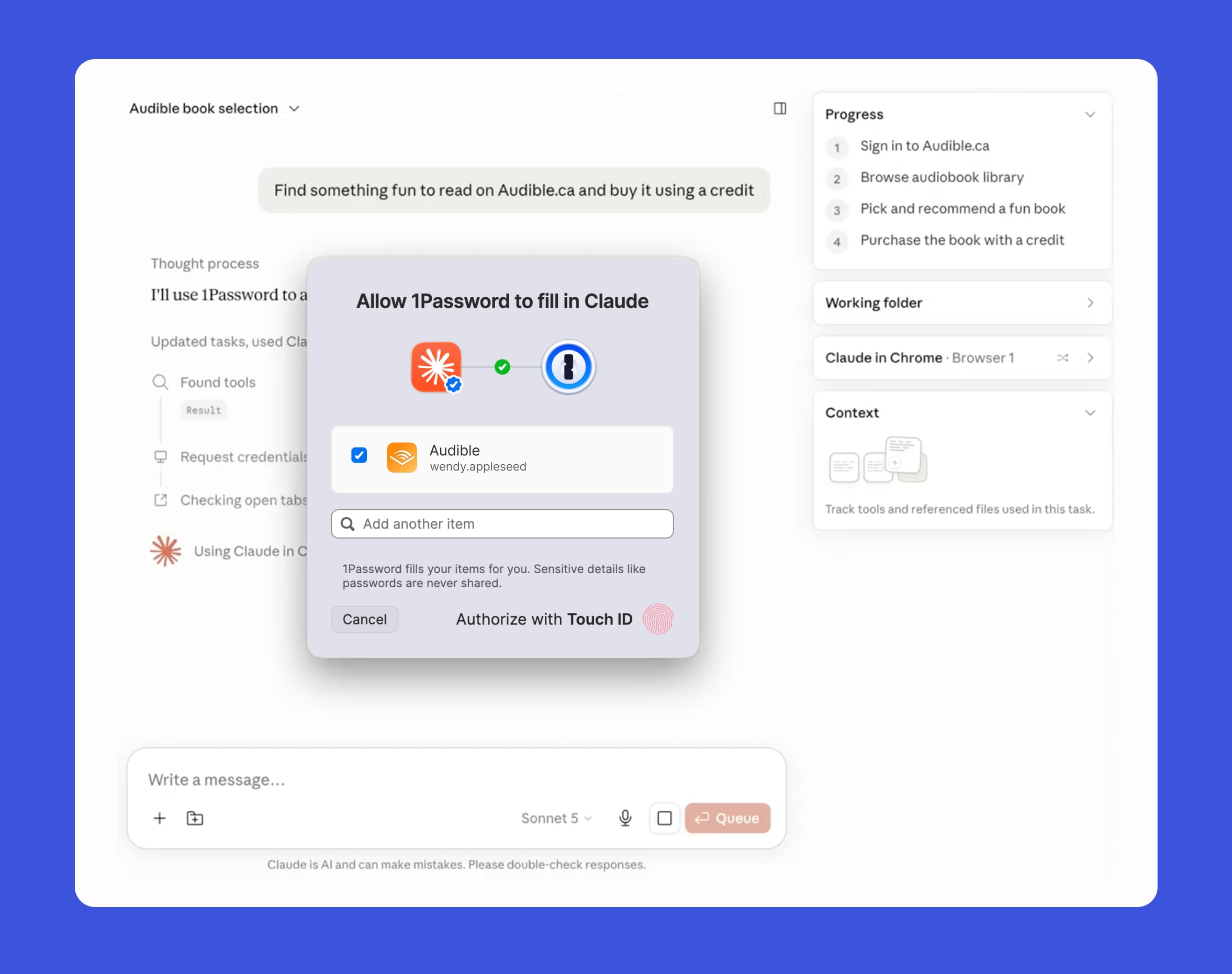
Popular password management app 1Password today added Claude support, which means AI service Claude can access credentials stored in 1Password for completing browser tasks.


With the integration, Claude can use 1Password logins and one-time codes without the actual password being exposed to Claude. Passwords never reach Claude's context, memory, or Anthropic's systems.

When Claude wants to sign in to a website, 1Password shows the user which credential Claude wants access to and why. After the user approves the request, 1Password adds the credential directly to the page. Access is limited to the current task and ends when the task has been completed. The 1Password team says that after a password is autofilled, the app checks to make sure secrets were not exposed on the page.


Credit cards and identities in 1Password are not supported at the current time, so Claude's access is limited to logins and one-time codes.

The 1Password browser extension is also being updated with Agentic Mode, which gives users control over browser-based AI agents. When an AI agent takes over, the 1Password extension locks down so passwords are not exposed. The password interface is hidden, and the agent can use logins and one-time codes only when the user gives approval. Agentic Mode works to protect passwords from AI agents even if the integration is not set up.

1Password for Claude is available for Mac, and 1Password business, family, and individual plan subscribers can use it. A Pro, Max, Team, or Enterprise Claude plan is required. 1Password has a help document with detailed information on how to set it up.

Claude can use 1Password logins across sites where Claude in Chrome can complete actions. The 1Password desktop app and browser extension are required, as are the Claude desktop app and the Claude in Chrome browser extension.
This article, "1Password for Claude Lets AI Log In Without Seeing Your Passwords" first appeared on MacRumors.com

Discuss this article in our forums

  •  

Claude can now use your 1Password credentials for you

A robot with the claude logo on its face.

1Password has launched a new browser integration for Claude that allows the Anthropic chatbot to access stored security credentials like usernames and passwords. The 1Password for Claude feature means that users can authorize Claude to complete multi-step tasks like booking travel and managing online accounts on their behalf without having to manually input their login credentials, but without actually exposing your security information to Anthropic's AI models, according to 1Password.

That's made possible by a new "zero-exposure security framework" developed by 1Password, which works by injecting the required credentials for each task thro …

Read the full story at The Verge.

  •  

New Anthropic Ad Implies AI Could Kill Us All

Anthropic is doing what Anthropic does best: putting on its most concerned face so it can convince you they’re the good guys in the industry.

Last week, the world’s most valuable AI startup revealed a new commercial that took an unorthodox approach to promoting its technology. Rather than diving straight into bubbly optimism, it starts with a series of grim images as we hear voiceovers from different speakers ask some hard-hitting questions about AI. 

You couldn’t blame someone for thinking they were watching a PSA. It starts with a burning house — which always bodes well. When someone asks, “Can AI be trusted?” we’re shown what looks like surveillance footage with an AI algorithm scanning the faces of everyone in a crowd.

The most striking sequence comes right after.

“Who’s going to hit the brakes if we need to?” another voice says. Then it cuts to an image of a cemetery lined with hundreds of headstones.

You don’t need to ask Claude to explain this one to you. Anthropic is clearly acknowledging the fear that AI could kill us all.

I think the questions on everyone's mind is, can Anthropic be trusted? https://t.co/OTExfm2lXl

— terminally onλine εngineer (@tekbog) July 14, 2026

But this is actually a feel-good story — at least in the eyes of Anthropic. The tagline, “There’s hope in hard questions,” assures the viewer that their concerns over AI — like its potential to destroy jobs or erode or ability to think — are all perfectly valid, but more importantly, that these are questions which Anthropic’s leaders are keeping themselves up at night grappling with.

“People have a lot of hard questions about AI,” an announcement from the company states. “It’s our job to address them.”

The commercial, which aired during the World Cup quarterfinal clash between Argentina and Switzerland over the weekend, quickly drew criticism online. One viral post mocked the thinking behind the ad, writing, “When we raise the question of stopping a dangerously powerful superintelligence we show 300 American gravestones for half a second.”

Even OpenAI CEO Sam Altman fired a shot.

“i thought this was satire,” he wrote in his typical all-lowercase style.

The ad is Anthropic in a nutshell. A key part of the company’s mythology is that it was founded by former OpenAI employees who wanted to focus on safe AI development. CEO Dario Amodei claims that he could’ve been the one to release a chatbot that changed the world instead of OpenAI with ChatGPT, but held off because he was too concerned about the tech’s risks.

Amodei has also been strikingly forward about AI’s risks, saying it could wipe out half of all entry-level white-collar jobs, while dangling the possibility that its models may already be conscious. Recently, the company even called for a global “pause” on AI development because it feared the technology could spiral out of human control. (It also hired an economist who said that a 33 percent risk of human extinction from AI was acceptable.)

Those may seem like counterproductive things for the creator of one of the most widely used chatbots in the world to say. But it all serves a very deliberate point. By being the ones that doomsay about AI the most, Anthropic can also present itself as the only company that can be trusted to develop it. 

Its actual track record suggests otherwise. In February, it dropped a key safety pledge that vowed it would stop training an AI system if it couldn’t guarantee it had proper guardrails in place. And while it fought with the Pentagon against its tech being used in mass surveillance and autonomous weaponry, it emerged that its Claude AI was being used to select strike targets in Iran.

One person responding to the company’s ad said it best: “Can Anthropic be trusted?”

More on AI: New York Becomes First State to Ban AI Data Centers

The post New Anthropic Ad Implies AI Could Kill Us All appeared first on Futurism.

  •  

AI companies want to water down Australia’s copyright laws. Artists are outraged, Labor is split

Anthony Albanese will deliver a landmark speech on AI this week as MPs are torn between attracting datacentre investment and protecting the rights of creatives

When Anna Funder stood before a pack of journalists at Parliament House this month, she presented herself not just as a writer but also a “victim of crime”.

The Stasiland author was using the analogy to illustrate how technology companies have flagrantly “hoovered up” her literary works for their own profit.

Continue reading...

© Composite: Victoria Hart/AAP/Getty Images

© Composite: Victoria Hart/AAP/Getty Images

© Composite: Victoria Hart/AAP/Getty Images

  •  

American Tech Companies Are Suddenly Sweating Bullets as China Catches Up on AI

The head start that the US companies enjoyed in the AI race is quickly vanishing. Chinese competitors are now nipping at their heels, and it’s causing a wave of anxiety in the American sector.

Over a year ago, DeepSeek spurred an existential crisis — and a mass stock selloff — in the US tech industry when it released a competitive AI model created for a fraction of the cost of the leading American models.

If that was a wakeup call, then the release of GLM-5.2 last month is loudly banging on the front door. The model, from the Chinese start-up Z.ai, has been hailed as nearly or just as powerful as frontier US systems, especially when it comes to its coding capabilities and cybersecurity applications — while being significantly cheaper to use. 

It’s generated heaps of discussion in tech circles. Marc Andreessen, one of Silicon Valley’s foremost venture capitalists, tweeted that “AI insiders are saying GLM-5.2 is the first Chinese AI model to match and often beat the American big lab public AI models with no compromises.”

Perhaps betraying their sense of a weakening grip on the field, US companies are crying foul about China’s AI ascension. Earlier this year, Anthropic accused China’s DeepSeek, Moonshot, and MiniMax of using a technique called distillation to illegally gather data to imitate its models, which is essentially claiming that they cheated their way to the front of the pack.

In distillation, a weaker “student” model is trained on the outputs of a more advanced “teacher.” AI labs routinely use this to create smaller and more efficient versions of the their largest systems, but Anthropic says Chinese firms are abusing the trick in a mass coordinated effort involving tens of thousands of accounts that probe its models for data that it can extract and use to train their own AI models, thereby effectively pilfering Anthropic’s tech. These claims were relitigated last month, when Anthropic sent a letter to US senators accusing Chinese titan Alibaba of also engaging in this practice.

“These distillation attacks are carried out illicitly, systematically and at industrial scale to harvest US AI capabilities across frontier labs and repackage them as their own,” Anthropic told the senators, per the New York Times.

But Anthropic may be wasting its breath. Distillation is an open secret among rivals in the US tech sector. And as the NYT notes, it’s not even clear if it’s illegal. Unless some court rulings go their way, US firms will have to rely on their own countermeasures to stop it. (Anthropic was caught trying to do this by secretly embedding code in its Claude Code model that allowed it to spy on Chinese users, creating alarm among its customer base.)

American firms could also benefit for some geopolitical strong-arming, such as the US cutting off China’s access to its powerful AI chips, or even blocking Americans from accessing Chinese models (which isn’t as far-fetched as it may sound, when you consider that the US threatened banning TikTok as a way of forcing China’s ByteDance into divesting its US operations, or that it’s also effectively banned Chinese electric vehicles, which are far cheaper than American ones, with prohibitively high tariffs).

Chinese firms may very well have used surreptitious measures to help catch up to the US, but according to the NYT, many experts believe that a distillation crackdown would be meaningless, as building a model as advanced as Z.ai’s can’t be explained by distillation alone. US firms may simply have to accept that their Chinese counterparts are now on equal footing. The complaining about distillation is a convenient distraction at a time when their coding products are under more scrutiny for being too expensive to use as they get deployed in corporate settings — or perhaps a desperate plea for the US government to intervene and rescue them from the horrors of global, free market competition.

More on AI: Bank of America Warns That AI Investors Are in for a Nasty Reality Check

The post American Tech Companies Are Suddenly Sweating Bullets as China Catches Up on AI appeared first on Futurism.

  •  

A viral doomsday scenario aims to shake Europe out of its AI complacency

Does a thought-experiment about US ascendancy in the technology say as much about AI jitters as it does about the reality?

It’s 2031 and the US and China are about to tear Europe into pieces.

The US ploughed vast sums into datacentres and the EU did not. China built robots and Europe did not. American companies “restructured” their workflows around AI and fired people, while EU workers went on long lunch breaks and handed over administrative tasks to the AI model Claude.

Continue reading...

© Photograph: Hannibal Hanschke/EPA

© Photograph: Hannibal Hanschke/EPA

© Photograph: Hannibal Hanschke/EPA

  •  
❌