Login

EV tech is trickling down to hybrid and combustion vehicles, and I’m here for it
It’s pretty clear that EVs and software defined vehicles (SDVs) go hand-in-hand these days, and while Tesla paved the way with the Model 3 back in 2017, Rivian, Lucid, and Chinese manufacturers quickly followed. The legacy car manufacturers are taking a while longer to get on board, but are finally catching up. Companies like Hyundai Motor Group, General Motors, BMW, and Mercedes-Benz are starting to launch full SDVs.
SDVs for the win
SDVs are cars with functions and features that are primarily enabled through software and can improve over time via over-the-air (OTA) software updates. I’m not just talking about updating navigation or infotainment, here. Thanks to their zonal architecture, full SDVs use a holistic approach to software updates where every hardware module can be updated OTA, which enables diagnostics and even recalls without a dealer visit.
The cynical view is that SDVs allow greedy car manufacturers to extract revenue from customers via needless subscriptions, but that's short-term thinking. When done right, there are many benefits to SDVs. Companies like Rivian and Tesla issue free monthly OTA updates to fix bugs and add new features to their EVs, to the delight of their customers, while only charging an optional subscription for higher data connectivity and ADAS tiers.
SDVs go beyond EVs
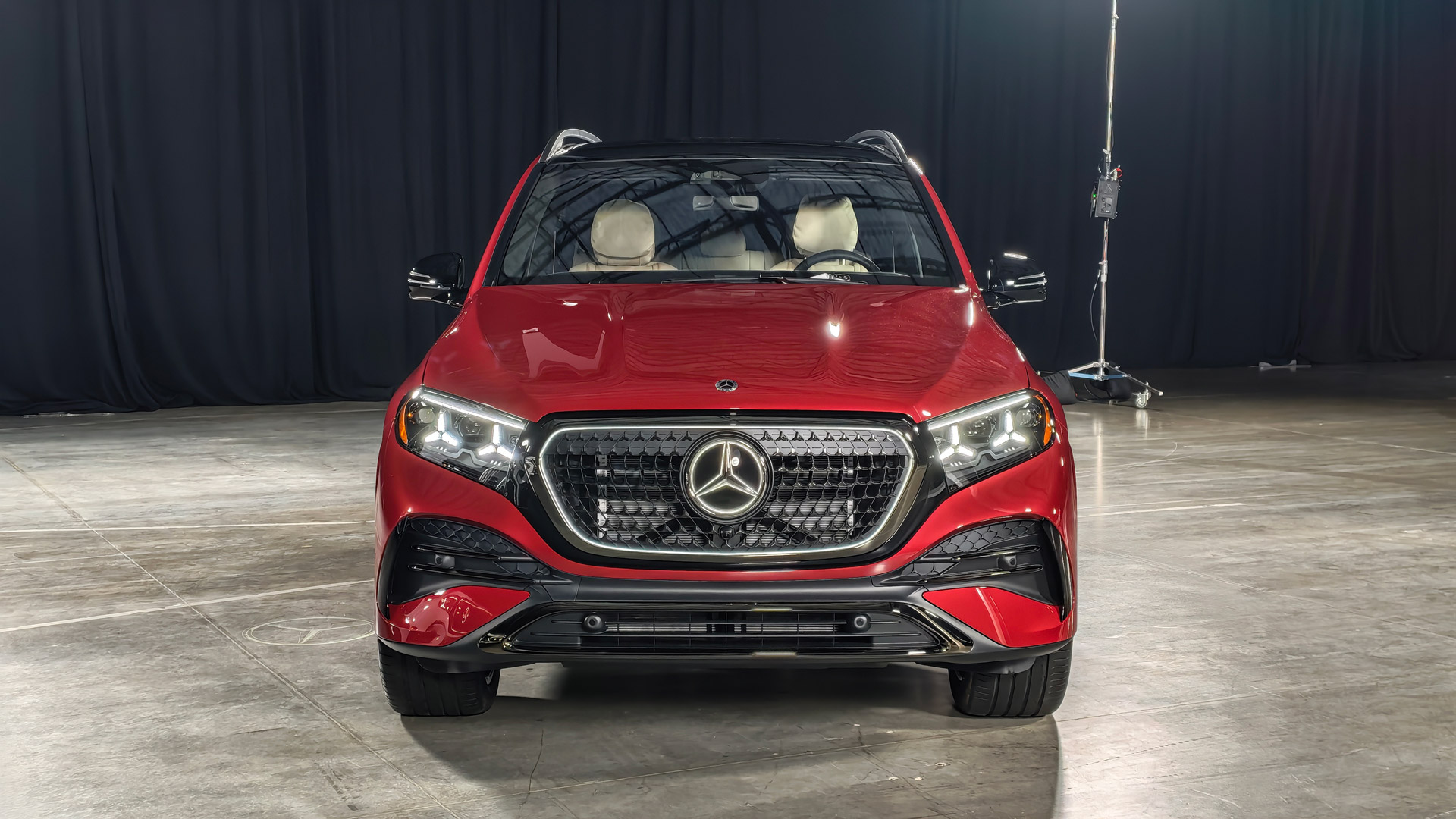
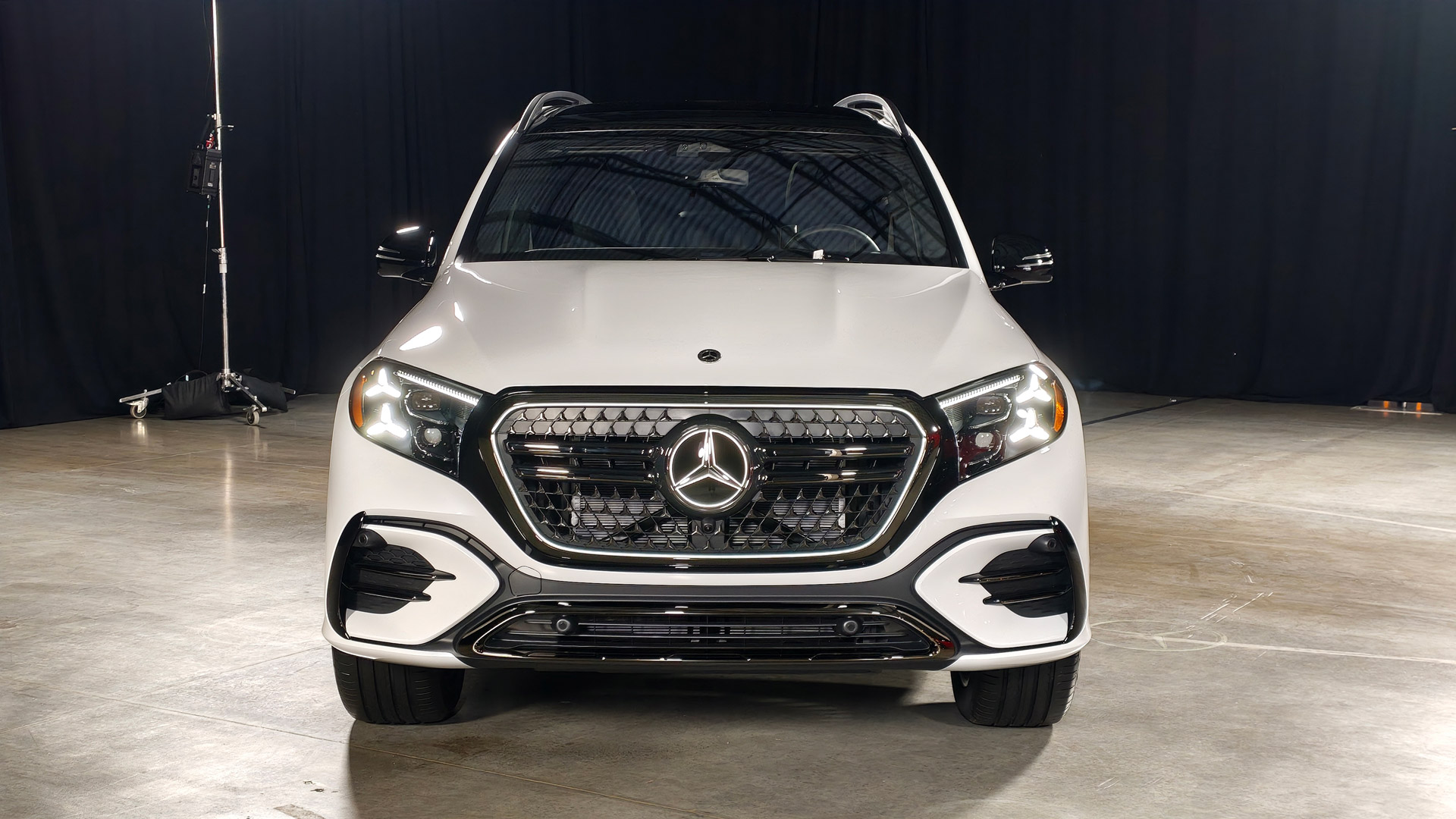
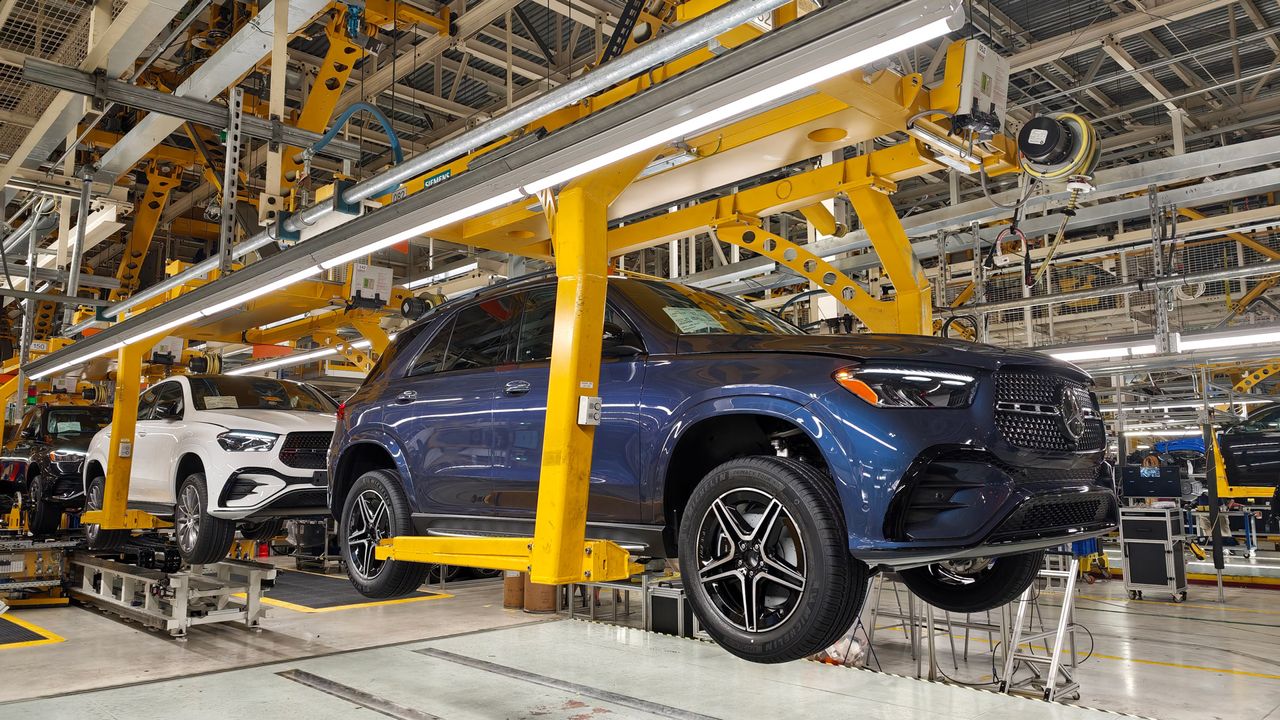
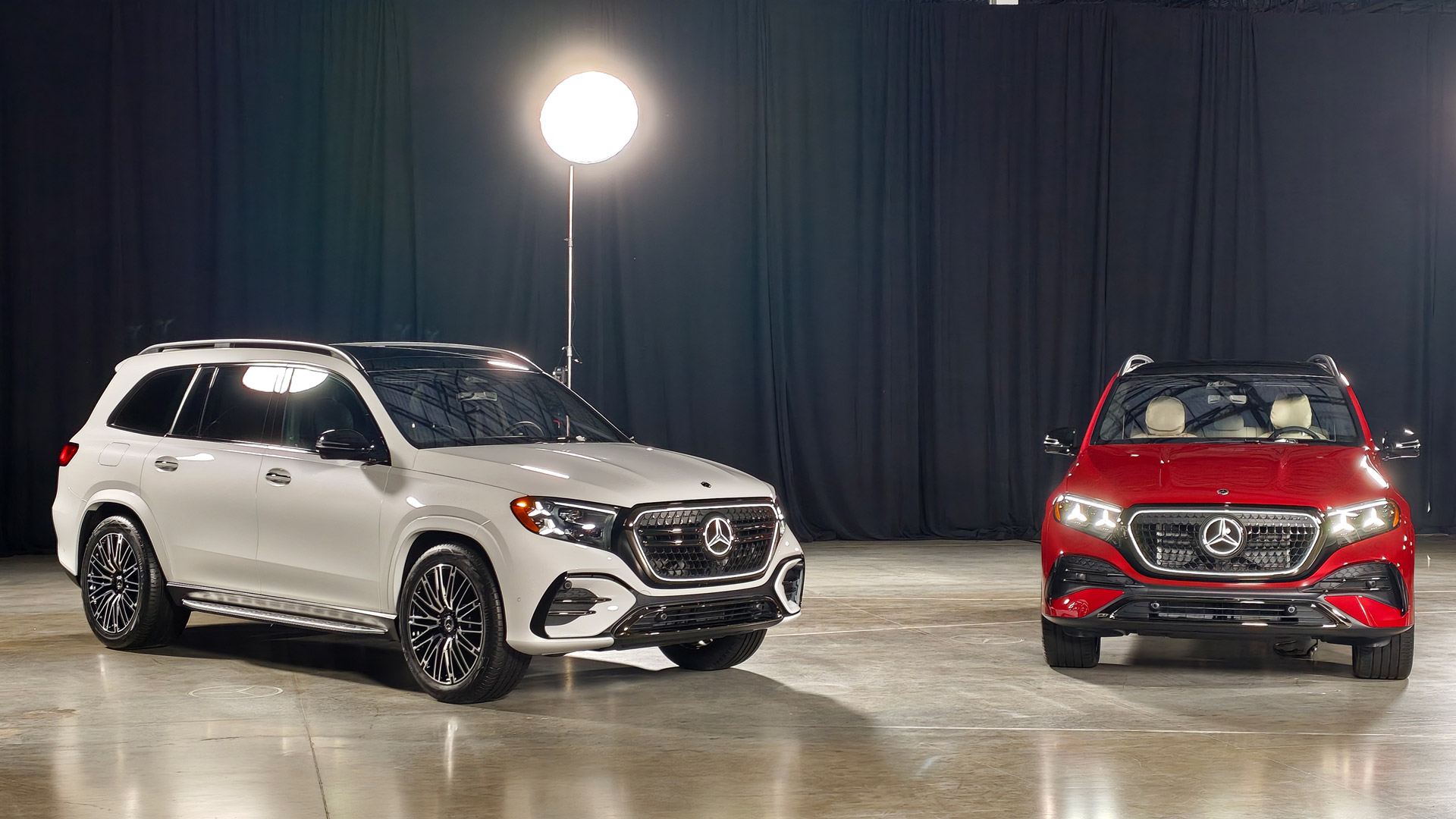
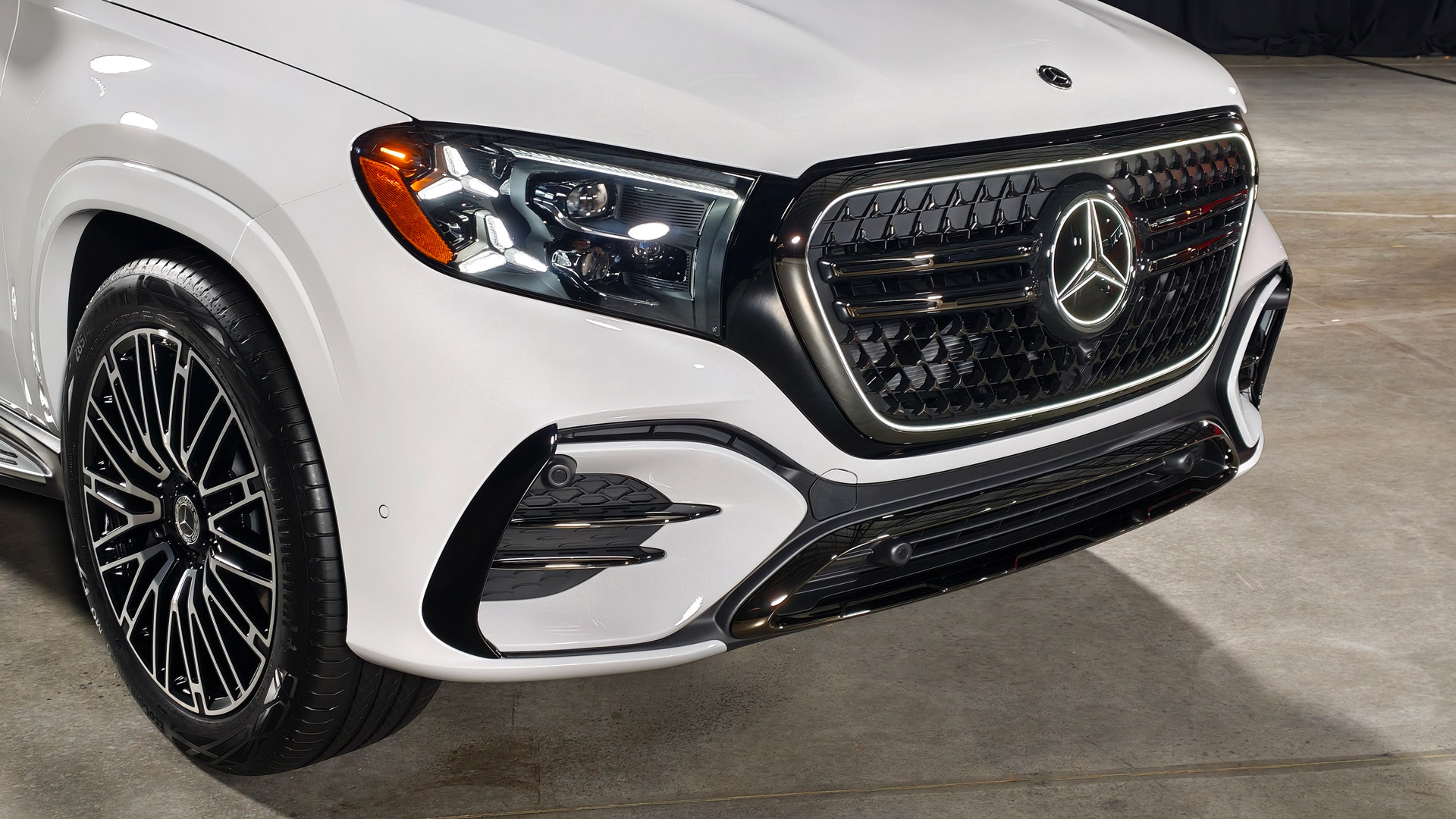
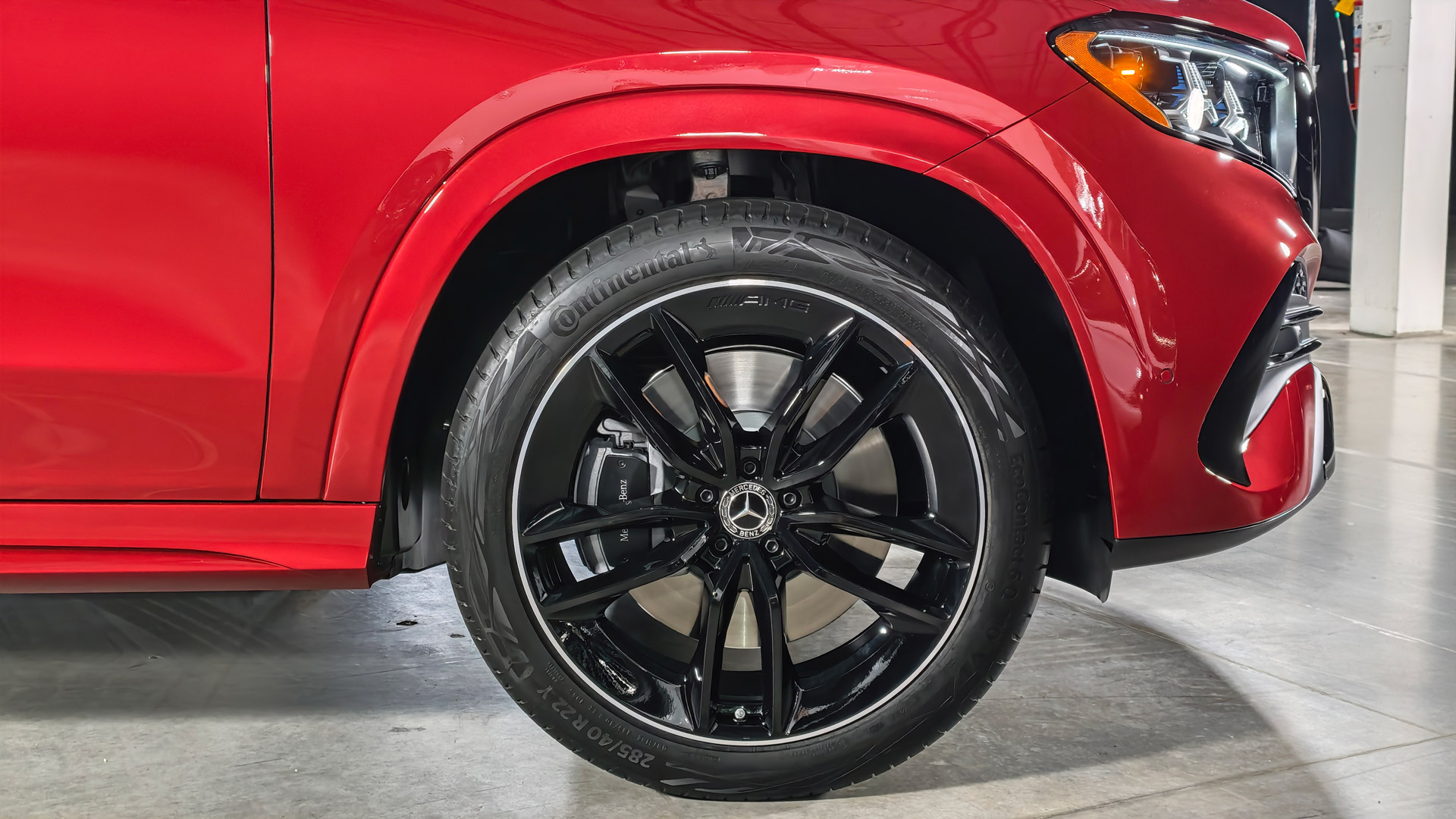
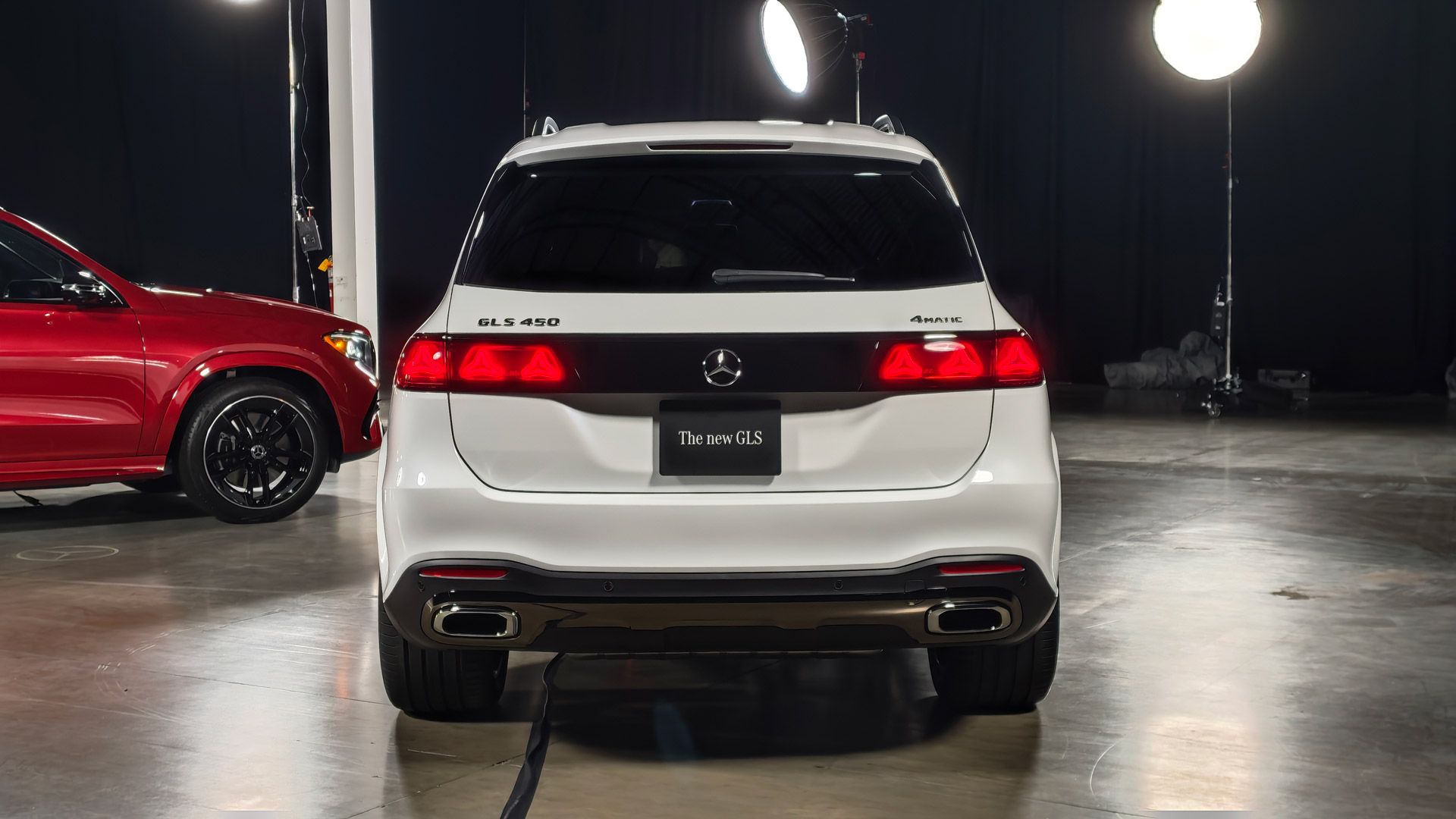
What happens when you extend SDVs beyond EVs to hybrid and combustion vehicles? A few weeks back, I visited Mercedes’ factory near Tuscaloosa, AL, where the company manufactures most of its global SUVs, to get a first look at the refreshed GLE and GLS SUVs. Beyond more powerful engines and the usual mid-cycle cosmetic upgrades inside and out, these SUVs are Mercedes’ first hybrid and combustion SDVs. Well, almost.
Unlike their predecessors, the 2027 GLE and GLS run the company’s MB.OS across all four domains — infotainment, automated driving, body & comfort, and driving & charging — just like Mercedes’ first full SDVs, the all-electric CLA and GLC. Previously, MB.OS was only implemented for navigation and infotainment, like in the current E-Class sedan and wagon. As such, those cars weren’t SDVs. But there’s a catch.
Mercedes notes, however, that “while all of these vehicles leverage MB.OS principles and a domain-oriented software architecture, the underlying hardware, communication systems, software capabilities, and OTA deployment approaches vary by vehicle platform.” As such, the refreshed GLE and GLS, while only partial SDVs, are closer to full SDVs than any other hybrid or combustion car before them.
The 2027 GLE and GLS feature Mercedes’ pillar-to-pillar Superscreen as standard, which consists of three 12.3-inch displays (driver, center, and passenger) behind a single glass surface, and includes a selfie camera for video calls (when stopped) and for selfies, naturally. Video calls require apps like Zoom, which you can download from Mercedes’ own app store. A 3D instrument display and head-up display are available as an option.
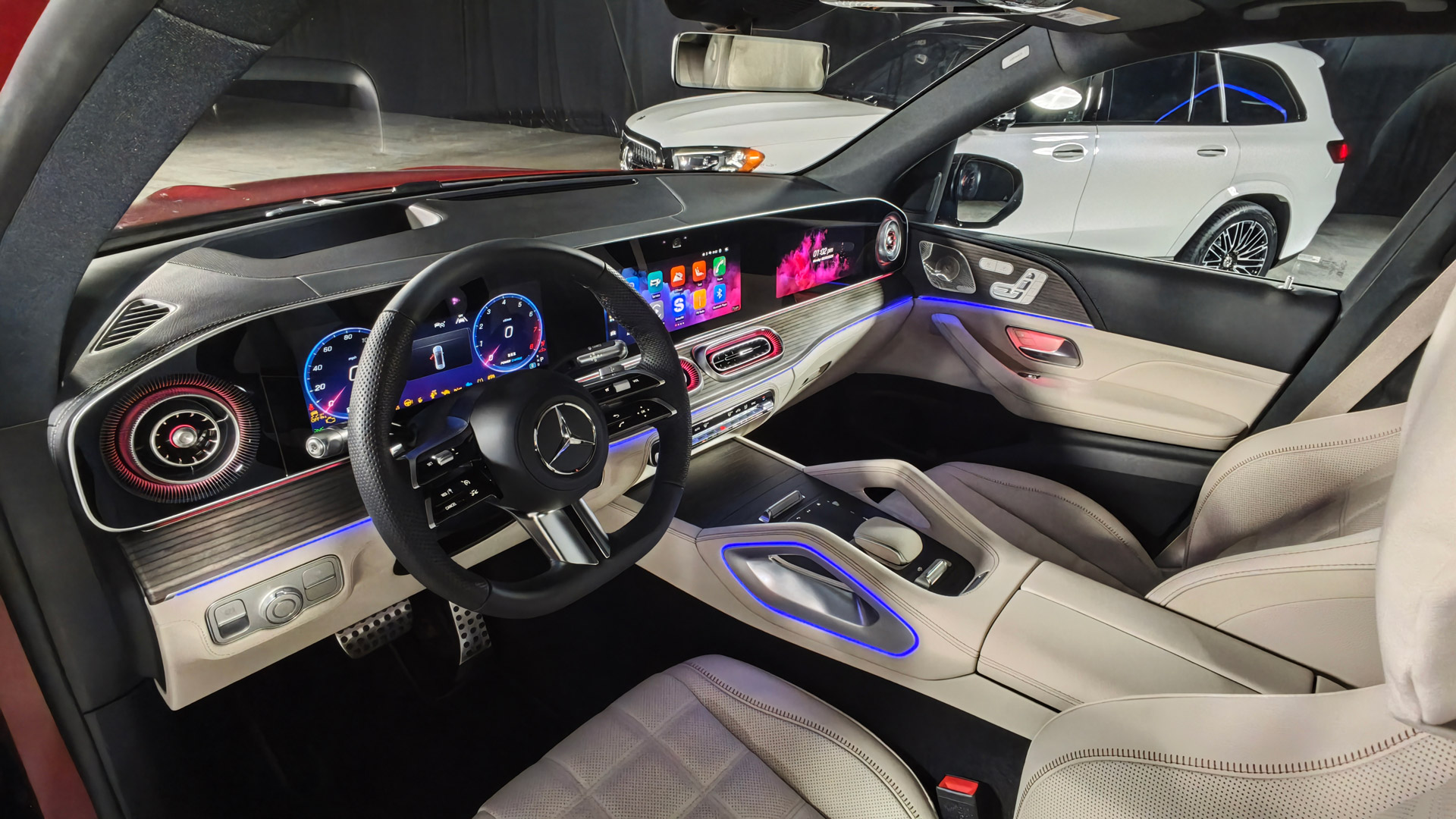
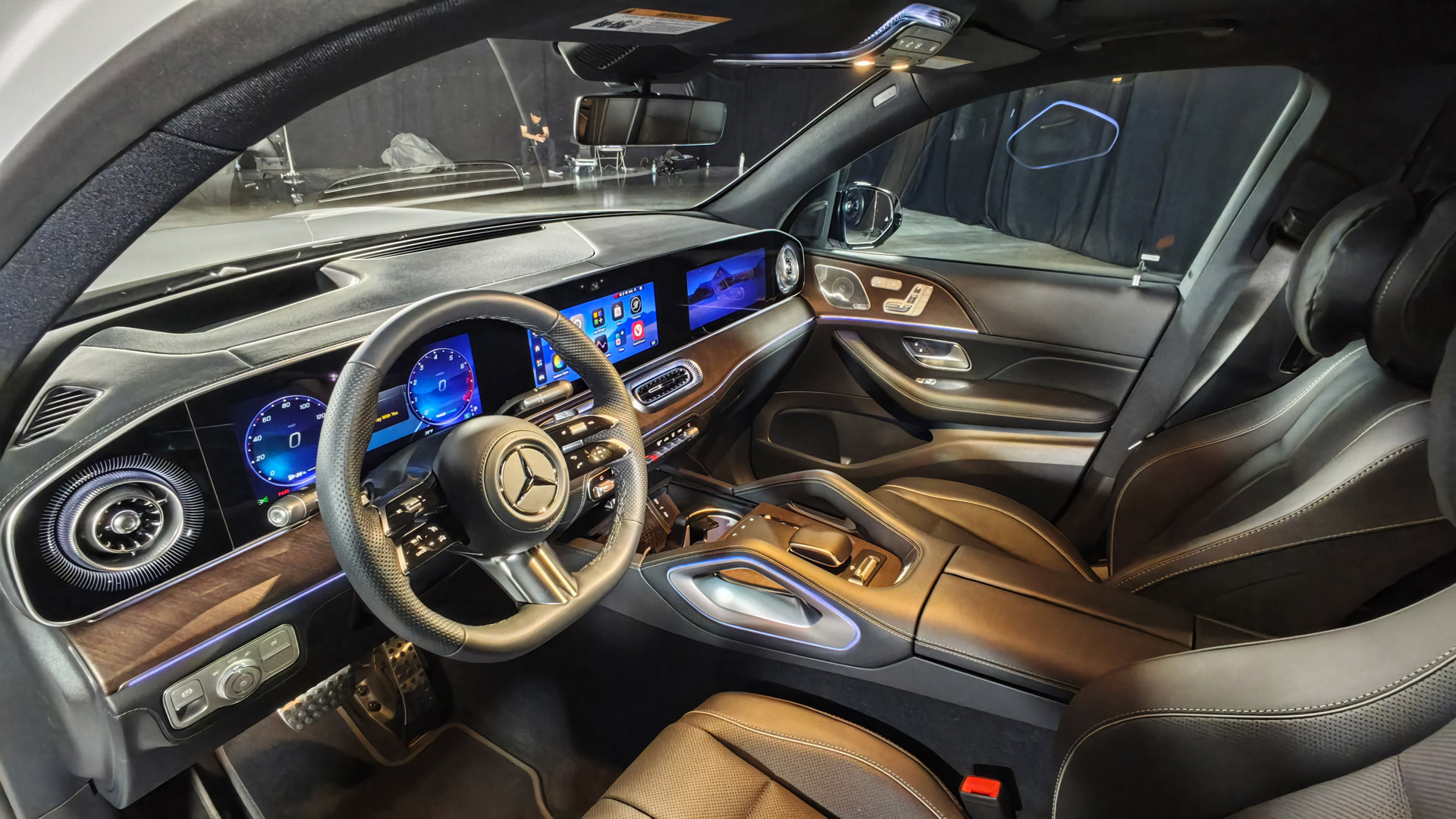
Like the all-electric CLA and GLC, the refreshed GLE and GLS feature a generative AI-powered voice assistant which uses OpenAI’s ChatGPT4o, Microsoft Bing Search, and Google Cloud’s Automotive AI Agent (for navigation) — depending on context. The MBUX Virtual Assistant can handle a whole range of natural language requests, from adjusting the climate and music to navigation and even general knowledge queries.
Mercedes’ MB.Drive Assist Pro, the company’s NVIDIA-powered point-to-point level 2+ advanced driver assistance system (ADAS), which launched on the all-electric CLA and GLC, is coming to the 2027 GLE and GLS, first in China, then in the US later this year. This ADAS is similar to Tesla’s ill-named full self-driving (FSD), but in addition to using ten cameras, it also uses five radar sensors and twelve ultrasonic sensors.
In all, the refreshed GLE and GLS show that drivetrain variations aside, it’s possible for all-electric, hybrid, and combustion vehicles to reach parity as SDVs when it comes to infotainment, navigation, comfort, and ADAS. Let’s hope that Mercedes fully embraces this exciting new technology and follows in Rivian and Tesla’s footsteps by releasing free monthly OTA updates to fix bugs and add new features to these new SDVs.
SDVs for all
What’s even more important is that SDVs are starting to extend beyond EVs and luxury cars. Manufacturers like Hyundai Motor Group are launching more affordable hybrid and combustion vehicles that are SDVs. The zonal architecture used by SDVs makes cars inherently less expensive to manufacture since it requires fewer hardware modules and much simpler wiring harnesses (less copper means less cost and less weight).
The South Korean Grandeur sedan and Europe-bound IONIQ 3 SUV are Hyundai’s first proper SDVs. Both cars run the company’s new Android Automotive-based Pleos Connect navigation and infotainment platform, and include Hyundai’s App Market and large language model (LLM)-powered Gleo AI voice assistant. Pleos Connect, the App Market, and Gleo AI will also be coming to Hyundai Motor Group’s future Kia and Genesis cars.
...while I believe that the future is all-electric, hybrid and combustion vehicles will be sticking around a little while longer
Right now, most of the affordable full SDVs being developed outside of China are EVs. Ford is working on its Universal Electric Vehicle (UEV) SDV platform which will initially underpin an all-electric small truck priced around $30,000. Volkswagen’s upcoming ID.1 city car, destined for Europe and priced below €20,000, is the company’s first SDV. Its zonal architecture and software stack are a direct result of VW’s partnership with Rivian.
Hopefully, these new EV-first platforms can also be adapted to manufacture more affordable hybrid and combustion SDVs. Because while I believe that the future is all-electric, hybrid and combustion vehicles will be sticking around a little while longer, at least here in the US. And considering the cost and feature benefits of SDVs, it would be a shame if manufacturers didn’t deploy this technology across all their upcoming vehicles.
My takeaway
Between 2018 and 2024, I owned two Tesla Model 3s, so I was able to enjoy the benefits of SDVs firsthand. There’s something utterly wonderful about finding an OTA software update waiting in your car every month, ready to deliver new functionality for free. Rivian aside, I have missed this on every other EV I’ve driven since, and because of this positive experience, I will forever associate SDVs with EVs.
But as Mercedes has shown with the refreshed GLE and GLS SUVs, the benefits of SDVs also extend to hybrid and combustion vehicles. SDVs allow the company to provide a consistent and modern user experience across its entire lineup, regardless of drivetrain. Not to mention, SDVs reduce costs and complexity for all manufacturers. As such, I’m looking forward to SDVs becoming the norm for more cars going forward.