The US military said it has launched its 10th consecutive round of strikes on Iran to force the reopening of the strait of Hormuz.
Earlier on Monday, Iran’s president said the country is in a “full-scale war” after the US expanded its aerial campaign and Tehran struck Washington’s Gulf allies, even as diplomats said talks to de-escalate were continuing.
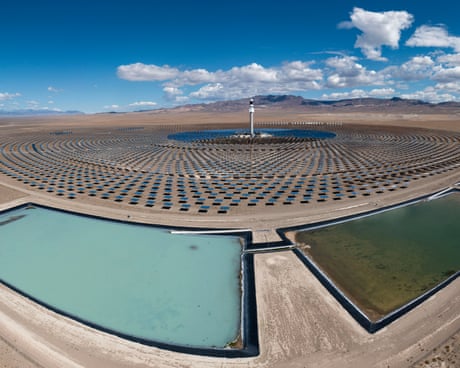
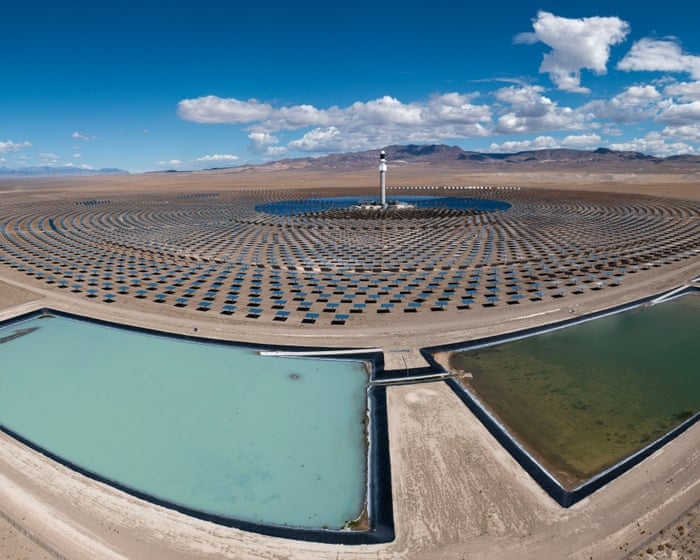
From Nevada to Manchester, developers are trialling innovative solutions to clean energy’s biggest challenge
In the deserts of the United Arab Emirates a sprawling clean energy project, stretching across an area roughly the size of 12,600 football fields, will play host to a breakthrough allowing solar energy to power the equivalent of half a million homes through the night.
The Gulf state has been steadily combining 5.2GW of solar power capacity with 19GWh of battery storage to create the largest battery scheme in the world.
Taiwanese prosecutors on Monday indicted a former deputy manager at Taiwan Semiconductor Manufacturing Company (TSMC) for allegedly stealing trade secrets involving technologies designated as national core technologies, with the intent to use them in China.
The defendant, identified by the surname Chen, faces charges under Taiwan’s National Security Act and the Trade Secrets Act. Prosecutors are seeking a seven-year prison sentence.
According to the indictment, Chen conspired with a Hong Kong national between 2023 and 2024 to establish CSMAC, a semiconductor materials analysis company in China. He is accused of copying 21 TSMC documents containing national core technologies and other proprietary trade secrets for use in the new venture.
TSMC, the world’s largest contract chipmaker and a key supplier to companies such as Nvidia and Apple, detected the unauthorized copying through an internal investigation and successfully recovered all duplicated documents. The Hong Kong co-conspirator was not prosecuted because he had died. Chen remains in custody, and Reuters was unable to reach him for comment. TSMC declined to comment on the case.
Prosecutors described this as Taiwan’s first indictment involving the alleged theft of trade secrets related to technologies officially designated as national core technologies for intended use in China.
The case underscores heightened concerns in Taiwan over China’s efforts to recruit Taiwanese semiconductor talent and acquire advanced chip know-how. In response, Taiwan has significantly tightened protections for technologies deemed critical to its economic and national security.
MacDailyNews Take: TSMC clearly plays a central role in the global semiconductor supply chain, making the protection of its intellectual property a matter of strategic importance far beyond Taiwan’s borders.
Please help support MacDailyNews — and enjoy subscriber-only articles, comments, chat, and more — by subscribing to our Substack: macdailynews.substack.com. Thank you!
In a major boost to American domestic manufacturing, the Trump Administration today announced that Taiwan Semiconductor Manufacturing Company (TSMC) is committing an additional $100 billion in investments for advanced semiconductor facilities in the United States. This brings TSMC’s total planned investment to $265 billion — one of the largest foreign direct investments in American history.
The announcement, made jointly by the White House and the Department of Commerce, highlights the success of strategic trade and investment partnerships, particularly the historic U.S.-Taiwan deal signed in January 2026. As a direct result, TSMC will build four additional advanced semiconductor manufacturing and packaging facilities, bringing its U.S. footprint to 12 leading-edge facilities, primarily in Arizona.
Building on Momentum
This latest expansion builds on previous commitments. TSMC’s original plans started at around $65 billion, which were later increased. The new infusion underscores sustained momentum under the current administration’s focus on reshoring critical supply chains.
In a statement, U.S. Commerce Secretary Howard Lutnick emphasized the job-creating impact, “President Trump’s leadership is driving companies to invest in American manufacturing. TSMC’s announcement of an additional $100 billion investment following our historic deal on trade and investment with Taiwan will create tens of thousands of American jobs and bring advanced semiconductor manufacturing back to America.”
TSMC Chairman and CEO Dr. C.C. Wei echoed the sentiment, crediting collaboration with the administration and strong U.S. customer demand, “We appreciate the strong collaboration and support of the Trump Administration, Secretary Lutnick and our leading U.S. customers… This is to support the strong multi-year demand from our leading U.S. customers, and we believe this investment will further foster the development of the U.S. semiconductor ecosystem, strengthen the supply chain, and support significant job creation in the United States.”
Economic and Strategic Impact
The investments are expected to generate significant construction and high-tech jobs, along with billions in indirect economic output. Beyond direct facilities, the broader U.S.-Taiwan trade and investment framework is catalyzing an additional $500 billion in Taiwanese investments — $250 billion in direct semiconductor and related enterprises, plus another $250 billion to strengthen the full supply chain in the U.S.
This move addresses long-standing concerns about reliance on overseas production for advanced chips, especially those critical for AI, defense, automotive, and consumer electronics. By expanding domestic capacity with a world-leading foundry like TSMC, the U.S. strengthens its position in the global semiconductor race while creating high-paying opportunities for American workers.
The Trump Administration’s approach, which combines diplomatic deals, incentives for onshoring, and a focus on national security, continues to yield concrete results in rebuilding America’s industrial base.
MacDailyNews Take: With 12 state-of-the-art facilities on track, America is poised to capture a much larger share of advanced chip production. This not only bolsters economic competitiveness, but also enhances supply chain resilience against geopolitical risks.
Please help support MacDailyNews — and enjoy subscriber-only articles, comments, chat, and more — by subscribing to our Substack: macdailynews.substack.com. Thank you!
iPhone 17 Pro and Pro Max feature a thermal management system that includes an Apple-designed vapor chamber, delivering exceptional performance.
Apple has significantly boosted its orders for vapor chamber cooling systems, primarily to support production of its highly anticipated first foldable iPhone, according to a Chinese supply chain leaker. The move also points to advanced thermal management in the company’s upcoming Twentieth Anniversary iPhone slated for 2027.
The information comes from the Weibo account “Fixed Focus Digital,” a source that has previously shared details about Apple’s foldable device. The increased orders will first go toward manufacturing the book-style foldable iPhone, internally referred to as the “iPhone Ultra,” which is on track for a September 2026 debut alongside the iPhone 18 Pro lineup.
Apple has reportedly instructed suppliers to prepare around 10 million units of the foldable iPhone for 2026, an increase from earlier projections of 7–8 million. This ramp-up signals strong confidence in the device’s production readiness despite the complexities of its folding mechanism.
Advanced Cooling for a Challenging Form Factor
Fixed Focus Digital previously indicated that the foldable iPhone would feature “impressive” vapor chamber cooling, with Apple “going all out” on its thermal design. This makes sense given the device’s expected thin profile when unfolded (rumored around 4.5–5mm) and the space constraints of a foldable chassis, which could limit traditional heat dissipation options.
Apple first introduced vapor chamber technology in the iPhone 17 Pro models last year. The system uses a small amount of deionized water to efficiently transfer heat away from the powerful A-series chip and spread it across the device’s aluminum frame, helping sustain high performance without thermal throttling.
The same cooling approach is now expected to extend to the foldable iPhone Ultra and potentially the 2027 anniversary iPhones, which are rumored to feature dramatic edge-to-edge displays with glass curving around all four sides for a nearly borderless look.
Broader Context and Timeline
The foldable iPhone is expected to include a 7.8-inch inner display, a 5.5-inch cover screen, an A20 chip, and a Touch ID power button, with pricing likely starting near $2,000. Recent reports confirm that mass production is underway, with key components like OLED panels already in production at Samsung Display.
Meanwhile, Apple’s 20th-anniversary iPhones are planned for two sizes similar to the iPhone 18 Pro models. These devices could mark a major redesign, potentially returning to an all-glass enclosure.
MacDailyNews Take: This latest leak aligns with Apple’s aggressive push into new form factors while maintaining the performance and reliability standards users expect from its flagship devices. As the September launch approaches, more details on the iPhone Ultra’s final specifications are likely to emerge from the supply chain.
Please help support MacDailyNews — and enjoy subscriber-only articles, comments, chat, and more — by subscribing to our Substack: macdailynews.substack.com. Thank you!
Now that the public beta for iOS 27 is available, even more iPhone and iPad users are going to be interested in experiencing the new operating systems while they’re under active development. And there’s good reason for this, iOS 27 and iPadOS 27 are both shaping up to be notable improvements to the operating systems, ... Read More
Apple is quietly shopping for AI chip companies. According to a new report from The Information, the company has been approaching chip startups and consulting with bankers about potential acquisitions — a notable shift for a firm long known for its reluctance to make big hardware buys.
The move comes as Apple grapples with limitations in its current AI infrastructure. Its Private Cloud Compute servers, which power parts of Apple Intelligence, currently rely on internally designed M2 Ultra chips. These have proven insufficient for handling larger, more demanding AI models.
The Siri Overhaul Problem
One concrete example stands out: Apple has been working on a major Siri overhaul powered in part by Google’s Gemini models through a partnership. When engineers tried running these advanced models on Apple’s own servers, the M-series hardware fell short. As a result, more complex Siri tasks are now routing through Nvidia GPUs hosted in Google’s cloud infrastructure.
This dependency clashes with Apple’s long-standing preference for controlling its own silicon and protecting user privacy through on-device and Private Cloud Compute processing.
Baltra Delayed
Internally, Apple has been developing its first dedicated AI server chip, codenamed Baltra. The company had originally targeted a 2026 launch, but the timeline has slipped. Baltra is designed as a purpose-built server ASIC (with Broadcom contributing key networking and interconnect technology) to reduce reliance on third-party GPUs for cloud AI workloads.
The reported pursuit of acquisitions suggests Apple wants to accelerate progress on its next-generation server silicon — either by bringing in specialized talent and IP or by acquiring teams that have already solved similar challenges.
A Rare Shift in M&A Approach
Apple has historically avoided large acquisitions, preferring to build technology in-house. Its most recent notable deal was the January 2026 acquisition of Israeli audio AI startup Q.ai (reportedly valued around $2 billion). With roughly $45.6 billion in cash and cash equivalents as of late March 2026, Apple certainly has the financial firepower if it chooses to move.
This new interest in chip startups marks a pragmatic acknowledgment that the AI hardware race — particularly in data center-scale inference and training — moves extremely fast. While Apple excels at designing efficient mobile and laptop chips, scaling specialized AI accelerators for servers is a different challenge that hyperscalers like Google, Amazon, and Meta have been tackling for years.
Broader Context
This development comes just days after Apple announced a major multi-year expansion of its partnership with Broadcom, worth more than $30 billion. The deal includes custom silicon components and supports U.S. manufacturing expansion in Colorado. It underscores Apple’s broader push to strengthen its custom silicon capabilities while also highlighting how much it still relies on external partners for certain advanced technologies.
What It Means
If Apple follows through on acquisitions, it could help close the gap in its cloud AI infrastructure faster than organic development alone would allow. Success here would support more ambitious on-device and private-cloud AI features without heavy dependence on external clouds and GPUs.
It would also represent a meaningful evolution in Apple’s strategy: from a company that largely designs its own chips from scratch to one willing to acquire specialized expertise to stay competitive in the AI era.
The coming months will reveal whether these discussions lead to actual deals — and whether they can meaningfully accelerate Apple’s ability to run sophisticated AI models on its own terms.
MacDailyNews Take: The mad scramble to catch up continues. Hopefully, new Apple CEO John Ternus can quickly kick things back into high gear after far too many years of coasting along in neutral.
Please help support MacDailyNews — and enjoy subscriber-only articles, comments, chat, and more — by subscribing to our Substack: macdailynews.substack.com. Thank you!
Devid Striesow, Axel Stein, Heike Makatsch and Torben Liebrecht in “Where’s Wanda?” season two, premiering October 21, 2026 on Apple TV.
Apple TV on Wednesday revealed first look images and the season two premiere date for celebrated German-language dark comedy series “Where’s Wanda?” Produced by UFA Fiction, the eight-episode season stars International Emmy Award nominee Heike Makatsch (“Love Actually”), German Comedy Award winner Axel Stein (“The Vault”), multiple award-winning actress Lea Drinda (“The Gryphon”), Leo Simon, and Nikeata Thompson (“Späti”). Season two will make its global debut on Apple TV with one episode on Wednesday, October 21, followed by a new episode weekly through Wednesday, December 9, 2026.
In season two, the Klatts (Makatsch and Stein) are back! Just as they thought their lives were finally returning to normal, their daughter, Wanda (Drinda), is caught seemingly red-handed standing over a dead body. They will need to do everything in their power to prove her innocence and avoid losing her again, as their investigation to find the real murderer takes them into the criminal underbelly of their sleepy suburban town. But will their quest to protect their family get them all out of trouble, or ultimately lead them further astray? And can they find out the truth of what happened on that fateful day before it’s too late?
Hailing from UFA Fiction, a Fremantle company, “Where’s Wanda?” season two is created, written and executive produced by Royal Television Society nominee Oliver Lansley (“Flack”), alongside multiple award-winning executive producer Nataly Kudiabor (“Arthur’s Law”) and Oliver Ossege (“Helgoland 513”). The series was co-created and based on a story by Zoltan Spirandelli (“Vaya con Dios”) and is directed by critically acclaimed, award-winning filmmakers Tobi Baumann (“Faking Hitler”) and Christian Ditter (“How To Be Single”).
Following its global debut, “Where’s Wanda?” has been hailed as an “electrifying,” “standout” series keeping “viewers on the edge of their seats” with “a unique blend of dark comedy and suspense,” and featuring “immensely likable, and often affecting performances” by its “talented cast.” Season one achieved a rare perfect 100% critics’ score on Rotten Tomatoes. Fans applaud the “beautiful” show as the “kind of gem Apple only seems capable of creating” and “a compelling new addition” to Apple TV’s “expanding international offerings.”
Apple TV offers premium, compelling drama and comedy series, feature films, groundbreaking documentaries, and kids and family entertainment, and is available to watch across all of a user’s favorite screens. After its launch on November 1, 2019, Apple TV became the first all-original streaming service to launch around the world, and has premiered more original hits and received more award recognitions faster than any other streaming service in its debut. To date, Apple Original films, documentaries and series have been honored with 850 wins and 3,737 award nominations and counting including multi-Emmy Award-winning and history-making comedies “The Studio” and “Ted Lasso,” global cultural phenomenon “Severance,” Apple’s most-viewed drama “Pluribus,” Academy Award Best Picture winner “CODA” and Academy Award winner “F1,” the highest-grossing sports feature of all time.
MacDailyNews Note: Apple TV is available on the Apple TV app in over 100 countries and regions, on over 1 billion screens, including iPhone, iPad, Apple TV 4K, Apple Vision Pro, Mac, popular smart TVs from Samsung, LG, Sony, VIZIO, TCL and others, Roku and Amazon Fire TV devices, Chromecast with Google TV, PlayStation and Xbox gaming consoles, and at tv.apple.com, for $12.99 per month with a seven-day free trial for new subscribers. For a limited time, customers who purchase and activate a new iPhone, iPad, Apple TV 4K or Mac can enjoy three months of Apple TV for free.
Please help support MacDailyNews — and enjoy subscriber-only articles, comments, chat, and more — by subscribing to our Substack: macdailynews.substack.com. Thank you!
With its new architecture and capabilities, the next generation of Apple Intelligence powers helpful features across the system, simplifying the things users do every day.
China’s cyberspace regulator has officially registered Apple’s on-device generative AI service, Apple Intelligence, for use in the country. This marks a significant step toward the long-awaited launch of the feature for Chinese consumers.
According to Reuters, “China’s cyberspace regulator said on Wednesday that Apple’s on-device generative AI service, Apple Intelligence, has been registered for use on iPhones in China, paving the way for the long-anticipated rollout of the service in the country.”
China mandates that companies register large language models and generative AI services with regulators before making them available to the public. This approval positions Apple to finally introduce its AI capabilities in one of its most important markets.
The service will integrate local AI expertise. Reuters reports, “Apple Intelligence will incorporate capabilities from AI models developed by Baidu and Alibaba, a source familiar with the matter said, speaking on condition of anonymity.”
Alibaba confirmed its involvement in a statement to Reuters: “Its Qwen model will be integrated into Apple Intelligence across Apple’s iPhone (iOS), iPad (iPadOS), Mac (macOS) and Vision Pro (visionOS) operating systems in China.”
A Baidu spokesperson also noted, “Apple is also working with Baidu to develop Apple Intelligence features for Chinese iPhone users.”
The regulator’s statement provided no specific launch date for Apple Intelligence in China.
This development comes at a crucial time for Apple in China, where the company reported a 24.4% year-on-year increase in shipments in the second quarter. The rollout of Apple Intelligence could further strengthen its competitive position in a market where consumers have eagerly awaited these AI features.
MacDailyNews Take: Clearly good news for Apple and should be for Apple’s – and Alibaba’s – stock prices, too.
Please help support MacDailyNews — and enjoy subscriber-only articles, comments, chat, and more — by subscribing to our Substack: macdailynews.substack.com. Thank you!
OpenAI, the company behind ChatGPT, the AI for newbies who don’t know better alternatives exist, is stepping into consumer hardware with its first device: a movable, screen-free smart speaker designed as an always-on AI companion for the home. According to a Bloomberg News report, the product — still in development — aims to control smart-home devices, play media, answer questions, handle messages, and leverage ChatGPT’s capabilities.
This sounds innovative on paper, especially with the promise of a more “humanlike” AI presence. But let’s be clear: Amazon, Google, and Apple pioneered this category years ago. OpenAI isn’t breaking new ground here — it’s trying to catch up to a market these giants have dominated for nearly a decade.
Apple’s HomePod mini
The Smart Speaker Revolution Started Long Before ChatGPT
Amazon lit the fuse in 2014 with the original Echo and Alexa. What began as a cylindrical speaker that could play music, set timers, and answer basic questions quickly evolved into a full ecosystem. Echo devices now control lights, thermostats, door locks, and more — exactly the smart-home hub role OpenAI envisions. Amazon iterated relentlessly with cheaper Dots, portable versions, and premium models, shipping hundreds of millions of units and embedding Alexa into countless third-party devices.
Google followed in 2016 with Google Home (later Nest Audio and similar), emphasizing superior search integration and natural language understanding powered by its vast data resources. These speakers became central to many households for information, entertainment, and automation. Apple entered the fray in 2018 with the HomePod, focusing on premium audio quality and tight integration with its ecosystem, later adding the more affordable HomePod mini.
By the time OpenAI is targeting a potential 2027 launch for its device, smart speakers will have been mainstream for over a dozen years. The core features OpenAI highlights — voice interaction, media playback, smart-home control, and AI assistance — are table stakes that consumers already expect.
What’s New (or Not So New) with OpenAI’s Approach?
The Bloomberg News description by Mark Gurman positions OpenAI’s speaker as a “new type of home computer for the AI era,” movable and screen-free for ambient use.
Earlier reports suggest possible camera integration for environmental awareness, object recognition, and even facial recognition for purchases — features that echo (pun intended) what existing devices already offer or are evolving toward. Many current smart speakers and displays already include cameras, microphones that listen continuously (with privacy toggles), and advanced AI for proactive suggestions.
OpenAI’s edge is presumably its cutting-edge language models, potentially enabling more conversational, context-aware interactions than today’s assistants. Yet even here, competitors aren’t standing still: Google has integrated Gemini, Amazon continues enhancing Alexa with generative AI, and Apple is finally significantly deepening Siri with on-device intelligence in its ecosystem.
Privacy Concerns Loom Large, Especially Versus Apple
One area where OpenAI’s entry raises fresh questions is privacy. An always-listening, camera-equipped AI companion that processes conversations, surroundings, and potentially personal interactions could amass intimate data about users’ daily lives. OpenAI has faced broader scrutiny over how it handles training data and user inputs with its models, and a device that lives in the home would amplify those risks — including potential data sharing, advertising uses, or breaches.
In contrast, Apple has long positioned itself as a privacy leader in the smart speaker space. HomePod devices prioritize on-device processing where possible, use randomized identifiers instead of linking data to user accounts, and offer straightforward controls to delete Siri history. Apple’s ecosystem design generally minimizes cloud transmission and avoids using customer data for ad targeting in the same way its competitors do. OpenAI, as a newer hardware player heavily reliant on cloud-based AI, will need to earn similar trust — something that could prove challenging given the always-on nature of the proposed companion.
Challenges Ahead for the Newcomer
OpenAI enters a crowded, mature market where hardware margins are thin, privacy concerns run high, and user loyalty to existing ecosystems (Amazon for shopping, Google for search, Apple for seamless device handoff) is strong. Building reliable hardware at scale, managing always-listening microphones and potential cameras responsibly, and competing on price (rumored $200–$300 range) won’t be trivial.
History shows that smart speakers succeeded because they solved simple, everyday problems affordably and reliably — not because they promised revolutionary AI companionship. OpenAI’s version may feel more “alive” thanks to advanced models, but it risks being perceived as a me-too product unless it delivers truly standout experiences that justify switching or adding yet another device to the home.
MacDailyNews Take: In the smart speaker space, OpenAI following well-trodden footsteps laid by Amazon, Google, and Apple. The real test will be whether ChatGPT can make the familiar feel fresh enough to stand out — while addressing privacy headwinds that Apple has long navigated more cautiously.
Our prediction is that it won’t.
OpenAI has always been skeevy, from eschewing its open source roots to Sam Altman to desperately overpaying for a washed Jony Ive. Just plain skeevy.
If ever a Skynet would arise, we expect it would spring from the diseased loins of OpenAI. – MacDailyNews, July 13, 2026
Please help support MacDailyNews — and enjoy subscriber-only articles, comments, chat, and more — by subscribing to our Substack: macdailynews.substack.com. Thank you!
Apple has released the first public beta of iOS 27, giving eager iPhone users an early look at the year’s most significant software update. Launched on July 13, 2026, the beta introduces a vastly improved Siri powered by Apple Intelligence, along with speed enhancements, refined visuals, and thoughtful updates to everyday features.
How to Install the iOS 27 Public Beta
Joining the beta is straightforward and free through Apple’s Beta Software Program — no developer account required.
Back up your iPhone first (via iCloud or a computer), as betas can bring bugs, battery drain, or app issues.
Visit beta.apple.com, sign in with your Apple ID, and enroll.
On your iPhone, go to Settings > General > Software Update > Beta Updates.
Select iOS 27 Public Beta.
Return to the Software Update screen and tap Update Now when available.
Apple recommends testing on a secondary device. iOS 27 supports iPhone 11 and newer models (including SE 2nd generation and later). Full Apple Intelligence features, including advanced Siri AI, require iPhone 15 Pro or newer.
Siri AI Steals the Spotlight
The biggest highlight is the complete overhaul of Siri, now rebuilt as Siri AI on the next-generation Apple Intelligence foundation. It supports natural, ongoing conversations, understands on-screen content, searches your personal data across apps like Mail, Messages, Notes, and Calendar, and performs actions within apps.
• Responses appear in the Dynamic Island; pull down for full conversation view.
• A new standalone Siri app stores conversation history (synced privately via iCloud).
• Camera integration adds a Visual Intelligence mode for tasks like turning barcodes into Wallet passes or importing events from flyers.
• New voice controls let you adjust pace and expressivity.
Siri AI starts with select English variants and is unavailable in the EU at launch. Some advanced features need the latest flagship iPhones.
Apple Intelligence Expands Across Apps
Beyond Siri, Apple Intelligence brings smarter tools to several core apps:
• Safari: Auto-organizes tabs by topic, groups bookmarks and Reading List items, offers “Notify Me” for stock alerts or page changes, and can generate custom extensions from natural language prompts.
• Photos: New Clean Up for complex objects, Extend to generate content beyond frame edges, and Spatial Reframing to adjust perspective post-capture.
• Passwords: Automatically updates weak or compromised passwords with Live Activity progress.
• Shortcuts: Build automations from plain-language descriptions.
• Additional perks include Call Context in Phone, photorealistic image generation in Image Playground, and natural-language Calendar editing.
Liquid Glass Gets More Customizable
iOS 27 refines last year’s Liquid Glass design for better clarity and flexibility. Controls better diffuse backgrounds, with improved contrast for readability. The standout new feature is a customization slider in Settings > Appearance that adjusts tint and translucency system-wide, from ultra-clear to fully opaque.
Performance Upgrades for All iPhones
Apple promises noticeable speed gains even on older devices:
• Apps launch up to 30% faster.
• AirDrop transfers up to 80% faster.
• New Photos captures appear up to 70% faster.
Optimizations to the CPU scheduler benefit iPhone 11 and newer. Expect smoother unlocking, navigation, scrolling, and better network switching. Search in Spotlight, Photos, and Mail has also been rebuilt.
Redesigned Screen Time and Enhanced Child Safety
Parents get a major upgrade with a clearer dashboard, one-tap controls, category-based Time Allowances, and flexible Schedules (school days, evenings, weekends). New Ask to Browse extends permissions to websites, while Communication Safety now flags gore and violence in addition to nudity. Full features require all Family Sharing devices on iOS 27.
Other Notable Features
• Messages: Background media sending and consolidated Tapback notifications.
• Photos: Full-resolution Shared Albums, cross-platform support, keywords, star ratings, and custom slideshows.
• Save any video frame as a photo.
• Independent alarm volume control.
• Extra-large widgets that fill entire Home Screen pages.
• AirPods custom equalizer.
• Direct GymKit connections and improved FaceTime/Home features on supported hardware.
MacDailyNews Take: The public beta will evolve through the summer, with the final release expected this fall alongside new iPhones. Users can report issues via the Feedback Assistant app.
Currently, iOS 27 public beta feels like a polished, user-focused OS that meaningfully advances AI capabilities while making the iPhone faster and more enjoyable for everyone. Early testers should proceed with caution, but will in most cases likely be impressed by the refinements already in place. Again, use a secondary device for testing iOS 27 public beta.
Please help support MacDailyNews — and enjoy subscriber-only articles, comments, chat, and more — by subscribing to our Substack: macdailynews.substack.com. Thank you!
TIFF 2026 will open with Siân Heder’s “Being Heumann,” the Apple Original Films drama starring Ruth Madeley as pioneering disability rights activist Judy Heumann.
The film, Heder’s follow-up to her Oscar-winning “CODA,” chronicles the 1977 Section 504 sit-in protest that helped secure accessibility rights.
The 51st Toronto International Film Festival runs September 10–20, 2026.
Being Heumann follows Heumann as she leads more than 100 disabled people to take over the San Francisco Federal Building, kicking off a 28 day sit-in in 1977. The protestors form a tightly bound community, refusing to leave until the government enforces section 504 of the Rehabilitation Act, which required all federal spaces to become accessible.
Heder and Rebekah Tussing adapted the memoir. Mark Ruffalo, Dylan O’Brien, Jon Beavers, Rob Delaney, Ray Fisher and more star in the pic. David Permut, Heder, John W. Beach, Kevin Cleary and Kevin J. Walsh produce.
“We’re thrilled to open this year’s festival with Siân Heder’s inspiring follow-up to her Oscar-winning CODA,” TIFF CEO Cameron Bailey said. “Being Heumann features an electric performance from Ruth Madeley in the story of Judy Heumann, a world-changing advocate for accessibility.”
MacDailyNews Note: Apple Original Films has not yet released an official trailer for Being Heumann. An official teaser or trailer from Apple is expected closer to the film’s opening night at the 2026 Toronto International Film Festival on September 10th.
Please help support MacDailyNews — and enjoy subscriber-only articles, comments, chat, and more — by subscribing to our Substack: macdailynews.substack.com. Thank you!
In a challenging quarter for the global smartphone industry, Apple has once again demonstrated why the iPhone remains a powerhouse brand. According to recent data from IDC, while overall smartphone shipments tumbled, Apple’s shipments surged—highlighting the company’s strategic resilience in the face of rising costs and weakening demand.
The Broader Market Struggles
The second quarter of 2026 was tough for the smartphone sector. Globally, shipments fell 6.7% year-over-year to approximately 277.5 million units, marking the second consecutive quarter of decline. In China—the world’s largest smartphone market—shipments dropped 4.3% to 66 million units, extending a streak of five straight quarterly declines.
A key culprit? The ongoing memory crisis. DRAM and NAND flash costs have skyrocketed (up nearly 300% in some cases), squeezing manufacturers who rely heavily on low-end devices. Many Android vendors responded by raising prices or trimming budget models, which discouraged consumers from upgrading. Government subsidies that previously propped up demand also began to fade.
This created a polarized market: low-end segments contracted sharply, while premium players with stronger supply chains and brand power pulled ahead.
Apple’s Standout Performance
Against this backdrop, Apple shone brightly. In China, iPhone shipments grew a remarkable 24.4% year-over-year, boosting Apple’s market share to 18.1% (second place behind Huawei). Globally, reports indicate Apple achieved its strongest-ever Q2 for iPhone shipments, with growth in the range of 3-24% depending on the source, pushing its worldwide share toward record highs around 20%.
Why the success? Several factors converged:
• Price Stability: While competitors hiked prices due to component costs, Apple held steady. This gave hesitant buyers a compelling reason to purchase rather than delay.
• Strong Demand for iPhone 17 Series: Early signaling of potential future price increases encouraged preemptive buying. The latest lineup delivered one of Apple’s strongest refresh cycles.
• Premium Positioning: Apple’s focus on high-end devices insulated it from the low-end crunch. Memory costs represent a smaller portion of its bill of materials, and its locked-in supply chain provided an edge.
• Brand Loyalty and Promotions: In China, targeted discounts and promotions (especially ahead of the 618 shopping festival) amplified momentum, even as the overall market softened.
IDC analysts noted that Huawei and Apple were the only major vendors posting growth in China, thanks to holding prices while others raised theirs. Arthur Guo, Senior Analyst at IDC China, highlighted how this dynamic gave buyers a “reason to go ahead and purchase.”
What This Means for the Industry
The memory crisis is accelerating a two-tier market. Premium brands like Apple and Samsung are expanding share by leveraging scale, supply security, and desirable features. Mid- and low-tier vendors face painful adjustments—shifting toward higher-margin models while struggling to convince price-sensitive buyers to pay more.
For Apple, this isn’t just survival, it’s dominance. With iPhone shipments hitting record Q2 levels amid a downturn, the company is well-positioned for the rest of 2026. Analysts project Apple’s full-year market share could reach a historic 22%.
MacDailyNews Take: Challenges remain, of course. Cost pressures could intensify later in the year, and competition (especially from Huawei in China) is fierce. Yet Apple’s ability to thrive where others falter underscores a timeless truth in tech: premium experiences, strong ecosystems, and smart pricing win loyal customers, even in tough times.
As the smartphone market navigates this memory-induced turbulence, Apple’s iPhone success story offers a masterclass in resilience. For investors, fans, and competitors alike, it’s a reminder that not all phones are created equal.
Please help support MacDailyNews — and enjoy subscriber-only articles, comments, chat, and more — by subscribing to our Substack: macdailynews.substack.com. Thank you!
OpenAI has replaced its Mac apps with a confusing 1.45 GB amalgamation, killed its ChatGPT Atlas Web browser after less than a year, and boosted ChatGPT Voice by backing it with more capable models.
Apple has opened the public beta program for MacOS 27 Golden Gate to all curious Mac users. While betas are typically best reserved for advanced users due to being buggier and less stable than final builds, the public beta program offers an opportunity for users to experience beta development and upcoming features, ahead of the ... Read More
Apple has launched the public beta program for iOS 27, making the upcoming iPhone operating system available as a beta to all interested users. Beta system software tends to be buggier and less refined than final versions, and is generally best reserved for advanced users, but the public beta is fairly stable, and made available ... Read More

 Login