If you want an artificial intelligence tool to book a flight or buy an audiobook, it usually needs to log into your personal accounts. Sharing your private login details directly with a chatbot feels risky, but a new software update changes that process entirely. The popular password manager 1Password just built a clever way for […]
Moonshot AI’s Kimi K3 offers 2.8 trillion parameters and planned open weights, raising new questions about AI costs, control, and US-China competition.
Public backlash to AI is intensifying — and transforming into real-world attempts at physical violence. Industry leaders are fearing for their lives.
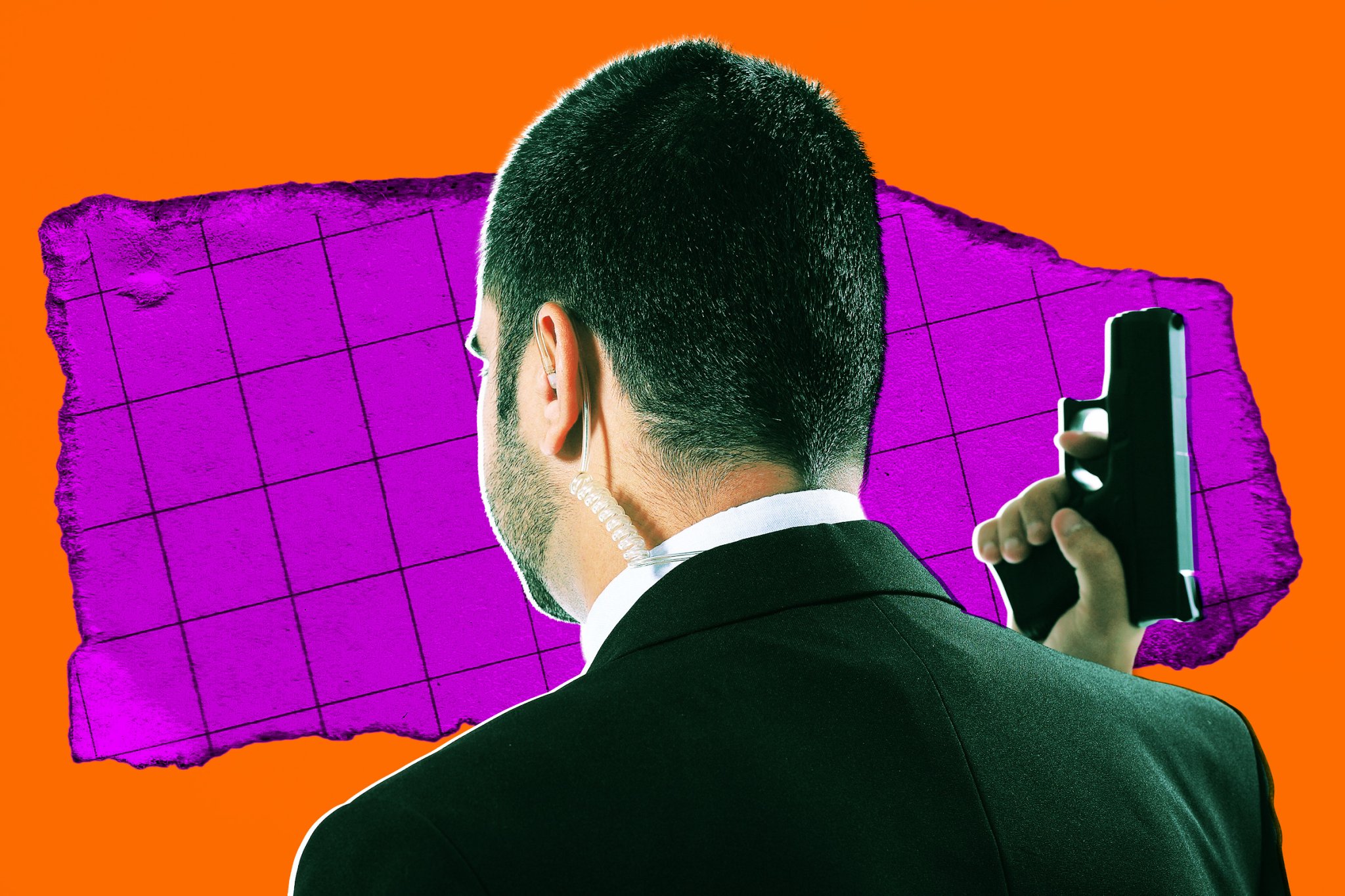
Leading AI companies and their top executives are beefing up security, the Wall Street Journal reports, as escalating anti-AI industry sentiment is culminating in threats and attempts of violence against the people and ventures building leading AI models. Some executives are even traveling with armed guards, while others have taken to keeping a lower public profile.
“Tech CEOs, a few years ago, definitely did not have security,” Dakota Dominguez, an executive at the Silicon Valley-based security firm JPT Security, told the WSJ. “A lot of tech companies now are incorporating that into their budgets.”
Earlier this year, the AI industry was shaken when a 20-year-old anti-AI activist named Daniel Moreno-Gama, armed with a gun and a Molotov cocktail, unsuccessfully tried to firebomb the home of OpenAI CEO Sam Altman. No one was injured, but the high-profile incident followed a string of violent threats and at least one OpenAI lockdown.
OpenAI isn’t alone. Per the WSJ, around the time that Altman’s home was targeted, OpenAI rival Anthropic faced a close call when a man snuck into its headquarters behind an employee carrying an envelope with an executive’s name on it. The man reportedly then told a guard that the executive was “going to be killed.” The man was stopped before anyone got hurt.
All in all, it’s easy to see why tech leaders are budgeting for beefed up security.
Not all anti-AI sentiment has manifested in attempted physical violence. Activists have also shut down data centers, taken down AI-powered surveillance cameras, and protested outside AI company headquarters. As the fight over AI data centers heats up, some polls have shown that AI is less popular with Americans than Immigration and Customs Enforcement. People fear that AI will result in mass layoffs, a further consolidation of wealth and power, or even a catastrophic apocalypse — outcomes that many leaders in the AI industry have issued warnings about.
“That’s why people are setting warehouses on fire,” a former Pinterest employee named Bonnie Kate Wolf, who was laid off during an AI-focused restructuring, told the WSJ. “You can’t go back to serfdom. It really feels like the people in power want to be kings. Historically, that doesn’t work out for kings.”
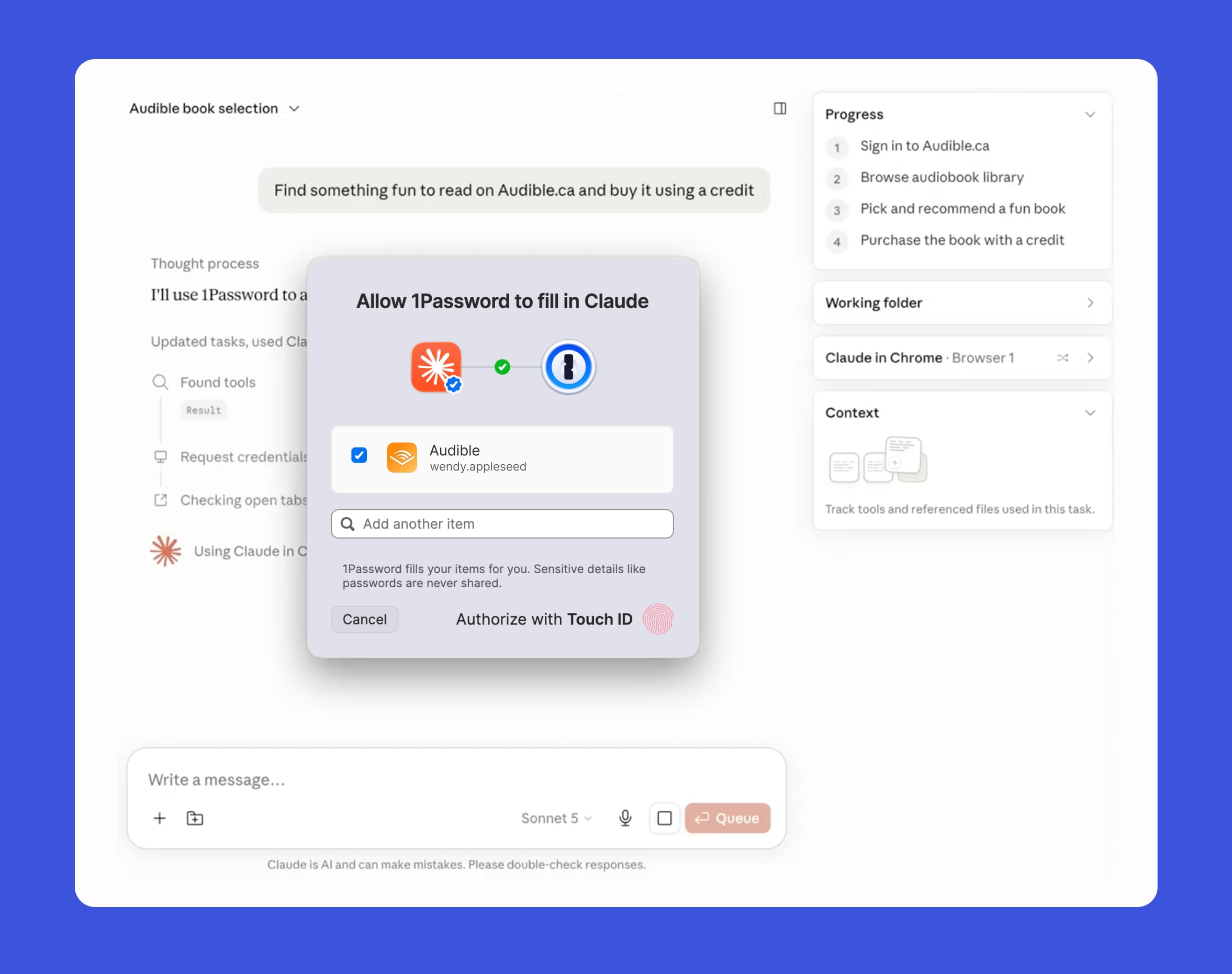
Popular password management app 1Password today added Claude support, which means AI service Claude can access credentials stored in 1Password for completing browser tasks.
With the integration, Claude can use 1Password logins and one-time codes without the actual password being exposed to Claude. Passwords never reach Claude's context, memory, or Anthropic's systems.
When Claude wants to sign in to a website, 1Password shows the user which credential Claude wants access to and why. After the user approves the request, 1Password adds the credential directly to the page. Access is limited to the current task and ends when the task has been completed. The 1Password team says that after a password is autofilled, the app checks to make sure secrets were not exposed on the page.
Credit cards and identities in 1Password are not supported at the current time, so Claude's access is limited to logins and one-time codes.
The 1Password browser extension is also being updated with Agentic Mode, which gives users control over browser-based AI agents. When an AI agent takes over, the 1Password extension locks down so passwords are not exposed. The password interface is hidden, and the agent can use logins and one-time codes only when the user gives approval. Agentic Mode works to protect passwords from AI agents even if the integration is not set up.
1Password for Claude is available for Mac, and 1Password business, family, and individual plan subscribers can use it. A Pro, Max, Team, or Enterprise Claude plan is required. 1Password has a help document with detailed information on how to set it up.
Claude can use 1Password logins across sites where Claude in Chrome can complete actions. The 1Password desktop app and browser extension are required, as are the Claude desktop app and the Claude in Chrome browser extension.
1Password has launched a new browser integration for Claude that allows the Anthropic chatbot to access stored security credentials like usernames and passwords. The 1Password for Claude feature means that users can authorize Claude to complete multi-step tasks like booking travel and managing online accounts on their behalf without having to manually input their login credentials, but without actually exposing your security information to Anthropic's AI models, according to 1Password.
That's made possible by a new "zero-exposure security framework" developed by 1Password, which works by injecting the required credentials for each task thro …
Anthropic is doing what Anthropic does best: putting on its most concerned face so it can convince you they’re the good guys in the industry.
Last week, the world’s most valuable AI startup revealed a new commercial that took an unorthodox approach to promoting its technology. Rather than diving straight into bubbly optimism, it starts with a series of grim images as we hear voiceovers from different speakers ask some hard-hitting questions about AI.
You couldn’t blame someone for thinking they were watching a PSA. It starts with a burning house — which always bodes well. When someone asks, “Can AI be trusted?” we’re shown what looks like surveillance footage with an AI algorithm scanning the faces of everyone in a crowd.
The most striking sequence comes right after.
“Who’s going to hit the brakes if we need to?” another voice says. Then it cuts to an image of a cemetery lined with hundreds of headstones.
You don’t need to ask Claude to explain this one to you. Anthropic is clearly acknowledging the fear that AI could kill us all.
I think the questions on everyone's mind is, can Anthropic be trusted? https://t.co/OTExfm2lXl
— terminally onλine εngineer (@tekbog) July 14, 2026
But this is actually a feel-good story — at least in the eyes of Anthropic. The tagline, “There’s hope in hard questions,” assures the viewer that their concerns over AI — like its potential to destroy jobs or erode or ability to think — are all perfectly valid, but more importantly, that these are questions which Anthropic’s leaders are keeping themselves up at night grappling with.
“People have a lot of hard questions about AI,” an announcement from the company states. “It’s our job to address them.”
The commercial, which aired during the World Cup quarterfinal clash between Argentina and Switzerland over the weekend, quickly drew criticism online. One viral post mocked the thinking behind the ad, writing, “When we raise the question of stopping a dangerously powerful superintelligence we show 300 American gravestones for half a second.”
Even OpenAI CEO Sam Altman fired a shot.
“i thought this was satire,” he wrote in his typical all-lowercase style.
The ad is Anthropic in a nutshell. A key part of the company’s mythology is that it was founded by former OpenAI employees who wanted to focus on safe AI development. CEO Dario Amodei claims that he could’ve been the one to release a chatbot that changed the world instead of OpenAI with ChatGPT, but held off because he was too concerned about the tech’s risks.
Those may seem like counterproductive things for the creator of one of the most widely used chatbots in the world to say. But it all serves a very deliberate point. By being the ones that doomsay about AI the most, Anthropic can also present itself as the only company that can be trusted to develop it.
Its actual track record suggests otherwise. In February, it dropped a key safety pledge that vowed it would stop training an AI system if it couldn’t guarantee it had proper guardrails in place. And while it fought with the Pentagon against its tech being used in mass surveillance and autonomous weaponry, it emerged that its Claude AI was being used to select strike targets in Iran.
Anthony Albanese will deliver a landmark speech on AI this week as MPs are torn between attracting datacentre investment and protecting the rights of creatives
When Anna Funder stood before a pack of journalists at Parliament House this month, she presented herself not just as a writer but also a “victim of crime”.
The Stasiland author was using the analogy to illustrate how technology companies have flagrantly “hoovered up” her literary works for their own profit.
The head start that the US companies enjoyed in the AI race is quickly vanishing. Chinese competitors are now nipping at their heels, and it’s causing a wave of anxiety in the American sector.
Over a year ago, DeepSeek spurred an existential crisis — and a mass stock selloff — in the US tech industry when it released a competitive AI model created for a fraction of the cost of the leading American models.
If that was a wakeup call, then the release of GLM-5.2 last month is loudly banging on the front door. The model, from the Chinese start-up Z.ai, has been hailed as nearly or just as powerful as frontier US systems, especially when it comes to its coding capabilities and cybersecurity applications — while being significantly cheaper to use.
It’s generated heaps of discussion in tech circles. Marc Andreessen, one of Silicon Valley’s foremost venture capitalists, tweeted that “AI insiders are saying GLM-5.2 is the first Chinese AI model to match and often beat the American big lab public AI models with no compromises.”
Perhaps betraying their sense of a weakening grip on the field, US companies are crying foul about China’s AI ascension. Earlier this year, Anthropic accused China’s DeepSeek, Moonshot, and MiniMax of using a technique called distillation to illegally gather data to imitate its models, which is essentially claiming that they cheated their way to the front of the pack.
In distillation, a weaker “student” model is trained on the outputs of a more advanced “teacher.” AI labs routinely use this to create smaller and more efficient versions of the their largest systems, but Anthropic says Chinese firms are abusing the trick in a mass coordinated effort involving tens of thousands of accounts that probe its models for data that it can extract and use to train their own AI models, thereby effectively pilfering Anthropic’s tech. These claims were relitigated last month, when Anthropic sent a letter to US senators accusing Chinese titan Alibaba of also engaging in this practice.
“These distillation attacks are carried out illicitly, systematically and at industrial scale to harvest US AI capabilities across frontier labs and repackage them as their own,” Anthropic told the senators, per the New York Times.
But Anthropic may be wasting its breath. Distillation is an open secret among rivals in the US tech sector. And as the NYT notes, it’s not even clear if it’s illegal. Unless some court rulings go their way, US firms will have to rely on their own countermeasures to stop it. (Anthropic was caught trying to do this by secretly embedding code in its Claude Code model that allowed it to spy on Chinese users, creating alarm among its customer base.)
American firms could also benefit for some geopolitical strong-arming, such as the US cutting off China’s access to its powerful AI chips, or even blocking Americans from accessing Chinese models (which isn’t as far-fetched as it may sound, when you consider that the US threatened banning TikTok as a way of forcing China’s ByteDance into divesting its US operations, or that it’s also effectively banned Chinese electric vehicles, which are far cheaper than American ones, with prohibitively high tariffs).
Chinese firms may very well have used surreptitious measures to help catch up to the US, but according to the NYT, many experts believe that a distillation crackdown would be meaningless, as building a model as advanced as Z.ai’s can’t be explained by distillation alone. US firms may simply have to accept that their Chinese counterparts are now on equal footing. The complaining about distillation is a convenient distraction at a time when their coding products are under more scrutiny for being too expensive to use as they get deployed in corporate settings — or perhaps a desperate plea for the US government to intervene and rescue them from the horrors of global, free market competition.
Anthropic’s new Claude Tag brings an always-on AI teammate to Slack. But beyond productivity, the feature is a strategic play to capture organizational context, institutional knowledge, and enterprise workflows.
Does a thought-experiment about US ascendancy in the technology say as much about AI jitters as it does about the reality?
It’s 2031 and the US and China are about to tear Europe into pieces.
The US ploughed vast sums into datacentres and the EU did not. China built robots and Europe did not. American companies “restructured” their workflows around AI and fired people, while EU workers went on long lunch breaks and handed over administrative tasks to the AI model Claude.
For the last 30 years, stopping the flow of cybersecurity-related software has proven to be ineffective. It's unclear why it would work now with Anthropic’s cybersecurity model Mythos.
Just as last week was ending, the US government forced Anthropic to pull its two newest models, Fable 5 and Mythos 5, citing national security concerns after Amazon researchers allegedly found a way to bypass Fable 5’s guardrails. Cybersecurity researchers have since signed an open letter calling the move dangerous, and Anthropic itself noted the same jailbreaks exist in other models. So is […]

 Login