❌

Reading view

The Pentagon's Space Development Agency hasn't moved as fast as anyone would like

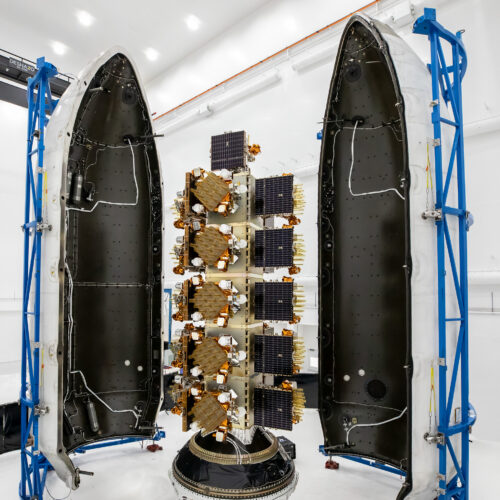
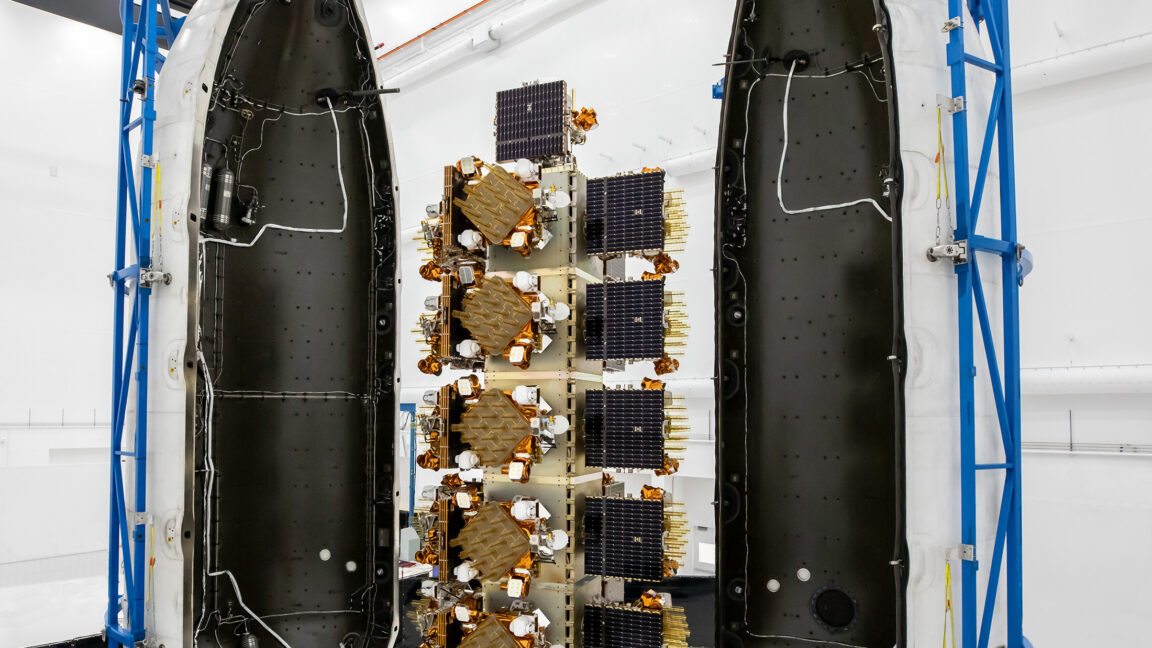
The Space Development Agency was established in 2019 to help speed up the deployment of US military space systems by sidestepping the Pentagon's traditional sluggish bureaucracy.

Seven years later, SDA is finally launching its first batches of operational satellites, just as the Pentagon plans to shutter the semi-autonomous agency and fold it back into the Space Force's procurement pipeline, newly reorganized under several program acquisition executives in a bid to streamline weapons buying.

SDA's fate is not a surprise, and lawmakers in both houses of Congress have backed the agency's closure in drafts of this year's National Defense Authorization Act.

Read full article

Comments

© SpaceX

  •  

Microsoft’s Patch Tuesday updates: Keeping up with the latest fixes

Long before Taco Tuesday became part of the pop-culture vernacular, Tuesdays were synonymous with security — and for anyone in the tech world, they still are.  Patch Tuesday, as you most likely know, refers to the day each month when Microsoft releases security updates and patches for its software products — everything from Windows to Office to SQL Server, developer tools to browsers.

The practice, which happens on the second Tuesday of the month, was initiated to streamline the patch distribution process and make it easier for users and IT system administrators to manage updates.  Like tacos, Patch Tuesday is here to stay.

In a blog post celebrating the 20th anniversary of Patch Tuesday, the Microsoft Security Response Center wrote: “The concept of Patch Tuesday was conceived and implemented in 2003. Before this unified approach, our security updates were sporadic, posing significant challenges for IT professionals and organizations in deploying critical patches in a timely manner.”

Patch Tuesday will continue to be an “important part of our strategy to keep users secure,” Microsoft said, adding that it’s now an important part of the cybersecurity industry.  As a case in point, Adobe, among others, follows a similar patch cadence.

Patch Tuesday coverage has also long been a staple of Computerworld’s commitment to provide critical information to the IT industry. That’s why we’ve gathered together this collection of recent patches, a rolling list we’ll keep updated each month.

In case you missed a recent Patch Tuesday announcement, here are the latest six months of updates.

July’s Patch Tuesday sees an end-of-support collision amidst a massive, record-setting patch wave

Microsoft addressed 722 CVEs this month once the 427 Chromium upstream relays are set aside — roughly three times a normal cycle and one of the largest single months in recent memory. Two vulnerabilities arrive under active exploitation: an elevation of privilege in Active Directory Federation Services (CVE-2026-56155), and an elevation of privilege in SharePoint Server (CVE-2026-56164). A third, a BitLocker security feature bypass (CVE-2026-50661) is publicly disclosed but not yet exploited.

The July 2026 Patch Tuesday earns Patch Now recommendations for Windows, Office, Exchange, and SQL Server. SharePoint has two critical RCEs on top of its exploited zero-day, and Exchange Server returns with a critical on-premises spoofing flaw. Adding to our (dear) administrator’s efforts, SharePoint Server 2016/2019 and SQL Server 2016 all reach end of support today. The Readiness team has provided a handy infographic of the expected risk profile of this month’s Patch Tuesday updates.

More info is available here on Microsoft Security updates for July 2026.

For June, Patch Tuesday means an IT scramble

Microsoft this month released 206 updates affecting Windows, Office, Exchange Server, and its developer tools — including three Windows vulnerabilities already publicly disclosed. That trio includes an elevation of privilege in the Collaborative Translation Framework (CVE-2026-45586), a denial of service in HTTP.sys (CVE-2026-49160), and a BitLocker security feature bypass (CVE-2026-50507). At the moment, none appear to be under active exploitation, but all three are rated “Exploitation More Likely.” 

Even without an exploited zero-day, the June 2026 Patch Tuesday release requires Patch Now recommendations for Windows, Office, and Exchange. The latter is back in the patch picture with a consolidated security update that Microsoft recommends installing “as soon as possible.”

More info is available here on Microsoft Security updates for June 2026.

For May, Patch Tuesday means 139 updates — but no zero-days

Microsoft this month released 139 updates affecting Windows, Office, .NET, and SQL Server (though there were no updates for Microsoft Exchange Server). Despite the absence of zero-days, the May Patch Tuesday update still requires Patch Now recommendations for Windows and Office. 

The combination of three unauthenticated network RCEs (Netlogon, DNS Client, and SSO Plugin for Jira and Confluence), four Word Preview Pane RCEs, the large TCP/IP vulnerability cluster, and the carry-over BitLocker recovery condition (still active on Windows 10 and Windows Server) warrants an accelerated deployment release schedule. 

More info is available here on Microsoft Security updates for May 2026.

Microsoft’s Patch Tuesday release for April is a whopper

Windows admins are going to be busy this month, dealing with the largest Patch Tuesday cycle in memory. The April release involves 165 updates and roughly 340 unique CVEs from Microsoft — including two zero-days, one of which is already being actively exploited in the wild. 

The Readiness team recommends “Patch Now” schedules for nearly every major product family: Windows, Office (with a zero-day), Microsoft Edge (Chromium), SQL Server, and Microsoft Developer Tools (.NET). April also brings Phase 2 of Microsoft’s Kerberos RC4 hardening with full enforcement set for July. There is a lot to cover, so here’s a useful infographic mapping the deployment risk for each platform.

More info is available here on Microsoft Security updates for April 2026.

For March, Patch Tuesday delivers fixes for 83 vulnerabilities

Microsoft’s March Patch Tuesday release addresses 83 vulnerabilities across Windows, Office, SQL Server, Azure, and .NET — with two publicly disclosed zero-days affecting SQL Server and .NET (though neither is being actively exploited in the wild.) Six additional vulnerabilities spanning the Windows Kernel, Graphics Component, SMB Server, Accessibility Infrastructure, and Winlogon are flagged as “Exploitation More Likely.”

The most significant change this month is the introduction of Common Log File System (CLFS) hardening with signature verification, which will affect how Windows handles log files across the operating system. More info on Microsoft Security updates for March 2026.

February’s Patch Tuesday release fixes 59 flaws, including 6 being exploited

The company’s Patch Tuesday release for February addresses 59 CVEs across the company’s product family — roughly half the volume of January’s 159 patches. Six vulnerabilities, affecting Windows Shell, MSHTML, Desktop Window Manager, Remote Desktop, Remote Access, and Microsoft Word, are already being actively exploited. (All five Critical-rated CVEs target Azureservices rather than Windows, however.) 

Both Windows and Office get a “Patch Now” recommendation, with CISA setting a March 3 enforcement deadline for all six exploited vulnerabilities. Two new enforcement timelines also take effect in April: Kerberos RC4 deprecation (CVE-2026-20833) and Windows Deployment Services hardening (CVE-2026-0386). More info on Microsoft Security updates for February 2026.

  •  

July’s Patch Tuesday sees an end-of-support collision amidst a massive, record-setting patch wave

Microsoft addressed 722 CVEs this month once the 427 Chromium upstream relays are set aside — roughly three times a normal cycle and one of the largest single months in recent memory. Two vulnerabilities arrive under active exploitation: an elevation of privilege in Active Directory Federation Services (CVE-2026-56155), and an elevation of privilege in SharePoint Server (CVE-2026-56164). A third, a BitLocker security feature bypass (CVE-2026-50661) is publicly disclosed but not yet exploited.

The July 2026 Patch Tuesday earns Patch Now recommendations for Windows, Office, Exchange, and SQL Server. SharePoint has two critical RCEs on top of its exploited zero-day, and Exchange Server returns with a critical on-premises spoofing flaw. Adding to our (dear) administrator’s efforts, SharePoint Server 2016/2019 and SQL Server 2016 all reach end of support today. The Readiness team has provided a handy infographic of the expected risk profile of this month’s Patch Tuesday updates.

(More information about recent Patch Tuesday releases is available here.)

Known issues

The July release note flags known issues against the following updates:

  • BitLocker recovery prompt on first restart – the PCR7 recovery condition tracked since April remains live on the platforms that did not receive the Boot Manager servicing fix (Windows Server 2022 and Windows 10 22H2). Devices with BitLocker on the OS drive, the Group Policy “Configure TPM platform validation profile for native UEFI firmware configurations” set with PCR7 included, and Secure Boot State PCR7 Binding reported as “Not Possible” may be prompted for the recovery key on the first restart after installing this update. This month’s publicly disclosed BitLocker security feature bypass (CVE-2026-50661) keeps the component in focus.
  • WSUS synchronization error details suppressed (Windows Server 2025 and 2022) – WSUS no longer displays synchronization error details in its error reporting, a deliberate change made to address the Remote Code Execution Vulnerability CVE-2025-59287. Sync still works, but administrators triaging a failed synchronization lose the detail pane and must fall back to the SoftwareDistribution logs.

Windows Update can still replace manually installed graphics drivers with older OEM versions from the catalogue (the four-part Hardware ID ranking issue acknowledged on the Hardware Dev Center). The two-part HWID pilot runs to September 2026.

Major revisions and mitigations

Between the June and July Patch Tuesdays, MSRC Security Update Guide notices updated 651 reported CVEs across six notification dates (15, 19, 26 June and 3, 8, 11 July), 532 of them routine Chromium upstream re-publications. Of the roughly 30 Microsoft revisions, almost all were cross-platform Office catch-up with no bearing on a Windows enterprise estate. No further action required for IT administrators for this Windows update cycle.

Windows lifecycle and enforcement updates

This is the deadline cycle June pointed at. The July end-of-support wave lands today, and it collides with the month’s heaviest patching. SharePoint and SQL Server take some of their most active security updates ever on platforms receiving their last.

  • SharePoint Server 2016 and 2019, Project Server 2016 and 2019, SQL Server 2016 and InfoPath 2013 have all reached end of support. SQL Server 2014 ESU Year 2 reaches end of support today. SharePoint 2016/2019 take an actively exploited zero-day and two RCEs this cycle, and SQL Server 2016 takes a critical RCE, all as their final security update. Now is the time to get moving on updating these platforms.

The 2011 Secure Boot certificate expiries have now passed; devices that never took the Windows UEFI CA 2023 key updates under CVE-2023-24932 can no longer receive updated boot components, with the Windows Production PCA for the boot manager still ahead on 19 October 2026. Kerberos RC4 hardening (CVE-2026-20833) has been in enforcement since April 2026; the July 2026 update removes the RC4DefaultDisablementPhase rollback control that let administrators defer it, making enforcement final.

Microsoft’s July 2026 Patch Tuesday is a security-only release: 180 test-guidance entries, 14 of them high risk (June had one). Printing and graphics are the centre of gravity: win32kfull.sys, the kernel-mode window manager, is the most-patched binary (14 entries), and seven high-risk flags sit alongside it – the Print Spooler, four win32k entries, and two GDI+ metafile entries. NTFS is the second theme, with 10 entries, two high risk. Every entry reports no functional changes – it’s pure regression validation. The packages span Windows 11 26H1 back to Server 2012 ESU.

Printing and graphics (high risk)

The Print Spooler flag centres on shared printers, whose queue status must track jobs accurately; the win32k flags cover 32-bit application printing, font rendering in printed and exported output, on-screen rendering, and window management; the GDI+ flags cover metafiles.

  • Share a printer from a print server, print from a separate client in varied sizes and formats, and cancel a job, confirming the queue reflects every state change
  • Print from your 32-bit applications, and print text-heavy, graphics-heavy, and multi-page documents to physical and virtual (PDF or XPS) printers, repeating after orientation, scaling, and resolution changes
  • Export documents with varied fonts to PDF and confirm fonts and layout survive; render EMF+ files that apply effects to very large images, and convert EMF files to WMF
  • Open and close windows rapidly, drive common dialogs by mouse and keyboard, and close parents with children open – no orphaned windows

Storage and file systems (high risk)

Both NTFS high-risk flags target integrity – extended attributes, and volume recovery after an unexpected shutdown. File History carries its own high-risk flag on clients. A Windows Server 2025-only bundle across boot, BitLocker, and ReFS demands the full Secure Boot/BitLocker matrix. Eight entries hit Server 2025 alone, including WSL, GPU partitioning, and a scripted Windows Server Backup pass repeating recovery after rolling the date 90 days forward.

  • Exercise NTFS extended attributes – older-system EAs, backup workflows that preserve them, concurrent same-file operations where supported – with antivirus, encryption, or storage filters active
  • Simulate an unexpected shutdown during file activity, verify the volume mounts intact, run chkdsk, and confirm indexing, shadow copies, and backup still work
  • Run a full File History pass: back up, modify and back up again, exclude folders, change frequency, move the destination
  • On Server 2025, boot all four Secure Boot/BitLocker combinations, in standard and confidential VMs where supported

Devices, input and networking (high risk)

Three further high-risk flags land here: HID input (hidparse.sys with win32k) – touch, keyboard, mouse, touchpad, through disconnects and restarts; the WinSock bundle (afd.sys plus Bluetooth and multicast drivers); and IrDA. The heaviest ask is not high risk at all: the NetAdapterCx driver (24H2/25H2, Server 2025) wants 500-plus adapter enable-disable cycles under Driver Verifier.

  • Run the connectivity suite: browsing, large downloads, mapped drives, an RDP session idle 30+ minutes, a Teams call, an hour of streaming, and localhost apps such as Docker or WSL
  • Stress Bluetooth: pairing, 10+ minutes of audio, input after idle, and reconnection after sleep
  • Where infrared hardware exists, transfer a file and run at least 100 connect-disconnect cycles
  • Sweep the rest: DNS Server (zone data must stay under its configured database directory), the client resolver (five entries), DHCP Server (five entries), SMB, NFS, Message Queuing (five entries), RRAS administration, client VPN, and WinHTTP/WinINet consumers

Other windows components

Windows Installer itself is patched: testing should include application install, uninstall, repair, and force a rollback. Hyper-V wants virtual-switch traffic as part of its testing exercises with Virtual Filtering Platform policies enforced. Sixteen media-related security entries cover playback, HEVC and MPEG-TS, USB audio, and MIDI 2.0.

Shell hardening and LSA isolation

These two entries are a little different from the rest of the cycle: they ask you to confirm a security behaviour actively works, not just that nothing regressed. A pass here means the protection fired, so treat them as functional checks rather than box-ticking.

  • Shortcut handling (windows.storage.dll; Windows 11 23H2 and earlier, plus Server 2022): drop a shortcut file carrying the Mark of the Web into a folder and confirm the system refuses to extract its icon and leaks no NTLM credential hash – include the zero-click paths, where the icon would otherwise render without you opening anything
  • LSA isolation and KeyGuard (24H2/25H2, Server 2025): run the supplied PowerShell validation script, which turns on Virtualization-based Security if it isn’t already, exercises KeyGuard key operations in both required and best-effort isolation modes, and reports pass or fail – it needs TPM 2.0, UEFI with Secure Boot disabled, and PowerShell 7
  • Run that script on a dedicated test machine, never a shared one: it enables test signing, disables automatic updates, and reboots without asking

Office & SharePoint

July’s Office wave is security-only; everything landed on 14 July, and nothing critical or non-security shipped in the 7 July preview. It’s an MSI-only cycle, so Click-to-Run estates can sit this one out.

  • On MSI Office 2016, apply the client updates – Excel (KB5002886), Word (KB5002890), PowerPoint (KB5002867), and five further Office 2016 security updates (KB5002273, KB5002887, KB5002748, KB5002857, KB5002830) – then exercise macros, external data, embedded objects, and any line-of-business add-ins
  • On SharePoint Server, patch 2016 (KB5002891, plus the KB5002892 language pack) and Subscription Edition (KB5002882), then check browser-based editing; the guidance lists SharePoint 2019 with a baseline but ships no 2019 package, so there is nothing to install there

Mind the rollback rules before you schedule the window: most client updates can be uninstalled, but the server updates cannot and always require a reboot.

Developer tools & databases

The developer estate gets a broad but low-drama sweep this month. Both .NET and SQL Server patch widely, but the ask is representative-application validation rather than anything exotic – install on the matching branch and confirm normal behaviour.

  • .NET: install the SDK updates (8.0.423, 9.0.316, 10.0.302, x64 and x86) and the Framework rollups spanning 3.5 through 4.8.1 – which reach from Windows Server 2012 up to Windows 11 26H1 and Server 2025 – then run a representative set of applications and confirm they function normally
  • SQL Server: the GDR updates span 2016 SP3 through 2025 – install each on its matching branch and test that each removes cleanly
  • Check an encrypted client connection through the separately patched Windows SQL client (dbnetlib.dll), which ships outside the server branches

The Readiness team recommends the following priorities for your larger enterprise deployments:

  • Start with printing and graphics: half the high-risk flags sit in the Print Spooler, win32k, and GDI+, so regress shared printers, 32-bit printing, PDF export, metafiles, and window management before anything else
  • Take NTFS next – extended attributes and crash recovery both touch data integrity – and add a client File History backup-and-restore pass
  • Give Server 2025 its wider matrix – the Secure Boot/BitLocker combinations, WSL, GPU partitioning, and the scripted backup pass – and work through the stress suites
  • Run the scripted KeyGuard validation on any VBS estate, preferably on a dedicated machine.

Each month, we break down the update cycle into product families (as defined by Microsoft) with the following basic groupings:

  • Browsers (Microsoft IE and Edge)
  • Microsoft Windows (both desktop and server)
  • Microsoft Office
  • Microsoft Exchange and SQL Server
  • Microsoft Developer Tools (Visual Studio and .NET)
  • Adobe (if you get this far)

Browsers

Edge has had a busier month than usual. Microsoft addressed 46 Microsoft Edge (Chromium-based) CVEs this cycle. None critical, but heavily weighted to remote code execution (21 entries) and spoofing (13), led by CVE-2026-58289, a remote code execution flaw. A run of further RCEs (CVE-2026-57981, CVE-2026-56645, CVE-2026-57974) follows.

  • Microsoft Edge – the Edge-specific fixes ship in the Edge stable channel (version 150.0.4078.65, released 9 July). The concentration of RCE and spoofing this month is worth a look for managed Edge estates rather than a routine wave-through.
  • Chromium upstream – 427 CVEs relayed through MSRC this cycle, spanning the weekly Chrome release cadence since the June report: use-after-free, out-of-bounds read/write, type confusion, and inappropriate-implementation flaws across V8, Dawn, ANGLE, Skia, and Tint. The same fixes ship in the Chrome Stable channel; see the Chrome releases blog for the upstream notes.

The Chromium volume looks (quite) alarming but is routine plumbing: it flows to Edge through its own auto-update channel. Add these browser (Edge) updates to your standard release schedule for your managed environments.

Microsoft Windows

Windows carries the bulk of this month’s updates: 406 CVEs, 31 rated critical and 374 important. Elevation of privilege dominates by volume (226 entries), followed by remote code execution (70), information disclosure (70), denial of service (23), and a scatter of security-feature-bypass, tampering, and spoofing entries across the following feature groupings:

The Windows Kernel is the most-patched component (28 CVEs, seven “More Likely”), followed by NTFS (21), Windows Runtime (17), Windows Media (14), ReFS (12), and Win32k (15 across its two entries). Add this Windows update to your Patch Now deployment schedule.

Microsoft Office

Microsoft released 96 Office CVEs this month: 19 critical, 76 important. Remote code execution leads (53 entries), ahead of information disclosure (27) and spoofing (10). SharePoint is the centre of gravity: it touches 39 of the 96 CVEs and supplies the family’s one actively exploited flaw.

  • SharePoint Server: has been exploited (who would have guessed) and reaches end of support today. CVE-2026-56164, an elevation of privilege, is under active exploitation. Above it sit two critical remote code execution flaws, both “Exploitation More Likely” (CVE-2026-50522, CVE-2026-58644) and a critical security feature bypass (CVE-2026-55040). SharePoint Server 2016 and 2019 reach end of support on 14 July, so this exploited, critical-heavy set is the final security update those on-premises farms will receive.
  • Office has experienced a long run of critical remote code execution entries across Office, Word, and PowerPoint (among them CVE-2026-55033 and CVE-2026-55127 in Word, CVE-2026-55043 in PowerPoint, and CVE-2026-55018 in Office), topped by CVE-2026-55045.

With an exploited zero-day, two RCEs, and an end-of-support deadline all landing on SharePoint in the same cycle, SharePoint environments are the priority. Add the July Office and SharePoint updates to your Patch Now schedule.

Microsoft Exchange and SQL Server

Both Exchange and SQL Server carry critical-rated security vulnerabilities this month. Exchange Server returns with an on-premises security update for Exchange Server Subscription Edition, the only on-premises release still supported after Exchange Server 2016 and 2019 reached end of support in October 2025; SQL Server takes two critical remote code execution flaws, one of them against SQL Server 2016, which reaches end of support on the same day.

  • Exchange Server (on-premises) – CVE-2026-55008, a spoofing vulnerability rated critical and “Exploitation More Likely,” is the headline. Behind it, a remote code execution entry (CVE-2026-55005) and two elevation-of-privilege flaws (CVE-2026-55006, CVE-2026-55009) round out the on-premises set. A separate Exchange Online elevation of privilege (CVE-2026-54998, critical) is fixed service-side with no customer action.
  • SQL Server – two critical remote code execution flaws: CVE-2026-54117 (SQL Server 2025) and CVE-2026-54118 (which reaches back to SQL Server 2016 SP3), with five further important elevation-of-privilege and information-disclosure entries behind them. The 2016 exposure matters because SQL Server 2016 reaches end of support on 14 July: a critical RCE on a platform taking its final update.

Both belong on the Patch Now schedule this month: the Exchange on-premises update for its critical spoofing flaw, and the SQL Server update for the two critical RCEs.

Microsoft developer tools

Microsoft released 24 CVEs across its developer tooling this month, all rated important. The weighting shifts from last month’s Visual Studio Code concentration toward .NET and ASP.NET Core, where a run of denial-of-service entries dominates the volume:

Add these Microsoft updates to your standard developer update release schedule.

Adobe (and third-party updates)

Outside Microsoft’s own catalogue, July is quiet. Adobe issued no Acrobat or Reader security updates. So, the month belongs to Microsoft, and it is a heavy one: 722 CVEs, roughly three times a normal cycle and one of the largest on record. Worth noting that this lands in the same season Microsoft has been talking up AI-assisted vulnerability management, and the AI stack it is selling as the answer, Copilot and Azure OpenAI among them, sits in the centre of this patch cycle’s own critical-rated updates. The (AI) tooling may be getting smarter, but the patch pile is (definitely) not getting smaller. This may be the beginning of an accelerating curve of ever larger patch cycles. My feeling is that we are in the middle of the beginning of this coming patch surge.

This article is published as part of the Foundry Expert Contributor Network.
Want to join?

  •  

Deep Beneath the Atlantic, an Eerie “Lost City” is Feeding Legions of Lifeforms That Thrive Where Sunlight Never Reaches

For centuries, ancient seafarers have told tales of fabled lost lands. They have been known by many names—Ultima Thule, Hy-Brasil, the Fortunate Isles, and of course, the legendary lost city of Atlantis.

Now, scientists say Earth’s hidden plumbing system may be feeding one of its strangest ecosystems—an area on the Atlantic seafloor that conjures images of such legendary landscapes lost to time and memory.

Known as the Lost City hydrothermal field, this ancient Atlantic oddity is doing more than just broadening our view on how extremophiles thrive in some of our planet’s least hospitable environments: it offers a potential model for how extraterrestrial life may thrive elsewhere in our solar system.

In a recent paper published in Geophysics, Geochemistry, and Geosystems, an international team of researchers finally discovered the system behind these hydrogen- and methane-rich alkaline hot springs that feed the Lost City ecosystem. 

The white carbonate chimneys that emit these gases provide an alternative to sunlight as the Lost City’s primary energy source, allowing life to thrive in a challenging deep ocean environment.

Lost City hydrothermal vent
A view of the Lost City hydrothermal vent, located adjacent to the Mid-Atlantic Ridge (Image Credit: Susan Lang, University of South Carolina/National Science Foundation/ROV Jason 2018 WHOI)

Searching Near The Lost City

Those precious nutrients coming from these vents were created by underground reactions. It turns out that the water feeding the Lost City is likely part of a larger underground system, where extreme processes imbue the liquid with essential nutrients.

The discovery came from nearly a mile below the Atlantis Massif, a large block of Earth’s crust that forms an underwater mountain range. This dome-shaped region stretches for 10 miles and rises 14,000 feet above the ocean floor.

Lost City map
Above, a map shows the location of the Lost City on the Atlantis Massif (Image Credit: NOAA)

Geologists believe this formation originated between 1.5 and 2 million years ago, as tectonic plate movement pulled it out from beneath the Mid-Atlantic Ridge, forming a new feature on the ocean floor.

From aboard the Joint Oceanographic Institutions for Deep Earth Sampling (JOIDES) ship Resolution, scientists drilled their 4,160-foot-deep hole about 2,600 feet north of the Lost City. They were intrigued to find that the water recovered from the hole had a chemical composition extremely similar to that of water emerging from the Lost City vents.

Beneath The Ocean Floor

From their drill site, they pumped water from varying depths up to the surface for examination.

Roughly the first 1,500 feet consisted primarily of seawater and freshwater from the drilling process, yet at lower depths, they found water that had risen from beneath the rock. At the deepest depths, up to 80% of the sample came from these subterranean regions.

Their detailed analyses revealed that the water had reacted with the surrounding minerals to gain calcium while losing magnesium, a reaction that would require prolonged exposure to rocks at a temperature of at least 572°F. Despite this finding, the hole was much cooler when the team took their samples.

Typically, a water-rock reaction with gabbroic and ultramafic rock would produce such results that are high in calcium, yet with no magnesium. Other components, such as lithium, rubidium, cesium, and strontium, were found in the water at both the bore site and Lost City.

Lost City carbonate spire
One of the Lost City’s many carbonate spires is shown in this image from the 2005 Lost City Expedition (Image Credit: IFE, URI-IAO, UW, Lost City Science Party; NOAA/OAR/OER; The Lost City 2005 Expedition)

The findings are consequential for providing the first direct evidence of this extremely hot water circulating beneath the Atlantis Massif through gabbroic and ultramafic rock. In this hidden plumbing system, seawater reaches deep within oceanic plates, providing energy to these deep-sea environments and potentially supporting their microbial life.

Feeding The Lost City

As researchers have now demonstrated that hydrogen-enriched water can naturally form deep within the Earth through rock reactions, researchers say there are major implications for our understanding of the Earth and beyond. 

For one, it adds a new element to Earth’s energy cycles, explaining how life persists under such difficult, dark conditions. Secondly, it offers intriguing new ideas about how life might persist in extraterrestrial environments, as humans continue to search for it elsewhere in the cosmos. The strange conditions of the Lost City ecosystem are thought to be a potential model for how life could persist in the global oceans of ice-covered worlds such as Jupiter’s moon Europa or Saturn’s moon Enceladus.

However, some uncertainty about the samples does remain. Seawater, freshwater, and drilling contaminants were present in the samples, and the exact proportions attributable to gabbro or ultramafic rock are unknown. Also, while this is evidence for an underground connection between the borehole and the Lost City chimneys, it is not conclusive proof that they are connected.

Plans are already underway to return once the borehole has stabilized to collect pristine samples that will allow researchers to answer questions about where and how these reactions occur, as well as the amount of energy they add to the water. From the most inhospitable regions on Earth to the quest for organisms among the stars, the research underway deep within our oceans is providing new answers to how such life persists.

The recent paper, “Borehole Waters From Hole U1601C (Atlantis Massif) Provide Constraints for a Deep-Sourced Formation Water That (Could) Feed the Lost City Hydrothermal Field,” appeared in Geophysics, Geochemistry, and Geosystems on July 12, 2026.

Micah Hanks, Editor in Chief of The Debrief, also contributed to this reporting. 

Ryan Whalen covers science and technology for The Debrief. He holds an MA in History and a Master of Library and Information Science with a certificate in Data Science. He can be contacted at ryan@thedebrief.org, and follow him on Twitter @mdntwvlf.

  •  

Google must open Android to rival AI agents, EU orders

The European Union is stepping up its actions against US tech giants under the Digital Markets Act, which is intended to ensure fair competition between digital platforms. On Thursday, the European Commission issued two rulings to limit Google’s dominance.

The Commission ordered Google to open up the Android operating system to AI assistants other than its own Gemini, ensuring that they had the same access to applications and operating system services. A second ruling ordered Google to share search data that only it is big enough to collect with other search engines.

Google has hit back at the measures, warning that they could create security issues for users. “Today’s decisions risk undermining vital privacy and security guardrails for millions of Europeans. We have repeatedly offered solutions to safeguard users while satisfying the DMA’s goals, but these rulings discount extensive evidence of user harm,” said Kent Walker, Google’s President of Global Affairs, in a company blog post.

The EU move doesn’t just cause problems for Google but for CISOs as well, warned Roman Stanek, CEO of Good Data AI. “Enterprise security has always leaned on a simple assumption, that apps are boxes, and the OS decides what crosses the box. But once multiple agents get equal system-level reach, access to screen context, cross-app actions, background execution, that assumption breaks.

“CISOs need to stop treating ‘AI assistant’ as a single, well-understood permission and start treating it as a category risk, one they have to govern like they govern app stores and MDM policies today. That requires device policies that name which agents can hold system-level permissions, not just which apps are installed. It means DLP and conditional access rules that account for an agent reading and acting on data, not just an app requesting it.,” he said.

  •  

Great Barrier Reef Acropora deaths tied to climate swings and human pressures

A new analysis revisits the Great Barrier Reef’s past losses of Acropora corals, showing that reef decline was not only a modern story of warming oceans. Using historical ecological records alongside climate-linked environmental data, the study links earlier episodes of Acropora mortality to shifting variability in ocean conditions—factors that can amplify heat stress even before today’s extremes fully arrive. The findings suggest that the reef’s vulnerability has deep roots, shaped by how the atmosphere and oceans interact over time.

The researchers focus on Acropora, a genus that forms structurally complex habitats and supports high biodiversity. When these branching corals die, the consequences cascade: shelter and food sources shrink, juvenile recruitment becomes harder, and reef recovery slows. Their approach connects mortality signals across time to measures of climate variability, aiming to distinguish natural swings from persistent human-driven pressures.

Clues come from patterns consistent with stress events driven by warmer-than-usual water, altered temperature dynamics, and changing conditions that influence coral physiology. Importantly, the work frames these stressors as interacting rather than acting alone. Climate variability can raise the frequency and severity of harmful conditions, while human impacts provide chronic background stress that reduces coral resilience.

The study emphasizes that anthropogenic impacts—such as local water-quality degradation and other human pressures—can intensify the damage caused during climate-driven heat or disturbance events. In this view, the reef does not simply “survive” or “collapse” based on temperature alone; it fails when multiple stressors converge, tipping corals past thresholds for survival and regrowth.

This “multi-stressor” model matters for forecasts. If past mortality aligns with periods of heightened climate variability, then future reef risk depends not only on long-term warming trends but also on how variability evolves. That means management strategies must be tuned to both the climate signal and the local pressures that determine how quickly corals can bounce back after shocks.

The authors also highlight that historical mortality patterns can function like a preview of likely future dynamics. Instead of treating recent bleaching as the first chapter, the analysis portrays a longer timeline of stress accumulation. The reef’s trajectory, they argue, reflects a system that has repeatedly been strained and partially recovered—until cumulative impacts made recovery less complete.

With the Great Barrier Reef facing intensifying marine heatwaves, this work adds urgency to climate mitigation and local conservation. It suggests that reducing human pressures can buy time by strengthening coral tolerance, even as global temperatures continue to rise. In viral science terms, the message is clear: the reef’s past predicts its future—and human actions can still change the ending.

Subject of Research: Great Barrier Reef coral (Acropora) mortality
Article Title: Past Acropora mortality on the Great Barrier Reef linked to climate variability and anthropogenic impacts.
Article References: Clark, T.R., Leonard, N.D., Jupiter, S.D. et al. (2026). Commun Earth Environ. https://doi.org/10.1038/s43247-026-03800-9
Image Credits: AI Generated
DOI: 10.1038/s43247-026-03800-9

  •  

Move over, GPS: Navigation satellites in low-Earth orbit are making a comeback

New navigation satellites in low-Earth orbit could provide 100 times stronger signal strength compared to GPS and other global navigation satellite systems operating from higher orbital altitudes—enabling greater location accuracy within dense cities, under thick foliage, and even inside buildings. Such signals would also likely prove more resilient to interference at a time when commercial flights, maritime shipping, and even various smartphone apps face increasingly widespread disruption from GPS jamming.

That vision may start to take shape when the first six production satellites of California-based Xona Space Systems are scheduled to launch in October 2026, with early service starting in 2027. Once the full constellation of 258 Pulsar satellites has been launched in the following years, Xona claims that customers will be able to accurately pinpoint their locations anywhere on Earth to within several centimeters.

“That added power means that we can get into that indoor environment that GPS can't get to today,” Adrien Perkins, co-founder and VP of engineering at Xona Space Systems, told Ars. “Our higher power allows you to get into those jamming environments a lot further than you would with GPS by itself.”

Read full article

Comments

© Xona Space Systems

  •  

Industrial waste solidified a UK beach in just 35 years

Humans have been around for only about 0.01% of Earth’s history, yet we’ve altered natural landscapes and processes that have remained stable for millions of years. A team of researchers from the University of Glasgow recently studied a formerly sandy beach in the UK that highlights how fast these changes can occur.

Industrial steel and iron furnaces operated extensively in the UK from 1856 until the 1980s. During these decades, workers dumped roughly 335 million cubic meters (90 billion gallons) of molten furnace waste, called slag, across the country. Of that, roughly 27 million cubic meters (6 million gallons) now sits on the coast of Derwent Howe in a massive 30-meter (100-foot), solidified cliff. 

The researchers analyzed this region to understand how man-made, or anthropogenic, materials influence the way rocks form. Rocks naturally form and change into different types of rocks over million-year timescales, through a continuous process called the rock cycle. When the team uncovered a soda can tab manufactured in 1989 within the hardened grains, or clasts, of slag, they concluded that the beach had solidified within the last 35 years. Based on this discovery, they proposed a new term for rocks formed from anthropogenic sediments: the anthropoclastic rock cycle. 

The team collected 1,300 grains of sediment from 13 sites in the study area and found that 83% were slag. Natural beach sediments, like quartz sand, comprised only about 17% of the grains. As wind and waves broke down the cliff, slag clasts fell off and became rounded by friction as tides transported them from the cliff to the beach. 

At the boundary where the slag touched the beach, the researchers also saw evidence that the slag had seeped into the underlying wet sediment. The rocks there resembled a type of rock called peperite, which forms when lava flows over wet, loose sediments.  They concluded that this peperite-like rock formed as the molten slag flowed over the still sandy beach. Slag is much thicker than wet sand, so the resulting rock looked like blobs of slag encased in sandy rock. 

The researchers then visually observed how the slag grains were arranged in the solidified rock to reconstruct the tidewater speeds at different points in the coast’s history. The different ways sediments are arranged within a rock are called sedimentary features, and they reflect the processes that formed the rock. For example, as water flows over sand, it forms small, dune-like ripples. When the sand beds harden into rock, the ripples are preserved as features known as trough cross-bedding. 

Faster water erases any ripple formations and instead forms horizontal layers in the sediment, known as planar lamination. The researchers observed both trough cross-bedding and planar laminations preserved in the slag beach rocks. These sedimentary features indicate that the beach at Derwent Howe turned from loose sediment into rock in a generation. 

To investigate why this beach rapidly solidified, the researchers scanned the surfaces of the beach rock with electron beams and X-rays using a scanning electron microscope, or SEM, equipped with an energy dispersive X-ray, or EDX. Every chemical element emits a unique set of X-rays with different wavelengths when hit with EDX, so the researchers could compare the X-rays from their samples to databases of known mineral X-ray signatures. They identified the primary binding agents as calcium- and iron-rich minerals like calcite, goethite, and brucite. These minerals are called cements because they bind grains of sediment together. 

The researchers expected the slag to produce these cement compositions, since extracting metal ores from rock enriches the resultant slag in calcium, magnesium, manganese, and iron, which readily dissolve in water. When water flowing between closely packed slag grains can no longer hold additional dissolved elements, those elements precipitate as solid mineral cements. Since cements only form when the water has very high concentrations of dissolved elements, the introduction of massive amounts of slag caused the cement to form faster than it would in waters with lower concentrations of elements.

The researchers suspected that the anthropoclastic rock cycle they observed at Derwent Howe is not uncommon. Since slag contains all the elements necessary to form rocks when in contact with seawater and air, slag deposits all over the world could be rapidly influencing their local environments. With this in mind, the team suggested that future researchers update geological models to account for human contributions to the natural rock cycle. 

The post Industrial waste solidified a UK beach in just 35 years appeared first on Sciworthy.

  •  

Siri AI steals the show as the iOS 27 public beta lands

Apple has released the first public betas of its “27” series of operating systems, and feedback so far suggests they’re already very stable builds, even at this early end of the release cycle. 

For most intrepid public beta testers, the big attractions here are Siri AI and the heavily improved Apple Intelligence tools – though Siri AI is not yet available in Europe due to regulatory problems there. Overnight social media commentary has been highly positive, with Siri widely seen as delivering on what we always thought it should be rather than the limited product it became.

Caveat emptor

Once installed, the new operating system is fast and better performing on the iPhone, though there are some limitations anyone considering the beta should consider first:

  • This is beta software; things can and sometimes do go wrong. So don’t install it on your primary device unless you know how to restore your device and its data.
  • Some critical apps such as banking tools, VPNs and some smart home management software are reported to be unstable at times.
  • Once the public beta is first installed, there’s a lengthy period during which your device will rebuild its database; this can take many hours and performance will be affected.
  • As the OS beds in, users might experience sudden battery drain or the device might seem warmer than usual.
  • You’ll need to join a lengthy Siri waitlist before you can install the updated Siri AI.
  • Siri AI requires significant hardware capabilities and only runs on iPhone 15 Pro, iPhone 16 and iPhone 17 models. Alternatively, you must have an M1 or later Mac or an iPad running an M1 chip or later, or A17 Pro (iPad mini).

Siri AI is a big improvement

Siri AI is the big reward here. Joanna Stern called it “significantly better.” It will provide you with much better responses than its predecessor, and its contextual understanding is sophisticated and advanced. 

That’s because Siri can search across your messages, emails, photos and more to help you find what you’re looking for and has some understanding of where you are and what you are doing to help it make even more accurate decisions. It is faster than it’s ever been with a dedicated app (which includes logs of your interactions) and a new glowing design when activated. 

The assistant can now hold an ongoing conversation with you, understands what’s on screen, and take some actions in apps. One way that might be useful is if you are looking at a recipe online, you can ask Siri to write up a shopping list for the recipe ingredients and paste it in a Note. Siri has become much more knowledgeable than in the past thanks to its expanded and updated world knowledge database.

Apple Intelligence has been beefed up, too, with keyboard tools much improved on the last version. Siri can even reflect your personal tone and style based on the person you’re communicating with when sending a Mail or Messages post. 

Apple and the image

The Camera app now has a new Siri mode; it can do things like identify objects and people, or import event details from a leaflet. You can easily search or ask questions about what’s around you, and there are useful new actions you can take, such as getting nutritional insights about a plate of food.

Image Playground wasn’t terribly impressive when it first appeared, and a lot of people did little with it. It seems much better now, capable of generating photo-realistic images in virtually any style from natural language prompts or editing existing images. It’s a useful step up.

Another impressive feature is Spatial Reframing. This lets you shift the composition of a photo after you’ve taken it, using AI to create accurate renditions of what is outside the frame. A new Extend tool lets you expand images, which is useful for adjusting aspect ratios or creating Lock Screen wallpapers.

The future on your wrist

If you use an Apple Watch, you’ll be impressed, as the contextual AI extends to that device. So, you can have context-savvy conversations with your watch and ask it to do tasks on your behalf. It makes it feel like a bona fide computer on your wrist and bodes well for other future wearable products from the company. 

There are lots of other interesting features in the beta. Call Context can automatically surface the information you need, like a confirmation code or reservation number, when calling up a business. And a new Notify Me feature in Safari lets you know when a web page changes, so you can watch for stock availability or ticket sales.

How to install the beta

If you’re interested in installing the new OSes, Apple’s Beta Software Program website should be your first port of call. You’ll need to sign in to access the betas using your Apple Account. Once you’ve done that, open Settings and go to Software Update; there you can select Beta Updates and choose the 27 series Public beta. Tap Update Now and the installation will begin.

You can follow me on social media! Join me on BlueSky, LinkedIn, Mastodon, and subscribe to The Core.

  •  

Tiny Underwater Waves in the Ocean Can Affect the Climate Thousands of Kilometres Away

Calm ocean waves with gentle ripples during sunset, reflecting the sky's colors.Thousands of metres below the ocean’s surface, there are tiny waves moving through the water. Much like breaking waves at the beach, these small waves within the ocean must eventually break. When they do, they create turbulence and mixing, similar to what you feel from a big wave breaking on the beach. This might seem […]
  •  

Viruses help plants obtain nitrogen

Nitrogen is an essential building block of proteins, amino acids, and DNA. Without nitrogen, cells can’t function or reproduce. Nitrogen is abundant in the atmosphere as dinitrogen gas, but plants and animals can’t access atmospheric nitrogen. Instead, we rely on biologically available forms like ammonia and nitrate. 

Specialized microbes can transform atmospheric nitrogen into ammonia via a process called biological nitrogen fixation. Nitrogen-fixing soil bacteria have a unique protein complex, the nitrogenase complex, that facilitates this nitrogen transformation. The nitrogenase complex is activated by a group of genes known as nif genes. 

Legume plants like peanuts, peas, and beans have nitrogen-fixing bacteria in the soil zone around their roots, called the rhizosphere. The symbiotic relationship between nitrogen-fixing soil bacteria and legume plants supplies most of the biologically available nitrogen to life on Earth.

Bacteria attached to plant roots “feed” nitrogen to plants through the soil, and in turn receive organic acids for energy from plants performing photosynthesis. Source: Wikimedia Commons

Bacteria attached to plant roots “feed” nitrogen to plants through the soil, and in turn receive organic acids for energy from plants performing photosynthesis. Source: Wikimedia Commons

However, one piece of the puzzle remains unexplored: the role of soil viruses in these nitrogen transformations, referred to as the nitrogen cycle. Viruses are microscopic particles made up of genetic material and proteins, but they can’t reproduce without a host cell. Scientists consider viruses to be biological entities that are halfway between living and non-living.

To reproduce, viruses contact a host cell and inject their genetic material into it. The virus’s genetic material takes over the host cell’s genome and forces the cell to produce proteins that assemble into new viruses. As new viruses are created, they can incorporate genes from the host cell into their own genetic material. Genes that are transferred from a host cell to a virus are known as auxiliary metabolic genes (AMGs). Viruses can carry AMGs and pass them to other hosts or use them to increase their own ecological fitness. 

Scientists from China, Spain, and the Czech Republic set out to investigate whether viruses from legume roots could increase local soil nitrogen fixation by expressing nif AMGs or by transferring nif genes to other bacteria. First, they determined the global distribution of viral nitrogen-fixing genes by analyzing about 8.6 million viral genomes from the Integrated Microbial Genomes/Virus database. They looked for the DNA sequences of known nitrogen-fixing genes and the locations where the viruses were sampled. They found that only 0.003% of the viruses in the database had at least 1 nitrogen-fixing gene, but they clustered in the same locations as nitrogen-fixing bacteria. 

The team also found 3 types of viruses that most commonly carried nitrogen-fixing genes: Kyanoviridae, Nudiviridae, and Bronfenbrennervirinae. Kyanoviridae viruses carried a nif gene called nifU. The researchers used a computer program called DRAM-v to confirm that nifU was a fully functional gene and a real tool that viruses could use. 

Next, the team collected soil samples from a cowpea field in Nanjing, China, to test whether the cowpea roots influenced the abundance of viruses using nitrogen-fixing genes. They collected soil from the cowpea rhizospheres and soil away from the plants. They analyzed both viral and bacterial RNA in the soil samples to identify active genes, using a sequencing process called metatranscriptomics. They found that the viral nifU gene was actively expressed in the cowpea rhizosphere samples more than in the non-crop soil. Although about 96% of nifU genes were being expressed by bacteria, viruses contributed about 4%. 

The researchers then assessed whether rhizospheric viruses changed the amount of nitrogen being fixed in these soils. They set up small, enclosed containers of sterile soil and added either bacteria or a mixture of bacteria and viruses extracted from the cowpea rhizospheres. They found that soil with viruses had higher total nitrogen (36 milligrams per kilogram, or mg/kg) than soil without viruses (17 mg/kg). 

Finally, they adjusted the air in each container to have a different form of dinitrogen gas. Atoms of the same element that have different atomic masses are known as isotopes. Nitrogen has 2 stable isotopes: lighter nitrogen-14 and heavier nitrogen-15. Bacteria or viruses that fix nitrogen at natural isotope abundances will take up nitrogen-14. But scientists can track who in the population fixes nitrogen by adding nitrogen-15 to the air, a process called nitrogen-15 stable isotope probing. Nitrogen-fixers will incorporate the heavy nitrogen-15 into their biomass over time and increase their weight, allowing researchers to separate and identify them.

The team grew the bacteria and viruses with nitrogen-15 for 35 days, then used stable isotope probing to separate the nitrogen fixers. They detected viral nifU AMGs among the heavier biomass, confirming that rhizospheric viruses were fixing nitrogen. 

The team concluded that rhizospheric viruses and the viral nifU AMG can increase nitrogen fixation in cowpea soils. The team suggested that although viruses with nitrogen-fixing genes are rare, they can influence the soil nitrogen cycle. They recommended that future researchers further test the contribution of viral nifU genes to plant nitrogen fixation with controlled infection experiments.

The post Viruses help plants obtain nitrogen appeared first on Sciworthy.

  •  

Cold shocks in a warming ocean affect large marine animals

In March 2021, the carcasses of at least 260 marine organisms from 81 species, including large animals called megafauna, washed ashore in South Africa. Scientists questioned whether this event was the result of an extreme temperature drop that can happen when deep, cold water rises to the surface along coastlines. Scientists refer to these rapid cooling events as coastal upwelling. 

Climate change is making oceans warmer, but it’s also making coastal upwelling stronger, with unknown consequences for marine megafauna. Scientists recently studied 2 boundary currents that are rapidly warming and creating strong upwelling near the edges of sharks’ geographic ranges: the Agulhas Current in southern Africa and the East Australian Current in eastern Australia. They wanted to determine whether climate-driven changes in upwelling zones are making cold-shock events more frequent and intense, and how these events are pushing sharks beyond their temperature limits. 

First, the researchers analyzed sea surface temperature data from satellites to see if rapid cooling from upwelling caused the mass marine die-off in 2021. They also obtained hourly temperature recordings from temperature loggers to measure subsurface temperature changes during the event. They found that during the March 2021 event, sea surface temperatures along the coast dropped by up to 7°C (12°F) in less than 48 hours, from 24°C (75°F) to below 17°C (63°F). Subsurface temperatures dropped faster, by more than 9°C (16°F) in 24 hours, from 21°C (70°F) to 12°C (54°F). 

Bullsharks experience physiological stress at temperatures below 19°C (66°F), which is near their lower thermal limit, when migrating through rapid cooling zones. Therefore, the researchers deduced that during the 2021 cold-shock event, the sharks were exposed to temperatures several degrees below their thermal limit, possibly more than 5°C (or 10°F) colder. 

The researchers also tagged 66 bull sharks with acoustic and satellite transmitters – including 41 at the Agulhas Current in South Africa and 25 at the East Australian Current in eastern Australia – to determine how they responded near their lower thermal limits in these zones. The acoustic tags record when sharks pass underwater receivers, providing information on their movements, locations, and water depths at those specific locations. In contrast, satellite tags continuously record the water temperatures and depths the sharks experience over time. 

The researchers used these data to compare sharks living in warm subtropical waters with those living in cooler waters at the edge of their temperature range. The researchers found that low temperatures that persisted for long periods prevented the sharks and other megafauna from physiologically recovering. They saw that some sharks try to swim to shallower depths and look for warmer water, but cooling sometimes happened faster than they could respond. 

The researchers also obtained wind records from the South African Weather Service to determine if upwelling-favorable winds happened before the 2021 event. They reported strong easterly winds pushing cold water on the surface along the coastline immediately before the event occurred. Because the cooling, strong winds, and animal deaths happened at the same time and place, the researchers inferred that upwelling was the main reason for the die-off.

Finally, the researchers examined 41 years of sea surface temperature data and used mathematical models to compute changes in the frequency and intensity of these events. Their analysis showed that rapid cooling events linked to upwelling can last a lot longer than the usual 1 to 3 days. For example, the March 2021 event lasted for 7 days. 

They found that these events have increased in both frequency and intensity in the past decades, and produce more extreme temperature drops than typically happen within 24 hours. Their results suggested that the 2021 die-off was part of an increasing trend, where warming oceans allow species to move into different areas, but intense upwelling can suddenly expose them to fatal cold events. This pattern is what scientists call a climate bait-and-switch. 

The researchers concluded that climate change is making coastal upwelling stronger, which can push marine megafauna beyond their thermal limits, even when initial warming appears to be beneficial. Their findings highlight an understudied aspect of climate change in the context of how temperature and upwelling cause shifts in species survival. They concluded their findings could help predict how marine ecosystems respond to future changing ocean conditions.

The post Cold shocks in a warming ocean affect large marine animals appeared first on Sciworthy.

  •  

How many asteroids can we detect before they hit Earth?

When you think of an asteroid impact, you’re probably imagining something like the cataclysmic event that nearly wiped out the dinosaurs. In an astonishingly rare event, a rock the size of the island of Manhattan could come hurtling from deep space towards Earth and destroy the world.

On the contrary, asteroids are generally leftover debris from the primordial solar system that didn’t become part of a larger body, like a planet or moon, and they’re not particularly rare. Scientists estimate that there are about 1 billion asteroids and comets classified as near-Earth objects, or NEOs. NEOs are generally much smaller than the asteroid that killed the dinosaurs. They range from weakly held-together piles of rubble 200 meters (700 feet) across, to the minuscule 2024 BX1, approximately 44 centimeters (17 inches) across. 

For several decades, astronomical surveys of the sky have looked for these asteroids. NASA’s Center for Near-Earth Object Studies (CNEOS) Fireball and Bolide Database has records of over 1,000 incidents of objects colliding with our planet since the mid-1990s. Among these is a set of 11 objects that scientists detected before they hit Earth, known as imminent impactors. Finding imminent impactors allows scientists unique opportunities to study the smallest building blocks of the solar system, enabling them to learn more about asteroid composition, structure, and history.

A team of scientists recently conducted a study on how the newly built Vera Rubin Observatory could detect more imminent impactors before they strike Earth. They examined the CNEOS Fireball and Bolide Database impact records spanning February 1, 1994, to January 1, 2026, for records of the asteroids’ coordinates, velocities, and the energy they released at the time of collision. 

They found that 343 NEOs met this criterion, including 5 known imminent impactors. Using these recorded data, they reconstructed the objects’ pre-impact characteristics. The team predicted the asteroids’ orbital paths from the recorded coordinates and velocity. Assuming the objects were spherical, they estimated the size from velocity and impact energy. From this information about the asteroids’ state before impact, the team could then simulate whether the Rubin Observatory would have detected them. 

When small asteroids hit Earth, they mostly burn up in the atmosphere, producing a bright flash that is relatively easy to spot compared to when they are in space. The Rubin Observatory can see objects up to 10 billion times dimmer than the brightest star in the night sky, Sirius. To predict if the Rubin Observatory can detect dim NEOs, the team used the solar system simulator SORCHA. SORCHA takes an observatory’s specifications and the physical properties of the NEOs and uses these to determine whether the observatory could detect them. It also estimates the measured sizes and speeds of the NEOs, and predicts when the observatory would have seen them. 

At the Rubin Observatory, an imminent impactor is considered discovered if it’s observed at least 3 separate times over 15 days before hitting Earth. So this team applied this same criterion to their simulation. They found that of their 343 impactors, SORCHA estimated that the Rubin Observatory would have discovered 14 of them before impact. 

They also found that SORCHA predicted 4 additional impactors that could have been observed at least once, potentially allowing scientists to search other telescope data for evidence of their existence in pre-collision images. Based on these results, the team estimated that the Rubin Observatory could find 4% of all objects longer than 1 meter (3 feet) before they hit Earth. This percentage of discovery translates to 1 to 2 imminent impactors detected every year, at least double their current discovery rate.

The ability to more consistently find imminent impactors would allow researchers to study the smallest pieces of the solar system in detail and to draw general conclusions about the properties of objects that could potentially collide with Earth. This would also allow scientists to more accurately calculate the orbits of imminent impactors, determine where more meteorites land to recover them, and keep tabs on the extremely rare but more hazardous large impactors for planetary defense initiatives. So, humanity can learn more about the ancient solar system, and hopefully avoid going the way of the dinosaurs while doing so!

The post How many asteroids can we detect before they hit Earth? appeared first on Sciworthy.

  •  

AI’s Growing Appetite for Energy and Water Sparks a New Cooling Solution Beneath the Earth

Researchers at the University of Illinois Urbana-Champaign say underground aquifers could offer an unexpected solution to one of artificial intelligence’s fastest-growing environmental challenges: cooling the massive data centers that power the technology.

As protests and debates continue over the rapid expansion of AI data centers around the world, researchers are exploring new ways to manage the enormous amounts of energy and water required to keep these facilities running. To meet such demands, the University of Illinois Urbana-Champaign team has proposed an innovative solution: using underground aquifers as natural “thermal batteries” to cool data centers while reducing their environmental footprint.

Critics have raised concerns ranging from the vast quantities of water consumed by AI infrastructure to the ethical implications of job displacement and the broader societal impacts of artificial intelligence. Against that backdrop, designing AI systems that reduce their climate impact could represent an important step toward more sustainable computing.

Researchers Yu-Feng Lin, Andrew Stumpf, and postdoctoral researcher Upasana Pandey from the Prairie Research Institute’s Illinois State Geological Survey explored the potential of Aquifer Thermal Energy Storage (ATES) as a cooling strategy for data centers. The team suggests underground water systems could provide an efficient alternative to traditional cooling methods. Their findings were published in the peer-reviewed journal Groundwater.

“Data centers use large amounts of electricity, and 10 to 40% of that energy can go just to cooling, depending on the design,” Pandey said in a statement. “They also consume tremendous volumes of water, often through cooling methods where water is evaporated and effectively lost from the local supply.”

To address both challenges, the researchers propose using groundwater stored beneath Earth’s surface as a reusable thermal energy storage system. ATES can provide direct or supplemental cooling by circulating groundwater through underground pipes. Cool groundwater absorbs heat through a heat exchanger before the warmed water is returned to the aquifer for seasonal storage. The system can also store excess summer heat for winter heating and preserve cold winter water for use during the summer months.

An operational schematic of an aquifer thermal energy storage system illustrating operations in the summer, left, and winter, right. Credit: Graphic courtesy Upasana Pandey.

“In places like Illinois, where we experience seasonality, and when the subsurface geology is ideal, instead of constantly trying to moderate the outdoor temperatures that swing from 90°F in summer to minus 10°F in winter, we can tap into the Earth’s near-constant temperature,” Stumpf said. “You’re no longer adjusting from 90°F to 70°F; you’re adjusting from about 55°F to 70°F. That’s a huge energy savings.”

Illinois is particularly well-suited for aquifer thermal energy storage because of its pronounced seasonal temperature swings, favorable aquifer characteristics, and suitable subsurface geology. The system can utilize non-potable water sources, including deep saline aquifers, contaminated groundwater, and even abandoned mines.

According to the researchers, the primary barriers to broader adoption are the high upfront installation costs and relatively short investment timelines, rather than technical feasibility.

“Data centers sit at the center of the water-energy nexus: If you try to reduce energy use, you often use more water, and if you reduce water use, you may need more energy,” Lin said. “Our work looks for solutions that address both together.”

“Water is a magic material in this context because it has high heat capacity and can be a good thermal carrier with flow,” he adds.

“That combination is rare, and in groundwater, we can tap those same properties for energy storage.”

Chrissy Newton is a PR professional and the founder of VOCAB Communications. She currently appears on The Discovery Channel and Max and hosts the Rebelliously Curious podcast, which can be found on YouTube and on all audio podcast streaming platforms. Follow her on X: @ChrissyNewton, Instagram: @BeingChrissyNewton, and chrissynewton.com. To contact Chrissy with a story, please email chrissy @ thedebrief.org.

  •  

How do ice sheets melt?

Nearly 170 billion tons of ice melt off the Greenland Ice Sheet every year, but scientists don’t fully understand the process by which this melting occurs. Researchers in the past suggested that liquid water forms at the glacier’s surface, where warm air and sunlight melt the ice. This meltwater travels down through cracks in the glacier and along the bedrock beneath it and flows out to sea. 

However, some scientists view this model as too simple because it assumes water only flows downward and ignores how temperature affects water movement. They argue that an oversimplified melting model is unreliable for predicting how future ice sheets will behave.

One group of researchers tested this by investigating how water movement across Greenland is controlled by lakes beneath the ice sheet, called subglacial lakes. They monitored a newly discovered subglacial lake using high-resolution satellite images taken from 2012 to 2019 and 3D surface maps generated from the images. They focused on ice sheet changes from July 22 to August 1, 2014, during a suspected subglacial lake drainage event. A drainage event is like a water balloon that’s too full, bursting from excess pressure. 

They examined images of the Greenland ice sheet taken from Landsat-8, 3D surface maps from the Polar Geospatial Center, and data from ICESat and ICESat-2 taken in the summer of 2014. Based on these data, the researchers identified a 2-square-kilometer (0.8-square-mile) region of ice rising 10 to 15 meters (about 30 to 50 feet), forming a dome on the ice sheet’s surface. They suggested that this dome formed when a large, meltwater-fed lake developed on the bedrock beneath the ice sheet, pushing the ice upward. 

They also saw that on July 22, 2014, the dome began to collapse. Over the next 10 days, it dropped by 85 meters (about 280 feet), forming a basin. Using the dome’s dimensions, the researchers estimated that 90 million cubic meters, or about 3 billion cubic feet, of water drained from the lake at an average rate of 100 cubic meters, or about 3500 cubic feet, per second over the 10 days. This is roughly equivalent to 36,000 Olympic swimming pools draining at a rate of 1 pool every 25 seconds! 

The researchers also found that during the collapse, 40-meter-high (130-foot) ice blocks were uprooted about 1 kilometer (0.6 mile) downstream from the basin, followed by 6 square kilometers (about 2 square miles) of smooth ice. The researchers hypothesized that these features formed when water burst through the ice, flowed along its surface, and then reentered the ice sheet.

Next, they used data from Landsat 5, Landsat 9, the National Snow and Ice Data Center, and the U.S. Geological Survey to demonstrate that the drainage event also affected the surrounding environment. When the water reentered the ice sheet, it flowed beneath the Harding Glacier downstream. This influx of fast-moving water reduced pressure at the glacier’s base, slowing its movement. Simultaneously, the increased drainage beneath the Harding Glacier caused 500 to 600 meters (about 1,600 to 2,000 feet) of ice to break off its end. 

In response to these changes, the researchers hypothesized that subglacial waters rose to the surface rather than sinking to the bedrock because the ice sheet was frozen to it. To test this, they simulated temperatures at the base of the ice sheet using computer-generated thermal models. They input a range of likely bedrock temperatures and ice thicknesses to simulate possible conditions under the ice sheet. They found that all the simulations predicted the glacier’s base would remain below -5°C (23°F). At such low temperatures, the ice would be frozen to the bedrock before subglacial water could drain out. Since water couldn’t flow under the glacier, it was forced to travel upward. 

The researchers used these findings to develop a new conceptual model of how glacial meltwater moves. First, surface ice melts and flows into a subglacial lake. As meltwater accumulates, pressure builds at the base of the ice sheet, forming a dome on the surface. A drainage event causes the dome to collapse. As water moves downward through the glacier, it is blocked from reaching the base because the ice is frozen to the bedrock. The water then moves upward, bursts through the surface, travels across it, and eventually reenters the glacier before draining to the ocean.

The team concluded that water movement above, through, and below glaciers is interconnected. Destructive upward flow of meltwater, followed by downward flow beneath glaciers, can weaken ice sheet structure and alter downstream glacier dynamics. Their work highlights the need for more scientists to consider the processes driving glacial ice loss.

The post How do ice sheets melt? appeared first on Sciworthy.

  •  

A new method to detect volcanic eruptions

Many volcano scientists spend their time monitoring volcanoes to predict if, or when, they’ll next erupt. The challenge for these scientists is to forecast the exact probability of an eruption and the moment it will occur. 

To address this problem, a team of researchers developed an early-detection system to determine when to issue alerts about volcanic eruptions. Their motivation was that previous alert systems weren’t accurate enough because they couldn’t detect underground volcanic processes that occur right before an eruption. 

From 2014 to 2023, the researchers conducted a series of tests to accurately detect temporary, low-frequency vibrations using an instrument called a seismometer. The researchers focused on these transient signals because they come from earthquakes and other ground phenomena, which scientists often rely on to predict volcanic eruptions. These phenomena include ground tilting caused by fracturing from the movement of magma and volcanic gases. The scientists named these signals the “Jerk” signals because they occur due to sudden movements. 

The team set up their experiment at Piton de la Fournaise, a volcano at La Réunion Island off the east coast of Madagascar. They discovered the Jerk signals by detecting and analyzing mysterious short-term signals from existing and experimental seismic data. During real-time experiments, they detected signals 8 kilometers (about 5 miles) from the volcano at the Rivière de l’Est seismic station. These signals resulted from changes in ground elevation as magma moved, and they preceded eruptions by minutes and sometimes hours. 

The researchers measured the Jerk signals in units of newton-meters per second, which conveys how fast physical changes occurred in or around the volcano. In addition to real-time experiments, the team checked the Jerk signals’ accuracy by analyzing the station’s past data to determine when these signals would have occurred before an eruption.

To avoid false alarms during their experiments, the researchers needed to distinguish between the signal amplitudes of ocean tides and the transient Jerk signals. So, they used computational software to predict the signals from ocean tides. This was necessary because the instruments that record ground phenomena are also sensitive to tidal movements.  

The Jerk system sent its first automatic alarm in June 2014, 1 hour before the first volcanic tremor, signalling that magma was at the Earth’s surface. The team recorded the last signal in their study on July 2, 2023, 40 minutes before the eruption, at a slow 1.5 newton-meters per second. From 2014 to 2023, other Jerk detections occurred between a few minutes and up to 8 hours before an eruption.

To further assess the strength of the Jerk signals, the team examined previous eruption records at Piton de la Fournaise. They found that for the 24 eruptions between 1998 and 2010, a Jerk alarm would have gone off 83% of the time. Of the 48 eruptions that occurred between 1998 and 2023, including the eruptions during their real-time tests, about 42 Jerk alarms would have occurred. However, they found that the Jerk signals were more accurate during their real-time analysis than they would have been for the eruptions 20 years earlier. 

Although the researchers successfully detected pre-eruption signals, they noted that the Jerk alarms occasionally arrived too late due to the data processing time, which takes at least 10 to 15 minutes. They reported 2 late alarms: one on June 11, 2019, and the other on February 10, 2020. Therefore, after 10 years of tracking the Jerk signals, the team evaluated their success rates at 22 successful alarms out of 24 eruptions, for a 92% positive rate. 

Before using the Jerk signals, many volcanologists struggled to predict the exact moment a volcano erupts. The team concluded that, in addition to the usual methods for detecting pre-eruption earthquakes, observatory scientists could now use Jerk signals to confidently notify authorities in advance of volcanic eruptions, so they can alert people living near volcanoes worldwide. 

The post A new method to detect volcanic eruptions appeared first on Sciworthy.

  •  

Study Finds: Scientists Built Cancer Kill Switch That Turns On With Flash Of Light

Photonics influences cell behavior by using light. Technocrats have discovered that many cells, or genetically modified cells, express light-sensitive proteins (opsins, rhodopsins) that open or close ion channels when illuminated, changing membrane potential and firing patterns. In neurons, this directly controls excitability, synaptic transmission, and network dynamics on millisecond timescales. ⁃ Patrick Wood, Editor.

Cancer has a dirty trick: it can put itself to sleep. When tumor cells slip into a kind of biological hibernation, they become hard to kill, shrugging off treatment and lying low until conditions improve, then waking up and bringing the disease back. For decades, researchers have struggled to shut down this hiding strategy without causing serious harm elsewhere in the body. A team in Switzerland has now built a molecule that flips on and off with flashes of light, giving scientists a precise new way to probe, and possibly disrupt, the way sleeping cancer cells hide.

Behind this cellular sleep state, at least in certain cancers, sits a protein called the glucocorticoid receptor, a sensor inside cells that reacts to stress hormones. When it switches on, it can push cancer cells, especially in some solid tumors such as lung cancer, into a drug-resistant, dormant state. The obvious fix would be to destroy the receptor outright, but there is a catch: the same receptor does important jobs all over the body, including calming inflammation. Removing it everywhere would cause real damage. What was needed was a way to hit the receptor inside a tumor and leave the rest of the body alone.

That is what the team set out to build. Their solution, described in the journal Proceedings of the National Academy of Sciences, is a class of molecules called photoPROTACs: drug-like compounds engineered to destroy the stress hormone receptor, but only when a specific color of light switches them on. Shine the right light on them, and they go to work. Keep them in the dark, and they stay idle.

A Kill Switch for a Stress Hormone Receptor

It helps to know what a PROTAC is. A PROTAC is a molecule that grabs onto a specific protein inside a cell and tags it for destruction by the cell’s own waste-disposal system. It works like slapping a “delete me” sticky note on an unwanted protein. PROTACs have stirred huge excitement in medicine because they can eliminate proteins that ordinary drugs cannot touch.

Conventional PROTACs have a problem: they are always on. Once taken, they work throughout the entire body, destroying their target in cancer cells and healthy cells alike. For a receptor this important to normal health, that is a dealbreaker.

To get around it, the team embedded a light-sensitive part directly into the PROTAC molecule. By adding a chemical structure that physically changes shape depending on the wavelength of light hitting it, they created a molecular switch. In one shape, called the E-form, the molecule has the right geometry to do its job and destroy the receptor. In the other, the Z-form, it bends into a configuration that leaves it far less active. The switch runs both ways: one wavelength turns the molecule on, another turns it off.

Building the Light-Activated Cancer Switch

Researchers built and tested several versions of these light-switchable molecules, hunting for the best balance of stability and responsiveness. Two lead compounds, KH-5-306 and KH-5-309, stood out. Both flipped almost completely between their active and inactive shapes under different wavelengths of light and showed no signs of wearing out after repeated exposure.

Inside cells, both compounds destroyed the stress hormone receptor in their active E-form at very low doses. Switched to the inactive Z-form, the effect dropped sharply, though the inactive form still held on to some activity. Because the Z-form naturally drifts back toward the active E-form at body temperature, researchers kept it locked in place during experiments by hitting the cells with brief bursts of ultraviolet light every 30 minutes, a lab-only workaround they confirmed did not harm the cells or disturb the biology under study, and not a method meant for patients.

Additional tests confirmed the receptor destruction ran through the cell’s normal disposal machinery: when a separate inhibitor blocked that machinery, the photoPROTACs stopped working. The compounds also left a closely related receptor alone, even at higher doses, a sign the molecules were hitting their intended target and not damaging look-alikes. And the effect proved temporary. When the active compound was washed away after 12 hours, receptor levels started climbing back within 24.

Infographic by StudyFinds

Waking Up Sleeping Lung Cancer Cells

With the chemistry checked, researchers moved to a test closer to real medicine. They took human lung cancer cells and treated them with dexamethasone, a common steroid that switches on the glucocorticoid receptor and nudges these cells into a dormancy-like state. That setup mirrors a real problem: dexamethasone is routinely given to cancer patients to manage inflammation and treatment side effects, yet it may quietly push tumor cells toward this drug-resistant sleep.

After confirming that dexamethasone triggered the expected dormancy response, the team tested whether the lead photoPROTAC, KH-5-309, could reverse it. Cells treated with the active E-form saw the dormancy-linked gene activity roll back toward normal, and a sweep across thousands of genes confirmed the shift toward a more active state. By contrast, the inactive Z-form left those genes essentially untouched, behaving in this experiment as a neutral control on par with no treatment at all.

What’s Next for Light-Controlled Cancer Treatment

Researchers are candid about the limits. The biggest obstacle to reaching real patients is the kind of light involved. The wavelengths that switch these compounds on do not travel far into living tissue, so the current version could not reach a tumor buried deep in the body. Developing compounds that respond to longer, redder wavelengths, such as near-infrared light that penetrates tissue more deeply, is a key goal for future work rather than a solved problem.

For now, the strongest promise is in the lab: studying cancer biology in cell cultures, tissue slices, and lab-grown miniature organs called organoids, where light can be aimed precisely and repeatedly. Those tools give scientists a way to study how stress hormone signaling drives cancer behavior that existing drugs cannot match.

Cancer’s ability to play dead has long been one of the most frustrating barriers to lasting cures. This is early-stage work, years from any use in the clinic, but a well-aimed flash of light that disrupts cancer’s hiding strategy is the kind of proof-of-concept result that hands researchers a fresh grip on a stubborn problem.

Read full story here…

  •  
❌