Roadless rule helps protect clean drinking water for 25 million Americans, new study shows
Humans have been around for only about 0.01% of Earth’s history, yet we’ve altered natural landscapes and processes that have remained stable for millions of years. A team of researchers from the University of Glasgow recently studied a formerly sandy beach in the UK that highlights how fast these changes can occur.
Industrial steel and iron furnaces operated extensively in the UK from 1856 until the 1980s. During these decades, workers dumped roughly 335 million cubic meters (90 billion gallons) of molten furnace waste, called slag, across the country. Of that, roughly 27 million cubic meters (6 million gallons) now sits on the coast of Derwent Howe in a massive 30-meter (100-foot), solidified cliff.
The researchers analyzed this region to understand how man-made, or anthropogenic, materials influence the way rocks form. Rocks naturally form and change into different types of rocks over million-year timescales, through a continuous process called the rock cycle. When the team uncovered a soda can tab manufactured in 1989 within the hardened grains, or clasts, of slag, they concluded that the beach had solidified within the last 35 years. Based on this discovery, they proposed a new term for rocks formed from anthropogenic sediments: the anthropoclastic rock cycle.
The team collected 1,300 grains of sediment from 13 sites in the study area and found that 83% were slag. Natural beach sediments, like quartz sand, comprised only about 17% of the grains. As wind and waves broke down the cliff, slag clasts fell off and became rounded by friction as tides transported them from the cliff to the beach.
At the boundary where the slag touched the beach, the researchers also saw evidence that the slag had seeped into the underlying wet sediment. The rocks there resembled a type of rock called peperite, which forms when lava flows over wet, loose sediments. They concluded that this peperite-like rock formed as the molten slag flowed over the still sandy beach. Slag is much thicker than wet sand, so the resulting rock looked like blobs of slag encased in sandy rock.
The researchers then visually observed how the slag grains were arranged in the solidified rock to reconstruct the tidewater speeds at different points in the coast’s history. The different ways sediments are arranged within a rock are called sedimentary features, and they reflect the processes that formed the rock. For example, as water flows over sand, it forms small, dune-like ripples. When the sand beds harden into rock, the ripples are preserved as features known as trough cross-bedding.
Faster water erases any ripple formations and instead forms horizontal layers in the sediment, known as planar lamination. The researchers observed both trough cross-bedding and planar laminations preserved in the slag beach rocks. These sedimentary features indicate that the beach at Derwent Howe turned from loose sediment into rock in a generation.
To investigate why this beach rapidly solidified, the researchers scanned the surfaces of the beach rock with electron beams and X-rays using a scanning electron microscope, or SEM, equipped with an energy dispersive X-ray, or EDX. Every chemical element emits a unique set of X-rays with different wavelengths when hit with EDX, so the researchers could compare the X-rays from their samples to databases of known mineral X-ray signatures. They identified the primary binding agents as calcium- and iron-rich minerals like calcite, goethite, and brucite. These minerals are called cements because they bind grains of sediment together.
The researchers expected the slag to produce these cement compositions, since extracting metal ores from rock enriches the resultant slag in calcium, magnesium, manganese, and iron, which readily dissolve in water. When water flowing between closely packed slag grains can no longer hold additional dissolved elements, those elements precipitate as solid mineral cements. Since cements only form when the water has very high concentrations of dissolved elements, the introduction of massive amounts of slag caused the cement to form faster than it would in waters with lower concentrations of elements.
The researchers suspected that the anthropoclastic rock cycle they observed at Derwent Howe is not uncommon. Since slag contains all the elements necessary to form rocks when in contact with seawater and air, slag deposits all over the world could be rapidly influencing their local environments. With this in mind, the team suggested that future researchers update geological models to account for human contributions to the natural rock cycle.
The post Industrial waste solidified a UK beach in just 35 years appeared first on Sciworthy.

Scientists are paying increasing attention to pollution that comes from vehicle tires. Unlike exhaust emissions, tiny particles released as tires wear down receive much less public attention, yet they are one of the largest sources of microplastic pollution from road traffic. As these particles mix with ozone in the air, they create a chemical called […]
The post Could a Common Road Chemical Quietly Increase Alzheimer’s Risk? appeared first on Knowridge Science Report.

Plastic has become part of everyday life. It is used in food packaging, drink bottles, clothing, household products, cars, and countless other items. As these products wear down, they release tiny pieces of plastic into the environment. Some of these particles are called microplastics, while even smaller ones are known as nanoplastics. These particles are […]
The post Could Invisible Microplastics Raise Your Risk of Heart Attacks? appeared first on Knowridge Science Report.
And now it’s come for the East Coast
The post NASA Satellite Map Shows Stifling Heat Dome Squatting Over the United States appeared first on Nautilus.

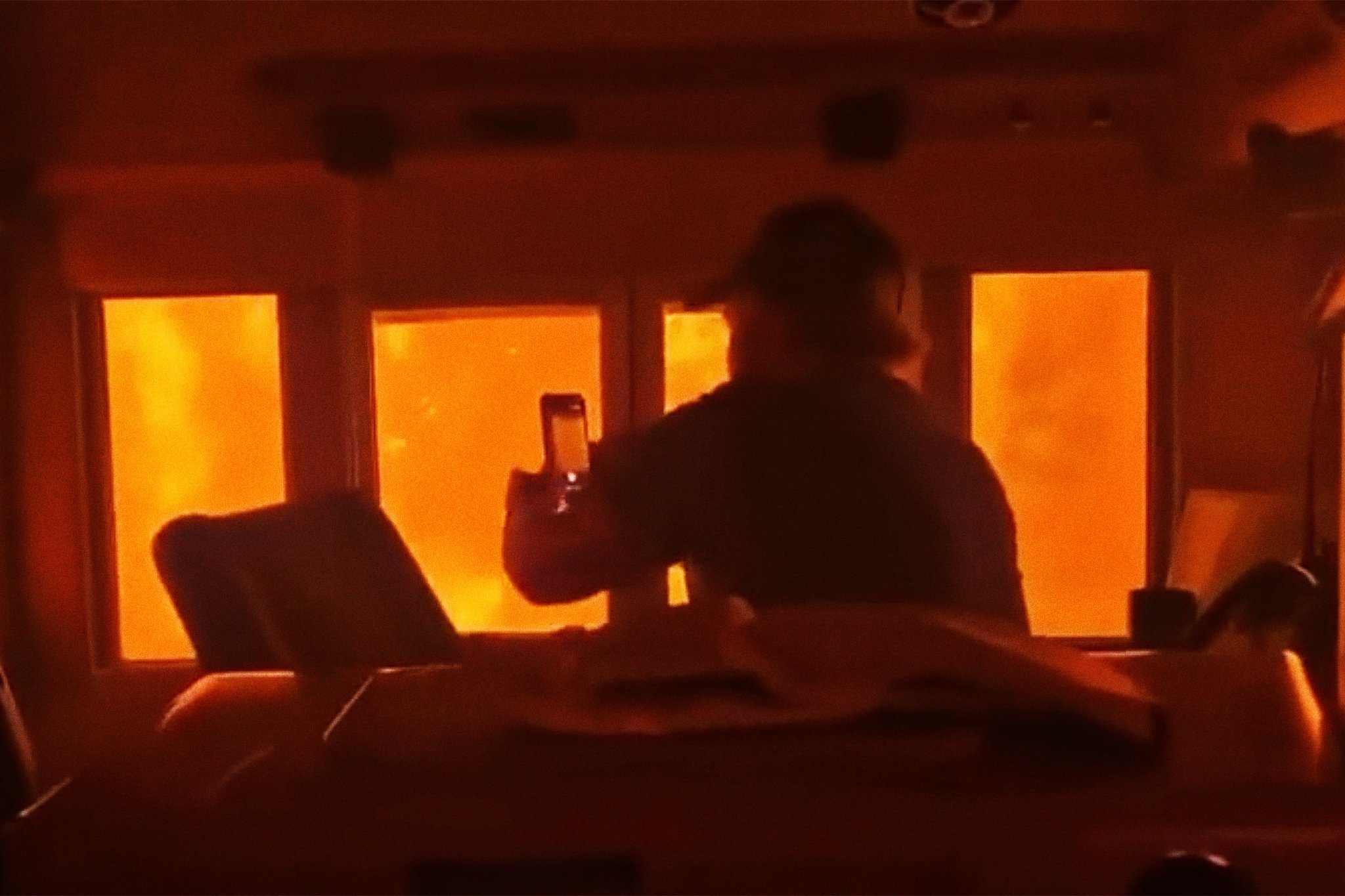
Apocalyptic footage shows a Canadian train crew trapped in their locomotive as it’s devoured by a wildfire.
Through the engine’s windows, the towering inferno can be seen raging through the treeline just a few feet away from the unmoving train, the world around them rendered completely orange. Some of the flames come close to licking the glass, as the wildfire blows across the tracks.
“This could potentially overtake us here, this has gotten a little scary,” one worker filming the video said, sounding surprisingly nonchalant. “Holy s***.”
“Y’all need to hurry up here. Like, seriously, we’re encased in flames now,” the cameraman adds.
“This has got to move f***ing quick here,” he added, after communicating with someone on the radio.
This is near Armstrong, Ontario.
— Sol Mamakwa (@solmamakwa) July 14, 2026
When will the Canadian National Railway Company make a statement about this incident? pic.twitter.com/6bKJYugeR0
The incident took place near Armstrong, Ontario, said Sol Mamakwa, an Ontario lawmaker who uploaded the video. Wildfires have been scouring their way across northern Canada this week, with at least 54 fires active in the country, according to the Canadian Interagency Forest Fire Center. Some 4.7 million acres of land have been burned by wildfires this year.
The blazes have forced dozens of communities to evacuate, including First Nations communities. Downwind of the disaster, Toronto, the largest city in the country, has been choked by wildfire smoke, turning the sky orange and plunging air quality levels to the worst in the world.
The train engineers in the video reportedly made it out safe. The Canadian National Railway Company (CN) confirmed that the train was stopped in Armstrong, telling Global News that all employees in the area were evacuated overnight Monday.
How they got stuck is unclear. It appears that they’re waiting for another train to pass them, which is seen later in the video, so they can proceed on the single track ahead. A thread on the r/railroading subreddit has a more dramatic telling, claiming that the engineers had crashed into the train cars that they left behind after going back to rescue a foreman, causing the engines to shut down. Allegedly, they then tried to escape on a hi-rail, a truck that can drive on both roads and train tracks, but it caught on fire, forcing them to make it out on foot. A movie-worthy story if true, but we couldn’t independently verify this account.
Even with the hellish conditions bearing down around them, the engineers were able to find moments of levity. When the other train finally emerged through the inferno and lumbered past them, the camera man couldn’t help but exclaim.
“Woo! That’s a meet and a half, eh?” he said.
More on the environment: A Staggering Number of People Are Dying Because of Record Heatwaves
The post Terrifying Video Shows Locomotive Engulfed in Wildfire Flames appeared first on Futurism.

EV owners were sent hefty PCNs but say some signs in private car parks fail to warn of fees to park and recharge car
Does refuelling your car class as parking? The answer appears to be yes if it’s an electric vehicle. Guardian Money has been contacted by several readers who were fined after charging their cars away from home.
The motorists report being caught out by signs that fail to make clear that charging points are subject to parking tariffs or to store opening times. Also, they have found some chargers being advertised as available for use when it would be a breach of the car park’s terms and conditions to use them.
Continue reading...
© Photograph: Nigel A Messenger/Alamy

© Photograph: Nigel A Messenger/Alamy

© Photograph: Nigel A Messenger/Alamy
Europeans are being crushed by deadly temperatures.
Record-breaking heatwaves across much of the continent have claimed thousands of lives and created a perfect storm for destructive wildfires, as The New York Times reports.
A staggering number of these deaths, experts urge, are linked to climate change. Britain’s national weather agency, Met Office, said that of the 2,700 deaths in England and Wales believed to be the result of extreme heat so far this season — and we’re barely halfway through summer — around 42 percent were likely the result of the “human-caused” climate change.
“However, it is clear that human-caused climate change is leading to more frequent and more intense summer heatwaves,” said Mark McCarthy, Met Office’s manager of climate attribution, in a statement. “This intensification is driving many impacts, including those affecting human health and mortality and other issues, such as agriculture, effects on transport infrastructure and biodiversity.”
In addition to the thousands of deaths in England and Wales, France has estimated that roughly a thousand excess deaths and hundreds of hospitalizations were caused by extreme heat, while Germany announced last week that its unprecedented temperatures have so far been linked to about 5,100 deaths.
French authorities continue to fight multiple major wildfires. The country’s national weather service, Météo-France, said last week that “the intense heat and dry soil have created an exceptional risk of forest fires.” Wales, Spain, and Portugal are also facing fires, which have collectively burned through tens of thousands of acres. Tens of thousands of people have been displaced by the blazes.
This year’s European fire season has already eclipsed the historical average and threatens to surpass the record set last summer.
Worst of all: this summer isn’t even an outlier. Extreme weather is worsening year-round around the globe. As it stands, this is the new normal — and scientists are warning that people and nations need to adapt.
“People need to be aware that we are now seeing dangerous climate change fueled heat that is claiming lives, disrupting schools and hospitals and shutting down transport and infrastructure,” said Imperial College London researcher Clair Barnes, who works on climate change and extreme weather, in a statement.
“It’s time we woke up to the fact that we now live in a country with dangerously hot summers,” Barnes continued. “To protect people during future extremes, we must urgently adapt to the reality of the climate we now have, and double down on global efforts to reach net zero emissions to stop this from getting worse.”
More on extreme heat: Climate Scientists Aghast at How Bad Things Are Getting, and So Fast
The post A Staggering Number of People Are Dying Because of Record Heatwaves appeared first on Futurism.

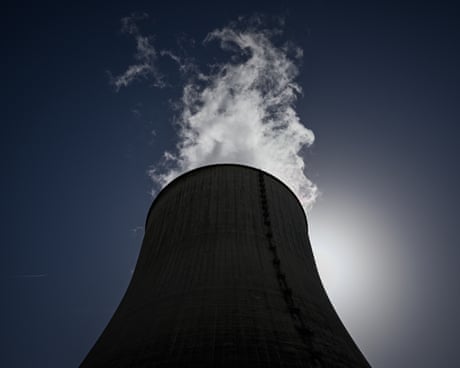
GenCost report contradicts parties’ claims about abandoning emissions target, and finds nuclear would be most expensive way to generate power
Get our breaking news email, free app or daily news podcast
Claims by the Coalition and One Nation that abandoning a net zero climate target would bring down power prices are contradicted in a new CSIRO report on the costs of generating electricity.
Generation costs will probably rise after 2030 regardless of Australia’s policy on net zero, according to the CSIRO’s annual GenCost report, but prices should then stabilise at levels below recent price spikes.
Continue reading...
© Photograph: Philippe Lopez/AFP/Getty Images

© Photograph: Philippe Lopez/AFP/Getty Images

© Photograph: Philippe Lopez/AFP/Getty Images
Deep within the world’s remaining equatorial forests, the last uncontacted Indigenous peoples continue to live in near-total isolation. They represent humanity’s final societies that have consciously chosen to remain beyond the reach of the modern world. Their existence is extraordinary not only because of who they are, but because of what their survival reveals about ourselves.
For decades, however, governments found it politically and economically convenient to pretend that many of these people did not exist.
That chapter is, thankfully, drawing to a close. Today, Peru, Brazil, and other South American nations officially recognize the existence of Indigenous peoples living in voluntary isolation. Yet the history of denying their existence remains one of the most revealing episodes in the modern relationship between development, politics, and human rights. It reminds us that before forests are exploited, the people living within them are often rendered politically invisible.
The lesson extends far beyond the Amazon.
Throughout history, governments have rarely denied the existence of people simply because evidence was lacking. In colonial times, the existence of indigenous societies and cultures had no bearing on European immigrant expansion. Their cultures were considered primitive, and civility and religion would be the great benefits of settler expansion. In the 20th and 21st centuries, denial served a more practical purpose. If no one officially occupied a forest, there were no communities whose rights required protection. No Indigenous reserves needed to be established. Logging concessions could be issued, roads extended, mines approved, and oil exploration expanded with fewer legal obstacles. Recognition would carry consequences.
Once governments acknowledge uncontacted peoples, they assume obligations under national constitutions, international human rights law, the United Nations Declaration on the Rights of Indigenous Peoples (UNDRIP), and, in many countries, ILO Convention 169. Suddenly, economic development must coexist with human rights.
For years, this tension played out repeatedly in the Peruvian Amazon.
As proposals emerged to establish reserves for Indigenous peoples living in voluntary isolation, regional politicians and government officials questioned whether these communities existed at all. They argued there was insufficient evidence despite decades of documentation by anthropologists, Indigenous organizations, and conservation scientists. Shelters, cultivated gardens, footprints, arrows, abandoned camps, aerial observations, and repeated eyewitness accounts painted an increasingly compelling picture. Yet recognition often lagged precisely where logging, oil, gas, or mining interests sought access.
In retrospect, this was never simply an anthropological debate. It was an economic one.
The existence of uncontacted peoples transformed forests from potential commercial assets into protected Indigenous territories. Recognition restricted extraction. Denial facilitated it.
Fortunately, much of that official denial has now ended. Governments increasingly recognize that uncontacted peoples do exist and deserve legal protection. Yet the episode leaves behind an important lesson: political narratives often reflect competing economic interests as much as objective evidence. The question is no longer whether uncontacted peoples exist. The question is whether governments possess the political will to protect them.
The irony is profound. The same territories that some once wished to portray as empty are now recognized as among the most important ecosystems on Earth.
Study after study demonstrates that Indigenous territories, particularly those occupied by peoples living in voluntary isolation, experience significantly lower rates of deforestation than surrounding forests. These landscapes contain extraordinary biodiversity, protect countless species yet to be documented by science, regulate regional rainfall, and store immense quantities of carbon essential to moderating global climate change.
Protecting uncontacted peoples, therefore, serves two inseparable purposes.
It safeguards fundamental human rights while simultaneously protecting some of humanity’s greatest environmental assets. In the western Amazon, where I have spent time working, these realities become impossible to separate.
This region contains the greatest concentration of uncontacted peoples anywhere on Earth. It is also among the richest expressions of biological diversity on the planet. Yet it remains under relentless pressure from illegal logging, mining, expanding road networks, narcotics trafficking, and land speculation. While Peru and Brazil have established large protected Indigenous territories, enforcement has weakened in many areas as criminal organizations and commercial interests increasingly penetrate previously inaccessible forests.
Every encounter between outsiders and uncontacted peoples carries enormous risk.
Centuries of violence, exploitation, and disease can be compressed into a single unexpected meeting. Illegal miners, loggers, and land invaders increasingly enter territories occupied by isolated peoples, provoking confrontations that neither side seeks. Fatal encounters have occurred involving both Indigenous defenders protecting their ancestral lands and outsiders venturing into territories they had no right to enter.
I experienced something that profoundly altered my appreciation of this reality.
On a recent expedition, I awoke before dawn to a river wrapped in mist beneath a pale orange sky. Overnight storms had left the air heavy with humidity as I walked along a stretch of exposed sand. Through the haze stood a man. Barely clothed, carrying what appeared to be a weapon of some form, he remained motionless for only a few seconds before silently disappearing back into the forest.
The encounter was brief, but penetrating. Ten thousand years faded away.
We were outside any officially protected Indigenous territory and had taken every precaution to avoid contact. Yet there he was, undeniably real. His footprints remained impressed in the wet sand long after he disappeared.
They reminded me that debates over whether isolated peoples exist are ultimately settled not by ideology, but by reality itself. These communities continue to live within forests that many outsiders still view primarily through the lens of economic opportunity.
Throughout the Americas, first contact repeatedly brought catastrophic epidemics, displacement, exploitation, and cultural destruction. Peoples living in voluntary isolation possess little immunity to common infectious diseases carried unknowingly by outsiders. Even a well-intentioned contact can prove devastating.
Some argue that continued isolation is no longer realistic—that climate change, expanding infrastructure, and globalization make eventual integration inevitable.
I believe this misunderstands both ethics and history.
It assumes that outside society possesses the right to determine other people’s future. It repeats the paternalism that has accompanied Indigenous dispossession for centuries. Respect requires something more difficult. It requires restraint.
The greatest lesson we should draw from the period when governments denied the existence of uncontacted peoples is not simply that denial was wrong. It is that economic convenience can shape political reality in dangerous ways. When forests are viewed primarily as timber, minerals, or agricultural land, it becomes remarkably easy to overlook the people who stand in the way of exploitation.
Today, official denial has largely given way to official recognition. That represents genuine progress. But recognition alone is insufficient if protections exist only on paper while illegal logging, mining, and organized crime continue to erode Indigenous territories on the ground.
Over the years, I have seen echoes of this same struggle elsewhere. In the highlands of Papua New Guinea, where stone tools were still in use, communities sought to preserve traditions against an advancing modern world. On India’s Andaman Islands, members of the Jarawa halted a military convoy I was travelling with, bows drawn, defending the integrity of their homeland. Across continents, the underlying question remains remarkably consistent: can modern societies respect the right of other cultures not to become like us?
The uncontacted peoples of this world challenge our assumptions about progress itself. Their existence reminds us that development is not the only measure of a society, and that autonomy sometimes means choosing a different path altogether.
Their territories also remind us that some of the world’s most effective conservationists have never described themselves as environmentalists. By simply defending their lives and territory, they have preserved ecosystems that benefit every person on Earth.
The people governments once pretended did not exist have become some of the planet’s important guardians. Protecting them is no longer only about correcting historical injustice. It is about recognizing that human rights, biodiversity, and climate stability are inseparable. Their silence in the forest is not absence. It is sovereignty.
Yet the story of the uncontacted has another, profound consideration for our era that extends far beyond remote forests. The history of the uncontacted tells us that for years, some governments denied the existence of people who were demonstrably there because acknowledging them carried political and economic costs. As we search for life beyond Earth, humility demands that we distinguish between what has not yet been confirmed and what may simply remain beyond our present ability—or willingness—to acknowledge.
History repeatedly warns against confusing the limits of our knowledge with the limits of reality.
Kerry Bowman, PhD, is a Canadian bioethicist and environmentalist. An instructor at the University of Toronto, he currently holds an academic appointment in the Faculty of Medicine and School of the Environment. Bowman’s recent work includes two major conservation projects in the Western Amazon and the Eastern Congo, focusing on the intersection of human health with factors such as deforestation, biodiversity loss, and emerging zoonotic diseases.

An international team of geophysicists examining the Southern Indian Ocean floor witnessed a section greater than two meters split apart, releasing millions of cubic meters of stored-up magma within just a few days.
Jean-Yves Royer, a marine geophysicist at the French National Centre for Scientific Research (CNRS) in Brest and a co-author of the study detailing the team’s serendipitous discovery, said witnessing the ocean floor splitting apart in real time was “a major surprise,” while the team hailed the scientific value of finally witnessing these processes up close.
Because the ocean floor is dynamic, the movement of tectonic plates pulling the existing crust away from mid-oceanic ridges allows magma to well up to the surface. When it dries, this material solidifies, adding to the existing crust. While scientists have understood this process for decades, no one has ever witnessed the phenomenon directly. This absence has left a gap in scientific knowledge that, as study co-author Isobel Yeo, a geoscientist at the National Oceanography Center in Southampton, UK, notes, persists to this day.
“We still know remarkably little about the frequency, magnitude, and dynamics of the eruptions and tectonic processes that build them”, the researcher explained
To try to fill that gap, the team focused its research on a section of the seafloor called the Southeast Indian Ridge, which runs east to west across the Indian Ocean. Due to its location, the ridge separates two tectonic plates, the Antarctic and the Australian.
The team notes that these two plates, which contain Antarctica and Oceania and the surrounding oceanic crust, are continuously moving in opposite directions by roughly six centimeters each year. Although both plates are exerting stress on the ridge, the team said the northward movement of the Australian plate accounts for most of this annual expansion.
The motion dynamics can also change by location. For example, one section of the Australian plate may stay stationary for a period and then suddenly experience a large surge in motion. These sudden events are accompanied by earthquakes.
In hopes of catching the ocean floor splitting in real time, Royer and colleagues ventured to the Southeastern Indian Ridge in February 2024. Once on site, the team deployed three categories of sensors at several different locations along a 100-kilometer stretch of the ridge. The sensor array included five hydrophones that detect underwater sound, including the telltale sonic waves produced by earthquakes. The team also deployed 15 battery-powered acoustic beacons designed to emit and detect sounds at selected locations along the ridge.
Because the acoustic beacons can produce and receive sounds, the team programmed them to exchange audio signals every four hours. This regular exchange allowed the team to measure the time between sound and response, which they used to determine the distance between the two beacons at four-hour intervals.
After the sensors were all in place, the team’s efforts finally paid off. According to the study, the carefully placed hydrophones began to detect seismic tremors on the ocean floor. These signals were followed by several days of acoustic beacon returns, indicating some of the stations had moved. When the team calculated the time between beacon signals, they determined that some sections of the ocean floor had moved by “at least” two meters as they were pulled away from the ridge.
The team also found evidence that the ocean floor was splitting apart in real time, altering the ocean floor’s depth. According to a reading from a single pressure sensor, the depth change caused by the event was “substantial.”
In the study’s conclusion, the research team estimates that 160 million cubic meters of lava rose between the split ocean floor and spilled onto the seafloor. They also suggested that the magma explosion emptied a reservoir that had accumulated along the ridge, which caused portions of the floor to “subside.”
Royer said the team was only expecting to find a vertical displacement of “a few centimeters.” Instead, he notes, “we measured 4.2 meters.” The team said this large amount of change suggests that three to six decades’ worth of stress from the northward movement of the Australian tectonic plate was released during the ocean-floor-splitting event.
When discussing the significance of witnessing the ocean floor splitting apart in real time for the first time, Yeo said their study “provides a rare direct view of these processes in action.”
The study “Anatomy of a seafloor spreading event captured by in situ seismogeodesy” was published in Nature.
Christopher Plain is a Science Fiction and Fantasy novelist and Head Science Writer at The Debrief. Follow and connect with him on X, learn about his books at plainfiction.com, or email him directly at christopher@thedebrief.org.