❌

Reading view

I Am Artemis: Jason Peterson

4 Min Read

I Am Artemis: Jason Peterson

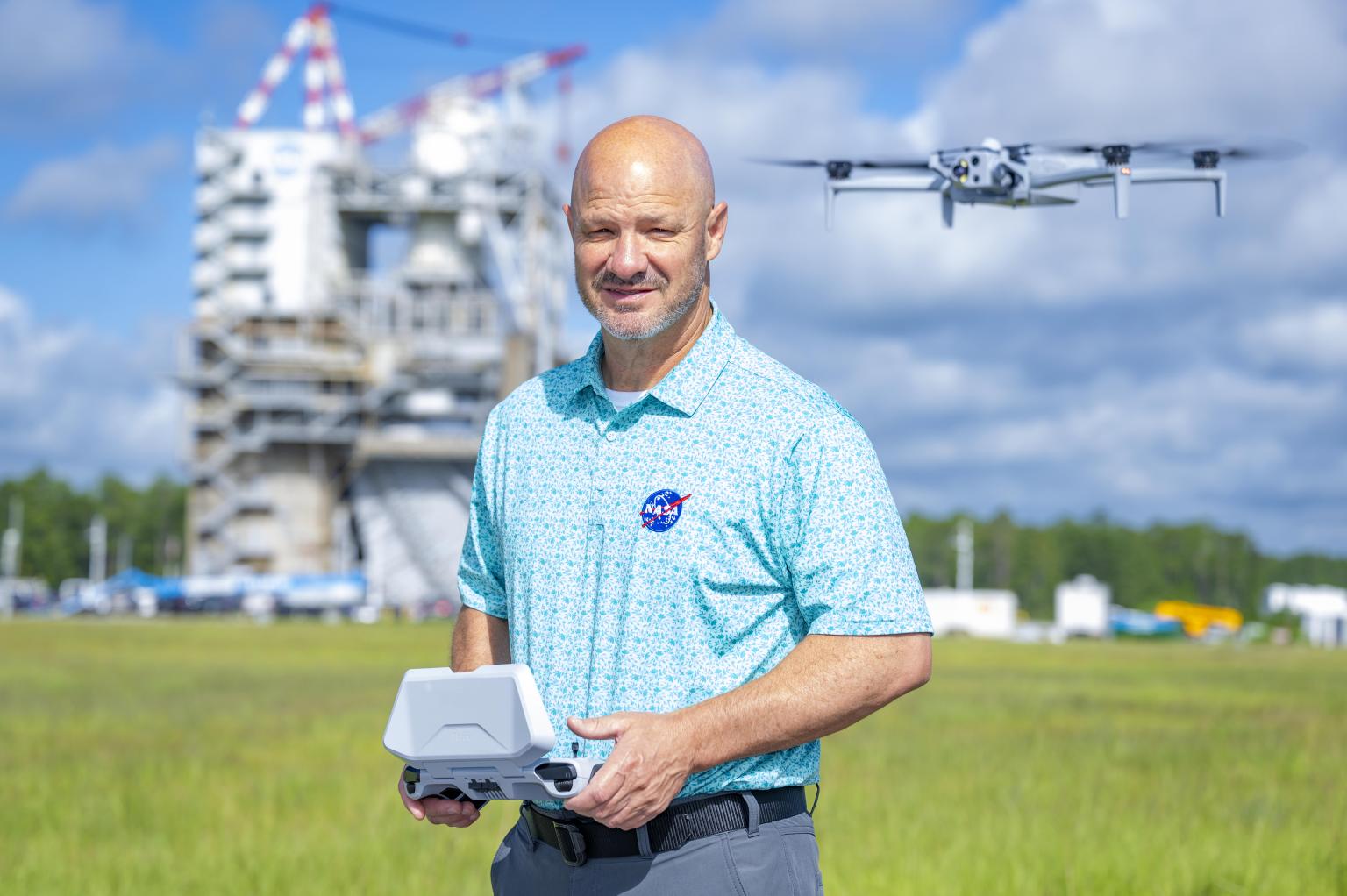
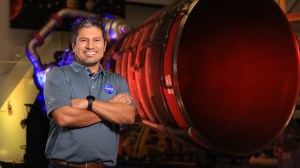
NASA’s Jason Peterson is the range operations manager at NASA’s Stennis Space Center. For Artemis II, he supported the team responsible for delivering video and communication feeds for launch and splashdown.
Credits: NASA/Danny Nowlin

Jason Peterson’s responsibilities for NASA’s Artemis II mission went beyond his usual role as the range operations manager at NASA’s Stennis Space Center near Bay St. Louis, Mississippi.

For Peterson, working at NASA is a surreal full-circle moment.

“I grew up in DeLisle, Mississippi, right down the road from NASA,” said Peterson. “You would hear NASA testing, the windows would shake, and you knew they were out there. Not in a million years would I have ever dreamed I would work with NASA.”

His career journey took a few turns before reaching the space agency.

“I got out of school, welded, went to college and then to the Air Force. The path to NASA really started to develop from there,” said Peterson.

Peterson spent 24 years in the U.S. Air Force and Air National Guard, working in airfield and air-to-ground range operations, followed by a few years working as an aircraft dispatcher at Airbus Final Assembly Line.

Peterson credits his military experience with preparing him for the 12-to-16-hour workdays that helped bring the Artemis II test flight around the Moon and into view for audiences around the world.

He supported the team responsible for delivering video and communication feeds for the launch of NASA’s SLS (Space Launch System) rocket with the Artemis II crew aboard the Orion spacecraft, and then splashdown in the Pacific Ocean.

During the nearly 10-day mission, NASA astronauts Reid Wiseman, Victor Glover, Christina Koch, and CSA (Canadian Space Agency) astronaut Jeremy Hansen completed a record-setting lunar flyby, taking them 252,756 miles at their farthest distance from Earth.

Aboard the USS John P. Murtha, Peterson was the first on the ship to spot the capsule returning with the crew.

“The sonic boom was the moment it truly hit me. Even though I was tracking the capsule, it did not fully register until then. Chills went down my neck and back. You realize our astronauts are coming home. It was an incredible and emotional moment.”
JASON PETERSON

JASON PETERSON

Range Operations Manager for NASA Stennis
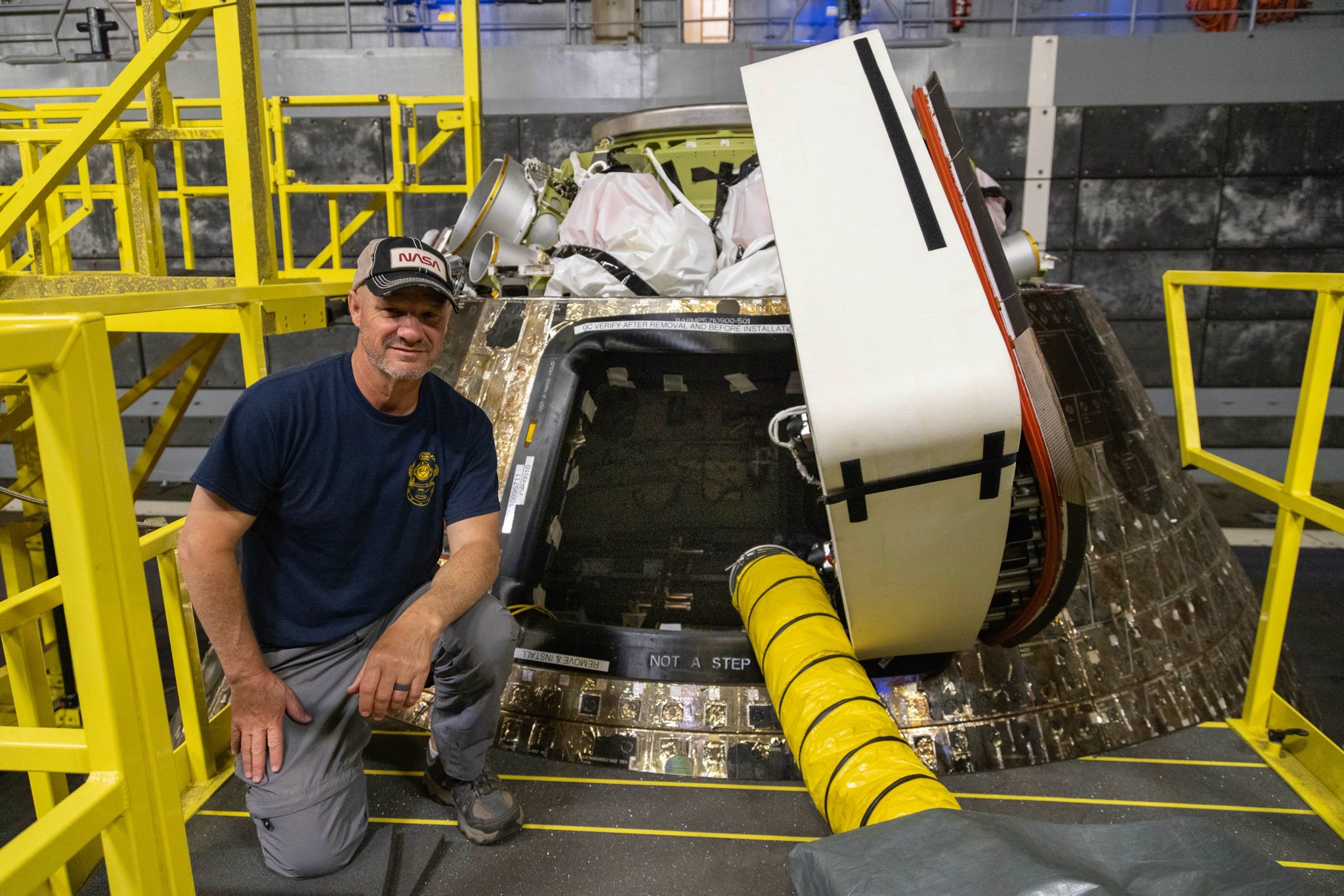
Jason Peterson, NASA Stennis range operations manager, is shown with the Orion spacecraft aboard the USS John P. Murtha on April 13, 2026. Peterson was the first to spot the capsule returning with the Artemis II crew as he supported the team responsible for delivering video and communication feeds during splashdown operations. Credits: NASA
NASA

Peterson operated one of six cameras providing live coverage by using a high‑resolution, multi‑sensor system with thermal capabilities. Using the ship’s heading and Orion’s predicted trajectory, he located the capsule within minutes and began tracking it.

Orion entered Earth’s atmosphere at about 400,000 feet above the planet’s surface, traveling nearly 35 times the speed of sound and about 1,956 statute miles from its splashdown point off the coast of California. Peterson tracked Orion from the release of the small parachutes that first slow and steady the capsule, through the main parachutes opening, and all the way to splashdown.

“You are fully locked in, keeping it centered, in focus, and steady,” said Peterson.

Peterson’s focus on the mission began weeks earlier at NASA’s Kennedy Space Center in Florida.

In the days leading to launch, Peterson worked with the team running full systems checks, staging communications gear, and preparing drones and fixed‑wing camera assets. He helped configure and operate the systems that ensured live video flowed from the launch pad, the crowds, and surrounding air and ground platforms.

On April 1, the launch day of Artemis II, the team unloaded and set up high‑resolution sensors, connection terminals, routers, monitors, fiber lines, and drone equipment. They flew drones to capture crowd scenes and aerial views before liftoff.

As the SLS rocket launched, Peterson’s full attention was on positioning the drone and maintaining the shot.

“There is not much time to step back and take in the moment, as you are concentrating on precision,” said Peterson.

As the mission got underway, Peterson and the team packed up, returned to the facility, and downloaded the day’s footage.

The Artemis II crew were more than halfway to the Moon as Peterson arrived in San Diego on April 4. In the days leading to splashdown, the team loaded and installed high‑fidelity cameras and supporting equipment, all to help the world witness a historic milestone when the Artemis II crew returned to Earth on April 10.

Next up will be Artemis III. NASA will launch four astronauts from NASA Kennedy aboard the Orion spacecraft on the SLS rocket. Building on the successful Artemis II crewed test flight in April, Artemis III will pave the way for future surface missions, with experts like Peterson helping every step of the way.
About the Author

Bo Black

Communications Strategist

Share

Details

Last Updated
Jun 23, 2026
Editor
Catherine Ragin Williams
Keep Exploring

Discover More Topics From NASA

  •  

NASA Astronauts to Answer Questions from New Jersey Students

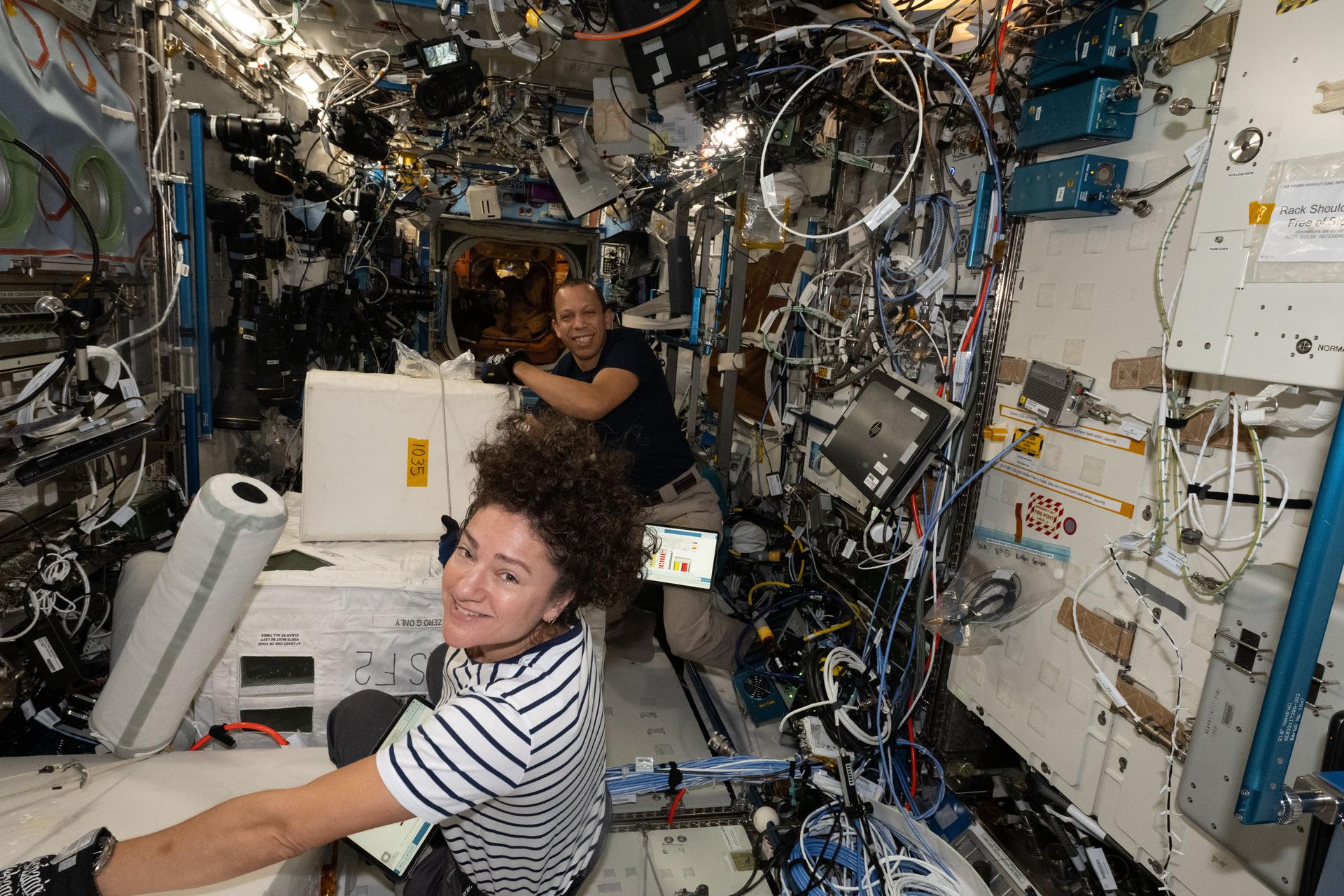
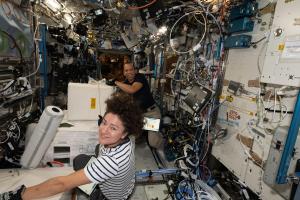
NASA astronauts Jessica Meir is pictured in the foreground wearing a black and white striped t-shirt. Her hair is curly and pulled up at the top of her head. She has a tablet in her lap and mittens on her hands as she faces the camera smiling. NASA astronaut Chris Williams is behind her wearing a black t-shirt and khaki pants, he has a tablet strapped to this upper leg. He is touching a white cube that sits in the middle of the space craft, while looking forward and smiling. The two astronauts are collecting frozen research samples while living and working aboard the International Space Station.
NASA astronauts Jessica Meir and Chris Williams collect frozen research samples while living and working aboard the International Space Station.
Credit: ESA/Sophie Adenot

Students in New Jersey will hear from NASA astronauts Chris Williams and Jessica Meir as they answer prerecorded STEM questions while aboard the International Space Station.

The Earth-to-space call will begin at 12:05 p.m. EDT, Thursday, June 18, and will stream live on the agency’s Learn With NASA YouTube channel.

This event is hosted by Newton Public Schools in Newton, New Jersey, for students in grades K-12 and members of the community. This unique opportunity aims to deepen understanding of space exploration and enhance awareness of STEM careers.

Media interested in covering the event must RSVP no later than 5 p.m. EDT, Wednesday, June 17, to Dr. Joseph Piccirillo at: 973-383-7392, x4229 or jpiccirillo@newtonnj.org.

For more than 25 years, astronauts have continuously lived and worked aboard the space station, testing technologies, performing science, and developing skills needed to explore farther from Earth. Astronauts communicate with NASA’s Mission Control Center in Houston 24 hours a day through SCaN’s (Space Communications and Navigation) Near Space Network.

Research and technology investigations taking place aboard the space station benefit people on Earth and lay the groundwork for other agency deep space missions. As part of NASA’s Artemis program, the agency will send astronauts to the Moon to prepare for future human exploration of Mars, inspiring the world through discovery in a new Golden Age of innovation and exploration.

For more information on NASA in-flight calls, visit:

https://www.nasa.gov/stemonstation

The post NASA Astronauts to Answer Questions from New Jersey Students appeared first on NASA Science.

  •  

NASA Astronauts to Answer Questions from New Jersey Students

NASA astronauts Jessica Meir is pictured in the foreground wearing a black and white striped t-shirt. Her hair is curly and pulled up at the top of her head. She has a tablet in her lap and mittens on her hands as she faces the camera smiling. NASA astronaut Chris Williams is behind her wearing a black t-shirt and khaki pants, he has a tablet strapped to this upper leg. He is touching a white cube that sits in the middle of the space craft, while looking forward and smiling. The two astronauts are collecting frozen research samples while living and working aboard the International Space Station.
NASA astronauts Jessica Meir and Chris Williams collect frozen research samples while living and working aboard the International Space Station.
Credit: ESA/Sophie Adenot

Students in New Jersey will hear from NASA astronauts Chris Williams and Jessica Meir as they answer prerecorded STEM questions while aboard the International Space Station.

The Earth-to-space call will begin at 12:05 p.m. EDT, Thursday, June 18, and will stream live on the agency’s Learn With NASA YouTube channel.

This event is hosted by Newton Public Schools in Newton, New Jersey, for students in grades K-12 and members of the community. This unique opportunity aims to deepen understanding of space exploration and enhance awareness of STEM careers.

Media interested in covering the event must RSVP no later than 5 p.m. EDT, Wednesday, June 17, to Dr. Joseph Piccirillo at: 973-383-7392, x4229 or jpiccirillo@newtonnj.org.

For more than 25 years, astronauts have continuously lived and worked aboard the space station, testing technologies, performing science, and developing skills needed to explore farther from Earth. Astronauts communicate with NASA’s Mission Control Center in Houston 24 hours a day through SCaN’s (Space Communications and Navigation) Near Space Network.

Research and technology investigations taking place aboard the space station benefit people on Earth and lay the groundwork for other agency deep space missions. As part of NASA’s Artemis program, the agency will send astronauts to the Moon to prepare for future human exploration of Mars, inspiring the world through discovery in a new Golden Age of innovation and exploration.

For more information on NASA in-flight calls, visit:

https://www.nasa.gov/stemonstation

  •  

NASA Astronaut Anil Menon Available for Prelaunch Virtual Interviews

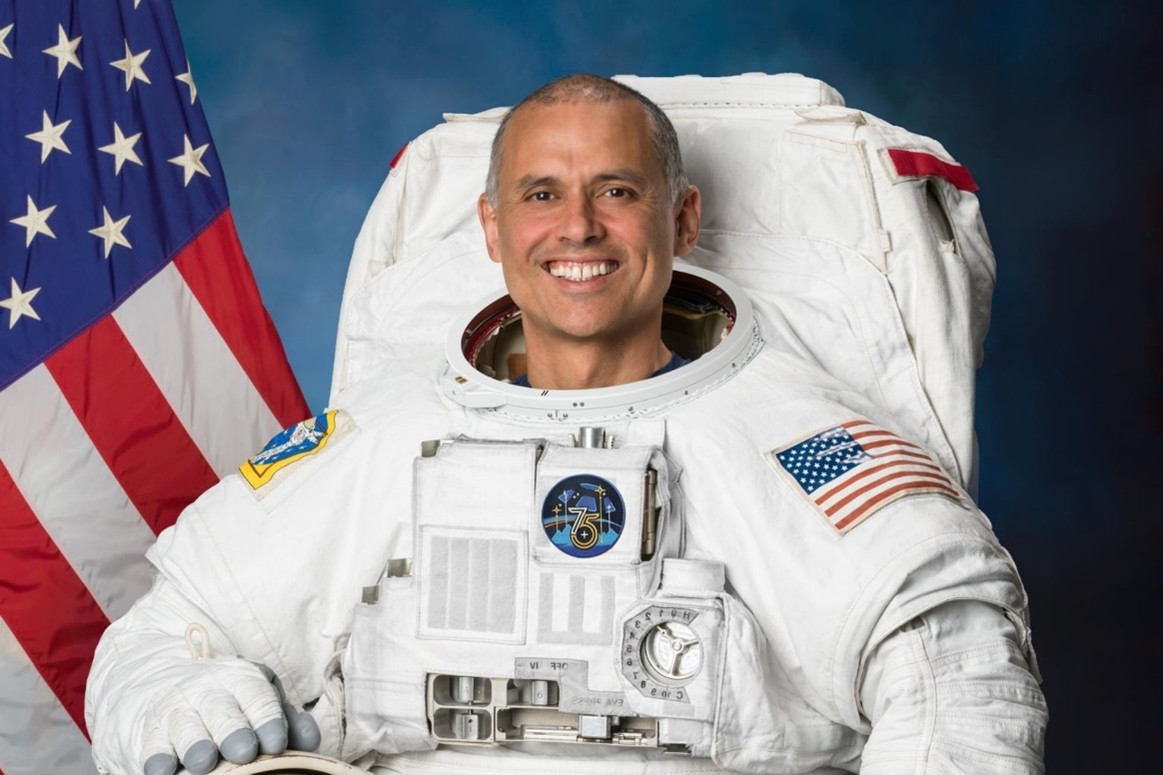
NASA astronaut and International Space Station Expedition 74/75 flight engineer Anil Menon poses for a portrait at NASA's Johnson Space Center in Houston.
NASA astronaut and International Space Station Expedition 74/75 flight engineer Anil Menon poses for a portrait at NASA’s Johnson Space Center in Houston.
NASA/James Blair

NASA astronaut Anil Menon will be available for limited media interviews beginning at 9 a.m. EDT Monday, June 22, to discuss his upcoming mission to the International Space Station as part of Expeditions 74/75.

The virtual interviews will take place from the Gagarin Cosmonaut Training Center in Star City, Russia, and will stream live on the agency’s YouTube channel.

Media interested in participating must submit a request to the newsroom at NASA’s Johnson Space Center in Houston no later than 5 p.m. Wednesday, June 17, by emailing jsccommu@mail.nasa.gov. A copy of NASA’s media accreditation policy is online.

Menon is scheduled to launch to the space station Tuesday, July 14, from the Baikonur Cosmodrome in Kazakhstan aboard the Roscosmos Soyuz MS-29 spacecraft with Roscosmos cosmonauts Pyotr Dubrov and Anna Kikina. The trio will spend about eight months aboard the orbiting laboratory before returning to Earth in spring 2027.

During his expedition, Menon will conduct scientific investigations and technology demonstrations to help humans prepare for future exploration missions to the Moon and Mars, and to provide benefits on Earth. Among the hundreds of experiments planned during his mission, he will participate in studies to better understand astronaut vein structure, blood flow, and blood composition in microgravity. He also will test producing intravenous fluids using the space station’s potable water.

The Soyuz MS-29 mission will be his first spaceflight after he was selected as part of NASA’s 2021 astronaut class. A native of Minneapolis, Menon is an emergency medicine physician, mechanical engineer, and colonel in the United States Space Force. He also has served as an expedition flight surgeon supporting the agency’s crew members aboard the space station.

For more than 25 years, people have lived and worked continuously aboard the International Space Station, advancing scientific knowledge and making research breakthroughs not possible on Earth. The space station helps NASA understand and overcome the challenges of human spaceflight, expand commercial opportunities in low Earth orbit, and build on the foundation for long-duration missions to the Moon, as part of the Artemis program, and to Mars.

To learn more about International Space Station research, operations, and its crews, visit: 

https://www.nasa.gov/station

-end- 

Jimi Russell  
Headquarters, Washington 
202-358-1100 
james.j.russell@nasa.gov

Anna Schneider / Mary Pfister
Johnson Space Center, Houston
281-483-5111
anna.c.schneider@nasa.gov / mary.m.pfister@nasa.gov

The post NASA Astronaut Anil Menon Available for Prelaunch Virtual Interviews appeared first on NASA Science.

  •  

NASA Astronaut Anil Menon Available for Prelaunch Virtual Interviews

NASA astronaut and International Space Station Expedition 74/75 flight engineer Anil Menon poses for a portrait at NASA's Johnson Space Center in Houston.
NASA astronaut and International Space Station Expedition 74/75 flight engineer Anil Menon poses for a portrait at NASA’s Johnson Space Center in Houston.
NASA/James Blair

NASA astronaut Anil Menon will be available for limited media interviews beginning at 9 a.m. EDT Monday, June 22, to discuss his upcoming mission to the International Space Station as part of Expeditions 74/75.

The virtual interviews will take place from the Gagarin Cosmonaut Training Center in Star City, Russia, and will stream live on the agency’s YouTube channel.

Media interested in participating must submit a request to the newsroom at NASA’s Johnson Space Center in Houston no later than 5 p.m. Wednesday, June 17, by emailing jsccommu@mail.nasa.gov. A copy of NASA’s media accreditation policy is online.

Menon is scheduled to launch to the space station Tuesday, July 14, from the Baikonur Cosmodrome in Kazakhstan aboard the Roscosmos Soyuz MS-29 spacecraft with Roscosmos cosmonauts Pyotr Dubrov and Anna Kikina. The trio will spend about eight months aboard the orbiting laboratory before returning to Earth in spring 2027.

During his expedition, Menon will conduct scientific investigations and technology demonstrations to help humans prepare for future exploration missions to the Moon and Mars, and to provide benefits on Earth. Among the hundreds of experiments planned during his mission, he will participate in studies to better understand astronaut vein structure, blood flow, and blood composition in microgravity. He also will test producing intravenous fluids using the space station’s potable water.

The Soyuz MS-29 mission will be his first spaceflight after he was selected as part of NASA’s 2021 astronaut class. A native of Minneapolis, Menon is an emergency medicine physician, mechanical engineer, and colonel in the United States Space Force. He also has served as an expedition flight surgeon supporting the agency’s crew members aboard the space station.

For more than 25 years, people have lived and worked continuously aboard the International Space Station, advancing scientific knowledge and making research breakthroughs not possible on Earth. The space station helps NASA understand and overcome the challenges of human spaceflight, expand commercial opportunities in low Earth orbit, and build on the foundation for long-duration missions to the Moon, as part of the Artemis program, and to Mars.

To learn more about International Space Station research, operations, and its crews, visit: 

https://www.nasa.gov/station

-end- 

Jimi Russell  
Headquarters, Washington 
202-358-1100 
james.j.russell@nasa.gov

Anna Schneider / Mary Pfister
Johnson Space Center, Houston
281-483-5111
anna.c.schneider@nasa.gov / mary.m.pfister@nasa.gov

  •  

NASA to Cover 34th SpaceX Resupply Mission Space Station Departure

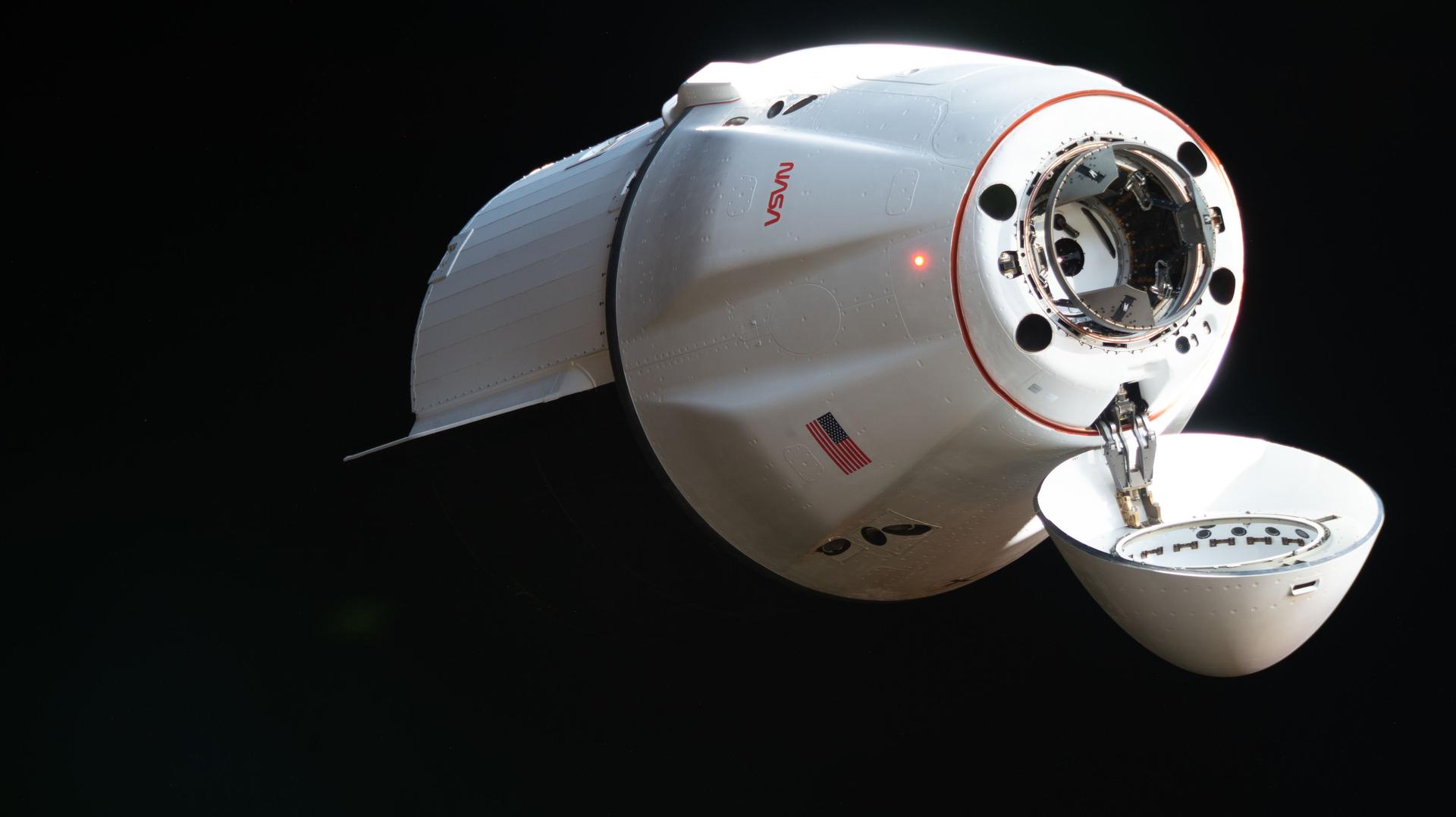
The SpaceX Dragon cargo spacecraft supporting the company’s 34th commercial resupply services mission for NASA approaches the International Space Station on May 17, 2026, carrying nearly 6,500 pounds of food, supplies, and equipment for the Expedition 74 crew.
Credit: NASA

NASA and its international partners are set to receive scientific research samples and hardware as a SpaceX Dragon spacecraft is scheduled to depart the International Space Station on Tuesday, June 16, for its return to Earth.

Watch NASA’s live undocking coverage beginning at 11:45 a.m. EDT on NASA+, Amazon Prime, and the agency’s YouTube channel. Learn how to watch NASA content through a variety of online platforms, including social media.

The Dragon spacecraft will undock from the forward port of the station’s Harmony module at about 12:05 p.m., after receiving a command from SpaceX ground controllers. The spacecraft then will fire its thrusters to move safely away from the orbiting complex.

Following a June 16 departure, the spacecraft will reenter Earth’s atmosphere on Wednesday, June 17, before splashing down off the coast of California at approximately 5:08 a.m. PDT. NASA will not stream the splashdown but will post updates on its space station blog.

Dragon will return to Earth with thousands of pounds of cargo, carrying samples that could shape future space exploration and life on Earth. Research returning includes bioprinted organ and cartilage tissue, data on improving cryogenic fuel storage for future space missions, and DNA‑inspired materials to develop new cancer treatments. The returning hardware includes an ocular imaging device used to monitor crew members’ eye health, an absorbent bed that filters trace contaminants from cabin air, and a separator pump from the waste and hygiene compartment.

Loaded with nearly 6,500 pounds of crew cargo and science experiments, Dragon arrived at the station on May 17 after launching two days earlier on a Falcon 9 rocket from Space Launch Complex 40 at Cape Canaveral Space Force Station in Florida.

For more than 25 years, people have lived and worked continuously aboard the International Space Station, advancing scientific knowledge and making research breakthroughs not possible on Earth. The space station helps NASA understand and overcome the challenges of human spaceflight, expand commercial opportunities in low Earth orbit, and build on the foundation for long-duration missions to the Moon, as part of the Artemis program, and to Mars.

Get breaking news, images, and features from the space station on Instagram, Facebook, and X.

Learn more about International Space Station research and operations at:

https://www.nasa.gov/international-space-station

-end-

Jimi Russell
Headquarters, Washington
202-358-1100
james.j.russell@nasa.gov

Leah Cheshier
Johnson Space Center, Houston
281-483-5111
leah.d.cheshier@nasa.gov

The post NASA to Cover 34th SpaceX Resupply Mission Space Station Departure appeared first on NASA Science.

  •  

NASA to Cover 34th SpaceX Resupply Mission Space Station Departure

The SpaceX Dragon cargo spacecraft supporting the company’s 34th commercial resupply services mission for NASA approaches the International Space Station on May 17, 2026, carrying nearly 6,500 pounds of food, supplies, and equipment for the Expedition 74 crew.
Credit: NASA

NASA and its international partners are set to receive scientific research samples and hardware as a SpaceX Dragon spacecraft is scheduled to depart the International Space Station on Tuesday, June 16, for its return to Earth.

Watch NASA’s live undocking coverage beginning at 11:45 a.m. EDT on NASA+, Amazon Prime, and the agency’s YouTube channel. Learn how to watch NASA content through a variety of online platforms, including social media.

The Dragon spacecraft will undock from the forward port of the station’s Harmony module at about 12:05 p.m., after receiving a command from SpaceX ground controllers. The spacecraft then will fire its thrusters to move safely away from the orbiting complex.

Following a June 16 departure, the spacecraft will reenter Earth’s atmosphere on Wednesday, June 17, before splashing down off the coast of California at approximately 5:08 a.m. PDT. NASA will not stream the splashdown but will post updates on its space station blog.

Dragon will return to Earth with thousands of pounds of cargo, carrying samples that could shape future space exploration and life on Earth. Research returning includes bioprinted organ and cartilage tissue, data on improving cryogenic fuel storage for future space missions, and DNA‑inspired materials to develop new cancer treatments. The returning hardware includes an ocular imaging device used to monitor crew members’ eye health, an absorbent bed that filters trace contaminants from cabin air, and a separator pump from the waste and hygiene compartment.

Loaded with nearly 6,500 pounds of crew cargo and science experiments, Dragon arrived at the station on May 17 after launching two days earlier on a Falcon 9 rocket from Space Launch Complex 40 at Cape Canaveral Space Force Station in Florida.

For more than 25 years, people have lived and worked continuously aboard the International Space Station, advancing scientific knowledge and making research breakthroughs not possible on Earth. The space station helps NASA understand and overcome the challenges of human spaceflight, expand commercial opportunities in low Earth orbit, and build on the foundation for long-duration missions to the Moon, as part of the Artemis program, and to Mars.

Get breaking news, images, and features from the space station on Instagram, Facebook, and X.

Learn more about International Space Station research and operations at:

https://www.nasa.gov/international-space-station

-end-

Jimi Russell
Headquarters, Washington
202-358-1100
james.j.russell@nasa.gov

Leah Cheshier
Johnson Space Center, Houston
281-483-5111
leah.d.cheshier@nasa.gov

  •  

Crew Works Microbiology, Advanced Tech and Congratulates New Artemis III Crew

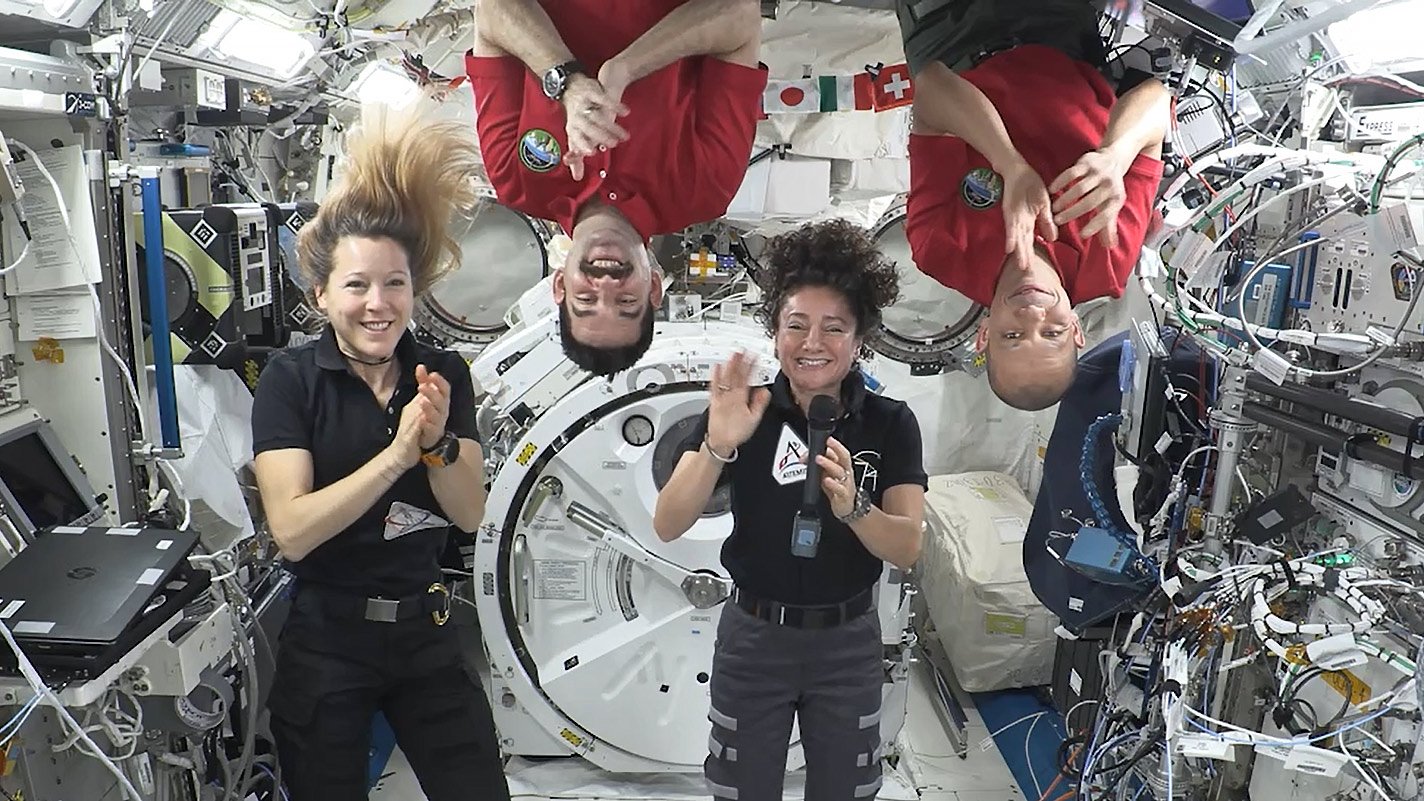
Expedition 74 crew members (from left) Sophie Adenot, Jack Hathaway, Jessica Meir, and Chris Williams congratulate the Artemis III crew in a recorded video message.
NASA

Microbiology and human research were the main scientific focus aboard the International Space Station on Tuesday to protect health on and off the Earth. The Expedition 74 crew members also worked on advanced research hardware and sent down a congratulatory message to the Artemis III crew, who were named during an announcement from the Johnson Space Center in Houston.

Some common bacteria have shown an increased resistance to antibiotics in the space environment potentially affecting an astronaut’s ability to fight an infection. Flight engineers Jack Hathway of NASA and Sophie Adenot of ESA (European Space Agency) explored the antibiotic-resistant organisms inside the Kibo laboratory module’s Life Science Glovebox and the Harmony module’s maintenance work area by processing the microbial samples and preparing them for DNA extraction and analysis. Doctors will use the data to understand how microbes adapt to microgravity possibly informing countermeasures to reduce the risk to astronaut health and protect patients on Earth.

NASA flight engineers Jessica Meir and Chris Williams partnered together loading a CubeSat-packed small satellite orbital deployer into Kibo’s airlock that will soon be placed into the vacuum of space. The Japanese robotic arm will grapple the deployer and point it away from the orbital outpost where it will safely deploy the shoebox-sized satellites into Earth orbit. A series of tiny satellites will be released for public and private research, including the Hokushin-1 CubeSat that will test space technologies such as radio frequency, propulsion, and solar arrays.

Roscosmos cosmonauts Sergey Kud-Sverchkov and Andrey Fedyaev worked on a pair of different investigations on Tuesday to continuously monitor how weightlessness affects the human body. Kud-Sverchkov, the orbital outpost’s commander, strapped an acoustic sensor around his neck that recorded his rapid exhalation to learn how living in space affects the respiratory system. Fedyaev wore a set of cuffs attached to his arms, wrist, and fingers measuring his blood pressure for a microgravity cardiac experiment. Roscosmos flight engineer Sergei Mikaev was back on artificial intelligence research studying new tools to boost crew efficiency and communications aboard a spacecraft.

Four of the station’s astronauts also sent down a message congratulating the four new Artemis III crew members commander Randy Bresnik of NASA, pilot Luca Parmitano of ESA, and NASA mission specialists Frank Rubio and Andre Douglas. The four flight engineers each spoke a few inspiring words with Meir stating, “Congratulations, Artemis III and godspeed on the journey ahead.” Watch the crew message on @Space_Station X.

Learn more about station activities by following the space station blog, @space_stationon X, as well as the ISS Facebook and ISS Instagram accounts.

Get the latest from NASA delivered every week. Subscribe here.

The post Crew Works Microbiology, Advanced Tech and Congratulates New Artemis III Crew appeared first on NASA Science.

  •  
❌