Login

NVIDIA and Japan’s Medical Giants Put AI Into Surgery, Scanners and Drug Design
Japan Wires AI Into Medicine Japan built the world’s most trusted names in medical hardware and biopharma. This


The Japanese government wants to sharply increase the number of launches despite struggles with both current and new launch vehicles.
The post Japan seeks to ramp up launch activity appeared first on SpaceNews.
As the United States of America celebrated its 250th birthday on terra firma with fireworks displays this weekend, two Asian countries made some splashes of their own farther from Earth.
On Sunday, an aging Japanese spacecraft named Hayabusa2, which completed its initial sample-return objective more than half a decade ago, found success with an extended mission that saw the vehicle fly by a peanut-shaped asteroid named Torifune.
Hours later, the Chinese space agency released images from a spacecraft, Tianwen-2, arriving at its target asteroid following a journey of 1 billion km. At this small asteroid, the Chinese spacecraft will attempt to retrieve samples and return them to Earth late next year.
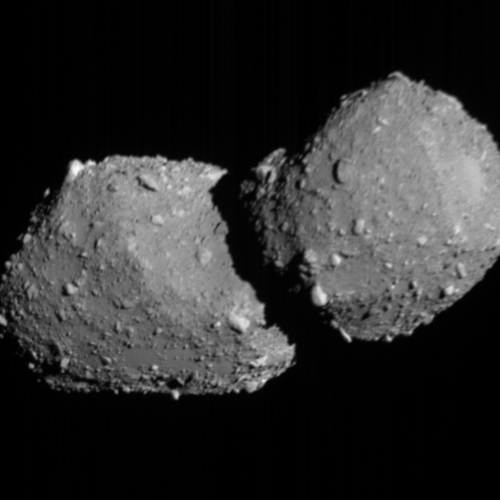
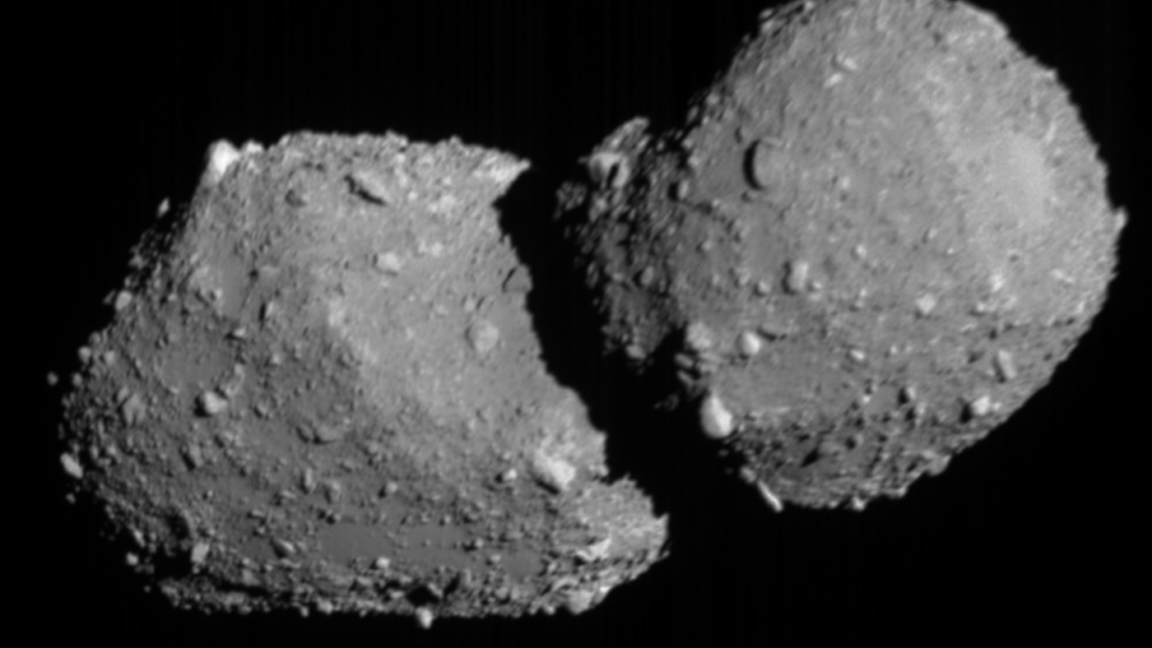
© JAXA
 Some of these places look like dream destinations until you learn the disasters hiding underneath
Welcome to Edition 8.46 of the Rocket Report! We don't mention Starship in the body of this week's report, so I'll give a brief update here. The next test flight of SpaceX's mega-rocket—Flight 13—could happen as soon as next month, according to Gwynne Shotwell, the company's president and chief operating officer, in a recent interview with CNBC. There's still a fair bit of work to do before Flight 13, so don't count on a launch next month just yet. What we do know, based on Shotwell's comments to CNBC, is the next Starship test flight will look a lot like the previous one last month, with a suborbital flight path and a splashdown of the ship in the Indian Ocean. SpaceX is holding off on an orbital flight until at least the following launch, Flight 14, after the ship was unable to complete a critical engine restart in space on the last flight.
As always, we welcome reader submissions. If you don't want to miss an issue, please subscribe using the box below (the form will not appear on AMP-enabled versions of the site). Each report will include information on small-, medium-, and heavy-lift rockets, as well as a quick look ahead at the next three launches on the calendar.

Isar test flight scrubbed again. Isar Aerospace still commands top position among a new generation of European rocket startups, but the company’s efforts to launch a critical test flight of its Spectrum rocket continue to encounter roadblocks, Ars reports. The latest delay came Monday, when Isar scrubbed a launch attempt after "detecting off nominal behavior in the vehicle’s fluid systems," according to a social media post. "The teams are analyzing the new data to isolate the root cause." Isar is flush with cash, having raised nearly $1 billion to date, but is still lacking in the critical currency of flight experience. The Spectrum rocket has flown just once to date, on a failed launch last year that lasted less than 30 seconds.


© Relativity Space
Welcome to Edition 8.46 of the Rocket Report! We don't mention Starship in the body of this week's report, so I'll give a brief update here. The next test flight of SpaceX's mega-rocket—Flight 13—could happen as soon as next month, according to Gwynne Shotwell, the company's president and chief operating officer, in a recent interview with CNBC. There's still a fair bit of work to go before Flight 13, so don't count on a launch next month just yet. What we do know, based on Shotwell's comments to CNBC, is the next Starship test flight will look a like like the previous one last month, with a suborbital flight path and a splashdown of the ship in the Indian Ocean. SpaceX is holding off on an orbital flight until at least the following launch, Flight 14, after the ship was unable to complete a critical engine restart in space on the last flight.
As always, we welcome reader submissions. If you don't want to miss an issue, please subscribe using the box below (the form will not appear on AMP-enabled versions of the site). Each report will include information on small-, medium-, and heavy-lift rockets, as well as a quick look ahead at the next three launches on the calendar.
Isar test flight scrubbed again. Isar Aerospace still commands top position among a new generation of European rocket startups, but the company’s efforts to launch a critical test flight of its Spectrum rocket continue to encounter roadblocks, Ars reports. The latest delay came Monday, when Isar scrubbed a launch attempt after "detecting off nominal behavior in the vehicle’s fluid systems," according to a social media post. "The teams are analyzing the new data to isolate the root cause." Isar is flush with cash, having raised nearly $1 billion to date, but is still lacking in the critical currently of flight experience. The Spectrum rocket has flown just once to date, on a failed launch last year that lasted less than 30 seconds.
© Relativity Space

Mitsubishi’s Kei-class eK Cross gets a mild facelift for the 2027 model year that combines a body-color front fascia and updated interior tech to give it a fresh look – but the big news is a new 100 V AC power outlet that can draw up to 1500 Watts.
Welcome to Edition 8.46 of the Rocket Report! We don't mention Starship in the body of this week's report, so I'll give a brief update here. The next test flight of SpaceX's mega-rocket—Flight 13—could happen as soon as next month, according to Gwynne Shotwell, the company's president and chief operating officer, in a recent interview with CNBC. There's still a fair bit of work to do before Flight 13, so don't count on a launch next month just yet. What we do know, based on Shotwell's comments to CNBC, is the next Starship test flight will look a lot like the previous one last month, with a suborbital flight path and a splashdown of the ship in the Indian Ocean. SpaceX is holding off on an orbital flight until at least the following launch, Flight 14, after the ship was unable to complete a critical engine restart in space on the last flight.
As always, we welcome reader submissions. If you don't want to miss an issue, please subscribe using the box below (the form will not appear on AMP-enabled versions of the site). Each report will include information on small-, medium-, and heavy-lift rockets, as well as a quick look ahead at the next three launches on the calendar.
Isar test flight scrubbed again. Isar Aerospace still commands top position among a new generation of European rocket startups, but the company’s efforts to launch a critical test flight of its Spectrum rocket continue to encounter roadblocks, Ars reports. The latest delay came Monday, when Isar scrubbed a launch attempt after "detecting off nominal behavior in the vehicle’s fluid systems," according to a social media post. "The teams are analyzing the new data to isolate the root cause." Isar is flush with cash, having raised nearly $1 billion to date, but is still lacking in the critical currency of flight experience. The Spectrum rocket has flown just once to date, on a failed launch last year that lasted less than 30 seconds.
© Relativity Space
A seismic shockwave traveling within the Earth moved the entire Japanese archipelago by 5 to 6 millimeters, posing a previously unknown Earthquake danger, according to a University of Chicago researcher.
Revealed in a recent paper published in the journal Science, Sunyoung Park and colleagues identified a shear wave bouncing off the Earth’s core after the Tohoku-Oki earthquake in 2011. According to the researchers, this specific type of rebound effect in the mainshock area after an earthquake has never been recognized before, offering new insights into the residual dangers of seismic events and how the layers of our planet interact.
As the best-recorded megathrust event in history, the 2011 Tohoku-Oki earthquake has already been well characterized in past studies. However, the team decided to take another look at the event, as monitoring stations throughout Japan detected the ScS shear wave’s return after hitting the core, as well as the archipelago’s eastward movement.
“When we examined the GPS time series in detail, we noticed a small, coherent eastward motion across much of Japan that followed seismic waves reflected from the core (the ScS phase) return to Japan,” Park told The Debrief. “This motion was puzzling because there was no known earthquake (aftershocks) associated with it at that timing, and so we wanted to understand what was really happening.”
According to the team, a previously unknown phenomenon produced the notable ground shift. In just those 13 minutes, a shear wave from the Tohoku-Oki earthquake raced through the planet, bounced off the core, and reactivated the tectonic plate beneath Japan.
In their analysis, they found the rebound shear wave aligned with the tectonic plate boundaries, which, combined with weakened frictional forces after the mainshock, produced the shear wave reflection.
“We only gradually became convinced that this returning wave could actually trigger slip on multiple plate boundaries,” Park said. “It was particularly surprising that such a long-traveling wave (traveling ~5800 km, comparable to the radius of the Earth) could both trigger an event and do so over such a broad region, comparable to the length of Japan, involving several different plate interfaces.”
The movement is described as “steplike,” due to the small but sudden nature of the shift. In the data, the movement resembles a staircase: a flat position, followed by a sudden shift, then another flattening at a different level. Resolving that tiny step proved a challenge.
“In this case, the steplike motion is only a few to several millimeters, so it is relatively small compared to the noise and various processing artifacts that can appear in GPS records,” Park explained. “We did not process the GPS data ourselves; instead, we relied on a carefully processed data product. Even so, we had to be very cautious, because subtle signals can sometimes be introduced by the way the data are processed.”
The research reexamined the main shock source for any evidence of large underwater landslides to rule out other potential causes and found no other correlations.
According to the team, it is no surprise that such events have previously gone unrecognized. For this rebound effect to occur, an extremely powerful earthquake is required to produce a noticeable effect, and dense, high-precision monitoring networks are needed to detect tiny motions over a large area. Additionally, most seismic studies focus on localized effects rather than viewing the aftermath on such a broad scale.
The slip is six to seven times that of the main shock rupture, making it the broadest single event rupture area ever recorded, doubling that of the great Sumatra Earthquake in 2004. According to the researchers, the Sumatra earthquake may be another example of this behavior, although no work has yet been done to investigate this.
From their work, the team says they cannot predict the exact amount of slip from such an event in the future, similar to the inability to predict normal earthquakes; yet, they can predict when the rebound effect will occur after the main thrust.
“I want to understand more generally how processes deep inside the Earth interact with shallow parts of the Earth,” Park concluded. “I am interested in why deep earthquakes happen and how they may be linked to the whole subduction system and the dynamics, from shallow to deep depth ranges.”
Park added that he is also finding “that these deep events can produce measurable deformation at the Earth’s surface, just like the step-like motions we see in this study,” all of which is helping researchers like him “better understand both these earthquakes and the structure of the Earth.”
The paper, “ScS-Triggered Slip on Megathrust Interfaces after the 2011 Mw 9.0 Tohoku-Oki Earthquake,” appeared in Science on June 18, 2026.
Ryan Whalen covers science and technology for The Debrief. He holds an MA in History and a Master of Library and Information Science with a certificate in Data Science. He can be contacted at ryan@thedebrief.org, and follow him on Twitter @mdntwvlf.
An iron artifact recovered by archaeologists may be the oldest of its kind ever found in Japan, according to new research.
Recovered during excavations at the Hayashi-Fujishima archaeological site in Fukui, the capital city of Fukui Prefecture, the artifact measures slightly more than an inch and a half across, just under an inch in width, and just a millimeter in thickness.
The presence of tiny, triangular teeth measuring up to 3 millimeters deep indicates the artifact’s use as an early saw, according to investigations by the Fukui Prefectural Archaeological Research Center, which recently announced the discovery.
While similar discoveries have been made in Japan, none are believed to be as old as this saw, which archaeologists have tentatively dated to the late Yayoi Pottery Culture Period, which thrived between the second and third centuries, making it the oldest known in the country.
Tomokatsu Uozu, Deputy Director at the Center, said the age of the discovery indicates the advancement of early iron technologies along the region’s coastal communities during the period.
“The artifact could be an important piece of evidence supporting the advancement of ironware culture along the Sea of Japan coast during the Yayoi period,” Uozu recently told The Asahi Shimbun.
The saw uncovered at the Hayashi-Fujishima archaeological site bears some similarities to saws from the same period that have been unearthed during past excavations in China.
Such similarities are important, since it is believed that the same iron processing techniques used in the creation of the saw from the Hayashi-Fujishima site originated in China, having been carried across the Korean Peninsula and eventually reaching northern Kyushu, where ancient traders carried it along the Sea of Japan to its eventual arrival at Fukui.
The saw recently showcased by the Fukui Prefectural Archaeological Research Center is only one example of the many artifacts recovered from the Hayashi-Fujishima site.
Past work at the site has uncovered additional iron artifacts, as well as stone tools, pottery, distinctive “magatama” and “kudatama” bead varieties, and a range of items during primary excavations, which were conducted during the late 1990s and early 2000s.
The site is believed to also host what remains of an ancient settlement dating to the Yayoi period, a period that was significant for the emergence of organized food production, as well as a unique element associated with the culture: the creation of distinctive, keyhole-shaped burial mounds.
However, it wasn’t until 2021, during restoration work with many of the artifacts retrieved from the site, that researchers first noticed something significant that had gone unnoticed decades earlier at the time of the artifact’s discovery: tiny serrations were present on one of its edges.
Further examination with the help of X-ray CT scan imaging confirmed the artifact’s identity as a triangular or “beak-shaped” saw, similar to other discoveries from later periods. At the time of its use, the complete saw would likely have measured up to five times the length of the remaining fragmentary portion.
Another notable feature of the saw is that the tip of the blade is bent, which archaeologists think may indicate that the saw was used for work involving fine crafting of wooden or stone items.
The discovery now overturns the previous oldest artifact of its kind known from the region, which was uncovered from a third-century burial mound in Hyogo Prefecture. That saw’s association with the Kofun Period, which thrived near the end of the third century, made it the oldest known at the time of its discovery.
Although additional studies are required, the team says that confirmation of the age of the Hayashi-Fujishima site’s saw would extend the timescales once again on the earliest use of such technologies by as much as a century.