Heavy precipitation becomes more intense with every degree Earth warms. This affects flooding. Using hourly data from 384 rivers in the Alps, researchers from the WSL Institute for Snow and Avalanche Research SLF modeled how flooding will change by the end of the century. Their projections are significantly bleaker than earlier ones. The findings are published in the journal Science Advances.
When the Marshall Fire tore through suburban Colorado in late 2021, residents had only hours to decide where to go. Some fled to nearby towns. Others stayed farther away for weeks or months. Now, a recent study published in Humanities and Social Sciences Communications suggests those decisions were shaped not only by distance or danger but also by something more human: the pull of familiar communities and social ties.
Amrit Kaur Purba and colleagues argue that social media restrictions operate within a wider system of adolescents, families, schools, governments and commercial actors—and therefore should be treated as complex systems interventions rather than isolated behavioral policies.
A Southwest Research Institute-led study has proposed a connection between a specific collision in the main asteroid belt and an inner-solar-system-wide bombardment episode that may have had measurable biological and geological consequences on Earth. The research suggests that the catastrophic breakup of the Eulalia parent body could be linked to an impact shower that struck the terrestrial planets about 800 million years ago. The work is published on the arXiv preprint server.
Sustaining attention over long periods affects everything from routine tasks to high-stakes decisions. Whether it is an umpire making a split-second call or a driver glancing at a navigation system, even small lapses in focus can have meaningful consequences. New research from Texas A&M University is shedding light on how people allocate their attention and why it fluctuates in ways that can lead to both errors and improved performance.
Since the early 1970s, when the Nixon administration launched the "war on drugs," Gallup has been asking Americans how they feel about problems surrounding illicit drugs. But the war has not gone well and Gallup's surveys reflect the public's opinion on a drug crisis that has worsened over time.
An international research team involving the University of Bayreuth has, for the first time, analyzed the "inner workings" of AI language models when predicting political voting decisions. To do so, the researchers examined six national elections and AI-based election forecasts and developed a new method for making more precise predictions. They presented their findings at the International Conference on Machine Learning (ICML 2026) in Seoul, South Korea.
FDM CCS Insight pointed to one area of the devices market which is showing signs of promise against a mostly gloomy backdrop, as it noted smartphones are not the only form-factor affected by rising component costs.
Analysts believe the smart ring sector is nailed on to book a rise in shipments in 2026, bucking an anticipated 3% drop in the overall wearables market.
FDM CCS Insight stated wearables’ woes would mostly stem from an anticipated drop in smartwatch shipments, the dominant form-factor in 2025.
The company predicts smartwatch shipments to fall 4% due to “replacement fatigue” and a general lack of innovation.
It also highlighted “supply side” issues involving memory and component costs as hindrances, indicating problems which have affected the smartphone market for some time are beginning to spread.
FDM CCS Insight acknowledged a forecast smart ring shipments would grow 53% this year comes “from a small base” in previous years, but argued the rise points to a greater “interest in health and wellness tracking” among buyers, along with broader retail availability.
It ranked Oura at the top of the shipments table for the first half of the year and noted Ultrahuman recovered from a ban on shipments in the US during the final quarter of 2025.
A recent “easing of regulations” by the US Food and Drug Administration is also tipped to fuel future shipments.
Senior analyst Ekta Mittal said the company’s research showed “75% of smart ring owners also own a smartwatch”, suggesting there could be a knock-on effect for the latter form-factor.
ExpressVPN has kept its 30-day money-back guarantee on pause after launching a new promotion to follow its previous World Cup promotion.
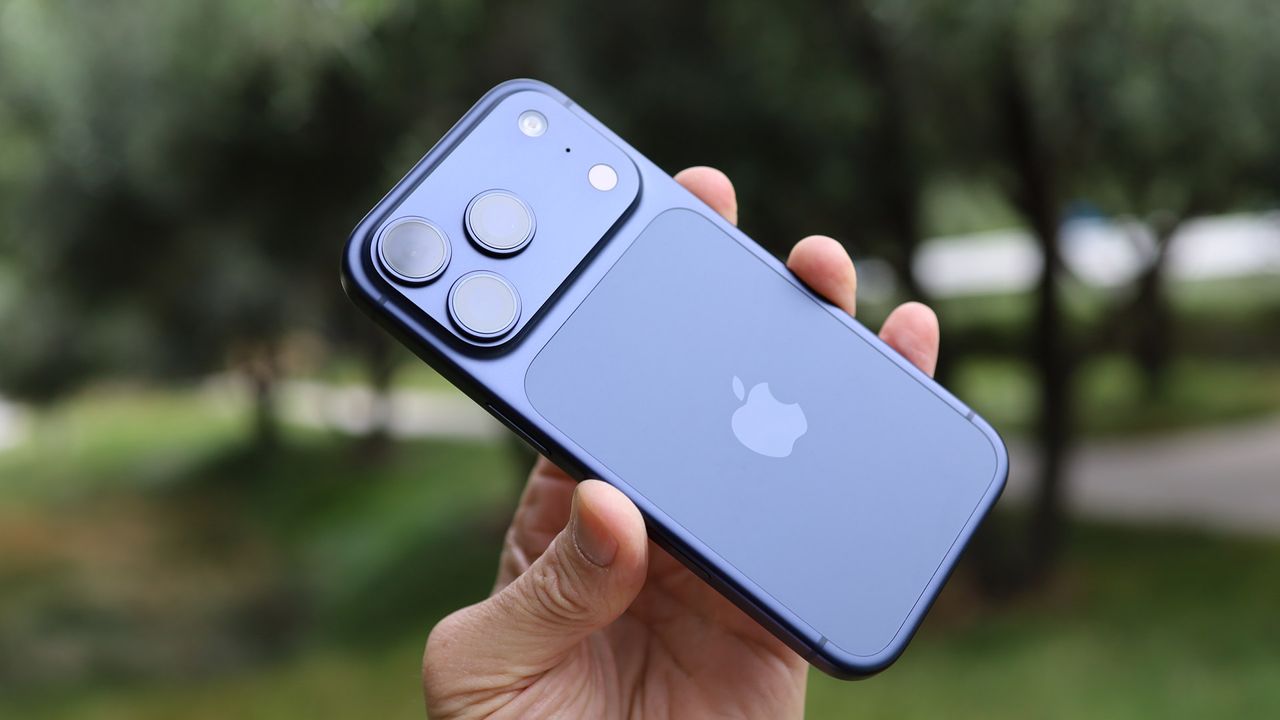
The ExpressVPN Summer Tech Competition / Sweepstakes will see the company give away 30 new iPhone 17 Pros, with the caveat that users are not covered by ExpressVPN’s usual 30-day money-back guarantee.
The promotion runs from 11 July 2026 to 11:59 pm BST on 9 August 2026, directly following the ExpressVPN FIFA World Cup 2026 Ticket Giveaway event, which ran from 10 June 2026 to 11 July 2026.
During the promotion, each new sign-up gains 10 entries into the iPhone 17 Pro raffle, with the caveat that all sales are final during this period.
This means that ExpressVPN will not have offered its usual 30-day money-back guarantee for 60 days by the time the Summer Tech Sweepstakes promotion concludes.
Mixed reactions
As one of the best VPNs, ExpressVPN is available on a variety of platforms (Image credit: ExpressVPN)
On the surface, it might seem like ExpressVPN’s decision to remove the money-back guarantee during these promotional periods is logical.
After all, if the option for a refund were still available after entering a raffle for World Cup tickets or a new iPhone, users might attempt to game the system by entering the contest and then cancelling their ExpressVPN plan if they win.
However, ExpressVPN electing to deny users a money-back guarantee for two consecutive months has worried some users, representing a break from industry-standard practice.
Feedback to the decision has been mixed at best, with multiple commenters in the r/Express_VPN speaking out. User QueenBe12 warned others to “be careful” while user rockyyguy called the move “predatory business”, asking "who came up with this idea?"
In a statement given to TechRadar, ExpressVPN said: "ExpressVPN sometimes runs optional, limited-time promotions — such as the current prize draw — which customers can choose to join.
These promotional plans are clearly identified and disclosed at the point of purchase, including that they offer additional benefits, such as prize-draw entry, in place of the 30-day money-back guarantee. This allows customers to make an informed choice about which option best suits them before they subscribe.
Whether a money-back guarantee is offered or not, customers' statutory rights are unaffected. Anyone on a promotional plan can also contact ExpressVPN Support to request a refund, and each request is considered on its merits."
Why are money-back guarantees important for VPNs?
A money-back guarantee gives you the chance to test out a VPN before committing to it long-term. (Image credit: ExpressVPN )
Like most software services, VPNs can be paid for as monthly subscriptions – but almost all VPNs offer huge discounts for signing up to one- or two-year-long plans.
In the case of ExpressVPN, a two-year plan offers an 84 per cent discount versus renewing monthly, and you get four extra months free of charge.
As such, when we talk about VPN pricing here at TechRadar, we’re usually referring to the price of one of these extended plans. It’s typically the most economical choice for most users.
However, our price-based recommendations are usually made in the context of money-back guarantees, which protect users from long payment plans if they sign up to the wrong option or realize that a certain VPN isn’t for them.
These guarantees are offered by many of the best VPNs, and many smaller and mid-tier brands will provide them as well. NordVPN and Surfshark VPN both offer 30 days; CyberGhost bumps this up to 45 days, and Norton VPN gives users a full 60 days.
This is all to say that ExpressVPN removing its money-back guarantee, even for a promotion, is a pretty big deal and a genuine reason to consider avoiding a longer plan until the promotional period concludes.
So, if you’re still keen on picking up ExpressVPN, consider picking up a monthly plan or waiting until 10 August for a longer plan, and be sure to check out our ExpressVPN review for an in-depth breakdown of its features and performance.
Séparé en deux moitiés pendant près d'un siècle, un colosse de pharaon vient enfin de retrouver son intégrité. Sept mètres de calcaire, un visage miraculeusement intact, et 94 ans d'attente entre la découverte de sa partie basse et celle de son buste. Récit d'une résurrection archéologique.
A l'abri de la lumière et de la chaleur, protégés dans les réserves du musée, ces parchemins en peau de veau constituent de précieux témoins du savoir scientifique. Une exposition les dévoilera au public à partir du mois de septembre. A noter sur vos tablettes!
Les souris, ces petits rongeurs souvent indésirables, peuvent causer bien des soucis dans nos foyers. Mais saviez-vous qu'un simple ingrédient de cuisine pourrait les tenir à distance ? Découvrez comment la cannelle, avec son parfum envoûtant pour nous mais repoussant pour elles, peut devenir...
When I tell people that I am a proud Boarisch-Schwob—Bavarian-Swabian—Indigenous person, I am often met with disbelief. I am white. I am European. I come from Bavaria, one of Europe's wealthiest regions. For some people, those facts settle the question before I have explained anything else.
When the Marshall Fire tore through suburban Colorado in late 2021, residents had only hours to decide where to go. Some fled to nearby towns. Others stayed farther away for weeks or months. Now, a recent study published in Humanities and Social Sciences Communications suggests those decisions were shaped not only by distance or danger but also by something more human: the pull of familiar communities and social ties.
One of the most intractable, contentious and niche issues in U.S. politics has come back into the spotlight. This week, the U.S. House of Representatives voted to make daylight saving time permanent in the United States.
Hotels have long encouraged guests to reuse towels, limit linen changes and conserve energy. Yet tourism remains a significant source of carbon emissions, and voluntary sustainability programs often struggle to achieve lasting behavior change. New research suggests a different approach may be more effective: connecting the environmental impact of a stay directly to what travelers pay.
Amrit Kaur Purba and colleagues argue that social media restrictions operate within a wider system of adolescents, families, schools, governments and commercial actors—and therefore should be treated as complex systems interventions rather than isolated behavioral policies.

 Login