❌

Reading view

Smart TV 85'' con 12 mesi DAZN, robot, accessori smart e altro: le top offerte del 16 luglio

Giovedì 16 luglio porta in homepage un nuovo appuntamento con le migliori offerte tech del giorno, questa volta concentrate soprattutto su Amazon. La selezione è piuttosto varia: si passa dai maxi TV 4K ai robot aspirapolvere di nuova generazione, fino a videocamere smart, accessori per iPhone, cuffie gaming e speaker Bluetooth.

Tra i prodotti più interessanti spicca l’Haier QLED 4K da 85 pollici, proposto a 683,28€ invece di 769,09€ e con 12 mesi di DAZN inclusi. Sul fronte pulizia domestica, invece, la giornata è dominata dai robot: il Mova P70 Pro Ultra scende a 549€, lo Xiaomi H50 arriva a 349,99€, mentre il Dyson Spot+Scrub AI resta una proposta di fascia alta, ma oggi più vicina al prezzo reale d’acquisto grazie allo sconto a 926,90€.

Non mancano le offerte più “pratiche”, quelle che magari non fanno scena come un TV da 85 pollici ma finiscono spesso per essere le più utili. È il caso della Tapo C250 4K, videocamera Wi-Fi da interno con tracking AI per persone e animali, proposta a 46,99€ invece di 59,99€, oppure del case ORICO magnetico M.2 NVMe per iPhone 15/16/17 Pro, pensato anche per registrazione ProRes e archiviazione esterna, che scende a 14,28€ invece di 25,99€.


Il miglior iPhone di sempre? Apple iPhone 17 Pro, compralo al miglior prezzo da Digitalparadise.it a 1,073 euro.

CLICCA QUI PER CONTINUARE A LEGGERE

  •  

The Uncontacted: Living in Voluntary Isolation, These Are the People Governments Pretended Didn’t Exist

Deep within the world’s remaining equatorial forests, the last uncontacted Indigenous peoples continue to live in near-total isolation. They represent humanity’s final societies that have consciously chosen to remain beyond the reach of the modern world. Their existence is extraordinary not only because of who they are, but because of what their survival reveals about ourselves.

For decades, however, governments found it politically and economically convenient to pretend that many of these people did not exist.

That chapter is, thankfully, drawing to a close. Today, Peru, Brazil, and other South American nations officially recognize the existence of Indigenous peoples living in voluntary isolation. Yet the history of denying their existence remains one of the most revealing episodes in the modern relationship between development, politics, and human rights. It reminds us that before forests are exploited, the people living within them are often rendered politically invisible.

The lesson extends far beyond the Amazon.

Throughout history, governments have rarely denied the existence of people simply because evidence was lacking. In colonial times, the existence of indigenous societies and cultures had no bearing on European immigrant expansion. Their cultures were considered primitive, and civility and religion would be the great benefits of settler expansion. In the 20th and 21st centuries, denial served a more practical purpose. If no one officially occupied a forest, there were no communities whose rights required protection. No Indigenous reserves needed to be established. Logging concessions could be issued, roads extended, mines approved, and oil exploration expanded with fewer legal obstacles. Recognition would carry consequences.

Once governments acknowledge uncontacted peoples, they assume obligations under national constitutions, international human rights law, the United Nations Declaration on the Rights of Indigenous Peoples (UNDRIP), and, in many countries, ILO Convention 169. Suddenly, economic development must coexist with human rights.

For years, this tension played out repeatedly in the Peruvian Amazon.

As proposals emerged to establish reserves for Indigenous peoples living in voluntary isolation, regional politicians and government officials questioned whether these communities existed at all. They argued there was insufficient evidence despite decades of documentation by anthropologists, Indigenous organizations, and conservation scientists. Shelters, cultivated gardens, footprints, arrows, abandoned camps, aerial observations, and repeated eyewitness accounts painted an increasingly compelling picture. Yet recognition often lagged precisely where logging, oil, gas, or mining interests sought access.

In retrospect, this was never simply an anthropological debate. It was an economic one.

The existence of uncontacted peoples transformed forests from potential commercial assets into protected Indigenous territories. Recognition restricted extraction. Denial facilitated it.

Fortunately, much of that official denial has now ended. Governments increasingly recognize that uncontacted peoples do exist and deserve legal protection. Yet the episode leaves behind an important lesson: political narratives often reflect competing economic interests as much as objective evidence. The question is no longer whether uncontacted peoples exist. The question is whether governments possess the political will to protect them.

The irony is profound. The same territories that some once wished to portray as empty are now recognized as among the most important ecosystems on Earth.

Study after study demonstrates that Indigenous territories, particularly those occupied by peoples living in voluntary isolation, experience significantly lower rates of deforestation than surrounding forests. These landscapes contain extraordinary biodiversity, protect countless species yet to be documented by science, regulate regional rainfall, and store immense quantities of carbon essential to moderating global climate change.

Protecting uncontacted peoples, therefore, serves two inseparable purposes.

It safeguards fundamental human rights while simultaneously protecting some of humanity’s greatest environmental assets. In the western Amazon, where I have spent time working, these realities become impossible to separate.

This region contains the greatest concentration of uncontacted peoples anywhere on Earth. It is also among the richest expressions of biological diversity on the planet. Yet it remains under relentless pressure from illegal logging, mining, expanding road networks, narcotics trafficking, and land speculation. While Peru and Brazil have established large protected Indigenous territories, enforcement has weakened in many areas as criminal organizations and commercial interests increasingly penetrate previously inaccessible forests.

Every encounter between outsiders and uncontacted peoples carries enormous risk.

Centuries of violence, exploitation, and disease can be compressed into a single unexpected meeting. Illegal miners, loggers, and land invaders increasingly enter territories occupied by isolated peoples, provoking confrontations that neither side seeks. Fatal encounters have occurred involving both Indigenous defenders protecting their ancestral lands and outsiders venturing into territories they had no right to enter.

I experienced something that profoundly altered my appreciation of this reality.

On a recent expedition, I awoke before dawn to a river wrapped in mist beneath a pale orange sky. Overnight storms had left the air heavy with humidity as I walked along a stretch of exposed sand. Through the haze stood a man. Barely clothed, carrying what appeared to be a weapon of some form, he remained motionless for only a few seconds before silently disappearing back into the forest.

The encounter was brief, but penetrating. Ten thousand years faded away.

We were outside any officially protected Indigenous territory and had taken every precaution to avoid contact. Yet there he was, undeniably real. His footprints remained impressed in the wet sand long after he disappeared.

They reminded me that debates over whether isolated peoples exist are ultimately settled not by ideology, but by reality itself. These communities continue to live within forests that many outsiders still view primarily through the lens of economic opportunity.

Throughout the Americas, first contact repeatedly brought catastrophic epidemics, displacement, exploitation, and cultural destruction. Peoples living in voluntary isolation possess little immunity to common infectious diseases carried unknowingly by outsiders. Even a well-intentioned contact can prove devastating.

Some argue that continued isolation is no longer realistic—that climate change, expanding infrastructure, and globalization make eventual integration inevitable.

I believe this misunderstands both ethics and history.

It assumes that outside society possesses the right to determine other people’s future. It repeats the paternalism that has accompanied Indigenous dispossession for centuries. Respect requires something more difficult. It requires restraint.

The greatest lesson we should draw from the period when governments denied the existence of uncontacted peoples is not simply that denial was wrong. It is that economic convenience can shape political reality in dangerous ways. When forests are viewed primarily as timber, minerals, or agricultural land, it becomes remarkably easy to overlook the people who stand in the way of exploitation.

Today, official denial has largely given way to official recognition.  That represents genuine progress. But recognition alone is insufficient if protections exist only on paper while illegal logging, mining, and organized crime continue to erode Indigenous territories on the ground.

Over the years, I have seen echoes of this same struggle elsewhere. In the highlands of Papua New Guinea, where stone tools were still in use, communities sought to preserve traditions against an advancing modern world. On India’s Andaman Islands, members of the Jarawa halted a military convoy I was travelling with, bows drawn, defending the integrity of their homeland. Across continents, the underlying question remains remarkably consistent: can modern societies respect the right of other cultures not to become like us?

The uncontacted peoples of this world challenge our assumptions about progress itself. Their existence reminds us that development is not the only measure of a society, and that autonomy sometimes means choosing a different path altogether.

Their territories also remind us that some of the world’s most effective conservationists have never described themselves as environmentalists. By simply defending their lives and territory, they have preserved ecosystems that benefit every person on Earth.

The people governments once pretended did not exist have become some of the planet’s important guardians. Protecting them is no longer only about correcting historical injustice. It is about recognizing that human rights, biodiversity, and climate stability are inseparable. Their silence in the forest is not absence. It is sovereignty.

Yet the story of the uncontacted has another, profound consideration for our era that extends far beyond remote forests. The history of the uncontacted tells us that for years, some governments denied the existence of people who were demonstrably there because acknowledging them carried political and economic costs. As we search for life beyond Earth, humility demands that we distinguish between what has not yet been confirmed and what may simply remain beyond our present ability—or willingness—to acknowledge.

History repeatedly warns against confusing the limits of our knowledge with the limits of reality.

Kerry Bowman, PhD, is a Canadian bioethicist and environmentalist. An instructor at the University of Toronto, he currently holds an academic appointment in the Faculty of Medicine and School of the Environment.  Bowman’s recent work includes two major conservation projects in the Western Amazon and the Eastern Congo, focusing on the intersection of human health with factors such as deforestation, biodiversity loss, and emerging zoonotic diseases.

  •  

Datacentres drive up big tech’s carbon emissions to a third of those of France

Microsoft, Amazon and Google say they still aim to achieve net zero output despite construction boom

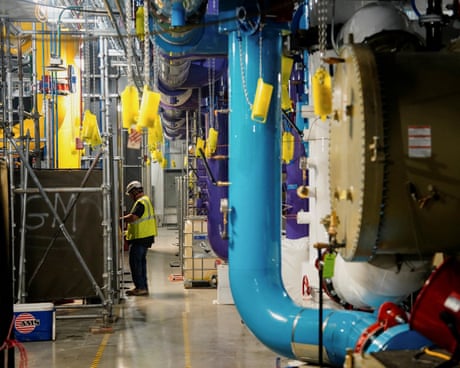
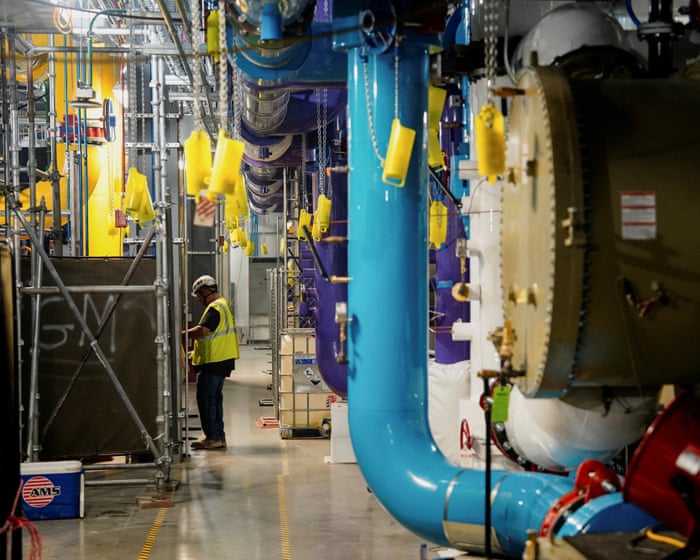
Microsoft, Amazon and Google’s collective carbon emissions have increased by nearly a fifth in the past year, driven largely by datacentre construction.

In the financial year ending March 2026, the three tech companies emitted 119m mTCO₂e (metric tonnes of carbon dioxide equivalent), or about a third of those of France.

Continue reading...

© Photograph: Audrey Richardson/Reuters

© Photograph: Audrey Richardson/Reuters

© Photograph: Audrey Richardson/Reuters

  •  

ULA's last six Atlas Vs can't launch anything besides Boeing's Starliner

The final flight of United Launch Alliance's Atlas V rocket is still several years off, but an important era for the once-dominant launch company came to a close last week.

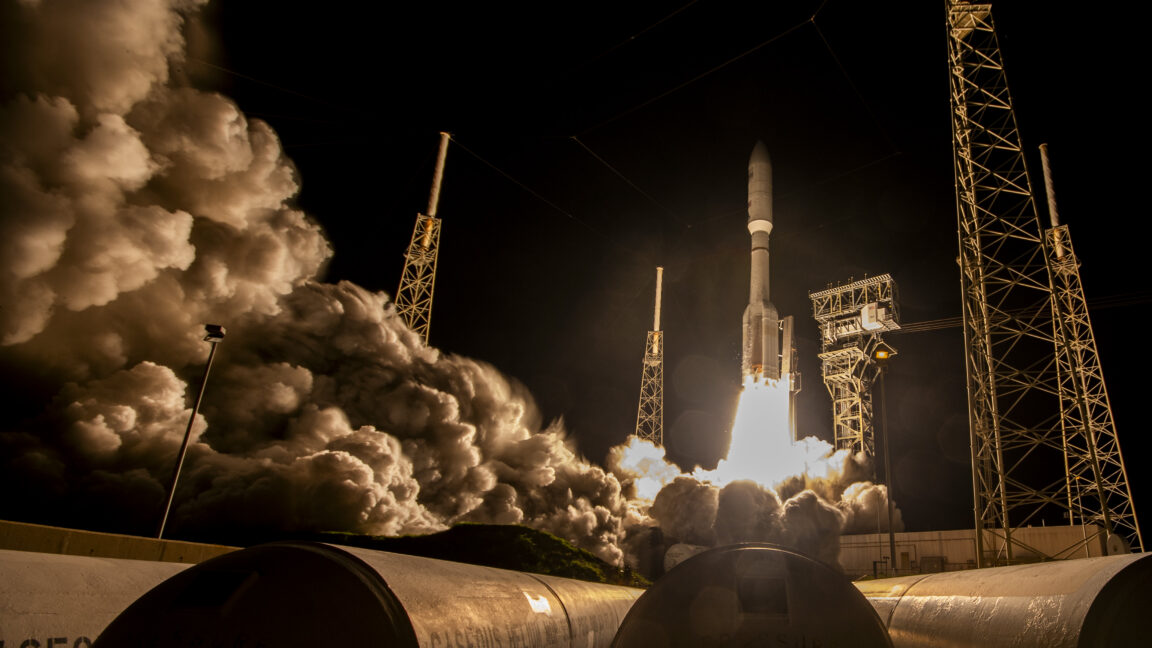
The final flight of an Atlas V for the Amazon Leo broadband constellation lifted off from Cape Canaveral Space Force Station in Florida at 12:30 am EDT (04:30 UTC) last Thursday, sending 29 satellites to orbit to move the network closer to providing initial services.

All 29 spacecraft deployed from the Atlas V rocket less than an hour after launch. They will use onboard propulsion to raise their orbits from an altitude of approximately 289 miles (465 kilometers) to their final operating positions at 392 miles (630 kilometers) above the Earth.

Read full article

Comments

© United Launch Alliance

  •  

Amazon blames piracy apps with malware for killing new Fire Stick sideloading

Amazon is blaming the threat of malware for its decision to stop releasing new Fire Sticks that support sideloading apps from outside Amazon’s Appstore.

Amazon has released two Fire Stick models that use its proprietary, Linux-based operating system, Vega OS. Previous Fire Sticks ran Fire OS, which is an Android fork based on the Android Open Source Project. One of the biggest differences between Vega OS and Fire OS is that the former doesn’t support sideloading.

It wasn’t surprising when Amazon released its first Vega OS-based Fire Stick. Although many tinkerers sideloaded apps, especially from the Google Play Store, for added functionality, sideloading had also become largely associated with streaming piracy, especially of sporting events.

Read full article

Comments

© Amazon

  •  

JBL Wave Buds a 19,99€: sconto del 67% sul prezzo di listino al Prime Day Amazon

Durerà sicuramente pochissimo l'offerta del Prime Day Amazon che ti permette di portare a casa JBL Wave Buds, ottimi auricolari Bluetooth con design in-ear, a 19,99€. Uno sconto del 67% sul prezzo di listino e comunque del 49% rispetto al prezzo offerto sulla piattaforma nell'ultimo mese. Completa rapidamente l'ordine per approfittarne finché c'è disponibilità. Spedizioni veloci e gratuite per abbonati Prime.

Un paio di auricolari entry-level, ma di ottima qualità e soprattutto firmati da un marchio che non ha bisogno di presentazioni. Buona l'autonomia energetica, ci sono diverse modalità di ascolto che ti permetteranno di non perdere il contatto con l'ambiente circostante mentre ti godi la musica che ami di più. Tramite l'applicazione per smartphone puoi personalizzare la tipologia del suono potenziando anche i bassi se lo desideri.

Decisamente, se il budget è contenuto non c'è da aspettare oltre e approfittare dell'ottima offerta Amazon del momento per portare a casa gli auricolari JBL Wave Buds a meno di 20€ in offerta con spedizioni veloci e senza costi supplementari per gli abbonati Prime. Completa ora il tuo ordine per assicurarteli perché l'offerta è limitata.


Top gamma a prezzo da medio gamma? Poco F8 Ultra, compralo al miglior prezzo da Aliexpress.com a 594 euro.

CLICCA QUI PER CONTINUARE A LEGGERE

  •  

Zoox’s purpose-built robotaxi is getting a refresh

Zoox robotaxi

Zoox, the autonomous vehicle company owned by Amazon, unveiled a new look for its boxy, bidirectional robotaxi, calling it the "next evolution" of the vehicle intended for mass production. The company is currently operating a free robotaxi service in San Francisco, Las Vegas, Austin, and Miami while it waits for the federal government to approve its request for an exemption from safety rules that require production vehicles to have traditional controls, like steering wheels and pedals.

While other robotaxi operators have typically relied on vehicles with familiar nameplates for their fleets, Zoox is unique in its embrace of a purpose-built …

Read the full story at The Verge.

  •  

Prime Day 2026, i 20 prodotti più venduti del secondo giorno

I 20 prodotti più venduti del secondo giorno di Prime Day 2026 raccontano bene cosa sta cercando davvero il pubblico Amazon in queste ore: non solo grandi sconti sui dispositivi più costosi, ma anche piccoli prodotti smart, accessori per la casa, smartwatch, notebook, monitor e robot aspirapolvere.

La classifica è interessante proprio perché mescola acquisti d’impulso da poco più di 10€ e prodotti premium da oltre 1.000€, segno che il Prime Day continua a essere una vetrina molto trasversale, dove si compra il modulo smart per automatizzare una luce e, magari nello stesso carrello mentale, si guarda anche uno smartphone top di gamma.

Il nome più curioso in cima alla selezione è il SONOFF Matter, un mini interruttore intelligente Wi-Fi proposto a 11,25€ e arrivato al minimo storico. È il classico prodotto che costa poco ma risolve problemi concreti: può servire per rendere smart una luce, un interruttore o un piccolo punto di controllo domestico, con supporto a Matter e compatibilità con Alexa e Google Home.


Top gamma a prezzo da medio gamma? Poco F8 Ultra, compralo al miglior prezzo da Aliexpress.com a 594 euro.

CLICCA QUI PER CONTINUARE A LEGGERE

  •  

Votre pelouse mérite mieux : le Prime Day fait chuter le prix de ce robot tondeuse (-29 %)

Le RoboUP Raccoon 2 SE démocratise un peu plus l’accès aux robots tondeuses intelligents. Destiné aux jardins jusqu’à 600 m², ce modèle séduit par son fonctionnement sans câble périphérique et sa navigation assistée par caméra. À l’occasion du Prime Day Amazon, il profite d’une remise...

  •  

-50 % en plein Prime Day : ce robot piscine risque de disparaître rapidement

Le robot piscine Dreame Z1 attire actuellement de nombreux regards sur Amazon, notamment grâce à une remise de 50 % qui fait passer son prix sous la barre des 500 €. Une offre qui risque de ne pas rester longtemps disponible. Sans fil, il prend en charge le nettoyage du fond, des parois et de la...

  •  

Roborock frappe fort pour les Prime Day : ce robot aspirateur laveur perd 200 € d’un coup

Les robots aspirateurs laveurs sont devenus de véritables alliés du quotidien pour garder une maison propre sans effort. Parmi les marques les plus réputées du secteur, Roborock s'est imposée grâce à des appareils performants, intelligents et particulièrement efficaces sur tous types de sols.

  •  

NGSO trade association launches without industry giant SpaceX

A composite image of 33 exposures captures reflective Starlink satellites, making them appear to streak over the sky of southern Brazil. Credit: NASA / Egon Filter

Amazon and several other non-geostationary satellite operators have formed a trade association to represent their fast-growing market, with SpaceX notably absent despite having by far the largest NGSO constellation.

The post NGSO trade association launches without industry giant SpaceX appeared first on SpaceNews.

  •  

Amazon lâche 50 € sur ce spa gonflable Bestway à l'occasion du Prime Day

Amazon frappe fort à l’occasion du Prime Day avec une baisse de prix notable sur le spa gonflable Bestway Lay-Z-Spa Milan AirJet Plus. Capable d’accueillir jusqu’à six personnes, ce modèle transforme facilement un coin de jardin ou une terrasse en espace de détente. Entre bulles relaxantes, eau...

  •  

Le Prime Day fait tourner les têtes : ce ventilateur Newday passe sous les 125 €

Le mercure grimpe, les nuits deviennent plus longues et le coup d'envoi du Prime Day tombe à point nommé. Amazon baisse le prix du ventilateur de plafond Newday à 124,09 € au lieu de 138,69 €, une offre intéressante pour équiper son intérieur avant les prochains pics de chaleur. Ventilation...

  •  

Hollywood is bending the knee to OpenAI

Photo collage of Sam Altman in front of the OpenAI logo.

Netflix, A24, Focus Features, and Warner Bros.' Clockwork have all reportedly decided to pass on picking up Artificial - director Luca Guadagnino's new biographical drama about OpenAI cofounder / CEO Sam Altman - for distribution deals. And while Neon and Mubi are still said to be interested in the film, this situation makes it seem like Hollywood no longer has the courage to tell critical stories about Big Tech.

Postproduction on Artificial was nearly finished when Amazon MGM unexpectedly announced last week that it no longer plans to distribute the film. The news came as a surprise given how far along the movie was and reports that Amazon …

Read the full story at The Verge.

  •  

Amazon ouvre le bal du Prime Day avec ce ventilateur de plafond à moins de 90 €

Le Prime Day démarre fort et certains bons plans semblent avoir été calibrés pour affronter la vague de chaleur. Ce ventilateur de plafond Cecotec voit son prix passer sous la barre des 90 €, avec une réduction de 10 % qui tombe au moment où les températures s'emballent.

  •  

Amazon Prime Day 2026: As melhores ofertas em tecnologia para aproveitar até quinta-feira

De tablets a aspiradores, passando por auriculares e televisores OLED, a Amazon conta com centenas de milhares de promoções exclusivas para os membros Prime até ao dia 26 de junho. E, quem ainda não é membro, pode experimentar gratuitamente durante 30 dias.

The post Amazon Prime Day 2026: As melhores ofertas em tecnologia para aproveitar até quinta-feira appeared first on Tek Notícias.

  •  

Le thermomètre grimpe, Amazon baisse le prix de cette piscine gonflable pour le lancement du Prime Day

Le coup d'envoi du Prime Day est donné et les bons plans estivaux sont déjà dans le grand bain. Cette piscine autoportante Intex, plébiscitée par des dizaines de milliers d'acheteurs sur Amazon, profite d'un tarif particulièrement attractif. De quoi installer un espace de baignade à domicile...

  •  
❌