To a driver passing Fish Lake on State Route 25, in Utah, an aspen grove would look just like a forest of pale trunks. But this is isn’t your average forest. Rather, it’s a single quaking aspen masquerading as a forest; one organism, spread across 106 acres (43,000 square meters), joined underground by one living […]
The first global map of underground fungal networks reveals a hidden 68 quadrillion-mile superhighway that helps sustain life on Earth and store carbon in the soil. Beneath forests, grasslands, wetlands, and even many agricultural fields lies a vast underground fungal network that supports plant life and plays an important role in the global carbon cycle. [...]
Ancient mycorrhizal fungal networks, consisting of a billion astronomical units’ worth of roots, have finally been mapped by scientists, providing insight into their connections, which are essential to climate regulation and plant sustenance.
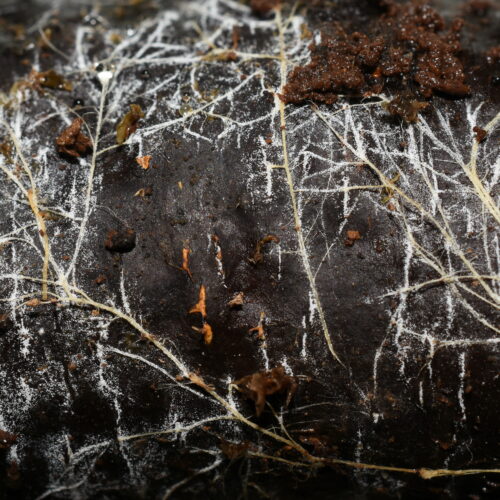
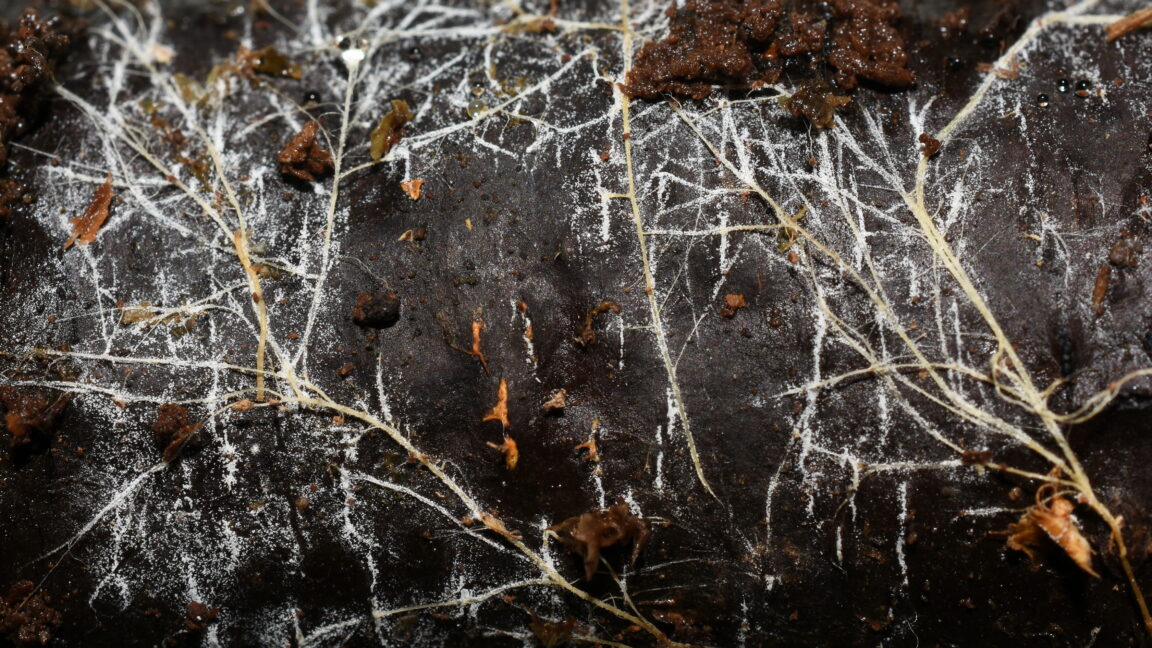
Mycorrhizal fungi grow in an arbuscular formation, meaning they take on a branching tree-like structure of tubular cells called hyphae, which pull carbon from the atmosphere to aid in climate regulation.
The international team presented their work in a recent paper published in Science, which estimates the distribution and mass of these enormous fungal networks and provides an interactive visualization tool that offers crucial insight into threats to these systems, which are essential to Earth’s health.
Mapping Fungal Networks
The new research brings both encouraging and concerning findings, highlighting regions where fungal networks remain robust while also identifying areas under increasing threat.
Although previous studies have attempted to map the diversity of these fungi across the globe, this is the first effort to predict and visualize their density and biomass on a planetary scale. According to the team’s estimates, the network extends for approximately 110 quadrillion kilometers, with roughly 40% located beneath grasslands.
The new map reveals the extent of the mycorrhizal fungal network globally. Credit: Truth & Beauty / Moritz Stefaner Justin Stewart – SPUN
Using more than 16,000 soil cores collected worldwide, researchers assembled a massive fungal dataset. They then employed machine-learning models that combined data from multiple biomes to predict the density of arbuscular mycorrhizal fungal networks in unsampled regions. Robotic imaging of more than 300,000 living, laboratory-grown hyphae allowed the team to calibrate and validate their models.
“It is hard to overstate the importance and enormity of these fungi,” said lead author Dr. Justin Stewart, with the Society for the Protection of Underground Networks (SPUN). “There could be up to 10 meters (32 feet) of mycorrhizal network in just a teaspoon of soil.”
Earth’s Circulatory System
Because it transports carbon, water, and nutrients underground, scientists have likened the network to our planet’s circulatory system, with a flow rate of up to 120 micrometers per second. About 70% of Earth’s plant species thrive on a symbiotic relationship with the arbuscular mycorrhizal fungi network.The network can provide over 80% of a plant’s phosphorus and increase the root foraging area 100-fold.
The network subsists on carbon waste produced by plants, while providing them with water and nutrients in return. By pulling in roughly 4 billion tons of CO2 into the ground every year, mycorrhizal fungi mitigate an amount corresponding to roughly 11% of human emissions.
Unfortunately, grasslands, where the network thrives most, are among the least protected environments on Earth and are being rapidly converted to farmland. According to the study team, cropland has only about half the lower network density of regular land, which the researchers worry may negatively affect how soil stores carbon, cycles nutrients, and resists stress.
Continuing Fungal Network Research
“It is important to remember that these maps are living documents. This is a first attempt at building a foundational model of Earth’s fungal networks infrastructure, but it is not complete,” Stewart recently told The Debrief. “There are other types of mycorrhizal fungi that still need to be mapped in more detail, and other fungal structures, such as spores, that are also critical to understanding how these organisms persist, move, and respond to environmental change. Likewise, we need more data in regions that have been poorly sampled.”
The team says the study represents a major advance for climate science, a field in which fungi have often been overlooked in discussions about conservation and resilience. Researchers hope the findings will encourage a more comprehensive understanding of the role fungi play in maintaining healthy ecosystems.
“A major goal now is to make these kinds of data useful for decision makers. Fungi are still rarely included explicitly in climate, biodiversity, and land-use agendas, even though they are central to how ecosystems move carbon and nutrients,” Stewart adds. “We want to help ‘course-correct’ by building a clearer picture of the underground systems that support life aboveground.”
Ryan Whalen covers science and technology for The Debrief. He holds an MA in History and a Master of Library and Information Science with a certificate in Data Science. He can be contacted at ryan@thedebrief.org, and follow him on Twitter @mdntwvlf.
Hidden underground around the world lie 110 quadrillion kilometers of arbuscular mycorrhizal fungal networks—webs of ultra-thin threads that, if connected in a single line, would stretch almost a billion times the distance between the Earth and the sun, according to new research published in Science on Thursday.
These fungal communities form intimate relationships with the roots of plants, which they provide with nutrients like phosphorus and nitrogen in exchange for carbon, 1 billion tons of which the networks sequester underground annually, previous research has found. If the fungal network wasn’t storing it, that carbon would be warming the atmosphere.
But those networks have never been mapped globally until now. The new study led by Society for the Protection of Underground Networks, or SPUN, an organization founded to map mycorrhizal fungi networks, used a combination of literature review, soil samples from around the globe, machine learning and laboratory testing to estimate the distribution and mass of these systems and map where they are densest.
By studying fungal microfossils in 66-million-year-old rock samples from the Denver Basin in Colorado, Johns Hopkins University microbiologists have confirmed that the dinosaur-killing asteroid impact triggered a worldwide fungal takeover, and uncovered a second, previously unknown ecological crisis just before it.

 Login

 To a driver passing Fish Lake on State Route 25, in Utah, an aspen grove would look just like a forest of pale trunks. But this is isn’t your average forest. Rather, it’s a single quaking aspen masquerading as a forest; one organism, spread across 106 acres (43,000 square meters), joined underground by one living […]