❌

Reading view

Everyone pays the price as patent holders on seeds stifle innovation

The United States is one of only a handful of countries that allows companies to hold patents on plant varieties. As a result, a small number of corporations can—and do—suppress competition in the seed industry, stifle innovation, and turn taxpayer subsidies intended for farmers into corporate profits.

The US Department of Agriculture has found that two companies control more than 70 percent of US corn and soybean seed sales, and the top four cottonseed companies control nearly 94 percent of that market.

In a May 2026 court filing in a legal dispute between two US seed companies, the Department of Justice said patents on seeds are obstructing competition and research in the agriculture industry.

Read full article

Comments

© wsfurlan via Getty

  •  

Sea Level Rise Is Swallowing Farmland at Alarming Rates

Aerial View of a Tidal MarshCoastal farmland in the Mid-Atlantic is being overtaken by rising seas faster than forests, revealing an overlooked rural front in climate-driven marsh migration. Ghost forests, the eerie stands of dead trees left behind when saltwater moves inland, have become a stark sign of sea level rise along the Mid-Atlantic coast. Yet a new Nature Sustainability [...]
  •  

Rice Roots Attract Bacillus Using Heptadecanoic Acid

In a groundbreaking revelation that could reshape our understanding of plant-microbe interactions and agricultural biotechnology, researchers have unveiled a novel chemical communication mechanism between rice roots and beneficial soil bacteria. This newly discovered pathway centers on the secretion of heptadecanoic acid, a specific fatty acid, which effectively recruits Bacillus species to the rhizosphere, the densely populated soil region surrounding plant roots. Such a mechanism not only highlights the intricate biochemical dialogues that underpin plant-microbe symbioses but also opens promising avenues for sustainable crop management through microbiome engineering.

Rice, a staple food that sustains more than half of the world’s population, has long been studied for its interactions with the soil ecosystem. The rhizosphere harbors myriad microbial communities, some of which promote plant health by enhancing nutrient acquisition, defending against pathogens, or improving stress tolerance. Identifying the exact signals that facilitate recruitment of beneficial bacteria has presented a considerable scientific challenge. The recent study by Zeng, Wen, Zhao, and colleagues provides essential insights and fills a critical gap by pinpointing heptadecanoic acid as a chemical attractant secreted by rice roots, which acts as a molecular beacon for Bacillus.

Heptadecanoic acid, also known as margaric acid, is a saturated fatty acid containing 17 carbon atoms. Traditionally, plant root exudates—complex mixtures of organic acids, sugars, amino acids, and secondary metabolites—have been observed to influence microbial colonization, but the specific involvement of fatty acids as signals was less appreciated. The team’s meticulous biochemical analyses have now elucidated that rice roots not only exude heptadecanoic acid but do so strategically when recruiting beneficial Bacillus species. This revelation signifies a refined understanding of the selective microbial recruitment strategies employed by plants.

The team’s research employed an array of advanced techniques—ranging from root exudate profiling through gas chromatography-mass spectrometry (GC-MS) to microbial chemotaxis assays—to validate that Bacillus species detect and are attracted to gradients of heptadecanoic acid in the rhizosphere. Importantly, not all soil microbes respond equivalently, underscoring the specificity of this fatty acid signal. Functional studies further demonstrated that disrupting rice root production of heptadecanoic acid diminished Bacillus colonization, which correspondingly weakened the plant’s resistance to common soil-borne pathogens.

Understanding the biochemical basis for such recruitment enables scientists to rethink approaches to crop protection and enhancement. Bacillus species are well-known for their plant growth-promoting traits, including production of antimicrobial compounds, enhancement of nutrient solubilization, and induction of systemic resistance in plants. By harnessing the heptadecanoic acid signaling pathway, it is conceivable that agricultural inoculants could be optimized to improve colonization efficiency and consistency in field conditions, potentially reducing the need for chemical pesticides and fertilizers.

This molecular dialogue highlights a sophisticated communication network where plants actively shape their microbial environment. The discovery that a fatty acid functions not merely as a structural or energy-storage molecule but as a signaling compound redefines our conception of root exudate complexity. Moreover, heptadecanoic acid’s hydrophobic nature prompts questions about its diffusion dynamics in soil and the mechanisms by which Bacillus receptors detect it. Future exploration into bacterial chemoreceptors and downstream signaling pathways activated by this molecule could illuminate novel targets for microbiome manipulation.

Beyond direct agricultural implications, this finding resonates with broader ecological principles. The soil microbiome’s composition significantly influences plant community dynamics, ecosystem productivity, and resilience to environmental stresses. By uncovering a precise mediator of microbe recruitment, the work by Zeng and colleagues contributes to the fundamental ecological theory of plant-soil feedback loops, suggesting that plants possess active biochemical agency in curating their microbial consortia.

Interestingly, the secretion of heptadecanoic acid is not constant but modulated by environmental cues and plant developmental stages, emphasizing the dynamic nature of root exudation profiles. This temporal regulation indicates that plants might selectively recruit beneficial microbes in response to specific physiological needs or external threats, adding an adaptive dimension to this interaction. Understanding these controls could inform timing strategies for microbial inoculant application in agriculture to coincide with natural recruitment periods.

The authors also raise intriguing evolutionary considerations. The conserved ability among rice varieties to secrete heptadecanoic acid suggests selective pressure favoring plants capable of enlisting Bacillus partners. Parallel studies on other cereal crops could reveal whether this fatty acid signaling is a widespread mechanism or unique to rice. Such comparative analyses across plant taxa may unearth a broader family of fatty acid signals mediating symbioses and expand the toolkit for synthetic microbiome engineering.

This pioneering investigation underscores the necessity of interdisciplinary approaches combining plant biology, microbiology, analytical chemistry, and ecology to fully decipher plant-microbe interactions. It leverages cutting-edge omics technologies and bioinformatics pipelines to characterize metabolite profiles and microbial responses, illustrating the power of integrative science. The robust experimental design and reproducible methodologies set a new benchmark for future studies aiming to parse root exudate signaling.

As the global agricultural sector grapples with the challenges of increasing food production sustainably on finite arable land under climate change pressures, the discovery of a natural plant mechanism to recruit growth-promoting and protective microbes represents a potentially transformative tool. Strategies informed by such foundational knowledge could reduce reliance on synthetic inputs, lower environmental footprints, and enhance crop resilience, aligning with ambitious global sustainability goals.

In conclusion, the identification of heptadecanoic acid as a pivotal signaling molecule secreted by rice roots to attract beneficial Bacillus species marks an exciting advance in the field of plant-microbe research. It unravels a previously unrecognized layer of biochemical communication with profound implications for agriculture and ecology. Continued investigation into the molecular details, environmental regulation, and cross-species relevance of this signaling mechanism promises to unlock innovative avenues for crop improvement and sustainable farming practices worldwide.


Subject of Research: Plant-microbe interactions focusing on the biochemical signaling between rice roots and Bacillus species mediated by heptadecanoic acid secretion.

Article Title: Author Correction: Rice roots recruit Bacillus via the secretion of heptadecanoic acid.

Article References: Zeng, J., Wen, T., Zhao, J. et al. Author Correction: Rice roots recruit Bacillus via the secretion of heptadecanoic acid. Nat. Plants (2026). https://doi.org/10.1038/s41477-026-02341-5

Image Credits: AI Generated

  •  

2,000-Year-Old Grape Seeds Rewrite the History of Italian Wine

Professional Sommelier Analyzing Red WineA genetic study of 2,000-year-old grape seeds is shedding new light on ancient winemaking. For centuries, the vineyards of Tuscany have been associated with some of the world’s most celebrated red wines. But a cache of grape seeds buried in ancient wells is revealing a very different story about what people were growing and drinking [...]
  •  

Quelque chose a changé dans l’ensoleillement de la Terre : la France fait partie des régions qui vont changer

Des scientifiques chinois montrent que l'ensoleillement sur Terre est en train d'être modifié, et d'être redistribué de manière différente à travers la Planète. Certaines régions du monde seront de plus en plus lumineuses, tandis que d'autres vont s'obscurcir, et le phénomène semble avoir déjà...

  •  

Deeply plowing farm fields can do more harm than good

For thousands of years, farmers have prepared their fields for planting by overturning the soil. It helps them the manage the moisture, nutrients and flow of air underfoot. But modern farming’s deep plowing and heavy machinery often do more harm than good, researchers report.

All that soil turnover disrupts the natural paths that water takes to percolate into the root zone. And this is not a problem just for growing crops. Breaking down the network of pores that water wants to move through also makes the soil less resilient to flooding and drought. So concludes a team of scientists in the April 16 Science.

A photograph of a fiber-optic cable placed on an agricultural field in order to measure how tilling can damage soil structure.
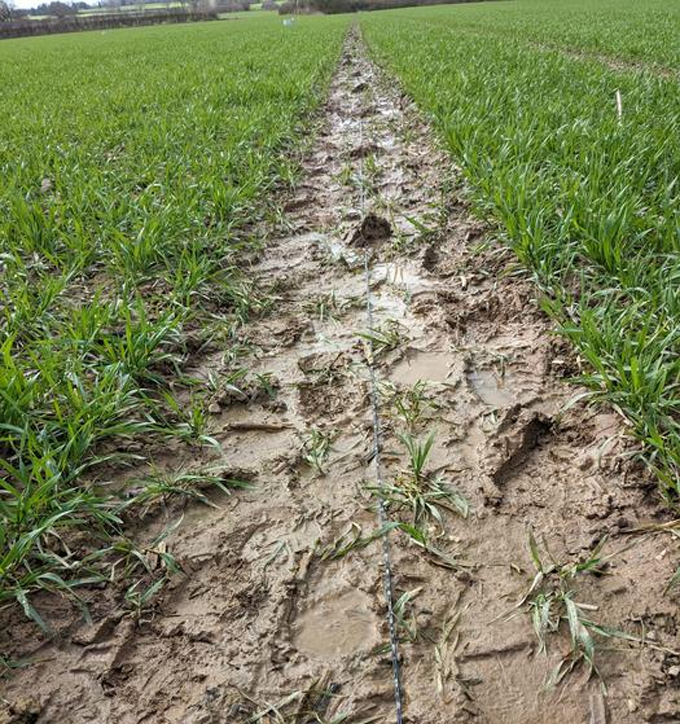
A fiber-optic cable, here laid along the relatively bare soil, was able to pick up tiny seismic signals. They’d been triggered by the movement of rainwater in the soil below.Marine Denolle

Qibin Shi is a geophysicist with the Chinese Academy of Sciences in Beijing. He was part of a team that fashioned a dense array of sensors out of fiber-optic cables. Such cables find use in more than just high-speed internet. They also can become powerful tools for seismology — and not just for earthquakes. They’re proving sensitive enough to detect even the tiny vibrations triggered as water moves through soil.

Shi’s group installed these cables along the edges of 27 plots of land at a university test farm in Newport, England. The plots were treated one of three ways. Nine went unplowed. Another nine were tilled to a depth of 10 centimeters (4 inches). The last nine were turned over to a depth of 25 centimeters (almost 10 inches). Within each group, plowing machinery of different weights were used. Why? The heavier they are, they more they can compact the soil.

For three days in March 2023, the team used its seismic-sensing system to track how the plots responded to rain. Rainwater didn’t seep down much on plots with the most compacted and deeply plowed soil. Instead, it tended to pool near the surface. Here, it could evaporate swiftly once the sun came out.

Water moved down and around more easily in the plots that were less compacted and less deeply plowed.

To understand what was happening, Shi’s team created a computer program that modeled the water’s movements. Rain, they found, moves through porous soil in a way that sort of mimics what happens to blood in capillaries — the body’s tiniest blood vessels. This process is known as capillary action.

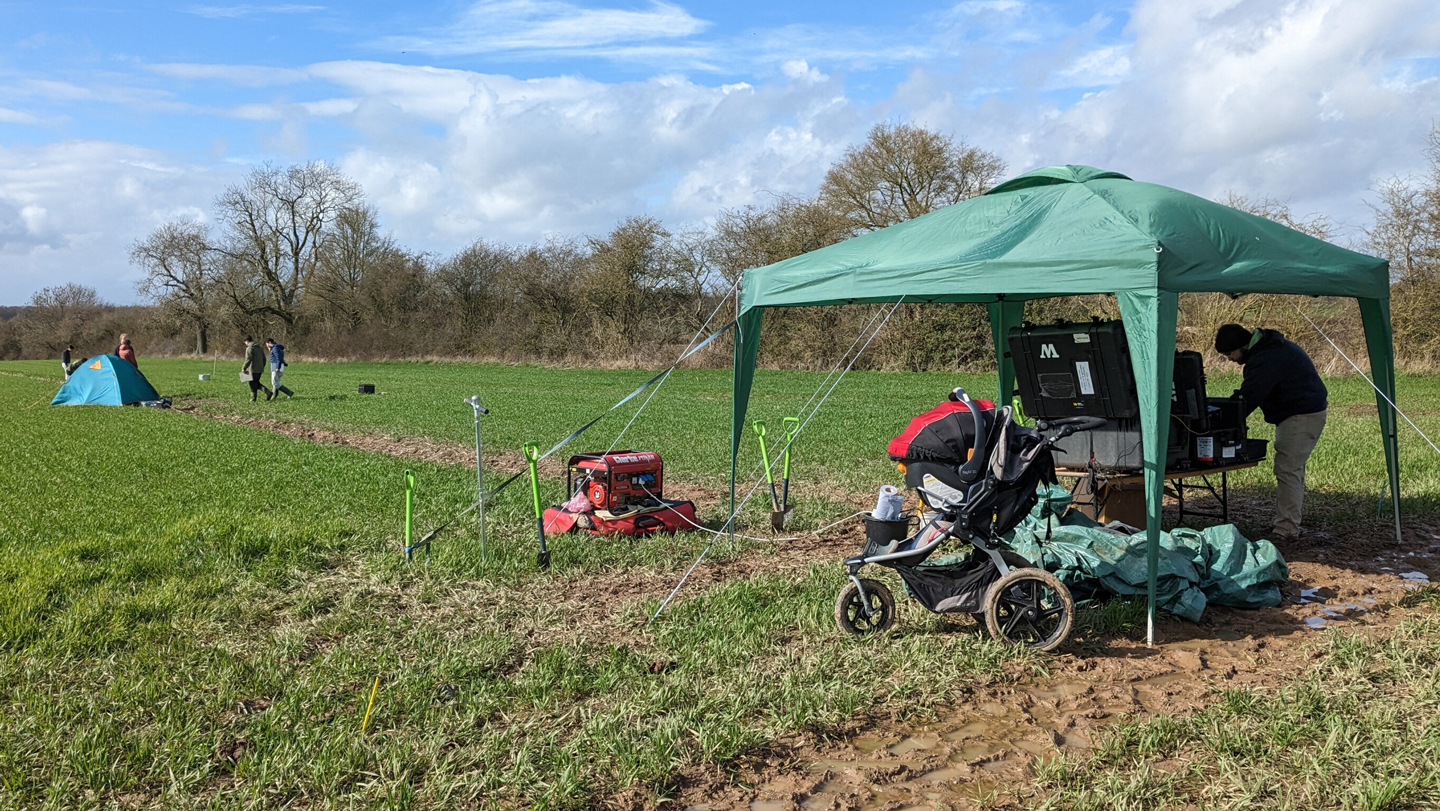
A group of scientists work inside a tent. Nearby, another group is walking in an open, grassy field.
Scientists used fiber-optic cables to study how turning over the soil in spring will affect rainwater’s ability to infiltrate the soil at this research site in Newport, England.Marine Denolle/University of Washington

Like our capillaries, the tiny, tunnel-like airways between specks of soil are very thin. Gravity does not drive water’s flow through these holes. Instead, as water tries to alternately adhere to soil particles and bind to other water molecules, it gets caught in a push-pull action. And that moves it. When those narrow pathways get disturbed or crushed, however, the suction forces strengthen, impairing the water’s flow.

Fiber-optic sensing could offer farmers a quick and inexpensive way to monitor soil moisture on a large scale, Shi’s team says. Such monitoring also could provide real-time warnings of natural hazards, such as flooding and soil liquefaction during an earthquake (when saturated ground can suddenly turn unstable due to shaking).

  •  

Wa’ed Ventures Supports KAUST Spinout Terraxy in Advancing Desert Greening Technology

Terraxy, an innovative startup emerging from cutting-edge research at the King Abdullah University of Science and Technology (KAUST), has successfully secured $3 million in its Seed-2 funding round. This round was spearheaded by Wa’ed Ventures, the venture capital wing of Saudi Aramco, with additional support from KAUST itself. The investment aims to accelerate the scaling and commercialization of Terraxy’s groundbreaking soil regeneration and carbon storage technology, designed specifically to tackle the challenges posed by desert environments.

The capital injection follows a critical growth phase, facilitating Terraxy’s shift from pilot-scale initiatives toward full-scale industrial production. A flagship component of this expansion is the establishment of a 30,000-square-meter commercial facility located in Al Zulfi, Saudi Arabia. This state-of-the-art production hub symbolizes a major leap for the company in bringing its proprietary technology to market readiness, underpinning Wa’ed Ventures’ mission to translate locally developed, research-driven innovations into sustainable, practical solutions.

At the heart of Terraxy’s technology lies Carbosoil, a proprietary soil enhancer engineered to address the unique and challenging characteristics of sandy soils found across the Arabian Peninsula. Globally, soil degradation affects nearly a third of arable land, hindering agricultural productivity and ecosystem health. In Saudi Arabia, where sandy and nutrient-poor soils dominate, agricultural efforts are hampered by poor water retention and low nutrient availability. Carbosoil demonstrates a remarkable ability to improve these conditions, delivering up to a 70% increase in plant growth and yield using the same quantities of water and nutrients. This efficacy directly translates into enhanced resource-use efficiency, especially critical in arid regions where water scarcity is a major concern.

Integral to Terraxy’s success is the supportive regulatory landscape fostered by Saudi Arabia’s Ministry of Environment, Water and Agriculture (MEWA). Terraxy has benefited from MEWA’s Regulatory Sandbox, a pioneering initiative allowing emerging environmental technologies to be tested rigorously under real-world conditions. This framework not only accelerates the validation of novel technologies but also ensures alignment with stringent environmental standards and drives the responsible introduction of innovations to the market, supporting national sustainability targets.

The importance of soil health in the Kingdom cannot be overstated. It underpins food security, water efficiency, and land rehabilitation frameworks that are critical to Saudi Arabia’s ambitious environmental and economic agendas. Through collaboration between innovators, regulators, and investors, Terraxy exemplifies how multi-stakeholder engagement can foster the development of homegrown technologies that address both ecological and commercial imperatives.

Amidst escalating global efforts to combat land degradation and climate change, Terraxy’s dual-purpose technology stands out. It not only rehabilitates degraded soils but also captures and stores atmospheric carbon dioxide in a stable form that can endure for centuries. This long-term carbon sequestration capability complements regional and international commitments to emission reduction and climate resilience, providing a scalable solution adaptable to various arid and semi-arid environments.

Wa’ed Ventures CEO Anas Algahtani emphasized the strategic value of backing deep technology initiatives with tangible sustainability benefits. Highlighting Terraxy’s unique strength, he noted that the startup’s ability to transition from foundational science to deployable industrial applications underscores the potent role of science-led innovation. Such initiatives are vital to Saudi Arabia’s Vision 2030, which prioritizes sustainability, technological advancement, and economic diversification.

Aramco’s commitment to supporting solutions that address emissions from difficult-to-decarbonize sectors was also underlined by Ahmad O. Al-Khowaiter, Executive Vice President of Technology & Innovation at Aramco, and Chairman of Wa’ed Investment Committee. Terraxy’s technology fits squarely within this vision, exemplifying the kind of scalable, scientifically robust innovation required to achieve meaningful climate impact while fostering economic growth.

As a spinout from KAUST, Terraxy benefits from a robust ecosystem that bridges academia and industry. The National Transformation Institute (NTI) at KAUST has played a pivotal role in nurturing the company’s journey, offering infrastructure and translational support critical for scaling emerging technologies. Professor Himanshu Mishra, one of Terraxy’s co-founders and an associate professor at KAUST, highlighted how the broader ecosystem—rather than any singular breakthrough—was instrumental in Terraxy’s development.

Dr. Ian Campbell OBE, Senior Vice President at KAUST’s NTI, formally acknowledged the importance of NTI’s efforts in enabling Terraxy’s scale-up journey. He described Carbosoil as a cornerstone for soil enrichment initiatives and a tool that aligns with Saudi Arabia’s Green Initiative and expanding carbon credit market. Such alignment demonstrates how academia, government, and private sector investment can converge to yield innovations with direct and measurable impacts on national and global environmental priorities.

Substantial funding and institutional validation signal growing confidence in Terraxy’s technology. The company is poised to make a significant contribution to Saudi Arabia’s greening efforts, resource efficiency strategies, and carbon management policies. Its scalable commercial model offers a replicable path for other arid regions facing similar environmental challenges, positioning Terraxy as a potential global leader in sustainable soil regeneration and carbon sequestration.

The company’s trajectory also illustrates the power of university-driven innovation ecosystems in advancing high-tech environmental solutions. By translating fundamental research into market-ready products, Terraxy exemplifies how science and technology can be harnessed to create sustainable economic opportunities while addressing pressing environmental imperatives.

As Terraxy moves forward, its integrated approach to enhancing soil health and capturing carbon dioxide offers a compelling model for deep-tech interventions in the sustainability domain. With substantial backing and a proven technology platform, Terraxy’s advances could become a pivotal component in shaping sustainable land management and carbon reduction strategies, both within Saudi Arabia and internationally.

Subject of Research: People
Article Title: Terraxy Secures $3 Million to Pioneer Soil Regeneration and Carbon Storage Technology for Desert Environments
News Publication Date: Not provided
Web References: https://mediasvc.eurekalert.org/Api/v1/Multimedia/1ee8d30f-c323-416c-95ce-a86efb4d3d71/Rendition/low-res/Content/Public
Image Credits: Images © Terraxy / KAUST
Keywords: Soil Regeneration, Carbon Storage, Desert Agriculture, Deep Tech, KAUST, Terraxy, Carbosoil, Wa’ed Ventures, Aramco, Carbon Sequestration, Saudi Arabia, Sustainability, Environmental Innovation

  •  

Voici la première carte mondiale d’un immense réseau vivant caché sous nos pieds

Sous nos pieds se cache l’un des plus vastes réseaux vivants de la planète. Une nouvelle étude révèle l’ampleur vertigineuse des champignons mycorhiziens, ces alliés invisibles des plantes qui transportent des milliards de tonnes de carbone chaque année et pourraient jouer un rôle clé dans la...

  •  

Ancient Maya knowledge helps Guatemalan farmers cut agrochemical use

In the mountain villages of Guatemala’s Western Highlands, farmers are combining ancient Maya knowledge with modern sustainable farming techniques to protect their crops from pests and disease. Smallholders are creating homemade biopesticides using plants with strong smells and flavors to deter pests on their family plots. This is helping to cut back on the use of increasingly expensive agrochemicals, many of which have been labeled as dangerous to human health and linked to soil degradation. About 60 Guatemalan communities in the Western Highland departments of Sololá and Huehuetenango, as well as Chiquimula in the east, are working to revive these traditional techniques with support from the international development organization World Neighbors. Their focus is to restore and strengthen traditional knowledge, combining it with agroecological practices that help families produce surplus food they can sell to boost household incomes. “Traditional farming techniques are becoming popular because they are simple practices to apply, use local resources, and have proven to be effective,” Dayani Roche, a program associate at World Neighbors, told Mongabay via email. Rather than a single ancient recipe, farmers are using “a living combination of ancestral knowledge, local experimentation and more recent agroecological practices,” he said, which are “safer for families, soil, water and biodiversity than many chemical alternatives.” The Maya civilization, which once stretched across modern-day Central America, had a rich history of farming dating back to 2000 B.C.E. Its most celebrated agriculture system is the milpa, a form of intercropping that involves a mix of maize, beans and…This article was originally published on Mongabay

  •  

Mystery Solved: The Decades-Old Secret Lurking Beneath North Carolina’s Blueberry Farms

Prionus imbricornisA newly identified pest is raising concerns for North Carolina’s blueberry industry. What began as a mystery beneath North Carolina’s blueberry fields has now been traced to a surprising culprit: a giant root-feeding beetle never before confirmed attacking blueberries anywhere else in the United States. Researchers at North Carolina State University have identified the insect [...]
  •  

Using bacteria to fight fungal brown rot

Brown rot is a common fungal disease in the Southeastern United States that affects stone fruits like peaches, cherries, and plums. Monilinia fructicola is a tan, fuzzy fungus that grows on tree flowers, twigs, and fruit, and is the most common cause of brown rot. Once brown rot infects a tree, the damage is irreversible, causing significant crop losses in commercial orchards. Farmers try to control the spread of M. fructicola by applying chemical sprays, called fungicides, to fruit trees in the spring.

In M. fructicola, a biosynthesis gene named MfCYP51 encodes a major protein critical to the fungi’s survival. Certain fungicides, called demethylation inhibitor (DMI) fungicides, stop M. fructicola from growing by targeting this protein. Over the last 20 years, DMI fungicides have become less effective against brown rot as M. fructicola becomes more resistant. 

Living microorganisms and their metabolites can control fungal diseases as an alternative to chemical fungicides, known as biofungicides. Many bacteria produce compounds like hydrogen cyanide and pyrrolnitrin that damage fungal cells. However, scientists have not found a biofungicide suitable for commercial production.​ A group of researchers at Clemson University in the USA and Huazhong Agricultural University in China set out to test whether the soil bacteria Pseudomonas chlororaphis and Bacillus subtilis could be effective biofungicides against brown rot. 

The researchers performed an incubation experiment to analyze how the fungal cells make their critical protein from the MfCYP51 gene, a process called gene expression, under different fungicide treatments. They used 3 M. fructicola strains sensitive to traditional DMI fungicides and 3 resistant strains. They tested these with 5 different fungicide treatments: a DMI fungicide, a mixture of P. chlororaphis metabolites, a mixture of living B. subtilis cells, a DMI fungicide + P. chlororaphis metabolites, and a DMI fungicide +  B. subtilis cells. They also set up a control treatment with sterile water instead of fungicide.  

After 6 hours, the researchers extracted the molecule that measures gene expression, called RNA, from the fungi. They found that both the P. chlororaphis treatment and the DMI fungicide + P. chlororaphis treatment substantially reduced MfCYP51 expression in both the sensitive and resistant isolates compared to the controls. In contrast, the DMI fungicide, B. subtilis, and DMI fungicide + B. subtilis treatments increased MfCYP51 expression in the resistant isolates. The researchers concluded that P. chlororaphis has a unique ability to reduce gene expression, unlike other biofungicides.

​To further investigate how the biofungicide treatments work, the team tested whether P. chlororaphis and B. subtilis produced the anti-fungal metabolite pyrrolnitrin. They added 1 milliliter of each treatment to a machine that separates and identifies liquid compounds using high pressure, called a high-performance liquid chromatograph. They found that the P. chlororaphis treatment contained pyrrolnitrin, so they hypothesized that it was responsible for reducing gene expression.

Additionally, the researchers tested their 5 treatments on brown rot in fruit. For each treatment, they took 10 Gala apples, washed and sterilized their surfaces, and sprayed them with the fungicides. After 24 hours, they poked holes in the apples with toothpicks and added 20 microliters of liquid containing M. fructicola cells to the poked holes. They placed the apples in a humid chamber for 5 days and measured the number and size of brown rot spots that developed on their surfaces. 

Despite decreasing MfCYP51 expression, ​the researchers found that P. chlororaphis treatment alone didn’t reduce brown rot disease compared to the control, but the DMI fungicide and B. subtilis treatments did. The mixed treatments of DMI fungicide + P. chlororaphis and DMI fungicide + B. subtilis both reduced brown rot disease compared to the control, but only the DMI fungicide + P. chlororaphis treatment prevented it. 

​The researchers concluded that although biofungicides may not be fully effective on their own, commercializing them could allow farmers to use less DMI fungicide. They explained that scaling back the use of DMI fungicides would slow M. fructicola resistance. Finally, they proposed that future researchers test biofungicide mixtures containing pyrrolnitrin in the field to observe real-world effects on stone fruit trees.

The post Using bacteria to fight fungal brown rot appeared first on Sciworthy.

  •  

World’s Most-Used Weedkiller Found To Disrupt Honeybee Brains

Farmer Spraying Herbicides Pesticides InsecticidesNew research suggests a widely used herbicide may have subtle but significant effects on honeybees. Growing flowering plants for pollinator gardens, farms, and home landscapes often requires herbicides to control weeds. Honeybees are naturally drawn to these areas and are essential for pollination. But researchers wanted to know what happens when bees are exposed to [...]
  •  
❌