❌

Reading view

We got a sneak peek of the final space shuttle set to go on public display

There are some sights in this world that no photograph can truly capture.

Think of the rolling ribbons of the aurora in the northern and southern skies, the depth and breadth of the Grand Canyon, or the sense of immersion when diving on the Great Barrier Reef. Astronauts will tell you that not even large-format cameras can truly capture the blackness of outer space or the majesty that is our planet as seen from orbit or beyond.

It's not every day that a new one of those sights debuts. But such will be the case on Friday, November 13, when the California Science Center in Los Angeles finally reveals the launch-pad-like display of the space shuttle Endeavor inside the new Samuel Oschin Air and Space Center.

Read full article

Comments

© California Science Center/Mike Kelley

  •  

Agrarian Economy Shapes Amazon Vector-Borne Disease Patterns

In the dense and biodiverse expanse of the Brazilian Amazon, the interplay between human activity and ecological systems has long shaped the epidemiology of vector-borne diseases. Recent research delves into how the agrarian economy and socioenvironmental contexts are critical determinants of disease co-occurrence patterns in this pivotal region. This investigation illuminates the complex network of factors influencing vector-borne illnesses, shedding light on how environmental modifications and economic activities intertwine to affect human health.

Vector-borne diseases, illnesses transmitted by organisms such as mosquitoes, ticks, and other arthropods, represent a significant burden in tropical regions worldwide. The Amazon Basin, renowned for its vast tropical rainforest and intricate ecosystems, harbors multiple pathogens that cause diseases like malaria, dengue, Chagas disease, and leishmaniasis. However, it has been increasingly evident that these diseases do not occur in isolation but rather exhibit notable patterns of co-occurrence that hinge on intertwined environmental and socioeconomic factors.

The study conducted by Barbosa, Lana, Dal’Asta, and colleagues offers a groundbreaking analysis by mapping disease co-occurrence in relation to various agrarian economic practices and socioenvironmental variables across the Brazilian Amazon. By integrating epidemiological data with land use, climatic, and demographic information, the researchers constructed a multifaceted framework to explore how agricultural modalities and human livelihood strategies modulate disease dynamics.

One of the most compelling insights emerging from this research is the pivotal role agrarian economies play in shaping vector habitats and human-vector interactions. Agricultural activities, ranging from subsistence farming to extensive cattle ranching, transform the landscape in ways that can either amplify or mitigate vector proliferation. For instance, deforestation and land clearing for agriculture often create breeding grounds for mosquitoes by generating stagnant water pools, while simultaneously disrupting natural predator populations that help control vector species.

Moreover, the socioeconomic context of rural communities—encompassing aspects such as housing quality, access to healthcare, education levels, and income—profoundly influences vulnerability to vector-borne diseases. Poor infrastructure and limited resources hinder effective disease prevention and treatment, escalating the risk of infection and complicating public health responses. The researchers underscore that social inequities intersect with environmental changes to intensify disease co-occurrence, reinforcing the notion that health outcomes in the Amazon cannot be disentangled from broader societal patterns.

Importantly, the co-occurrence of multiple vector-borne diseases in the same geographic and demographic spaces introduces unique challenges for surveillance, diagnosis, and management. Overlapping symptomatology and co-infection potential complicate clinical decision-making, while co-transmission by shared or distinct vector species demands integrated vector control strategies. The study’s nuanced approach highlights how tailored interventions must consider the local agrarian economies and socioenvironmental backdrops to effectively disrupt transmission cycles.

The analysis further integrates spatial-temporal modeling techniques to detect hotspots of disease co-occurrence. These mathematical and computational models, employing advanced geostatistical methods, reveal dynamic patterns aligning with seasonal changes, land-use shifts, and population movements. Such data-driven insights facilitate the prioritization of resources toward areas most susceptible to simultaneous outbreaks, providing a robust tool for public health planning.

Beyond pointing out correlations, the researchers propose mechanisms by which agrarian economies precipitate ecological alterations favoring vector adaptation. For example, cattle ranching often promotes water storage and drainage systems, which inadvertently become breeding sites for vector mosquitoes, while crop cultivation could affect microclimate conditions conducive to vector survival. These ecological cascades underscore the need for interdisciplinary research, combining epidemiology, ecology, economics, and social sciences.

The Brazilian Amazon, a hotspot of both biodiversity and infectious diseases, thus exemplifies the intricate feedback loops between human economic activity and ecosystem health. As the global climate shifts and land-use change accelerates, understanding the socioenvironmental determinants of disease distribution assumes critical importance. This research not only advances scientific comprehension but also has major policy implications—highlighting sustainable agricultural practices and socioeconomic improvements as dual levers to reduce the burden of vector-borne diseases.

The possibility of co-infections and their synergistic effects on morbidity is another hallmark finding. Patients living in agrarian settings characterized by poverty and environmental degradation often face exposure to multiple pathogens simultaneously. The immune system’s response to co-infection may alter disease severity and treatment outcomes, posing a public health conundrum that demands integrated diagnostic approaches and targeted therapies.

Encouragingly, the research paves the way for community-based participatory strategies that align disease control with livelihood enhancement. Recognizing local knowledge and integrating agricultural best practices with vector management can potentiate sustainable interventions. For example, modifying irrigation practices to minimize stagnant water or improving housing conditions can substantially reduce vector habitats while supporting agricultural productivity.

Sustainability emerges as a key theme, emphasizing that controlling vector-borne disease co-occurrence transcends medical interventions. Policies fostering economic diversification, education, and infrastructure development are integral to disrupting the pervasive cycles of infection. The researchers advocate for cross-sector collaboration encompassing health agencies, agricultural planners, environmental managers, and local stakeholders to forge resilient systems adaptable to evolving ecological and social landscapes.

As Brazil grapples with competing pressures of economic development and environmental conservation, this research underscores the necessity of nuanced approaches that balance agrarian growth with health. It reveals that unchecked agrarian expansion without attention to socioenvironmental variables could exacerbate disease risks, indicating a path toward integrated, eco-health oriented policy frameworks.

The study also calls attention to the potential impact of climate variability, which synergizes with agrarian and socioenvironmental factors to influence vector ecology. Changes in precipitation, temperature, and seasonality may alter the geographic range and population dynamics of vectors, further complicating disease control. This underscores the urgency for adaptive monitoring systems that incorporate climatic data to anticipate and mitigate emerging threats.

In conclusion, this pioneering research presents an intricate tapestry of how agrarian economies and socioenvironmental contexts shape vector-borne disease co-occurrence in the Brazilian Amazon. By weaving together ecological, economic, and social threads, it provides a powerful lens through which to understand and address infectious disease challenges in one of the world’s most complex biomes. The implications reach far beyond the Amazon, offering global lessons in navigating the nexus of agriculture, environment, and health in a rapidly changing world.

Subject of Research: Vector-borne disease co-occurrence influenced by agrarian economy and socioenvironmental contexts in the Brazilian Amazon

Article Title: Vector-borne disease co-occurrence is shaped by agrarian economy and socioenvironmental contexts in the Brazilian Amazon

Article References:
Barbosa, M., Lana, R.M., Dal’Asta, A.P. et al. Vector-borne disease co-occurrence is shaped by agrarian economy and socioenvironmental contexts in the Brazilian Amazon. Commun Earth Environ (2026). https://doi.org/10.1038/s43247-026-03619-4

Image Credits: AI Generated

  •  

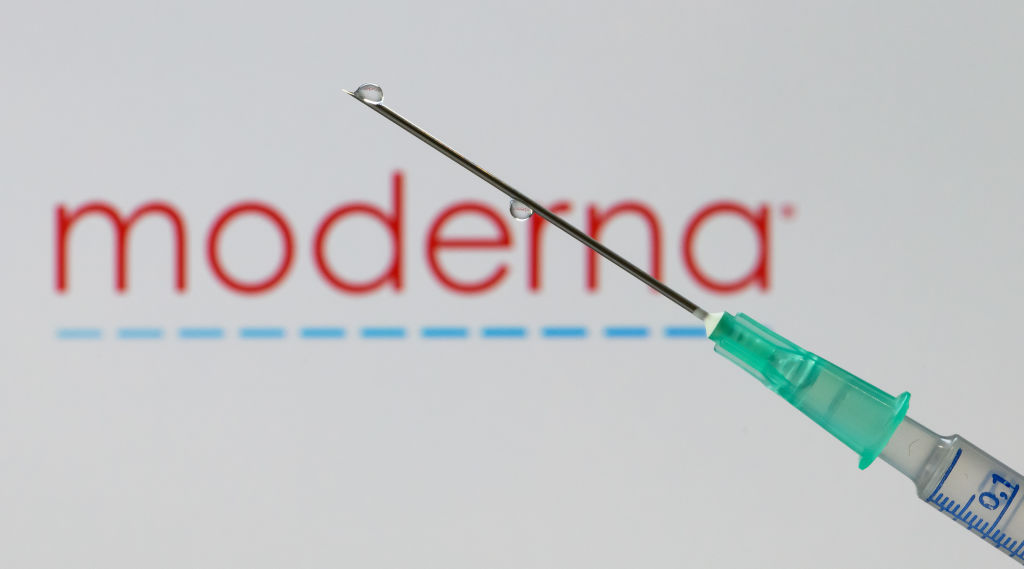
FDA advisors unanimously vote to approve Moderna's mRNA after agency drama

Independent advisors for the Food and Drug Administration on Friday voted 9–0 in support of approving Moderna's seasonal mRNA flu vaccine, which a Trump appointee at the agency initially tried to block from even being reviewed.

In an all-day meeting, members of the FDA's advisory committee—known as VRBPAC for Vaccines and Related Biological Products Advisory Committee—pored over data and presentations on the vaccine, which is dubbed mRNA-1010 and branded as mFlusiva. The presentations included a review from FDA scientists, which was supportive of the vaccine.

Data from a Phase 3 trial including over 40,000 adults age 50 and older found the mRNA vaccine was around 27 percent more effective against seasonal flu than a standard flu shot. A smaller Phase 3 trial, involving data from nearly 3,000 people age 65 years and older, showed the shot produces stronger immune responses than a high-dose flu vaccine, which is recommended for this age group. The safety profile of the vaccine was also generally good.

Read full article

Comments

© DeFodi Images

  •  

"Truly evil" FDA rejection of gene therapy overturned after Trump official ousted

A gene therapy for Huntington's disease has a new path toward approval from the Food and Drug Administration after the ouster of several Trump officials, particularly Vinay Prasad, who rejected the therapy in a shocking move one former FDA official called "truly evil."

Huntington's disease is an inherited condition that typically strikes in middle age and causes nerve cells in the brain to gradually break down. There are currently no treatments for the disease, and many afflicted die in their 50s and 60s.

Gene therapy company UniQure developed a one-time treatment, AMT-130, that aims to lower brain levels of the mutant protein behind the disease, called huntingtin. Data from a small, early trial suggested the drug could slow the progression of the disease up to 75 percent, and patients and advocates have closely watched the drug's development in hopeful anticipation.

Read full article

Comments

© Getty | Congressional Quarterly

  •  

Ariane 6 set to launch the heaviest payload in Ariane history, 36 Amazon Leo satellites, on the debut of upgraded boosters

Artist's impression of an Ariane 6 upper stage releasing a spacecraft in orbit above Earth

Arianespace is scheduled to launch 36 Amazon Leo broadband satellites aboard an Ariane 6 rocket on Wednesday, June 17, in a flight the company says will carry the heaviest payload ever launched by an Ariane launcher. Liftoff from Europe’s Spaceport in Kourou, French Guiana, is targeted for a window that opens at 11:53 a.m. UTC (8:53 a.m. local time in Kourou), according to Arianespace’s mission announcement.

Designated VA269 by Arianespace and LE-03 by Amazon, the mission is the third Ariane 6 flight dedicated to Amazon’s low Earth orbit constellation and the eighth Ariane 6 launch overall. The 36 satellites are four more than rode each of the two previous Amazon flights, which carried 32 apiece.

Why this flight carries more

The extra payload comes from a hardware change rather than a bigger rocket. VA269 is the first Ariane 64 to fly with four P160C solid-propellant boosters, an upgraded version of the P120C boosters used on earlier Ariane 6 flights.

The upgrade is internal: each P160C holds more propellant, up to 156 tonnes, in a motor about one meter longer than the P120C’s. Arianespace says that raises booster performance by about 10 percent and lifts Ariane 64’s capacity to roughly 22 tonnes in low Earth orbit, an increase of more than two metric tons. The company describes the P160C, built by ArianeGroup, as among the world’s largest one-piece carbon-fiber solid rocket motors.

The 36 satellites sit under the rocket’s 20-meter fairing. If the flight goes to plan, they will separate over a sequence lasting one hour and 51 minutes from liftoff to release of the final satellite.

Where the constellation stands

Amazon Leo, the company’s satellite internet network formerly known as Project Kuiper, is being deployed across several rockets. Amazon says more than 330 of its satellites have been deployed so far across 12 missions, using Atlas V, Ariane 6, Falcon 9 and other launchers.

A successful VA269 would bring to 100 the number of Amazon Leo satellites launched by Arianespace across three missions in under five months, and would mean Europe has launched more than a quarter of Amazon’s growing constellation. Amazon Leo is Arianespace’s largest single customer, with an initial contract for 18 Ariane 6 launches.

“The upgraded P160C boosters are bringing exactly the performance gains we designed them for, and LE-03 will be our most ambitious launch together yet,” Arianespace chief executive David Cavaillolès said in a statement released with Amazon.

What is and is not settled before liftoff

The record and the new booster capability are claims about a flight that has not happened yet. Launch dates and windows commonly slip for weather or technical reasons, and the heaviest-payload milestone and the P160C’s performance gain are only confirmed once the rocket flies and the satellites separate as planned. The figures above are Arianespace’s and Amazon’s own pre-flight numbers; the deployment outcome will not be known until the mission concludes, nearly two hours after liftoff.

Arianespace says the satellites reached Kourou in mid-April and that the rocket’s core stage and four boosters are already assembled on the pad. The company plans to confirm the result after the flight.

The post Ariane 6 set to launch the heaviest payload in Ariane history, 36 Amazon Leo satellites, on the debut of upgraded boosters appeared first on Space Daily.

  •  

Scientists Find a New Way to Stop Cancer Spread

For many cancer patients, the most frightening part of the disease is not the original tumor but the possibility that cancer may return after treatment. Doctors can often remove tumors through surgery and destroy large numbers of cancer cells with chemotherapy or radiation. Yet even when scans appear clear, a small number of cancer cells […]

The post Scientists Find a New Way to Stop Cancer Spread appeared first on Knowridge Science Report.

  •  

Tensions Are Rising Among States That Rely on the Colorado River

A prolonged drought means the nation’s largest reservoirs are dwindling, and litigation over access to water could lie ahead.

© Nina Riggio for The New York Times

The Upper Colorado River on the Grand Canyon last month. About 40 million people and 5.5 million acres of cropland depend on the Colorado for drinking water and irrigation.
  •  

AT&T is launching $3 ‘unlimited’ day passes for iPads

A photo of the M5 iPad Pro.
AT&T’s new day passes let you get your iPad online for 24 hours at a time, when you need it. | Photo: David Pierce / The Verge

AT&T has introduced a new "Unlimited Day Pass" cellular data offer for iPad users who need brief connectivity instead of signing up for a long-term plan. The day pass is available for $3 in the US starting today, providing 24 hours of unlimited data, with no contracts, subscriptions, or credit checks required.

This offer is available to anyone, including non-AT&T customers, with the 24-hour data activation beginning shortly after purchase. The first day pass is free as part of an introductory deal. There are no caps on speed or data mentioned in AT&T's announcement, but the company says it may "temporarily slow data speeds if the network is …

Read the full story at The Verge.

  •  

Christian Zionism Militarizes Scripture for the Empire

Christian Zionists have been used as a tool of the imperialism of the empire. By conscripting them with the false reinterpretation of the scripture Genesis 12:3, they are led to believe and support the current nation of Israel as a bulwark against radical Islam.

  •  

The False Choice | Israel or Terrorism

I critique the portrayal of the Israel-terrorist binary choice, emphasizing that true followers of Jesus Christ should advocate for peace rather than support wars driven by greed or ideology, instead promote love and coexistence among diverse beliefs.

  •  

Vinyls: o gira-discos virtual que transforma o iPhone numa mesa de mistura analógica com toda a nostalgia do vinil

Criada por um programador independente depois da sua primeira WWDC em 2019, a Vinyls reproduz a música da sua biblioteca com animações de disco em rotação, estalinhos característicos e até um arranhão se tocar na agulha.

The post Vinyls: o gira-discos virtual que transforma o iPhone numa mesa de mistura analógica com toda a nostalgia do vinil appeared first on Tek Notícias.

  •  
❌