❌

Reading view

Review: Widow's Bay is a boldly original take on comedic horror

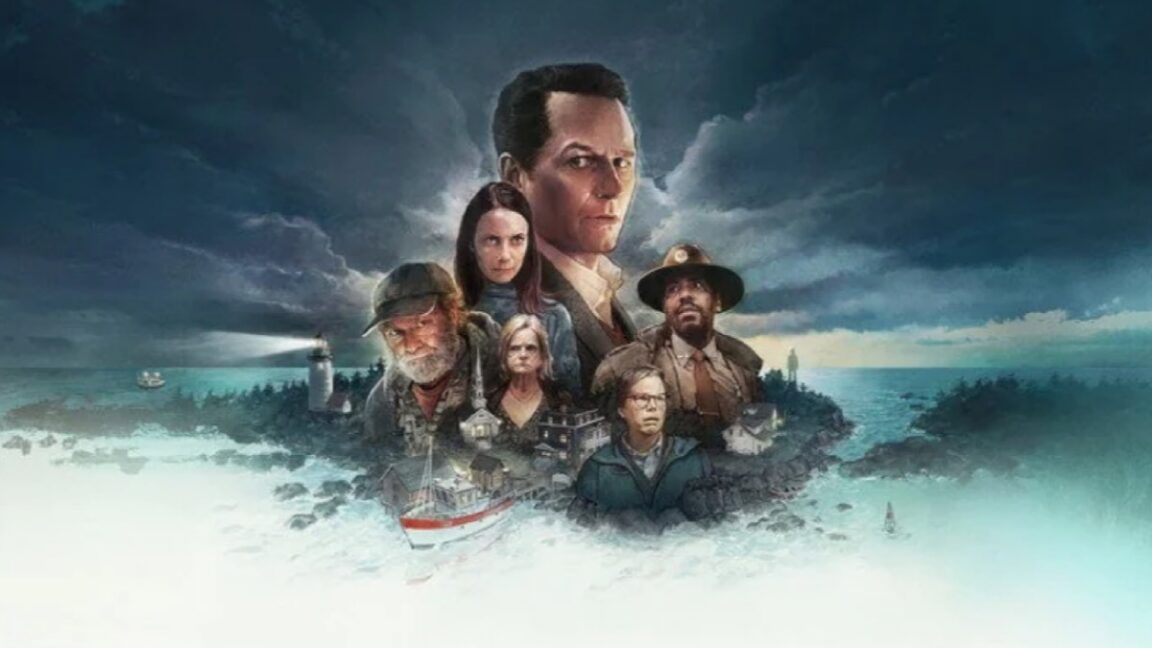
Widow's Bay, the delightfully eccentric new comedic horror series from Apple TV, is easily one of the best new series of the year. There's a reason everyone from Guillero del Toro and Ben Stiller to Damon Lindelolf (Lost) is raving about the show. It's an eminently binge-able, addictive series that pays tribute to all the classic horror tropes while reinventing them in surprising ways. Think Stephen King meets Parks and Recreation, with a dash of Twin Peaks—except Widow's Bay is very much its own refreshingly original beast.

(Some spoilers below but no major reveals.)

Tom Loftis (Matthew Rhys) is a widower and mayor of Widow's Bay, a quirky little seaside town that has a colorfully bizarre history marked by periodic tragedies. Tom is eager to elevate the town into a trendy summer tourist destination. But the arrival of New York Times travel writer Arthur Lloyd (Bashir Salahuddin), who has the clout to make Tom's aspirations for Widow's Bay come true, coincides with the onset of a mysterious fog. Local resident Wyck (Stephen Root) warns Tom that the fog is an omen that the island is "waking up," meaning more supernatural occurrences are bound to happen.

Read full article

Comments

© Apple TV

  •  

Happy Summer Solstice! Today marks the longest day of the year for the Northern Hemisphere

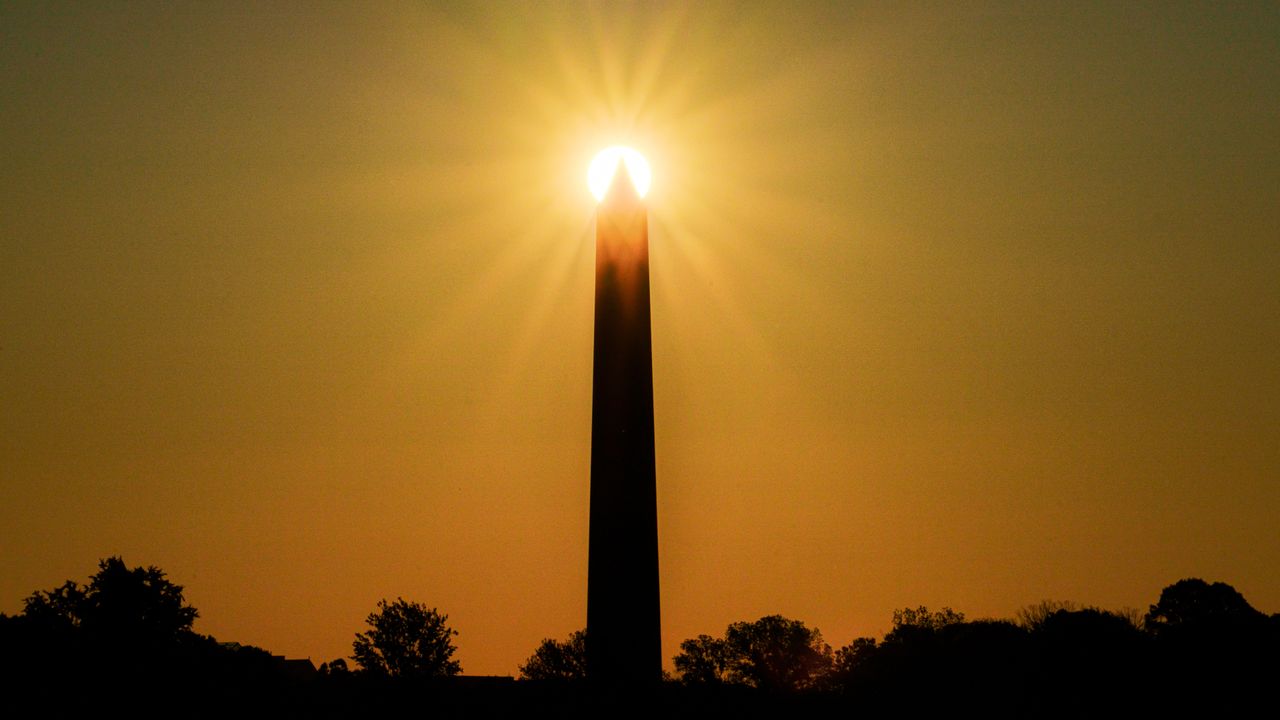
The summer solstice has arrived, marking the start of astronomical summer and the longest day of 2026 in the northern hemisphere.

The summer solstice occurred at 4:24 a.m. EDT (0824 GMT) on June 21, as Earth's north pole reached its most extreme tilt towards the sun in its yearly orbit, bathing the northern hemisphere in its light.

As such, June 21 marks the start of astronomical summer, which is calculated based on the position of Earth relative to the sun, as opposed to meteorological summer, which is based on temperature and runs from the beginning of June through to the end of August.

How much sunlight will you get on the day of the summer solstice?

How much daylight you receive depends largely on your latitude. According to veteran meteorologist and Space.com columnist Joe Rao, it's all a question of latitude. "At the equator, the time from sunrise to sunset is about 12 hours. At temperate or mid-northern latitudes (approximately 40 degrees north) the length of daylight lasts about 15 hours," said Rao in an article for Space.com

The effect of Earth's tilt is even more pronounced 66.5 degrees north of the equator in the Arctic Circle, where the sun won't set below the horizon at all, heralding a full 24 hours of daylight, often called the midnight sun. You can discover exactly how much daylight you'll get on June 21 using Time and Date's sunrise and sunset tracker.

At the same time that the northern hemisphere experiences the summer solstice, Earth's south pole tilts 23.5 degrees away from the sun relative to the celestial equator, which gives the southern hemisphere its shortest day of the year during the winter solstice.

Want to know more? Then be sure to read our comprehensive guides to the summer and winter solstices to discover everything from the Latin meaning of their names, to what causes them and how they're celebrated around the world.

  •  

Researchers had 124 adults cut their email checking to three times a day — what dropped wasn’t their workload, it was their daily stress

How many times do you check your email on a normal workday? Be honest. Not the number you’d like to say, the real one, counting every quick glance at the phone and every tab you flick back to between actual tasks.

Some research suggests this little habit might have an effect on wellbeing and stress. 

A quick note before we go further: I’m a writer, not a psychologist or a clinician, and what follows is me reading and thinking about one study, not handing out advice. The research here is drawn from a particular group of people, so treat it as a useful clue about how attention and stress interact, not a rule about your life.

In 2014, Kostadin Kushlev, then a PhD candidate, and Elizabeth Dunn at the University of British Columbia ran a two-week field experiment to test something simple. Does checking email less often make you feel better? They published it the following year in Computers in Human Behavior as “Checking email less frequently reduces stress.”

They recruited 124 adults, about two-thirds of them students, the rest a mix of financial analysts, medical professionals and others. Over two weeks, each person spent one week checking email as often as they liked, and another week limited to three times a day. Which week came first was decided at random. So everyone was their own comparison, living both ways.

You might expect the finding to be about getting more done. Fewer interruptions, more output, that sort of thing. That isn’t what they measured, and it isn’t what jumped out.

What they found was that people felt calmer during the limited week. Participants reported significantly lower daily stress when they were checking less, and lower stress in turn predicted higher well-being across a range of measures. Kushlev put it as plainly as it can be put. “Our findings showed that people felt less stressed when they checked their email less often.”

It’s one two-week study of 124 mostly young people, so it’s a clue rather than a verdict, but the mechanism it points to has shown up in other workplace research too.

The stress relief didn’t come from clearing the inbox faster or replying the moment something landed. It came from checking less often, full stop. The authors point at attention fragmentation, the cost of constantly breaking off what you’re doing to glance at something else, not the speed of your replies.

I know that cost intimately, because I lose to it most days. A Slack message comes in while I’m writing. I tell myself I’ll just glance. I glance, I answer, I come back to the document, and then I sit there for a while staring at the half-finished sentence, trying to remember where I was going with it. The message took ten seconds. Getting back into the writing takes a lot longer.

I’ve built a small fortress against this, with mixed success. The phone goes in another room. I close every tab before I start. No social media open while I work. None of it makes me disciplined. The systems leak, I break my own rules, and some mornings the fortress is more of a fence. But the principle holds: the cost is the interruption itself, not whether the email was urgent.

There’s a wrinkle that makes the study more honest, not less. The people in the limited week mostly couldn’t actually hit three times a day. They checked a mean of about 4.7 times, well above the target, against a baseline of about 15 checks on a normal workday. Kushlev was upfront about it: “Most participants in our study found it quite difficult to check their email only a few times a day.”

So the lower stress showed up in people who tried and largely fell short. That’s encouraging, because most of us are going to fall short too. You don’t have to be a monk about it. Cutting from fifteen-odd checks toward five seems to do something, even if three stays out of reach. As Kushlev framed it, drawing on his own study, “people find it difficult to resist the temptation of checking email, and yet resisting this temptation reduces their stress.”

Kushlev says he changed his own habit after the study. He now checks email in chunks several times a day, rather than constantly responding to messages as they arrive. That’s the one lever from all of this I’ve actually pulled, and the one I plan on keeping — not three times a day, just in chunks, with the inbox shut in between, getting back to whatever I was supposed to be doing before the next glance.

If the low hum of being always-on has tipped into something heavier than email annoyance, a chat with a qualified therapist is worth far more than anything I can offer here.

The post Researchers had 124 adults cut their email checking to three times a day — what dropped wasn’t their workload, it was their daily stress appeared first on Space Daily.

  •  

How to watch Spain vs. Saudi Arabia online for free

Lamine Yamal #19 of Spain looks on

TL;DR: Live stream Spain vs. Saudi Arabia in the 2026 FIFA World Cup for free on BBC iPlayer. Access this free streaming platform from anywhere in the world with ExpressVPN, an Official Supporter of the FIFA World Cup 2026.


The biggest story from the first round of 2026 FIFA World Cup fixtures was probably Spain's failure to beat Cape Verde. The Euro 2024 winners will be looking to make a statement in their next game against Saudi Arabia, a team that pulled off a surprise draw with Uruguay in their opening game.

If you want to watch Spain vs. Saudi Arabia in the 2026 FIFA World Cup from anywhere in the world, we have all the information you need.

When is Spain vs. Saudi Arabia?

Spain vs. Saudi Arabia in the 2026 FIFA World Cup kicks off at 12 p.m. ET on June 21. This fixture takes place at the Atlanta Stadium.

How to watch Spain vs. Saudi Arabia for free

Spain vs. Saudi Arabia in the 2026 FIFA World Cup is available to live stream for free on BBC iPlayer.

BBC iPlayer is geo-restricted to the UK, but anyone can access this free streaming platform with a VPN. These tools can hide your real IP address (digital location) and connect you to a secure server in the UK, meaning you can unblock BBC iPlayer to live stream the 2026 World Cup for free from anywhere in the world.

Live stream Spain vs. Saudi Arabia for free by following these simple steps:

  1. Subscribe to a streaming-friendly VPN (we recommend ExpressVPN)

  2. Download the app to your device of choice (the best VPNs have apps for Windows, Mac, iOS, Android, Linux, and more)

  3. Open up the app and connect to a server in the UK

  4. Visit BBC iPlayer

  5. Watch Spain vs. Saudi Arabia for free from anywhere in the world

Credit: ExpressVPN
$12.99 only at ExpressVPN

The best VPNs for streaming are not free, but most do offer free-trials or money-back guarantees. By leveraging these offers, you can access free live streams of the 2026 World Cup without actually spending anything. This obviously isn't a long-term solution, but it does give you enough time to stream Spain vs. Saudi Arabia (plus more World Cup fixtures) before recovering your investment.

ExpressVPN's regular 30-day money back guarantee is not available for any subscriptions purchased during the FIFA World Cup between June 10 and July 11. ExpressVPN remains our top pick for sport, but you will need to pay the monthly rate. Alternatively, Proton VPN still offers that all-important money-back guarantee.

What is the best VPN for BBC iPlayer?

ExpressVPN is the best choice for bypassing geo-restrictions to stream live sport on BBC iPlayer, for a number of reasons:

  • Servers in 105 countries including the UK

  • Easy-to-use app available on all major devices including iPhone, Android, Windows, Mac, and more

  • Strict no-logging policy so your data is secure

  • Fast connection speeds free from throttling

  • Up to 10 simultaneous connections

A two-year subscription to ExpressVPN is on sale for $68.40 and includes an extra four months for free — 81% off for a limited time. Alternatively, you can get a one-month plan for just $12.99. That covers you for the duration of the World Cup.

Live stream Spain vs. Saudi Arabia in the 2026 FIFA World Cup for free.

  •  

NYT Connections Sports Edition today: Hints and answers for June 21, 2026

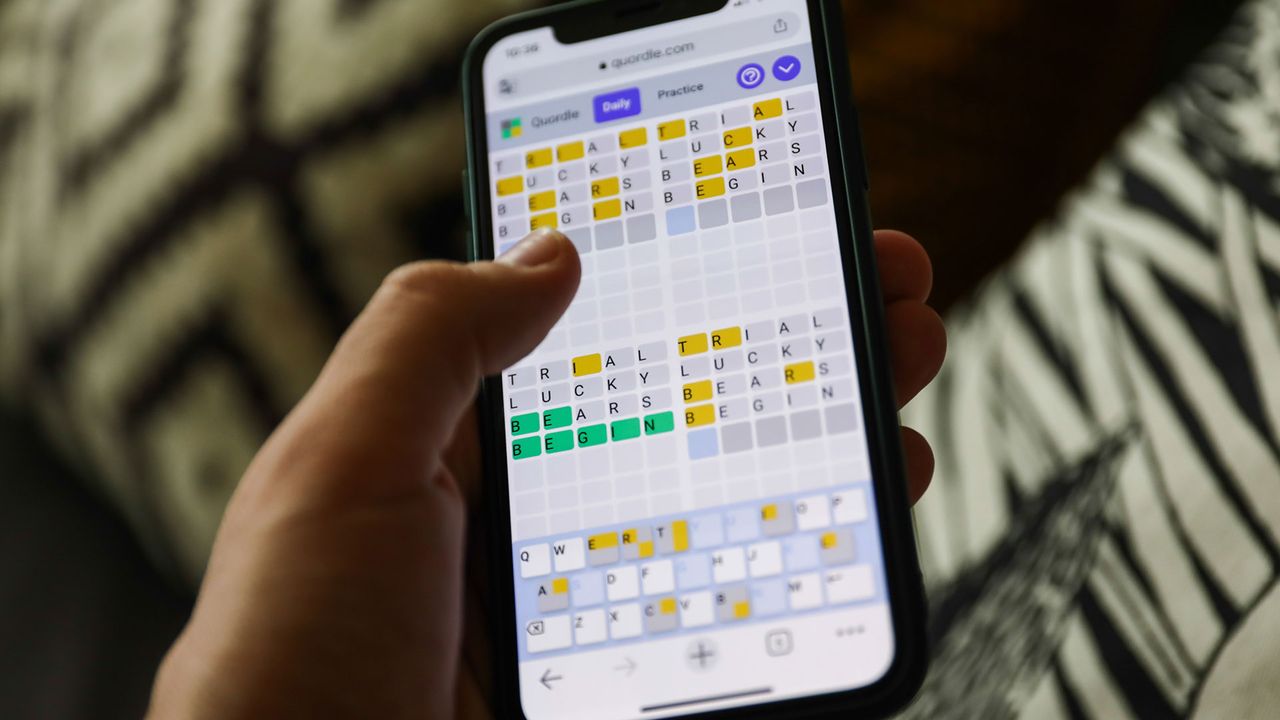
A phone displaying the New York Times game 'Connections.'

Today's Connections: Sports Edition will be easier if you know golf history.

As we've shared in previous hints stories, this is a version of the popular New York Times word game that seeks to test the knowledge of sports fans.

Like the original Connections, the game is all about finding the "common threads between words." And just like Wordle, Connections resets after midnight, and each new set of words gets trickier and trickier — so we've served up some hints and tips to get you over the hurdle.

If you just want to be told today's puzzle, you can jump to the end of this article for the latest Connections solution. But if you'd rather solve it yourself, keep reading for some clues, tips, and strategies to assist you.

What is Connections: Sports Edition?

The NYT's latest daily word game has launched in association with The Athletic, the New York Times property that provides the publication's sports coverage. The sports Connections can be played on both web browsers and mobile devices and require players to group four words that share something in common.

This Tweet is currently unavailable. It might be loading or has been removed.

Each puzzle features 16 words, and each grouping of words is split into four categories. These sets could comprise anything from book titles, software, country names, etc. Even though multiple words will seem like they fit together, there's only one correct answer.

If a player gets all four words in a set correct, those words are removed from the board. Guess wrong and it counts as a mistake — players get up to four mistakes before the game ends.

This Tweet is currently unavailable. It might be loading or has been removed.

Players can also rearrange and shuffle the board to make spotting connections easier. Additionally, each group is color-coded with yellow being the easiest, followed by green, blue, and purple. Like Wordle, you can share the results with your friends on social media.

Here's a hint for today's Connections: Sports Edition categories

Want a hint about the categories without being told the categories? Then give these a try:

  • Yellow: Top athletes

  • Green: Football terms of affection

  • Blue: Geographically specific

  • Purple: Classic sports words

Here are today's Connections: Sports Edition categories

Need a little extra help? Today's connections fall into the following categories:

  • Yellow: A team's best players

  • Green: Informal nicknames for NFL teams

  • Blue: Brazilian soccer greats

  • Purple: Old terms for golf clubs

Looking for Wordle today? Here's the answer to today's Wordle.

Ready for the answers? This is your last chance to turn back and solve today's puzzle before we reveal the solutions.

Drumroll, please!

The solution to today's Connections: Sports Edition #636 is...

What is the answer to Connections: Sports Edition today?

  • A team's best players: A-TEAM, FIRST STRING, REGULARS, STARTERS

  • Informal nicknames for NFL teams: BOLTS, G-MEN, PACK, VIKES

  • Brazilian soccer greats: KAKÁ, MARTA, PELÉ, RONALDINHO

  • Old terms for golf clubs: BRASSIE, CLEEK, MASHIE, NIBLICK

Don't feel down if you didn't manage to guess it this time. There will be new sports Connections for you to stretch your brain with tomorrow, and we'll be back again to guide you with more helpful hints.

Are you also playing NYT Strands? See hints and answers for today's Strands.

If you're looking for more puzzles, Mashable's got games now! Check out our games hub for Mahjong, Sudoku, free crossword, and more.

Not the day you're after? Here's the solution to yesterday's Connections.

  •  

Moon phase today: What the Moon will look like on June 21

An image of a full moon.

It's now the First Quarter, which means the Moon is half full, and there's plenty surface area illuminated to spot features.

What is today’s Moon phase?

As of Sunday, June 21, the Moon phase is First Quarter. Tonight, 54% of the moon will be be lit up, according to NASA's Daily Moon Guide.

With just your naked eye, tonight you'll be able to see the Mares Fecunditatis, Serenitatis and Crisium. With binoculars, you'll also catch a glimpse of the Endymion Crater, Posidonius Crater, and the Mare Nectaris. If you have a telescope, this will help you see all this plus the Linne Crater, the Descartes Highlands, and the Rupes Altai.

When is the next Full Moon?

The next Full Moon will take place on June 29.

What are Moon phases?

According to NASA, the Moon completes one orbit around Earth in about 29.5 days, moving through eight recognised phases along the way. While the same side of the Moon always faces our planet, the amount of its surface lit by the Sun changes as it travels around Earth. As a result, we see the Moon appear in different shapes over the course of a month, from slender crescents and half moons to a bright Full Moon. This repeating sequence of phases is known as the lunar cycle.

New Moon - The Moon is between Earth and the sun, so the side we see is dark (in other words, it's invisible to the eye).

Waxing Crescent - A small sliver of light appears on the right side (Northern Hemisphere).

First Quarter - Half of the Moon is lit on the right side. It looks like a half-Moon.

Waxing Gibbous - More than half is lit up, but it’s not quite full yet.

Full Moon - The whole face of the Moon is illuminated and fully visible.

Waning Gibbous - The Moon starts losing light on the right side. (Northern Hemisphere)

Third Quarter (or Last Quarter) - Another half-Moon, but now the left side is lit.

Waning Crescent - A thin sliver of light remains on the left side before going dark again.

  •  

About 66 million years ago an asteroid roughly 10-15 km wide struck off Mexico’s Yucatan, gouging a crater some 180 km across — and the extinction that followed wiped out the non-avian dinosaurs and around 75% of all species

Roughly five billion. That is the number of Hiroshima-sized bombs it would take to match the energy of a single morning 66 million years ago.

Yes, according to a Physics Today summary of recent impact modelling, “The collision energy was 3 × 10²³ J, which is equivalent to about 5 billion Hiroshima-sized atomic bomb explosions.” The figure is a model-derived estimate, and the Hiroshima comparison is illustrative rather than exact but it still does the work of making an unimaginable event somewhat graspable.

The asteroid was about 10 to 15 kilometres in diamater. It struck the northern Yucatán Peninsula and left the Chicxulub crater, a buried scar some 180 kilometres wide. What followed was not a single catastrophic instant but a chain of consequences that played out over hours, months, and years. The story worth telling is less about the strike itself than about how a brief collision became a planetary reset.

The first hours

The immediate physics were brutal. Simulations summarised in the same Physics Today piece indicate that “Within seconds, the impact excavated a hole more than 20 km deep into Earth’s surface and threw bedrock and sediment into the upper atmosphere.” Again, that depth is a simulation result, not a measurement, but it captures the scale of the excavation.

Material did not just fall back where it came from. A 2022 review in Nature Reviews Earth & Environment, led by researchers at Imperial College London, synthesised the modelling this way: “Several thousand gigatonnes of asteroidal and target material were ejected at velocities exceeding 5 kilometres per second, forming a fast-moving cloud that transported dust, soot and sulfate aerosols around the Earth within hours.” A regional event became a global one before the day was out.

The long winter that did the killing

The strike was survivable for a great many organisms. The aftermath was not. The Nature Reviews synthesis frames the central mechanism plainly: “These impact ejecta and soot from global wildfires blocked sunlight and caused global cooling, thus explaining the severity and abruptness of the mass extinction.” That cooling likely explains why the extinction was so sharp, though the relative contributions of dust, soot, and sulfate aerosols remain debated.

How long the dark lasted is genuinely unsettled. The same review notes carefully that “it remains uncertain whether this impact winter lasted for many months or for more than a decade.” That uncertainty matters, because the duration is the difference between a lean season and the collapse of nearly every food web on the planet.

The debate over what drove the cooling is still live. A 2016 study in Scientific Reports proposed that soot ejected from the oil-rich rock at the impact site, spread globally through the stratosphere, drove much of the cooling and darkening, placing soot from the impact site itself, not just wildfires, near the front of the killing sequence. More recently, a 2025 Nature Communications paper by Katerina Rodiouchkina and colleagues revised the sulfur estimate sharply downward, suggesting a less prominent role for sulfur emission and a milder impact winter, with implications for which species pulled through the first years after the strike. It is one study, and it conflicts with other modelling that treats sulfur as the main early driver. The precise recipe of the winter is still being worked out.

Who slipped through

The pattern of survival is the part that tends to surprise people. Size was close to a death sentence. The Scientific Reports analysis notes that only about 12% of land-dwelling forms survived, with large-bodied land animals probably almost entirely wiped out. The contrast with the water is striking: around 90% of species in the freshwater assemblage survived, buffered because they relied on detritus rather than the living plants and plankton that the darkness destroyed much of. 

Finding the crater, decades later

For years the impact was a hypothesis without a smoking gun. The crater was first detected in the late 1970s by petroleum geophysicists Glen Penfield and Antonio Camargo, but its connection to the extinction was only confirmed around 1990 and 1991, after Alan Hildebrand tied iridium-rich boundary deposits to the buried structure beneath the Yucatán. 

The rock record has since been read directly. In 2016, an international drilling project bored into the crater’s peak ring, recovering shocked minerals and impact rocks that confirmed long-modelled details of the collision. As a summary of that work records, the drilling confirmed the peak ring was built from granite ejected within minutes from deep in the Earth. 

What the record shows, followed to the end, is quietly disorienting. The event erased three-quarters of life on Earth. 

The post About 66 million years ago an asteroid roughly 10-15 km wide struck off Mexico’s Yucatan, gouging a crater some 180 km across — and the extinction that followed wiped out the non-avian dinosaurs and around 75% of all species appeared first on Space Daily.

  •  

NYT Connections hints today: Clues, answers for June 21, 2026

Connections game on a smartphone

The NYT Connections puzzle today is not too difficult if you a binge watcher.

Connections is the one of the most popular New York Times word games that's captured the public's attention. The game is all about finding the "common threads between words." And just like Wordle, Connections resets after midnight and each new set of words gets trickier and trickier—so we've served up some hints and tips to get you over the hurdle.

If you just want to be told today's puzzle, you can jump to the end of this article for today's Connections solution. But if you'd rather solve it yourself, keep reading for some clues, tips, and strategies to assist you.

What is Connections?

The NYT's latest daily word game has become a social media hit. The Times credits associate puzzle editor Wyna Liu with helping to create the new word game and bringing it to the publications' Games section. Connections can be played on both web browsers and mobile devices and require players to group four words that share something in common.

This Tweet is currently unavailable. It might be loading or has been removed.

Each puzzle features 16 words and each grouping of words is split into four categories. These sets could comprise of anything from book titles, software, country names, etc. Even though multiple words will seem like they fit together, there's only one correct answer.

If a player gets all four words in a set correct, those words are removed from the board. Guess wrong and it counts as a mistake—players get up to four mistakes until the game ends.

This Tweet is currently unavailable. It might be loading or has been removed.

Players can also rearrange and shuffle the board to make spotting connections easier. Additionally, each group is color-coded with yellow being the easiest, followed by green, blue, and purple. Like Wordle, you can share the results with your friends on social media.

Here's a hint for today's Connections categories

Want a hint about the categories without being told the categories? Then give these a try:

  • Yellow: Weather patterns

  • Green: Shocks

  • Blue: Hit shows

  • Purple: Offenses

Meet The Mashable 101: Our list of the content creators shaping the internet today

Here are today's Connections categories

Need a little extra help? Today's connections fall into the following categories:

  • Yellow: Precipitation

  • Green: Bowls over

  • Blue: NBC sitcoms

  • Purple: Starting with kinds of insults

Looking for Wordle today? Here's the answer to today's Wordle.

Ready for the answers? This is your last chance to turn back and solve today's puzzle before we reveal the solutions.

Drumroll, please!

The solution to today's Connections #1106 is...

What is the answer to Connections today

  • Precipitation: DRIZZLE, RAIN, SHOWERS, SPRINKLES

  • Bowls over: FLOORS, ROCKS, STUNS, SURPRISES

  • NBC sitcoms: COMMUNITY, FRIENDS, SCRUBS, WINGS

  • Starting with kinds of insults: BARBADOS, DIGGITY, DISSECT, SLAPDASH

Don't feel down if you didn't manage to guess it this time. There will be new Connections for you to stretch your brain with tomorrow, and we'll be back again to guide you with more helpful hints.

Are you also playing NYT Strands? Get all the Strands hints you need for today's puzzle.

If you're looking for more puzzles, Mashable's got games now! Check out our games hub for Mahjong, Sudoku, free crossword, and more.

Not the day you're after? Here's the solution to yesterday's Connections.

  •  

SEU CELULAR VIRA CONTROLE DA NETFLIX! #netflix #jogos #assistênciatec

💾

Transforme seu celular em um controle de videogame da Netflix e jogue direto na TV ou no computador sem gastar nada. Neste vídeo, mostramos como conectar o smartphone aos jogos compatíveis da plataforma usando apenas um QR Code. Uma função pouco conhecida que pode deixar a jogatina muito mais divertida com amigos e família.

#Netflix #NetflixGames #Jogos #Gaming #Tecnologia #Dicas #SmartTV #GamesMobile #Geek #TecMundo
  •  

Mysterious Roman tablet with Egyptian curse written by slave found in military settlement

In an interesting twist of fate, researchers from the Institute of Papyrology at Heidelberg University discovered “curse tablets” from the Roman era, a fascinating look at the more superstitious side of a triumphant empire.

Found in a pit in the Town Square in Heerlen, the curse tablet measuring about 3.7 by 1.9 inches had been laid to rest at a former Roman military settlement of Coriovallum in Lower Germania.

Whoever left it there had a vendetta against her own, or someone else, as researchers suspect that a slave had written the curse either against the four slaves named, or an unknown person.

Known as a defixione or katadesmoi, these curse tablets made of lead were marked with spells and then buried in places associated with supernatural forces, showing that we, humans, have always had a desire to invoke the gods to act in our favor.

This is a rare sighting from Roman Egypt that revealed the role that magic played in that society, at a time when cultures and belief systems were mixing and spreading throughout the empire.

Someone was mad

Researchers had an arduous task before them, as time damaged the inscription. They employed reflectance transformation imaging, which allowed them to penetrate the tablet deeper than their eyes could, picking up more of the inscription lost, their wish perhaps answered by the gods.

Upon the profane/sacred tablet, they found references to Egyptian divinities, which, according to researchers, surprised them as a rare sighting in Germany. Most in Northern Europe follow a similar format: Latin and Roman. Not Egyptian.

And the plot thickens… as it was buried, interestingly, in a former Roman military settlement, and typically, these were buried in locations infused with the supernatural. Below three magical symbols, the author wrote the names of four enslaved people. The men held Latin names. The women, Greek.

As the inscription had been damaged, researchers couldn’t decipher whether this tablet had cursed four slaves or whether four slaves had cried out to the Egyptian gods and demi-heroes, who knows? To wrath. To wreak havoc on an unknown person.

“The tablet served either as a curse against these four slaves or as a curse in their name against an unnamed person,” as the Heidelberg papyrologist told Phys.

Hoping to “work a little magic”

Already, the curse tablet stands alone among the others that researchers have found, because the author etched the message in Greek rather than Latin. These thin sheets of lead containing scratches of supernatural desires were used to sway a court case, target a rival, or even a lover, as per Archaeology News.

“It cannot be ruled out that one of the two women was the author of the inscription and had brought the supposed ability to communicate with divine powers through such curses with her from Roman Egypt,” says Dr. Julia Lougovaya, research associate at the Institute for Papyrology in Phys.

That might suggest that she wrote it for someone, on behalf of four slaves. This author might have originated from Roman Egypt because of the references used. Along the Nile, magic played a fundamental role in society. But interestingly, more so related to protection and healing, as per Phys.

But this was a curse. And these tablets were Roman. So, did a former slave flip the concept? The significance of the tablet rests on its cultural mix.

In the far north of the Roman Empire, this Egyptian-meets-Greek artifact was found, exhibiting just how far the mélange of cultures traveled. Perhaps, it might even inspire ideas as to who might have wanted to curse someone at some Roman camp, because of the slave names written across the tablet.

💾

Known as a defixione or katadesmoi, these curse tablets made of lead were marked with spells and then buried in places associated with supernatural forces.
  •  

SMPTE Opens Entire Standards Catalog for Free, Removing Century-Old Paywall

The Society of Motion Picture and Television Engineers has published over 800 technical standards over the years (as a professional association for the media and entertainment industry). But this week SMPTE "announced that its complete Standards catalog, the technical backbone behind everything from SDI and timecode to IP-based broadcast workflows, is now freely available to anyone in the global media technology community," reports the filmmaking news site CineD, arguing it's "one of the more meaningful structural shifts we have seen from a standards body in years" that could "reshape how smaller developers and educators engage with professional media technology." The move covers all published Standards, Recommended Practices, Engineering Guidelines and Registered Disclosure Documents, plus every future release, ending a long-standing model in which individual documents often sold for well over $100 each. For more than a century, SMPTE Standards have quietly governed how images and sound move through the production chain. If you have ever recorded timecode in the HH:MM:SS:FF format, routed a signal over 3G-SDI, or built a facility around the ST 2110 suite for media over IP, you have relied on SMPTE specifications, whether you knew it or not... Until now, accessing the actual text of those documents usually meant paying per file, a barrier that this announcement removes entirely... The latest releases are available through the Recently Published Documents page on the SMPTE website, with the complete archive reachable through the SMPTE Standards Library... There is also a practical, behind-the-scenes story here. The open-access move is part of a broader modernization of how SMPTE develops and publishes Standards. Recent initiatives include adopting GitHub-based workflows for version control, issue tracking and automation, transitioning to structured HTML-based authoring, and implementing an integrated publishing pipeline that streamlines document creation, review, validation and release... The most consequential beneficiaries are arguably not the large members already inside the system, but the developers, integrators, educators and manufacturers who previously worked around the paywall... The practical upshot is that developers and emerging markets can build from accurate primary specifications rather than secondhand sources, which matters enormously when a single misread tolerance or metadata field can break compatibility down the line. This also fits a wider pattern of the industry moving toward openness. We have previously covered moments like GoPro's decision to make its CineForm codec open source and release the SDK, a codec that SMPTE itself standardized in 2015 as an open standard for acquisition and post production. Lowering the cost of knowledge tends to widen the pool of people who can contribute to it, and a freely readable standards library is a significant step in that direction for an organization that has historically sat behind a per-document fee. "This was a decision we did not make lightly," says SMPTE President Rich Welsh. But "For 110 years, SMPTE has evolved alongside the media technology industry, helping to drive change and innovation — and we're not stopping now." "Our industry is confronting transformative shifts, from IP-based workflows to AI authenticity and content provenance, and we find ourselves at another inflection point. We listened to our Members, Partners and the global Standards community, and the answer was clear: Interoperability is essential to the future of media. Now is the time to open the gates and ensure the next generation of media technology is built on a stronger, more accessible foundation." Thanks to innocent_white_lamb (Slashdot reader #151,825) for sharing the news.

Read more of this story at Slashdot.

  •  

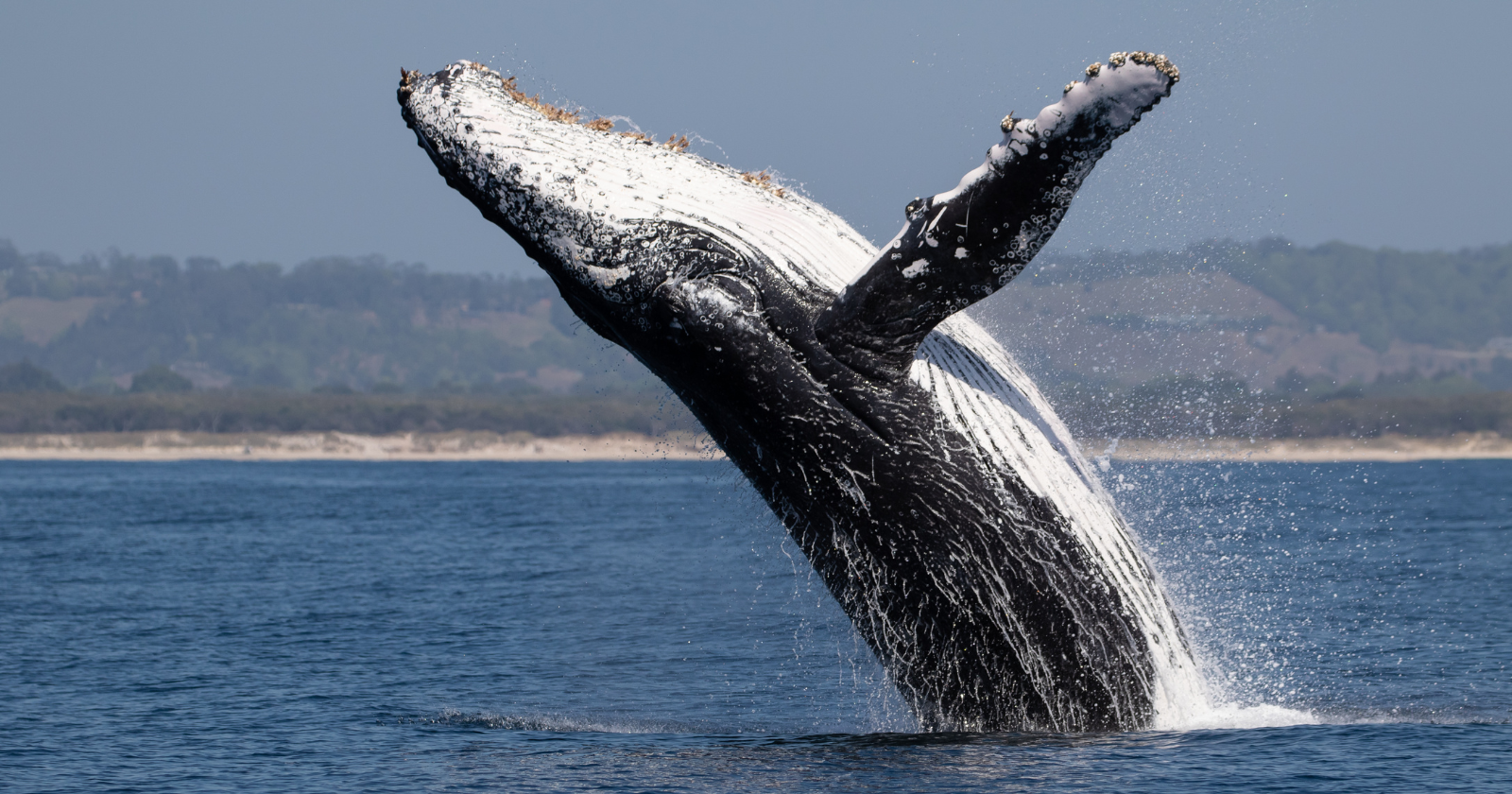
When a dead whale sinks to the seafloor, its ‘whale fall’ becomes an oasis feeding deep-sea life for decades — up to 190 species crowding a single skeleton, with bone-eating worms gnawing the bones for as long as a decade

One whale skeleton on the deep seafloor can host an entire neighbourhood of animals. On whale skeletons studied, researchers have found as many as 190 species of macroscopic bottom-dwelling animals on a single skeleton. Biologists call the phenomenon a whale fall, and the name is almost literal: a body falls, and an oasis assembles around it.

The setting matters. The abyssal plain is one of the hungriest places on Earth, a soft floor that lives on whatever scraps drift down from sunlit water far above. A great whale arriving intact is a sudden windfall, tens of tonnes of food dropped onto a surface that normally goes without.

What follows is a sequence of feasts, each handing off to the next over years.

What actually happens to the body

Researchers describe the process in overlapping stages. First come the mobile scavengers. Hagfish, sleeper sharks, crabs and their kind strip the soft tissue, a stage that can run up to two years for a large animal. Once the flesh is gone, a wave of smaller opportunists settles onto the bared bones and the enriched sediment around them.

In what is called the sulfophilic stage, bacteria break down the fats locked inside the skeleton and release hydrogen sulphide, one of the same chemical currencies that helps fuel life at hydrothermal vents and cold seeps. The Smithsonian describes this final stage as the point when bacteria break down lipids trapped inside the bones, generating sulfur and supporting a larger community of rare species.

That chemistry can sustain a community of chemosynthetic animals for a long time. The Natural History Museum puts this stage at roughly 10 to 50 years, and one large whale-fall community has been tracked for more than 50 years. 

The worms that eat bone

The bones themselves turned out to shelter one of the stranger residents in the deep. In 2002, on a whale fall about three kilometres down in Monterey Canyon, scientists found a new genus of worm they named Osedax. 

Adrian Glover, a deep-sea biodiversity researcher at the Natural History Museum in London, calls them “the most important animals responsible for the process of breaking down the bones,” though the large scavengers do plenty of reducing earlier on.

An individual Osedax can spend as long as about a decade feeding on a single whale’s bones. That figure is worth holding against the popular claim that the worms gnaw for the better part of a century: the documented number for an individual worm is closer to ten years, not eighty.

What made the worms possible is the strange economy of the deep. As Robert Vrijenhoek, the MBARI evolutionary biologist who led the discovery, put it: “When carcasses fall to the bottom of the ocean, there are no hyenas down there to eat the bones.” Osedax is the exception that filled the gap.

How many are down there right now

For all that researchers know about how whale falls work, almost no one has watched a natural whale fall unfold from death and sinking through the whole ecological succession. Fujiwara et al. note that, since the first observations in 1987, several natural whale falls have been opportunistically encountered during remotely operated vehicle, submersible and trawl deployments.

For years, one of the deepest confirmed natural examples was an Antarctic minke whale resting at 4,204 metres in the South-West Atlantic. Just this month, researchers reported active whale-fall ecosystems in the Diamantina Zone of the southeastern Indian Ocean, including one at 6,789 metres, pushing the known depth range far beyond that earlier record.

When Vrijenhoek’s team found unexpected genetic diversity in their bone-eating worms, the result led him to a simple inference: “there must be a lot of dead whales out there.” That was a deduction from genetics rather than a count, and even with new discoveries, the watched record remains tiny compared with the deep ocean itself.

The honest answer to how many active whale falls are feeding deep-sea communities at this moment is that no one really knows, only that the number seen by human eyes is a sliver of the number that must be there.

The post When a dead whale sinks to the seafloor, its ‘whale fall’ becomes an oasis feeding deep-sea life for decades — up to 190 species crowding a single skeleton, with bone-eating worms gnawing the bones for as long as a decade appeared first on Space Daily.

  •  

Por que FICAMOS PÁLIDOS quando LEVAMOS um SUSTO? #IberêResponde

💾

Por que uma pessoa pode ficar pálida imediatamente depois de levar um susto?

Neste Iberê Responde, descobrimos o que acontece dentro do corpo humano quando somos surpreendidos por uma situação de perigo ou medo. Uma reação tão rápida que acontece antes mesmo de você pensar no que está acontecendo.

Abra sua conta Revolut usando esse link e ganhe até R$100,00 de cashback: https://get.revolut.com/z4lF/manualdomundoytlong
Termos e condições se aplicam à promoção. Consulte as condições de IOF e SPREAD zero para cada plano disponível.

Além disso, o episódio responde perguntas curiosíssimas sobre galinhas que comem os próprios ovos, preços terminados em R$ 9,99, o verdadeiro significado da cor anil, micro-ondas, bebês na barriga da mãe, o tamanho da Terra, por que o mar é azul, como funciona a sílica gel e muitas outras curiosidades científicas.

Conheça todos os livros do Manual do Mundo: https://amzn.to/3AAc6L8

Um daqueles episódios em que cada pergunta abre uma porta para uma descoberta inesperada.

#susto #dúvidacruel #astronomia #cores #Revolut #publicidade

Seja membro deste canal e ganhe benefícios:
https://youtube.com/channel/UCKHhA5hN2UohhFDfNXB_cvQ/join

► Inscreva-se: https://youtube.com/user/iberethenorio?sub_confirmation=1
► Canal de cortes: https://youtube.com/channel/UCzBTlYfHYMwVEru4hmLM8hg

REDES SOCIAIS
Instagram: http://instagram.com/manualdomundo
TikTok: https://www.tiktok.com/@manualdomundo
Facebook: http://facebook.com/manualdomundo

Instagram Mari: http://instagram.com/amarifulfaro
Twitter Iberê: http://twitter.com/iberethenorio

Dúvidas e sugestões: contato@manualdomundo.com.br
Imprensa e convites: assessoria@manualdomundo.com.br
Negócios: comercial@manualdomundo.com.br

CRÉDITOS

Direção Geral e Apresentação
IBERÊ THENÓRIO

Direção de Estratégia e Marca
RUBENS ISHARA

Direção de Conteúdo Educacional
FERNANDO SOUZA

Direção de Produção
TIAGO CÉSAR SILVA

Direção Financeira
KATIA HATSUMI

Roteiro
BEATRIZ HERMINIO

Conteúdo
FERNANDA T. WAIMBERG
ALISON SOUSA (Estágio)
DANIEL R. UNZELTE (Estágio)
JULIA MARTINATO (Estágio)

Produção
DANIEL PEDROSO
LUCAS VALLADO

Fotografia
JANSEN BISPO

Edição e Finalização
GUSTAVO GIROTTO
NILTON SILVA (Estágio)
FILIPE CANDIDO
JOÃO BRASIL

Arte
ANDRESSA GONÇALVES

Mídias Digitais
ALEX TERUEL (Estágio)

Distribuição
RODOLFO VIANNA

Comercial
NAYARA CRISTINA FERREIRA

Infraestrutura e Serviços
MARIA OLIVEIRA

Apoio: Revolut

Copyright© Manual do Mundo®. Todos os direitos reservados.
  •  

Thought of the day from Stoic philosopher Epictetus: “Some things are in our control and others not. Things in our control are opinion, pursuit, desire, aversion, and, in a word, whatever are our own actions. Things not in our control are body, property, reputation, command, and, in one word, whatever are not our own actions”

Imagine your flight is delayed three hours. Or someone leaves you a bad review that you think is unfair. Or a person you live with wakes up in a foul mood and you can feel it filling the kitchen.

The first reflex, at least mine, is to push back against the thing. To argue with the airline, draft the reply, try to fix the mood. To treat the situation as a problem I can solve if I just apply enough force.

I started reading Stoicism in earnest during a period of failure and a general search for meaning. Seneca’s line about how we waste time stayed with me as a durable impression from that whole reading rabbit-hole.

But the idea I keep coming back to, the one that has been most useful, is the one Epictetus opens his Enchiridion with:

“Some things are in our control and others not. Things in our control are opinion, pursuit, desire, aversion, and, in a word, whatever are our own actions. Things not in our control are body, property, reputation, command, and, in one word, whatever are not our own actions”. 

The handbook was compiled by his pupil Arrian from Epictetus’s teaching, but the thought is his, and modern readers tend to call it the dichotomy of control.

A note before I go further. I’m not a psychologist or a philosopher by training, just a reader who came to the Stoics during a rough stretch and kept reading. What follows is reflection on old ideas and a little modern research, not advice, and the psychology I mention is observational, drawn from particular groups of people rather than rules about you.

The easy misreading is to hear “big things versus small things,” as if Epictetus is telling you to sweat the little stuff and let the big stuff go. I don’t think that is the cut he’s making. The cut is between what is your own doing and what is not. Your judgments, your choices, your effort, your intentions sit on one side. Your body, your property, your reputation, your job title, the outcome of almost anything — all of that sits on the other.

The slightly uncomfortable part is how short the first list turns out to be once you’re strict about it. Almost everything I would naturally call “mine,” the result of my work, what people think of me, whether a plan succeeds, is not actually in my power. As the professor of philosophy, Massimo Pigliucci puts it, the idea “basically reminds us that our agency, our ability to change things, is far more limited than we normally think.” 

Years ago I tried to build a coffee business. It failed. And the part I didn’t understand until afterward was that the outcome was never really mine to control. Whether the business survived depended on the market, on timing, on a hundred things I couldn’t move no matter how hard I pushed. What was actually mine was the effort, the decisions, the work I put in each day. Those I could give fully.

The first time around I got this exactly backwards. I poured my anxiety into the outcome, the part I couldn’t touch, and the fear of failing followed me everywhere. When the thing I’d been dreading finally happened, the strange discovery was that the reality was lighter than the fear had been. Fearing it was worse than living it. I’m not romanticizing this, and I’m certainly not recommending failure as a teacher. But the dichotomy was sitting right there in the experience. The effort was mine. The result never was. Carrying the result as though it were mine just doubled the weight.

None of this is permission to stop caring or go limp. That’s the version of Stoicism that gets it wrong, the one that treats “let it go” as an excuse to do nothing. Epictetus is not saying don’t try. He’s saying try completely on the part that is yours, then release your grip on the part that isn’t. You act fully, then you stop demanding a particular result from the universe as the price of your peace.

So the freedom here is not the obvious kind. It isn’t getting more control over outcomes, more grip on the delayed flight or the bad review or the mood in the next room. It’s noticing, in the moment, which part of the thing is actually your own doing, giving that part everything, and setting down the rest.

These days, when a result I wanted slips away from me, I try to ask one plain question before I start fighting it: was this ever mine to decide? Often the answer is no. And there’s a real lightness in putting down a thing you were never holding up in the first place.

If any of this is landing closer to home than it is interesting, a good therapist or counsellor is worth far more than any old book or article, mine included.

The post Thought of the day from Stoic philosopher Epictetus: “Some things are in our control and others not. Things in our control are opinion, pursuit, desire, aversion, and, in a word, whatever are our own actions. Things not in our control are body, property, reputation, command, and, in one word, whatever are not our own actions” appeared first on Space Daily.

  •  

The UK will scan asylum-seekers’ faces for age checks—despite knowing the tech is flawed

Age verification is consuming the Internet. From social media bans in Australia to porn restrictions in half of US states, for many having to prove their age to access websites is becoming an everyday requirement. But one of the key technologies underpinning many of these age checks is about to seep into the offline world—with potentially life-changing consequences for people having their age predicted by AI.

Starting next year, the British government is planning to introduce facial age estimation—where AI scans your face and suggests how old you are—to help determine the age of asylum seekers arriving at the United Kingdom’s border. The move is believed to be the first time that a so-called facial age estimation (FAE) system has been used in this way. Many asylum seekers arriving in the UK will not have documents proving their age, and if children are incorrectly classed as adults, they can be stripped of some legal protections and placed in adult-only detention centers.

An investigation by WIRED and Lighthouse Reports, in collaboration with The Independent, has obtained an internal UK government report detailing its tests of FAE technologies. It shows how the systems regularly mistake children for adults and appear to contain serious bias problems, which directly impact the largest group of migrants subject to age assessments in 2025, according to data from the Home Office. The investigation raises questions about the effectiveness of the technology and whether it should be deployed in such high-stakes scenarios.

Read full article

Comments

© Nicolas Economou/NurPhoto via Getty Images

  •  

Science news this week: Goblin shark filmed for first time, California close to a major quake, physicists split photon, and inside China's plans to 'tame nature'

This week's science news was filled with things missing and found, with the revelation of the first-ever deep-sea footage of the elusive goblin shark making waves in the press.

Goblin sharks (Mitsukurina owstoni) are mysterious, deepwater creatures that have not changed much since they first appeared on Earth 125 million years ago — making them "living fossils." But capturing a recording of the sharks in their deep habitats is exceptionally difficult, and they have previously been seen alive only after being hooked to the surface on fishing lines. Scientists recently filmed not one, but two goblin sharks: The first near Jarvis Island in the South Central Pacific, and the second 6,550 feet (1,997 meters) deep in the Tonga Trench.

If you like your elusive animals on the wilier (and certainly much cuter) side, we also reported on the first ever photographs of the dwarf fox, a species that was believed to be extinct but has been found near a highway in Cozumel, Mexico.

Elsewhere, archaeologists found a second cannonball from the 1836 Battle of the Alamo, meaning they now have one from each side of the conflict. And separate teams of archaeologists discovered the remains of a prehistoric man in Germany who may have been a human sacrifice and signs of a "prototype" Stonehenge close near the famous Stone Age monument.

If you got this far wondering if the "missing" news items were, well, missing, we also covered how a "cold blob" of absent heat in the Atlantic Ocean is shifting Indian summer monsoons, threatening over one billion people; the Texas-size chunk of ice missing from Antarctica; how an ancient chunk of the moon found in Africa hints at a calamitous lunar collision; and a bizarre viral infection that left a woman unable to recognize her own father.

California is scarily close to a major quake

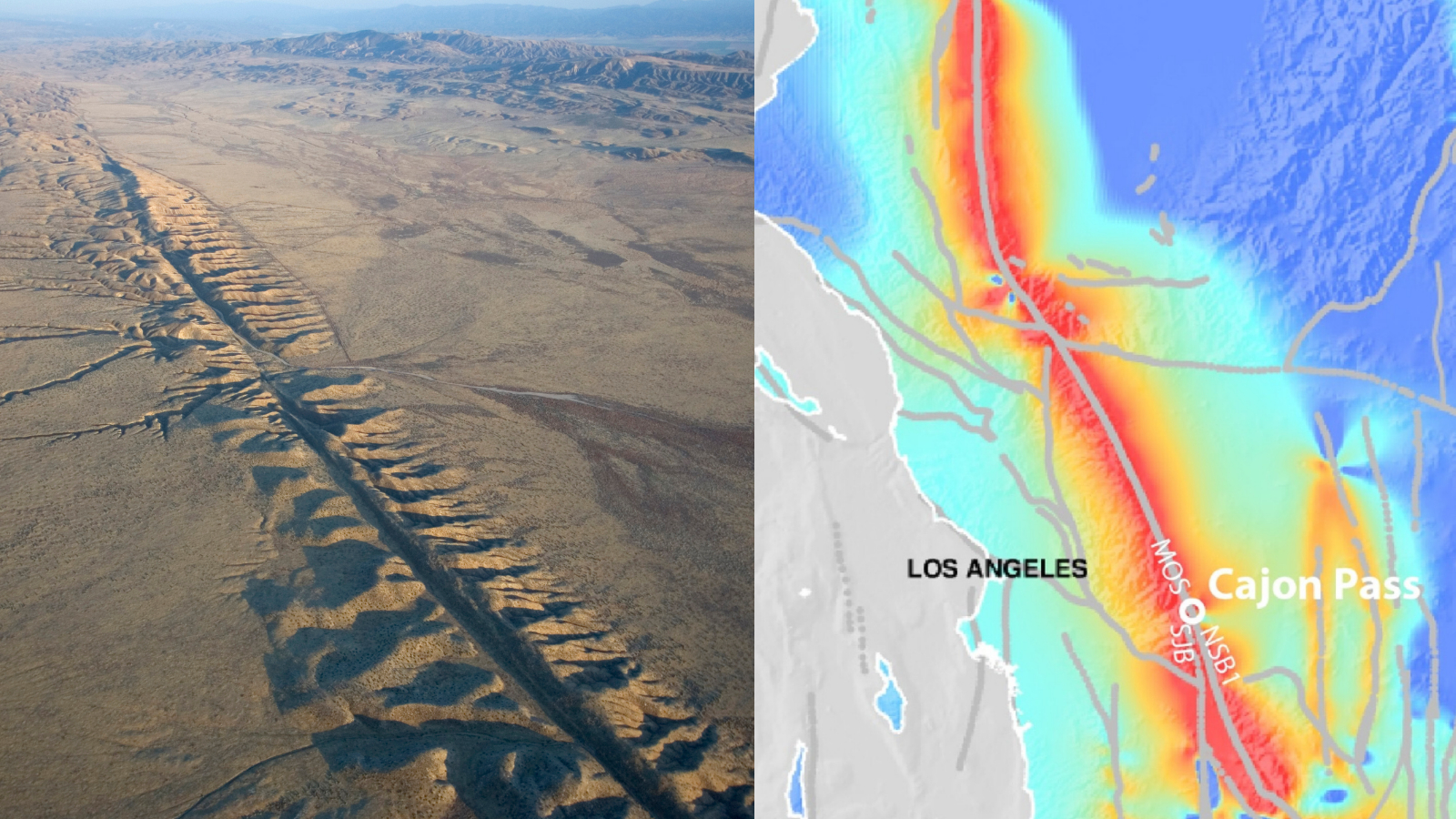
'The system is critically stressed': San Andreas and San Jacinto faults scarily close to major earthquake, study finds

Aerial view of the San Andreas fault and map showing tectonic stress at the San Andreas fault in 2025.

The San Jacinto and southern San Andreas faults have reached their highest levels of tectonic stress in 1,000 years. (Image credit: Left: Cavan Images / Peter Essick / Getty Images; Right: Burkhard et al., 2026 (CC BY 4.0))

The next major Californian earthquake could be closer than we thought, according to an alarming new study.

The research, based on historical modeling of earthquake activity, found that Southern California's San Andreas and San Jacinto fault systems are at their highest levels of tectonic stress in more than 1,000 years; while also being connected by a "gate" system that could make them rupture together.

The exact odds of each event happening and the timing of a possible future rupture are unknown. But the scientists stress that understanding how much strain is building up inside the system could help to prepare for whatever comes next.

Life's Little Mysteries

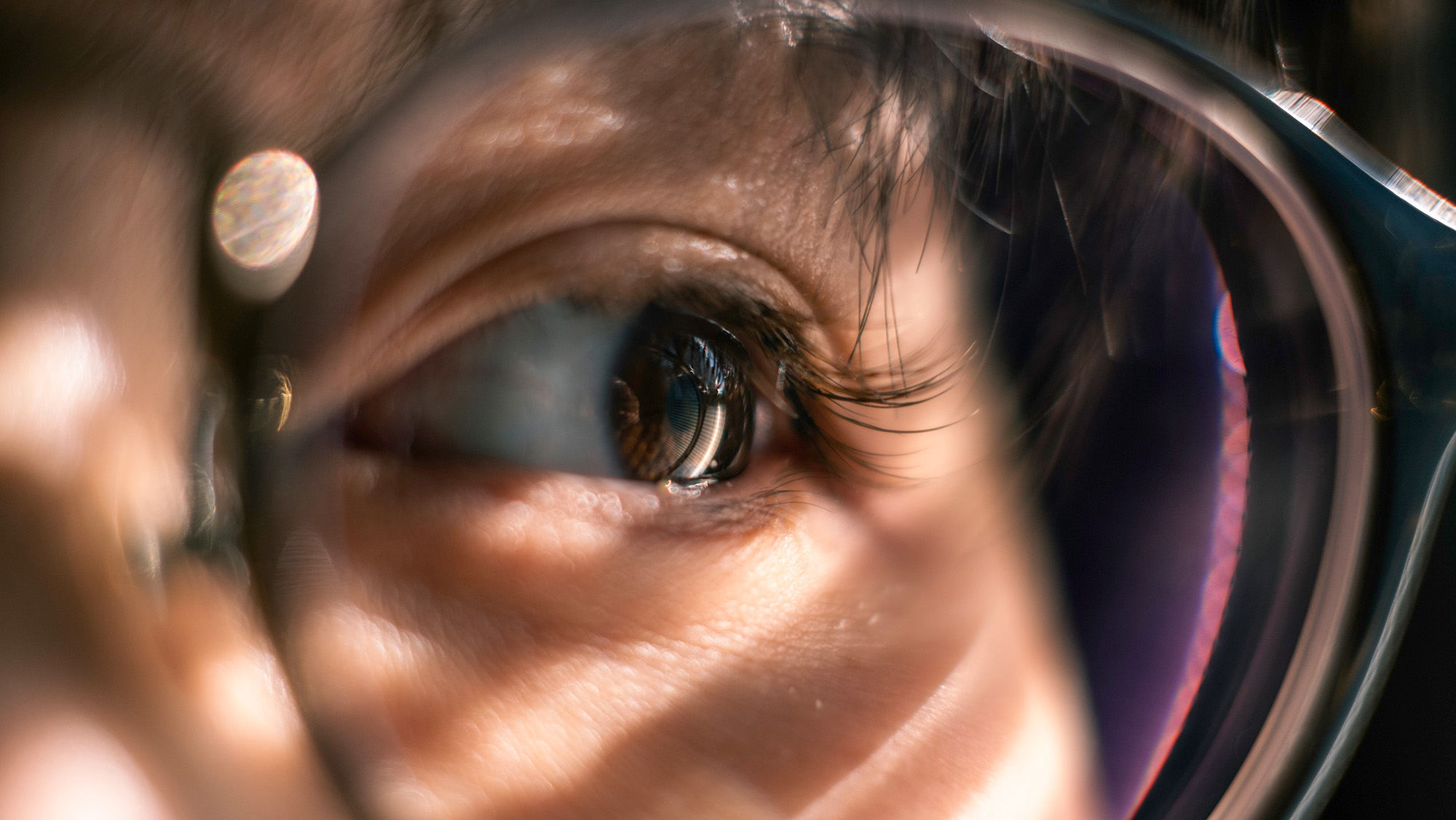
Why does it take our eyes so long to adjust to the dark?

A close up of a person's brown eye behind the lens of the glasses.

Why does it always take up to an hour for our eyes to adjust to our surroundings if we're out in nature on a dark night? (Image credit: Jackal Pan via Getty Images)

Our eyes are remarkably adaptable, switching from navigating under bright lights to the near pitch-black of a moonless night. But anyone who's stubbed a toe during this acclimation window — and that definitely includes me — may have once or twice asked themselves why it takes our eyes so long to adjust to the dark. Live Science shed a bit of light on the question.

—If you enjoyed this, sign up for our Life's Little Mysteries newsletter

Physicists split a photon

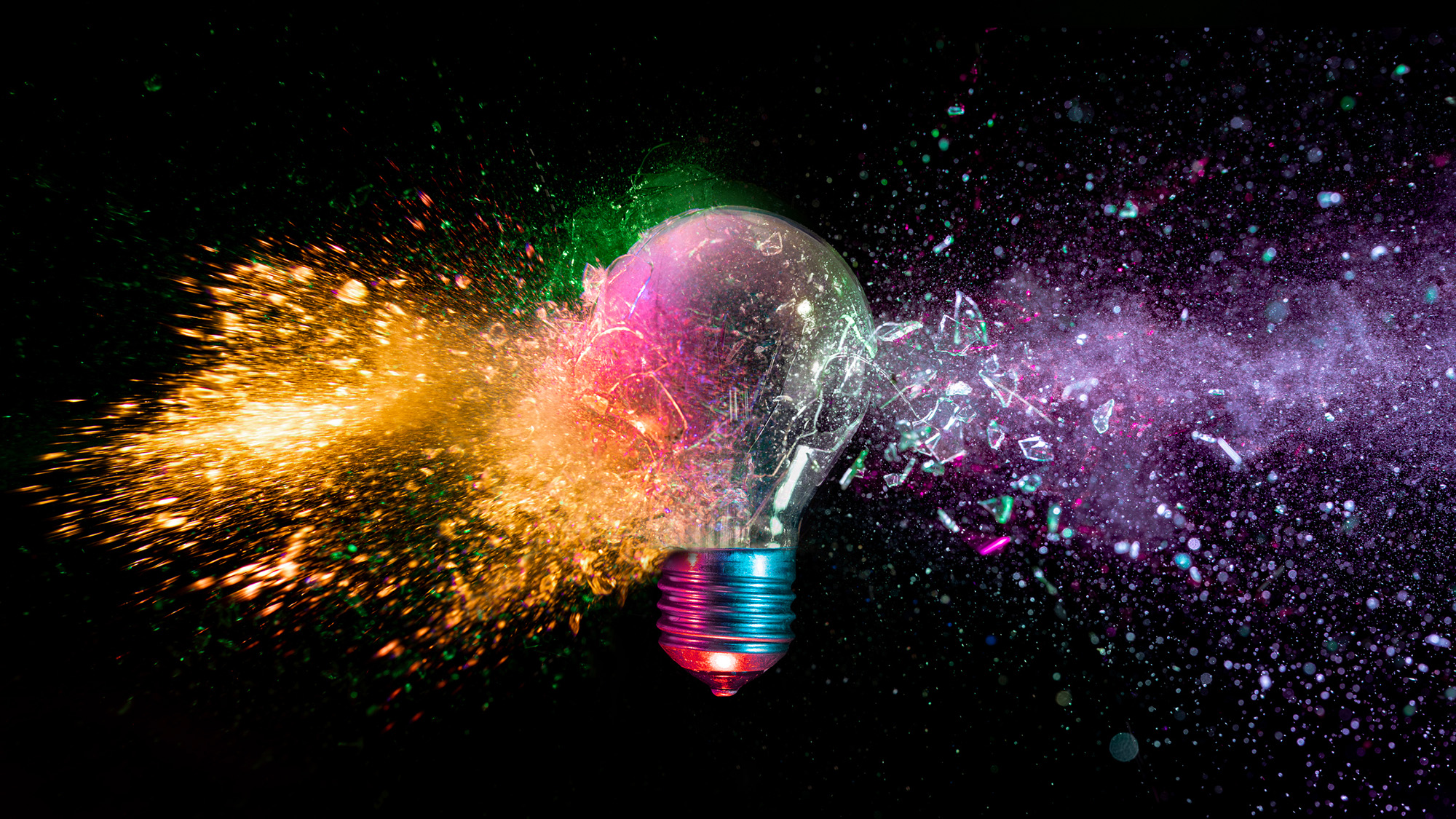
'A mixture from zero to infinity': Physicists split apart a photon — and ended up with an improbable swarm of particles

A lightbulb is shattered with various colors coming out of it against a black background

Physicists are studying what would happen if a single particle of light was sliced apart — unleashing a swarm of unpredictable outcomes. (Image credit: tiero via Getty Images)

What do you get if you split a photon? Anywhere from zero to an infinite number of more photons, physicists say.

That's the finding made by a new experiment that simulated a photon being sliced by a shutter under various circumstances, revealing the result was anywhere from zero to one to upwards of an infinite swarm of the tiny light particles. The probability of each of these states corresponded to how quickly the shutter cut the photon.

And the unexpected behavior has some truly profound implications for how we view fundamental particles.

Discover more physics news

—The world's first nuclear clock just ticked on — and it could help detect a fifth fundamental force of physics

—NASA's experimental X-59 jet breaks sound barrier twice, reaching Mach 1.4 in step toward 'quiet supersonic' technology

—Earth-based telescope shares image of Artemis II capsule near the moon — one of the farthest photos of humans ever taken

Also in science news this week

—'A completely different story': 300 million-year-old fossils reveal the first vertebrate land dwellers weren't what we thought, researchers claim

—Oldest known plague victims found in a 5,500-year-old burial ground in Siberia — and many of them were children

—Indonesia's near-identical, 'Twin Peaks' volcanoes form striking mirror image — Earth from space

—Lavish Roman villa discovered outside Rome's walls may have been frequented by Hadrian and Marcus Aurelius

—Neuroscientists are searching for the 'cellular substrate of loneliness'

Science Spotlight

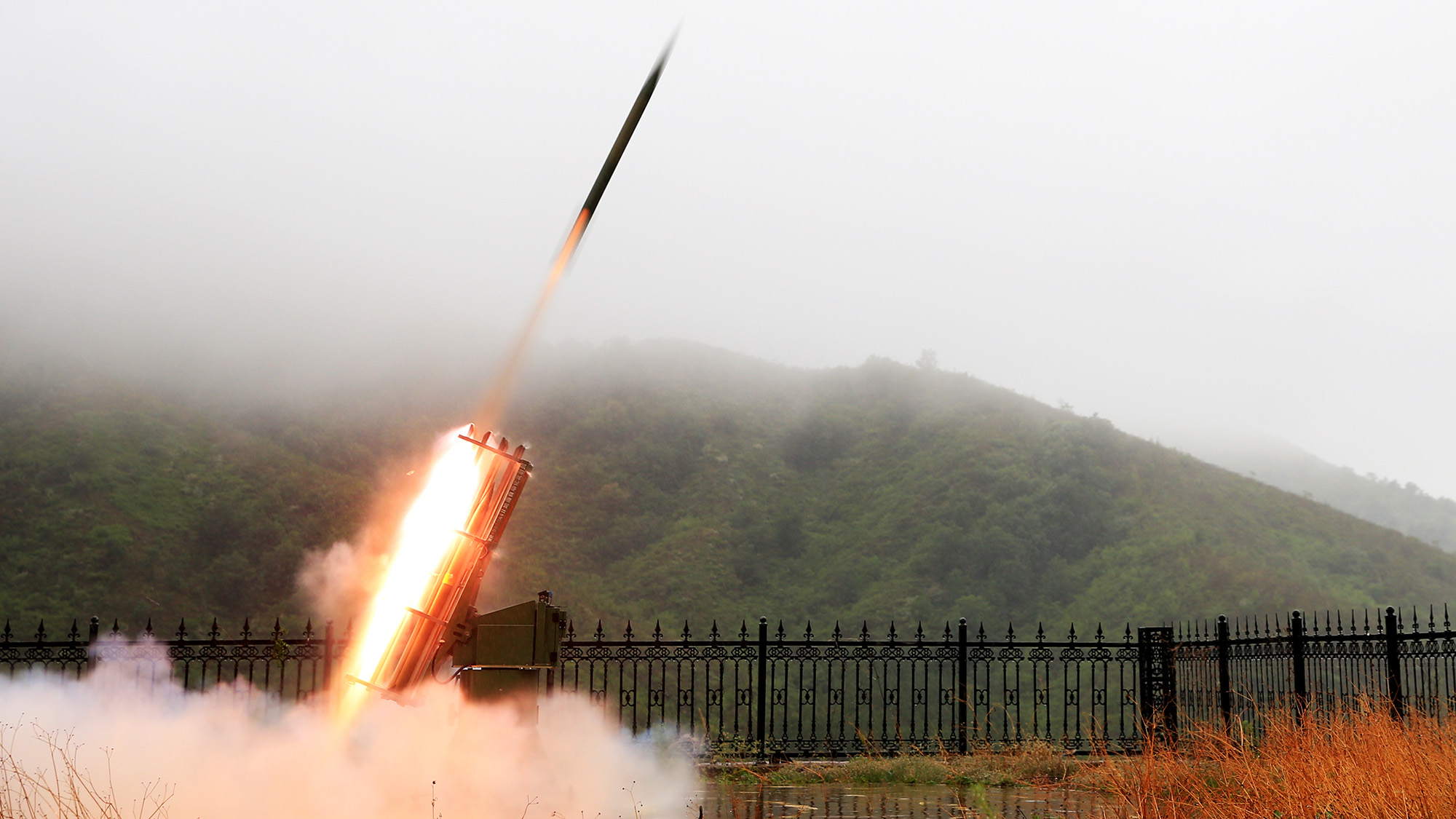
'River in the Sky': China's doomed plan to create a 'cloud seeding corridor' tells us how far the country will go to solve its climate crisis

A rocket blasts off from a launch page next to a fence and forested hill.

A cloud-seeding rocket is launched into the sky in Hebei Province in an attempt to generate precipitation. (Image credit: VCG via Getty Images)

China's response to the climate crisis continues to astonish. Over the past two decades, the world's industrial powerhouse has presided over the largest and fastest clean energy buildout in modern history, while also working to bring its carbon emissions to a peak before 2030.

But an underdiscussed aspect of China's climate plans are its bold attempts to geoengineer the environment to be more resilient and better suit human needs. That's why, in his three-part "Taming Nature" series, Live Science's production editor James Price investigated the country's efforts to create a permanent atmospheric river and build the world's biggest dam in earthquake-prone Tibet.

Something for the weekend

If you're looking for things to keep you busy over the weekend, here are some of the best news analyses, crosswords, interviews, opinion pieces and quizzes published this week.

—A secretive Chinese probe has just arrived at one of Earth's 'quasi-moons' and will soon attempt a first-of-its-kind landing [News analysis]

—Dangerously hot and humid: Rising temperatures in the US make outdoor exercise hazardous [News analysis]

—'Is having two legs useful' in space?: Astronaut John McFall explains what life in orbit might be like for the first physically disabled person in space [Interview]

—'They reliably chose the statistically more favorable option': A crow researcher explains how these winged geniuses process numbers, and what it could reveal about human math smarts [Interview]

—Bow-Wow, Ding-Dong, Pooh-Pooh: Expert explains early theories of how human language evolved — and their silly names [Opinion]

—Rainforest quiz: Can you sort Earth's largest rainforests from biggest to smallest? [Quiz]

—Live Science crossword puzzle #48: Largest fish on Earth — 6 across [Crossword]

Science video of the week

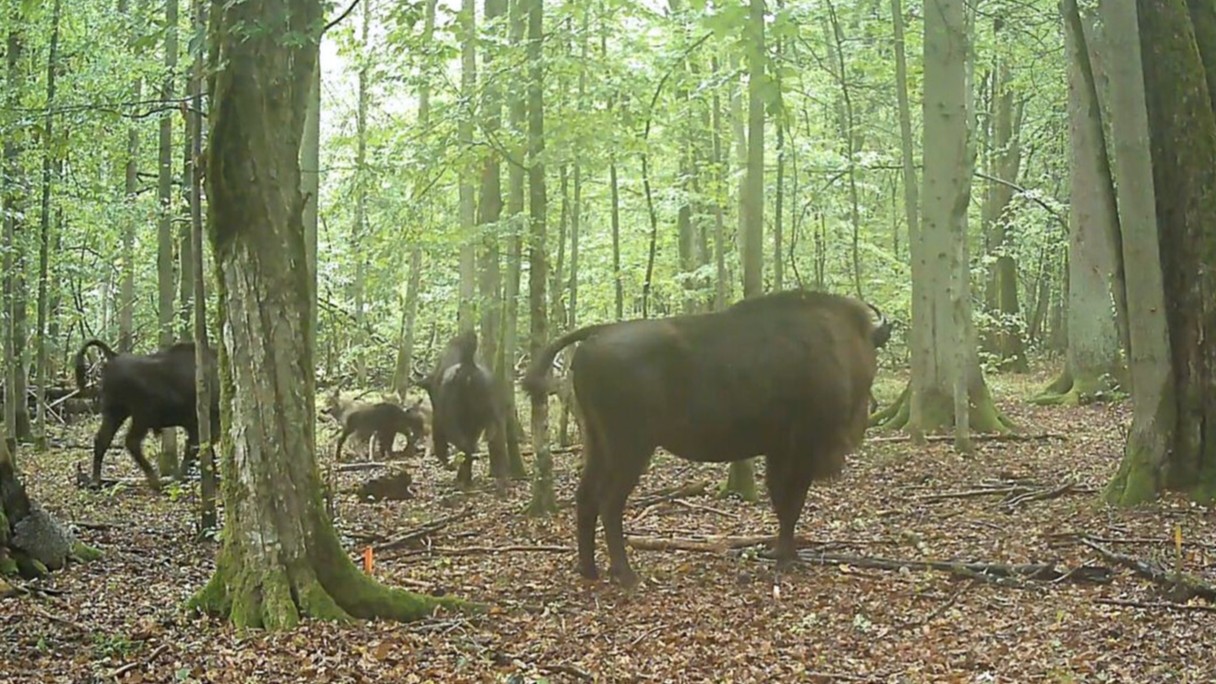
Watch bison herd defend a newborn calf from wolf attack in a primeval Polish forest

Wolves attacking a herd of European bison in a forest. In the background we see the wolves biting a newborn bison calf.

Wolves are growing in number across Poland and Belarus, spelling trouble for the region's bison. (Image credit: Wijnands & Borowik, 2026. Ecology and Evolution (CC BY 4.0))

European bison (Bison bonasus) are typically considered to be a non-prey species — only being hunted by humans.

But rare and unexpected camera trap footage from Poland's Bialowieza Primeval Forest (the oldest and best-preserved temperate lowland forest in Europe) has called that into question.

In the video, a herd of bison is recorded rallying around a newborn calf to fend off an attack from five wolves (Canis lupus), successfully driving the predators away. It's a nerve wracking watch, and one that could become more common as wolf packs grow in size thanks to a late 1980s hunting ban across the region.

Follow Live Science on social media

Want more science news? Follow our Live Science WhatsApp Channel for the latest discoveries as they happen. It's the best way to get our expert reporting on the go, but if you don't use WhatsApp we're also on Facebook, X (formerly Twitter), Flipboard, Instagram, TikTok, Bluesky and LinkedIn.

  •  

Più nero del nero, c'è una vernice capace di assorbire il 99,9% della luce visibile

Una novità tecnologica che sorprende, perché alza notevolmente la percezione di esclusività. Ultimamente gran parte delle innovazioni e sperimentazioni viene dalla Cina, compresa quest'ultima. Un gruppo di ricercatori del produttore <strong>Nippon Paint</strong> ha presentato una vernice che loro hanno battezzato "<strong><em>ultra-nera</em></strong>" capace di assorbire ben il <strong>99,9% </strong>della <strong>luce visibile.</strong> Qual è l'obiettivo? Portare sulle strade qualcosa finora riservata soltanto a prototipi da esposizione o esperimento scientifico, aprendo la porta a una nuova era per le finiture di lusso.<h2>Non è una novità assoluta</h2>L'idea di un'auto in grado di annullare i riflessi non è una novità assoluta nel pianeta delle quattro ruote. Già nel 2019, in occasione dell'IAA, <a href="https://www.hdmotori.it/bmw-ix3-flow-edition/">BMW</a> aveva stupito tutti quanti con la <strong>X6 Vantablack</strong>, un esemplare rivestito con un materiale capace di assorbire il 99,965% della radiazione luminosa. Tuttavia, il Vantablack, composto da miliardi di nanotubi di carbonio allineati verticalmente, presentava limiti insormontabili per la produzione su larga scala: costi esorbitanti e una fragilità estrema che rendeva la superficie quasi impossibile da conservare.<h2>Assorbimento strutturale e nanotubi</h2>Tornando al presente, la nuova soluzione proposta dai ricercatori Zhiwei Liu, Changyi Pan e Jet Cui punta ad andare oltre gli ostacoli visti nel passato, attraverso un approccio tecnico differente. La vernice combina <strong>nanotubi di carbonio </strong>con <strong>particelle di fuliggine</strong> sintetizzate artificialmente in una miscela a base acquosa. A differenza delle vernici nere tradizionali, che si affidano esclusivamente ai pigmenti per assorbire la luce, questo materiale sfrutta il cosiddetto <strong>"assorbimento strutturale"</strong>. Le particelle di fuliggine si depositano lungo i nanotubi creando una microstruttura finissima che disperde la luce incidente più volte, intrappolandola in modo ancora più efficace all'interno del rivestimento.<h2>Verso la produzione in serie?</h2>Uno dei punti di forza della nuova <a href="https://www.hdmotori.it/nuova-bmw-serie-7-debutta-lesclusiva-vernice-dual-finish/">vernice</a> cinese, i cui risultati sono stati pubblicati sulla rivista scientifica <em>Matter &amp; Light</em>, è la sua <strong>durabilità</strong>. Per dimostrare la fattibilità industriale, i ricercatori hanno sottoposto il rivestimento a test severi: esposizione a un'umidità del 95% a 40 gradi Celsius, prove di resistenza termica e sollecitazioni meccaniche. I risultati indicano che le proprietà di assorbimento rimangono praticamente inalterate, rendendo la vernice più adatta all'uso quotidiano e alla lavorazione industriale rispetto al precedente Vantablack.Nonostante i risultati siano promettenti, la ricerca non è ancora conclusa. Il team sta considerando l'utilizzo di strutture multistrato o di pellicole speciali per ridurre ulteriormente i riflessi residui e aumentare ancora la capacità di assorbimento. Sebbene non sia ancora stata definita una data certa per l'ingresso in produzione di serie, l'interesse dell'industria automobilistica è elevato, poiché una simile finitura potrebbe ridefinire gli standard di eleganza e avanguardia tecnologica per i veicoli del futuro.

La perfetta esperienza Android ad un piccolo prezzo? Google Pixel 9a, compralo al miglior prezzo da Smarterstore.it a 339 euro.

CLICCA QUI PER CONTINUARE A LEGGERE

  •  
❌