❌

Reading view

Cotton-inspired phase-change aerogel fabric achieves active thermodynamic heat regulation

Natural cotton fibers remain an apparel staple due to their exceptional softness, loft, and insulation. However, cotton presents a severe performance limitation when deployed in active sports or cold-weather gear: its hydrophilic structure acts like a sponge, absorbing perspiration and ambient humidity.

Once saturated, cotton fibers lose their structural loft and aggressively conduct heat away from the body, increasing the risk of severe hypothermia in extreme sub-zero environments.

To overcome this fundamental thermodynamic flaw, an engineering team at the Chinese Academy of Sciences has synthesized a lightweight, flexible, and entirely hydrophobic material that replicates the tactile fluffiness of cotton.

The research relies on an advanced material, a phase-change fiber aerogel (PCFA). Unlike static insulations, this active synthetic textile dynamically stores and releases thermal energy while remaining completely immune to water absorption.

Microencapsulated polymeric aerogel matrix

The structural architecture of the PCFA prototype consists of a highly porous, flexible network of specialized hydrophobic polymer fibers. Rather than applying a superficial water-resistant coating—which historically washes away or stiffens garments—the engineers embedded a dense matrix of microscopic capsules directly into the core of the polymeric strands during the fabrication phase.

These microcapsules house a specialized phase-change hydrocarbon compound engineered to function as an autonomous thermal gatekeeper. At standard or relatively cool sub-ambient temperatures, the hydrocarbon molecules arrange into a highly organized, tight crystalline pattern.

This binding behavior physically locks the surrounding polymer fibers together, creating a dense, static boundary layer that traps the wearer’s body heat inside localized micro-pockets.

Regulating thermal flux via molecular phase shifts

The primary innovation of the PCFA textile lies in its ability to undergo an autonomous molecular transition at a specific thermal threshold. When environmental temperatures or physical exertion push the fabric to a precise transitional temperature of 26.2°C (79.16°F), the internal hydrocarbon undergoes a controlled phase change, melting from a crystalline solid to an amorphous fluid.

This thermodynamic phase shift forces the microencapsulated matrix to relax, opening the fiber structure to release stored heat and enabling slightly higher thermal conductivity. During extensive laboratory stress testing using 6-by-20-inch swatches, the material automatically toggled between heat-retention and heat-dissipation cycles in response to shifting ambient air currents.

When subjected to extreme sub-zero simulations at -25°C (-13°F), a hand wrapped in the PCFA prototype remained significantly warmer than an identical hand wrapped in natural cotton insulation of equal thickness, proving its superior thermal barrier efficiency.

Hydrophobic Resilience and Industrial Wash Durability

Heavily prioritizing real-world resilience, the synthetic aerogel demonstrates total moisture immunity. When exposed to highly humid environments and direct water droplet impacts, the PCFA swatches actively repelled the liquid, remaining completely dry while adjacent natural cotton samples quickly absorbed the moisture.

The material also demonstrated superb mechanical elasticity and durability during repeated flex testing, retaining its structural integrity when wrapped tightly around a continuously bending mechanical finger.

To verify the fabric’s commercial viability for outdoor gear, the team subjected the PCFA swatches to twenty consecutive, high-turnover industrial laundering cycles. Post-wash auditing revealed that the material completely resisted fiber shedding, returned to its original fluffy volume immediately, and retained 97% of its baseline heat-trapping capability. The researchers note that because the phase-change material is securely microencapsulated, it cannot leak onto the wearer or degrade over time, paving the way for highly durable, low-maintenance extreme-weather clothing lines.

This breakthrough was first published in the journal ACS Energy Letters,

  •  

Governmental Efficacy Drives Climate Action Psychology

In the urgent and multifaceted battle against climate change, understanding the psychological pathways that drive individual and collective action is crucial. Recent research underscores governmental efficacy—not merely as a political concept but as a psychological catalyst—as a pivotal determinant in galvanizing public engagement with climate initiatives. This insight shifts the paradigm from traditional economic or policy-driven explanations to a deeper recognition of how people’s belief in government competence fundamentally shapes climate-related behaviors and attitudes.

Climate change, as a global crisis, demands robust cooperation between citizens, governments, and institutions. Governments worldwide often attempt to implement policies and programs aimed at reducing carbon emissions, promoting renewable energy, and enhancing sustainability. However, such measures frequently encounter public skepticism or apathy. The research conducted by Goldwert, Sabherwal, and Vlasceanu highlights that the perception of government efficacy—that is, the public’s confidence in the government’s ability to enact meaningful change—acts as a critical psychological mechanism enabling or hindering climate action.

At its core, governmental efficacy is a psychological construct reflecting the belief that governmental bodies possess the competence, resources, and willpower to address climate crises effectively. This belief influences individuals’ propensity to participate in climate activism, adopt environmentally friendly behaviors, and support pro-environmental policies. The study reveals that when people trust that their government can and will perform decisively and competently on environmental issues, they feel empowered and are more motivated to contribute to the collective effort.

Moreover, the research draws on extensive psychological theory and behavioral science frameworks to explain how perceptions of governmental efficacy impact motivation. Notably, the role of self-efficacy—the belief in one’s own ability to effect change—is intertwined with collective efficacy regarding governments. When governments demonstrate efficacy, they enhance citizens’ sense of personal and collective agency, creating a feedback loop that fosters more dynamic participation in climate solutions.

The authors intricately explore how different dimensions of governmental efficacy influence climate engagement. These include the perceived transparency of government actions, accountability mechanisms, the clarity of communication regarding climate policies, and the tangible outcomes of implemented measures. Each of these dimensions works collectively to nurture a sense of trust and effectiveness, which is indispensable for sustaining long-term climate action.

Additionally, the research proffers that diminished confidence in government efficacy can have a demobilizing effect, breeding cynicism and disengagement. This dynamic is particularly salient in regions or countries where political instability, corruption, or historical failures undermine trust in public institutions. In such contexts, grassroots movements and non-governmental organizations often struggle to compensate for the psychological vacuum left by ineffective governance structures.

In transcending the usual discourses surrounding climate action, this research brings psychological determinants to the forefront. It suggests that increasing governmental efficacy perception is not solely a task for policymakers but also for communicators, educators, and community leaders. Strategic public engagement that transparently showcases government capabilities and ethical commitments can foster this efficacy perception, transforming passive observers into active participants.

The implications of this study extend to international climate policy frameworks, where nations’ commitments and track records are scrutinized by citizens and global observers alike. High-profile failures to meet targets or opaque governance breeds disillusionment. Conversely, governments that effectively communicate both their successes and challenges—and engage citizens in problem-solving—can inspire broader public confidence and support.

Furthermore, this psychological perspective has ripple effects on innovation and technology acceptance in climate mitigation. When citizens trust their governments’ ability to manage the complexities of new technologies—such as carbon capture, geoengineering, or renewable infrastructure—they are more likely to endorse and adopt these innovations. This psychological endorsement is crucial for scaling emerging climate solutions from experimental phases to widespread societal integration.

The authors also delve into the nuanced relationship between governmental efficacy and media narratives. Media representations not only shape public perception but also reflect and influence political accountability. Transparent and factual media coverage that highlights government efficacy in climate matters can amplify motivation for individual and collective action, while sensationalism or misinformation can erode these perceptions.

From a policy standpoint, the research advocates for governance models that prioritize transparency, inclusivity, and responsiveness. Collaborative governance, which involves stakeholders across sectors and levels, tends to enhance perceptions of efficacy by distributing responsibility and fostering shared ownership of climate goals. Such models not only bolster democratic legitimacy but also improve policy resilience through diversified input and adaptive capacities.

This study also explores the temporal dynamics of governmental efficacy. Short-term successes in climate policy can provide critical psychological boosts, fostering sustained engagement. Yet, it is the consistency of governmental performance and communication over time that cements long-range trust and motivation. This insight supports sustained investment not only in technical capacity but also in institutional stability and ethical governance.

Given the rising tide of climate anxiety and eco-paralysis among populations worldwide, the authors emphasize the transformative power of reinforcing governmental efficacy. In psychological terms, this approach combats helplessness and despair by cultivating hope and agency, critical emotions necessary for lasting behavioral change.

As climate change continues to present complex and evolving challenges, the integration of psychological perspectives like governmental efficacy into environmental strategies can significantly amplify their effectiveness. By recognizing and nurturing this vital pathway, societies can unlock new levels of climate engagement, ensuring that policies and initiatives do not languish in public disinterest but instead become powerful catalysts for collective transformation.

Ultimately, the research by Goldwert, Sabherwal, and Vlasceanu offers a compelling, empirically grounded narrative that elevates the psychological mechanisms underpinning climate action. It opens fresh avenues for research and practice, suggesting that tackling climate change is as much about fostering belief in collective competence as it is about technical innovation or legislative frameworks. This paradigm encourages a holistic understanding that intertwines governance, psychology, and social dynamics in the deeply interconnected quest for a sustainable future.

Subject of Research: Psychological pathways linking governmental efficacy to climate action

Article Title: Governmental efficacy is a key psychological pathway to climate action

Article References:
Goldwert, D., Sabherwal, A.C., & Vlasceanu, M. Governmental efficacy is a key psychological pathway to climate action. Commun Earth Environ (2026). https://doi.org/10.1038/s43247-026-03743-1

Image Credits: AI Generated

  •  

Orbital nervous system: China mulls space-based high-speed rail control infrastructure

Railway engineering researchers in Beijing are proposing a revolutionary shift: relocating the command, signaling, and control architecture of high-speed trains into space.

As described in the journal Railway Signalling and Communication Engineering, their comprehensive framework envisions a space-based train control system to govern vast high-speed rail networks from orbit. Bypassing ground infrastructure, this system promises resilience against natural disasters but also introduces new cybersecurity challenges.

Current high-speed rail networks depend on vast ground-based infrastructure—trackside beacons, signal lamps, and radio masts—to ensure safety. These remain vulnerable to extreme weather, floods, earthquakes, and lightning, which disrupt signals and ground control.

The proposed space-based model uses a dedicated satellite constellation to maintain constant data exchange with high-speed trains. Trains send location data to satellites, which relay it to ground control. Commands are sent back through the same route, protecting operations from terrestrial disruptions.

Mapping out cyber vulnerabilities and exploitation vectors

However, this space-based system introduces new digital vulnerabilities. Shen Xiangyu and his team at the CRSC Research and Design Institute Group, responsible for China’s railway signaling, conducted a threat analysis to identify ways the system could be compromised. They mapped several possible cyber-attack methods that could disrupt or manipulate the orbital control structure.

The main risk is signal spoofing. Hackers could imitate satellite transmission frequencies, sending false data to alter train operations. An attacker might send fake “movement authority” codes to cause unsafe speed changes or falsify train locations to clear tracks prematurely.

The study also highlights threats such as jamming attacks that drown out satellite signals, denial-of-service attacks that exhaust bandwidth, and tampering with onboard satellite receivers. Without safeguards, these attacks could result in serious safety failures.

Building a multilayered digital and physical defense matrix

To defend against these threats, the CRSC team designed a multi-layered cryptographic and sensor-based security system. Digitally, all communications between ground centers, satellites, and trains would be protected by military-grade encryption.

Satellites would have hardware firewalls and real-time intrusion detection to filter out unverified or corrupted commands instantly.

Physically, the system uses decentralized validation. Instead of relying solely on satellites, trains cross-check orbital navigation data with multiple ground-based sensors: onboard inertial navigation, legacy track circuits, and passive balises embedded in the tracks. This ensures commands are only executed if satellite data matches ground feedback, blocking spoofed signals from taking control.

Export potential and infrastructure leapfrogging

This orbital control system also has major economic implications. Backed by China’s National Key R&D Programme, it’s designed for global scalability.

Building high-speed rail in developing regions typically requires laying thousands of miles of cable through difficult terrain, such as deserts or mountains, making expansion costly and slow.

A space-based system allows countries to bypass decades of infrastructure development. Eliminating the need for trackside cabling and signal masts reduces costs and accelerates project timelines.

This makes high-speed rail viable in remote locations, positioning the satellite system as a competitive option for international transport projects.

  •  

The notebooks Marie Curie used in her research remain radioactively contaminated more than a hundred years later. Some Curie papers have been found contaminated with radium-226, an isotope with a half-life of about 1,600 years, and original volumes are kept under strict radiation-protection controls before anyone can handle them.

An open vintage notebook with handwritten notes and diagrams on aged paper.

The notebooks Marie Curie filled with her research are still dangerous to touch. More than a century after she wrote in them, the pages remain radioactively contaminated, mostly with radium-226, and the original volumes are kept under strict radiation controls. To read them at the Bibliothèque nationale de France in Paris, where they are stored in lead-lined boxes, you sign a liability waiver and put on protective clothing first.

This is not a curiosity of preservation. It is a direct consequence of the physics Curie helped uncover.

Why a notebook stays dangerous

The contamination is dominated by radium-226, and the key number is its half-life: about 1,600 years. A half-life is the time it takes for half of a radioactive substance to decay away. After a hundred years, radium-226 has barely begun, only a few per cent of it is gone, which is why a century has done almost nothing to make these pages safer. It also decays into a chain of further radioactive products, including radon gas, so the contamination is not one substance sitting quietly but a small, self-renewing source.

On that timescale, estimates suggest the notebooks will stay hazardous to handle freely until around the year 3500. The ink and paper are ordinary. What soaked into them is not.

How a notebook gets contaminated

Curie worked with radium and polonium by hand, every day, at a time when no one understood what that exposure did. She and her husband Pierre had isolated the two elements in 1898, and she coined the term radioactivity itself, but the harm in what they were handling was simply not yet known. She stirred glowing solutions, carried test tubes of radioactive material in her pockets, and is said to have kept a sample by her bed because she liked its glow.

In a laboratory like that, radioactive dust gets onto everything: the bench, the door handles, the pages of the notebook open beside the work. It was not just her papers. Her furniture, her cookbook, and her clothing carry the same contamination, and her old laboratory in Paris was not fully decontaminated until 1991, nearly sixty years after her death.

The controls around them

So the library treats them as what they are, low-level radioactive objects of immense historical value. They sit in boxes lined with lead, because radium-226 and its decay products emit gamma radiation that ordinary materials do not stop. A researcher who wants to consult an original signs an acknowledgement of the risk and works under protection. The notebooks form part of a wider Curie collection the library holds, available to scholars only on those terms.

The hazard is real but modest if handled correctly, which is the point of the controls. The waiver is less about a single dangerous afternoon than about making sure no one treats a radioactive artefact as if it were just an old book.

A record of what was not yet known

There is something fitting, and sad, in all of this. The notebooks are the working record of the woman who gave us the word radioactivity, and they are radioactive because she did the work before anyone, including her, grasped the cost.

Curie died in 1934 of a blood disorder widely linked to her years of exposure. Her pages will go on quietly emitting radiation for another fifteen centuries, long after the science they describe became common knowledge, a physical reminder of how new and how dangerous that knowledge once was. By the time the pages can finally be handled bare-handed, they will have outlasted her by the better part of two thousand years.

The post The notebooks Marie Curie used in her research remain radioactively contaminated more than a hundred years later. Some Curie papers have been found contaminated with radium-226, an isotope with a half-life of about 1,600 years, and original volumes are kept under strict radiation-protection controls before anyone can handle them. appeared first on Space Daily.

  •  

Agrarian Economy Shapes Amazon Vector-Borne Disease Patterns

In the dense and biodiverse expanse of the Brazilian Amazon, the interplay between human activity and ecological systems has long shaped the epidemiology of vector-borne diseases. Recent research delves into how the agrarian economy and socioenvironmental contexts are critical determinants of disease co-occurrence patterns in this pivotal region. This investigation illuminates the complex network of factors influencing vector-borne illnesses, shedding light on how environmental modifications and economic activities intertwine to affect human health.

Vector-borne diseases, illnesses transmitted by organisms such as mosquitoes, ticks, and other arthropods, represent a significant burden in tropical regions worldwide. The Amazon Basin, renowned for its vast tropical rainforest and intricate ecosystems, harbors multiple pathogens that cause diseases like malaria, dengue, Chagas disease, and leishmaniasis. However, it has been increasingly evident that these diseases do not occur in isolation but rather exhibit notable patterns of co-occurrence that hinge on intertwined environmental and socioeconomic factors.

The study conducted by Barbosa, Lana, Dal’Asta, and colleagues offers a groundbreaking analysis by mapping disease co-occurrence in relation to various agrarian economic practices and socioenvironmental variables across the Brazilian Amazon. By integrating epidemiological data with land use, climatic, and demographic information, the researchers constructed a multifaceted framework to explore how agricultural modalities and human livelihood strategies modulate disease dynamics.

One of the most compelling insights emerging from this research is the pivotal role agrarian economies play in shaping vector habitats and human-vector interactions. Agricultural activities, ranging from subsistence farming to extensive cattle ranching, transform the landscape in ways that can either amplify or mitigate vector proliferation. For instance, deforestation and land clearing for agriculture often create breeding grounds for mosquitoes by generating stagnant water pools, while simultaneously disrupting natural predator populations that help control vector species.

Moreover, the socioeconomic context of rural communities—encompassing aspects such as housing quality, access to healthcare, education levels, and income—profoundly influences vulnerability to vector-borne diseases. Poor infrastructure and limited resources hinder effective disease prevention and treatment, escalating the risk of infection and complicating public health responses. The researchers underscore that social inequities intersect with environmental changes to intensify disease co-occurrence, reinforcing the notion that health outcomes in the Amazon cannot be disentangled from broader societal patterns.

Importantly, the co-occurrence of multiple vector-borne diseases in the same geographic and demographic spaces introduces unique challenges for surveillance, diagnosis, and management. Overlapping symptomatology and co-infection potential complicate clinical decision-making, while co-transmission by shared or distinct vector species demands integrated vector control strategies. The study’s nuanced approach highlights how tailored interventions must consider the local agrarian economies and socioenvironmental backdrops to effectively disrupt transmission cycles.

The analysis further integrates spatial-temporal modeling techniques to detect hotspots of disease co-occurrence. These mathematical and computational models, employing advanced geostatistical methods, reveal dynamic patterns aligning with seasonal changes, land-use shifts, and population movements. Such data-driven insights facilitate the prioritization of resources toward areas most susceptible to simultaneous outbreaks, providing a robust tool for public health planning.

Beyond pointing out correlations, the researchers propose mechanisms by which agrarian economies precipitate ecological alterations favoring vector adaptation. For example, cattle ranching often promotes water storage and drainage systems, which inadvertently become breeding sites for vector mosquitoes, while crop cultivation could affect microclimate conditions conducive to vector survival. These ecological cascades underscore the need for interdisciplinary research, combining epidemiology, ecology, economics, and social sciences.

The Brazilian Amazon, a hotspot of both biodiversity and infectious diseases, thus exemplifies the intricate feedback loops between human economic activity and ecosystem health. As the global climate shifts and land-use change accelerates, understanding the socioenvironmental determinants of disease distribution assumes critical importance. This research not only advances scientific comprehension but also has major policy implications—highlighting sustainable agricultural practices and socioeconomic improvements as dual levers to reduce the burden of vector-borne diseases.

The possibility of co-infections and their synergistic effects on morbidity is another hallmark finding. Patients living in agrarian settings characterized by poverty and environmental degradation often face exposure to multiple pathogens simultaneously. The immune system’s response to co-infection may alter disease severity and treatment outcomes, posing a public health conundrum that demands integrated diagnostic approaches and targeted therapies.

Encouragingly, the research paves the way for community-based participatory strategies that align disease control with livelihood enhancement. Recognizing local knowledge and integrating agricultural best practices with vector management can potentiate sustainable interventions. For example, modifying irrigation practices to minimize stagnant water or improving housing conditions can substantially reduce vector habitats while supporting agricultural productivity.

Sustainability emerges as a key theme, emphasizing that controlling vector-borne disease co-occurrence transcends medical interventions. Policies fostering economic diversification, education, and infrastructure development are integral to disrupting the pervasive cycles of infection. The researchers advocate for cross-sector collaboration encompassing health agencies, agricultural planners, environmental managers, and local stakeholders to forge resilient systems adaptable to evolving ecological and social landscapes.

As Brazil grapples with competing pressures of economic development and environmental conservation, this research underscores the necessity of nuanced approaches that balance agrarian growth with health. It reveals that unchecked agrarian expansion without attention to socioenvironmental variables could exacerbate disease risks, indicating a path toward integrated, eco-health oriented policy frameworks.

The study also calls attention to the potential impact of climate variability, which synergizes with agrarian and socioenvironmental factors to influence vector ecology. Changes in precipitation, temperature, and seasonality may alter the geographic range and population dynamics of vectors, further complicating disease control. This underscores the urgency for adaptive monitoring systems that incorporate climatic data to anticipate and mitigate emerging threats.

In conclusion, this pioneering research presents an intricate tapestry of how agrarian economies and socioenvironmental contexts shape vector-borne disease co-occurrence in the Brazilian Amazon. By weaving together ecological, economic, and social threads, it provides a powerful lens through which to understand and address infectious disease challenges in one of the world’s most complex biomes. The implications reach far beyond the Amazon, offering global lessons in navigating the nexus of agriculture, environment, and health in a rapidly changing world.

Subject of Research: Vector-borne disease co-occurrence influenced by agrarian economy and socioenvironmental contexts in the Brazilian Amazon

Article Title: Vector-borne disease co-occurrence is shaped by agrarian economy and socioenvironmental contexts in the Brazilian Amazon

Article References:
Barbosa, M., Lana, R.M., Dal’Asta, A.P. et al. Vector-borne disease co-occurrence is shaped by agrarian economy and socioenvironmental contexts in the Brazilian Amazon. Commun Earth Environ (2026). https://doi.org/10.1038/s43247-026-03619-4

Image Credits: AI Generated

  •  

In the weightlessness of orbit, an astronaut’s heart can become more spherical as it no longer works against gravity in the usual way, while their spine stretches enough to make them measurably taller before they return to Earth.

An astronaut floating during a spacewalk with Earth in the background.

Spend long enough in orbit and your own body starts to change shape. With gravity no longer pulling on it in the usual way, an astronaut’s heart can grow slightly more spherical, and their spine can stretch enough that they return to Earth measurably taller than when they left. Both changes are real, both are temporary, and both come down to the same thing: a body built for gravity, briefly relieved of it.

Neither is dramatic on its own. Together they are a useful illustration of how much of our shape is simply the body bracing against a force we never notice.

The rounder heart

On Earth, the heart is a slightly elongated organ, its shape maintained in part by the constant work of pumping blood against gravity. Take that load away and it relaxes toward a rounder form.

A study presented at the American College of Cardiology in 2014, based on ultrasound images from 12 astronauts, found that the heart became more spherical by about 9.4 per cent during long spells in microgravity. The reading worth keeping is what that rounding signals rather than the shape itself. A heart that does less work tends to lose muscle, and the change is one visible sign of the cardiac deconditioning that comes with weightlessness.

It is a small study, and a preliminary one, and the effect reverses once an astronaut is back under gravity. What it points to is a longer question: what sustained low effort does to the heart over the length of a mission to somewhere like Mars.

The taller astronaut

The height change is more straightforward and, for a while, more noticeable. Astronauts can gain up to around three per cent in height in orbit, which for a tall person can mean a couple of extra centimetres.

This is not bone growth. The spine is a stack of vertebrae cushioned by soft discs, and on Earth gravity keeps those discs gently compressed all day, which is why people are fractionally taller in the morning than at night. In orbit there is nothing pressing down at all, so the discs expand and rehydrate and the whole column lengthens. The astronaut does measure taller, just not permanently.

The stretch comes at a price. Lengthened spines are linked to back pain in flight and to a raised risk of herniated discs after landing, as the spine recompresses. Height returns to normal over the weeks and months that follow.

A body unloaded

The two changes share a cause. Almost everything about the human body, from the thickness of bones to the tone of muscles to the set of the spine, is shaped by a lifetime of resisting gravity. Remove that resistance and tissues drift toward shapes and lengths the constant downward pull normally prevents.

The heart and the spine are only the most easily pictured examples. Weightlessness also sends fluid toward the head, thins the bones, and wastes the muscles, which is why astronauts on the International Space Station spend hours a day exercising to hold the worst of it off.

Why it is worth tracking

These effects are reversible on the timescales of current missions, but they stop being a curiosity the moment journeys get longer. A crew bound for Mars would spend months in this state on the way out, arrive with deconditioned hearts and altered spines, and then have to function on landing.

Understanding exactly how the body reshapes itself without gravity, and how to counter it, is part of the unglamorous groundwork of going anywhere far. It also runs the other way: the spherical-heart finding drew interest precisely because the shape resembles changes seen in certain heart conditions on Earth, which makes the orbiting body a strange but useful place to study the one down here.

The post In the weightlessness of orbit, an astronaut’s heart can become more spherical as it no longer works against gravity in the usual way, while their spine stretches enough to make them measurably taller before they return to Earth. appeared first on Space Daily.

  •  

Emotion Regulation Drives VR Therapy for Auditory Hallucinations

In recent years, the use of virtual reality (VR) in clinical psychology has surged, offering innovative approaches to treat some of the most challenging mental health conditions. A groundbreaking study published in 2026 by Glenthøj, Vernal, Mariegaard, and colleagues in Schizophrenia examines an essential question: can emotion regulation be identified as a primary mechanism driving the efficacy of virtual reality-assisted therapy for auditory hallucinations? This investigation, a secondary analysis stemming from the CHALLENGE randomized clinical trial, shines a new light on how immersive technologies might not just help manage symptoms but actively transform the neuropsychological processes underlying psychosis.

Auditory hallucinations, or hearing voices that are not present, are among the most debilitating symptoms experienced by individuals with schizophrenia and related disorders. Conventional treatments, while somewhat effective, often leave patients with residual symptoms, significantly impairing their quality of life. The advent of VR-assisted therapy offers a promising frontier by immersing patients in controlled, yet highly realistic environments where they can confront and modulate their hallucinatory experiences under therapeutic guidance. The CHALLENGE trial represents one of the largest and most comprehensive efforts to rigorously assess these interventions and tease apart the psychological factors mediating their success.

This study’s unique contribution lies in its focus on emotion regulation as the potential key mechanism of therapeutic change. Emotion regulation refers to the complex set of cognitive and behavioral processes through which individuals influence their emotional experiences, expressions, and responses. In psychosis, dysregulated emotional reactions to hallucinations can exacerbate distress and dysfunction, creating a vicious cycle of increased symptom severity. By using VR to simulate hallucinatory voices within a safe environment, patients may practice adaptive emotion regulation strategies that reduce the impact of their symptoms in daily life.

The methodology underpinning this secondary analysis involved sophisticated statistical modeling to track changes in patients’ emotion regulation capabilities alongside reductions in hallucination severity and distress over the course of VR therapy. Participants underwent multiple VR sessions designed to confront hallucinations through interactive avatars representing the voices, coupled with real-time coaching in cognitive reappraisal, mindfulness, and distress tolerance techniques. This allowed researchers to dynamically examine how improvements in managing emotions corresponded with clinical outcomes, offering evidence for causality rather than mere correlation.

Findings suggest that emotion regulation improvements significantly mediated the reduction of hallucination-related distress and overall symptom burden. Patients who demonstrated greater gains in their ability to reinterpret and modulate negative emotional responses to the voices subsequently reported notably diminished auditory hallucination severity. Such results provide compelling experimental support for emotion regulation as a central therapeutic mechanism in VR-assisted interventions, marking a pivotal advancement in psychosis treatment models.

From a neuroscientific perspective, these results align well with emerging understandings of the neural substrates involved in psychosis. Dysfunction within prefrontal-limbic circuits, which govern emotional control and executive function, is thought to underpin many psychotic symptoms. VR therapy may promote neuroplasticity within these networks by encouraging patients to engage in adaptive emotional strategies repeatedly in immersive, salient contexts, effectively rewiring maladaptive patterns that perpetuate hallucinations and distress.

Moreover, the immersive and interactive attributes of VR make it uniquely suited to facilitate experiential learning in emotion regulation. Unlike traditional talk therapy, VR creates visceral, multi-sensory exposures that can evoke authentic emotional responses. This experiential intensity may enhance the encoding and generalization of therapeutic gains, supporting transfer of emotion regulation skills into everyday challenging encounters with hallucinations. The personalized, graded nature of VR exposures further tailors treatment to individual patients’ needs and tolerance levels, optimizing clinical impact.

Importantly, this study also addresses critical questions about the durability and specificity of these effects. Secondary analyses revealed that emotion regulation gains were maintained at follow-up assessments several months post-therapy, suggesting lasting positive neuropsychological change rather than transient symptom suppression. Additionally, these improvements were specific to emotion regulation constructs rather than generalized cognitive or attentional abilities, underscoring the targeted nature of VR’s therapeutic impact.

These insights offer profound clinical implications. By pinpointing emotion regulation as a core mechanism, future interventions can increasingly focus on honing these skills within VR platforms, potentially integrating neurofeedback, bio-sensing, or adaptive difficulty adjustments to accelerate recovery. Furthermore, emotion regulation could serve as a predictive biomarker to identify patients most likely to benefit from VR-assisted therapy, enabling precision psychiatry approaches tailoring treatment plans according to individual emotional processing profiles.

The study’s implications extend beyond psychosis treatment per se, offering a conceptual framework for utilizing VR in other psychiatric domains where emotional dysregulation plays a pivotal role, such as anxiety disorders, PTSD, and depression. By demonstrating how immersive technologies can catalyze emotion regulation neural circuits, this research paves the way for wide-reaching applications of VR as a transformative therapeutic tool in mental health care.

Nevertheless, the authors acknowledge ongoing challenges in scaling VR therapies, including technological accessibility, patient engagement variability, and the need for standardized protocols to ensure intervention fidelity. Ethical considerations surrounding the intensity of VR experiences and the safeguarding of vulnerable patients also merit ongoing scrutiny as this field evolves. Continued randomized trials with larger samples and diverse populations will be essential to consolidate evidence and inform best practice guidelines.

In summary, the CHALLENGE trial secondary analyses present a landmark investigation revealing that emotion regulation improvements are not merely outcomes but active mechanisms driving symptom improvement in VR-assisted therapy for auditory hallucinations. This discovery heralds a new era where immersive therapeutics grounded in robust neuropsychological theory have the potential to reshape mental health treatment paradigms fundamentally.

As virtual reality continues to infiltrate clinical settings, the intersection of technology and psychology promises unprecedented opportunities to unlock healing mechanisms once obscured by conventional approaches. This pioneering research by Glenthøj et al. charts a visionary pathway—one where harnessing the brain’s intricate emotional machinery through immersive digital environments can rewrite the narratives of suffering for individuals grappling with psychosis worldwide.

The convergence of virtual environments, cognitive science, and clinical innovation showcased in this work highlights a future where mental illness is not merely managed but dynamically transformed through mechanistic precision in therapy design. For patients burdened by the relentless voices of auditory hallucinations, the promise of VR-assisted emotion regulation offers a beacon of hope toward reclaiming agency, resilience, and meaning in their lives.


Subject of Research: Emotion regulation as a mechanism of change in virtual reality-assisted therapy for auditory hallucinations.

Article Title: Is emotion regulation a mechanism of change in virtual reality-assisted therapy for auditory hallucinations? Secondary analyses of the CHALLENGE randomized clinical trial.

Article References:
Glenthøj, L.B., Vernal, D.L., Mariegaard, L.S. et al. (2026). Is emotion regulation a mechanism of change in virtual reality-assisted therapy for auditory hallucinations? Secondary analyses of the CHALLENGE randomized clinical trial. Schizophrenia. https://doi.org/10.1038/s41537-026-00779-2

Image Credits: AI Generated

  •  

A Greenland shark studied in 2016 was estimated to be nearly 400 years old, meaning it may have been born around the time Shakespeare’s era was ending — and, astonishingly, would not have reached sexual maturity for more than another century.

In 2016, researchers put an age to a Greenland shark that is hard to take in. The largest animal in their study was estimated at nearly 400 years old, which would place its birth around the time Shakespeare’s era was drawing to a close. Stranger still, by the same research a shark like that would not have reached sexual maturity until it was around 150, more than a century into a life most creatures never get a fraction of.

The figure is astonishing, and it also comes with a wide margin of error worth stating plainly.

How you age a shark with no birth certificate

Greenland sharks leave no growth rings to count, so the team needed another clock. They found one in the eye.

The nucleus at the centre of a shark’s eye lens forms before birth and is not replaced over its life, so the carbon locked inside it is a chemical snapshot of the moment the animal began. By radiocarbon dating that tissue, and using the spike of carbon-14 that nuclear weapons tests left in the oceans in the 1950s as a time stamp for the younger sharks, the researchers could estimate how long each had been alive. The work, led by Julius Nielsen and published in the journal Science, covered 28 female sharks, ranging from under a metre to just over five metres in length.

Nearly four centuries, give or take

The headline number needs its uncertainty attached. The largest shark, around five metres long, came out at roughly 392 years old, but the method carries a margin of about 120 years either way. The honest statement is that this animal was at least 272 years old and possibly more than 500.

Even the low end of that range is extraordinary. It makes the Greenland shark the longest-lived vertebrate known, outlasting the bowhead whale and everything else with a backbone. At the central estimate, the shark was swimming the cold North Atlantic before the first telescopes were turned on the night sky.

A childhood longer than a human lifetime

The detail that lingers is not the death but the slowness of the life.

The same research put sexual maturity at something like 150 years of age. A Greenland shark spends longer reaching adulthood than any human being has ever lived, drifting through the deep, cold dark and growing at perhaps a centimetre a year. By the time it can reproduce, generations of faster animals have come and gone many times over.

That pace is tied to the cold. These sharks live in near-freezing water, their metabolism turned right down, and a body that does everything slowly tends to do it for a very long time. It is a life lived almost in slow motion, paced to water that barely climbs above freezing from one century to the next.

Why the longevity is also a liability

There is a sting in the story. A species that takes 150 years to breed cannot replace its numbers quickly, which makes it badly exposed to anything that kills adults faster than the slow trickle of new ones can keep up.

Greenland sharks are caught as bycatch and were once hunted in large numbers for the oil in their livers, and a population that recovers on a timescale of centuries has little room to absorb that. Slow to mature and slower to rebuild, they are guarded by little except the cold and the depth that hide them. The same biology that produced a nearly four-century-old animal is what makes the species so hard to protect: by the time a shark born today is old enough to matter to the population, every person reading this will be long gone.

The post A Greenland shark studied in 2016 was estimated to be nearly 400 years old, meaning it may have been born around the time Shakespeare’s era was ending — and, astonishingly, would not have reached sexual maturity for more than another century. appeared first on Space Daily.

  •  

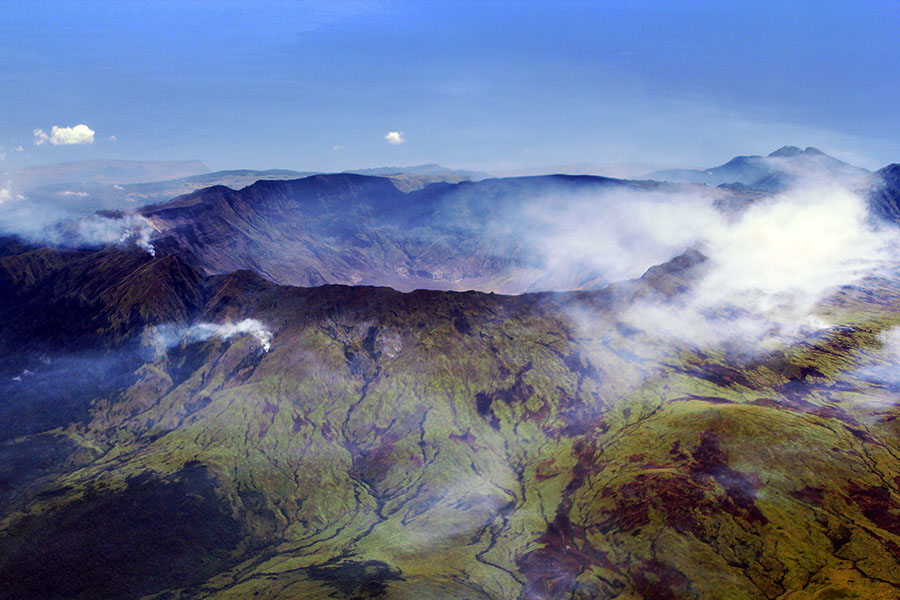
The 1815 eruption of Mount Tambora in Indonesia, the largest documented volcanic eruption in human history, killed approximately 90,000 people directly and produced the year without a summer in 1816, a climate disruption that caused famine across the Northern Hemisphere, may have triggered the first global cholera pandemic, and produced the cold dark summer at Lake Geneva during which Mary Shelley wrote Frankenstein

On the evening of 5 April 1815, the residents of Java and surrounding Indonesian islands heard what they believed were cannon shots in the distance. British colonial administrators dispatched troops to investigate, assuming a naval engagement was underway somewhere offshore. The sounds were heard as far away as Sumatra, more than 2,000 kilometres from their source, and continued intermittently for five days.

They were not cannon shots. They were the opening sounds of the largest volcanic eruption in modern human history.

On the evening of 10 April 1815, Mount Tambora on the small Indonesian island of Sumbawa entered its climactic phase. The volcano ejected approximately 160 cubic kilometres of pulverised rock, ash, and pumice into the atmosphere over the following 24 hours, sent a column of ash and sulphur dioxide approximately 43 kilometres into the stratosphere, and reduced its own mountain in height from approximately 4,300 metres to approximately 2,850 metres. The pyroclastic flows that descended the mountain’s flanks killed approximately 11,000 people in the surrounding region directly, in the first day of the event. The famines and disease that followed across the Indonesian archipelago over the next several months killed approximately 60,000 to 80,000 more.

The eruption was, by the available geological measurements, a Volcanic Explosivity Index 7 event, the highest VEI rating documented in modern human historical records since the eruption of Mount Samalas in Indonesia in 1257. The sulphur dioxide injected into the stratosphere spread around the planet over the following months, where it converted to sulphate aerosol and reflected solar radiation back into space. The consequences of that radiative shift, on the available climate evidence, were felt across every continent in the Northern Hemisphere over the subsequent two years.

The mechanism

A peer-reviewed climate model reconstruction of the Tambora eruption, published in 2017 in Nature Communications by John Fasullo and colleagues at the National Center for Atmospheric Research, established the basic physical pathway through which a single volcanic eruption on a small Indonesian island could disrupt the climate of the entire Northern Hemisphere. The eruption injected approximately 60 million tonnes of sulphur dioxide into the stratosphere, which is the upper layer of the atmosphere above approximately 10 kilometres altitude where there is no weather to wash particles back to the surface. The sulphur dioxide converted to sulphate aerosol over the following weeks and months, forming a thin reflective layer that spread around the planet on the prevailing stratospheric circulation.

The sulphate aerosol layer reflected approximately 6 watts per square metre of incoming solar radiation back into space at its peak, on the Fasullo team’s modelling. The result was a measurable cooling of the planet’s surface by approximately 0.4 to 0.7 degrees Celsius averaged across 1816, with substantially larger regional anomalies in the Northern Hemisphere where the cooling concentrated in the summer growing season. The cooling was not uniform. It was unusually severe in northeastern North America, in western and central Europe, and in scattered parts of Asia, where the combination of stratospheric aerosol cover and disrupted atmospheric circulation produced the coldest summer recorded in approximately two centuries.

The Fasullo team’s analysis also identified secondary effects in the ocean and the cryosphere. The sea surface in the North Atlantic cooled measurably, the Arctic sea ice extended further south than the modern average, and the changes in surface temperature gradients altered the prevailing wind patterns over Europe and North America. The 1816 climate disruption was, on the available evidence, not simply a cold year. It was a fundamental reorganisation of atmospheric and oceanic circulation that took approximately two years to dissipate.

The year without a summer

The summer of 1816 was, in the lived experience of people in the affected regions, unlike anything they had ever encountered. In New England, frost fell every month of the year. Crops planted in the spring froze in June and again in July and again in August. The harvest of 1816 across northern New England was substantially less than half of normal, and in many communities was almost entirely lost. The price of wheat in the region more than doubled. The price of oats, used to feed horses on which all overland transport then depended, increased by approximately 800 per cent over the following winter.

In western and central Europe, the same pattern unfolded with similar severity. The 1816 harvest in France, Switzerland, the German states, and the United Kingdom failed across most major crops. Bread prices in some affected regions doubled within months. Riots over food broke out in Ireland, Wales, England, France, and Switzerland during the autumn and winter of 1816 and into 1817. The Swiss government declared a national emergency. The British government dispatched soldiers to suppress food riots in the manufacturing towns of the Midlands.

The death toll in Europe and North America during 1816 and 1817 from famine and the diseases that followed it was substantial but is difficult to determine precisely from the surviving records. Historical demographic studies have estimated approximately 100,000 to 200,000 excess deaths in Europe alone from famine, typhus, and other epidemic diseases in the two years following the eruption. The combined death toll from the direct eruption and the subsequent climate-driven famine and disease was, on the available estimates, well in excess of the 90,000 figure most commonly cited for the eruption itself.

The cholera connection

In 1817, in the Bengal region of British India, an outbreak of a previously regional disease began to spread along trade routes in a pattern that had not been observed before. The disease was Vibrio cholerae infection, which had been endemic in the Ganges Delta for centuries without major geographic expansion. In 1817 and 1818, it spread for the first time outside South Asia, reaching Southeast Asia, the Middle East, East Africa, and southern Europe through maritime trade routes and pilgrim caravans. The first global cholera pandemic, which would kill millions of people across Asia, Europe, and the Americas over the following decades, had begun.

The causal connection between the Tambora climate disruption and the emergence of the first cholera pandemic is suggestive rather than definitively established. The peer-reviewed epidemiological evidence, however, points to several plausible pathways. The climate disruption in South Asia in 1816 and 1817 included anomalous monsoon patterns that altered the salinity and temperature of estuarine waters in the Ganges Delta where Vibrio cholerae lives in its environmental reservoir. The disruption may have produced a strain variant with enhanced epidemic potential, or may have altered human population movements and water supplies in ways that facilitated the disease’s geographic expansion. The precise mechanism is contested in the peer-reviewed literature, but the temporal coincidence between the Tambora climate disruption and the emergence of cholera as a global disease is striking enough that the connection is treated as plausible in the standard epidemiological histories.

Frankenstein at Lake Geneva

In May 1816, a small group of British travellers arrived at the Villa Diodati on the shores of Lake Geneva in Switzerland. The group included the poet Percy Bysshe Shelley, his 18-year-old companion Mary Wollstonecraft Godwin, her stepsister Claire Clairmont, the poet Lord Byron, and Byron’s personal physician John Polidori. The plan had been to spend the summer of 1816 in the mountains, walking, sailing, and writing.

The summer at Lake Geneva did not unfold according to plan. The weather throughout June and July 1816 was, in Mary Godwin’s own description, “ungenial.” Cold rain fell for weeks at a time. Storms produced lightning across the lake almost nightly. The group was confined to the villa for days at a stretch by weather conditions that prevented outdoor activity of any kind. Lord Byron proposed, during one of these confinements, that each member of the group should write a ghost story to pass the time.

Mary Godwin, who would marry Percy Shelley later that year and become Mary Shelley, began work on a story about a scientist who reanimates dead tissue to create a living human being. The story expanded into a full novel over the following twelve months. Frankenstein, or The Modern Prometheus was published anonymously in 1818. Byron’s contribution to the same evening’s competition expanded into “Darkness,” one of the most haunting poems in the Romantic tradition, which begins with the line “I had a dream, which was not all a dream” and proceeds to describe a world in which the sun has been extinguished and the surviving humans are reduced to scavenging among the ruins. Polidori’s contribution became “The Vampyre,” the foundational text of modern vampire fiction.

The literary record of the summer of 1816, on the strongest available reading of the contemporary correspondence and diaries, was substantially shaped by the weather the visitors at the Villa Diodati were experiencing. The unending storms, the failed harvests, the death of livestock in nearby fields, and the visible distress of the local population would all have been part of the daily atmosphere in which Frankenstein, “Darkness,” and “The Vampyre” were composed. The works are not literal descriptions of the climate of 1816, but they were written by people inhabiting a world that had been visibly disrupted by something none of them yet understood.

The island record

A 2023 peer-reviewed study by Nick Wilson at the University of Otago and colleagues, published in Scientific Reports, examined the impact of the Tambora eruption on a global sample of 31 large populated islands. The team analysed contemporary climate records, historical demographic data, and modern climate model reconstructions to test the breadth of the eruption’s effects. The result was that 29 of the 29 islands with sufficient surviving data showed measurable weather and climate anomalies in the 1815 to 1817 period. The disruption was not regional. It was global, and it touched every populated region of the Northern Hemisphere for which records survive, with substantial measurable effects in parts of the Southern Hemisphere as well.

The Wilson team’s secondary purpose was to use the Tambora event as a case study for what a comparable future eruption might do to modern global civilisation. Their analysis suggests that island nations may have some long-term survival value during sun-blocking catastrophes of this kind, because the moderating influence of surrounding ocean reduces the severity of local cooling compared with continental interiors. The Fasullo 2017 modelling, however, suggested the opposite outcome for a future analogous eruption occurring under conditions of contemporary global warming. The increased ocean stratification produced by anthropogenic warming, on the Fasullo modelling, would amplify rather than dampen the surface cooling response to a major volcanic event.

The honest limitations

Several methodological caveats apply to the literature described above.

The exact death toll of the Tambora eruption is genuinely uncertain. The 90,000 figure most commonly cited is the sum of approximately 11,000 direct pyroclastic-flow deaths and approximately 80,000 deaths from famine and disease across the Indonesian archipelago in the months following the eruption. The figure is based on incomplete colonial-era population estimates and may be substantially understated. Death tolls from the European and North American famine of 1816 and 1817 are also approximate and depend on assumptions about background mortality rates that vary across the affected regions.

The causal connection between the Tambora climate disruption and the first global cholera pandemic is plausible but not definitively established. Cholera could have emerged as a global pandemic for reasons unrelated to the volcanic climate disruption, and the temporal coincidence between the two events does not by itself prove a causal relationship. The peer-reviewed epidemiological literature treats the connection as suggestive rather than confirmed.

The literary record of the summer of 1816 at Lake Geneva is contemporaneous and well-documented, but the causal claim that Frankenstein would not have been written without the Tambora eruption is unprovable. Mary Shelley was a writer of extraordinary capability working in a Romantic literary tradition that had been engaging with themes of nature, reanimation, and human limits for decades before 1816. What can be said with confidence is that the specific conditions under which she began Frankenstein were produced by the Tambora climate disruption, and that the atmosphere of the novel reflects the atmosphere of the summer in which it was conceived.

What it means

Several things follow from the Tambora evidence that are worth saying clearly.

The first is that a single volcanic eruption on a small Indonesian island can, under the right conditions, disrupt the climate of the entire Northern Hemisphere for more than a year, kill substantially more than 100,000 people across multiple continents through cascading consequences, and reshape the political, economic, and literary history of the early nineteenth century. The Tambora event is not a hypothetical or a model. It is a documented historical case of how a relatively brief geological event can produce sustained global human consequences on a scale that the popular framing of volcanic eruptions does not typically include.

The second is that the population of the world in 1815 was approximately 1 billion people. The population of the world in 2026 is approximately 8.2 billion. The agricultural systems on which modern populations depend are, on most relevant measures, more efficient and more productive than those of the early nineteenth century. They are also more centralised, more dependent on global trade networks, and more vulnerable to simultaneous disruption in multiple regions than the agricultural systems of 1815. A Tambora-magnitude eruption occurring under modern conditions would, on the Fasullo 2017 modelling, produce a substantially larger surface cooling than the 1815 event produced, in part because of ocean stratification changes driven by anthropogenic warming.

The third is that VEI 7 eruptions occur, on the available geological record, approximately once every several hundred to one thousand years. The Samalas eruption of 1257 was VEI 7. The Tambora eruption of 1815 was VEI 7. The next VEI 7 eruption, on the available statistical evidence, is more likely than not to occur within the next several centuries. The geological systems involved are not predictable on human time scales, and the next event could occur tomorrow, or could occur in 800 years. What is clear from the peer-reviewed record is that the next event will produce consequences comparable to the 1815 Tambora eruption, on a planet substantially less prepared for them than the world of 1815 was.

The fourth, on the strongest current reading of approximately two centuries of geological, climatological, demographic, and literary evidence, is that the most consequential single event in the early nineteenth century may have been a geological one in a place that almost no one in Europe or North America had ever heard of, and the most enduring literary record of that event is a novel about a scientist who creates a living being out of dead matter and then cannot bring himself to recognise it as his own.

Mary Shelley was eighteen years old when she began writing Frankenstein.

The volcano had erupted the previous April.

The summer at Lake Geneva was the coldest in living memory, and nothing in the world that summer was behaving as anyone had expected it to.

The post The 1815 eruption of Mount Tambora in Indonesia, the largest documented volcanic eruption in human history, killed approximately 90,000 people directly and produced the year without a summer in 1816, a climate disruption that caused famine across the Northern Hemisphere, may have triggered the first global cholera pandemic, and produced the cold dark summer at Lake Geneva during which Mary Shelley wrote Frankenstein appeared first on Space Daily.

  •  

Scientists Finally Uncover Why Solid-State Batteries Short-Circuit

New Unique Battery TechnologyResearchers have uncovered a critical mechanism behind battery failure in solid-state batteries, offering new insights that could help unlock safer, longer-lasting energy storage technologies. Every time a smartphone is charged or an electric vehicle is plugged in, billions of lithium ions move through a battery to store energy. Future devices could perform far better with [...]
  •  

NYU scientists reveal flocking birds mimic soft crystal mechanics in group movements

Decoding a long-standing ecological mystery, a team of mathematicians at New York University has demonstrated that flocking birds and schooling fish coordinate their high-speed group movements using the exact structural mechanics of soft crystalline materials.

The study reveals that organized lines of wildlife mimic atomic lattices, with individual animals behaving like “atoms” bound together by flexible, spring-like interactions. The findings establish a highly novel methodology for interpreting collective biological coordination.

Beyond purely ecological observations, this mathematical translation delivers vital structural data for engineering low-drag automotive fleets, highly coordinated robotic swarms, and aerospace systems.

The discovery was spearheaded by researchers at the Applied Mathematics Laboratory within NYU’s Courant Institute of Mathematical Sciences. Lead author Christiana Mavroyiakoumou, currently a fellow at Oxford University’s Mathematical Institute, along with Courant Professor Leif Ristroph and undergraduate researcher Jiajie Wu, established that animal columns closely match the structural properties of soft crystals.

These materials possess ordered atomic organizations that remain highly sensitive to external stimuli. The team discovered that this precise spatial fragility is exactly what allows biological collectives to effortlessly warp their formations without breaking rank when dodging predators or bypassing physical architecture, such as buildings or underwater reefs.

Parallels between soft crystals and living systems

To understand the intricate aerodynamics governing animal columns, the researchers proposed a mathematical framework that treats a flock or school as an elastic solid.

In a traditional soft crystal, the atomic organization is inherently fragile, meaning the repeating pattern of atoms can shift or deform easily when exposed to subtle changes in physical force or temperature.

The NYU mathematicians realized that this exact structural sensitivity mirrors how animal collectives navigate complex, real-time traffic challenges.

Rather than maintaining rigid, unyielding lines, birds and fish must continuously sense and respond to immediate environmental pressures. The flexible bonds that connect the group behave almost identically to the atomic springs that hold a soft crystal together.

While this structural configuration makes the collective composition fragile, the team notes that this fragility provides a significant survival advantage. It allows the animal line to behave as a highly responsive sensor array, enabling the group to quickly communicate situational changes down the line and reshape their geometry instantaneously to survive.

Simulating wildlife wakes with hydrodynamic models

Before this mathematical breakthrough, scientists understood the broad, macro-level dynamics that kept animal groups together, but the precise math governing their non-colliding, orchestrated maneuvers remained elusive.

By framing the problem through the lens of condensed matter physics, the NYU team was able to map out how individual animals leverage the fluid wakes of their neighbors. In a single-file, columnar formation, each animal generates a distinct aerodynamic or hydrodynamic trailing wave.

The trailing bird or fish relies on these fluid vortices to naturally regulate its distance from the leader, functioning exactly like a mechanical spring. This interaction creates a self-stabilizing feedback loop.

If an animal drifts too close, the fluid pressure pushes it back; if it falls too far behind, the localized drag dynamics pull it forward into the optimized slot. This mathematical insight explains how thousands of independent creatures can travel at high velocities without a centralized leader or manual communication.

Validating the lattice model with motorized “mock flocks”

To confirm that their predictive mathematical algorithms accurately reflected real-world fluid dynamics, the research team compared their results against physical laboratory simulations. The team deployed a specialized “mock flock” apparatus within a dynamic water-testing tank.

This system utilized a series of motorized, 3D-printed plastic wing foils designed to replicate the aerodynamic and hydrodynamic wakes generated by birds in flight or fish in mid-swim.

Driven to flap up and down in absolute unison, these automated flappers were allowed to freely adjust their positions horizontally within a single-file queue. Across various propulsion velocities, the mechanical swarm automatically self-organized into an evenly distributed line, relying solely on the surrounding fluid vortices to snap individual wings into perfect position.

The physical flappers behaved exactly as predicted by the soft-crystal model, proving that environmental fluid flows act as invisible, spring-like bonds that naturally regulate group spacing without requiring conscious mental calculation from individual organisms.

The study was first published in the journal Physical Review Fluids.

💾

A study by NYU mathematicians shows that flocking birds and schooling fish move like soft crystalline materials.
  •  

Scientists decode how birds, fish, insects, and mammals communicate to work together

Nature is often portrayed as a battlefield where every species competes for food, territory, and survival. Yet some of the most successful relationships in the natural world are built on cooperation. 

Across oceans, forests, and deserts, animals regularly interact with members of other species in ways that benefit both sides. Interestingly, from an evolutionary perspective, this cooperation should be difficult. This is because animals belonging to different species do not share the same instincts, sensory abilities, or interests. 

One animal may communicate through scent, another through movement, and a third through sound. Also, misunderstandings can be dangerous. A potential partner might instead become a competitor, a parasite, or even a predator.

“This gap in our understanding is noteworthy because animal interspecies cooperation combines features of multiple interaction types, sharing some challenges with broader mutualisms, such as cross-species communication and increased risk of harm or exploitation,” the authors of a new study note.

A new study examines how species overcome these obstacles through the exchange of information. The study authors argue that cues and signals help animals identify potential partners, assess their motivation to cooperate, and judge how reliable they are likely to be.

“Cues and signals are likely to be particularly crucial in animal interspecies cooperation, a specific form of mutualism that depends on real-time, interactive behavioural coordination to secure mutual benefit,” the study authors added.

By bringing together evidence from many forms of interspecies cooperation, the study provides a framework for understanding how communication helps make these unlikely partnerships possible.

Reducing risk and uncertainty in animal cooperation

The study emerged from a large interdisciplinary effort involving 58 researchers working across fields including animal behavior, ecology, evolution, anthropology, and linguistics. 

Rather than focusing on a single species or ecosystem, the team examined evidence from a broad range of cooperative relationships to understand the common principles that allow different species to coordinate their actions.

What interested the researchers was not the details of any one partnership but a challenge common to all of them, which was uncertainty. Whenever individuals from different species interact, they must somehow determine whether cooperation is worth the risk.

The researchers found that many cooperative systems contain mechanisms that reduce this uncertainty. These can include visual displays, sounds, chemical compounds, body postures, or repeated behavioral patterns. 

Regardless of the form they take, their purpose is similar—they provide information that allows one species to anticipate the actions of another.

Seen this way, communication functions less like a conversation and more like a mechanism for reducing uncertainty. Signals can reveal who a partner is, whether it intends to cooperate, and how predictable its behavior is likely to be. By making behavior more predictable, they reduce the risks that would otherwise discourage cooperation.

One example comes from the partnership between greater honeyguide birds and humans in parts of Africa. The birds use calls and behaviors that help direct people toward wild bees’ nests, while humans respond with their own vocal signals during the search. As a result, both sides gain access to resources they would struggle to obtain as efficiently on their own. 

From accidental clues to biological languages

The study also explores how communication systems may evolve over time. The researchers distinguish between cues and signals. A cue provides information to another species but did not evolve specifically for communication. 

A signal, in contrast, has been shaped by evolution because it influences how another organism responds. However, the study authors note, “signals can evolve from cues.”

The study points to interactions involving brightly colored cleaner fish on coral reefs as an example of how information can facilitate cooperation. Their distinctive appearance and behavior help client fish recognize them as cleaning partners rather than prey.

According to the researchers, characteristics that reliably convey useful information can become increasingly important if other species benefit from responding to them. Over time, natural selection may strengthen these interactions.

Individuals who provide clearer information gain more cooperative opportunities, while those who interpret the information more accurately gain greater benefits. The authors suggest that this process can lead to coevolution, with one species becoming better at providing information and the other becoming better at interpreting it.

In this way, what begins as an incidental cue can gradually develop into a more specialized signal that helps coordinate cooperation between species. The researchers also found that these communication systems are not always fixed. Some appear remarkably consistent, while others vary across environments and populations. 

This flexibility suggests that communication between species can be shaped not only by evolution but also by local ecological conditions and, in some cases, learning.

The hidden rules of cooperation

According to the study authors, “animal interspecies cooperation provides a powerful opportunity to investigate the evolution of communication.” 

By examining how species exchange information to coordinate their actions, the researchers argue that communication may be one of the hidden foundations of cooperation in nature.

By comparing interspecies cooperation with communication systems found within species and in other mutualistic relationships, the authors provide a broader framework for understanding how cooperation emerges and persists.

At the same time, the researchers emphasize that many forms of interspecies communication remain poorly understood. This is because most studies have focused on a relatively small number of well-known examples, leaving many species and ecosystems unexplored. 

Future work will investigate how signals originate, how they vary across populations, and how communication systems can evolve between cooperating species.

For now, the study’s message is simple. Cooperation does not require animals to share a common language. It requires enough information for each partner to recognize, interpret, and respond to the other. In nature, this ability may be what transforms a risky encounter into a lasting partnership.

The study is published in the journal Animal Behavior.

  •  

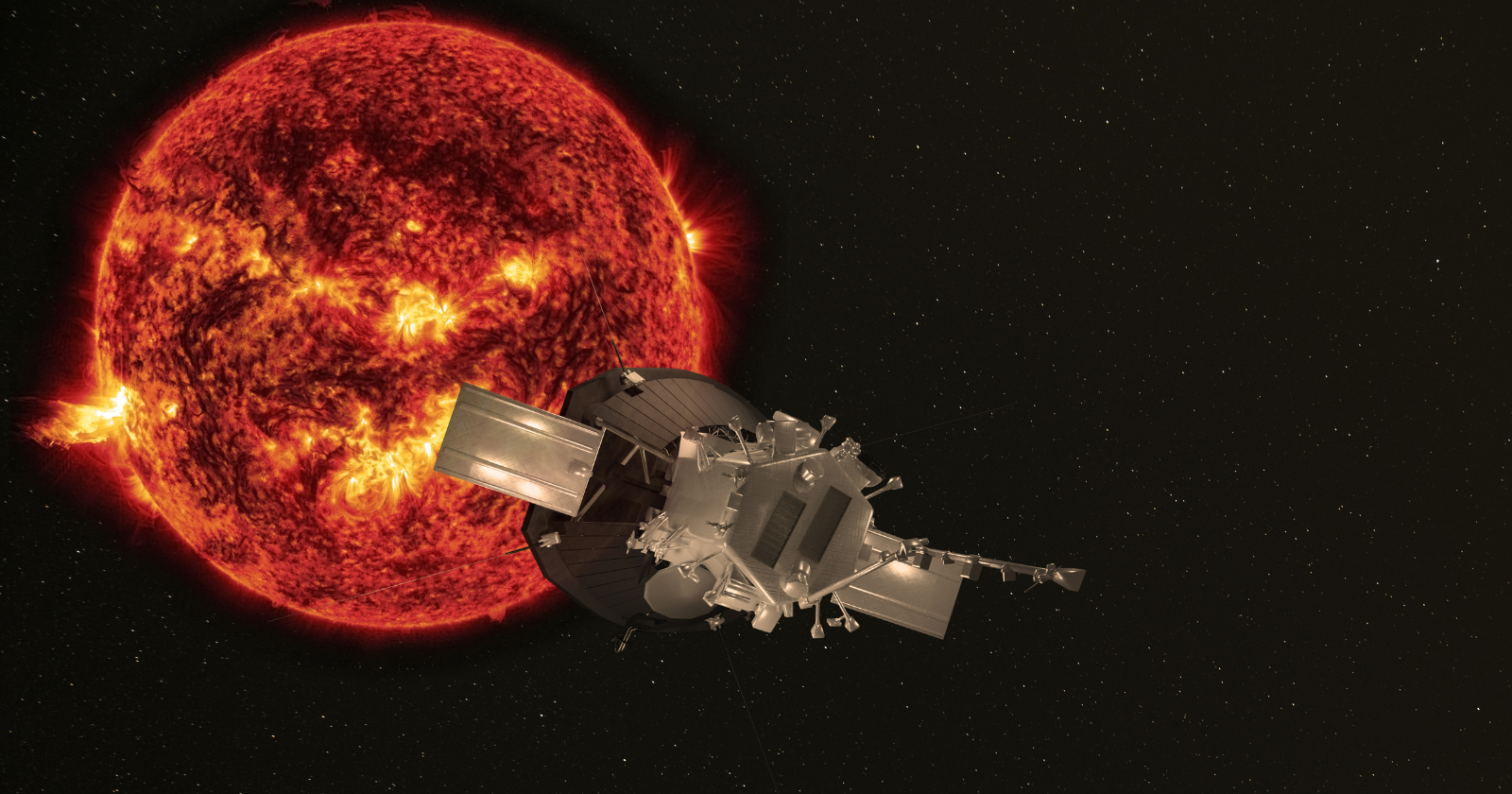
NASA’s Parker Solar Probe flew in and out of the solar corona and found a source of high-energy particles that no existing model had predicted

When NASA’s Parker Solar Probe passed through the solar corona during perihelion encounters at the heliospheric current sheet, its instruments recorded energetic protons at energies far above what existing models of particle acceleration at that location could account for.

A team led by Mihir Desai at the Southwest Research Institute, with James Drake, Marc Swisdak, and Zhiyu Yin from the University of Maryland’s Institute for Research in Electronics and Applied Physics has published an analysis of those measurements in The Astrophysical Journal Letters, identifying magnetic reconnection at the heliospheric current sheet as the mechanism responsible. The proton energies detected were, in the study’s framing, approximately a thousand times greater than the available magnetic energy per particle that models of this process had predicted.

The finding matters for two reasons: it identifies a source of energetic particles close to the Sun that was not anticipated, and it raises questions about how far the existing understanding of reconnection-driven particle acceleration extends.

What Parker measured at the current sheet

The heliospheric current sheet is a vast, warped surface in the solar wind where the Sun’s magnetic field reverses polarity. Parker crosses it during perihelion passes, when the spacecraft dips inside the corona. At those distances, the current sheet is narrower and more structured than it appears in the near-Earth solar wind, and the reconnection events occurring there have characteristics that instruments further from the Sun cannot resolve.

Within the exhaust region downstream of a reconnection event, where magnetic field lines have broken and rejoined and the released energy is being distributed into the surrounding plasma, Parker detected trapped protons at energies up to approximately 400 keV. The particles were confined within magnetic islands, structures that form within the reconnection exhaust as reconnected field lines roll up into closed loops. Magnetic island merging, as those loops interact and combine, appears to be the mechanism that accelerated the protons to the observed energies.

The thousand-fold discrepancy between what the models predicted and what Parker measured is the number that requires explanation. Reconnection as a particle accelerator was not a new idea: the process has been theorised to play a role in accelerating charged particles in a range of astrophysical environments. What was not predicted was that the energisation within near-Sun reconnection exhaust could reach this level through the island-merging pathway.

Why this source was not in the models

Current models of solar energetic particles, the high-speed charged particles that propagate through the solar system and can affect spacecraft and astronauts, have generally attributed the most energetic events to large-scale shocks: the driven shock fronts of coronal mass ejections, and the slower-building shocks of co-rotating interaction regions. Reconnection at the current sheet was considered a secondary contributor at best, capable of producing modest particle energies close to the Sun but not a major accelerator of the particles that eventually arrive as energetic storm particle events near Earth.

The Parker measurements suggest that picture needs revision. The magnetic island merging mechanism Desai and colleagues identify can evidently produce proton populations at energies that challenge the boundary between what reconnection does and what shock acceleration does. Whether this source can explain a significant fraction of observed near-Earth energetic particle events, or whether it contributes mainly at energies and scales that remain confined close to the Sun, is a question the paper does not yet resolve.

What this adds to the corona heating problem

A separate thread connects to the longstanding question of why the solar corona is so much hotter than the surface below it. The corona reaches temperatures of several million degrees Celsius while the photosphere sits at around 5,500°C. The energy source sustaining that gradient has not been fully identified. Reconnection, along with wave heating, is one of the leading candidates.

If reconnection at the current sheet is producing particles at the energies Parker measured, it is also depositing energy into the surrounding plasma at rates that may be higher than the models assumed. That does not resolve the corona heating problem, but it shifts the accounting. The energy going into particle acceleration through magnetic island merging is energy that must come from somewhere in the magnetic field, and tracing it may tighten the constraints on how much reconnection contributes to coronal heating overall.

Drake and Swisdak contributed the reconnection theory component of the analysis. The collaboration between the observational data from Parker and the theoretical modelling capacity at the University of Maryland is the structure the paper’s analysis rests on.

What comes next

Parker Solar Probe has now completed more than two dozen perihelion passes, with each close approach yielding data at distances and speeds no prior mission could reach. The heliospheric current sheet crossings that provided the data for this paper are repeatable: Parker will continue to encounter the current sheet during future perihelia, allowing the team to look for the magnetic island signature in additional events and test whether the particle energies observed here hold up as a consistent feature rather than a single anomaly.

Solar Orbiter, the European Space Agency mission operating in coordination with Parker, offers complementary measurements at somewhat greater distances. Comparing what the two spacecraft measure of the same particle populations as they propagate outward from the Sun will help establish which features originate close to the source and which are modified by the intervening solar wind. The energetic particle observations that puzzled researchers in the pre-Parker era now have a candidate mechanism. Whether that mechanism accounts for a large or small fraction of what actually reaches Earth remains the open question.

The post NASA’s Parker Solar Probe flew in and out of the solar corona and found a source of high-energy particles that no existing model had predicted appeared first on Space Daily.

  •  

In September 1969, a 100-kilogram space rock exploded in the sky above Murchison, Australia — and 50 years later, scientists analyzing dust grains buried inside the meteorite found particles between 5 and 7 billion years old, formed in the dying outer layers of stars that lived and died long before our Sun was born, in what remains the oldest solid material ever identified on the surface of the Earth

The Murchison meteorite is, by every available measure, one of the more scientifically valuable single rocks ever to fall on the planet. The fireball that delivered it streaked across the sky above the Goulburn Valley in southeastern Australia on a Sunday morning in September 1969, broke apart at high altitude, and scattered fragments across a roughly 35-square-kilometre area of farmland. One piece punched through the roof of a hay shed. The local dairy farmers who recovered most of the fragments over the following weeks sold the bulk of them to museums and universities, with the largest single collection now held by the Field Museum of Natural History in Chicago. Approximately 80 kilograms of the original 100-kilogram fall is currently held in scientific collections around the world. Over the subsequent five decades, Murchison has been examined more intensively than almost any other meteorite — yielding more than 70 distinct amino acids (including some that do not occur in any known terrestrial biology), sugars including ribose (the backbone of RNA), and several of the nucleobases that make up the building blocks of DNA. The rock has been at the centre of multiple revisions to scientific understanding of how organic chemistry distributes itself through the early solar system.

According to NBC News’s coverage of the 2020 Heck et al. paper on presolar grains in Murchison, the team published its dating results in the Proceedings of the National Academy of Sciences in January 2020. The analysis used a technique called cosmic-ray exposure dating, which Heck described with an unusually accessible analogy: cosmic rays — high-energy particles that constantly stream through the galaxy — interact with solid matter and produce new elements at a roughly constant rate. The longer a particle of matter has been drifting through space exposed to cosmic rays, the more of these new elements accumulate inside it. “I compare this with putting out a bucket in a rainstorm,” Heck told reporters at the time. “Assuming the rainfall is constant, the amount of water that accumulates in the bucket tells you how long it was exposed.” Applying this method to 40 large silicon-carbide grains extracted from the Murchison fragments, the Heck team was able to estimate how long each individual grain had been drifting through interstellar space before being incorporated into the asteroid that eventually fell to Earth.

What presolar grains actually are

The grains the Heck team dated are called presolar grains — solid particles that formed in the atmospheres of dying stars before the solar system existed, drifted through the interstellar medium for hundreds of millions or billions of years, and were then incorporated into the molecular cloud from which the Sun and planets eventually condensed. As reported in Sci.News’s coverage of the same paper, the typical formation environment for the silicon-carbide grains examined by the Heck team was the slowly-expanding atmosphere of an asymptotic giant branch (AGB) star — a red giant in the late stages of its evolution, shedding its outer layers into space at a rate of roughly one solar mass every hundred thousand years. The carbon, silicon, and other elements in the stellar atmosphere condense as the gas cools and expands, forming microscopic dust grains that are then carried outward by the stellar wind into the surrounding interstellar medium.

Most of these grains, once released into space, are eventually destroyed by some combination of supernova shock waves, radiation, and chemical reprocessing within the molecular clouds where new stars form. A small fraction survive intact for billions of years, drifting through the galaxy as part of the general inventory of interstellar dust. When a new solar system begins to form by gravitational collapse of a dense region of interstellar gas, this dust is incorporated into the early protoplanetary disc — and the heat and chemistry of solar system formation typically destroys or substantially alters most of it. The grains that survive intact through the entire formation process do so because they are extraordinarily durable (silicon carbide is one of the hardest materials in nature) and because they are quickly incorporated into the deep interiors of primitive asteroids that never undergo significant thermal processing. Murchison’s parent body was one such asteroid. The grains inside the Murchison fragments are, in a literal sense, time capsules from before the solar system existed.

The age distribution

The headline figure from the Heck team’s analysis — that the oldest grains are approximately 7 billion years old, predating the solar system by approximately 2.5 billion years — captures the extreme of the distribution rather than the average. Per ScienceDaily’s coverage of the Field Museum announcement, the full age distribution of the 40 grains was substantially more informative than the single extreme number suggests. Approximately 60 percent of the grains formed between 4.6 and 4.9 billion years ago — in the few hundred million years immediately preceding the formation of the solar system. Approximately 10 percent formed more than 5.6 billion years ago. A small number formed at the extreme end, around 7 billion years ago. Every grain examined was, by the cosmic-ray exposure dating, older than the 4.6-billion-year-old Sun. This is what made them presolar.

The distribution itself carries scientific weight beyond the individual grain ages. The clustering of a substantial fraction of grains in a narrow age band suggests that an unusual number of stars in the Milky Way galaxy formed, lived their full life cycles, and died during a specific epoch several billion years before the Sun ignited — a “burst” of star formation that produced an unusually large population of dying stars whose outflows seeded the surrounding interstellar medium with the dust that would later contribute to the formation of the solar system. The Heck team’s interpretation, drawing on the age distribution, is that this burst occurred approximately 7 billion years ago. The implication is that the Sun and the planets formed, several billion years later, from a galactic environment that had been substantially enriched with material from this earlier generation of stars.

Why no comparable material exists on Earth

As reported by Malay Mail’s coverage of the age distribution, the broader reason presolar grains can only be found in meteorites — never in any rock of terrestrial origin — is that every piece of solid material that contributed to Earth’s formation has subsequently been heated, melted, recrystallised, or otherwise reprocessed by the geological activity of the planet itself. Plate tectonics has churned the entire crust through the mantle and back at least once. Volcanism has melted and re-erupted vast quantities of material. Even the oldest rocks on Earth, found in places like the Acasta Gneiss Complex in northern Canada, are at most 4.0 to 4.2 billion years old — substantially younger than the planet itself, and far younger than the presolar grains preserved inside primitive meteorites.

The Murchison meteorite, in this respect, occupies a peculiar epistemological position. It is the closest available physical sample of the early solar system, but it is also a sample of the pre-solar-system galaxy that produced the early solar system. The grains inside it are older than anything that can be found by digging downward through the rocks of Earth, by any depth or any drilling technology. They are, in essence, a sample of the chemistry of the Milky Way at a moment several billion years before any of the familiar features of the current solar system existed. The fragments collected by Australian dairy farmers in 1969 and sent to museums in Chicago and elsewhere have turned out to contain, embedded in their carbonaceous matrix, a small but real sample of stardust from stars that finished burning before the Sun began.

The post In September 1969, a 100-kilogram space rock exploded in the sky above Murchison, Australia — and 50 years later, scientists analyzing dust grains buried inside the meteorite found particles between 5 and 7 billion years old, formed in the dying outer layers of stars that lived and died long before our Sun was born, in what remains the oldest solid material ever identified on the surface of the Earth appeared first on Space Daily.

  •  

Surface Collapse Reveals Mars Flood History at Osuga Valles

Flood-Related Surface Collapse at Osuga Valles, Mars: Unveiling the Dynamics of Martian Geomorphology

Recent research published in Communications Earth & Environment has spotlighted a remarkable phenomenon occurring on Mars — flood-related surface collapses in the Osuga Valles region. This discovery marks a transformative step in our understanding of Martian geomorphological activity, revealing dynamic processes previously undetected on the Red Planet. The comprehensive study led by Naor et al. deploys advanced remote sensing and modeling techniques to decipher the mechanisms behind these collapses, providing a fresh perspective on Mars’s hydrological past and present.

Osuga Valles, located in the northern hemisphere of Mars, has long intrigued planetary scientists due to its complex valley networks and evidence hinting at ancient water activity. The new findings reveal that these valleys are not merely relics of a bygone era but continue to undergo morphologic changes influenced by episodic flooding events. These floods, possibly triggered by subsurface ice melting or transient atmospheric phenomena, induce sudden collapses on the surface, reshaping the landscape at scales previously underestimated.

The investigation is centered around detailed analysis of high-resolution imagery combined with digital elevation models captured by Mars orbiters. These datasets allowed the researchers to identify distinct collapse features characterized by disrupted terrain, steep scarps, and chaotic blocky deposits. The spatial distribution and morphology indicate that these collapses originated from floodwaters undermining subsurface deposits, triggering a rapid failure of overlying strata.

What makes the Osuga Valles surface collapses particularly compelling is their implication for current Martian hydrology. The collapse events are believed to be linked to relatively recent flood episodes, suggesting the presence of liquid water or brines beneath the Martian surface. This challenges the longstanding notion of Mars as an entirely arid world and paves the way for hypotheses about transient hydrological cycles persisting in specific locales and under certain environmental conditions.

Moreover, the tectonic setting of the Osuga Valles region seems to facilitate these collapses. The valley system’s structural configuration, inclusive of fractures and faults, creates zones of mechanical weakness. When these structural features interface with floodwaters infiltrating subsurface layers, they act as conduits potentiating the collapse process. Thus, the interplay between geology and hydrology emerges as a critical driver of surface dynamics on Mars.

The authors also explore analogs from terrestrial environments—places where flooding induces surface collapse, such as in karst terrains or volcanic regions with subglacial lakes—to better interpret the Martian data. These Earth analogs provide a fertile framework for understanding how subsurface voids or weakened materials collapse under hydraulic pressure, refining our conceptual models applicable to Mars.

Advanced computational fluid dynamics simulations performed in the study reveal that the hydraulic pressures generated by transient floods are sufficient to disrupt sediment cohesion and trigger mass wasting events. The models incorporate variable sediment porosities, ice content, and fracture permeability, emphasizing how subtle changes in subsurface conditions can culminate in massive geomorphic transformations. This underscores the sensitivity of Martian surface processes to inundation events, even if these are limited in time and spatial extent.

In addition, the researchers analyzed mineralogical data from spectrometers aboard orbiters, detecting possible hydrated minerals and salts that corroborate the interaction between water and subsurface sediment. This mineralogical evidence supports the hypothesis of localized aqueous alteration driven by flood events, contributing to ongoing soil and sediment evolution in Osuga Valles.

The implications of these findings extend beyond geology and planetary science to astrobiology. The presence of liquid water, even transiently, opens up potential niches for microbial life or preserves biosignatures in subsurface refuges. Flood-related collapses could expose freshly altered materials, creating accessible targets for future rover missions endeavoring to seek signs of life or past habitability.

Technological advancements in orbital imaging and data analysis have thus unlocked a new era in Martian surface exploration. This study leverages these capabilities, illustrating how multidisciplinary approaches integrating geomorphology, hydrology, geochemistry, and computational modeling can unravel complex planetary phenomena. The Osuga Valles floods and collapses exemplify the dynamic and evolving nature of Mars, still shaped by aqueous forces despite its overall cold and dry climate.

Looking forward, these discoveries necessitate a revision in mission planning and surface hazard assessments. Understanding flood-related collapses aids in predicting surface stability and potential geomorphic hazards affecting landers or rovers. Moreover, unraveling the hydrologic cycles underlying these collapses could inform in situ resource utilization strategies, potentially enabling human exploration by identifying water reservoirs.

Furthermore, this research revitalizes the debate about Mars’s climatic variability and the possibility of episodic warming events facilitating surface liquid water. Such events might arise from volcanic outgassing, orbital shifts, or impact heating, temporarily altering atmospheric and subsurface conditions to create flood-triggering scenarios. Consequently, Osuga Valles may serve as a natural laboratory to study these transient climatic phenomena.

In summary, the study by Naor et al. dramatically expands our understanding of Martian surface processes by revealing active, flood-related collapses in Osuga Valles. By decoding the intricate linkages between subsurface hydrology, geological structure, and surface dynamics, it paints a picture of Mars as a planet where water still plays a crucial role in shaping landscapes. This breakthrough invites a new generation of explorations targeted at unraveling the mysteries of Mars’s watery past and its intermittent present.

The knowledge gained from these investigations not only transforms planetary science but also enriches comparative planetology, emphasizing how terrestrial analogs can illuminate extraterrestrial environments. As we decode Mars’s dynamic surface, the paradigm shifts from a static, desiccated world to one punctuated by active, fluid-driven geomorphology. The dynamic interplay between floods and collapses in Osuga Valles is a testament to this evolving narrative—a promise for thrilling discoveries yet to come.

Subject of Research: Flood-related surface collapses and geomorphologic processes on Mars, specifically in the Osuga Valles region.

Article Title: Flood-related surface collapse at Osuga Valles, Mars.

Article References:
Naor, R., Gulick, V.C., Spurling, R. et al. Flood-related surface collapse at Osuga Valles, Mars. Communications Earth & Environment (2026). https://doi.org/10.1038/s43247-026-03683-w

Image Credits: AI Generated

DOI: https://doi.org/10.1038/s43247-026-03683-w

Keywords: Mars geomorphology, flood-related collapse, Osuga Valles, Martian hydrology, subsurface water, geomorphic dynamics, remote sensing, planetary geology

  •  

The tallest volcano in the solar system is so wide that from most places on its slopes, you would never see a dramatic summit rising ahead of you — Olympus Mons is broader than some countries, and its gentle flanks curve away with Mars long before the mountain looks like a mountain at all.

The planet Mars showing surface detail against black space.

Olympus Mons on Mars is the tallest volcano in the solar system, rising about 22 kilometres above the surrounding plains, roughly two and a half times the height of Mount Everest. You might expect the largest mountain anywhere to be the most dramatic thing on the horizon. It is almost the opposite. Stand on its slopes and you would probably not register that you were on a mountain at all.

The reason is not the height. It is the width.

Big in a way that hides itself

Olympus Mons is roughly 600 kilometres across, a footprint about the size of the US state of Arizona, broader than a good many countries. It is a shield volcano, built from countless runny lava flows rather than explosive eruptions, and that gives it an extremely gentle profile. Its flanks rise at only a few degrees, the slope of a shallow ramp rather than a peak.

Put those two facts together and the mountain defeats the eye. The summit of a 600-kilometre-wide dome sits so far away from anyone on the flanks, and the ground tilts so gently, that the curve of Mars carries the high ground below the horizon. Mars is a smaller world than Earth, so its horizon is closer to begin with, and Olympus Mons is far wider than that horizon. From most of its slopes you would see a faintly tilted plain running off into the distance, not a summit ahead of you.

It is less a mountain you look at than one you would cross without quite noticing.

Why it grew so large

The size comes down to how Mars is built. Earth’s crust is broken into plates that drift slowly over the hot interior, so a volcanic hotspot does not stay under the same patch of surface for long. As the plate moves, the hotspot punches out a string of separate volcanoes instead of one, which is how the Hawaiian island chain formed.

Mars, as far as we can tell, has no such moving plates. Its crust sits still over the heat below, so eruption after eruption piled lava onto the same spot for a very long time, stacking up a single colossal shield rather than spreading the output across a chain. Lower Martian gravity, which lets a pile of rock stand taller before it collapses under its own weight, helped it grow further.

The drama is at the edge

There is a twist worth knowing. The one part of Olympus Mons that does look like a sheer mountain is not the summit but the rim.

The whole volcano is ringed by a steep escarpment, a cliff in places several kilometres high, where the gentle flanks end abruptly and drop to the plains below. A traveller approaching from outside would meet a wall of rock taller than most mountains on Earth. Climb it, and the dramatic relief would stop. Beyond the rim lies the long, mild upward slope that hardly reads as a climb at all. Far away at the very top, out of sight from almost anywhere on the flanks, sits a complex of overlapping craters, the collapsed calderas of past eruptions, together spanning roughly 80 kilometres.

A mountain too big to see

This is the strange thing about superlatives at planetary scale. The biggest mountain in the solar system is also one of the hardest to perceive as a mountain, because it is built on a scale the human eye was never meant to take in from the ground.

From orbit, Olympus Mons is unmistakable, a vast blister on the face of Mars. From its own slopes, it would mostly just be the ground, sloping away, with the rest of the mountain hidden over the edge of a smaller world.

The post The tallest volcano in the solar system is so wide that from most places on its slopes, you would never see a dramatic summit rising ahead of you — Olympus Mons is broader than some countries, and its gentle flanks curve away with Mars long before the mountain looks like a mountain at all. appeared first on Space Daily.

  •  

2,000-Year-Old Grape Seeds Rewrite the History of Italian Wine

Professional Sommelier Analyzing Red WineA genetic study of 2,000-year-old grape seeds is shedding new light on ancient winemaking. For centuries, the vineyards of Tuscany have been associated with some of the world’s most celebrated red wines. But a cache of grape seeds buried in ancient wells is revealing a very different story about what people were growing and drinking [...]
  •  

New AI database reduces hallucinations by 78% and delivers answers 20 times faster

Artificial intelligence is becoming increasingly important in businesses, helping employees search through large amounts of documents and answer complex questions. However, one major problem still limits the use of AI in many industries: hallucinations. An AI hallucination happens when a system generates information that sounds convincing but is actually wrong. This can be a serious […]

The post New AI database reduces hallucinations by 78% and delivers answers 20 times faster appeared first on Knowridge Science Report.

  •  

Why You Flinch When Someone Else Gets Hurt

Small Child Fall Bicycle Crying Screaming PainScientists discovered that the visual brain may secretly “feel” what it sees, turning sight into physical experience and helping make empathy possible. Working with researchers from institutions around the world, Nicholas Hedger (University of Reading) and Tomas Knapen (Netherlands Institute for Neuroscience & Vrije Universiteit Amsterdam) investigated one of neuroscience’s biggest questions: how humans experience [...]
  •  
❌