❌

Reading view

US Army selects edge-first software to maintain battlefield supply during jamming

The United States Army (the Army) has awarded Rune Technologies a $99 million Indefinite Delivery, Indefinite Quantity (IDIQ) contract for its proprietary TyrOS platform.

The IDIQ framework will run for five years, during which authorized Department of War (DoW) organizations can place orders for the software and associated services through the contract, up to a maximum cumulative value of $99 million.

“Established by the Army and available for broader DoW use, the vehicle enables Soldiers, Marines, Sailors, Airmen, Guardians, Commanders, Sustainers, acquisition professionals, and contracting teams to rapidly access and field-proven software solutions at the speed of operations,” Rune explains in an official press release.

This differs from “normal” military procurement in that it offers a potential rapid-adoption pathway for interested parties. For anyone even remotely familiar with military purchases (which can take many months to years), this could reduce procurement timelines from many months to just days.

But what is the big deal with the new software? Well, Rune’s TyrOS is akin to a mix of Amazon, Google Maps, inventory management, an artificial intelligence (AI) chatbot, and predictive analytics in one place. In this sense, it acts a bit like an AI-assisted logistics operating system.

Windows for war

Windows for war, if you like. “Logistics is the distribution layer of military power, and it has to move at the speed of the fight,” said David Tuttle, Co-Founder and CEO of Rune Technologies.

“This contract gives sustainment teams across the Army and joint force a single, repeatable way to deploy TyrOS and other Rune capabilities into their units, while reducing acquisition friction and accelerating capability delivery to the tactical edge,” he added.

The system not only tells users that an asset needs resupply but can also identify potential bottlenecks and recommend alternative courses of action.

So, the AI will go far beyond something simple like “fuel will run out here in X days.” It will help users find alternative sources, reroute convoys to assist, etc., before a crisis occurs.

Beyond predictive modeling, one of TyrOS’ strengths, Rune explains, is that it uses a native large language model (LLM) as part of its interface. So, instead of clicking through menus, a user can simply ask a question using natural language to get the answer they want.

Say they ask something like “show every artillery battalion that will be below 30% ammunition within the next 72 hours.” The AI converts that into database queries and produces an answer.

Proactive, not reactive

But it gets better than that. As Rune explains, its software features a specially designed AI agent called Saga. This sophisticated piece of software effectively acts as an automated AI logistician in the system.

To this end, it is able to autonomously detect issues and then generate recommendations for action. A human still approves the decision, but the planning work is largely automated.

Yet another innovation is something called “edge-first architecture.” Normally, AI systems rely heavily on cloud servers, which, in turn, rely on stable and reliable telecommunications.

But satellite link failures, network jamming, and physical severing of telecoms are something of an occupational hazard in war. Edge-first means the AI runs locally on military computers or servers.

So even if disconnected from headquarters, a brigade can still use the system. Not too shabby.

💾

Rune Technologies secures a $99M US Army contract for its proprietary AI-powered TyrOS battlefield logistics software.
  •  

New Franco-German armored tank incorporates unmanned turret and drone systems

Franco-German defense giant Krauss-Maffei Wegmann and Nexter (KNDS) have unveiled a new main battle tank for European customers at the 2026 Eurosatory trade show.

KNDS, in case you are unaware, is a conglomeration of the companies behind the German Leopard 2 and French Leclerc main battle tanks (MBTs). Today, they are a “pan-European land defense company, uniting over 11,000 employees with a €4.4 billion in revenue and a backlog of €33.1 billion in 2025.”

The new tank, called the CAPINT (“Intermediate Capability”), is effectively a Leopard 2A8 hull with a futuristic unmanned turret, integration with robotic vehicles, and drones.

According to KNDS, this will be something of a stopgap for France’s planned Main Ground Combat System (MGCS), which is taking a long time to arrive. So, the idea goes, instead of waiting until 2040, this new tank should be deployable during the 2030s.

Its chassis, reportedly, offers the new tank proven mobility and armor, while also benefiting from the existing logistics chain and lower development risk. It also provides the tank with a 1,500 hp (1,119 kW) diesel engine, which is the same power class as current Western MBTs.

The power plant might also be supplemented with battery packs (to enhance the onboard energy storage) along with an associated electric drive train to reduce the infrared and acoustic signatures.

KNDS’ new toys for Europe

The most interesting part is the crewless turret. Unlike conventional MBT turrets, no crew sits inside the turret itself. Instead, it is remotely operated, allowing the crew to remain protected within the hull.

As no crew needs to be present, this enables the turret to be smaller and lighter. But this doesn’t mean the tank will be without serious firepower.

According to reports, the tank will come with a KNDS ASCALON 120 mm smoothbore gun with an autoloader. This makes it compatible with the current NATO standard ammunition stockpiles.

KNDS does note, however, that this can be upgraded to larger calibers in the future without the need to redesign the entire turret. The scalable design also gives KNDS room to introduce larger calibers in the future, should battlefield requirements change.

All fairly standard so far, but an interesting wrinkle in the design is plans to give it some drone buddies. Robotic vehicles and drones will fight alongside the tank, forming a manned-unmanned team. In this configuration, the tank will act as an armored command platform.

Few concrete details have been released, but this will likely include reconnaissance drones to scout ahead and counter-drone systems for protection. The counter drone systems are likely to employ a mix of hard kill and soft kill means. These might include active protection systems and tube-launched interceptor drones.

Next iteration of Leopard 2 A-RC 3.0 study

Separately, KNDS also presented a further development of its fully self-financed study on Leopard 2 A-RC 3.0. It features a remote-controlled turret and a three-man crew.

Leopard 2 A-RC 3.0 KNDS

The concept revolves around an innovative, unmanned turret with its unique weapon mounting, this prevents the weapon from dipping into the vehicle, thus creating a possibility of freeing up space inside the hull.

The compact crew arrangement also reduces the armor protection volume, leading to weight reduction. This results in an improved power-to-weight ratio, which in-turn increases tactical mobility.

The Leopard 2 A-RC 3.0 can integrate different gun calibers from 120 mm, 130 mm, to 140 mm. It also incorporates an advanced secondary armament to counter the persistent threat of drone swarms.

💾

Europe's leading tank maker revealed an unmanned-turret MBT and artillery capable of striking 100 km away.
  •  

World’s first smart squid-fishing robot that mimics humans begins sea trials in China

A new robotic system developed in China is being positioned as the world’s first intelligent squid-fishing robot, designed to replicate the precise hand movements used by human fishers to lure squid from deep waters toward the surface. 

By mimicking these subtle motions, the machine aims to improve both catch efficiency and consistency in challenging offshore conditions.

The robot is currently undergoing sea trials aboard the Song Hang scientific research vessel. The ship is scheduled to carry out an extended survey mission in the northwestern Pacific Ocean through September, giving researchers an opportunity to evaluate the robot’s performance in real-world marine environments.

Robot brings human-like precision to offshore fishing

Unlike conventional automated systems used on squid-fishing vessels worldwide, the new robot is designed to respond dynamically to squid behavior, adjusting its movements based on how the animals bite. This adaptive capability allows it to deliver a level of precision closer to that of experienced human fishers, potentially improving both efficiency and catch rates, the South China Morning Post reported.

The robot is being tested aboard the Song Hang research vessel, which departed on June 8 from Changxing Island near Shanghai. According to Chinese media, the vessel has embarked on a 90-day scientific expedition to study fishery resources in the high seas of the northwestern Pacific.

Developed by Shanghai Ocean University in collaboration with China Fisheries Zhoushan Ocean Fishery Co, the squid-fishing robot was deployed aboard the research vessel as part of its ongoing sea trials.

As the world’s largest seafood producer, China maintains an extensive distant-water fishing fleet made up of thousands of vessels, including squid boats operating across major fishing grounds worldwide, particularly near the South American coast. 

However, concerns have repeatedly been raised about parts of China’s distant-water fishing fleet, with critics citing allegations of illegal fishing, poor working conditions for crew members, environmental harm to marine ecosystems, and, in some cases, suspected espionage-related activities.

Targeting inefficiencies in squid jigging

Industrial squid fishing typically relies on a method known as jigging. At night, vessels deploy powerful lights that can even be seen from space to attract squid, which are drawn in along with their prey. Once the squid gather near the surface, lines fitted with bait are lowered into the water and rapidly jerked up and down to imitate small prey such as shrimp, triggering strikes before the catch is reeled aboard.

According to Chen Xinjun, a professor at Shanghai Ocean University and leader of the intelligent fishing project, traditional squid fishing depends heavily on crew judgment to detect bites, which can lead to inefficiencies and lost time during operations.

While many industrial squid vessels already rely on automated systems to handle repetitive tasks such as jerking fishing lines and hauling in catch, these machines typically operate on pre-set programs configured by humans according to local sea conditions.

Chen further explained that the new intelligent squid-fishing system goes a step further by using sensors and adaptive control. It responds in real time to squid behavior, including biting and escape movements, with the goal of reducing ineffective operations and lowering dependence on human decision-making during fishing.

💾

China has begun sea trials of what researchers describe as the world’s first smart squid-fishing robot.
  •  

Chinese firm debuts man-portable laser weapon that zaps drones, fits in a backpack

Chinese defense supplier Harbin Xinguang Optic-Electronics Technology has unveiled a new man-portable. anti-drone laser weapon. Unveiled at the Defence Information Equipment and Technology Exhibition 2026 in Beijing, the miniaturized directed-energy weapon brings to life something once thought not possible.

The new system is part of the “Lijian” (roughly translated as “sharp swords”) range of lasers, which can allegedly shoot down drones at ranges up to 3,900 feet (1,200 meters). Being much smaller, this new portable version can’t quite reach those ranges, however.

Like its bigger brothers, the new system works by focusing a laser beam on a distant target, like a drone. The beam can then burn through wires, damage sensors and cameras, or overheat battery packs.

The theory is that once a critical part fails, the drone crashes. This capability is something many militaries are already rushing to develop, but the real breakthrough here is the unit’s size and weight.

According to reports, they are small enough for a single soldier to manipulate in the field. The Lijian II, for example, comes in at around 66 pounds (30 kg), with the Lijian III around 55 pounds (25 kg).

Man-portable laser power

To put that into perspective, that is roughly equivalent to carrying a machine gun plus ammunition and batteries. Still heavy, but much lighter than vehicle-mounted systems.

In the field, such systems would likely comprise a backpack that contains batteries and cooling systems. The soldier can then deploy the platform, which then tracks and targets drones visually or with optics.

All well and good, but lasers of this kind generally need a lot of power to actually work. While no technical details have been publicly released, laser weapons typically require between 20 and 50 kW.

They also require beefy cooling systems. This appears to have been solved, with reports being circulated that claim it can cool down in under 5 seconds. But again, how this was achieved has not been made public.

This all sounds impressive enough, but even futuristic weapons like lasers are not foolproof on the battlefield. They are, for example, highly susceptible to changes in weather like rain and fog, and other battlefield conditions like smoke, dust, etc.

Any of these can scatter the laser beam, subsequently dropping its effectiveness against a target. Lasers are also highly reliant on “line of sight” and must be able to see a target to hit it.

Gimmick or game-changer?

Any obstacles in the way, like buildings, hills, trees, etc, render them ineffective. There is also the issue that lasers must remain “locked” to a target for some time to be effective.

Ballistic weapons, like guns, deliver their full destructive potential on contact, while lasers need some time to do the damage. A fast-moving or maneuvering drone could, in theory, make this harder.

It is also not clear how such a small system could handle drone swarm attacks. Whatever the case may be, the new system could be an interesting evolution in anti-drone warfare.

If systems like this prove reliable, infantry units may eventually carry laser anti-drone weapons in the same way they carry machine guns or anti-tank missiles today.

  •  

Boeing tests quantum protocol in Q4S payload before year-long space mission

Engineers at Boeing demonstrated a key quantum protocol during ground testing of the payload for the Q4S mission, ahead of its launch scheduled in 2027. Boeing’s self-funded Q4S missions are critical in realizing a space-based quantum network in the future. 

The recent growth in interest for quantum computing and sensors has also pushed demand for quantum networks, where information can be shared with high security and reliability. For any network to work, information needs to be routed efficiently. 

While this has been successfully done for quantum networks using fiber-optic cables, transmission losses become significantly higher as the networks scale from regional to national scales. For data transmission over hundreds of miles, free-space optical channels are much more efficient than fiber-optic cables, prompting the need for a space-based quantum network.

Scientists are therefore working to develop these networks, and Boeing’s Q4S mission is one such project. 

What is Q4S mission? 

Boeing is making a major move towards developing a quantum space network through its Q4S mission. 

“Quantum networking has the potential to transform how information is shared, timed and protected across global systems, but only if it can work outside the lab, under real mission constraints,” said Lane Ballard, Boeing chief technology officer, in a statement. “Q4S is about taking an important quantum capability and proving it on mission-ready hardware.”

As part of the project, the mission will spend a year in orbit to test quantum networking hardware in the harsh environment of space. During these tests, the mission will demonstrate entanglement swapping, the foundational mechanism that enables quantum links to extend beyond point-to-point connections. 

What is entanglement swapping? 

Quantum entanglement swapping relies on quantum teleportation, where a quantum state of a particle can be transferred to another without physically moving the particle. In entanglement swapping, teleportation occurs between entangled photon pairs, resulting in a shared state between the particles, even though they have never interacted. 

Quantum entanglement swapping is the basis for quantum repeaters, which are crucial for scaling quantum networks. For Boeing to build a scalable quantum network, it needs to first demonstrate entanglement swapping between photons, without loss or degradation of quantum data. 

Demonstrating this in space will be challenging, since quantum states are delicate and entanglement can be disrupted by factors such as environmental temperature and radiation. 

“One of the hardest parts of quantum networking is maintaining strong performance while working within the size, weight and power limits of a spacecraft,” added Lowell in the statement. 

In their recent tests, Boeing engineers demonstrated quantum entanglement swapping in a space-qualified Q4S payload ahead of its launch to orbit. The results are comparable to peer-reviewed experiements, operating within the strict Size, Weight, and Power (SWaP) constraints of a compact satellite. 

“These test results show that we can produce high-fidelity swaps on a payload engineered for space, not just for a controlled lab bench,” concluded Lowell. “That is a meaningful step toward practical quantum networks.”

The Q4S mission is scheduled for launch in 2027. Following the one year data gathering in orbit, Boeing plans to share its technical results for peer-review. 

  •  

L’informatique quantique à la portée de tous, la révolution annoncée par OVHcloud

À l’occasion de VivaTech 2026, OVHcloud lève le voile sur sa Quantum Platform, une offre de quantum-as-a-service pour appréhender le quantique avant sa montée en puissance. À travers un écosystème de start-up européennes, le groupe entend structurer une filière souveraine. Fanny Bouton,...

  •  
  •  

ThermoPhy glove uses micro-heating and 3D tokens for tactile data visualization

Moving beyond conventional, screen-based digital interfaces, an engineering team at the University of Adelaide has developed an innovative wearable device that maps personal data directly onto physical sensations.

The functional prototype, named ThermoPhy, utilizes a localized combination of micro-heating hardware and 3D-printed physical indicators to allow wearers to literally feel complex datasets.

Developed at the university’s Australian Research Centre for Interactive and Virtual Environments (IVE), the platform explores a new paradigm in data visualization by prioritizing private tactile responses over traditional visual graphs.

Modern health and wellness tracking apps typically generate complex dashboards filled with abstract numerical charts that can feel cold and disconnected from human experience.

By utilizing “data humanism“—a design philosophy that makes raw information more relatable and narrative-driven—the ThermoPhy project aims to cultivate a more empathetic, embodied relationship with personal telemetry. The hardware achieves this by taking sensitive or emotionally charged metrics and converting them into distinct, carefully calibrated thermal zones across a user’s hand.

Integrating micro-heating elements with tactile tokens

The physical layout of the ThermoPhy glove relies on two distinct feedback loops: thermal stimulation and tangible structural tokens. Integrated into the internal lining of the glove’s fingers are arrays of miniature electronic heating elements.

These micro-resistors are wired to a central microcontroller capable of modulating temperatures precisely to deliver subtle, gradated sensations of warmth to the wearer’s fingertips.

On the exterior surface of the glove, researchers mounted attachable 3D-printed tokens engineered to resemble miniature physical bar charts, line graphs, and heatmaps. By merging these physical shapes with variable thermal signals, the device can simultaneously convey multi-layered datasets.

For instance, a user tracking their sleep architecture can feel the physical height of a 3D bar to measure total sleep duration, while the internal heating elements concurrently warm up or cool down to signal their psychological mood or stress level upon waking.

Isolating private telemetry and simulating crowd comfort

A primary technical advantage of using thermal feedback over traditional visual or auditory alerts is its inherent privacy. Because thermal energy transfers via direct conduction, only the person physically wearing the glove can perceive the shifting temperature profiles.

This makes the system uniquely suited for displaying sensitive, human-centered metrics—such as biometric anxiety tracking, mood fluctuations, and personal wellness logs—out of the prying eyes of external onlookers or surrounding screens.

In one practical testing scenario, researchers mapped the glove’s thermal engine to environmental crowding and ambient comfort indices. As a user simulated navigating a heavily congested space, the glove’s internal temperature scaled upward proportionally.

Higher physical temperatures were programmed to represent acute levels of environmental discomfort or heightened situational stress, translating abstract density calculations into an immediate, intuitive physiological warning system.

Designing for radical affordability and future AR tracking

Beyond individual self-tracking, the research team notes that the device holds significant potential for cultivating interpersonal empathy. Because the software architecture allows data profiles to be shared across a network, one user can equip the glove to directly experience the real-time stress, biometric fatigue, or psychological state of another person, providing a completely non-verbal platform for shared storytelling and emotional communication.

A standout feature of the ThermoPhy prototype is its extreme cost efficiency. While medical-grade haptic garments often cost thousands of dollars to manufacture, the Adelaide engineering team constructed their prototype using off-the-shelf electronic parts and raw components totaling just $19.68 USD.

Moving forward, the research team plans to conduct extensive user-group testing to catalog exactly how humans interpret varying degrees of thermal feedback over extended periods.

Additionally, the team is working on software patches to integrate the haptic glove directly into emerging augmented reality (AR) and virtual reality (VR) simulation suites, laying the groundwork for immersive, screen-free computing environments.

  •  

US quantum computer demonstrates 99.9975% fidelity, paves the way for a fault-tolerant future

Helios, a US-based quantum computer, demonstrated 99.9975% fidelity in one-qubit operations, while maintaining 99.921% for two-qubit operations. This is the highest fidelity for any commercial quantum computer in the industry, paving the way for a future with fault-tolerant quantum computers. 

Considered to be the next frontier of computing, the race to build reliable quantum computers is on. Research institutes and national laboratories in countries like the US, UK and China are engaged in building the necessary support for quantum computer startups to build the future of computing. 

The superior computing capacities of quantum computers arise from quantum bits or qubits, which can store multiple values between 0 and 1 at once. However, the same qubits are also easily disturbed, introducing errors into computations.

Scientists are therefore working to develop fault-tolerant computers that deliver high fidelity, i.e., a measure of how close the quantum operation is to the value of the expected operation. 

Helios’ highest fidelity

Quantinuum’s Helios is a 98-qubit quantum computer with 50 logical qubits. Built using trapped-ion qubits, the system also integrates photonics, allowing data transfer at the speed of light through the microscopic optical channels. 

This system design has dual benefits. It helps reduce risks to quantum computing data while significantly decreasing its power consumption. Helios’ power consumption is as little as 40 kW, even though it is equipped with the world’s fastest GPUs. 

In a recent paper, Quantinuum confirmed record fidelity for its one-qubit and two-qubit operations, reaching a record of sorts when it comes to two-qubit fidelity in the quantum computing industry. Helios is the company’s most reliable quantum computer to date and is available for commercial usage as a cloud-based service. 

Yet, Quantinuum has a long way to go before quantum computers like Helios and its successors become mainstream, and it is working with the Sandia National Laboratories (SNL) to develop fault-tolerant computers. 

Role of SNL

As a premier engineering laboratory in the US, SNL has been tasked with assessing opportunities and threats for technologies such as quantum computing. For over two decades, the national laboratory has leveraged its expertise and engineering capacities to build and share quantum devices on various platforms. 

SNL’s partnership with Quantinuum too is part of a Cooperative Research and Development Agreement, which was formed after Sandia researchers developed technologies in integrated photonics for trapped-ion quantum computers. 

Although Quantinuum is headquartered in Colorado, its research and development campus is in New Mexico, near SNL. The National Laboratory continues to help Quantinuum design and test new components that will be incorporated into future versions of the quantum computer. 

For instance, SNL researchers developed a new benchmarking methodology that can measure the performance of mid-circuit measurements, non-destructive readout operations that help in correcting quantum computing errors. 

“We evaluate every aspect of quantum computer performance with our commercial partners to accelerate the advent of quantum supercomputing,” said Robin Blume-Kohout, a researcher at SNL who was involved in the work.

By working with different companies and helping them solve issues will help quantum computers tackle unsolved scientific problems, Blume-Kohout added. 

The research findings were published in Nature.  

  •  

America’s most advanced metal 3D printer uses 12 lasers to mass-produce rocket frames

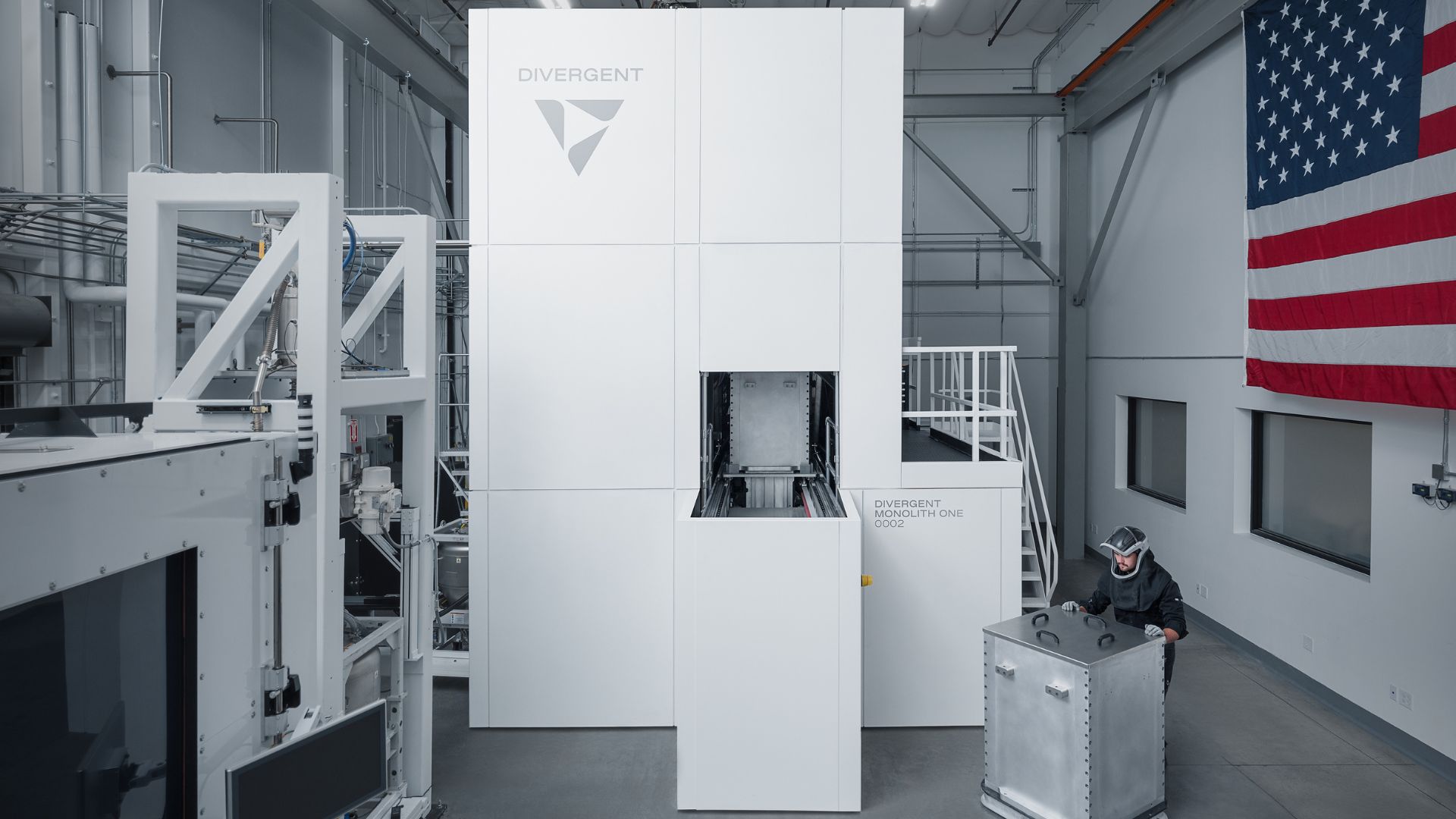
Divergent Technologies has unveiled a new industrial metal 3D printer and announced a major manufacturing expansion in Southern California, moves that the company says will significantly increase production capacity for defense and commercial customers.

The California-based manufacturer introduced the Monolith One, a large-format metal additive manufacturing system developed specifically for high-volume production. At the same time, the company revealed plans for a new 430,000-square-foot facility in Long Beach, California, where dozens of the machines will support future manufacturing programs.

Built for production

Unlike many metal 3D printers designed primarily for prototyping, Monolith One targets continuous industrial manufacturing. The machine stands more than eight meters tall and incorporates 12 high-powered lasers that deliver a combined 24 kilowatts of output.

Divergent designed the system over a 28-month period using lessons learned from more than a decade of additive manufacturing operations. The company developed the printer exclusively for use within its own manufacturing ecosystem rather than for commercial sale.

The machine supports a wide range of industrial alloys, including aluminum, steel, titanium, and nickel-based materials. It also offers a larger build chamber than many existing systems, allowing engineers to manufacture bigger and more complex structures in a single print.

According to Divergent, the printer can roughly double production throughput compared with current-generation equipment. The system also incorporates automated powder handling, thermal management controls, and optical monitoring technologies designed to improve consistency and reduce downtime.

Chief Technology Officer Brian Erhartic said the company built the printer specifically to improve manufacturing efficiency and quality. He added that integrating the machine directly into Divergent’s production platform helped unlock higher performance across multiple stages of manufacturing.

Factory expansion plans

Divergent currently operates six Monolith One printers at its headquarters in Torrance, California. The company plans to install an additional 64 systems at its new Long Beach facility over the next two years.

Divergent’s second factory in Long Beach, CA. Credit – Divergent Technologies, Inc.

Once fully operational, the site will support production of tens of thousands of munition airframes annually. It will also have the capacity to manufacture hundreds of thousands of critical metal components for aerospace and defense programs.

The expansion comes as defense contractors seek faster production methods and more resilient domestic supply chains. Traditional manufacturing processes often require lengthy lead times for complex hardware, particularly in aerospace applications.

Divergent says its software-driven manufacturing approach reduces those timelines from months to weeks or even days in some cases. The company supplies structures and components for several major defense and aerospace organizations, including Lockheed Martin, RTX, and CoAspire.

Chief Executive Officer Lukas Czinger said the new printer reflects years of operational experience gained from delivering production hardware to both defense and commercial customers. He noted that the company manufactures the systems domestically and sources key components through a U.S.-based supply chain.

As production ramps up at the Long Beach facility, Divergent expects the new manufacturing capacity to support growing demand for mission-critical hardware while strengthening domestic industrial capabilities.

  •  

New membranes strip 99.8% of heavy hydrocarbons from crude oil to save refining energy

A new class of ultrathin polymer membranes, dubbed Polymers of Locked Intrinsic Microporosity (PLIMs), has been developed through a global research collaboration.

These membranes can separate complex hydrocarbon mixtures (like crude oil), potentially transforming the energy-intensive refining process.

Modifying membrane structure

Every single day, standard crude oil refining uses the thermal distillation method. This process boils oil to separate it into useful fractions like gasoline, plastics, and jet fuel. It works well, but it carries an environmental price tag. It consumes a high amount of energy.

Now, a team of international researchers has created a workaround that could take the heat out of the equation entirely.

The Polymers of Locked Intrinsic Microporosity (PLIMs) are ultrathin membranes that can filter out complex hydrocarbon mixtures at a microscopic level without needing a heat source.

“Membranes can, in principle, do the same job as distillation or evaporation, using far less energy,” explained Andrew Livingston, Professor of Chemical Engineering and Vice President Research and Innovation at Queen Mary University of London, and CEO of Exactmer. 

“The problem has been finding materials that are both fast and selective when exposed to real hydrocarbon mixtures,” the lead researcher added.

The study introduces a novel fabrication method that injects a crosslinking agent during membrane formation to create highly efficient separating layers. It combines two features that have eluded scientists for decades: extreme molecular selectivity and incredibly fast transport speeds.

Testing of membrane

Membranes promise a cleaner, low-energy alternative to massive boilers. In this concept, rather than boiling the liquid, it is run through a molecular sieve that catches specific molecules based on their size.

In practice, organic liquids like crude oil ruined everything.

The team focused on highly porous polymers, materials possessing an internal structure like a sub-nanometer sponge. However, these materials have a flaw. When exposed to harsh hydrocarbons, it swells. As the polymer expands, the tiny pores dilate, allowing larger molecules to slip through. The filter becomes useless.

To fix this, the team altered the fabrication process and introduced an in situ crosslinking agent directly into the polymer film during its formation.

“The key was stabilizing the structure before the polymer had a chance to swell,” said Dr Zhiwei Jiang. “This preserves the tiny pores that make molecular separation possible, while still allowing hydrocarbons to flow through very quickly.”

When the researchers tested the membranes against real Arabian Extra Light crude oil, the results defied standard expectations. The PLIM system successfully stripped out 99.8% of heavy hydrocarbons (those with more than 15 carbon atoms). It also slashed corrosive sulfur compounds by 93%. 

This is a massive victory for refineries, as sulfur frequently degrades downstream equipment and catalysts.

The membrane performed just as well on lighter refinery streams, such as virgin naphtha. It sorted out smaller molecules destined for fuel upgrading from heavier components used to manufacture everyday plastics. It did all this while operating at flow rates comparable to those of commercial water desalination systems.

Moreover, this team designed the material with mass manufacturing in mind from day one.

Using standard roll-to-roll processing, PLIM sheets were manufactured over a meter wide. These sheets were wrapped into spiral-wound modules, the exact shape used in existing industrial filtration plants worldwide.

The membranes also proved they have stamina, running continuously for 30 days without a drop in performance.

The results were published in the journal Science on June 18.

💾

A new class of ultrathin polymer membranes, dubbed Polymers of Locked Intrinsic Microporosity (PLIMs), has been developed through a global research collaboration.
  •  
❌