❌

Reading view

Were dinosaurs doomed before the asteroid hit?

Around 66 million years ago, an asteroid wiped out 75% of the species on Earth. This event caused the extinction of all dinosaurs except birds, referred to as non-avian dinosaurs. However, an open question in paleontology is whether the dinosaurs were already declining before the asteroid hit. Many scientists think that around 5 to 10 million years before the extinction event, dinosaurs became less biologically diverse across America, making them more prone to extinction. 

To investigate this hypothesis, scientists recently revisited fossils in a rock layer from the end of the dinosaur era that previous researchers had incorrectly dated. The bulk of the fossils from this period had previously been collected from a different section of rocks called the Hell Creek Formation in Montana. These researchers studied a rock layer in New Mexico that is exposed to the surface, known as the Naashoibito Member. It’s approximately 30 meters (about 100 feet) thick and formed from ancient river sediments. 

To determine when the Naashoibito Member formed, the scientists measured the decay of radioactive elements within its mineral grains over time, a technique called radiometric dating. The scientist reasoned that these mineral grains must have crystallized before being transported and incorporated into the Naashoibito Member, so their youngest ages should provide a maximum depositional age. 

They determined the ages of 1,046 crystals of the mineral feldspar from 2 dinosaur-bearing rock layers in the Naashoibito Member. Based on these ages, the researchers found that a sandstone within 5 meters (about 16 feet) of the lowest boundary of the Naashoibito Member must be younger than 66.9 million years old. They found that the other layer, which is around 3.5 meters (11 feet) from the base of the lowest boundary, must be younger than 66.4 million years old. These age ranges indicated that the sandstone contains dinosaur fossils formed 400,000 years before their extinction.

Next, the researchers measured the direction of magnetic minerals inside the rocks, using a practice called magnetostratigraphy. The direction of these minerals indicates where Earth’s magnetic field was pointing at that time. Scientists have shown that the Earth’s magnetic field has flipped multiple times over Earth’s history, so they can use these magnetic signals to create a timescale for when the sediments formed. 

The researchers wanted to determine whether the magnetic minerals were lined up in a direction like today, called normal polarity, or the opposite, called reverse polarity. The researchers found one rock layer with normal polarity at the base of the Naashoibito Member, and one with reverse polarity in the upper part of the Naashoibito Member. These magnetic field directions lined up with 2 known polarity intervals over a timeline that matched the feldspar dates. Together, these data demonstrated that the Naashoibito Member formed at the end of the dinosaur era, around the same time as the Hell Creek Formation.

Next, the researchers wanted to test whether non-avian dinosaurs maintained their diversity across different regions of Western North America during this time period. They compared fossil patterns from locations across North America using statistical grouping methods that determine how similar or different their environments were. They found that temperature, rather than geographical location alone, was the best predictor of diversity at the extinction event. 

The team concluded that a diverse population of Naashoibito dinosaurs lived at around the same time as the Hell Creek dinosaurs. Earlier scientists surmised that dinosaurs were already on the decline because they studied the colder northern regions, where diversity was lower. However, these results suggest that warmer conditions in the south still supported diverse dinosaur populations. Together, this evidence suggests that dinosaurs were still diverse and thriving 66 million years ago, and that their extinction was indeed a result of the asteroid impact.


The post Were dinosaurs doomed before the asteroid hit? appeared first on Sciworthy.

  •  

Les scientifiques alertent sur un changement inquiétant chez les requins : l’Homme serait en train de modifier leur manière de survivre

80 millions : c'est le nombre de requins tués chaque année par la pêche mondiale, selon une étude publiée dans la revue Science. Une pression colossale qui ne reste pas sans réponse de la part de ces prédateurs. Dans le golfe du Mexique, les requins s'adaptent, et pas forcément dans le bon sens.

  •  

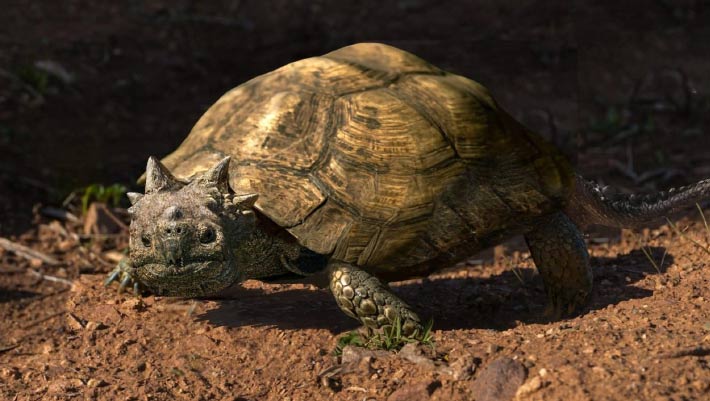
Fossil Discovery in Patagonia Reveals New Species of Horned Turtle

An artist’s impression of Patagoniaemys aeschyli. Image credit: Nawel Vazquez / Museo Argentino de Ciencias Naturales ‘Bernardino Rivadavia’ / CONICET.

Paleontologists have identified a new species of meiolaniform turtle from northern Patagonia, Argentina, that lived during the Maastrichtian age, just before the asteroid-triggered mass extinction that wiped out all non-avian dinosaurs.

The post Fossil Discovery in Patagonia Reveals New Species of Horned Turtle appeared first on Sci.News: Breaking Science News.

  •  

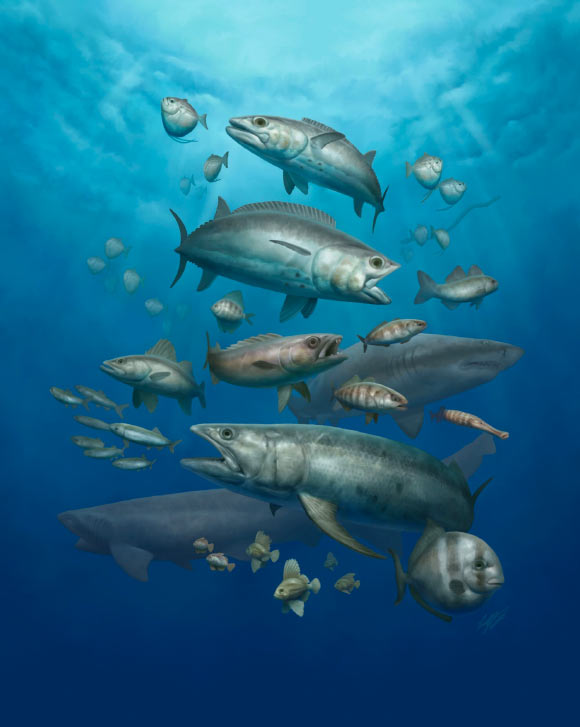
Fish Fossils from Early Paleocene Fill 10-Million-Year Gap after Dinosaur Extinction

Marine fishes from the Early Paleocene site of Qreiya 3 in the Eastern Desert of Egypt. Image credit: Ian Baylatry.

Paleontologists have described an assemblage of marine fish fossils from the 62.2-million-year-old site of Qreiya 3 in the Eastern Desert of Egypt, providing a window into this transition.

The post Fish Fossils from Early Paleocene Fill 10-Million-Year Gap after Dinosaur Extinction appeared first on Sci.News: Breaking Science News.

  •  

Ancient Oceans Began Losing Oxygen Millions of Years before End-Triassic Mass Extinction

Early Earth. Image credit: Peter Sawyer / Smithsonian Institution.

Chemical traces preserved in ancient rocks indicate that marine environments were deteriorating long before the catastrophe that wiped out vast numbers of species at the end of the Triassic period, around 201 million years ago.

The post Ancient Oceans Began Losing Oxygen Millions of Years before End-Triassic Mass Extinction appeared first on Sci.News: Breaking Science News.

  •  

A Chilling Warning from Brussels | The Foundational Flaw in mRNA Technology That the Public was Never Told

At the launch of "Make Europe Healthy Again," researcher Panagis Polykretis highlighted a critical issue with mRNA vaccines, asserting that they enable an immune attack on the body’s own cells, leading to severe adverse effects like myocarditis. He called for accountability and urgent safety studies amid rising health crises linked to the vaccines.

  •  

Fungi Bloomed Twice around End-Cretaceous Mass Extinction

The end-Cretaceous mass extinction was marked by both the Chicxulub asteroid impact and the ongoing eruptions of the Deccan Traps volcanoes.

By studying fungal microfossils in 66-million-year-old rock samples from the Denver Basin in Colorado, Johns Hopkins University microbiologists have confirmed that the dinosaur-killing asteroid impact triggered a worldwide fungal takeover, and uncovered a second, previously unknown ecological crisis just before it.

The post Fungi Bloomed Twice around End-Cretaceous Mass Extinction appeared first on Sci.News: Breaking Science News.

  •  

Chickens without eggs? De-extinction company creates artificial egg.

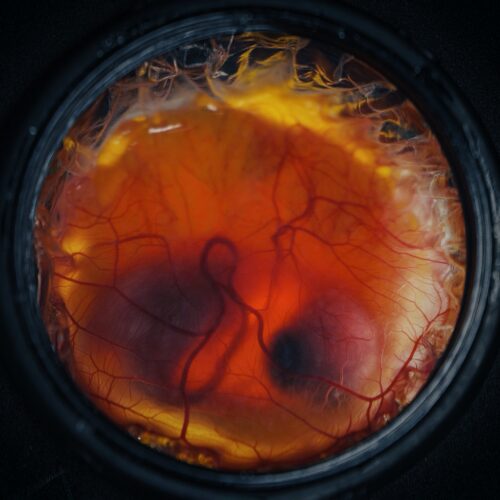
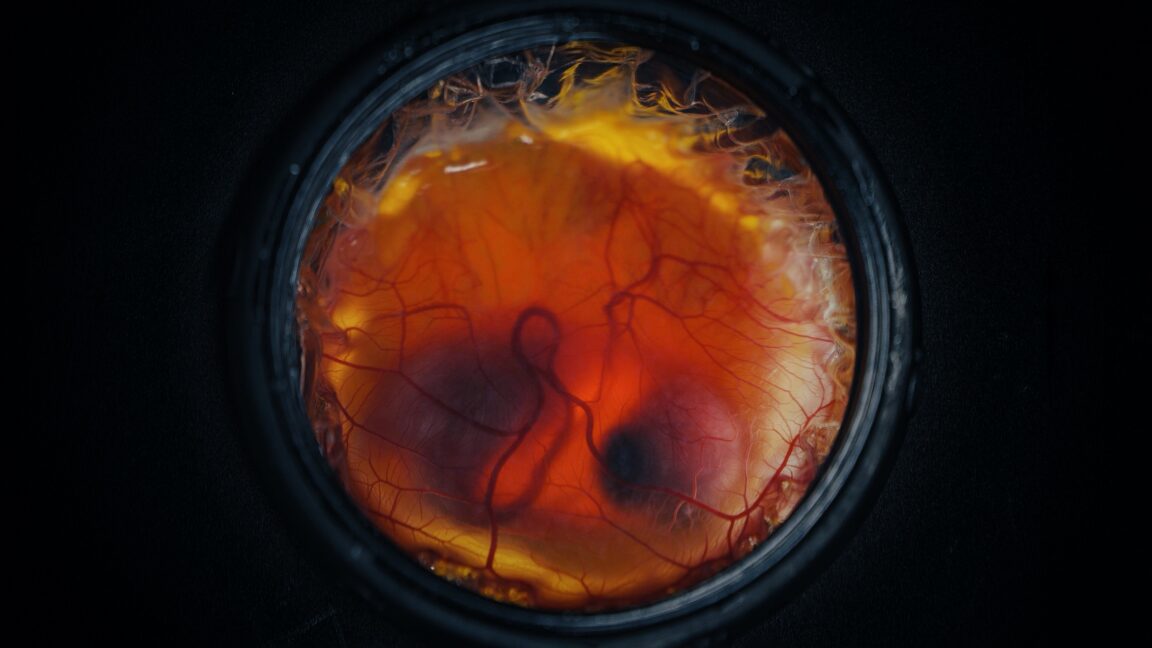
On Tuesday, biotech startup Colossal announced its newest development on the road to its announced goal: reversing the extinction of species, in this case, avian species. The development itself is essentially an artificial eggshell, one that allows almost the entire developmental process to occur without the shell. The company transferred the contents of eggs to their specially designed container within a day or two of laying and were able to have normal chicks walk away from it.

Beyond its potential utility for Colossal's intended efforts, the work is personally interesting to me because it may solve a problem I faced in my research days. I'm going to start by describing the research problem that Colossal may have solved, before coming back to what it hopes to use its technology to do—and why the company still has a few key hurdles left to overcome.

Watching development

For part of my career, I studied the development of vertebrates using chickens. While they're less closely related to us than something like mice, the basics of their development are largely the same. And, unlike mice, they develop outside of their mother's body. If you're careful, you can chip away a hole in the egg, perform manipulations on the developing embryo, and then seal it back up with some tape. The chicken embryo will keep developing, allowing you to see the impact of what you've done on normal development.

Read full article

Comments

© Colossal

  •  
❌