❌

Reading view

344 steps stood between the James Webb Space Telescope and total failure — any one could have ended it — and the telescope that survived them all now runs on less power than a household kettle, a million miles from Earth
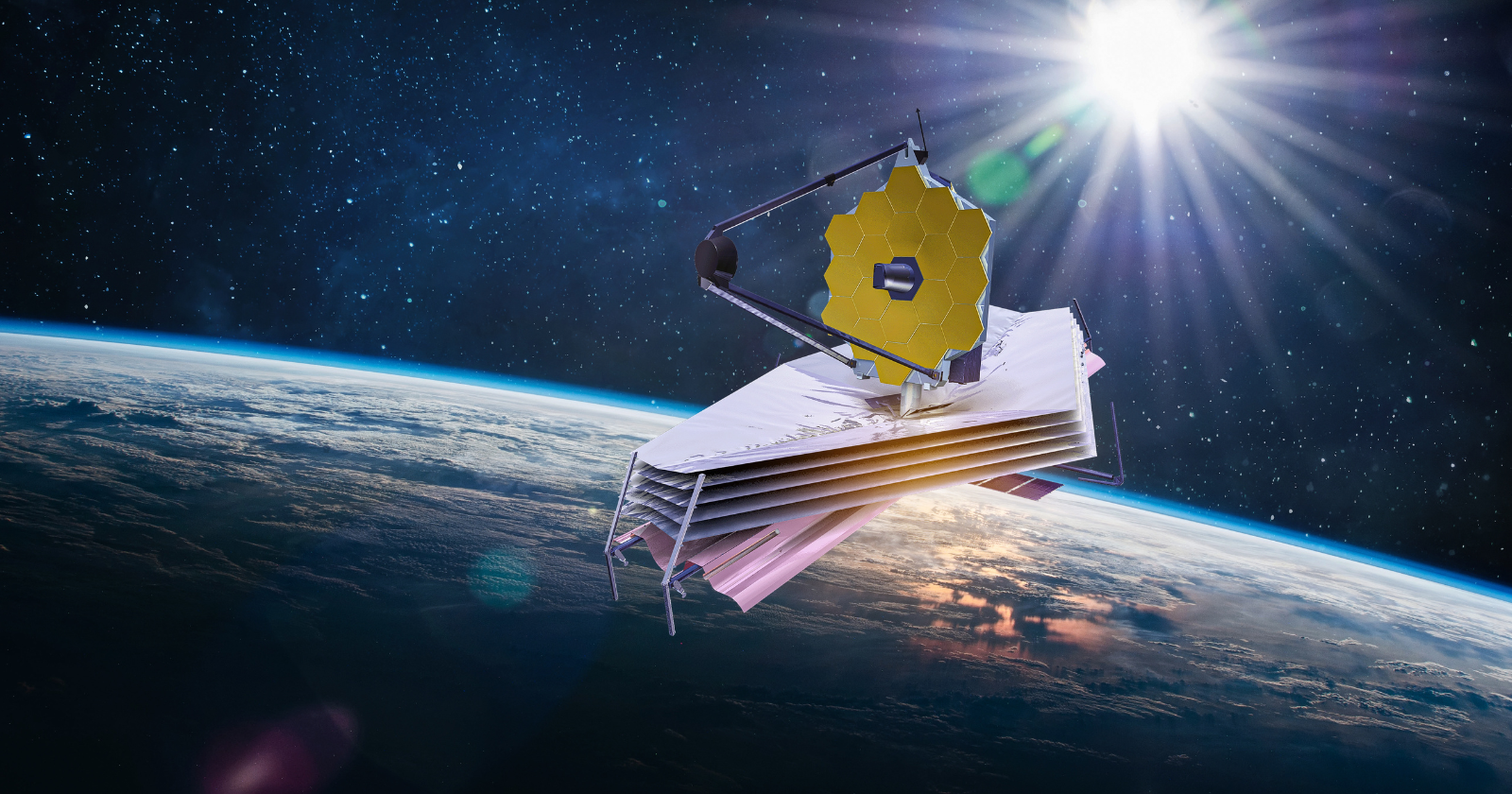
When the James Webb Space Telescope launched on 25 December 2021, it carried a list of 344 single points of failure. Each one was a step or a part where a single fault would have crippled the mission, with no second chance and no way to send anyone to fix it. The telescope cleared all of them. It now sits about a million miles from Earth, doing the most sensitive infrared astronomy ever attempted, on roughly the power of a household kettle.

Both halves of that are true, and both are worth taking apart, because the figures are precise and the precision is the point.

344 ways to fail

The number comes from Mike Menzel, Webb’s lead mission systems engineer at NASA, who has said the observatory launched with 344 single-point failures on its books. A single point of failure, in engineering terms, is a place where one thing going wrong takes everything with it. Most spacecraft have a handful. Webb had hundreds.

About 80 per cent of them were tied to the deployment, the slow unfolding of a telescope that had been folded up to fit inside its rocket. That sequence relied on roughly 140 release mechanisms, 70 hinge assemblies, eight motors, some 400 pulleys, and around a quarter of a mile of cable, each of which had to work on command, in order, the first time.

What made the list so unforgiving was the destination. Webb was not going to low orbit, where Hubble could be visited and repaired by astronauts five times. It was going somewhere no crew can reach, which meant the usual safety net, send someone up to fix it, did not exist. Every one of the 344 had to hold on its own.

The fortnight that decided it

The riskiest part was the sunshield, a five-layer screen the size of a tennis court that has to separate and tension without tearing or snagging. It is the single most complex deployment ever flown, and it is the reason so much of the risk was packed into the first two weeks.

The sunshield reached its final, tensioned shape on 4 January 2022, ten days after launch. The project manager at the time, Bill Ochs, told reporters that finishing it retired somewhere between 70 and 75 per cent of the single-point failures on the original list. The rest fell away as the mirror segments locked into place over the following days. By the end of the fortnight, the most dangerous machine NASA had ever unfolded had unfolded.

Less power than a kettle

Here the popular line is right, with one number worth pinning down. The spacecraft and its four instruments run on about one kilowatt. The solar array is built to deliver closer to two kilowatts, but that extra capacity is margin, sized so the telescope still has enough as the panels degrade over its mission.

So the working figure is about a kilowatt, and a lot of household kettles draw more than that, particularly the three-kilowatt kind common outside North America. A telescope unpacking the early universe really does run on less electricity than the appliance that makes your tea.

The reason it can is the sunshield again. Webb has to keep its detectors extraordinarily cold, down to around 7 kelvin on one instrument, and cooling is usually the most power-hungry thing a cold spacecraft does. By parking the sunshield between the telescope and the Sun, Webb does most of that cooling passively, simply by sitting in deep shade, rather than by running power-hungry refrigeration. The shade that protects it also keeps its electricity bill tiny.

A million miles out

That deep shade only works at the right address. Webb orbits the Sun-Earth point known as L2, about 1.5 million kilometres away, near enough a million miles, where it can keep the Sun, Earth, and Moon all behind a single shield.

It also means the telescope is on its own. The same distance that makes the observatory work is the distance that made the 344 single points of failure so tense, because none of them could be reached if they jammed. The achievement was not just building something this delicate. It was building something this delicate that had to survive its own unpacking, unattended, a million miles from the nearest spanner.

It has been returning science since July 2022.

The list of 344 is now history, which is the only acceptable place for a list like that to end up.

The post 344 steps stood between the James Webb Space Telescope and total failure — any one could have ended it — and the telescope that survived them all now runs on less power than a household kettle, a million miles from Earth appeared first on Space Daily.
  •  

A survey of 64 limestone caves in Cambodia, reported in March 2026, turned up around 11 species new to science, among them a turquoise pit viper, a flying snake, geckos, micro-snails and millipedes

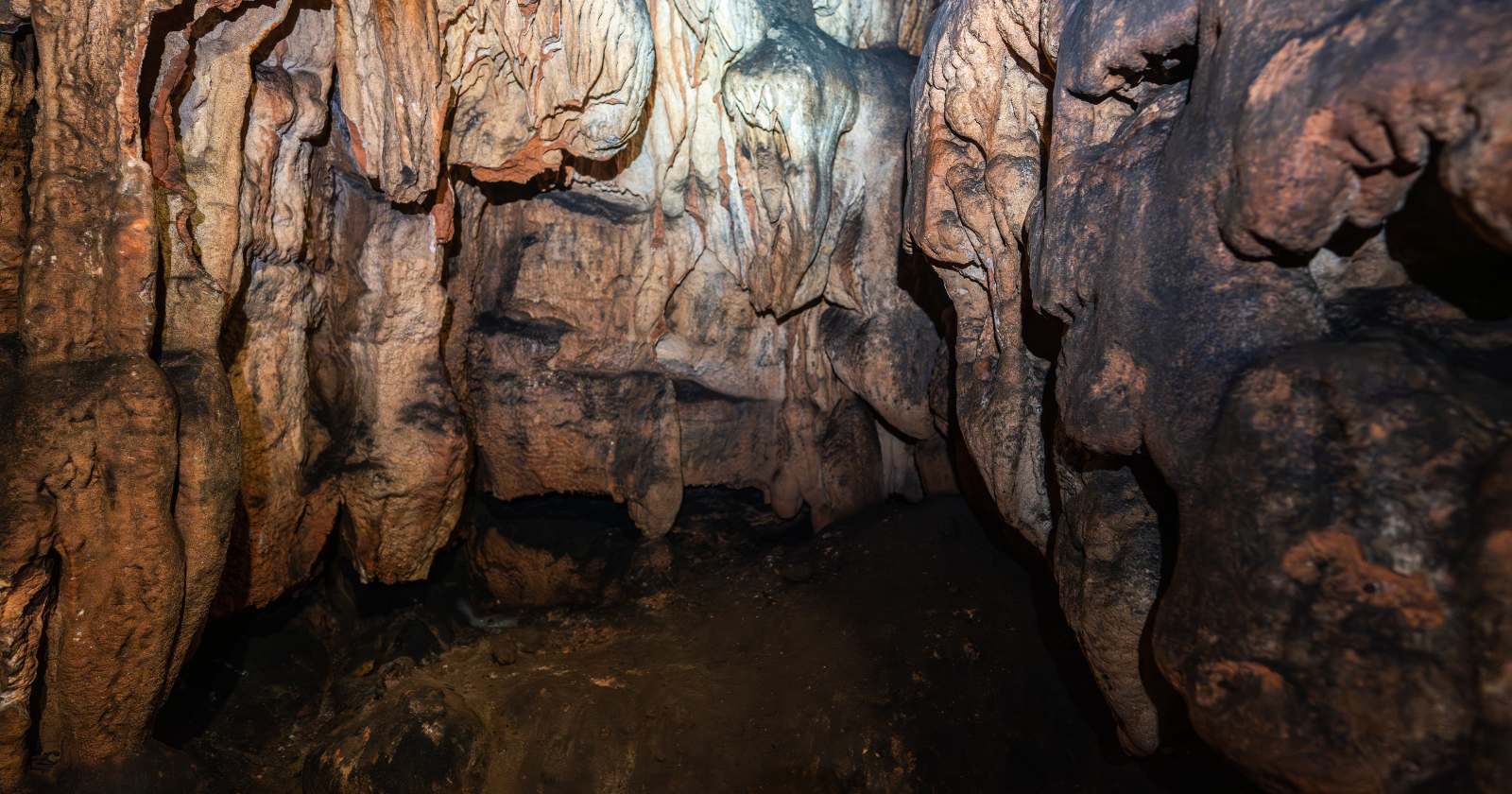
A multi-year biodiversity survey of limestone caves in western Cambodia has documented at least 11 species apparently new to science, among them a pit viper, several geckos, micro-snails and millipedes.

The work was led by the conservation charity Fauna & Flora with Cambodia’s Ministry of Environment. The published report compiles field surveys of four taxonomic groups plus a camera-trapping programme across the karst hills of Battambang province (the wider study also reached Stung Treng), with the cave bat survey alone covering 64 caves across 10 hills. The fieldwork ran from November 2023 to July 2025, and the report was released in March 2026.

Among the new species, the report lists three geckos already formally described — Cyrtodactylus kampingpoiensis, Hemiphyllodactylus khpoh and Dixonius noctivagus — alongside two micro-snails (Clostophis udayaditinus and Chamalycaeus aduncus) and two millipedes (Orthomorpha efefai and Orthomorpha battambangiensis). A further three geckos and one new pit viper of the genus Trimeresurus are still being formally described.

In all, seven have been described and published, with four more in progress.

Why one stretch of rock keeps producing new species

The reason such caves yield so many unfamiliar animals has less to do with luck than with geography. Cambodia’s karst — the eroded limestone formations that hold the caves — forms isolated hills, each cut off from its neighbours. A population that settles on one hill can evolve in confinement, separated from the same species only a few kilometres away.

The report frames these limestone landscapes as having high conservation value precisely because they harbour such localised, range-restricted animals. Researchers on the survey have likened the hills to a repeated natural experiment, with related lineages evolving independently on separate outcrops. That confinement is also what makes the species fragile: a gecko or millipede found on a single hill, and nowhere else, may have nowhere to go if that hill changes.

Discovery and destruction running in parallel

The caves are largely unprotected. The same limestone that makes the hills biologically distinctive also makes them commercially valuable, and the report documents extensive stone quarrying on some hills — at Phnom Takriem, for instance, roughly a fifth of the hill area has been given over to quarries. Across the world, only about 1% of karst ecosystems sit under any kind of protection. 

Pablo Sinovas of Fauna & Flora ties the geography directly to the risk: destroy the only place a species lives, and you risk wiping it out altogether. Sothearen Thi, the survey’s karst biodiversity coordinator, has made a related point — that biologically significant species could disappear before science has ever recorded them.

What the report changes, and what it doesn’t

The survey did not cover everything. The team did not enter the interiors of several caves holding very large bat colonies — some numbering in the hundreds of thousands, and more than a million in the biggest roosts. In at least one major colony cave, the ammonia inside was simply too concentrated to go in; other caves went unsurveyed because of unsafe vertical entrances, time constraints or a lack of climbing equipment. More exploration remains to be done.

What the report does is move these species from undocumented to documented — the precondition for any argument about protecting them. Whether that shifts the calculus for the hills themselves remains open. Fauna & Flora says it is working with the Cambodian government and local partners to strengthen protection of the landscapes. 

Source: Fauna & Flora (2026). Karst Biodiversity Report: Battambang and Stung Treng Provinces, Cambodia — November 2023–July 2025.

The post A survey of 64 limestone caves in Cambodia, reported in March 2026, turned up around 11 species new to science, among them a turquoise pit viper, a flying snake, geckos, micro-snails and millipedes appeared first on Space Daily.

  •  

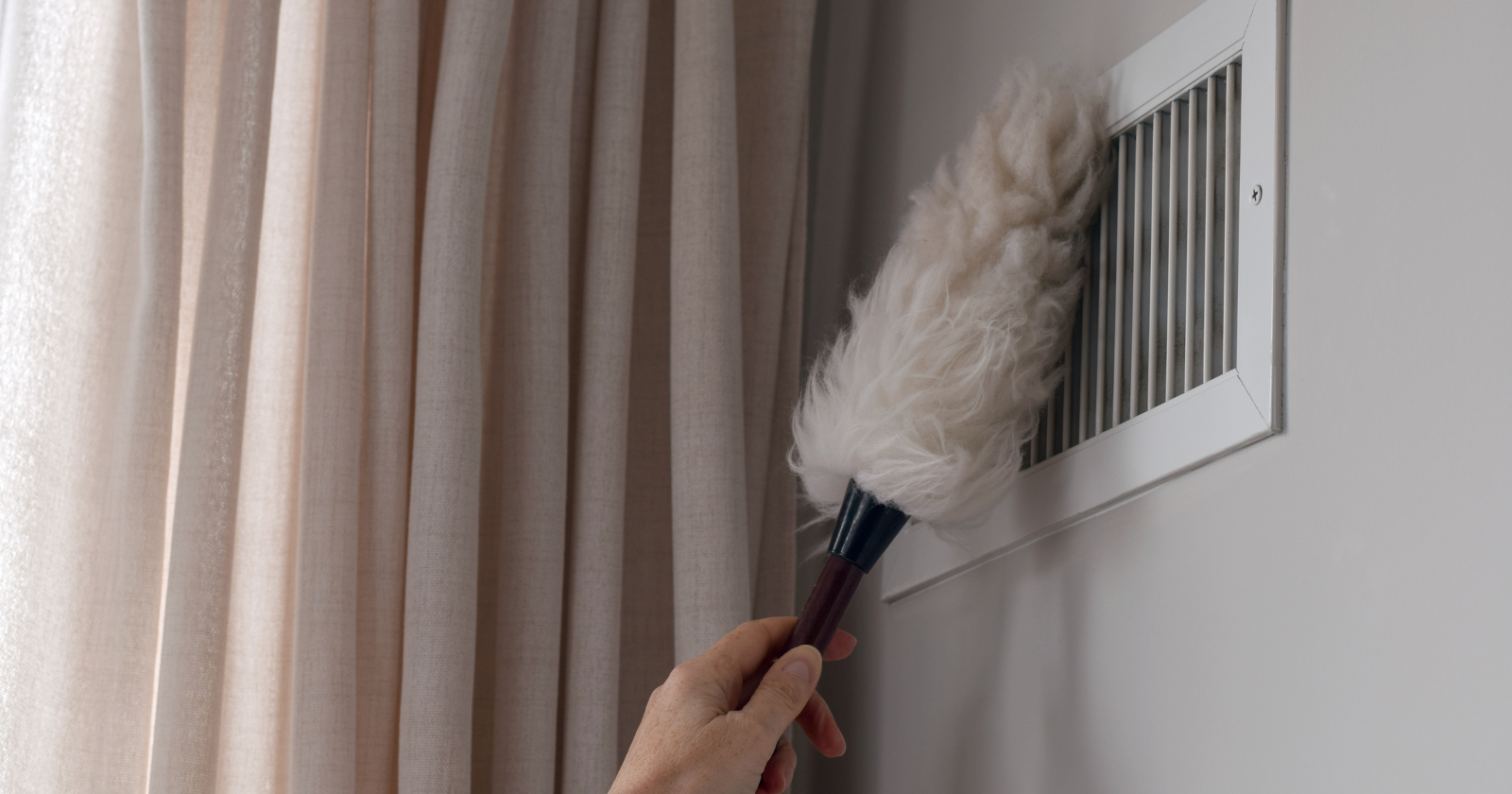
The dust in your home is not just dirt — it is a mixture of skin, fabric, pollen, soil, insects, microbes, smoke, and microscopic plastic, turning an ordinary windowsill into a quiet archive of what has entered the room

Look at a windowsill after a week without cleaning and you are looking at a material document. The grey film gathering there is not simply grime from outside. It is a composite, built layer by layer from everything that moves through the space: the people who live in it, the air that passes through, the products used, the seasons outside. Analysed carefully, household dust can be read almost like a log. Researchers have learned to do exactly that.

We are writers, not chemists or environmental scientists. What follows is a reading of several years of research into what dust is, not guidance on what to do about it.

What the mixture contains

House dust is usually described first in terms of skin. The figure most commonly cited is that humans shed something in the order of millions of skin cells per day — one widely cited estimate puts it at 500 million, with the outer layer renewing roughly every two to four weeks. Some of that settles. But the claim, still circulating widely, that household dust is mostly dead skin has been questioned by researchers who point out that skin cells account for a meaningful portion of the organic fraction, not the whole of the dust itself. The rest is a longer list.

Clothing and textiles contribute substantially. As fabric moves and wears, it releases fibres, and in homes with synthetic materials that means microscopic strands of polyester, nylon, acrylic and other polymers shed into the air and settle. Outdoor soil arrives on shoe soles and through ventilation. Pollen enters on clothing, on pets, through open windows; research published in Building and Environment found that indoor pollen loads track outdoor seasonal patterns closely, meaning the species composition of the dust in any given room shifts across the year. Insect fragments, particularly from dust mites and cockroaches, are present in most samples. Smoke particles, whether from cooking, candles, or outdoor air pollution tracked inside, add to the mix. Fungal spores, drawn in from outside, contribute to the biological fraction.

Then there is the microbial layer, which has attracted significant attention as sequencing technology has improved. A 2016 paper in PLOS One characterised the bacterial and fungal communities in indoor dust across a range of homes, finding that bacteria in indoor environments are largely derived from the inhabitants themselves, with genera including Staphylococcus, Streptococcus, Corynebacterium, and Lactobacillus dominating the profile. Fungi, by contrast, arrive mostly from outdoors, their community composition shifting with outdoor vegetation and season. The result is a microbial record that reflects both who lives in the space and what surrounds it.

The outdoor world inside

Around two-thirds of the material in household dust is estimated to originate outside, though this varies significantly by study, region, and building type. It is tracked in on shoes, carried in on air currents, attached to clothing, or brought in on pets. The remaining third is generated internally: by the bodies present, by the materials in the room, by whatever is cooked, burned, or sprayed. The ratio shifts in tightly sealed buildings and in homes with poor ventilation.

This outdoor contribution means dust is not simply a domestic record. It is also a local environmental one. Homes near high-traffic roads tend to carry higher loads of combustion particles and certain metals. Homes near agricultural land can carry pesticide residues. Seasonal pollen patterns are legible in indoor samples. In this sense the windowsill is not sealed off from the street outside; it is continuously receiving it.

The chemical accumulation

Dust also accumulates what is harder to see: the chemical load from consumer products in the home. Environmental chemist Miriam L. Diamond of the University of Toronto has described dust as holding a “long memory” of the contaminants introduced to a house. Flame retardants migrate off the foam in furniture and off electronics. Phthalates leach from vinyl flooring. Fragrance compounds shed from personal care products attach to airborne particles before settling. These compounds continue to accumulate in dust over time, and because homes are tightly sealed environments, the accumulation is persistent. Diamond has noted that dust from older homes can still carry traces of DDT and PCBs, banned in many countries for decades.

A 2016 analysis published in Environmental Science & Technology by Susanna D. Mitro of George Washington University and colleagues — including Robin E. Dodson of the Silent Spring Institute and Veena Singla of the Natural Resources Defense Council — reviewed more than two dozen dust studies covering 45 compounds. They found that ten compounds appear in 90 percent or more of US household dust samples, including phthalate plasticisers, flame retardants, and phenol preservatives from cosmetics. These are findings from that particular dataset, not universal claims about all households or all exposures. The health picture is genuinely uncertain: researchers have established that dust is a source of exposure to these substances, but determining the extent of any health risk requires more work, and for many of the compounds present, no clear safety thresholds have been set.

Microplastics have been found in indoor dust samples from across the world. A 2024 review in Indoor and Built Environment noted that synthetic textiles are among the primary sources, with polyester and polypropylene fibres dominant in most samples. The concentration varies by household, and the long-term health picture from microplastic inhalation and ingestion is still being established.

What the archive tells us

P. Lee Ferguson, an environmental chemist at Duke University, has described the chemical compounds measurable in household dust as covering only “the few to a hundred compounds that we know are in dust,” against a backdrop of tens of thousands to over a million compounds currently in commercial use. The full chemical archive in any given room is, in that sense, largely unread. Researchers using newer nontargeted mass spectrometry approaches are beginning to identify compounds that were not previously expected: surfactants from cleaning products, azo dyes from textiles, traces of dog flea treatments, and in some samples, cocaine. That last compound appears as a data point about what circulates in the built environment, not as moral commentary. It is a data point about what circulates in the built environment.

The more interesting point, in our reading of this body of work, is what the archive implies about ordinary domestic space. A room that appears clean is still accumulating. The material record builds whether or not anyone is paying attention to it. What settles on a windowsill over a week reflects the people inside, the objects they use, the plants flowering outside, the roads nearby, the products manufactured with compounds that were assumed to stay where they were put.

Dust is not usually studied for its own sake. Researchers study it because it is an unusually honest record of what surrounds us. It does not preserve memory in the way we think of memory. It preserves material presence: what arrived, what shed, what accumulated. Every ordinary surface is doing this, quietly, all the time.

The post The dust in your home is not just dirt — it is a mixture of skin, fabric, pollen, soil, insects, microbes, smoke, and microscopic plastic, turning an ordinary windowsill into a quiet archive of what has entered the room appeared first on Space Daily.

  •  

Approximately 35 per cent of all purchases made on Amazon are driven by its recommendation engine, approximately 70 per cent of all viewing on YouTube comes from algorithm-driven recommendations, and peer-reviewed evidence has shown that even randomly assigned recommendations measurably alter what consumers are willing to pay for a product

The popular framing of algorithmic recommendation, repeated across most contemporary writing on consumer technology, is that personalised suggestions surface preferences the consumer already has. The algorithm watches what someone does, identifies a pattern, and offers more of what the pattern predicts they will like. On this account, the algorithm is a useful but essentially neutral tool, one that accelerates discovery without changing what the consumer would have chosen if left to themselves.

The peer-reviewed experimental evidence accumulated over the past twenty years has substantially complicated this picture.

What the controlled studies have repeatedly shown is that algorithmic recommendations do not merely reflect existing preferences. They actively shape them. The brain treats the recommendation itself as a piece of information, an informational anchor, that influences subsequent judgment regardless of whether the underlying algorithm is accurate or not. The same effect persists when the recommendations are deliberately randomised, when they are intentionally incorrect, and when the consumer has been explicitly told that the recommendations may be unreliable. The mechanism is not driven by the algorithm being right. The mechanism is driven by the algorithm being present.

The Adomavicius experiments

The foundational peer-reviewed study of this effect was published in 2018 by Gediminas Adomavicius at the University of Minnesota, with Jesse Bockstedt at the University of Arizona, Shawn Curley at Minnesota, and Jingjing Zhang at Indiana University, in the journal Information Systems Research. The team designed three controlled experiments to test whether personalised recommendation ratings produced by a recommender system would influence the prices that participants would be willing to pay for digital music tracks.

The first experiment showed participants algorithmic recommendation ratings for a series of songs. The ratings were presented as if they had been personalised to each participant by a recommender system trained on their listening history. The ratings were, in fact, randomly assigned. Participants were then asked how much they would be willing to pay for each song. The team found that the randomly assigned ratings substantially altered the prices participants were willing to pay, even when the team controlled for the participants’ own underlying preferences and demographics. Higher random ratings produced higher willingness-to-pay figures. Lower random ratings produced lower figures. The shift was statistically robust across the sample.

The second experiment used actual system-generated recommendations from a real recommender system, but the team intentionally perturbed the recommendations by introducing controlled errors. Participants saw recommendations that were partially based on their preferences but deliberately shifted away from what an unperturbed algorithm would have produced. The team observed substantially the same effect. The participants’ willingness to pay tracked the perturbed recommendations rather than their underlying preferences.

The third experiment reduced preference uncertainty by giving participants substantial time and information to develop firm views about the songs before they were exposed to the recommendation ratings. The hypothesis the team tested was that participants who had already made up their minds about the music would be less susceptible to algorithmic influence. The hypothesis did not hold. Even participants with stable, well-developed preferences showed the same willingness-to-pay shifts in response to randomly assigned algorithmic recommendations.

The anchoring mechanism

The Adomavicius team’s interpretation, supported by the broader peer-reviewed literature on cognitive anchoring effects, was that the recommendation operates as a numerical anchor that the brain uses as a starting point for subsequent judgment. The classic anchoring effect, identified by Daniel Kahneman and Amos Tversky in the 1970s and replicated in thousands of subsequent studies, shows that arbitrary numerical values presented before a judgment systematically shift the judgment toward the anchor, even when the people making the judgment know the anchor is irrelevant.

Algorithmic recommendations function as anchors in the same way. A recommendation of four out of five stars sets a numerical reference point that influences the consumer’s subsequent valuation of the product, regardless of whether the four-star recommendation reflects anything meaningful about the consumer’s actual preferences. The consumer who has been told a song is worth four stars, by what they believe to be an accurate personalised algorithm, will offer a price closer to what a four-star song commands than they would have offered in the absence of the recommendation. The shift occurs whether the four-star rating is generated by an accurate algorithm, an inaccurate algorithm, or a random number generator.

The implication is that the source of the algorithmic influence is not the accuracy of the algorithm. The source is the presence of the algorithm. The consumer is being influenced by a numerical informational anchor that has been generated by a system the consumer trusts to be measuring their preferences. Whether the system is actually doing that is, on the peer-reviewed evidence, largely beside the point.

The Amazon and YouTube specifics

The peer-reviewed experimental findings sit alongside a substantial body of industry data on the actual scale of algorithmic influence in major consumer platforms. Amazon’s recommendation engine, on figures the company has publicly disclosed and that have been independently analysed by McKinsey and Company since 2013, drives approximately 35 per cent of all purchases made on the platform. The figure has held roughly steady for over a decade, despite extensive evolution in the underlying algorithms and substantial growth in Amazon’s product catalogue.

YouTube’s chief product officer Neal Mohan disclosed at the Consumer Electronics Show in January 2018 that approximately 70 per cent of all viewing time on YouTube comes from videos selected by the platform’s recommendation algorithm rather than from videos that users have actively searched for. The figure has been widely confirmed by subsequent industry analysis and remains the standard reference for the role of algorithmic recommendation in video discovery. YouTube now has approximately 2.5 billion monthly users.

The figures across other major platforms follow similar patterns. Pew Research Center has found that approximately 81 per cent of YouTube users say they at least occasionally watch recommended videos, with 15 per cent reporting that they do so regularly. The recommendation algorithms on TikTok and Instagram measure user engagement to the millisecond and adjust the content stream in real time based on which videos a user has lingered on, replayed, or scrolled past quickly. The effect of all this, on the available evidence, is that the majority of the content the average person encounters in the major consumer platforms is selected by algorithms rather than chosen by the person consuming it.

The manipulation framework

A 2019 peer-reviewed article by Daniel Susser at Pennsylvania State University, Beate Roessler at the University of Amsterdam, and Helen Nissenbaum at Cornell Tech, published in the Georgetown Law Technology Review, argued that the systematic deployment of algorithmic influence in digital platforms now meets the philosophical definition of manipulation rather than persuasion. The distinction matters because manipulation, in the philosophical literature, is defined as the deliberate influence of someone’s beliefs, desires, or actions through means that bypass their rational agency. Persuasion, by contrast, addresses someone’s rational agency directly by giving them reasons to change their beliefs or actions.

The Susser team’s argument was that algorithmic recommendations, as currently deployed, systematically bypass the rational agency of consumers. The consumer is not given reasons why a particular product is being recommended. The consumer is not told what factors the algorithm has weighted, or how heavily, or what alternatives have been excluded. The consumer is presented with a numerical or categorical anchor and expected to make a decision in response to it. The cognitive mechanism the recommendation activates, on the Adomavicius experimental evidence, is the anchoring effect, which is precisely the kind of non-rational decision-making bias that the philosophical literature has long identified as the substrate of manipulation.

The Susser argument has not produced consensus. Other scholars have argued that the line between manipulation and persuasion is blurry, that consumers retain meaningful agency to ignore or reject algorithmic recommendations, and that the consumer welfare benefits of algorithmic curation outweigh the autonomy costs. The peer-reviewed dispute is genuinely ongoing. What is not in dispute is that the cognitive mechanisms identified by the Adomavicius team operate in ways the consumer is generally unaware of, and that they produce substantial behavioural effects that the consumer would not necessarily endorse if they were aware of them.

The honest limitations

Several methodological caveats apply to the literature described above.

The Adomavicius experimental work has been conducted primarily in laboratory settings using digital music as the stimulus. The generalisability of the findings to other product categories, other recommendation contexts, and the open-ended environment of actual consumer life is plausible but not perfectly established. The effect sizes observed in the lab may be larger or smaller than the effect sizes that obtain in everyday digital commerce.

The industry figures for Amazon and YouTube are derived from corporate disclosures rather than from independent peer-reviewed measurement. The 35 per cent and 70 per cent figures are widely cited and broadly consistent with the available academic analyses, but they should be treated as informed estimates rather than as precise scientific measurements.

The Susser 2019 manipulation framework is a philosophical argument rather than an empirical finding. The conceptual definition of manipulation, and the application of that definition to algorithmic recommendation systems, remain genuinely contested in the peer-reviewed legal and philosophical literature. The argument is strong but is not the only available position.

The anchoring mechanism identified by the Adomavicius team is one of several cognitive effects that have been proposed to explain algorithmic influence on consumer behaviour. Other proposed mechanisms include social proof effects, decision fatigue and the deferral of judgment to perceived authority, identity-reinforcement effects in which recommendations mirror and amplify the consumer’s existing self-concept, and choice architecture effects in which the structure of the recommendation environment itself shapes which options the consumer considers. The relative contributions of these mechanisms are not yet fully understood.

What it means

Several things follow from the peer-reviewed evidence on algorithmic influence on consumer choice that are worth saying clearly.

The first is that the popular framing of algorithmic recommendation as a neutral discovery tool is not supported by the available experimental evidence. The recommendation is not a neutral observation of what the consumer would have chosen. It is an active intervention in the consumer’s decision-making process, operating through cognitive anchoring mechanisms that are substantially independent of the recommendation’s accuracy. The consumer who receives a recommendation is being measurably influenced by the fact of the recommendation, not just by its content.

The second is that the scale of algorithmic influence in modern consumer platforms is substantial. Approximately 35 per cent of Amazon purchases, approximately 70 per cent of YouTube viewing time, and the majority of content consumption on TikTok, Instagram, and the major streaming platforms now come from algorithm-driven recommendation rather than from user-initiated search. The figure means that, for most consumers in most digital environments, what they encounter is selected by algorithms rather than by them.

The third is that the cognitive mechanism producing the algorithmic influence is one the consumer is generally not aware of, and one the consumer cannot easily resist even when they have been told the recommendation may be unreliable. The Adomavicius team’s third experiment, in which participants with firm pre-existing preferences still showed the influence effect, suggests that informed scepticism about algorithms does not, by itself, neutralise the cognitive mechanisms by which algorithms shape decisions.

The fourth, on the strongest current reading of approximately twenty years of peer-reviewed evidence in behavioural economics, decision psychology, and the philosophy of digital technology, is that the consumer who believes their choices in algorithmically curated environments are predominantly their own is, on the available evidence, mistaken in a measurable way.

The choices are partly theirs.

They are also partly the algorithm’s.

The peer-reviewed evidence has not yet established the precise weighting, but it has established that the second contribution is larger than the popular framing has assumed.

The post Approximately 35 per cent of all purchases made on Amazon are driven by its recommendation engine, approximately 70 per cent of all viewing on YouTube comes from algorithm-driven recommendations, and peer-reviewed evidence has shown that even randomly assigned recommendations measurably alter what consumers are willing to pay for a product appeared first on Space Daily.

  •  

Some climate models suggest Venus could once have had liquid water and habitable temperatures, until a dramatic transformation hundreds of millions of years ago. One leading idea is that widespread volcanic resurfacing helped push the planet into the runaway greenhouse state that left it hotter than Mercury today.

The planet Venus and its thick cloudy atmosphere against black space.

Venus today is the most hostile planet in the solar system. Its surface sits at about 465 degrees Celsius, hotter than Mercury despite being almost twice as far from the Sun, under an atmosphere of carbon dioxide pressing down at roughly 90 times Earth’s. Yet some climate models suggest it may not always have been this way, and that the planet next door could once have held liquid water and mild temperatures before a transformation tipped it into the furnace it is now.

That is a hypothesis, not a settled history.

It is also sharply contested, and the disagreement is the interesting part.

The case that Venus was once habitable

The strongest version of the habitable-Venus idea comes from climate modelling by scientists at NASA’s Goddard Institute for Space Studies. Running the same kind of models used for Earth, Michael Way and Anthony Del Genio found scenarios in which Venus held a shallow ocean and surface temperatures a person could tolerate, potentially for up to two billion years.

The mechanism they proposed turns on the planet’s slow spin. A Venus day is longer than a Venus year, so the dayside bakes for weeks at a time, which in their model drives rainfall and builds a thick deck of cloud that shades the surface like an umbrella. In that picture, the same sluggish rotation that seems hostile actually helped keep an early Venus cool enough for water.

There is a separate clue in the planet’s air. Venus has an unusually high ratio of deuterium, a heavy form of hydrogen, to ordinary hydrogen, which is the kind of fingerprint a world carries after losing a great deal of water to space over time. It does not prove there were oceans, but it is consistent with a Venus that once had far more water than the trace amount left in its atmosphere now.

The volcanic trigger

If Venus was habitable and then was not, something ended it. One leading idea points to the planet’s own geology.

Venus has a relatively young, oddly uniform surface, which many researchers read as the mark of a global resurfacing, a period when widespread volcanism repaved much of the planet within the last several hundred million years. An episode like that could have vented enormous quantities of carbon dioxide into the atmosphere. Add a Sun that has slowly brightened over billions of years, and the result is a runaway greenhouse: warming evaporates water, water vapour is itself a greenhouse gas that drives further warming, and the cycle runs until the oceans are gone and the heat is locked in.

In this telling, the volcanism did not just reshape the surface. It helped close the door on the planet’s habitability for good.

The contesting view

The neat story has a serious challenge, and it is worth giving plainly.

A 2021 study in Nature, led by Martin Turbet, modelled early Venus and concluded that water may never have condensed into oceans at all. In those simulations, clouds formed preferentially on the planet’s night side and produced a powerful warming effect, keeping the surface too hot for water vapour to fall as rain and pool. If that model is closer to the truth, Venus was never the temperate world of the habitable scenario. It was hot from very early on.

The two camps are not arguing over the figures so much as over how clouds behaved on a young Venus, which is one of the hardest things to model. The fair position is that whether Venus ever had oceans is an open question, not a known fact.

What is settled, and what comes next

What no one disputes is the present. Venus is in a runaway greenhouse state now, wrapped in dense carbon dioxide, hot enough to melt lead at the surface. The argument is entirely about its past: whether it lost an ocean, or never managed to make one.

That past may not stay out of reach. Three missions are headed Venus’s way in the coming years, NASA’s DAVINCI and VERITAS and the European Space Agency’s EnVision, designed to study the atmosphere, the surface, and the history written into both. The deuterium record, the age of the surface, and the chemistry of the air are exactly the kinds of evidence they are built to read. Whether Venus was ever a second habitable world, or always the one that went wrong, is a question the next decade has a real chance of settling.

The post Some climate models suggest Venus could once have had liquid water and habitable temperatures, until a dramatic transformation hundreds of millions of years ago. One leading idea is that widespread volcanic resurfacing helped push the planet into the runaway greenhouse state that left it hotter than Mercury today. appeared first on Space Daily.
  •  

In June 2026, Relativity Space — the rocket company Eric Schmidt took over in 2025, whose one rocket has never reached orbit — said it would privately build and fly a Mars orbiter in 2028, carrying NASA’s Aeolus atmospheric instruments and doubling as a communications relay, paid for by a philanthropic backer it has not named

Relativity Space has reached orbit exactly zero times. Its only rocket flew once, in March 2023, climbed cleanly through the hardest part of the atmosphere, and then a second-stage engine quit and the vehicle fell into the Atlantic a few minutes after liftoff. On June 17, 2026, that same company announced it would build and fly a science orbiter to Mars in 2028 anyway.

The mission is the first under a newly created Interplanetary Sciences Program, run under CEO Eric Schmidt. It would carry a NASA instrument suite, double as a communications relay for whatever is operating on the Martian surface, and be paid for not by the agency but by a philanthropic backer Relativity has declined to name.

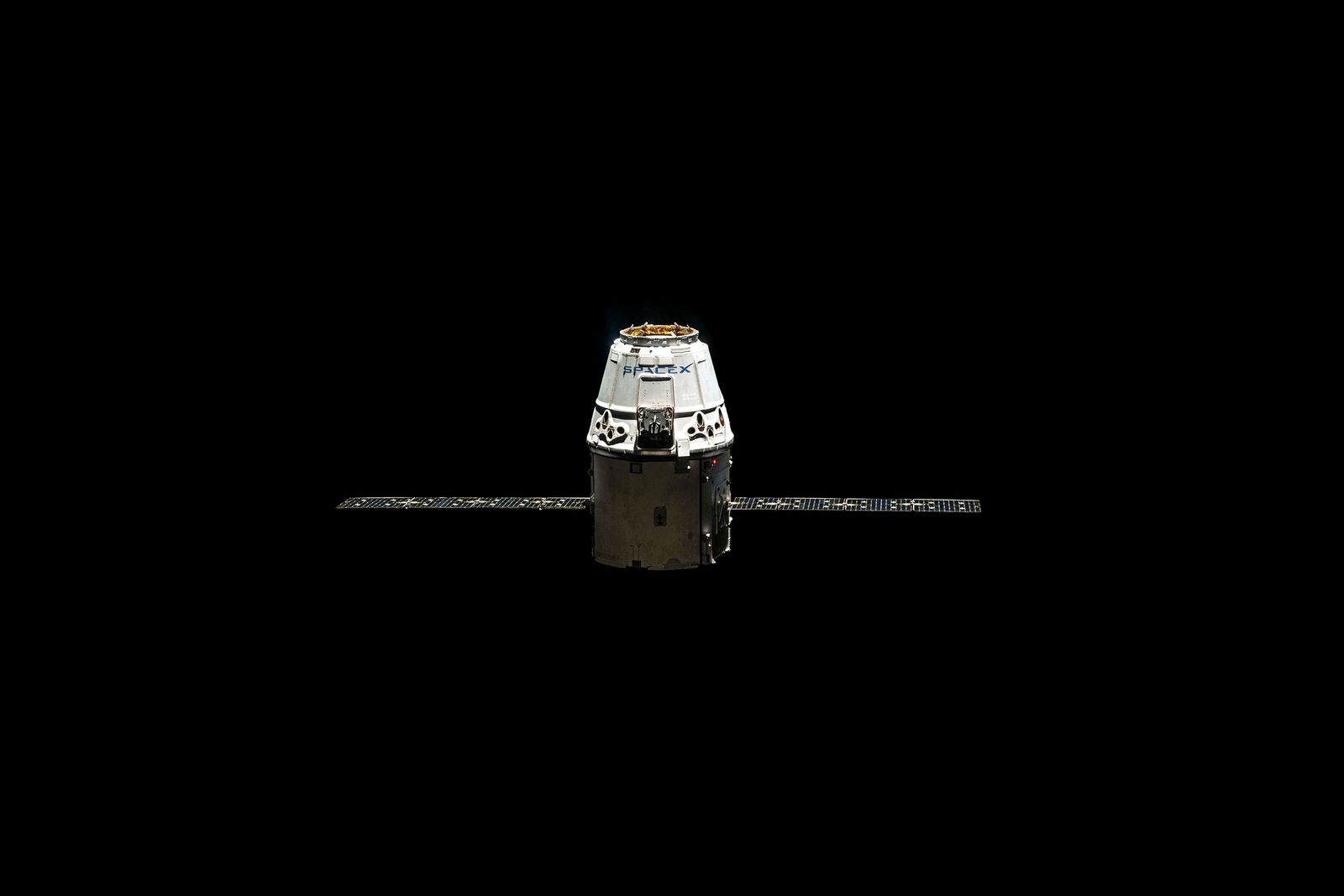
Mars orbiter spacecraft

The rocket that flew once

Relativity flew its 3D-printed Terran 1 a single time, on March 23, 2023. The rocket passed max-q, the point of peak aerodynamic stress, then lost its upper stage and never made orbit. A month later the company retired the small launcher to concentrate on the larger, reusable Terran R.

Terran R is a medium-class rocket roughly in the Falcon 9 weight class, with a first flight Relativity has slated for late 2026 from Cape Canaveral. Industry sources expect that to slip to 2027, a delay consistent with the development pace of nearly every new orbital-class launcher of the past decade.

The Mars orbiter would be Terran R’s interplanetary debut. If the rocket flies close to schedule, the 2028 transfer window to Mars is reachable. If it slips, the mission slips with it. There is no version of this where the orbiter beats the rocket to the pad.

What the orbiter would carry

The science payload comes from NASA’s Ames Research Center, which will design, build, and integrate it. The centerpiece is an atmospheric suite NASA calls Aeolus — four instruments meant to deliver the first integrated, daily, global picture of Martian winds, temperatures, dust, and clouds. A radar instrument would map subsurface ice and geology, the kind of water-resource data future crewed missions would lean on.

NASA says it will operate the instruments for at least one Martian year and build the pipeline that turns raw readings into usable science, under what it describes as its first six-year reimbursable Space Act Agreement. Relativity builds, owns, and flies the spacecraft; NASA supplies the instruments and the data processing.

Then there is the relay. The orbiter is being pitched to carry high-bandwidth laser and radio links back to Earth plus radio communications with surface assets. That matters because NASA’s working Mars relay fleet — the Mars Reconnaissance Orbiter, MAVEN, and Odyssey — is aging, with no committed replacement for the data backhaul every Mars rover depends on. A privately built relay arriving in the late 2020s would fill a hole the agency has openly worried about.

Relativity has said all of the mission’s scientific data will be released publicly. The control questions are harder. Who sets the relay schedule when multiple surface assets compete for the same downlink? What happens to a publicly funded rover if a privately owned orbiter becomes the only way to hear from it? Those answers are not in the announcement.

The Schmidt factor

The mission is inseparable from Eric Schmidt. The former Google chief executive took a controlling stake and became CEO of a cash-strained Relativity in March 2025, succeeding co-founder Tim Ellis. He arrived with money and with a network of science philanthropists.

Schmidt has framed the company’s goal as making access to space routine and pushing science beyond Earth, describing the Interplanetary Sciences Program as a step built on the Terran R platform. The orbiter is meant as a proof of concept; Relativity has not detailed the missions that would follow.

It is also not the only Schmidt-adjacent payload on Terran R’s manifest. Schmidt Sciences, the philanthropic vehicle Schmidt founded with his wife Wendy, announced in January 2026 the Eric and Wendy Schmidt Observatory System. That suite includes Lazuli, a space telescope with a primary mirror larger than Hubble’s, also targeting a launch as soon as 2028 on Terran R.

Two flagship science missions, one unflown rocket, one fortune behind much of both. Whether Schmidt Sciences is the Mars orbiter’s specific backer is unconfirmed; the company will only say the funder is philanthropic.

A privately funded mission to Mars

Privately backed science is not new in itself. The Breakthrough Initiatives funded ground-based SETI work. Jared Isaacman — now NASA’s administrator — bankrolled human spaceflight before taking the job. What is new in the Relativity model is the scale of capital a Mars orbiter requires, the presence of NASA instruments aboard a privately owned spacecraft, and the folding of commercial communications into what has historically been sovereign infrastructure.

This is also not Relativity’s first private Mars plan. In 2022 the company and Impulse Space announced a Mars lander to fly on Terran R, originally targeting the 2024 window; a 2023 update pushed it to as soon as 2026, and neither company has said much about it since.

The 2028 window is getting crowded regardless. SpaceX continues to pitch Starship cargo flights to Mars in roughly the same period, without firm payload commitments. More privately developed hardware may be pointed at the planet in 2028 than at any prior window. Whether all of it actually flies is a separate question, and Mars schedules are famously elastic.

The credibility test

Relativity’s announcement lands at an awkward point in its own story. It still has to prove Terran R can reach orbit. It has to prove the rocket can be reused on a useful cadence. And it has to show a launch company can build, integrate, and operate a deep-space science platform — a different engineering discipline entirely.

Plenty of launch startups have promised spacecraft alongside their rockets; few delivered both. The ones that came closest — SpaceX with Dragon, Rocket Lab with its Photon bus — got there through years of incremental flight experience Relativity does not yet have. The Mars orbiter would compress that curve dramatically, or expose how steep it still is.

The schedule offers no slack. If the program slips by a single Mars window, 26 months, the orbiter becomes a 2030 or 2031 mission, and the case for it shifts with it.

For now the orbiter is instrument designs at Ames, tank hardware in a Long Beach factory, and a 2028 launch window that, like every Mars window, opens and closes on the planet’s schedule rather than anyone’s. The rocket meant to carry it has still never left the pad. Both have to work, roughly two years apart, and Mars does not hold the window open.

The post In June 2026, Relativity Space — the rocket company Eric Schmidt took over in 2025, whose one rocket has never reached orbit — said it would privately build and fly a Mars orbiter in 2028, carrying NASA’s Aeolus atmospheric instruments and doubling as a communications relay, paid for by a philanthropic backer it has not named appeared first on Space Daily.
  •  

The oldest solid material ever found on Earth didn’t come from Earth at all — it was locked inside a meteorite that landed near Murchison, Victoria in 1969, and the stardust grains inside formed roughly 7 billion years ago, before the Sun existed.

A bright meteor streaking across a starry night sky.

The oldest solid material ever identified on Earth did not form on Earth, or anywhere near it. It came down inside a meteorite that fell near the town of Murchison, in country Victoria, on a spring morning in 1969. Sealed in that rock were microscopic grains of stardust, and the oldest of them formed roughly 7 billion years ago, well before the Sun.

The claim is accurate, with one detail worth keeping straight: 7 billion years is the age of the oldest grains, not of all of them.

The meteorite

At about 11 in the morning on 28 September 1969, people around Murchison heard a series of booms and saw a fireball trailing smoke across the sky. Fragments came down over several square kilometres, and more than 100 kilograms were eventually collected.

The rock is a carbonaceous chondrite, a primitive type rich in carbon compounds, and because the fall was witnessed and the material gathered quickly, Murchison became one of the most studied meteorites in the world. The grains that matter here are tiny pieces of silicon carbide, far smaller than a grain of sand, recovered by dissolving the surrounding rock in acid until only the most durable specks remain.

How you date a grain older than the Sun

These specks are not dated the way a rock on Earth is. They are dated by how long they drifted through space.

Before they were swept into the cloud that became our solar system, the grains spent a very long time as free-floating interstellar dust. Out there they were exposed to galactic cosmic rays, high-energy particles that strike solid matter and, now and then, transform an atom inside it into a new isotope. One of those products, a form of neon, builds up at a roughly steady rate. Measure how much has accumulated, and you can work out how long the grain was adrift before it was sheltered inside the meteorite.

That is the method a team led by Philipp Heck of the Field Museum and the University of Chicago used in a study published in 2020. They measured cosmic-ray exposure ages for 40 large presolar silicon carbide grains from Murchison, the largest such dating effort of its kind.

Most are old, and the oldest are very old

This is where the precision matters. Most of the grains the team dated formed in the few hundred million years before the Sun, clustering around 4.6 to 4.9 billion years ago. A smaller number were older. The oldest reached about 7 billion years, roughly 2.5 billion years beyond the 4.54-billion-year age of Earth and the solar system.

So the headline figure is the extreme of the range, not the average. Even the youngest of these grains, though, still predates the Sun, which is what makes the whole population presolar. They are older than the star our planet orbits.

What the grains actually are

Each grain is a piece of another star.

Silicon carbide of this kind condenses in the cooling outflows of dying stars, the kind that puff their outer layers into space late in life. Those expelled grains travel the galaxy until some are caught up in the formation of a new system, which is how a fragment of a star that died before the Sun ended up in a paddock in Victoria.

The clustering of ages led Heck’s team to a further suggestion, offered as interpretation rather than settled fact: that many of the grains may have formed during a burst of star formation in the galaxy around 7 billion years ago, a busier-than-usual stretch of stellar birth and death. That reading is debated, and the dating itself does not depend on it.

What is not in question is the simpler thing. A rock that fell on an Australian farming town within living memory carried, intact, solid matter that is older than the Sun, the Earth, and everything else ever measured on this planet. It had been drifting for billions of years before there was a planet here to land on.

The post The oldest solid material ever found on Earth didn’t come from Earth at all — it was locked inside a meteorite that landed near Murchison, Victoria in 1969, and the stardust grains inside formed roughly 7 billion years ago, before the Sun existed. appeared first on Space Daily.
  •  

In 1908, a 27-year-old Bavarian invented a five-letter word that would fit on a watch dial in any language — and trademarked it before he had a factory to make the watches

vintage Rolex dial closeup

The word Rolex has five letters, two syllables, and works in every language a marketer might want to sell into. It is short enough to sit on a watch dial without crowding the hands, blunt enough to pronounce in German, French, Japanese, and Hindi without distortion, and abstract enough to mean nothing at all. A young Bavarian named Hans Wilsdorf registered it as a trademark in 1908 in La Chaux-de-Fonds, Switzerland, years before he had a factory of his own. The name came first. The watches followed.

That sequence — invent the word, secure the word, then build the company around it — is one of the earliest known examples of what marketers would later call a coined brand. Wilsdorf did it in 1908 for a product he did not yet manufacture.

In 1908, a 27-year-old Bavarian invented a five-letter word that would fit on a watch dial in any language — and trademarked it before he had a factory to make the watches
Photo by ClickerHappy on Pexels

A word designed for a dial

Wilsdorf had ended up in London after a stint at a watch exporter in La Chaux-de-Fonds. By his mid-twenties he was importing Swiss movements and casing them in England under the unglamorous name Wilsdorf & Davis. He wanted something better. He wanted a name that was short, memorable, pronounceable in any European tongue, and small enough to be legible above the 12 o’clock marker of a wristwatch barely 30 millimetres across.

The constraints were real.

Try the test yourself. Write your favourite watch brand on a dial 30 millimetres wide, leaving room for hour markers, a logo, and the hands. Patek Philippe is thirteen letters and a space. Vacheron Constantin is eighteen. Jaeger-LeCoultre is fifteen and a hyphen. Rolex is five. On a wrist seen from across a room, five wins.

The phonetics of a global product

The cleverness sits in what the word avoids. There is no diphthong that collapses in Mandarin. No silent letter that an English speaker would mispronounce in French. No umlaut. No accent. No consonant cluster that trips an Italian tongue. The two syllables — ro and lex — are phonemes that exist in nearly every major language. A Tokyo retailer and a Geneva concierge say the word almost identically.

This was not accidental. By his own account, Wilsdorf wanted a name that was short, easy to say and remember in any language, and that looked good on a dial — a goal he later described as the reason he ran through hundreds of letter combinations before settling on Rolex, as Rolex itself recounts in its company history. He had also learned, selling watches across the British Empire and into continental Europe, that brand names with national flavour travelled badly.

He got one. Rolex is the closest thing the watch industry has ever produced to a piece of linguistic infrastructure — a sequence of sounds engineered to survive translation.

Trademark first, factory later

Wilsdorf registered the name in Switzerland in 1908 — the surviving registry entry is dated 2 July 1908 and lists the La Chaux-de-Fonds office of Wilsdorf & Davis, as the original trademark record reproduced in horological archives shows. He was still operating out of London and still casing movements supplied by Hermann Aegler’s workshop in Bienne. He did not own a Swiss manufacturing operation. He owned a word, an import-export business, and a hunch that wristwatches — at that point still dismissed as women’s jewellery, a prejudice Space Daily has explored in detail — would become the dominant form of timekeeping for men within a generation.

He was right on both counts. The First World War, with its trench officers needing both hands free, did for the wristwatch what no advertising campaign could. By 1919 Wilsdorf had relocated to Geneva, partly because British post-war duties made exporting from London punishing, and partly because anti-German sentiment in Britain had already pushed him to rename the firm The Rolex Watch Co. Ltd. in 1915, a change Britannica attributes to wartime prejudice against the German-sounding Wilsdorf name. The company that became synonymous with Swissness was Swiss almost by accident of geopolitics.

Hans Wilsdorf portrait archival

What a name buys you

Coining a word does something specific that descriptive names cannot. A descriptive name — Universal Geneve, International Watch Company — tells you what the thing is and where it comes from, and that’s the ceiling of its meaning. A coined word is an empty vessel. Whatever you pour into it over decades of advertising, sponsorship, and product, the word holds.

Wilsdorf began pouring almost immediately. The company developed the Oyster case, among the first commercially viable waterproof wristwatches. In 1927 a young London typist named Mercedes Gleitze, the first British woman to swim the English Channel, wore an Oyster during a high-profile Channel swim, and Wilsdorf took out prominent newspaper advertising to promote it. The word Rolex had its first myth.

The dress watch market is still organised around names of this kind. A 2025 Esquire review of a dress watch describes the category in language Wilsdorf would have recognised: thinness, legibility, restraint. The dials of the watches sitting next to it in auction catalogues all carry short, abstract words. Omega. Cartier. Tudor. Seiko. The naming convention Wilsdorf arrived at in 1908 became the default the rest of the industry now follows.

The decision that made Rolex unbuyable

Naming was the first of two structural decisions that made Rolex what it is. The second came after the death of Wilsdorf’s wife, Florence. Childless and grieving, he created the Hans Wilsdorf Foundation and, in his will, left every share of Rolex to it. When he died in 1960, the foundation became the sole owner. That arrangement — which Space Daily has covered separately — means no shareholder can demand a dividend, no rival can buy the company, and no quarterly report has to be filed. Rolex’s finances remain opaque because there is no legal obligation to publish them.

The opacity is the point. Because the company discloses nothing, every revenue figure is an outside estimate: analysts at Morgan Stanley and LuxeConsult put Rolex’s annual wholesale revenue above CHF 11 billion in their most recent reading, while cautioning that the brand publishes no official figures of its own. The foundation, a registered Swiss charitable trust, directs funds to charitable causes, including children’s charities — a nod to Wilsdorf’s own childhood as an orphan.

In 2023, Rolex agreed to buy Bucherer, its largest retailer, consolidating a distribution partner it had worked with for a century. A privately held watchmaker had moved to absorb its own biggest distributor, the kind of step no public company answerable to shareholders would have executed so quietly.

The freedom to make moves like that traces back to two decisions taken decades apart by the same man. First, in 1908, to coin a word with no national origin and trademark it before he had a factory. Second, decades later, to put the company beyond ownership. The first decision gave Rolex a name that could be sold anywhere. The second made sure no one could ever sell Rolex.

What five letters still do on a dial

Pick up a Submariner. The word sits above the centre pinion in a sans-serif crown-logo lockup that has barely changed in eighty years. Five letters. About four millimetres wide on a 40 mm dial. The eye reads it before it registers the hour. On a black bezel diving watch under a cocktail-bar lamp, the word is legible at three metres. On a gold Day-Date across a boardroom table, it’s legible at five.

That legibility is a function of letter count. Six letters would have required a smaller font. Eight would have required either a smaller font or a curved arc that distorts the reading angle. Five fits the optical sweet spot of a wristwatch dial almost perfectly — the horological equivalent of a logo built for a smartphone home screen, except Wilsdorf made the choice in 1908, when the dominant timepiece was still a pocket watch on a chain.

There is a reason the watch industry has not produced another Rolex-style word in the 118 years since. Most of the obvious five-letter, language-neutral combinations were registered long ago. The rest sound like pharmaceuticals. Coining a word that means nothing and survives a century of meaning being poured into it is harder than it looks, and the field is crowded with failures whose names you have already forgotten.

The trademark filing in La Chaux-de-Fonds in 1908 predated the existence of Rolex SA as an independent Swiss manufacturer by years. It predated the Oyster case by nearly two decades. It predated the foundation that owns the company today by several decades. It predated the watch on the wrist of an English Channel swimmer by nearly twenty years. For most of its first decade, the word Rolex sat on watches whose movements were made by other people, in cases assembled by other people, sold under a name that belonged to a young Bavarian importer in a rented London office. The word did the work. The factory caught up later.

Look at a Rolex dial today and you are reading a piece of linguistic engineering that is older than the Russian Revolution, older than the Model T, older than the first transatlantic flight. The hands have moved roughly a billion times around it. The word has not.

The post In 1908, a 27-year-old Bavarian invented a five-letter word that would fit on a watch dial in any language — and trademarked it before he had a factory to make the watches appeared first on Space Daily.

  •  

We tend to think of AI as a software problem, weightless and waterless, but even a 100-word email written with ChatGPT has been estimated to require roughly a bottle’s worth of water once data-centre cooling and electricity generation are counted — and scaled to global demand, researchers project AI could withdraw 4.2 to 6.6 billion cubic metres of water a year by 2027, roughly half the United Kingdom’s annual freshwater withdrawals.

Close-up of cooling fans and server racks in a data centre.

We tend to picture artificial intelligence as something weightless, a process happening in the abstract, with no physical cost beyond a power bill. It is not weightless, and it is not waterless. By one widely cited estimate, asking a chatbot to write a single 100-word email can account for roughly a bottle of water once the cooling of the data centre and the generation of its electricity are both counted.

That figure comes from work by Shaolei Ren and colleagues at the University of California, Riverside, the group that has done the most to put numbers on a cost the industry rarely discusses. It is worth understanding where the water goes, and also where these numbers are firm and where they are not.

Where the water goes

There are two main places. The first is direct: large data centres throw off a great deal of heat, and many are cooled by evaporating water, which carries heat away as it turns to vapour. The second is indirect: generating the electricity that runs the servers also consumes water, in the cooling towers of thermal power stations and in evaporation from hydroelectric reservoirs.

The bottle-per-email figure counts both. So does the often-quoted estimate that training the GPT-3 model in Microsoft’s United States data centres consumed on the order of 5.4 million litres of water, several hundred thousand litres of it evaporated on site.

This is the part the software framing hides. The query feels like pure information. The hardware behind it sits in a building that has to be kept cool, drawing on a grid that itself runs partly on water.

The numbers are estimates, and they swing

The precise figures deserve care, because they are estimates built on assumptions rather than meter readings.

The water cost of a given task depends heavily on where the data centre is, what time of year it is, and how the local electricity is generated. The same email that, in a 2024 Washington Post analysis with Ren, works out to around 519 millilitres on average, slightly more than a standard bottle, can be far higher in a hot region cooled by evaporation and far lower in a cool climate on a low-water grid. An average across those conditions is useful for a sense of scale, not as a precise reading of any single message.

The forward projection should be read the same way. Ren’s group, in a study titled Making AI Less “Thirsty” and later peer-reviewed in Communications of the ACM, estimates that global AI demand could account for 4.2 to 6.6 billion cubic metres of water withdrawal a year by 2027, which the authors put at around half the annual water withdrawal of the United Kingdom. That is a striking comparison, and it is a projection from one research team, with a range wide enough to signal how much is still uncertain.

The estimates are not the only evidence

Because so much of this rests on one group’s modelling, it is fair to ask whether anything corroborates it from outside.

Something does. The companies running the data centres have reported sharp rises in water use in their own environmental reports, independent of any academic projection. Microsoft’s global water consumption climbed about 34 per cent in 2022, to roughly 6.4 million cubic metres, and Google’s rose about 20 per cent, to around 19.5 million cubic metres, increases both companies and outside analysts have linked to the growth of AI and cloud computing. A United Kingdom government review of water use in data centres and AI reached the same broad conclusion, and made the same complaint about how little is disclosed.

The modelled headline numbers should be held loosely. The underlying trend, rising water use as AI scales, is visible from more than one direction.

Withdrawal is not the same as consumption

One distinction does a lot of work here, and it is easy to miss.

Water withdrawal means water taken from a source. Some of it is returned, warmer or slightly altered, and can be used again downstream. Water consumption means water that leaves the local cycle, mostly through evaporation, and does not come straight back. The headline figure of 4.2 to 6.6 billion cubic metres, and the comparison to the United Kingdom, are about withdrawal. The amount actually consumed is smaller.

That does not make the figure meaningless. It means the fair reading is “water passing through the system on this scale”, not “this much water gone for good”.

Why it still matters

Set against agriculture, which accounts for the great majority of human water use, AI’s global share is small. That comparison is sometimes offered as if it settles the matter. It does not, for two reasons.

The first is concentration. A data centre does not draw its water from the global average. It draws from one local watershed, and a growing number of them sit in dry regions where freshwater is already contested. A use that looks trivial worldwide can be a real strain on a single town’s supply.

The second is the rate of growth, paired with how little gets disclosed. Demand for AI computing is climbing quickly, and the companies running the data centres publish only limited information about how much water each site uses. Most of the public figures are estimates precisely because the measured ones are not shared.

That is the part worth watching, more than any single bottle-per-email statistic. Not whether AI uses water, which it plainly does, but whether the firms building it will report where and how much, so the cost can be weighed where it actually lands.

The post We tend to think of AI as a software problem, weightless and waterless, but even a 100-word email written with ChatGPT has been estimated to require roughly a bottle’s worth of water once data-centre cooling and electricity generation are counted — and scaled to global demand, researchers project AI could withdraw 4.2 to 6.6 billion cubic metres of water a year by 2027, roughly half the United Kingdom’s annual freshwater withdrawals. appeared first on Space Daily.
  •  

DARPA just quietly asked industry how to rebuild a destroyed satellite fleet in hours — and the request reveals what the Pentagon now assumes about the first day of a war with China

DARPA just quietly asked industry how to rebuild a destroyed satellite fleet in hours — and the request reveals what the Pentagon now assumes about the first day of a war with China

The Pentagon’s blue-sky research arm wants industry to figure out how to rebuild a shot-up satellite constellation in hours, not years. DARPA released a request for information asking companies to pitch concepts for restoring critical orbital services after an attack.

The solicitation, posted by DARPA’s Strategic Technology Office, asks for technical ideas spanning modular spacecraft, software-defined satellites, rapid manufacturing, on-orbit assembly and distributed sensor networks. The stated objective is blunt: reestablish service on timelines measured in hours to weeks after satellites are degraded by anti-satellite weapons, cyberattacks, orbital debris or other disruptions.

That is a sharp departure from how the U.S. has historically thought about space resilience — buy fewer, more exquisite satellites and assume they will survive because nobody dares shoot at them. That assumption is no longer holding.

The threat picture that prompted the RFI

Both China and Russia have spent the past decade fielding what defense officials call counterspace systems — direct-ascent anti-satellite missiles, co-orbital inspectors, ground-based jammers, lasers capable of dazzling optical sensors, and offensive cyber tools. The U.K. has begun naming the harassment publicly. Maj. Gen. Paul Tedman, head of UK Space Command, told the BBC  that Russian satellites are stalking British military spacecraft and that Moscow’s ground-based jammers target UK military satellites on a weekly basis.

Tedman described Russian payloads designed to fly close to allied satellites and collect information from them. He also noted that the combined Russian and Chinese fleet of satellites has grown substantially over the past decade, while Britain operates only a handful of dedicated military spacecraft.

The U.S. is more exposed than its allies in one sense: American forces are wired into space for almost everything. Communications, intelligence collection, missile warning, and the positioning, navigation and timing signals that guide everything from infantry radios to precision munitions all flow through orbit. Take down the satellites and you do not just blind a sensor — you peel apart the joint force.

What “reconstitution” actually means

DARPA’s framing makes clear the agency is not just asking for spare satellites in a warehouse. The RFI envisions a full reconstitution architecture: spacecraft built in modular blocks that can be swapped or reconfigured, software-defined payloads that can take on missions outside their original specification, manufacturing lines that can spin up replacements quickly, and on-orbit assembly that lets operators stitch together capability from parts already in space.

The distributed sensor piece matters too. A constellation of cheap, networked satellites is harder to disable than one big bus carrying a one-of-a-kind sensor. Lose ten of a hundred and the mission degrades gracefully. Lose one of one and the mission ends.

military satellite constellation

Building on Victus Nox and CASR

DARPA’s effort plugs into a wider Space Force push that has been building since 2021. The clearest demonstration so far came with Victus Nox, the tactically responsive launch exercise flown by Firefly Aerospace and Millennium Space Systems in September 2023. Firefly’s Alpha rocket lifted off from Vandenberg Space Force Base just 27 hours after the Space Force gave the launch order — a national security responsive-launch record, beating the previous mark of 21 days set on the TacRL-2 mission in June 2021.

The Victus Nox sequence is worth recalling because it shows what reconstitution looks like in practice. After entering a six-month hot-standby phase, Firefly and Millennium received an alert and had 60 hours to truck the satellite 165 miles from El Segundo to Vandenberg, fuel it, mate it to the payload adapter and ready it for launch. They finished in just under 58 hours. Then came the launch order, with 24 hours to update Alpha’s trajectory, encapsulate the payload and roll to the pad.

Lt. Gen. Michael Guetlein, then commander of Space Systems Command, praised the Victus Nox mission as demonstrating the nation’s ability to rapidly respond to adversary threats and deliver capabilities to warfighters.

The Space Force has also stood up the Commercial Augmentation Space Reserve, or CASR, which uses pre-arranged agreements with commercial satellite operators to provide surge capacity during a crisis. The model is borrowed from the Civil Reserve Air Fleet, which lets the Pentagon press civilian airliners into service during emergencies. CASR essentially admits that the commercial sector now operates more spacecraft than the military does and that wartime resilience requires using those assets.

The hard problem DARPA is really asking about

Responsive launch is the easy half. The harder question — and the one the new RFI tries to surface — is what you put on top of the rocket on short notice. A satellite bus that takes three years to build is not a reconstitution asset, no matter how fast you can launch it.

That is why the agency is asking about modular spacecraft and software-defined payloads. If a communications satellite can be reprogrammed in orbit to fill a missile-warning gap, the constellation becomes more than the sum of its parts. If a bus design can accept five different sensor packages with minimal integration work, manufacturers can keep partial inventory and finish assembly on demand.

On-orbit assembly raises the ambition further. Instead of launching a complete satellite, operators could launch a propulsion module, a power module and a sensor module separately, then dock them in orbit. The architecture would tolerate the loss of individual pieces and allow upgrades without replacing the whole spacecraft.

Where commercial industry fits

DARPA’s RFI is also an implicit recognition that the government cannot do this alone. The launch cadence required for genuine reconstitution — dozens of vehicles available on short notice — depends on commercial providers. The same applies to manufacturing. Companies producing small satellites at volume for commercial constellations have the production lines the Pentagon would need to draw on.

The Space Force has already been working to bring more launch providers into the national security fold. Blue Origin secured nearly $18 million for New Glenn integration studies under the National Security Space Launch Phase 3 program, joining SpaceX and United Launch Alliance as a potential heavy-lift provider for sensitive payloads. A broader stable of certified vehicles means more options when something goes wrong in orbit.

The deterrence logic

There is a strategic argument beneath the engineering one. If an adversary believes that destroying a U.S. satellite buys a meaningful military advantage that lasts for months, the temptation to attack rises. If the adversary instead believes the U.S. can replace the capability within days, the calculus shifts. Reconstitution is partly about resilience and partly about taking the prize off the table.

That deterrence logic only works if the capability is credible. The Pentagon will need to demonstrate, repeatedly and visibly, that it can do what the RFI describes. Victus Nox was the first credible demonstration. DARPA is now asking what comes next.

What follows the RFI — a formal program, a series of demonstrations, a quiet handoff to the Space Force — will say a lot about how seriously the Pentagon treats the risk that the next conflict starts, or ends, in orbit.

The post DARPA just quietly asked industry how to rebuild a destroyed satellite fleet in hours — and the request reveals what the Pentagon now assumes about the first day of a war with China appeared first on Space Daily.
  •  

Most people alive today will live to see the Arctic Ocean lose its summer ice — for the first time since before our species left Africa, 115,000 years ago

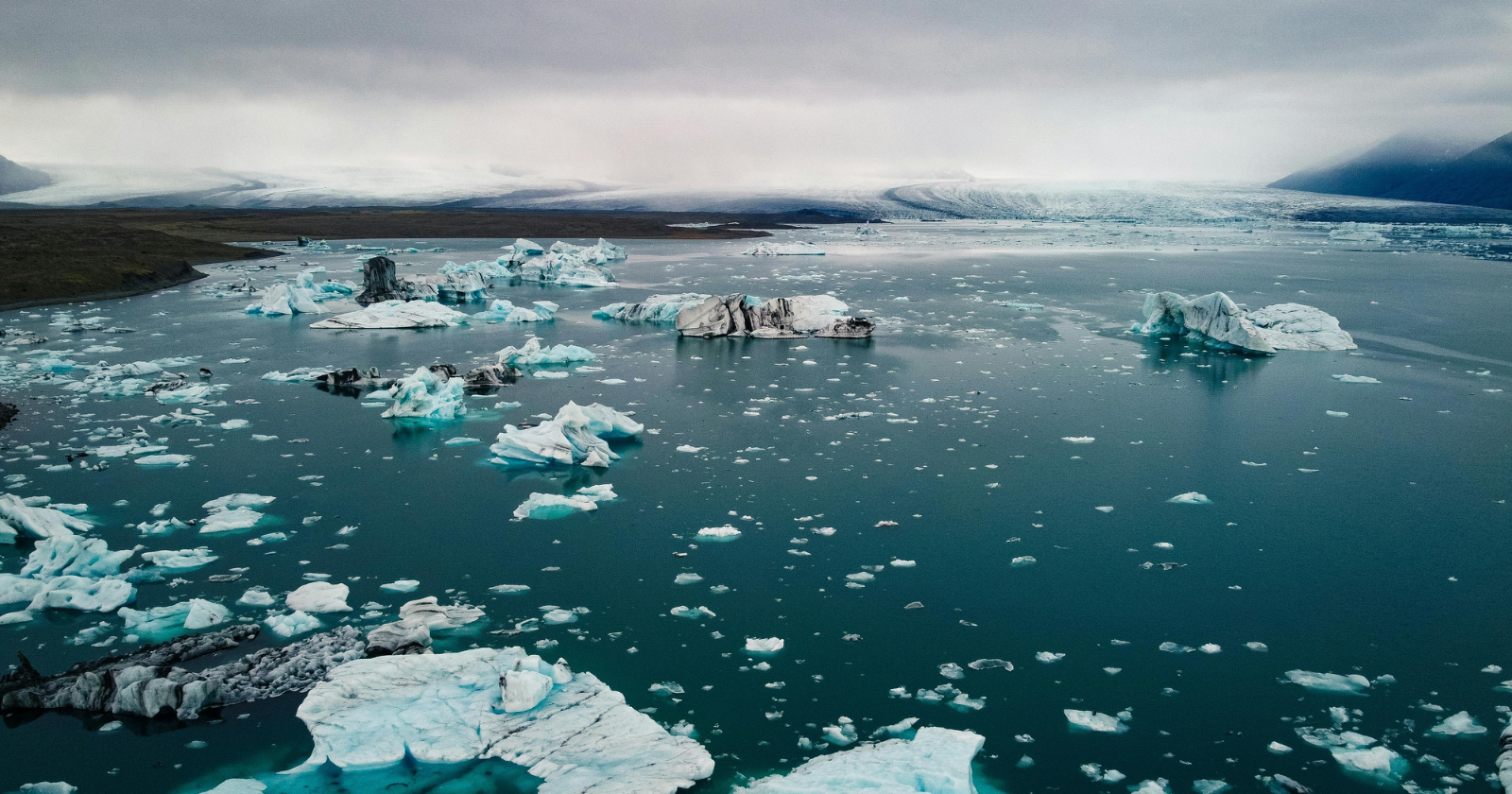
The Arctic Ocean has had ice on it, in some form, for essentially the entire span of recognisably modern human existence. The most recent interglacial period warm enough to have melted the summer ice cap was the Eemian, approximately 130,000 to 115,000 years ago, during which paleoclimate evidence suggests the Arctic was seasonally ice-free at its summer minimum — most clearly during the warmest phase around 130,000 years ago, with conditions gradually cooling toward the end of the period around 115,000 years ago, when the Arctic returned to continuous year-round ice cover. The Eemian ended before any sustained migration of anatomically modern humans out of Africa, before the development of agriculture, before recognisable language families had differentiated, before the construction of the first permanent settlements, and before essentially every aspect of human society that the present civilisation rests on. For approximately the past 115,000 years — through the entire emergence of modern civilisation — the Arctic has carried summer ice. That period is now ending. By the most recent peer-reviewed projections, the first single year in which the Arctic Ocean drops below the technical threshold for “ice-free” status — defined as less than 1 million square kilometres of sea ice, compared to the historical summer minimum of approximately 5 to 7 million square kilometres — is likely to occur sometime in the 2030s.

According to a 2023 study in Nature Communications by Seung-Ki Min and colleagues at Pohang University and the University of Hamburg, the projected date of the first ice-free Arctic September is now substantially earlier than the IPCC’s 2021 Sixth Assessment Report had concluded. The 2021 IPCC report had projected ice-free conditions “near mid-century” under intermediate and high emissions scenarios, with substantial uncertainty under low-emissions scenarios. Min and colleagues reanalysed the underlying climate models using observational constraints — adjusting the model projections to match the actual rate of Arctic sea ice decline measured by satellites over the past four decades — and concluded that the first ice-free September will likely occur in the 2030s under all emissions scenarios, including the most ambitious low-emissions trajectory. In the words of Dirk Notz, one of the study’s authors and a contributor to the IPCC reports: “We basically are saying that it has become too late to save the Arctic summer sea ice.”

What “ice-free” actually means

The technical definition of “ice-free” in this context is not the literal absence of all sea ice. As reported by a 2024 synthesis review of ice-free Arctic projections in Nature Reviews Earth & Environment, the threshold researchers use is sea ice area below 1 million square kilometres — substantially less than the approximately 4 to 7 million square kilometres that has been the typical late-summer minimum over the past several decades, but not literally zero. Some ice will continue to form along the northern coast of Greenland and within the Canadian Arctic Archipelago even after the central Arctic Ocean has lost its summer cover. The threshold is set at the level below which the central Arctic basin would be effectively open ocean during the September minimum — navigable, exposed to sunlight rather than reflecting it back, and fundamentally different in its physical, ecological, and atmospheric behaviour than the ice-covered Arctic that has characterised the Earth for approximately the last 115,000 years.

The first ice-free year is unlikely to be permanent. Winter ice will continue to form for some additional decades after the first ice-free summer, and there will be year-to-year variability in summer ice extent. But once the threshold has been crossed, it will be crossed with increasing frequency, and the long-term direction of travel is clear: the Arctic is heading toward a configuration in which late summer is reliably open water, with all of the consequences that flow from that change. A more recent 2024 paper in *Nature Communications* by Heuzé and colleagues projects that the first single ice-free day in the Arctic could occur even earlier than the first ice-free month — potentially before 2030, depending on whether an extreme weather year produces a sufficiently sharp summer melt.

Why the loss matters beyond the Arctic itself

The Arctic Ocean is not a self-contained system. The presence of summer ice across its surface is one of the major regulators of the global climate, and its loss will produce consequences across the planet. The most direct mechanism is the albedo effect: sea ice reflects approximately 80 percent of incoming sunlight back to space, while open ocean absorbs approximately 90 percent of it. Replacing ice with water at the top of the planet means substantially more solar energy is being absorbed into the Arctic Ocean, which then transfers that heat to the surrounding atmosphere, accelerates the warming of the broader Arctic region (which is already warming approximately four times faster than the global average), and propagates the change southward through atmospheric and oceanic circulation patterns.

Per a 2023 analysis in The Conversation of the implications of an ice-free Arctic, the downstream effects include disruption of mid-latitude weather patterns through changes to the polar jet stream (which is increasingly destabilised by the diminishing temperature gradient between the Arctic and lower latitudes); accelerated melting of the Greenland ice sheet (which contributes directly to sea-level rise, unlike sea ice itself); progressive thaw of Arctic permafrost (which releases methane and carbon dioxide stored in frozen organic matter, creating a self-reinforcing warming loop); collapse of Arctic ecosystems built around the seasonal sea ice cycle (including polar bears, ringed seals, walruses, ivory gulls, and the entire food web that depends on ice algae); and substantial disruption to the lives of the approximately 4 million people who live in the Arctic regions of the eight Arctic Council countries — including roughly 400,000 Indigenous people from more than 40 distinct ethnic groups, whose traditional food, transport, and cultural systems are particularly closely tied to a reliably frozen sea.

The geopolitical and economic dimensions

An ice-free Arctic will, simultaneously, open commercial shipping routes that have been closed for the entirety of recorded history. The Northern Sea Route along the Russian Arctic coast, the Northwest Passage through Canadian waters, and a potential central Transpolar route across the open polar ocean will all become reliably navigable during summer months. Container ships travelling from Northeast Asia to Northern Europe will be able to save approximately 40 percent of the distance compared to the traditional Suez Canal route. Energy resources currently inaccessible beneath the Arctic seafloor — estimated at approximately 13 percent of the world’s undiscovered oil and 30 percent of its undiscovered natural gas — will become commercially extractable. Russia, the United States, Canada, Norway, Denmark (via Greenland), and increasingly China (which has declared itself a “near-Arctic state”) are now actively positioning themselves for the strategic competition that an open Arctic Ocean will produce.

The threshold itself, when it is crossed sometime in the next 15 years, will not look dramatic from any vantage point available to most people. It will appear as a satellite image showing slightly less ice than the previous year. It will be reported as a single statistical metric falling below a defined value. The lived experience of most humans alive on the planet at the time will be substantially unchanged on the day of the threshold crossing. But the underlying transition is one of the larger physical changes to the planet that any modern human society has lived through — a return, after approximately 115,000 years, to a configuration of the polar regions that predates the entire arc of recognisably modern human civilisation. The species will, within the lifetimes of most people reading this, become the first generation to witness an Arctic Ocean without its summer ice. The change will not be reversible on any timescale relevant to human institutions. The question is no longer whether it happens but precisely when, and how rapidly the societies that depend on the old configuration adapt to the new one.

The post Most people alive today will live to see the Arctic Ocean lose its summer ice — for the first time since before our species left Africa, 115,000 years ago appeared first on Space Daily.
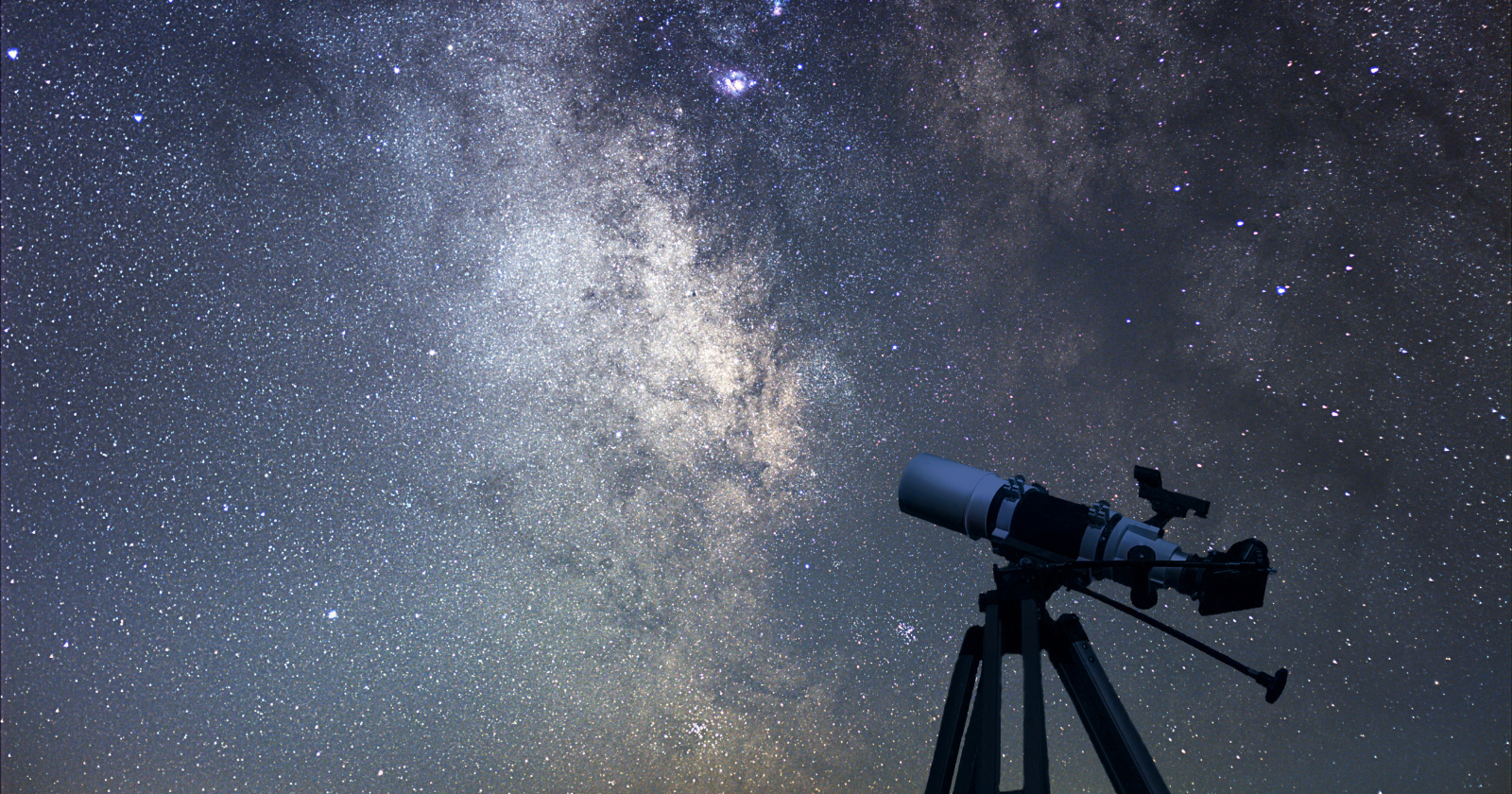
  •  

By 2025, a 4,800-year-old bristlecone pine named Methuselah in California’s White Mountains remained the oldest known non-clonal living tree, and the exact location of the gnarled, wind-stunted survivor is kept secret by the US Forest Service to protect it from vandals and souvenir hunters.

Close-up view of weathered tree bark displaying intricate textures and growth patterns.

Methuselah, a Great Basin bristlecone pine clinging to a limestone slope above 10,000 feet in California’s White Mountains, was confirmed at roughly 4,855 years old as of 2025, making it the oldest known non-clonal living organism on Earth. The US Forest Service refuses to disclose its exact location inside the Inyo National Forest’s Ancient Bristlecone Pine Forest, and rangers will not point it out to visitors who ask. Somewhere along the 4.5-mile Methuselah Trail, you walk past it without knowing.

The tree was cored and dated by dendrochronologist Edmund Schulman of the University of Arizona’s Laboratory of Tree-Ring Research. His count of the growth rings put its germination at around 2833 BCE — older than the Great Pyramid of Giza, older than Stonehenge’s sarsen circle, older than the wheel reaching most of Eurasia.

It was already a mature tree when Egyptians began mummifying their dead.

A tree that grows slower than almost anything alive

Bristlecones do not grow the way most conifers do. At Methuselah’s elevation, the growing season is brief. The air is thin, the soil is dolomite — a pale, alkaline limestone that most plants refuse to touch — and the wind sandblasts the trunks for most of the year.

A bristlecone might add very little wood in a good year. In a bad year, nothing.

The result is wood extraordinarily dense and resinous. The resin content is extraordinary, the cell walls are tightly packed, and the tree’s vascular system can keep functioning even when most of the trunk has died back to a thin ribbon of living bark. Walk up to a bristlecone and you will often find a twisting, polished spar of dead wood with a single narrow strip of green needles still pulling water up one side.

That sectional dieback is part of the survival strategy. When a branch dies, the tree simply stops sending water to that quadrant and concentrates its resources on the surviving tissue. A bristlecone can lose most of its living mass and keep going for centuries more.

Close-up of a moss-covered tree trunk surrounded by a dense, lush forest.

Why nobody will tell you which one it is

The secrecy is not bureaucratic theatre. It is a direct response to what happened to a tree called Prometheus.

Prometheus grew on Wheeler Peak in eastern Nevada. A graduate student named Donald Currey was studying bristlecone ring records. His coring tool got stuck in the trunk. With permission from the US Forest Service, the tree was cut down so the sample could be retrieved.

When the rings were counted, Prometheus turned out to be older than any tree known at the time. It had been killed for a study.

The Forest Service learned the lesson. Methuselah’s coordinates were classified, and they remain classified. Photographs that might identify the tree by its silhouette are withheld. Even most rangers who patrol the grove are not told which one it is.

A second bristlecone, unnamed publicly, was reported by researcher Tom Harlan as having a ring count above 5,000 years. Harlan died before publishing the verification, and the find has never been independently confirmed. Methuselah remains the oldest tree the scientific community can actually point to — or, more accurately, decline to point to.

What the rings remember

Each ring in Methuselah’s trunk corresponds to a calendar year, and the widths and densities encode the climate of that year. Wet years leave wide rings. Cold summers leave narrow, late-forming bands. Volcanic eruptions on the other side of the planet show up as frost-damaged cells, because the global stratospheric haze cooled the White Mountains by a degree or two.

Tree-ring labs have used bristlecone chronologies to reconstruct climate going back thousands of years by overlapping the rings of living trees with those of long-dead specimens preserved in the same dry, cold environment. The wood does not rot up there. It oxidizes and erodes, slowly, like stone.

The bristlecone record has proven valuable for calibrating radiocarbon dating. When physicists realized that atmospheric carbon-14 levels had fluctuated through history, the bristlecones provided a calibration curve — a known-age sample for every year going back millennia.

Reading a genome older than the pyramids

In 2026, a team coordinated by the University of California, Davis sequenced the Great Basin bristlecone pine genome for the first time. The work, announced through EurekAlert, was aimed at understanding what genetic machinery allows an individual organism to keep living and dividing cells for five millennia.

The genome turned out to be enormous. Bristlecones carry roughly ten times more DNA than humans do, padded with repetitive sequences and ancient transposable elements. Buried in that bulk are the genes the team most wanted to look at — those governing DNA repair, telomere maintenance, and resistance to oxidative damage.

Most multicellular organisms accumulate mutations over time. Cancers, organ failure, and senescence follow. Bristlecones appear to accumulate them at an extraordinarily slow rate, partly because their meristem cells — the dividing cells at the tips of branches and roots — divide only briefly each year.

Researchers analyzing the sequence have begun comparing it to shorter-lived pines to identify which gene families are amplified or modified in the long-lived species.

The forest you walk through

The Ancient Bristlecone Pine Forest sits east of Bishop, California, reached by a road that climbs through pinyon and sage until the air goes thin. The Schulman Grove visitor center, named for the dendrochronologist who first dated Methuselah, opens in summer once the snow clears.

From there, the Methuselah Trail loops 4.5 miles through some of the oldest individual living things on Earth. Trees here that look modest — twenty feet tall, with corkscrew trunks and patches of red-orange bark — are routinely two or three thousand years old. The grove holds dozens of trees older than the Roman Empire.
Visitors who walk the trail are explicitly asked not to touch the trees. The bark is fragile, the exposed dead wood is brittle, and a determined vandal with a knife could destroy in seconds what took fifty centuries to grow.

Signs along the path note only that Methuselah is somewhere in the loop. They do not specify which switchback, which slope, which gnarled survivor among the hundreds in view.

A solitary hiker trekking along the rugged Sierra Nevada mountains under a clear sky.

Why this particular slope

The extreme age is not an accident of one lucky tree. It is a function of the place.

Bristlecones grow in many western mountain ranges, but the oldest ones — Methuselah, Prometheus, the unnamed Harlan tree — all come from the highest, driest, most punishing sites. The dolomite soil reflects sunlight, stays cool, and discourages competition from grasses and other conifers. Lightning rarely strikes individual trees at this elevation because of the dispersed canopy. Fires almost never reach the upper grove because there is not enough fuel between trees to carry them.

A bristlecone in better soil, lower down, with more rain and more neighbors, will grow faster, get larger, and die younger. The trees at 10,000 feet are stunted, twisted, and effectively immortal.

Stress is what keeps them alive.

What 4,855 years actually means

When the seed that became Methuselah landed in a crack of dolomite, the Sumerians had not yet invented cuneiform writing. Bronze metallurgy was still spreading. The wheel had reached parts of Europe but not the Americas. No human language spoken today existed in any recognizable form.

The tree was already 700 years old when Khufu’s pyramid was built. It was already 1,800 years old when Tutankhamun was buried. It was 2,800 years old at the founding of Rome. It was 4,400 years old when Columbus reached the Caribbean.

Every empire you can name from a high school textbook rose and fell while this single organism kept laying down its thin ring each summer.

A secret kept in plain sight

The reason the Forest Service guards the coordinates so carefully is that the tree itself offers no defense. A bristlecone cannot run from a chainsaw or a knife or a souvenir hunter wanting a chip of the world’s oldest wood. It has survived almost five thousand winters at altitude precisely because nothing has touched it.

The genome sequencing announced in 2026 may eventually tell biologists exactly which molecular machinery has kept Methuselah dividing cells since the Bronze Age. Until then, the tree continues doing what it has always done — adding a sliver of wood each July, dropping a few cones, holding its grip on a windswept slope where almost nothing else will grow.

Somewhere on the Methuselah Trail, in plain view of every hiker who passes, the oldest known living individual on Earth stands without a label. That is the point. The Forest Service decided decades ago that anonymity was the only protection left, and forty-six centuries of survival have, so far, agreed.

The post By 2025, a 4,800-year-old bristlecone pine named Methuselah in California’s White Mountains remained the oldest known non-clonal living tree, and the exact location of the gnarled, wind-stunted survivor is kept secret by the US Forest Service to protect it from vandals and souvenir hunters. appeared first on Space Daily.

  •  

A self-taught Russian amateur astronomer named Filipp Romanov has been finding asteroids that NASA-funded sky-surveys missed — including a near-Earth asteroid he spotted in February 2026 before any of the professional systems noticed it — working from a village on Russia’s Sea of Japan coast, and naming each new asteroid he finds after one of his great-grandparents

The discovery happened on a Sunday evening. On 15 February 2026, Filipp Romanov was at his laptop in his grandparents’ old house in Yuzhno-Morskoy, a coastal village near Nakhodka in the Primorsky Krai region of Far Eastern Russia, reviewing images he had requested through a remote-access programme from the 2-metre Liverpool Telescope at the Roque de los Muchachos Observatory on La Palma in the Canary Islands. He had originally requested the observations to confirm the position of a known main-belt asteroid — a routine bit of astrometry that helps refine the orbits of catalogued objects. What he noticed in the images was something else. A second faint object, far smaller than the target, was moving across the field at approximately 18 arcseconds per minute. The motion was fast enough to suggest the object was close to Earth — much closer than a main-belt asteroid would be — and faint enough, at magnitude +20, to have escaped detection by the large automated sky surveys that have, over the past decade, increasingly come to dominate the discovery of small solar-system bodies.

According to Universe Today’s coverage of the discovery, Romanov made astrometric measurements of the object and submitted them to the Minor Planet Center’s NEO Confirmation Page under the temporary designation RFD0284. A few hours later, the McDonald Observatory in Texas — alerted by the submission — tracked the asteroid and confirmed its trajectory. The object, now formally designated 2026 CQ3, was classified as a member of the Amor group of near-Earth asteroids, on a trajectory that approaches Earth’s orbit from outside but does not cross it. Initial orbit calculations indicated that 2026 CQ3 had passed approximately 8 million kilometres from Earth on 13 February 2026 — about 20 times the distance to the Moon, close in astronomical terms but well outside the range that would pose any impact risk. The asteroid measured between 15 and 50 metres in diameter, in the same size class as the Chelyabinsk meteor of 2013, but in this case on a trajectory that took it past Earth rather than into the atmosphere.

How an amateur outpaces the sky surveys

The phrase “amateur astronomer” carries, for most people, an image of someone with a small telescope in a backyard observing the planets through the eyepiece. The actual practice of advanced amateur astronomy in the 2020s is substantially different from that image. Romanov, like a growing number of contemporary amateurs working at the frontier of small-object discovery, does not primarily use a telescope he owns or has built himself. He uses time on professional-class telescopes around the world — accessed through paid remote-observation programmes such as the Liverpool Telescope’s amateur access scheme and the iTelescope.net network of robotic instruments in Utah, Chile, Australia, and Spain. His workflow involves calculating the celestial coordinates he wants to image, requesting a sequence of exposures (typically 15 frames of 60 seconds each for asteroid-search work), waiting for the images to come back over the internet, and then examining them carefully for any objects that have moved between frames.

As reported by a 2025 Universe Today interview with Romanov about his earlier discoveries, the competitive niche for contemporary amateurs in the era of Pan-STARRS, ATLAS, and the Vera C. Rubin Observatory is finding objects in the gaps that the large automated surveys leave open. The professional surveys cover enormous fractions of the sky every night, but they cannot cover everything continuously, and there are always patches of sky — particularly those recently covered or under unfavourable conditions for the major facilities — where a careful amateur with good timing and patience can find something the surveys have missed. Romanov consults the Minor Planet Center’s Sky Coverage Plots database to identify these gaps, requests observations of promising regions, and works through the resulting images by eye to find moving objects. The methodology is labour-intensive and produces, by professional-survey standards, a small number of discoveries. But the discoveries it does produce are real — and 2026 CQ3 is now the second near-Earth asteroid Romanov has personally identified, after his first such find (2024 QS) two years earlier.

The names

The aspect of Romanov’s work that has attracted the most popular attention, beyond the discoveries themselves, is what he has done with the naming rights that come with formal discovery credit. The International Astronomical Union grants the discoverer of a new minor planet the privilege of proposing its permanent name, subject to IAU approval. Romanov has used this privilege, repeatedly, to honour his four great-grandparents — none of whom were public figures, none of whom were astronomers, and none of whom would otherwise have any chance of being remembered by anyone beyond their immediate descendants for more than another generation or two.

Per EarthSky’s coverage of the IAU naming approvals, the four great-grandparents now have asteroids carrying their names. Asteroid 623826 Alekseyvarkin commemorates Aleksey Makarovich Varkin (1923-1986), who was wounded rescuing horses during World War II and raised three children after his pregnant wife was killed in a bus accident in 1962. Asteroid 623827 Nikandrilyich commemorates Nikandr Ilyich Romanov (1916-1999), a Chuvash man who studied at veterinary and military schools, worked as a foreman after military service, and kept bees as a hobby. Asteroid 679999 Mariyavarkina commemorates Mariya Maksimovna Varkina (1922-1962), Aleksey’s wife, who died in the bus accident at age 40. Asteroid 679996 Mariyafilippovna commemorates Mariya Filippovna Romanova (1919-1979), who worked as a secretary-typist and clerk in Chuguyevka and received a Veteran of Labour medal. None of these names existed in the historical record at any scale beyond family memory before Romanov proposed them. They now exist in the IAU minor planet catalogue, attached to specific orbital objects, in a permanent form that will outlast any human institution likely to remember the four people the names commemorate.

What this means for the future of the field

As Romanov himself has argued in a 2022 paper he self-published on arXiv on the contribution of the modern amateur astronomer to the science of astronomy, the era of significant amateur contribution to observational astronomy is not over. It has, instead, migrated to the internet. The 2026 CQ3 discovery is one data point in a substantially larger pattern in which amateur astronomers around the world — working from home computers, using remote-access time on professional telescopes, consulting open databases of survey coverage, and submitting their findings to the same Minor Planet Center that handles professional submissions — continue to produce real scientific discoveries at the margins of the field that the large automated surveys have come to dominate. Romanov’s current discovery tally includes 82 variable stars, 10 planetary nebula candidates, several supernovae and novae in nearby galaxies, four possible binary stars, and an expanding collection of asteroids. The work is being done at a kitchen table in a small village in Far Eastern Russia, by a 27-year-old without a university degree, using telescopes that physically sit thousands of kilometres away on volcanic peaks in the Canary Islands and the high deserts of the American West. The combination is the modern shape of what an amateur astronomer can be.

The post A self-taught Russian amateur astronomer named Filipp Romanov has been finding asteroids that NASA-funded sky-surveys missed — including a near-Earth asteroid he spotted in February 2026 before any of the professional systems noticed it — working from a village on Russia’s Sea of Japan coast, and naming each new asteroid he finds after one of his great-grandparents appeared first on Space Daily.
  •  

A 43,000-year-old stone roughly the size of a potato, found in a rock shelter in central Spain, was confirmed in 2025 to bear a single red-ochre fingerprint in its centre — placed deliberately by a Neanderthal so that the rest of the stone resembled a face — making it one of the oldest known examples of human-like abstract thinking in the prehistoric record, by a species many people still imagine as incapable of art

The story of the stone begins, like many archaeological stories, with a moment of mild astonishment at the bottom of an excavation trench. The team from Complutense University of Madrid had been working at the San Lázaro rock-shelter for several seasons, recovering the usual inventory of Middle Paleolithic finds — stone tools, animal bones, the residues of fires. In July 2022, an excavator brushed away the soil from what looked initially like another worked pebble and uncovered, instead, a granite cobble approximately 20 centimetres long, with three natural depressions in its surface arranged in an unusual configuration. Two small, symmetrical indentations sat above a larger irregular one. In the centre of the configuration, almost exactly where a human nose would sit if the depressions were eye sockets and a mouth, there was a small red dot. The lead archaeologist, David Álvarez-Alonso, described the immediate reaction of the team in a 2025 commentary: “We were all thinking the same thing and looking at each other because of its shape. We were all thinking, ‘This looks like a face.'”

According to a December 2025 commentary by Álvarez-Alonso and colleagues in The Conversation describing their investigation, the team spent the following three years subjecting the stone to a sequence of analyses designed to determine, as rigorously as possible, whether the red dot represented something more than coincidence. The first question was whether the dot was actually ochre — a pigment made from iron-oxide-rich clay that has been used by humans and their relatives for hundreds of thousands of years — or whether it was some natural staining of the granite by mineral decomposition. X-ray fluorescence analysis and scanning electron microscopy confirmed that the dot was externally applied ochre, not a natural feature of the stone. Granite, additionally, does not absorb pigment the way porous rock does. Someone had to have held the stone, picked up the pigment, and pressed it into place.

How the fingerprint was found

The second question was how the ochre had been applied. The team brought in the Spanish General Commissary of Scientific Police — the country’s forensic identification unit — to examine the dot with the kind of multispectral imaging technology that is normally used to recover fingerprints from modern crime scenes. As reported by Science News’s coverage of the analysis, the multispectral imaging examined the surface of the dot under multiple wavelengths of light. What it revealed, invisible to the naked eye, was a clearly defined human fingerprint embedded in the ochre — ridge endings, bifurcations, and ridge spacing of approximately 0.48 millimetres, consistent with an adult human fingertip. Thirteen distinct identifying features were eventually catalogued. Comparison with fingerprint databases suggested the print most likely came from an adult male, although the analysis cannot definitively rule out other possibilities. The pigment had been applied with the tip of a finger.

The combination of analyses meant that the team could now characterise the find with substantial precision. A Neanderthal man, approximately 43,000 years ago, in what is now central Spain, had picked up a granite cobble from the nearby Eresma River, carried it back to a rock shelter, examined it carefully enough to notice that its three natural indentations resembled the features of a face, dipped a finger into a supply of red ochre, and pressed a single dot of pigment into the centre of the stone where a nose would have completed the resemblance. The stone showed no wear from use as a tool. No other ochre-marked objects were found in the immediate area. This was, on the available evidence, a one-off act with no functional purpose — a piece of behaviour explicable only as an aesthetic or symbolic gesture by a member of a species that has, for most of the past century of paleoanthropological research, been popularly imagined as incapable of either.

What the find means in context

Per Smithsonian Magazine’s coverage of the discovery, the research team interpreted the find as evidence of Neanderthal pareidolia — the cognitive phenomenon by which humans perceive faces, animals, or other familiar shapes in essentially random visual stimuli. Pareidolia is a feature of the human visual system that emerges in early childhood and remains active throughout life; it is why people see faces in clouds, in the patterns of wood grain, in the random configurations of rocks and shadows. The Neanderthal who selected the San Lázaro stone, in this interpretation, had experienced the same cognitive phenomenon, recognised that the natural indentations of the stone resembled a face, and reinforced the resemblance by adding the missing feature. The mental act involved is fundamentally the same as the mental act of any modern human who has ever noticed that a particular rock looks like a person — and then, in a substantially more elaborate gesture, has done something about it.

Statistical analysis using Monte Carlo simulations indicated that there was approximately a 0.31 percent probability that the red dot’s alignment with the indentations occurred by chance. The interpretation is not universal: some scholars in the broader paleoanthropology community remain cautious about labelling the find as “symbolic art” in the full sense, and the question of how much of what looks like deliberate symbolic action in archaeological assemblages is genuinely symbolic versus the product of other explanations is one of the more contested debates in the field. But the San Lázaro stone sits within a slowly accumulating body of evidence — including cave paintings at La Pasiega, Maltravieso, and Ardales (dated to approximately 65,000 years ago, though the dating itself remains contested), stalagmite structures at Bruniquel Cave in France (approximately 176,000 years ago), and decorative use of eagle talons at sites in Croatia — that has progressively shifted the scholarly picture of Neanderthal cognitive capacity away from the older image of a brutish, art-incapable species and toward an image of a population that shared substantial cognitive features with anatomically modern humans.

The fingerprint as signature

As documented by Live Science’s coverage of the broader significance, the San Lázaro fingerprint is the oldest known human fingerprint of any species — older than any fingerprint left by Homo sapiens, older than any fingerprint left by any other hominin. It is also direct, physical evidence of an individual’s bodily contact with a symbolic object, of a kind that is exceedingly rare in the prehistoric record. Most Paleolithic art is anonymous: we have the cave paintings, the carved figurines, the worked beads, but we very rarely have any trace of the specific person who made them. The Neanderthal who pressed his finger into the ochre on the San Lázaro stone has left, by accident, the closest thing to a personal signature that survives from anywhere in his species’ approximately 400,000-year tenure on Earth. The fingerprint identifies an individual whose existence is otherwise lost — the specific person who, on a specific day approximately 43,000 years ago, in central Spain, looked at a stone, recognised what it looked like, and made a gesture about it that is still legible 43 millennia later.

Neanderthals went extinct approximately 40,000 years ago, roughly 3,000 years after the San Lázaro stone was set down in its rock shelter. The species had occupied Europe and western Asia for several hundred thousand years before being replaced, through some combination of competition, interbreeding, and environmental change, by the anatomically modern humans who had arrived from Africa. The popular image of Neanderthals as cognitively inferior to modern humans is, by the available archaeological evidence, increasingly difficult to sustain. The fingerprint embedded in the red ochre on a face-shaped stone in central Spain is one more data point in the broader picture: a species that, by the time of its extinction, was making aesthetic gestures essentially indistinguishable from the ones modern humans would later make in their own art, in their own caves, on their own carefully selected stones. The man who made the mark left no name. He left a fingerprint.

The post A 43,000-year-old stone roughly the size of a potato, found in a rock shelter in central Spain, was confirmed in 2025 to bear a single red-ochre fingerprint in its centre — placed deliberately by a Neanderthal so that the rest of the stone resembled a face — making it one of the oldest known examples of human-like abstract thinking in the prehistoric record, by a species many people still imagine as incapable of art appeared first on Space Daily.
  •  

Beneath the streets of Naples lies a 2,400-year-old network of Greek and Roman tunnels and cisterns carved into soft volcanic tuff, and during World War II tens of thousands of residents sheltered in the same hollow chambers their ancestors had dug to quarry building stone.

Explore the eerie underground tunnels of the Paris Catacombs, a historic landmark.

Forty meters below the cobblestones of Via Toledo, in a chamber the Neapolitans call the Bourbon Tunnel, the air still smells faintly of damp tuff and rust. Mattresses from 1943 lie where families left them. A child’s shoe, a rosary, the rusted handlebars of a Vespa abandoned by a fleeing owner — all of it sits in the same yellow volcanic rock that Greek colonists began hollowing out in the 5th century BCE to quarry stone for the walls of Neapolis. The hollows they left behind became cisterns under the Romans, escape passages for the Bourbon kings, and, during the Allied bombing campaign of World War II, bomb shelters for tens of thousands of Neapolitans crowded into a labyrinth their ancestors had inherited from antiquity.

The city above is loud, chaotic, sun-bleached. The city below is silent, climate-controlled by geology, and almost continuously inhabited for millennia.

Silhouette of person in a dramatic stone tunnel, enhanced by bold lighting.

A city built by removing itself

Naples sits on the Campanian Ignimbrite, a sheet of soft yellow tuff laid down by a supervolcanic eruption in the Phlegraean Fields just west of the modern city. The rock is soft enough to cut with a hand pick and strong enough, once exposed to air, to hold up a five-story palazzo. Greek settlers figured this out almost immediately. Rather than haul stone in from quarries elsewhere, they cut blocks directly from beneath the plots where they intended to build, lifting the tuff up through a shaft and assembling the house on top of the void they had just created.

Every palazzo in the historic center is, in effect, made of the hole beneath it. The cellars in Spaccanapoli and the Sanità district are not really cellars. They are quarries that ran out when the builders decided the house above was tall enough.

The Romans turned the holes into plumbing

By the 1st century BCE, the Greek quarries had been connected into something far more ambitious. Roman engineers extended the Aqua Augusta aqueduct into the existing voids beneath Neapolis and lined them with waterproof opus signinum, a concrete made with crushed terracotta. The quarries became cisterns. Each palazzo had its own private well shaft dropping straight down into a chamber that held tens of thousands of liters of drinking water.

Households drew water by lowering a bucket through a narrow shaft in the courtyard. A class of workers called pozzari — well-men — climbed down the shafts to clean the cisterns and repair the linings. They worked in the humid chambers until the late 19th century.

What ended the water system

Cholera ended it. An outbreak in 1884 killed thousands of Neapolitans, and investigators traced the contamination to the cistern network, where centuries of seepage from cesspits and graveyards had finally caught up with the city. The government commissioned a new aqueduct, sealed off the wellheads, and walled up the cistern chambers. The pozzari were out of work. The underground city, after more than two millennia of continuous use, went dark and silent.

It stayed that way for decades. Long enough that most Neapolitans forgot the chambers were there at all. Long enough that, when the air-raid sirens began in 1940, the city’s civil defense planners had to send teams down the old well shafts with kerosene lamps to find out what was still intact.

1940 to 1943: the chambers reopen

Naples was one of the most heavily bombed cities in Italy during the Second World War. Allied aircraft flew hundreds of raids against the port and rail yards, killing tens of thousands of civilians. The Fascist government, slow to build proper concrete bunkers, ordered the old cisterns reopened. Workers knocked through the 19th-century brick seals, cut connecting passages between chambers that had been separate cisterns for centuries, and installed wooden bunks, latrines, infirmaries, and electric lights powered by hand-cranked generators.

By 1942, signs reading Ricovero — shelter — hung above stairways tucked into the side streets of every quarter. A single chamber under the Pallonetto di Santa Lucia could hold thousands of people. The Bourbon Tunnel network beneath the royal palace took in thousands every night at the height of the raids.

A group of people sitting and standing in an underground shelter with simple lighting and chalk drawings on the floor.

What it was like down there

Survivors who gave testimony decades later described a city that had folded into itself. Families brought their best furniture down, fearing the house above would be flattened. They scratched their names and the dates of raids onto the tuff walls in pencil and charcoal, and the graffiti is still legible because the rock does not weather underground. There are tally marks counting how many nights a family had slept in the chamber. There are drawings of Allied bombers. There is one inscription, in the Bourbon Tunnel, that simply reads Mamma ho paura — Mama, I’m scared — in a child’s hand.

Disease moved through the chambers easily. Tuberculosis, lice, scabies. Pregnant women gave birth on the tuff floor with midwives working by candlelight. The chambers held a constant cool temperature year-round, the natural temperature of the rock, which meant the shelters were warmer than apartments above in winter and brutally damp in summer.

What survivors said decades later, in oral histories collected by local cultural associations and by the volunteers who eventually reopened the chambers, was that certain reactions never left them. An uneasiness around sirens. A wariness about basements and enclosed spaces. An aversion to sleeping in the dark. Some described their adult children carrying a version of the same — a discomfort with cellars and tunnels they couldn’t quite account for, never having been below ground themselves.

After the war, another vanishing

When Naples fell to the Allies in 1943, the shelters emptied within weeks. Families went back up to whatever was left of their apartments. The municipal authorities, with no further use for the chambers, sealed them again — this time with rubble. The chambers became dumping grounds. Through the 1950s and 1960s, the city quietly used the old cisterns to dispose of bombed-out cars, motorcycles, statues damaged by the raids, and household debris that nobody wanted to haul to the surface. The Bourbon Tunnel alone holds dozens of Fiat Topolinos, Lancias, and Vespas from the postwar years, perfectly preserved in the dry tuff, their tires still inflated.

Rediscovery

Speleological groups began clearing chambers in the late 20th century. The Bourbon Tunnel was reopened to visitors after years of hauling out the debris by hand. Today a portion of the underground city is mapped and accessible — a fraction of what’s actually there. New chambers turn up routinely when a building collapses, or when sinkholes open in the street, which they do, alarmingly often, in a city built on its own hollows. Sinkholes in recent years have swallowed sections of road and revealed previously unrecorded Greek-Roman cisterns still holding water.

The chambers have become a key part of Naples’ tourism economy. The population’s sense of identity is built partly on shared physical inheritance — the literal rock their ancestors quarried, sheltered in, and bequeathed. The historic center of Naples, including the subterranean network, has been a UNESCO World Heritage site since 1995. Some of the cleared chambers now host candlelit classical concerts — Galleria Borbonica’s Concerto al buio, performed in the dark, is the best known — alongside art installations and a small underground garden that takes advantage of the constant cool temperature.

The same rock, four civilizations deep

Stand in a chamber under the Sanità district and look at the walls. The lower courses, cut at clean angles with bronze tools, are Greek. Above them, the irregular Roman patches where the cistern was deepened. Higher up, Bourbon-era brick from the 1850s expansion. And near the ceiling, a hand-painted arrow and the word USCITA — exit — stenciled in 1942 to guide families toward a stairway leading up to a courtyard that had been shaking, that night, with bombs.

Naples is a city that has been bombed, plague-stricken, erupted on, and earthquake-shaken — the kind of seismic instability that periodically reminds southern Italy of its tectonic situation — and through all of it the chambers have held. The tuff is patient. It was laid down by a volcano millennia ago, hollowed out by the Greeks centuries before Christ, plumbed by the Romans 2,000 years ago, drained by cholera in the 19th century, repopulated by air raids in the 1940s, and rediscovered last week, somewhere, by a homeowner who noticed that the floor of their cellar sounded hollow.

Above the chambers, the espresso bars open at six. Below them, the child’s shoe is still where it was left in 1943, in a room cut from rock that was already old when Augustus was born.

The post Beneath the streets of Naples lies a 2,400-year-old network of Greek and Roman tunnels and cisterns carved into soft volcanic tuff, and during World War II tens of thousands of residents sheltered in the same hollow chambers their ancestors had dug to quarry building stone. appeared first on Space Daily.

  •  

By the early 2030s, the United States is projected to have more adults over 65 than children under 18 for the first time in the country’s history — a demographic milestone the Census Bureau now expects to arrive around 2034 — and within the lifetime of most people reading this, the median American is likely to be approaching the median resident of Japan today

The American population pyramid is changing shape in real time, and the rate of change is accelerating. The country has always been, demographically, a relatively young society — substantially younger than most of Europe, dramatically younger than Japan, and shaped throughout its history by waves of younger immigrants and high birth rates that kept the population pyramid wide at the bottom. That configuration is now ending. The 78 million baby boomers, born between 1946 and 1964, are aging through the older brackets of the population in a single demographic wave that will not be replaced by an equivalent generation of children behind them. The youngest boomers will reach 65 in 2029. By 2030, every member of the boomer generation will be 65 or older. By 2034, on the most recent Census Bureau projections, the population of Americans aged 65 and older will, for the first time in the nation’s history, exceed the population of Americans under 18.

According to the U.S. Census Bureau’s official announcement of the 2017 National Population Projections, Jonathan Vespa, the Census Bureau demographer who led the projection work, characterised the milestone directly: “The aging of baby boomers means that within just a couple decades, older people are projected to outnumber children for the first time in U.S. history. By 2034, there will be 77.0 million people 65 years and older compared to 76.5 million under the age of 18.” The Bureau’s updated estimates have refined the crossover year slightly — earlier projections had placed it in 2035, while the current best estimate places it in 2034 — but the basic milestone is the same. Within approximately the next decade, the United States will become, in a measurable demographic sense, an old country.

The arithmetic of the crossover

Per the Census Bureau’s June 2025 release of the Vintage 2024 Population Estimates, the gap between the two populations is now closing faster than at any previous point in American demographic history. In 2020, the 65-and-older population numbered approximately 55.8 million, while the under-18 population was approximately 73.1 million — a gap of just over 20 million favouring children. By 2024, the gap had narrowed to under 12 million. The 65-and-older population had risen to 61.2 million, growing at 3.1 percent in a single year, while the under-18 population had declined by 0.2 percent to 73.1 million. The pattern is now well-established: over the four-year period from 2020 to 2024, the 65-and-older population grew by 13.0 percent, while the under-18 population declined by 1.7 percent. Working-age adults grew by just 1.4 percent over the same period.

The two trends are not symmetric. The 65-and-older population is being driven upward by two compounding forces: the boomer cohort moving sequentially into older age brackets, and the continued slow extension of life expectancy at older ages. Both forces are likely to continue operating through at least the early 2040s, with the 85-and-older population projected to grow approximately 200 percent by 2060 — from approximately 6 million today to approximately 19 million. The under-18 population is being held down by sustained sub-replacement fertility rates (currently 1.6 children per woman in the U.S., below the 2.1 needed for population replacement), combined with declining birth cohorts year over year. Without a substantial increase in either fertility or immigration, the gap between the two populations will continue closing through 2034 and then reverse.

What “older country” actually looks like

The United States is not the first developed country to experience this transition. Japan crossed the equivalent demographic threshold in the 1990s and now has approximately 28 percent of its population aged 65 or older — substantially older than the U.S. at 18 percent. Italy is at 23 percent. Germany is at 22 percent. The U.S. is now beginning the same transition that these countries have been navigating for the past two to three decades, with the corresponding challenges to social security systems, healthcare infrastructure, labour markets, and intergenerational political dynamics. The current median age of an American is approximately 39 years; the current median age of a Japanese resident is approximately 49.5 years — the oldest of any major country. The U.S. is unlikely to reach Japan’s current median age within the next two decades, but the trajectory is in that direction. Under the Census Bureau’s projections, the U.S. median age will reach approximately 44 by 2060 — older than the U.S. has ever been, though still substantially younger than Japan is today.

As documented in the Census Bureau’s 2020 Demographic Turning Points for the United States publication, the structural implications of the transition are substantial. The ratio of working-age adults to those aged 65 and older will shift from approximately 3.5 working-age adults per retiree in 2020 to approximately 2.5 by 2060. The implications for Social Security and Medicare funding, which depend on payroll taxes from current workers to fund benefits for current retirees, are direct. The U.S. will also become, beginning approximately in 2030, a country in which net international migration overtakes natural increase (births minus deaths) as the primary driver of population growth — another demographic first for the United States, and one that will substantially shape the politics of immigration policy for the rest of the century.

What has already happened

Per Population Education’s analysis of the 2020 Census results, the largest single demographic change in the United States between 2010 and 2020 was the 27 percent expansion of the population aged 55 and older — a rate of growth dramatically faster than any other age group. The under-18 population, by contrast, actually declined by 1.4 percent over the same decade. This is the configuration that produces an old country: not a single dramatic event, but a slow, accumulating divergence between the growth rates of the older and younger populations that, over decades, produces a population pyramid radically different from the one the country has always had. As of 2024, eleven U.S. states — Maine, Vermont, New Hampshire, Florida, West Virginia, and several others — already have more adults over 65 than children under 18. Nearly half of all U.S. counties (approximately 1,500 of 3,100) have already crossed the same threshold. The national milestone in 2034 will be, in effect, the moment when the rest of the country catches up to where these states and counties already are.

The transition itself is not bad or good. It is a structural fact that will reshape essentially every institution designed for a younger demographic configuration — schools, family policy, pension systems, healthcare infrastructure, the housing market, the political coalitions that have organised around generational interests, the labour markets that depend on younger workers, and the cultural assumptions of a country that has, until now, always thought of itself as relatively young. The crossover year of 2034 is not the destination but the marker. The destination is a configuration of American life in which the median citizen is substantially older than the median citizen has ever been, in a country whose institutional design was built around a demographic configuration that, by every available indication, is now ending.

The post By the early 2030s, the United States is projected to have more adults over 65 than children under 18 for the first time in the country’s history — a demographic milestone the Census Bureau now expects to arrive around 2034 — and within the lifetime of most people reading this, the median American is likely to be approaching the median resident of Japan today appeared first on Space Daily.

  •  

Viktor Frankl wrote ‘Man’s Search for Meaning’ in nine days in 1945 — and the psychiatrist argued meaning is found in serving others, not in chasing your own happiness

Young woman in checkered pajamas writing in a notebook while lying on a bed.

Viktor Frankl returned to Vienna after liberation from the Nazi camps, having lost his wife, mother, father, and brother, and he dictated the manuscript that would become Man’s Search for Meaning in a compressed period of intense work. He had been a prisoner at concentration camps including Theresienstadt and Auschwitz. The book has sold millions of copies in dozens of languages, and its central claim — that meaning is found in serving something beyond yourself, not in pursuing your own happiness — has outlasted nearly every popular psychology trend of the last eighty years.

Frankl initially considered publishing the book anonymously. His friends convinced him to add his name to the cover. He later said he was certain the book would fail.

A young man intently reading a book indoors, captured in a relaxed and leisure setting.

A manuscript carried in memory

The writing pace was not literary affectation. Frankl had been carrying the manuscript in his head for years. An earlier manuscript had been confiscated when he arrived at Auschwitz. He spent the rest of his imprisonment reconstructing it mentally and on scraps of paper, rehearsing the arguments during forced labor.

When he got back to Vienna, the words came out fast because they had been written, erased, and rewritten in his memory for nearly three years. According to accounts of the manuscript’s creation, he worked through intense sessions of dictation to produce the book rapidly.

The first edition came out in German in the mid-1940s. The English translation arrived under the title From Death-Camp to Existentialism, then was later retitled Man’s Search for Meaning. The Library of Congress named it one of the most influential books in America.

The thing he saw in the camps

Frankl was a trained neurologist and psychiatrist before the war. He had developed an approach he called logotherapy — after Freud’s psychoanalysis and Adler’s individual psychology. Drawing from the Greek word for meaning, he believed that the deepest human drive was not pleasure or power but the search for significance.

The camps gave him a laboratory he never wanted. He watched, clinically, who survived and who did not. Physical strength was not the predictor. Education was not the predictor. The prisoners who endured, he observed, were those who had something outside themselves to live for — a manuscript to finish, a child waiting in another country, a piece of work only they could do. The ones who lost that thread tended to die quickly. He described prisoners who simply lay down in their bunks one morning and refused to get up.

From this he built his core argument: meaning is not something you find by looking inward. It is something you find by looking outward — at a task, a person, a cause, a piece of suffering you have been asked to bear with dignity.

Why happiness can’t be the goal

Frankl was sharp on this point. He thought the pursuit of happiness as an end in itself was self-defeating. The more you chase it, he argued, the more it recedes. Happiness has to ensue from something else — from devotion to a cause, love for another person, or the way you carry an unavoidable burden. Chase it directly and you end up empty.

His logotherapy framework identified three routes to meaning: creating a work or doing a deed, experiencing something or encountering someone (love being the highest form), and the attitude one takes toward unavoidable suffering. The third was the one the camps had taught him. You cannot always choose what happens to you. You can always choose your response.

He often quoted Nietzsche: “He who has a why to live for can bear with almost any how.” In the camp barracks at night, he said, that sentence had kept men alive.

An adult man using a vintage typewriter in an office setting, capturing a timeless moment.

What the research has done with the idea

Decades on, the empirical literature has caught up with Frankl in ways that would have surprised him. Building on concepts of eudaimonic well-being — the deep satisfaction of living for something larger than yourself — versus hedonic well-being focused on pleasure, research on well-being suggests that purpose and meaning are not luxuries layered on top of survival but central to it.

Work from the Greater Good Science Center at Berkeley has documented that people who orient their lives toward service report higher meaning scores and lower rates of depression than those who orient toward self-improvement or pleasure.

The medical field has begun to fold this in. A 2026 paper covered by EurekAlert called on lifestyle medicine practitioners to treat meaning, purpose, and spirituality as foundational components of patient care rather than optional extras, citing their measurable effect on adherence to treatment and long-term health outcomes.

The statue of responsibility

Frankl had a proposal he repeated for the rest of his life. He thought the Statue of Liberty on the east coast of the United States should be matched by a Statue of Responsibility on the west coast. Freedom, he argued, was only half of the human story. Freedom without responsibility for something or someone else was just license, and license was not the same as meaning.

He lived this out. After the war he returned to clinical practice and lecturing. He remained active into old age.

What the intensive writing period produced

The book itself is short, with the camp memoir occupying roughly the first half and a primer on logotherapy filling the second. The prose is plain. There is almost no rhetorical flourish. Frankl describes the smell of the barracks, the way frozen feet feel inside cardboard-stuffed boots, the small economies of bread, the moment a guard’s casual cruelty could decide whether a man ate that day. And then, without warning, a sentence like: “Everything can be taken from a man but one thing: the last of the human freedoms — to choose one’s attitude in any given set of circumstances, to choose one’s own way.”

That sentence has been quoted on graduation programs, in twelve-step rooms, in hospice wards, in military training manuals, and on the walls of palliative-care clinics. It came out of a man who had watched his family murdered and had days to put what he learned into words before the grief swallowed him.

The argument that refuses to age

Self-help publishing has cycled through optimism training, mindfulness, manifestation, dopamine fasting, hustle culture, and a dozen variants of personal-happiness engineering since Frankl’s death. None of them have displaced the book. It continues to sell widely. College syllabi still assign it. Hospice workers still hand it to dying patients.

Part of the durability is the credential. Frankl was not theorizing from a comfortable office. He had run the experiment on himself in the worst laboratory ever built, and he came out the other side with a finding he was willing to stake his career on: the people who survive — and the people who live well after surviving — are the ones who have something or someone to live for outside themselves.

The book ends with Frankl’s conclusion that nothing would so effectively help one survive even the worst conditions as the knowledge that there is meaning in one’s life — a conclusion he drew from observing who survived the camps and who did not. He wrote it down in a Vienna apartment in the late summer of 1945, with the windows open and the city still in ruins, and it has not gone out of print since.

The post Viktor Frankl wrote ‘Man’s Search for Meaning’ in nine days in 1945 — and the psychiatrist argued meaning is found in serving others, not in chasing your own happiness appeared first on Space Daily.

  •  

Mihaly Csikszentmihalyi coined ‘flow’ in 1975 after interviewing artists who forgot to eat — he found the state appears only when attention points fully outward at a task, never at the self

A young girl focused on painting while wearing bright red eyeglasses indoors.

In the early 1970s, a Hungarian psychologist named Mihaly Csikszentmihalyi sat in a Chicago studio watching painters work. They had been at it for hours. Lunch came and went. The painters did not notice. One artist, asked later why he had skipped meals and let his coffee go cold, could not really explain it — he had simply been inside the canvas. Csikszentmihalyi wrote down the phrase his subjects kept reaching for: it felt like being carried by a current. In his book Beyond Boredom and Anxiety, he gave the state a name. He called it flow.

Half a century later, the finding has been diluted into a productivity slogan. That dilution obscures what Csikszentmihalyi actually discovered, and why it matters now more than ever: flow is not a kind of focus you can summon. It is what happens when attention points so completely outward that the self goes quiet — and the device in your pocket is engineered to make exactly that impossible.

The argument of this piece is narrow. The neuroscience that has emerged in the last decade does not extend Csikszentmihalyi’s theory so much as confirm its strangest claim: that the vanishing of self-monitoring is not a feeling, but a measurable redistribution of brain activity. And the conditions that produce that redistribution are precisely the ones the modern attention economy is built to prevent.

A young female artist painting on a canvas in an art studio filled with creative works.

The man with the rock

Csikszentmihalyi’s interest in absorbed states began long before the Chicago studios. As a child in wartime Europe, he watched adults around him struggle to find meaning after catastrophe, and noticed that the ones who coped best tended to lose themselves in something — chess, music, mountain climbing. He carried that observation into his graduate work at the University of Chicago.

One of his early subjects was a rock climber. Another was a chess master. Another was his own older brother, a mineralogist who could spend an entire afternoon studying a single stone. As Psychology Today recounted, the brother’s quiet absorption in a piece of quartz was one of the seeds of the entire theory.

The common thread across climbers, chess players, surgeons and painters was not the activity. It was the structure of attention.

What the painters told him

Csikszentmihalyi’s method was unglamorous. He handed people pagers, later replaced by digital devices, and beeped them at random moments during the day. When the pager went off, the subject filled out a short form: What are you doing? How hard is it? How skilled do you feel? How absorbed are you?

The data, gathered across thousands of subjects over decades, kept producing the same shape. Flow appeared when three conditions lined up at once: a clear goal, immediate feedback, and a challenge that sat right at the edge of the person’s skill — hard enough to demand full attention, not so hard that it tipped into panic. Below that edge, people reported boredom. Above it, anxiety. Inside the narrow band, the self went quiet.

The surgeons he interviewed said they forgot they had bodies. The composers said the music seemed to write itself. The climbers said the mountain seemed to move them rather than the other way around. None of them could enter the state on command. They could only set up the conditions and let it arrive.

Why the brain seems to cooperate

The behavioural finding sat unexplained for decades. Csikszentmihalyi could describe what subjects reported, but he could not say what was actually happening inside their skulls. The neuroscience of the last fifteen years has begun to fill that gap, and the pattern it has found maps closely onto what the painters told him.

The default mode network — a set of midline brain regions associated with self-referential thinking, mind-wandering and autobiographical rehearsal — was first characterised by Raichle and colleagues in 2001. It is the circuitry that hums when you are worrying about a conversation or imagining yourself from outside. A growing body of imaging work, reviewed in Frontiers in Psychology, finds that this network quiets down during tasks meeting Csikszentmihalyi’s flow conditions, while sensorimotor regions become tightly coupled to the work at hand.

The mechanics of how blood flow tracks neural activity, captured by techniques described in neurovascular coupling research, allow researchers to watch this redistribution happen in real time. In jazz pianists improvising, in expert climbers visualising routes, in writers composing fluently, the self-monitoring circuits dim and the task-relevant circuits dominate. The behavioural strangeness — the vanishing self — has a neural signature.

Recent work has gone further. A 2024 study from Washington University traced a mechanical link between body motion and fluid movement in the brain through a network of veins, suggesting that the physical engagement characteristic of flow states — climbing, playing, surgery — may shape neural conditions in ways that pure cognition cannot.

Side view of strong ethnic man practicing on climbing wall in modern bouldering center

The conditions the phone destroys

One of the most-cited findings from Csikszentmihalyi’s pager studies was that flow is not tied to any particular kind of work. Factory workers entered it on assembly lines. Mothers entered it reading to children. Accountants entered it in spreadsheets. The activity did not matter. The structure did.

What separated people who experienced flow often from those who rarely did was not their job description. It was whether they had organised their attention so that something — anything — could demand all of it.

This is where the modern problem comes into focus. People who spent their evenings flicking between apps reported the lowest flow frequencies. People who played an instrument, gardened, climbed, cooked complex meals, or wrote in journals reported the highest. The phone, with its endless drip of low-stakes novelty, sits exactly in the wrong zone: enough stimulation to keep attention from settling, not enough challenge to absorb it. It is, in effect, an anti-flow device — engineered to keep the default mode network humming, to keep the self always slightly aware of itself.

As National Geographic reported, climbers like Steph Davis describe entering a state on big walls where fear, plans, and self-talk drop away and only the next handhold exists. Free soloists in particular — climbers without ropes — describe the state as not optional but necessary. Any intrusion of self-consciousness at 600 metres above the ground is dangerous. They are, in a sense, the last group for whom the conditions are non-negotiable.

Why it cannot be forced

The paradox at the centre of the theory is that flow rewards attention pointed away from itself. The harder a person tries to be in flow, the further it retreats. Trying to be in flow is, by definition, attention pointed at the self.

Csikszentmihalyi’s advice, repeated across his books and lectures, was indirect. Set up the conditions. Choose a task with a clear goal. Match the difficulty to your current skill. Remove interruptions. Then forget about the state and do the work.

What the painters were really doing

Looking back at the studio interviews that started everything, the detail that still stands out is how mundane the painters’ answers were. They were not chasing transcendence. They were trying to solve a problem on the canvas. The colour was wrong. The composition needed something in the lower left. The hand had to move in a particular way.

The state Csikszentmihalyi named arose as a byproduct of that ordinary attention — attention so completely committed to the object in front of them that there was no spare capacity left to think about themselves. That is the part of the finding that has resisted fifty years of dilution into self-help. Flow is not a productivity hack. It is not a brand of focus that can be summoned with the right playlist. It is what happens to a mind when something outside it becomes, briefly, more interesting than the mind itself.

Csikszentmihalyi died in 2021. The painters he interviewed in Chicago are mostly gone too. The pagers have been replaced by phones, and the phones, on the whole, have made the state harder to reach. But the structure he identified has not changed, and the neuroscience has only sharpened it. A clear goal. Immediate feedback. A task at the edge of one’s skill. And then the quiet, when the self steps out of the way and the work fills the room.

The post Mihaly Csikszentmihalyi coined ‘flow’ in 1975 after interviewing artists who forgot to eat — he found the state appears only when attention points fully outward at a task, never at the self appeared first on Space Daily.

  •  

Charles Darwin argued that the roots of human morality were not separate from animal life, and the surprise is what that does to civilization — manners, conscience, and restraint become not the opposite of instinct, but instinct complicated by memory, language, and the judgment of others

The objection Darwin knew would be hardest to answer was not about bones or fossils. It was about conscience. As long as the moral sense could be held apart from animal life, the distance between human beings and other creatures remained intact. Rev. Leonard Jenyns made exactly this argument in a letter to Darwin in January 1860, writing that he could not bring himself to accept that “man’s reasoning faculties and above all his moral sense could ever have been obtained from irrational progenitors, by mere natural selection.” Take the moral sense out of nature and you preserve, as Jenyns put it, “the Divine Image that forms the insurmountable distinction between man and brutes.”

Darwin’s response, worked out across Chapters 3 and 5 of The Descent of Man (1871), was not to deny that the moral sense was special. It was to explain where it came from without appealing to anything outside the natural world. The argument is more specific, and stranger, than it is usually remembered.

The hypothesis Darwin actually made

Darwin’s central claim was a conjecture he stated plainly near the opening of Chapter 4: “any animal whatever, endowed with well-marked social instincts, the parental and filial affections being here included, would inevitably acquire a moral sense or conscience, as soon as its intellectual powers had become as well, or nearly as well developed, as in man.”

This is worth reading carefully. Darwin was not saying that morality evolved because it was useful to individuals. He was not saying that conscience is simply clever self-interest. He was saying that if you take social instincts, which already exist in many species, and combine them with sufficient intelligence, memory, and language, something like a conscience is the outcome. Not a chosen outcome. An inevitable one.

The social instincts Darwin had in mind were real biological tendencies: propensities to take pleasure in the company of others, to feel something like sympathy with them, and to perform services for them. These tendencies, he argued, are persistent. They do not disappear when they are overridden. Other impulses, hunger, desire, self-preservation, can suppress social instincts in a given moment, but the social instincts persist as a background disposition, always present, always able to reassert themselves once the pressing impulse has passed.

Where memory enters the argument

The mechanism Darwin proposed for the emergence of conscience depends on memory. An animal with strong social instincts but no memory of its past actions cannot experience the conflict between what it did and what its social nature would have preferred. It acts, it satisfies an appetite, and it moves on. The social instinct, frustrated but not forgotten, leaves no trace.

Add memory, and the calculation changes entirely. After an act that violated social instinct, that persistent social feeling reasserts itself in memory and produces a disagreeable feeling that Darwin described with precision: “He will then feel remorse, repentance, regret, or shame.” This is conscience, in his account. Not a divine faculty. Not a special human endowment. It is the collision, remembered, between what was done and what the social nature would have preferred. “Conscience looks backwards,” he wrote, “and serves as a guide for the future.”

Memory alone is not enough. Darwin added language as the mechanism by which communities build explicit shared norms, what he called “public opinion” as to how members should act for the common benefit. These norms are conventional, not instinctive. Their content varies across cultures and times. But their binding force, Darwin argued, depends on something that is instinctive: sympathy. “Our regard for the approbation and disapprobation of our fellows depends on sympathy, which forms an essential part of the social instinct, and is indeed its foundation-stone.”

The consequence of how we understand civilisation

If this argument is substantially right, a particular way of thinking about manners, conscience, and moral restraint becomes harder to hold. The traditional view treats these things as the victory of something higher over something lower: reason over appetite, culture over nature, the civilised over the animal. Darwin’s account does not work that way. Manners are not the suppression of instinct. They are one set of instincts, the social ones, as they have been elaborated and made explicit through memory, language, and the accumulated judgments of people living together.

Restraint is not the opposite of instinct. It is what instinct looks like after it has been complicated by the awareness that others are watching and will remember.

This is unsettling in a specific way. It means that the moral progress of a society cannot be understood as a movement away from biology toward something purely rational or conventional. It means that the social instincts, those old biological tendencies toward sympathy and mutual regard, are doing continuous work underneath the surface of any functioning moral culture. When those instincts weaken, when the conditions that maintain sympathy erode, there is no backup system of pure reason to fill the gap.

What Darwin acknowledged the argument could not do

Darwin was a careful enough thinker to register the difficulty his own account ran into. He wanted to say that the social instincts, including sympathy, were themselves products of natural selection. But natural selection works on individuals, and sympathy is a propensity that benefits others, sometimes at the individual’s expense. He gestures toward what would later be called group selection, the idea that tribes with more cooperative members outcompete those without, and toward something close to kin selection. He did not resolve it. The mechanisms that actually account for the evolution of altruistic behaviour were worked out in the twentieth century by W. D. Hamilton and Robert Trivers, building on foundations Darwin laid.

There is a further limitation worth naming. Darwin’s account of conscience as social-instinct-plus-memory is a psychological and evolutionary account. It describes how the moral sense likely arose and what it is composed of. It does not, by itself, tell us what we ought to do. Darwin was explicit about this. He was more cautious than Herbert Spencer and others who tried to derive ethical prescriptions directly from evolutionary facts. What evolution explains is the origin of our moral faculties, including their biases, their reach, their limitations. It is not a replacement for moral reasoning.

The reading that travels farthest

What we keep coming back to in Darwin’s account is how little of it requires the human animal to be exceptional in the ways that traditional moral philosophy assumed. The components he identifies, social instinct, memory, language, the sensitivity to others’ approval and disapproval, are not inventions unique to our species. They are elaborations, remarkable ones, of tendencies that appear in recognisable forms across many social animals.

This does not diminish the moral achievements of human cultures. It relocates them. What seems to belong to a separate, higher domain turns out to be built from materials that were already present, already working, long before anything we would call civilisation. The notebooks Darwin kept in 1838, more than thirty years before The Descent of Man was published, already contain the essential idea, written in his characteristic shorthand: “Society could not go on except for the moral sense, any more as a hive of Bees without their instincts.”

The comparison to bees was not meant as a reduction. It was meant as an observation about what holds any social life together. The moral sense, in Darwin’s reading, is not a ceiling above our animal nature. It is something that grew from within it, shaped by the fact that we live together, remember our actions, care what others think of us, and inherit the social tendencies of creatures far older than ourselves.

The post Charles Darwin argued that the roots of human morality were not separate from animal life, and the surprise is what that does to civilization — manners, conscience, and restraint become not the opposite of instinct, but instinct complicated by memory, language, and the judgment of others appeared first on Space Daily.

  •  

In a hunting dive, the peregrine falcon becomes the fastest animal alive, plunging at speeds of more than 320 km/h — before striking its prey in mid-air, a blow that can kill on impact

A peregrine falcon in a hunting dive reaches a terminal velocity of about 320 km/h (200 mph), which makes it the fastest animal alive.

That figure is not a guess from a single enthusiast with a stopwatch. A peer-reviewed aerodynamics study notes that peregrines exceed 320 km/h in a full stoop, though its own filmed dives took place past a 60 m dam — short enough that the falcons never reached terminal velocity, but long enough to capture the changing wing shape on high-speed cameras. The record claim sits higher still: a captive falcon named Frightful was reportedly clocked at 389 km/h (242 mph) in 1999 after release from a light aircraft.

For comparison, the Guinness World for the fastest speed in an Formula 1 car is 372.56 km/h (231.51mph). These cars need a long straight and lots of horsepower. The falcon gets there with body mass, gravity, and a folded silhouette, then has to land a precise strike at the end of it. The car only has to keep going straight.

The dive has a name: the stoop. The record speed belongs only to the dive, and the dive depends on shape. Robin Mills, a biologist who has modelled the manoeuvre, describes it this way: “Within the blink of an eye, it dives down – first flapping forcefully and then folding its wings to decrease drag. It basically appears to drop out of the sky.” All of this is in service of the strike at the bottom — the stoop is how the falcon turns altitude into a killing blow.

The peregrine delivers the blow with its feet, used as a blunt weapon rather than as the gripping talons most people picture. The popular image of a clenched fist is roughly right but not exact. The Birds of Stanford essays note that “High-speed cinematographic studies, however, have shown that they strike their prey from above with all four toes fully extended.” The foot may be open at the instant of contact, not closed, though the strike itself remains a percussive hit rather than a grab.

The impact does much of the killing. Peregrines and their close relatives carry only modest talons, so they cannot rely on the crushing grip that some larger raptors use. Instead, as Fowler and colleagues describe in their study of raptor anatomy, “For immobilisation, Falconini rely more strongly on strike impact and breaking the necks of their prey, having evolved a ‘tooth’ on the beak to aid in doing so.” The dive does the work, and the notched beak finishes what the blow starts.

The speed record hides something. A car at 320 km/h is being asked to follow a known line on a known surface. The falcon is being asked to intercept a small, frightened, swerving target in open air, and to do it while its own anatomy works against it. The peregrine’s sharpest vision sits off to the side of its eye, not straight ahead. Tucker and colleagues put the problem plainly: “When diving at prey straight ahead from great distances at high speeds, a peregrine has a conflict between vision and aerodynamics.”

To see the prey clearly, the bird “must turn its head approximately 40 ° to one side” to fix the target on the most acute part of its eye, but a turned head adds drag and slows the dive. Wild peregrines solve this not by turning the head but by curving the whole approach. Tucker’s team observed birds tracking distant prey along a curved path resembling a logarithmic spiral, which keeps the target pinned on that sideways high-acuity vision while the head stays streamlined. It is the aerial equivalent of taking the racing line rather than the shortest one.

The precision goes deeper than the path. A 2018 simulation by Mills and colleagues at Groningen and Oxford modelled the attack and found the diving falcon steers using the same proportional-navigation logic that guides missiles. The same work is careful about what high speed actually buys. The simulations suggest that when prey moves erratically, high-altitude stoops raise catch success compared with low-altitude attacks, but only if the falcon’s guidance law is finely tuned and its vision and control are precise. Speed without that control is just a fast miss. This is a modelling result rather than a field measurement, so it is best read as a clue to how the real birds manage it, not the last word.

The body comes equipped for the rest. Bony tubercles inside the nostrils are thought to limit the air rushing in at speed, and a translucent third eyelid sweeps across the eye to protect it while still letting the falcon see, a built-in visor for a pilot who cannot afford to blink at the wrong moment.

The post In a hunting dive, the peregrine falcon becomes the fastest animal alive, plunging at speeds of more than 320 km/h — before striking its prey in mid-air, a blow that can kill on impact appeared first on Space Daily.

  •  
❌