Apple Announces Major App Store Changes on iOS in Brazil
Read more of this story at Slashdot.
Miguel S. Albergaria dá continuidade à sua reflexão sobre a ética na IA, abordando a privacidade e a proteção de dados.
The post Ética na IA (4): a extração de dados e o problema da privacidade appeared first on Tek Notícias.
10:00am – 11:30am PT
Dear Astrophysics Strategic Technology & Research Accelerator (ASTRA) community members this serves as a reminder for those attending AAS248. This session is in-person only.
AAS248 Block Schedule: https://submissions.mirasmart.com/AAS248/Itinerary/EventDetail.aspx?evt=70
NASA’s astrophysics fleet of observatories push the limits of human vision and understanding, exploring the most profound questions of our existence while driving innovations that transform the extraordinary into the everyday and reinforce U.S. leadership in space. This special session, organized by the NASA Astrophysics Division, will provide insight into the ASTRA Initiative, share initial findings from the May 2026 Innovation for Astrophysics Missions Workshop, and will discuss plans for the September 2026 Astrophysics community science (Ad ASTRA) workshop. Talks will be followed by a panel to address questions from the community.
| Time | Session | Location |
|---|---|---|
| 10:00am ‑ 11:30am | Special Session: Planning for the Future of Astrophysics and the ASTRA Initiative | Pasadena Convention Center ‑ Ballroom G |
| Time | Topic | Speaker |
|---|---|---|
| 10:00am ‑ 10:10am | Introduction from the NASA Astrophysics Division Director | Shawn Domagal‑Goldman, NASA HQ |
| 10:10am ‑ 10:25am | The ASTRA Initiative: Overview & Path Forward | Jessica Gaskin, NASA HQ |
| 10:25am ‑ 10:40am | Innovation for Astrophysics Workshop: Initial Findings | Kendra Short, JPL |
| 10:40am ‑ 10:55am | Ad ASTRA Community Science Workshop | Peter Kurczynski, NASA/GSFC |
| 10:55am ‑ 11:30am | Panel Discussion | Francesca Civano, NASA/GSFC |
Wishing you the best,
Dr Ron Gamble
Cosmic Origins Support Scientist, NASA GSFC
Dr Bernard Kelly
PhysCOS Support Scientist, NASA GSFC
Subscribe to your community email news list
We will never share your email address.

The post TODAY: Planning for the Future of Astrophysics & the ASTRA Initiative, 18 June 2026 appeared first on NASA Science.
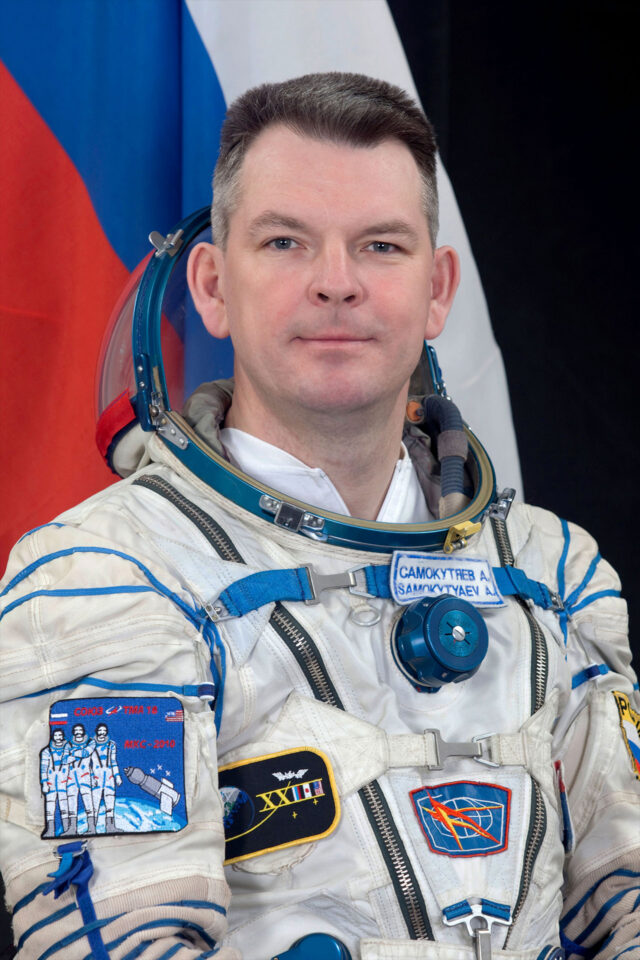
Russian cosmonaut Aleksandr Samokutyaev, who served twice as a crew member aboard the International Space Station (ISS), including during the final US space shuttle mission in 2011, has died at the age of 56.
With Samokutyaev's death on Wednesday, he becomes the first former ISS long-duration resident to die in the 26 years that the space station has been a home to 155 other cosmonauts and astronauts as expedition crew members. The cause of his death is unknown.
Portrait of cosmonaut Aleksandr Samokutyaev.
Credit:
Roscosmos
"The leadership and staff of the Roscosmos State Corporation extend their sincere condolences to the family and loved ones of Aleksandr Mikhailovich," officials with Russia's space agency said in a statement.


© NASA
18 June 2026
Dear Physics of the Cosmos (PhysCOS) community members-
If you’re attending the American Astronomical Society’s 2026 Summer Meeting (AAS 248) in Pasadena CA, please join us for the following PhysCOS-organized activities (all times Pacific):
Thursday 18 June
Additionally, the following activities may be of special interest to the PhysCOS community:
Thursday 18 June
And please drop by the PhysCOS table in the Exhibit Hall!
For more information on PhysCOS throughout the meeting, check out our meeting webpage.
Wishing you the best,
Dr Francesca Civano & Dr Brian Humensky
PhysCOS Chief Scientists, NASA GSFC
Dr Bernard Kelly
PhysCOS Support Scientist, NASA GSFC
The 248th AAS meeting (joint with the High Energy Astrophysics and the Laboratory Astrophysics Divisions) will be held 14-18 June 2026 in Pasadena, California.
Learn More
Subscribe to your community email news list
We will never share your email address.

The post PhysCOS Activities at AAS 248 – 18 June 2026 appeared first on NASA Science.

Blue Origin has started rebuilding a launch pad severely damaged in a New Glenn explosion less than three weeks ago as it works to resume launches by year’s end
The post Blue Origin begins rebuilding New Glenn pad appeared first on SpaceNews.
A nova plataforma da Qualcomm para realidade estendida promete desempenho de IA significativamente superior, mais 20% de autonomia e até 12°C menos calor, face à geração anterior. O XREAL Project Aura será o primeiro dispositivo a usá-lo ainda este ano.
The post Snapdragon Reality Elite são a nova aposta para óculos XR, com até 48 TOPS de IA e visão de 4,4K por olho appeared first on Tek Notícias.
Segundo o Experis Tech Talent Outlook, a Projeção para a Criação Líquida de Emprego no setor das TI em Portugal fixa-se nos 32% para o terceiro trimestre de 2026, uma queda de 18% face ao trimestre anterior. A automação surge como o principal motivo apontado pelas empresas que preveem reduzir equipas.
The post Setor tecnológico português abranda contratações, mas mantém-se como o segundo com melhores perspectivas no país appeared first on Tek Notícias.
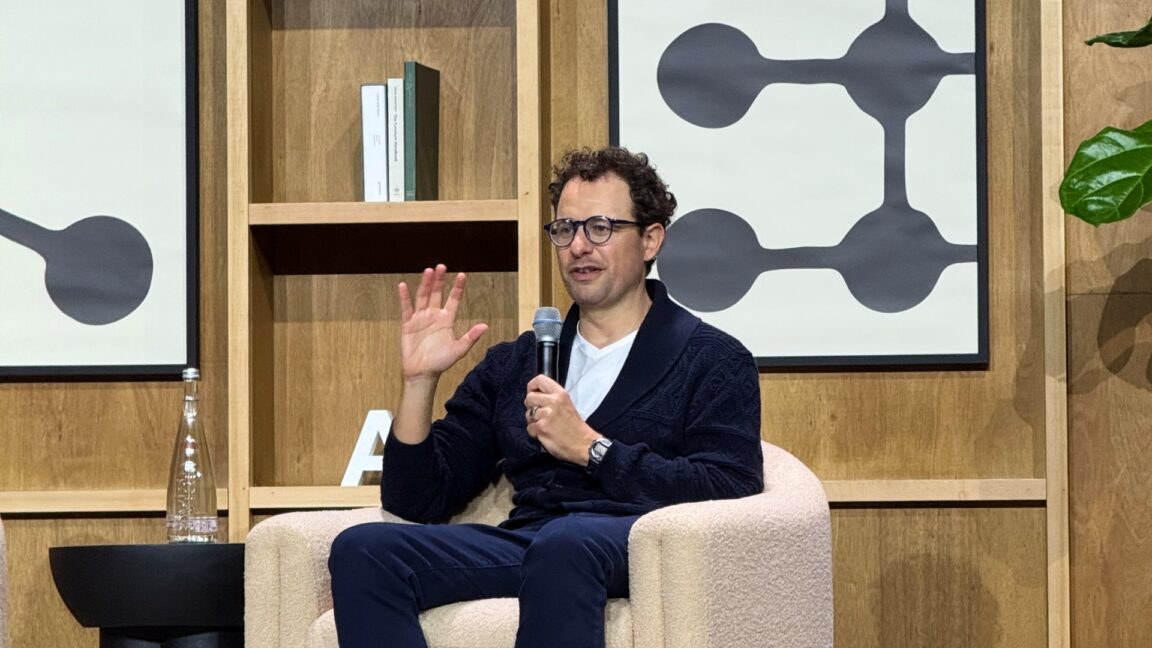
Apple is planning to raise prices in response to the ongoing memory shortage. In an interview with The Wall Street Journal, Apple CEO Tim Cook says "price increases are unavoidable:"
We're doing our best to mitigate the huge increases that are being passed to us, and we've been trying to shield our customers from the increases, but the situation has become unsustainable.
Cook doesn't say when Apple plans on raising prices or which products will be affected. The company has already stopped selling the Mac Studio with 512GB of RAM in March and later raised the starting price of the Mac Mini to $799 after dropping the cheaper $599 option f …
Graças à inteligência artificial, e sem precisar de escrever comandos, o MagicBrew transforma fotografias, desenhos de crianças ou retratos de animais em vídeos animados de alta qualidade, prontos a partilhar nas redes sociais.
The post MagicBrew: transforme qualquer fotografia, ou o desenho do seu filho, num vídeo animado com um único toque appeared first on Tek Notícias.

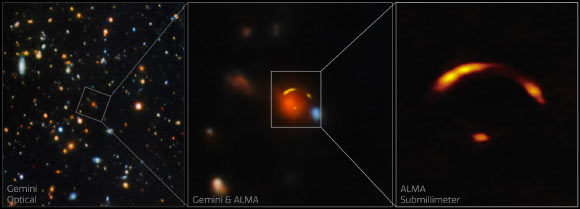
JCMT0402-0424, a dusty starburst galaxy around 11 billion light-years away, is the strongest candidate yet for the source of the high-energy neutrino event IC 210922A, according to a team of astronomer led by Yuji Urata of MITOS Science Co.
The post Astronomers Trace Elusive High-Energy Neutrino to Star-Forming Galaxy in Early Universe appeared first on Sci.News: Breaking Science News.
Late last week, Anthropic took its new Claude Fable 5 and Mythos 5 AI models offline following a United States government export-control directive barring “any foreign national” from using the services. The company has been in talks with the White House since Friday but has yet to secure an agreement that would allow it to reinstate the offerings.
Since Mythos debuted in April, Anthropic has claimed—and warned—that the model has advanced capabilities for not only finding software vulnerabilities to help defenders patch them, but also figuring out ways to exploit them that could be used by bad actors. Anthropic itself noted this double-edged sword in its launch of Mythos 5 and Claude Fable 5. “A great deal of advanced usage of AI models is dual use: the same queries that are beneficial in the hands of cybersecurity professionals and biology researchers could be dangerous if available to malicious actors,” the company wrote in a blog post last week.
With this in mind, the company initially released a version called Mythos Preview to a select consortium as part of a working group known as Project Glasswing. Mythos 5 was also privately released to this group last week, while Claude Fable 5, which is a Mythos-grade model, was released to the general public with specific blocks on its ability to give responses to questions about biology and cybersecurity.


© Samuel Axon
In a groundbreaking series of experiments conducted by researchers at the University of Jena, scientists have revisited and expanded upon a century-old discovery that shapes our understanding of embryonic development. Originally unearthed by Hans Spemann and his student Hilde Mangold in 1924, the concept of the “organiser” is a pivotal developmental mechanism that directs the formation of body axes during the early stages of an embryo’s growth. Spemann and Mangold’s pioneering work involved tissue transplantation between amphibian embryos, revealing the presence of a group of cells within the blastopore that orchestrate the development of a secondary body axis. This discovery earned Spemann a Nobel Prize in 1935 but tragically Mangold passed away young, never witnessing the lasting impact of their findings.
The new research from Jena not only reaffirms these foundational insights but extends them dramatically into the early evolutionary origins of metazoans. Using delicate microsurgical manipulation, the team studied the ribbed comb jelly Mnemiopsis leidyi, a member of the ancient phylum Ctenophora. This lineage diverged from that of other animals approximately 700 million years ago, according to the latest evolutionary models. By transplanting small portions of blastoporal tissue from one comb jelly embryo into another, Jena researchers induced a secondary body axis, effectively recapitulating Spemann and Mangold’s classic findings but now in one of the earliest-diverging animal lineages. The experiment demonstrated that the organiser’s developmental blueprint is deeply conserved across vast evolutionary time frames.
What makes these experiments particularly astounding is the technical difficulty involved. Comb jelly embryos measure only about 120 micrometers in diameter—just a fraction larger than the width of a human hair—while the transplanted tissue samples were barely 20 micrometers in size. Dr. Stanislav Kremnyov, the lead experimentalist, had to master an extraordinary level of manual dexterity to integrate these tiny groups of cells into host embryos without triggering rejection or other developmental derailments. To an outside observer, it appeared as if the researchers were “dissecting clouds,” a vivid metaphor used by Prof. Andreas Hejnol, who leads the research team at Jena.
The functional transplantation of organising tissue between individuals of the same species was spectacular enough. Yet the Jena team dared to push further by performing xenotransplantations, transferring organiser tissue across animal orders into the sea anemone, a cnidarian species that diverged from ctenophores roughly 60 million years later. Remarkably, the transplanted organiser tissue also initiated axis formation in the sea anemone embryos. This unprecedented success underscores the extraordinary evolutionary conservation of developmental mechanisms underpinning animal body plans. Xenotransplantation of organiser tissues across distinct phyla had never before been demonstrated, marking this as a historic advance in developmental biology.
Beyond the cellular choreography, the study also zeroed in on genetic underpinnings. The team identified, for the first time, the specific gene responsible for organiser formation in the sea anemone, bridging molecular mechanisms across species boundaries. This gene appears to regulate the signalling networks critical to early embryonic axis determination, providing a molecular anchor to the organiser’s functional role. Such findings hint that the genetic toolkit necessary for complex body plan organisation was already present in the earliest multicellular ancestors of modern animals.
These discoveries overturn previous assumptions that organiser-driven axis formation was a feature exclusive to more recently evolved animal groups such as bilaterians. Instead, the findings position the organiser as a primordial control system in multicellular organism development, dating back to the dawn of animal evolution itself. It suggests a remarkable evolutionary continuity where the fundamental blueprints for constructing the three-dimensional architecture of multicellular animals remained largely stable across hundreds of millions of years.
The implications of this research extend far beyond ctenophores and sea anemones. Since the organiser guides the spatial coordination of cell fate during development, understanding its origins and conservation sheds light on the evolutionary emergence of animal diversity and complexity. It also offers potential new perspectives for biomedical research, particularly in regenerative medicine and congenital defect studies, where guiding axis formation and tissue patterning is critical.
Technical mastery was central to these findings. The researchers employed advanced microscopy and vital cell staining techniques allowing them to trace transplanted cells dynamically within host embryos. Coupling this with precise microsurgical transplantation provided not only functional but also visual confirmation of organiser activity. This combination of cutting-edge experimental methods enabled insights previously thought unattainable in such fragile and inaccessible embryonic systems.
Prof. Andreas Hejnol reflects on the evolutionary significance with enthusiasm: “Our data demonstrate that this organizer mechanism coordinates the entire body axis and is conserved among one of the earliest-diverging animal lineages, suggesting that complex body plan organisation arose very early in metazoan evolution.” His team’s work bridges developmental biology with evolutionary biology, providing a vivid example of how ancient developmental principles underpin the incredible diversity of life forms on Earth today.
This research, published in the prestigious journal Nature, represents a milestone in understanding early animal evolution and embryogenesis. It dramatically shifts the paradigm surrounding the origins of the organiser and prompts reconsideration of the molecular and cellular processes foundational to animal multicellularity. As scientists continue to explore these ancient mechanisms, further revelations about the building blocks of life’s complexity are eagerly anticipated.
Subject of Research: Animals
Article Title: A blastoporal organiser in a ctenophore
News Publication Date: 17-Jun-2026
Web References: http://dx.doi.org/10.1038/s41586-026-10643-z
Image Credits: Lisa-Marie Barf
Keywords: embryonic development, organiser, blastopore, ctenophore, Mnemiopsis leidyi, evolutionary biology, axis formation, multicellularity, xenotransplantation, sea anemone, cnidaria, developmental genetics

Late last week, Anthropic took its new Claude Fable 5 and Mythos 5 AI models offline following a United States government export-control directive barring “any foreign national” from using the services. The company has been in talks with the White House since Friday but has yet to secure an agreement that would allow it to reinstate the offerings.
Since Mythos debuted in April, Anthropic has claimed—and warned—that the model has advanced capabilities for not only finding software vulnerabilities to help defenders patch them, but also figuring out ways to exploit them that could be used by bad actors. Anthropic itself noted this double-edged sword in its launch of Mythos 5 and Claude Fable 5. “A great deal of advanced usage of AI models is dual use: the same queries that are beneficial in the hands of cybersecurity professionals and biology researchers could be dangerous if available to malicious actors,” the company wrote in a blog post last week.
With this in mind, the company initially released a version called Mythos Preview to a select consortium as part of a working group known as Project Glasswing. Mythos 5 was also privately released to this group last week, while Claude Fable 5, which is a Mythos-grade model, was released to the general public with specific blocks on its ability to give responses to questions about biology and cybersecurity.


© Samuel Axon
Há novas burlas a circular em Portugal, com alertas deixados pelo Portal da Queixa, assim como pelo Ministério Público. Os esquemas fraudulentos, que incluem táticas de phishing e engenharia social, fazem-se passar pelo Ministério da Saúde e por instituições bancárias.
The post Há novas burlas a circular em Portugal. Esquemas imitam Ministério da Saúde e bancos para roubar dinheiro appeared first on Tek Notícias.