Labour leadership hopeful Wes Streeting has said Labour should ditch Ed Miliband's Net Zero targets. Or has he? It's as clear as mud, says Ben Pile, with promises of yet more 'green growth' cakeism.
A new study reveals that oak trees can keep photosynthesizing for months after growth ends, challenging assumptions about how effectively forests convert absorbed carbon into long-term storage. A tree can look busy long after it has stopped building itself. Its leaves may still be absorbing sunlight and pulling carbon dioxide from the air, but deep [...]
With CO2 greening the planet, any possible harms are outweighed by the benefits of more trees and crops. And that's even before you subtract the monumental cost of Net Zero, says Matt Ridley.
After defence secretary John Healey quit over the under-resourcing of the Armed Forces, Paul Homewood has a simple solution: scrap Net Zero, then Britain can easily meet its military obligations and needs.
Researchers explored how different dietary changes could reduce the carbon footprint of food consumption. A single change at the dinner table could have a bigger climate impact than many people realize. Researchers in the UK found that replacing just one beef steak per week with salmon could significantly reduce food-related carbon emissions over time. In [...]
In a groundbreaking study set to reshape our understanding of polar carbon dynamics, researchers have uncovered that the lithology of catchment areas along the Antarctic Peninsula plays a pivotal role in regulating the net carbon balance of these fragile ecosystems. This revelation not only challenges previous assumptions regarding carbon sequestration in polar regions but also highlights the complex interplay between geology and climate change in one of the planet’s most sensitive areas.
For decades, scientists have grappled with accurately quantifying carbon fluxes in polar environments due to the extreme conditions and limited accessibility. The Antarctic Peninsula, stretching northwards from the main Antarctic continent, represents a unique geophysical interface where ice, rock, and ocean converge. Prior research predominantly focused on biological and climatic factors controlling carbon balance but seldom accounted for the geochemical contributions borne from the underlying lithology. This new research sets a transformative precedent by rigorously dissecting how rock types influence carbon absorption and release processes, thereby painting a more nuanced picture of the peninsula’s carbon budget.
The study relied heavily on state-of-the-art field measurements coupled with advanced geochemical modeling to parse out the contributions of catchment lithology—essentially the rock makeup and mineral composition of drainage basins—to net carbon balance. Geological substrates act not only as passive backdrops but as active participants in biogeochemical cycles. Chemical weathering of silicate and carbonate minerals can sequester atmospheric carbon dioxide, while other rock forms may facilitate carbon release via mineral dissolution or hydrological transport mechanisms. The research team meticulously sampled various catchment zones along the peninsula, integrating data from frozen soils, sediment runoff, and meltwater streams to decode these lithological influences.
One of the most striking findings from the investigation was the spatial variability of carbon fluxes directly correlated with geological heterogeneity. Catchments dominated by silicate-rich bedrock exhibited higher carbon sequestration capabilities through rock weathering processes compared to those underlain by carbonate lithologies, which tend to release carbon dioxide during dissolution. This variability suggests that predictions of polar carbon dynamics need to incorporate detailed geological maps and lithological classifications for greater precision. Such insights could significantly improve climate models that currently struggle with polar region parameterization.
Moreover, the researchers illuminated the role of mineral weathering as a long-term sink for atmospheric CO2, contrasting the widely documented biological sinks such as phytoplankton blooms and moss growth. In particular, the slow yet persistent process of silicate mineral weathering draws down carbon dioxide, converting it into bicarbonate ions that are flushed into the ocean. This naturally occurring geological carbon pump could be particularly impactful in the Antarctic Peninsula where rapid glacial retreat exposes fresh silicate rock surfaces, enhancing weathering rates. These observations offer compelling evidence that geological processes may buffer climate change effects, at least regionally, by locking away carbon in mineral forms.
Intriguingly, temporal data spanning multiple melt seasons revealed that net carbon balance is highly sensitive to seasonal variations in temperature and hydrology, which themselves are modulated by lithological factors. For example, catchments composed of permeable volcanic rocks exhibited more pronounced meltwater infiltration, accelerating mineral weathering and carbon sequestration during warm months. Conversely, less permeable sedimentary formations tended to trap water and organic carbon within soils, affecting the timing and magnitude of CO2 fluxes to the atmosphere. This complex feedback between lithology, hydrology, and climate underscores the necessity of interdisciplinary approaches when assessing polar carbon systems.
The implications of these findings reverberate far beyond academic curiosity. As the Antarctic Peninsula experiences some of the fastest warming rates on Earth, understanding the controls on carbon balance is critical for forecasting future climate trajectories. If lithological variability leads to differential carbon sequestration zones, then localized geological disruptions caused by melting glaciers or human activity could substantially alter regional carbon budgets. This knowledge is paramount for policymakers designing effective climate mitigation strategies, particularly in sensitive high-latitude environments where carbon feedbacks may accelerate global warming.
In addition to geochemical and climatological impacts, the study also highlights the potential for emerging technologies such as remote sensing and machine learning to map lithological controls at unprecedented resolution. By integrating satellite imagery with field data, researchers can create predictive models that swiftly identify carbon hotspots and areas vulnerable to carbon loss. This approach holds promise not only for Antarctic research but for global efforts to monitor and manage terrestrial carbon stocks in the face of escalating environmental change.
Furthermore, the interdisciplinary team behind this research underscores the importance of collaboration across geology, ecology, and atmospheric science disciplines. Only through such synergies can the subtle yet powerful effects of geological substrates on biogeochemical cycles be fully appreciated. This holistic perspective marks a paradigm shift in polar science, encouraging future studies to transcend traditional boundaries between earth sciences and climate research.
The work also invites a reevaluation of how catchment-scale processes are incorporated into Earth system models. Historically, these models have neglected fine-scale lithological heterogeneities, instead favoring generalized assumptions about soil and sediment carbon storage. The evidence provided by this study advocates for embedding lithological parameters into model architectures, enabling more accurate simulations of polar carbon dynamics under variable climatic scenarios. Such advancements are vital for anticipating tipping points in Antarctic ecosystems where abrupt changes could trigger widespread carbon release.
As global attention intensifies on polar regions as bellwethers of climate change, the intricate connection between rocks beneath our feet and atmospheric carbon cycles comes sharply into focus. The Antarctic Peninsula serves as a natural laboratory, revealing that the geology beneath evolving ice landscapes is not merely inert background but an active, dynamic component influencing the Earth’s carbon footprint. These insights champion a new era where geosciences play a central role in unraveling planetary carbon mysteries and inform global climate stewardship.
To realize the full potential of these findings, continuous monitoring and expanded field campaigns will be indispensable. The study sets a benchmark for future Antarctic research by demonstrating how integrative methodologies can decode complex environmental phenomena. With accelerating climate pressures threatening polar ecosystems, unraveling the lithological control on carbon balance becomes not just an academic endeavor but an urgent imperative for humanity’s environmental resilience.
In conclusion, this landmark research elegantly reveals how the mineral composition and geological characteristics of Antarctic catchments exert profound control over carbon exchanges between land, atmosphere, and ocean. By amalgamating detailed geochemical analyses with ecological and climatic data, the study enriches our comprehension of polar carbon cycling and offers tangible pathways to improve global climate models. As the Antarctic Peninsula continues to reshape itself under warming skies, understanding the lithological underpinnings of its carbon dynamics will be essential for predicting its role in the Earth’s future climate narrative.
Subject of Research: Geology and carbon cycling in the Antarctic Peninsula catchments
Article Title: Catchment lithology controls net carbon balance along the Antarctic Peninsula
Article References:
He, S., Zhang, X., Hu, H. et al. Catchment lithology controls net carbon balance along the Antarctic Peninsula. Nat Commun (2026). https://doi.org/10.1038/s41467-026-74667-9
In a groundbreaking study published in Communications Earth & Environment, researchers Michael Dickau, Kirsten Zickfeld, and Henry D. Matthews unveil a sobering new framework for understanding the permanence of climate change. Their work introduces the concept of “degree-years of temperature overshoot” as a critical metric that quantifies how temporary excursions beyond safe temperature thresholds can lead to irreversible environmental transformations. This innovative approach adds a crucial dimension to climate science, emphasizing not just peak temperature increases but the duration and cumulative intensity of warming above critical limits.
Traditional climate models have largely focused on absolute temperature increases as the key indicator of climate risk, emphasizing targets such as the 1.5°C or 2°C limits set by the Paris Agreement. However, the new research underscores that even transient overshoots—periods during which global mean surface temperature temporarily exceeds these thresholds—have the potential to trigger lasting and perhaps unstoppable changes in Earth’s systems. The authors coin the term “degree-years” to capture both the magnitude and the persistence of such overshoots, integrating these factors into a unified metric that reflects cumulative thermal stress on the planet.
This degree-years concept operates by calculating the product of how many degrees the global temperature exceeds a set threshold and the length of time this exceedance lasts. For instance, a half-degree overshoot lasting two years would equate to one degree-year; similarly, a one-degree overshoot lasting one year also amounts to one degree-year. Crucially, the study demonstrates that certain climate impacts can become irreversible once the cumulative degree-years surpass specific tipping points, regardless of whether global temperature subsequently declines.
Using an ensemble of Earth system models, the research team investigates multiple climate feedback mechanisms and tipping elements, such as the melting of polar ice sheets, disruption of ocean circulation patterns, and shifts in tropical rainforests. Their simulations reveal that the risk of crossing dangerous thresholds escalates significantly with increasing degree-years of overshoot. For example, temporary overshoot scenarios that peak above 2°C but rapidly return below this limit still lead to substantial and irreversible sea level rise due to sustained polar ice melt dynamics set in motion during the overshoot period.
One of the key insights emerging from this work challenges the assumption that episodes of elevated temperature can be fully “undone” by later cooling. The degree-years metric quantifies the residual “memory” of warming embedded in earth system components, which continue to evolve even after global temperatures stabilize. The long timescales involved in ice sheet dynamics and biosphere feedbacks mean that rapid temperature corrections may not reverse damage already set in progress during the overshoot phase. Hence, avoiding overshoot altogether, or limiting both its magnitude and duration, becomes paramount to mitigating irreversible harm.
The study’s implications are profound for policy and climate mitigation strategies. Current targets geared towards limiting peak warming are important but may be insufficient if the duration of overshoot is not carefully managed. This necessitates a reconsideration of emissions trajectories, emphasizing pathways that avoid substantial periods above critical temperature thresholds. It also highlights the urgency of carbon dioxide removal and other negative emissions technologies as tools to swiftly bring temperatures down post-overshoot, should such scenarios unfold.
Further complicating the global puzzle, the authors note that regional climate impacts tied to degree-years of overshoot may be even more severe and less reversible. Areas dependent on stable ice coverage, predictable monsoon patterns, or intact rainforest ecosystems are particularly vulnerable to the cumulative stress captured by the degree-years framework. These localized consequences exacerbate socioeconomic and ecological vulnerabilities, raising challenging questions about adaptation and resilience under future climate regimes.
The robustness of the degree-years concept is fortified by the multi-model approach, harnessing the strengths of different Earth system models to explore uncertainties and variability in tipping thresholds. Although individual models exhibit different sensitivities, the overarching finding that overshoot duration compounds irreversible impacts holds consistently across simulations. This consensus underscores the importance of integrating degree-years into future climate risk assessments and international negotiations.
Another notable aspect of this research is its capacity to reconcile temporal aspects of climate response with policy-relevant decision-making. Climate policies often operate on decadal or shorter timescales, yet many earth system processes unfold over centuries to millennia. Degree-years offers a bridge, linking short-term temperature excursions to long-term, irreversible environmental change, thereby sharpening the scientific basis for precautionary action.
In terms of public communication, the concept of degree-years could serve as a powerful narrative tool. It translates complex climate dynamics into an intuitive measure that captures cumulative exposure to harmful warming. This allows scientists, policymakers, and the public to grasp why even brief exceedances of temperature targets cannot be dismissed as temporary or harmless, engendering a sense of urgency and shared responsibility to prevent such scenarios.
Moreover, the study opens exciting avenues for further research. Quantifying degree-year thresholds specific to different types of tipping points—such as permafrost thaw, coral reef die-offs, or monsoon shifts—can refine risk predictions and tailor mitigation efforts. Understanding interactions between multiple tipping elements under varying degree-year exposures may reveal potential cascade effects, heightening the stakes of temperature overshoot.
From a geoengineering perspective, the findings also raise caution. Proposed interventions aimed at artificially reducing global temperatures after an overshoot event must be evaluated in the context of irreversible processes already triggered. If irreversible changes are initiated early in the overshoot phase, cooling alone may not restore pre-overshoot conditions, limiting the efficacy of such strategies.
Importantly, this study enhances our conceptual toolkit for addressing the climate crisis. Instead of focusing solely on static temperature targets, it shifts the lens to dynamic exposure metrics that capture the integrative nature of climate impacts. This could inspire novel frameworks for carbon budgeting, climate risk governance, and adaptation planning that better reflect the temporal dimension of warming.
As the world grapples with the twin challenges of rapid decarbonization and social transformation, the message is clear: the pathways we choose today will dictate not just the future peak temperatures but whether we cross invisible but consequential temporal boundaries that lock in irreversible change. The degree-years of temperature overshoot is a clarion call to steer humanity away from transient excesses and towards a sustainable, stable climate future.
In sum, Dickau, Zickfeld, and Matthews have presented a visionary and urgently needed perspective on climate change risks. Their pioneering work demystifies the irreversibility of certain climate impacts by framing it within the cumulative thermal stress of overshoot duration and intensity. This holistic approach complements existing metrics and offers a powerful new paradigm for safeguarding the planet’s habitability in an era of uncertainty.
Subject of Research: Irreversible climate changes linked to cumulative temperature overshoot measured as degree-years.
Article Title: Irreversible climate changes driven by degree-years of temperature overshoot.
Article References:
Dickau, M., Zickfeld, K. & Matthews, H.D. Irreversible climate changes driven by degree-years of temperature overshoot. Commun Earth Environ (2026). https://doi.org/10.1038/s43247-026-03761-z
Al Carns urges us to put 'security' at the heart of everything – but is it realism or just the same old security state in greener clothing? Ben Pile thinks it's the latter.
Deep inside a limestone cave in southern China, paleontologists have uncovered an assemblage of thirteen fossilized teeth belonging to Gigantopithecus blacki, the largest primate species ever known to have lived.
Food waste may become a powerful climate tool thanks to tiny reusable beads that capture carbon directly from the air. Keeping global warming below 1.5°C over the long term will require more than major cuts in greenhouse gas emissions. According to climate scenarios outlined in the latest Assessment Report from the Intergovernmental Panel on Climate [...]
Across the stories today, a common thread emerges around the gap between scientific urgency and practical action — from coral reefs that might survive climate change to political systems struggling to keep pace with environmental reality.
The day’s coverage points to growing momentum around citizen-led conservation, revealing how communities are stepping in where institutions fall short. In Britain, volunteers are using remote cameras to protect red squirrels while citizen scientists help restore bog insect populations through coordinated community efforts. Meanwhile, American homeowners are banding together in group buying programs, saving thousands of dollars on heat pumps while collectively advancing climate solutions one neighborhood at a time.
Yet this grassroots energy exists alongside troubling institutional retreats. The UK government appears ready to scale back electric vehicle targets after industry pushback, while critical monitoring systems for Atlantic ocean currents — which could collapse ten times faster than previously predicted — may lose funding just when we need them most. It’s a reminder that progress and pressure often arrive together, creating political tensions that can undermine long-term environmental goals.
The human cost of these delays becomes starkly visible in places like Delhi, where thermal imaging revealed that 43.5°C air temperatures translated into furnace-like conditions on urban surfaces, or in the Marshall Islands, where researchers race to identify “super reefs” that might survive rising ocean temperatures. Behind the numbers are real communities adapting in real time, from Thai rubber farmers navigating new EU deforestation rules to climate-displaced people facing growing barriers to safety as extreme weather events multiply.
Perhaps most striking is how wildlife serves as both victim and indicator of these broader pressures. Little terns face their most challenging breeding season yet due to dog disturbances, while a single black-headed gull spotted in Australia sends bird enthusiasts flying across the continent — a reminder of how rare the unexpected has become. Meanwhile, Mexican long-tongued bats continue their nightly dance through agave flowers, unknowingly keeping the tequila industry alive through pollination, even as global wildlife trade creates what scientists call “pandemic roulette” by moving billions of animals across unnatural boundaries.
The most promising thread runs through stories of restoration and discovery. A former banker is bringing back Australia’s lost Big Scrub rainforest, while Amazon deforestation drops to nearly decade-low levels, showing environmental progress is possible when political will aligns with practical action. Century-old Antarctic research voyages are revealing early clues to El Niño patterns, and scientists have identified hidden pollutants driving 15 percent of global warming — knowledge that could reshape climate policy.
Indigenous scholar Tyson Yunkaporta’s argument that “false narratives drive environmental destruction” feels particularly relevant amid today’s stories. From conservation groups rejecting shark culling calls in favor of drone technology to the controversy over displaying an African elephant at a political convention, the battle over environmental stories — which ones we tell, which ones we fund, which ones we act upon — shapes outcomes as much as any scientific discovery.
As the week unfolds, all eyes will be on whether these citizen-led conservation efforts can scale fast enough to compensate for institutional hesitation, and whether the gap between scientific understanding and political action will narrow or continue to widen in the face of accelerating environmental change.
Ancient mycorrhizal fungal networks, consisting of a billion astronomical units’ worth of roots, have finally been mapped by scientists, providing insight into their connections, which are essential to climate regulation and plant sustenance.
Mycorrhizal fungi grow in an arbuscular formation, meaning they take on a branching tree-like structure of tubular cells called hyphae, which pull carbon from the atmosphere to aid in climate regulation.
The international team presented their work in a recent paper published in Science, which estimates the distribution and mass of these enormous fungal networks and provides an interactive visualization tool that offers crucial insight into threats to these systems, which are essential to Earth’s health.
Mapping Fungal Networks
The new research brings both encouraging and concerning findings, highlighting regions where fungal networks remain robust while also identifying areas under increasing threat.
Although previous studies have attempted to map the diversity of these fungi across the globe, this is the first effort to predict and visualize their density and biomass on a planetary scale. According to the team’s estimates, the network extends for approximately 110 quadrillion kilometers, with roughly 40% located beneath grasslands.
The new map reveals the extent of the mycorrhizal fungal network globally. Credit: Truth & Beauty / Moritz Stefaner Justin Stewart – SPUN
Using more than 16,000 soil cores collected worldwide, researchers assembled a massive fungal dataset. They then employed machine-learning models that combined data from multiple biomes to predict the density of arbuscular mycorrhizal fungal networks in unsampled regions. Robotic imaging of more than 300,000 living, laboratory-grown hyphae allowed the team to calibrate and validate their models.
“It is hard to overstate the importance and enormity of these fungi,” said lead author Dr. Justin Stewart, with the Society for the Protection of Underground Networks (SPUN). “There could be up to 10 meters (32 feet) of mycorrhizal network in just a teaspoon of soil.”
Earth’s Circulatory System
Because it transports carbon, water, and nutrients underground, scientists have likened the network to our planet’s circulatory system, with a flow rate of up to 120 micrometers per second. About 70% of Earth’s plant species thrive on a symbiotic relationship with the arbuscular mycorrhizal fungi network.The network can provide over 80% of a plant’s phosphorus and increase the root foraging area 100-fold.
The network subsists on carbon waste produced by plants, while providing them with water and nutrients in return. By pulling in roughly 4 billion tons of CO2 into the ground every year, mycorrhizal fungi mitigate an amount corresponding to roughly 11% of human emissions.
Unfortunately, grasslands, where the network thrives most, are among the least protected environments on Earth and are being rapidly converted to farmland. According to the study team, cropland has only about half the lower network density of regular land, which the researchers worry may negatively affect how soil stores carbon, cycles nutrients, and resists stress.
Continuing Fungal Network Research
“It is important to remember that these maps are living documents. This is a first attempt at building a foundational model of Earth’s fungal networks infrastructure, but it is not complete,” Stewart recently told The Debrief. “There are other types of mycorrhizal fungi that still need to be mapped in more detail, and other fungal structures, such as spores, that are also critical to understanding how these organisms persist, move, and respond to environmental change. Likewise, we need more data in regions that have been poorly sampled.”
The team says the study represents a major advance for climate science, a field in which fungi have often been overlooked in discussions about conservation and resilience. Researchers hope the findings will encourage a more comprehensive understanding of the role fungi play in maintaining healthy ecosystems.
“A major goal now is to make these kinds of data useful for decision makers. Fungi are still rarely included explicitly in climate, biodiversity, and land-use agendas, even though they are central to how ecosystems move carbon and nutrients,” Stewart adds. “We want to help ‘course-correct’ by building a clearer picture of the underground systems that support life aboveground.”
Ryan Whalen covers science and technology for The Debrief. He holds an MA in History and a Master of Library and Information Science with a certificate in Data Science. He can be contacted at ryan@thedebrief.org, and follow him on Twitter @mdntwvlf.
A vital system of ocean currents that regulates Europe’s climate by moving warm water across the Atlantic could collapse far more rapidly than scientists previously believed. Yet paradoxically, the monitoring systems needed to track this potentially catastrophic shift may soon lose their funding.
The Atlantic Meridional Overturning Circulation (AMOC) acts like a massive conveyor belt, carrying warm tropical water northward and returning cold water south. This system plays a crucial role in maintaining Europe’s relatively mild climate and stable weather patterns. Recent research suggests that if this circulation weakens or collapses, the changes could unfold 10 times faster than earlier models predicted, potentially transforming European climate within decades rather than centuries.
The situation presents a troubling paradox in scientific priorities. While Europe allocates €1 billion annually to monitor space for asteroids—despite the extremely low probability of a civilization-ending impact—the ocean monitoring systems that track AMOC face potential budget cuts worth just a few million dollars. Scientists warn this is like detecting a dangerous asteroid heading toward Earth, then cutting funding for the telescopes needed to track it.
The implications of AMOC collapse would be severe: dramatically cooler temperatures across Northern Europe, shifts in precipitation patterns, and potential disruption of agricultural systems. Without adequate monitoring, scientists would lose the ability to provide early warning of these changes, leaving society unprepared for rapid climate shifts that could affect hundreds of millions of people.
As the World Cup tournament begins, labor advocates are raising urgent concerns about the health and safety of workers who will be operating in dangerous heat conditions across multiple host cities. Temperatures are forecast to exceed 90°F in several locations, creating potentially life-threatening working conditions for stadium staff, security personnel, vendors, and other essential workers who make the massive sporting event possible.
The extreme heat poses serious risks including heat exhaustion, heat stroke, and other heat-related illnesses that can quickly become fatal without proper protections. Workers will be exposed to these dangerous conditions while performing physically demanding tasks, often in direct sunlight with limited opportunities for breaks or cooling.
Labor organizations are demanding immediate implementation of worker protection measures, including mandatory cooling breaks, access to shade and hydration, adjusted work schedules during peak heat hours, and proper training on heat illness prevention. Without these critical safeguards, advocates warn that workers could face a wave of heat-related injuries and potentially tragic outcomes.
The situation highlights a growing global challenge as climate change drives more frequent and intense heat waves, putting outdoor workers at increasing risk. The World Cup’s worker safety crisis serves as a stark reminder that major international events must prioritize the wellbeing of their workforce, especially as extreme weather becomes the new normal across many regions.
Funded by European and American philanthropists, Tessa Khan uses the courts to impose Net Zero policies voters have rejected at the ballot box. Meet the lawfare entrepreneur waging war on North Sea energy.
 Login



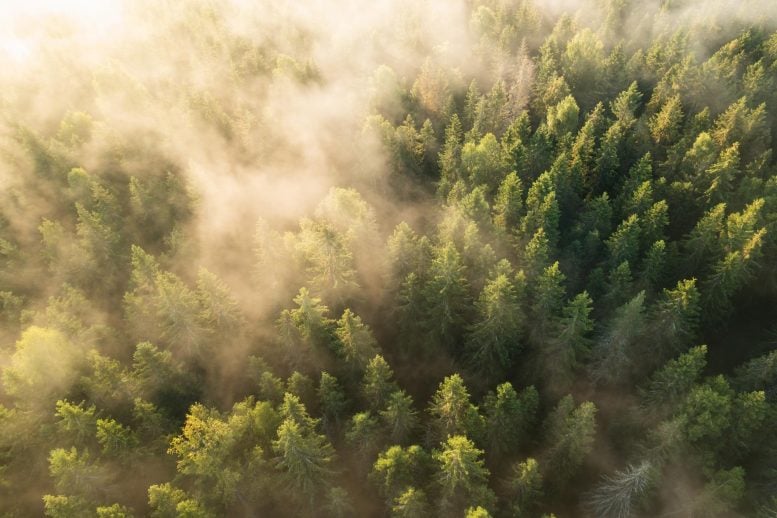 A new study reveals that oak trees can keep photosynthesizing for months after growth ends, challenging assumptions about how effectively forests convert absorbed carbon into long-term storage. A tree can look busy long after it has stopped building itself. Its leaves may still be absorbing sunlight and pulling carbon dioxide from the air, but deep [...]

 Researchers explored how different dietary changes could reduce the carbon footprint of food consumption. A single change at the dinner table could have a bigger climate impact than many people realize. Researchers in the UK found that replacing just one beef steak per week with salmon could significantly reduce food-related carbon emissions over time. In [...]
 This is a monumental biological network.


 Food waste may become a powerful climate tool thanks to tiny reusable beads that capture carbon directly from the air. Keeping global warming below 1.5°C over the long term will require more than major cuts in greenhouse gas emissions. According to climate scenarios outlined in the latest Assessment Report from the Intergovernmental Panel on Climate [...]
 The Pacific warning has become an active global climate event.


