 Login

BMW opens i3 orders months early as buyers rush in

The new i3 is here sooner than expected. Although it wasn’t expected to go on sale until this fall, BMW has already opened orders in several markets after “high levels” of early interest.

The new i3 is here sooner than expected. Although it wasn’t expected to go on sale until this fall, BMW has already opened orders in several markets after “high levels” of early interest.

One of the most hotly anticipated electric vehicles makes its formal debut next week. It's the Blank Slate, a refreshingly simple pickup truck EV designed by Slate Auto, which is trying to take some of the soaring cost out of a new car with a back-to-basics approach that means even electric windows are an optional extra. Of course, a crucial aspect of this pared-back approach is pricing.
Plenty of people are attracted to the idea of a truck with a compact footprint, no infotainment system or embedded modem, and the option to upconvert it later into an SUV or fastback. In the abstract, at least, people aren't going to jump at the prospect of a truck with 150 miles (241 km) of range if it costs too much.
When Slate broke cover in 2025, it was targeting a price of around $20,000, assuming the $7,500 IRS clean vehicle tax credit would remain in effect, but it was abolished later that year.
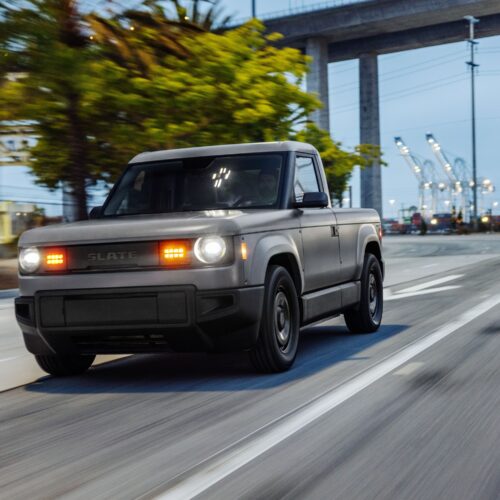

© Slate Auto
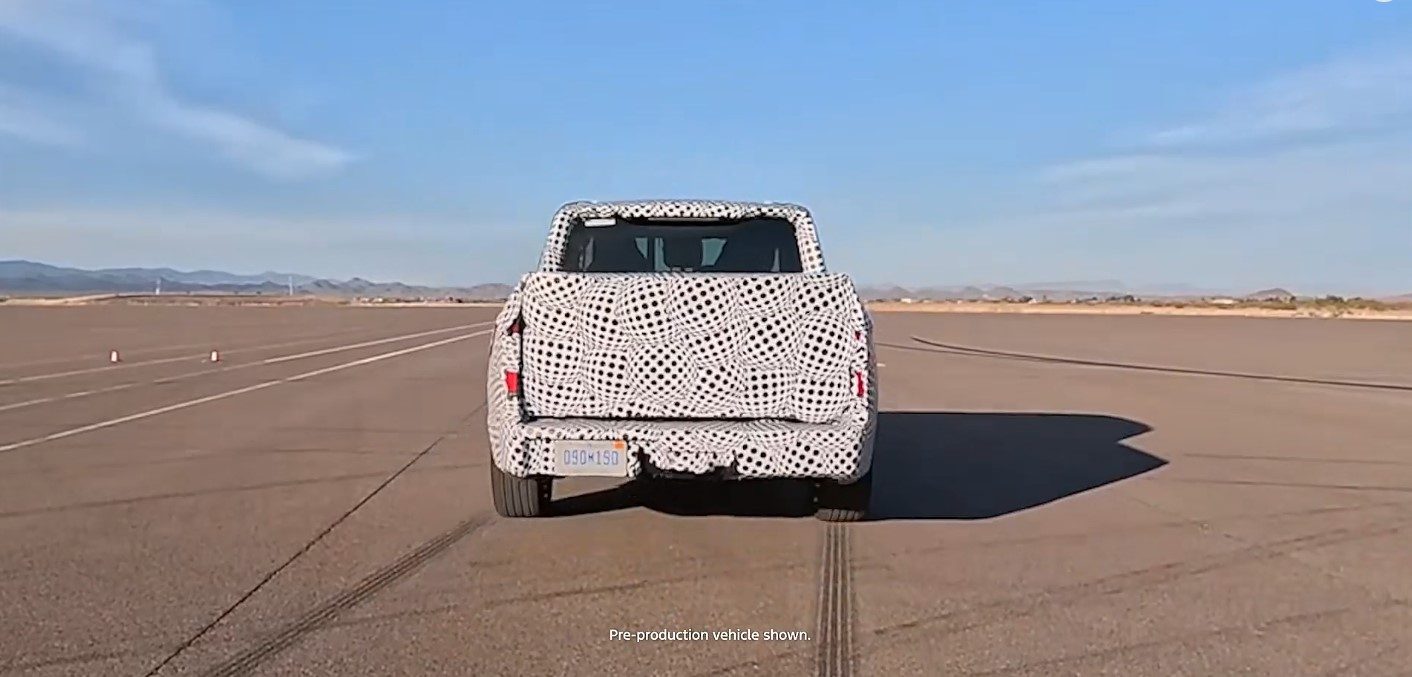
Ford is set to become the first to assemble LFP batteries for mainstream consumer auto use in the US, starting with its $30,000 midsize pickup next year.
Small-boat migrants who appeared on a controversial episode of Question Time where Reform's Zia Yusuf was "ambushed" were placed there by campaigners at the invitation of the BBC.
The post Channel Migrants Placed on Question Time by Campaigners at BBC’s Invitation appeared first on The Daily Sceptic.

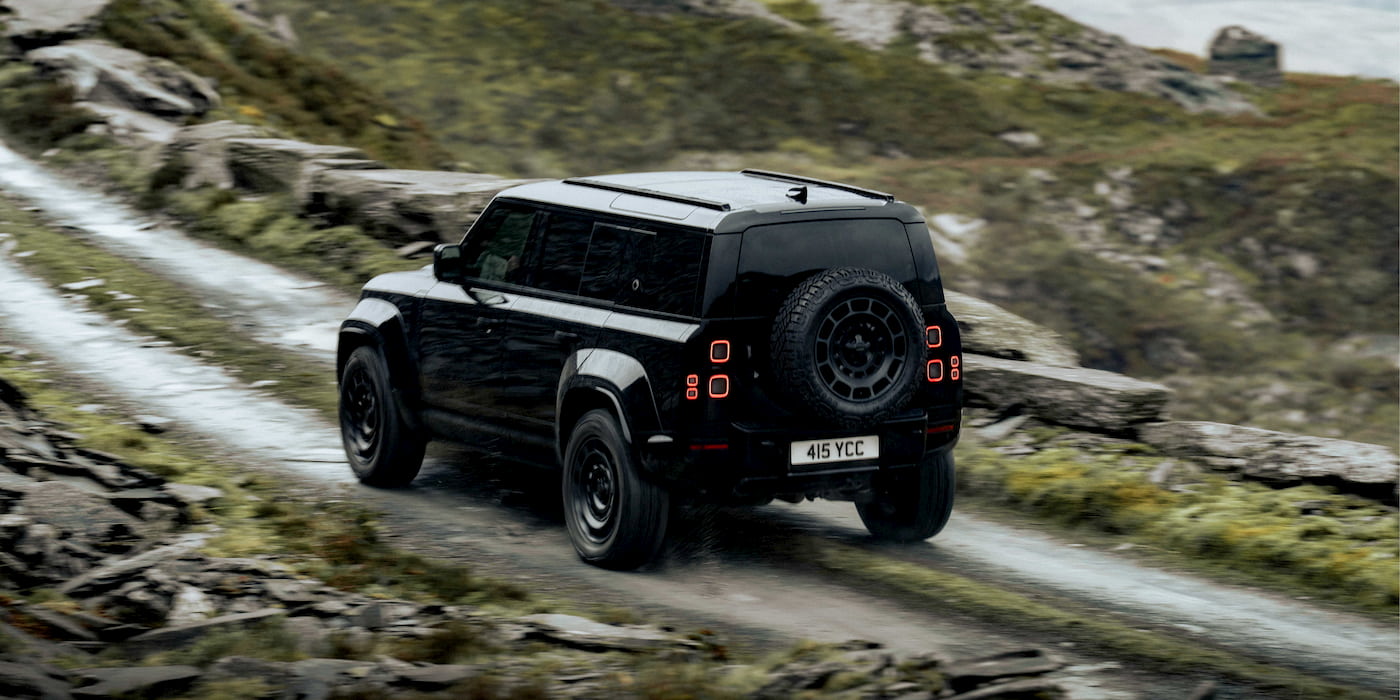
We will finally get to see the Range Rover Electric and smaller Sport model later this year. Defender is set to launch its first EV, which could be an even bigger hit.


Chinese firm Alibaba has launched its first embodied AI model family, which links large language models with real-world robotic actions.
The Qwen-Robot suite was developed by Alibaba’s Tongyi Lab and is undergoing pilot testing with selected Alibaba Cloud enterprise clients.
The suite comprises three models focused on navigation, manipulation, and world modeling for robots operating in physical environments.
Alibaba said the models enable machines to perceive, reason, and interact with the real world, joining a growing global push to advance embodied AI beyond traditional chatbot applications.
Alibaba says its Qwen family of AI models has become very good at understanding the physical world. These models can recognize objects, understand spatial relationships, follow complex visual instructions, and reason about real-world environments. For example, a model can understand a command such as, “Go to the kitchen, find the red cup, pick it up, and place it on the shelf.”
However, understanding a task is different from actually performing it. While a vision-language model (VLM) can describe the steps needed to complete a task, it cannot directly control a robot’s movements. The challenge is connecting human language and visual understanding with the motor actions required to interact with the physical world.
This problem is difficult because robot training data is very different from internet data. Information collected from navigation systems, robotic arms, vehicles, and cameras comes in different formats and is expensive to gather. Simply combining all this data often creates conflicts rather than improving performance.
To address this, Alibaba developed the Qwen-Robot Suite, which includes three specialized models. Qwen-RobotNav focuses on movement and navigation. It helps robots follow instructions, navigate to locations, track targets, and support autonomous driving.
According to its website, Qwen-RobotManip focuses on physical interaction. It enables robots to grasp, move, and manipulate objects using a large training dataset collected from different robotic systems. Qwen-RobotWorld acts as a world model, predicting how environments may change and helping robots understand the likely outcomes of their actions.
Together, these models aim to enable robots to understand instructions, interact with objects, navigate environments, and make decisions in the real world.
Alibaba showcased Qwen-RobotNav on a Unitree Go2 quadruped powered by NVIDIA Jetson Thor hardware and a single low-resolution camera. The robot successfully navigated an unfamiliar apartment, following spoken instructions across multiple rooms without preloaded maps, while maintaining an inference latency of 196 milliseconds.
The company claims that Qwen-RobotManip, its robotic manipulation model, was trained on more than 38,000 hours of open-source data covering object handling and interaction tasks. According to Alibaba, the model recently achieved the highest score in the generalist category of the RoboChallenge real-world robotics benchmark, earning a process score of 59.83 and a task success rate of 45 percent.
The company also unveiled Qwen-RobotClaw, a robotics agent framework that enables Qwen models to use the Qwen-Robot suite as physical-world tools. In one demonstration, an agent searched for a restroom, identified an out-of-order sign, and independently rerouted to another location. Alibaba further open-sourced Chat2Robot, a browser-based platform for testing embodied AI interactions.
As competition in embodied AI intensifies worldwide, Alibaba has expanded its ambitions beyond language and multimodal software with the launch of its Qwen-Robot models. The move reflects a broader industry shift toward creating AI systems capable of understanding and interacting with the physical world.
Alibaba’s move comes as competition in physical AI accelerates globally. In the US, Google DeepMind is advancing Gemini Robotics, while Nvidia is expanding its robotics ecosystem through Cosmos, Isaac, and GR00T. Start-ups, including Physical Intelligence, Skild AI, and Figure AI, are also developing general-purpose robotic intelligence, according to the South China Morning Post.
China is strengthening its position by pairing its manufacturing advantages with growing investments in AI software for autonomous decision-making. The sector now spans AI developers, robotics firms, and EV makers. Companies such as Alibaba, Tencent, Unitree, AgiBot, UBTech, Galbot, Spirit AI, GigaAI, Xpeng, and Xiaomi are actively pursuing embodied AI technologies.
European Commission (EC) President Ursula von der Leyen (pictured) called for closer US-European Union (EU) cooperation on AI at the G7 Summit currently being held in France, arguing both sides have a shared interest in accelerating adoption and ensuring powerful models are introduced safely.
In a post on X following a roundtable with partner countries and AI business executives, von der Leyen stated AI is “developing exponentially” and described it as “the most important technology of our time”. She said the technology “comes with immense potential, but also risks for free, democratic societies”, adding Europe and the US should work together because they “represent 70% of the world market”.
According to Reuters, von der Leyen framed AI safety as a shared interest, stating: “We use each other’s trusted technology, and our financial systems are interconnected. “It is in our mutual interest that our citizens and companies can safely use the best AI models,” she added.
New models
The remarks follow a US government order issued earlier this week directing Anthropic to suspend access to its most advanced AI models, Fable 5 and Mythos 5, for foreign nationals over national security concerns.
Although the Trump administration’s letter targeted foreign nationals, Anthropic said compliance would have required verifying the nationality of every user. It therefore shut both models down entirely for all customers.
In an AI sovereignty push earlier this week, French Prime Minister Sebastien Lecornu argued: “We cannot rely on the goodwill of certain partners who, as we have seen in recent days, are capable of cutting off access to the Anthropic model.”
On the issue, von der Leyen said at the summit “the key question of today is how to introduce new models safely,” calling for G7 countries to exchange information and cooperate through independent entities evaluating models before market release.
She also highlighted adoption as a competitive priority, stating Europe and the US are “at par in terms of AI adoption” but that the bloc wants “our own AI future, not in isolation – that is very important – but together with our trusted partners”.
The post US-EU AI cooperation in focus at G7 Summit appeared first on Mobile World Live.

Mesmo com diversos craques desfilando pelos gramados de Estados Unidos, México e Canadá, um dos destaques da Copa do Mundo de 2026 é a sua bola e as tecnologias integradas a ela. Mas será que os sensores inseridos na Trionda foram os responsáveis por decidir um lance no final do jogo entre França e Senegal?
A jogada em questão aconteceu nos instantes finais da partida disputada nesta terça-feira (16), no MetLife Stadium, em Nova Jersey (EUA). Em uma investida pela ponta direita, um jogador da seleção senegalesa cruzou a bola para a área, e o volante francês Aurélien Tchouaméni desviou contra a própria meta.
O lance obrigou o goleiro Mike Maignan a se esticar para realizar a defesa exatamente sobre a linha do gol, o que gerou uma dúvida instantânea sobre se a bola havia entrado completamente ou não. A decisão foi de “não gol”, mas não ficou claro para muitos torcedores se o árbitro foi auxiliado pela tecnologia da Trionda ou por outro recurso.
-
Entre no Canal do WhatsApp do Canaltech e fique por dentro das últimas notícias sobre tecnologia, lançamentos, dicas e tutoriais incríveis.
-

Embora a Trionda tenha sido lançada com tecnologias que lhe renderam o status de “computador” em campo, a tecnologia que validou a intervenção de Maignan foi a Goal-line Technology (GLT).
Esse recurso estreou oficialmente na Copa do Mundo de 2014, disputada no Brasil, e foi projetado para determinar instantaneamente se a bola ultrapassou completamente a linha do gol.
O sistema em questão não depende dos dados gerados pelos sensores instalados no interior da bola. A GLT, na verdade, funciona com uma infraestrutura própria que conta com 14 câmeras de alta velocidade instaladas no estádio.
Essas câmeras são direcionadas especificamente para as duas metas e conseguem identificar a posição exata da bola em tempo real. Em situações como a da partida entre França e Senegal, a informação é processada e transmitida automaticamente ao relógio do árbitro em menos de um segundo.
Para Everaldo Pereira, coordenador do curso de Design do Instituto Mauá de Tecnologia (IMT), essa solução utilizada na Copa do Mundo é um exemplo de como diferentes recursos tecnológicos trabalham em conjunto para tornar as decisões mais precisas.
"O que percebemos é que um conjunto de tecnologias promove esse rastreamento em tempo real, ampliando a percepção do que acontece em campo para jogadores, árbitros e torcedores. Esses recursos são importantes tanto para garantir o cumprimento das regras do jogo quanto para oferecer uma experiência mais rica ao público."

Se a GLT é a responsável por determinar se a bola cruzou a linha do gol, a Trionda foi projetada para auxiliar em outras decisões em campo, especialmente aquelas que dependem do Árbitro Assistente de Vídeo (VAR). Para isso, a bola desenvolvida pela Adidas conta com um sensor de Unidade de Medição Inercial (IMU) alimentado por uma bateria interna.
Essa estrutura, inclusive, explica o fato de a bola usada na Copa do Mundo de 2026 precisar ser recarregada antes do início das partidas. Durante o jogo, o sensor monitora aceleração, velocidade e movimentação espacial, transmitindo dados em uma frequência de 500 Hz, ou seja, 500 vezes por segundo.
Esses recursos fazem parte da tecnologia adidas Connected Ball, desenvolvida pela fabricante esportiva em colaboração com a empresa Kinexon.
O sistema foi integrado à bola para ajudar os árbitros a identificar com precisão cada toque ocorrido nela, reduzindo o tempo necessário para analisar lances complexos.

Graças à tecnologia da Trionda e à integração com 16 câmeras de rastreamento espalhadas pelo estádio, jogadas que envolvem possíveis toques de mão, desvios sutis e impedimentos semiautomáticos podem ser analisadas de forma mais rápida e eficiente, contribuindo para acelerar o processo de revisão do VAR.
Segundo Pereira, o uso dessas ferramentas também demonstra como diferentes áreas do conhecimento precisam atuar em conjunto para viabilizar soluções cada vez mais sofisticadas em grandes eventos esportivos.
"Esse conjunto de recursos melhora a experiência das pessoas em relação à Copa do Mundo. Essas funcionalidades também mostram como conhecimentos interdisciplinares, como eletrônica, engenharia e design, se unem para viabilizar soluções complexas como as utilizadas no torneio."
E você está considerando comprar uma TV para acompanhar assistir aos jogos da Copa do Mundo? Confira se vale a pena adquirir uma nova ou ficar com a sua.
Leia a matéria no Canaltech.
Nature Geoscience, Published online: 17 June 2026; doi:10.1038/s41561-026-02018-w
Heat flux across the core–mantle boundary is laterally variable, and heat may flow into the core beneath hot piles of dense material such as large low-shear-wave-velocity provinces, according to mantle thermochemical convection models.
Nature, Published online: 17 June 2026; doi:10.1038/s41586-026-10764-5
Towards Conversational AI for Disease Management
Nature, Published online: 17 June 2026; doi:10.1038/s41586-026-10586-5
Analysis of long-term radial velocity data and transit time variations, induced by a super-Earth, a warm Jupiter and a brown dwarf in a coplanar orbit around the relatively young star TOI201.
Nature, Published online: 17 June 2026; doi:10.1038/s41586-026-10638-w
A new polaritonic optical method that uses the mid-infrared out-of-plane hyperbolic polaritons mode is described and experimentally validated to allow the examination of picometre-scale interlayer deformations, providing a bridge between nanomechanics and photonics.
Nature, Published online: 17 June 2026; doi:10.1038/s41586-026-10617-1
A prototype differential atom interferometer operates at the standard quantum limit with no excess noise beyond atom shot noise, achieving performance in line with the specifications for future long-baseline atom interferometers.
Nature, Published online: 17 June 2026; doi:10.1038/s41586-026-10657-7
Cryo-electron microscopy and biochemical reconstitution experiments in yeast provide insight into the assembly of the CMGE complex, a helicase that establishes bidirectional DNA replication in eukaryotic cells, and elucidate the role of the firing factor Sld2.
Nature, Published online: 17 June 2026; doi:10.1038/s41586-026-10676-4
A new quantum computer, Quantinuum Helios, which is a 98-qubit trapped-ion quantum processor built on the QCCD architecture, demonstrates performance well beyond classical capabilities and provides a path for scaling up quantum computing.