❌

Reading view

AI coding agents taught robots how to install GPUs and cut zip ties

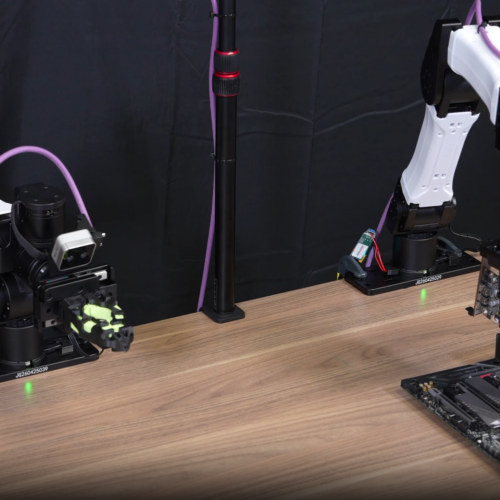
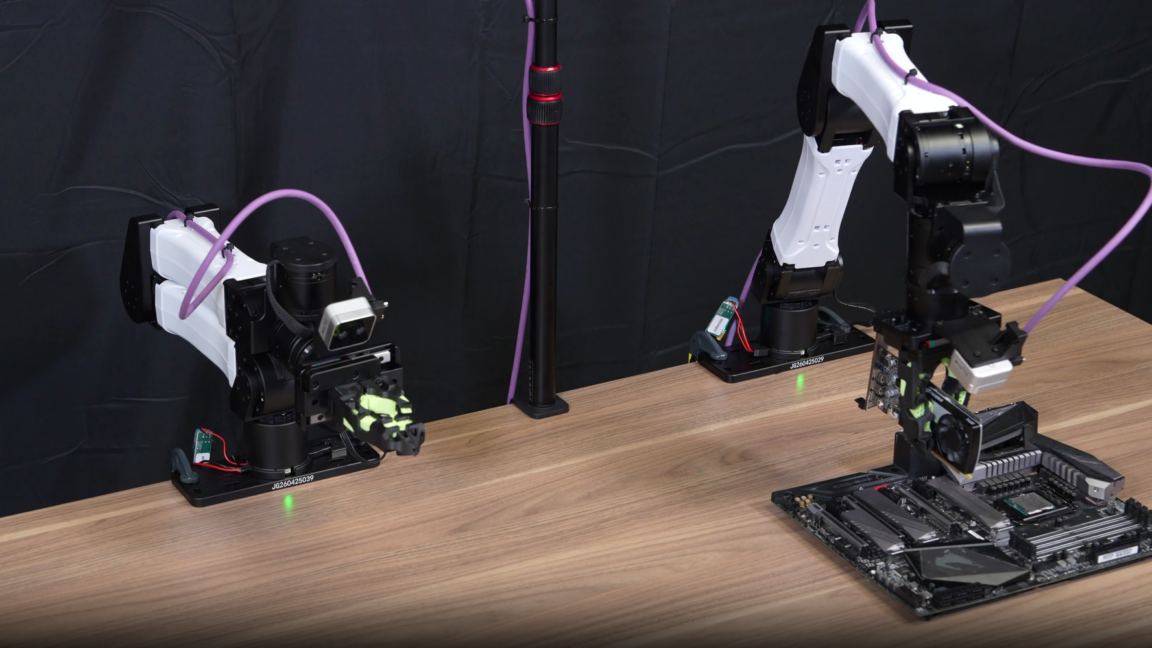
What happens when you give AI coding agents a lab full of robotic arms, some compute resources, and a “generous token budget” for teaching the robots various tasks? The agents can apparently figure out a training regimen that teaches the robots to successfully cut zip ties and even insert GPUs into thin sockets on motherboards.

That glimpse into how AI can act in a fully autonomous way to automate robot training was made possible by a new agent harness framework—software that wraps around AI models to enable their use of various tools while also providing capabilities such as memory, context, constraint, and feedback loops. That agentic harness, called ENPIRE, was developed by robotics researchers at the Nvidia GEAR (Generalist Embodied Agent Research) lab alongside collaborators from Carnegie Mellon University in Pittsburgh and the University of California, Berkeley.

“A part of our NVIDIA GEAR lab now self-improves tirelessly overnight,” wrote Jim Fan, director of AI at NVIDIA, in a LinkedIn post. “We just read the reports in the morning.”
Read full article

Comments

© NVIDIA

  •  

Nvidia targets China with Vera CPU push

Nvidia reportedly told Chinese customers its new Vera CPU for AI data centres could be available in August, in a move to regain ground in a market where its advanced GPU business has been stalled by US export curbs.

Reuters reported the chipmaker is pitching Vera as an alternative route into China after shipments of its H200 AI chip stalled for months. CEO Jensen Huang (pictured) previously said Nvidia’s market share in China had effectively fallen to zero, reflecting tighter US restrictions and Beijing’s push to support domestic suppliers.

The news site noted Vera is Nvidia’s first standalone CPU for agentic AI workloads, with the company claiming it delivers up to 1.8 times the performance of rival processors.

Huang unveiled Vera in March as part of Nvidia’s Vera Rubin architecture and cast the CPU as a major new growth engine, as the company looks to expand beyond GPUs and into the server processor market.

Sources told Reuters one major Chinese cloud provider is planning to order more than 300 servers containing two Vera CPUs each for testing, with the chips set to be deployed first in overseas data centres before any wider commitment.

The move also sharpens Nvidia’s challenge to Intel and AMD, which dominate the server CPU market.

Because Vera is based on Arm architecture rather than x86, Nvidia is entering the segment as AI infrastructure demand shifts further toward inference and agentic computing, where CPUs are becoming increasingly important alongside accelerators.

Reuters added selling CPUs into China may prove easier for Nvidia than shipping high-end GPUs, which remain subject to stricter US controls.

Broader adoption, however, is likely to hinge on software compatibility and the willingness of Chinese operators to move workloads away from domestic AI silicon.

The post Nvidia targets China with Vera CPU push appeared first on Mobile World Live.

  •  

Google quer reduzir dependência da TSMC e negoceia a produção de um novo chip de IA com a Samsung e Intel

O próximo processador de IA da Google terá uma arquitetura de fabrico dividida. A TSMC deverá produzir o núcleo computacional, cabendo à Samsung o fabrico do componente de interligação à memória. A Intel poderá também entrar na equação com a produção da TPU.

The post Google quer reduzir dependência da TSMC e negoceia a produção de um novo chip de IA com a Samsung e Intel appeared first on Tek Notícias.

  •  

Nvidia fecha acordos com gigantes sul-coreanos para alimentar a expansão da IA

Jensen Huang fechou em Seul uma série de acordos estratégicos com SK Hynix, SK Telecom, Naver, Doosan, LG e Hyundai, reforçando a aposta da Nvidia na Coreia do Sul como pilar central da sua expansão em IA e robótica.

The post Nvidia fecha acordos com gigantes sul-coreanos para alimentar a expansão da IA appeared first on Tek Notícias.

  •  

Votre futur PC pourrait vous obéir comme R2-D2 : Nvidia dévoile RTX Spark et sa vision pour l’ordinateur du futur

Au Computex, Jensen Huang n’est pas seulement venu présenter une nouvelle puce ARM pour Windows. À travers RTX Spark, le patron de Nvidia dessine surtout une vision beaucoup plus ambitieuse de l’avenir du PC, qui serait destiné à devenir comme R2-D2.

  •  

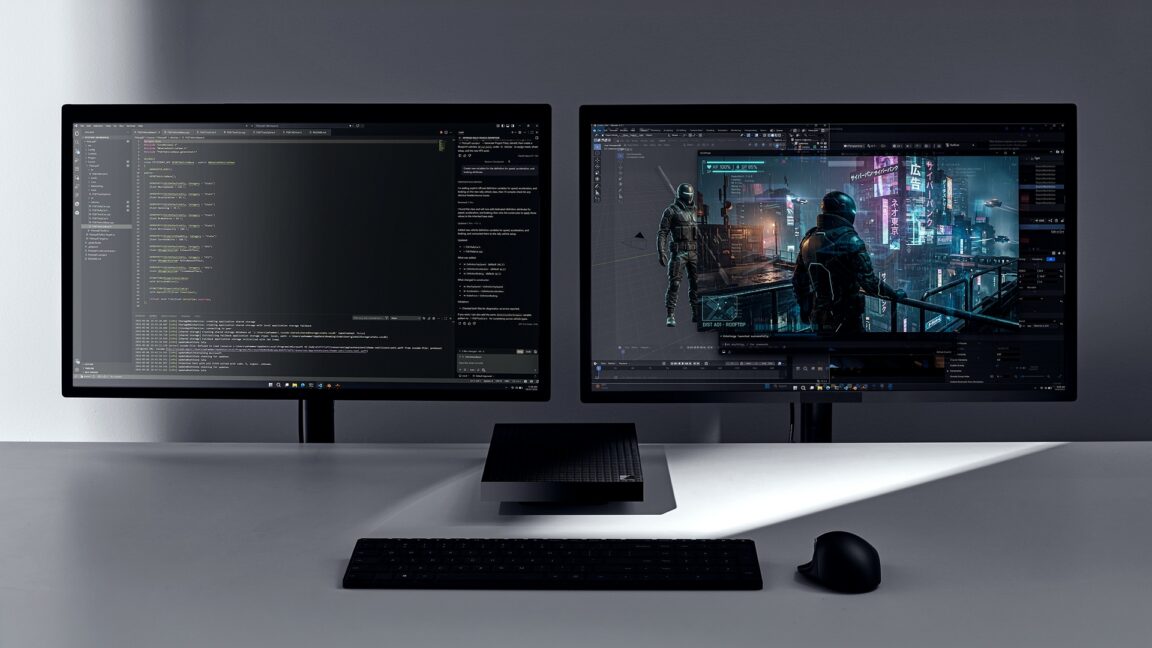
Microsoft plans Linux tools and an RTX Spark desktop for Windows developers

Microsoft's Build developer conference kicked off today, and as with almost everything the company has done in the last few years, Microsoft's opening keynote focused overwhelmingly on AI and other closely related technologies. There's Microsoft Scout, an OpenClaw-based "Autopilot" agent that can hook into Microsoft 365 data to perform tasks for users; several new AI models; an expanded preview of "Codename MDASH," which is a "multi-model agentic scanning system" meant to detect and fix software vulnerabilities.

A few of those announcements stood out to us as particularly interesting, either for esoteric technical reasons or because they seem like they may have some utility for those who aren't spending their every waking moment using generative AI tools. (Microsoft's recent efforts to make its flagship operating system faster, more reliable, more useful, and less annoying didn't really come up, but there have been plenty of other announcements on that front lately.)

On the hardware front, we didn't get any updates for existing Surface devices (not counting yesterday's Surface Laptop Ultra announcement), but we did get something new: the Surface RTX Spark Dev Box is "a compact developer PC" built around Nvidia's new RTX Spark chip with up to 128GB of built-in memory.

Read full article

Comments

© Microsoft

  •  

SKT puts Nvidia digital twins to work in chip fabs

SK Telecom (SKT) partnered up with Nvidia to use the chip company’s digital twin technology for semiconductor manufacturing environments operated by SK Hynix, pushing industrial AI deployments to achieve more automated factory operations.

The operator said it used Nvidia “Omniverse libraries” to adapt digital twins for complex, large-scale manufacturing environments, following a proof-of-concept completed last year at a SK Hynix semiconductor manufacturing site. It plans to commercialise the technology in stages as SK Hynix works to establish autonomous fab operations by 2030.

Using Nvidia’s Agent Toolkit, SKT developed Agentic Digital Twin Modelling technology to automate data processing, including site equipment and spatial structures, for use in digital twin systems. It also integrated Nvidia Omniverse libraries to make large 3D factory scenes load faster, run more smoothly and use GPU and memory resources more efficiently.

The set up aims to improve data conversion, scene optimisation and performance tasks required to build and run digital twins at scale.

SKT explained digital twins act as working replicas of real factories and equipment. In semiconductor plants, they can be used to test changes to processes or equipment layouts in advance, helping reduce costly trial and error in highly complex production sites.

Mike Geyer, head of industrial digital twins at Nvidia, said semiconductor fabs are “among the most challenging manufacturing environments”, citing “massive amounts of 3D data, complex equipment structures, and the need for high-level optimisation”.

Cho Ik-hwan, head of physical AI at SKT, added the collaboration demonstrates manufacturing digital twins can move “beyond simple 3D visualisation” into systems capable of “understanding and optimising large-scale 3D manufacturing data”.

SKT added the move bolsters its plans to expand its enterprise and public sector business with AI offerings spanning infrastructure, models and services.

The post SKT puts Nvidia digital twins to work in chip fabs appeared first on Mobile World Live.

  •  

Da Asus à Lenovo: Estes são primeiros portáteis equipados com o “super processador” Nvidia RTX Spark

Depois daquela que foi considerada a mais relevante apresentação, até agora, na Computex 2026, está na altura de conhecer um pouco melhor o que é o Nvidia RTX Spark, e quais os primeiros equipamentos a virem equipados com o mesmo.

The post Da Asus à Lenovo: Estes são primeiros portáteis equipados com o “super processador” Nvidia RTX Spark appeared first on Tek Notícias.

  •  

Nvidia RTX Spark comes to Windows PCs with Arm CPU, RTX GPU, and unified memory

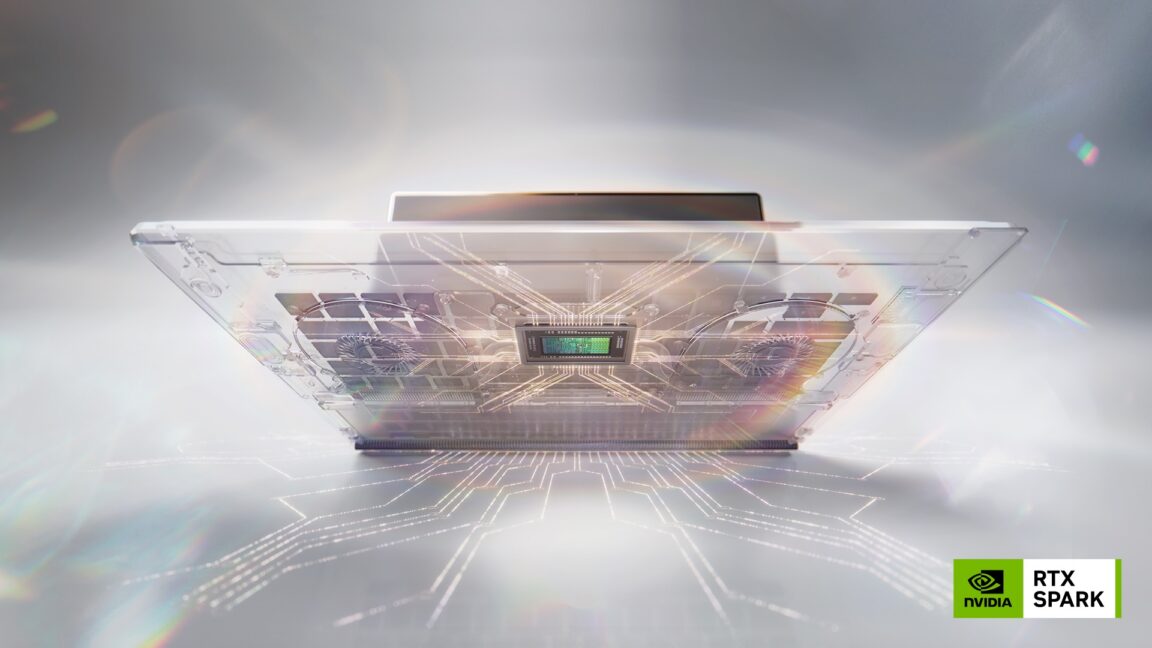
These days, Nvidia primarily sells AI data center products, and its traditional consumer devices feel like more of a side project. But the company occasionally still releases something designed for consumers. After a couple of years of rumors, Nvidia has announced an Arm-based chip designed to power Windows PCs. Dubbed RTX Spark, the new chip combines a 20-core Nvidia Grace CPU co-developed with MediaTek, up to 6,144 Blackwell-based GPU cores (the same architecture as the RTX 50-series GPUs), and support for up to 128GB of unified LPDDR5x memory.

Nvidia and its partners offered nothing about expected pricing, but both "slim Windows laptops with all-day battery life and premium displays" and "compact desktop PCs" are slated to be "available this fall" from partners including Asus, Dell, HP, Lenovo, Microsoft, MSI, Acer, and Gigabyte.

This isn't Nvidia's first chip for Windows PCs; earlier chips in the Tegra series powered several of the short-lived Windows RT tablets. But Tegra chips largely stopped appearing in consumer devices following the Tegra X1 in the late 2010s (variants power the original Nintendo Switch and the apparently unkillable Nvidia Shield TV box). Modern Arm-based PCs in the Windows 10 and Windows 11 eras have all used processors from Qualcomm.

Read full article

Comments

© Nvidia

  •  

Jensen Huang antecipa um futuro em que o PC é gerido por um agente e em que há “um supercomputador de IA em cada casa”

Quarenta anos depois do início da era dos computadores pessoais, a NVIDIA está a trabalhar com a Microsoft e com as fabricantes de PCs para reinventar o computador como uma plataforma de agentes. Por dentro está o chip NVIDIA RTX  Spark e há novas máquinas a caminho.

The post Jensen Huang antecipa um futuro em que o PC é gerido por um agente e em que há “um supercomputador de IA em cada casa” appeared first on Tek Notícias.

  •  

Nvidia kills Windows XP-era Control Panel "after 20 years of dedicated service"

Shiny new Nvidia apps like the GeForce Experience and the "Nvidia app" have come and gone, but the old Nvidia Control Panel and its rotating green Nvidia logo have existed as an option for managing basic settings since it was originally introduced in 2006.

That's ending with version 610.47 of Nvidia's Game Ready and Studio drivers for GeForce GPUs. Nvidia says the old Control Panel will no longer be installed by default, since "all actively supported Nvidia Control Panel features for GeForce users have been modernized and transitioned" to the new Nvidia app.

"The NVIDIA app contains all of the modern functionality of the NVIDIA Control Panel available for GeForce RTX GPUs, and much more, while running faster and more efficiently," writes Nvidia Technical Marketing Content Editor Andrew Burnes in the drivers' release notes.

Read full article

Comments

© Andrew Cunningham

  •  
❌