The department cited national security concerns, saying Elon Musk’s company had played a crucial role in the Iran war. It also argued it has the authority to stop environmental lawsuits brought by citizens.
The department cited national security concerns, saying Elon Musk’s company had played a crucial role in the Iran war. It also argued it has the authority to stop environmental lawsuits brought by citizens.
The department cited national security concerns, saying Elon Musk’s company had played a crucial role in the Iran war. It also argued it has the authority to stop environmental lawsuits brought by citizens.
TechCrunch's Zack Whittaker argues that the U.S. government's abrupt export-control order forcing Anthropic to pull its Fable 5 and Mythos 5 models offline was "never about an AI jailbreak" threat. Instead, it was driven more by "personality differences" between the AI company and Trump administration. Security experts say the reported guardrail bypass did not justify the order and warn that the move sets a troubling precedent: the government can unilaterally disrupt American software products without court approval, potentially undermining trust in U.S. AI providers. From the report: Katie Moussouris, a cybersecurity veteran and researcher who founded Luta Security, said in a blog post that Anthropic recently shared with her a private copy of a paper written by security researchers describing an alleged guardrail bypass in Fable 5. (The Wall Street Journal reports that the paper's authors are security researchers at Amazon.) Moussouris said that Anthropic reached out to ask for her take on the paper. Moussouris' blog post described how the researchers triggered the guardrail bypass, but said that the bypass itself "should never have triggered an export control." The difference is largely between asking an AI model to "review code for security issues" versus asking it to "fix this code."
The end result is largely the same, even if the questions are posed slightly differently. "The behavior described in the paper cannot meaningfully be fixed, and any attempt would only weaken the model for defense," said Moussouris, who criticized the export control directive as hasty, heavy-handed, and misguided. Moussouris and dozens of other top security researchers and experts have since called on the Trump administration to revoke the export control order, calling the move to pull advanced cybersecurity capabilities from network defenders in the U.S. as "dangerous."
Past administrations have made sweeping decisions on knowledge gaps. For instance, language used by the U.S. government during the 2010s to fix export law covering cybersecurity tools that could also be used for cyberattacks was so broad that inadvertently, it nearly outlawed legitimate security and vulnerability research. However, the Trump administration's directive appears retaliatory. Justin Hendrix, the editor of Tech Policy Press, said the Trump administration's move is "likely to raise alarms in foreign capitals about the reliability of American AI for critical applications." The message is that AI companies in the United States can't be trusted to operate without interference from the U.S. government.
The Trump administration hasn't confirmed why it invoked its export control directive. Did the officials misread the report and freak out? Did Amazon CEO Andy Jassy say something to senior government officials that prompted the reaction, out of caution or spite? Was something lost in translation, or was this a way to pressure Anthropic, with whom the administration already has a fractious relationship? It's possible that the White House was unaware of the far-reaching consequences of the letter's demand and officials are scrambling to undo the damage of their own making. To quote Hendrix, "the climate is one of a cloud of suspicion that senior officials are picking favorites based on personal and political factors." The aftermath is that the government has set a dangerous precedent about how much control it intends to wield over the release of American-made software. This time the government took issue with Anthropic; tomorrow it could be with anyone else.
The Federal Data Center Enhancement Act (FDCEA) is set to expire in September without an apparent replacement, potentially ending requirements for federal agencies to report on data-center efficiency, resilience, energy and water use, and contractor sustainability. Wired reports: Despite the public backlash, the Office of Management and Budget (OMB), the government agency that sets guidance for how agencies implement policies in line with the president's agenda, is not providing any plans for how federal agencies should manage the sunset or continue to implement reporting beyond the timeline of the law. This, current and former workers at OMB and the General Services Administration (GSA) say, signals that the Trump administration is set to take an even more hands-off approach to data center oversight and regulation.
A replacement for the requirements laid out in FDCEA would, in other administrations, have been in the works for months ahead of its expiration. An employee with the GSA, the agency that oversees the government's IT services and helps to implement the FDCEA, says that the lack of any sort of plan is highly uncommon. The employee spoke to WIRED on the condition of anonymity for fear of retaliation. "Never in the history of data center policies has a policy expired without another one having been painstakingly worked on for three years behind the scenes," says the GSA employee. "The technology has changed so much it's not about getting everything right, it's about doing the best they can and updating to a new policy. They claim they're going to make sure private companies pay their fare share, but they haven't explained how they'll do that."
[...] There has been a burst of data-center-related legislation introduced in Congress this year, from bills that mandate environmental reviews of data centers to bills designed to protect local moratoriums. However, it appears that none of these bills are designed to address the requirements in FDCEA, nor do they specifically address federally run or leased data centers. [...] A search of reginfo.gov, the OMB website that contains reports on the president's Unified Agenda, also turns up nothing for the FDCEA. "By letting this expire, OMB is going to enter into this new age of prioritizing rapid AI development over any sort of centralized control or rigorous standards," says the anonymous GSA employee who spoke to Wired. "In the absence of a new policy from OMB, [GSA] has no directive or measurable standards with which to point agencies towards managing data centers efficiently."
The Trump administration's decision that forced Anthropic to pull its latest cybersecurity models could be reactionary, retaliatory, or both, but the message is clear: The AI industry isn't immune from U.S. government interference.
The health secretary is trying to restart the work of a panel that advises the government on vaccines, after a judge froze its decisions and prevented it from meeting.
Prime Minister Keir Starmer said his government planned to bar children under 16 from social media, following similar efforts in Australia and elsewhere.
The Upper Colorado River on the Grand Canyon last month. About 40 million people and 5.5 million acres of cropland depend on the Colorado for drinking water and irrigation.
For many, including European Union policy makers, increased use of open source software is a key part of the answer, offering an alternative to proprietary platforms from a handful of large US vendors.
That’s the view of Frank Karlitschek, CEO of Nextcloud, the German software vendor that bills itself as an open-source alternative to software suites from the likes of Microsoft and Google.
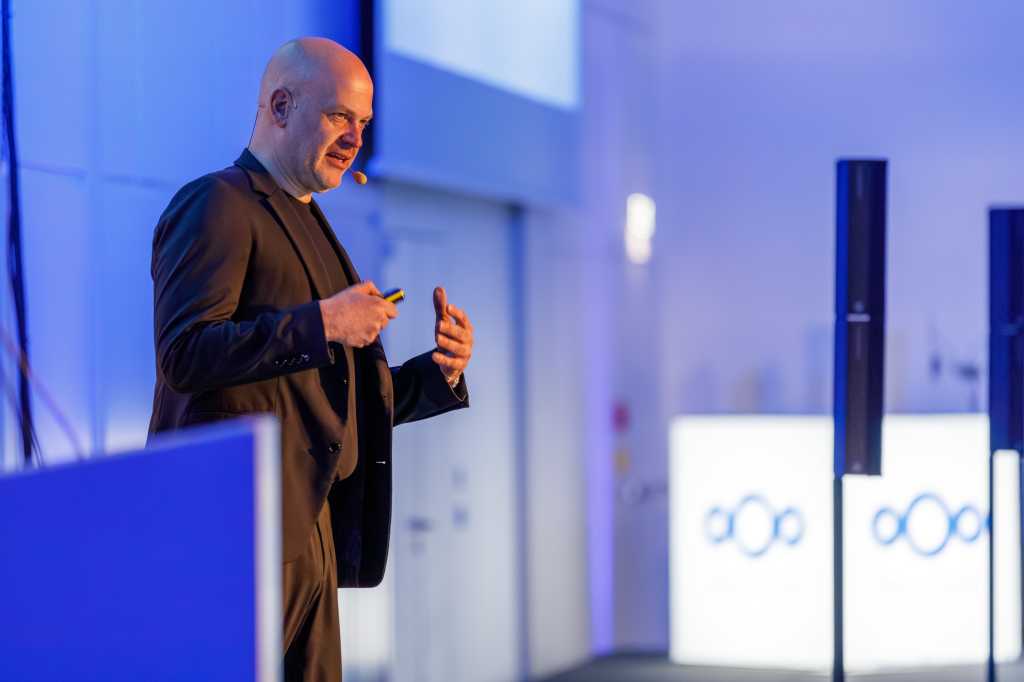
Nextcloud CEO Frank Karlitschek speaking at the German software company’s Nextcloud Summit 2026.
Nextcloud
Karlitschek founded the company in 2016, forking OwnCloud’s open-source file-sharing software. Since then, Nextcloud has expanded its products to include a range of productivity and collaboration tools that organizations can install and run on their own servers or access via cloud providers.
More recently, Nextcloud helped develop the Euro-Office application suite, which launched last week as an open source alternative to Microsoft Office and others, and continues to build out its Nextcloud Hub with AI assistant and agent features. The company now says revenues are growing at between 50% to 100% year over year.
Computerworld spoke to Karlitschek at Nextcloud Summit about momentum around digital sovereignty, the European Commission’s Tech Sovereignty Package proposals, and how Nextcloud hopes to evolve in the coming years.
The following interview was edited for length and clarity.
When Nextcloud launched, there was a big push in Europe away from on-premise software towards US cloud providers. How have attitudes towards open source and awareness of alternatives providers changed since then? “I’ve been doing open source since the ‘90s; at the time it was mostly for a nerdy audience — a very small group of people who really care about software and being in control. The sovereignty part was always there. It’s the core idea behind open source that you can understand what the software is doing, you can deploy it wherever you want, you can study it and change it, and so on.
“At the time, it was very niche, and since then it’s really growing and growing. There are certain points in time that really accelerated the growth; something like the Snowden revelations, for example, or the whole discussion about GDPR and certain legislation. And then, of course, the current geopolitical situation.
“I personally find it interesting that it grew from something that is just interesting for software developers, and now it’s on the geopolitical stage. I have meetings with big politicians who really care about it now, and I personally find it interesting that it’s increasingly understood by — I wouldn’t say the mainstream, but more and more people.
“At the beginning of Nextcloud, we mostly talked with IT managers looking for a solution; they care about how it works, the price and other things. But now we are also talking with the C-level people. It’s part of an overall strategy of a company, to say, ‘Hey, we need to look into the dependencies, we want to have a solution that fits into the strategy of the company.’
“In the past, it was like a commodity – it’s just some software, who cares? Now, it’s really part of the company strategy. That’s really interesting.”
There’s been a lot of interest around digital sovereignty over the past couple of years. To what degree is this translating into action, with organizations migrating away from US cloud providers? “The interest is gigantic. Everybody’s talking about it, we have so many contacts and people coming to us. Not everybody is doing it — a lot of people are just exploring and seeing what the options are.
“Obviously, we hope that this will translate into actions in a few months. At the moment, it’s a lot of talking and exploring the options. As a company, we are also growing a lot in customer base. But the interest in this space is even bigger; we see it as the beginning of a funnel.
‘In defense we see a lot of interest, then also everything around education is very important for us, then other regulated markets like the healthcare, for example. Finance is an interesting one.”
A lot of the conversations around digital sovereignty are tied to the current geopolitical situation and even the US administration. Do you see demand for sovereign technology as a structural change or are some organizations holding back to see how the situation improves in the future? “I see it as a long-term trend. If you look at the IT budgets and projects in the ‘90s, it was some something unimportant. It was, of course, important that the printer works and the fax machine works, but it was not definitely not strategic for the company.
“And then in 2000, the whole cloud trend came up, and there was the big hope that this will save money. It was always the narrative with cloud computing that you can just outsource it and save money and it’s great.
“Nowadays, people realize that it’s not something that you can just ignore. I wouldn’t say that everything comes back on premise, but people care about it now. They understand it’s not just a commodity, like water, or electricity that comes out of the wall and you don’t care what’s behind it. People realize that it’s something that has an impact on the future of an organization, from a vendor lock-in perspective, from a cost perspective, from an industry espionage perspective, and competitiveness. With open source, you’re more flexible. So, I think the trend that this is all more strategic and important for the future, this will go on.”
The European Commission recently published its Tech Sovereignty Package, including its open source strategy. Are these proposals sufficient to address the concern around digital sovereignty and support the open source ecosystem in Europe?
“It’s great, I really like it. I was actually surprised they listened so well. But now the real challenge is to actually do it; this still needs to happen. The description of the problem and a possible solution, this is all very good. I’m surprised, I’m happy about it, but to put this into actually binding law, this still needs happen.”
Would you like to see any changes to the current proposals before they’re gets passed into legislation? “At the moment, they have these four different risk levels, and the most critical one — No. 4 — is one where they accept only open source and European solutions. This is the highest risk level, but this is only for 1% of the market. I hope that it’s better understood that more than 1% should care about this more.
“If you have something which is completely not critical, maybe doesn’t possess any personal data at all — sure, it’s totally fine [to use non-EU suppliers]. But if you have GDPR requirements, espionage protection, no vendor lock-in, and so on, then there should be more of that [the highest requirement level].”
US firms have attempted to address European customers’ concerns in different ways, with sovereign marketed cloud services and joint ventures with European providers. Microsoft 365 Local is designed to run on premise. Where do you draw the line between what’s actually a sovereign solution and what some call ‘sovereignty washing? “Sovereignty has different dimensions, of course. But if you look at the problem of the CLOUD Act alone, which gives foreign agencies full access to the data here, then the whole idea that it’s enough to have European data centers — that’s not enough. It’s clearly written in the CLOUD Act, that even with [European] data centers, or subsidiaries, it still applies.
“Microsoft tries to find a solution there with its Delos idea; a company that is owned by SAP — a German company — and Microsoft delivers only the software. But even then, you have this dependency, because software needs updates and software security updates. And if they’re not available, or if someone puts a backdoor into the software, which is possible, then you still have a problem.
“So, they’re trying really, really hard to find a way around the problem, but it’s not easy for them.”
To look ahead a bit in terms of the product strategy, there were announcements for Nextcloud Hub this week around AI agents, and the program to work with independent software vendors. What do these say about Nextcloud’s future? “The overall product strategy will not change so much; it’s about having state-of-the-art collaboration software — but with a lot more control, security and safety — that’s open source and independent where you host it. So this will always stay, but of course, there’s some additional factors that come into play now, like the AI impact that we see and want to leverage with our agent strategy.
“We’ve had this for one and a half years already, but we are expanding that. In the future, you might still use an interface in a classic way that you open documents and type in text and so on. But there are also a lot of operations that can be automated in the future with AI. And this is something we really invest a lot into.
“Another aspect of AI is how easy it is to build custom software around it. The coding models are getting better all the time, which means there will be more and more custom business software. This is what we want to capture with our ISV program. Software development will become easier, but you don’t want to deploy just random software in your company, you want to have something that is tested, certified and secured, and that somebody’s accountable for it. This can be something we can provide at Nextcloud.”
Editor’s note: NextCloud paid for Matthew Finnegan’s travel and hotel costs for NextCloud Summit 2026, but had no editorial role in the creation of this story.
A U.F.C. fight on President Trump’s birthday will now double as a capstone for Paramount’s successful effort to secure Justice Department approval for a mega media merger.
The company said on Friday night that the federal government had ordered limits on its Mythos and Fable 5 A.I. systems, citing national security concerns.
Lawmakers have failed to extend a surveillance law that allows US intelligence agencies to monitor targets abroad without a warrant.
Congress rejected a vote to extend Section 702 of the Foreign Intelligence Surveillance Act to July 2, which means, for a few days at least, some surveillance will be put on hold, for the first time since the Act was passed in 2008. The next possible chance for a vote will be June 28.
This has significance for CISOs because they need to be aware of how communication between the US and other countries is being monitored. The Act permits US intelligence agencies to collect texts and emails sent to and from foreigners living outside the US without a warrant — and when those communications are to or from an US citizen, it allows them to scoop them up too.
“For too long, the FBI has been able to piggyback on a major national security tool as an unconstitutional backdoor way of reading Americans’ communications,” Electronic Frontier Foundation Senior Policy Analyst Matthew Guariglia wrote in article about the renewal vote this week.
It is uncertain what will happen next. Some commentators expect things will proceed as if the Act had been extended, possibly through an executive order. However, the industry may well revolt against this and we could see some tech providers take legal action.
The freeze affects 41 wind projects in Texas, which produces more wind power than any other state in the U.S., as well as projects in Colorado, Illinois, Iowa, Kansas, New Mexico, Oregon and Washington.

 Login