❌

Reading view

Hanwha Ocean to Build Six KDDX Destroyers Featuring AESA Radar, VLS, and IEP Options

South Korea has formally advanced its Korea Destroyer eXperimental (KDDX) program by designating Hanwha Ocean as the prime contractor for the construction of six next-generation destroyers, according to reports.

The move signals a concrete step in Seoul’s broader naval modernization effort, aimed at replacing aging KDX-I class frigates that have been in service since the late 1990s.

Program architecture and Hanwha Ocean’s role

Hanwha Ocean, formerly known as Daewoo Shipbuilding and Marine Engineering (DSME) before its acquisition by the Hanwha Group in 2023, will serve as the lead shipbuilder for the KDDX fleet.

The company brings substantial warship construction experience, having previously built KDX-II Chungmugong Yi Sun-sin-class and KDX-III Sejong the Great-class destroyers for the Republic of Korea Navy (ROKN).

The KDDX is designed as a roughly 6,000-ton displacement vessel — placing it between a conventional frigate and a full destroyer — optimized for multi-domain operations covering anti-surface warfare (ASuW), anti-submarine warfare (ASW), and anti-air warfare (AAW).

The design incorporates an integrated mast architecture that consolidates radar, electronic warfare, and communications systems into a single structure to reduce radar cross-section.

Propulsion and combat systems specifications

The KDDX is expected to adopt a combined diesel and gas (CODAG) or integrated electric propulsion (IEP) system, with final propulsion architecture still subject to program refinement. The ship’s combat management system is slated for domestic development, consistent with South Korea’s stated goal of reducing dependence on foreign defense electronics.

The vertical launch system (VLS) configuration will likely accommodate the domestic Hyunmoo cruise missile family alongside the Korean Air and Missile Defense (KAMD) interceptors.

The radar suite is anticipated to include an Active Electronically Scanned Array (AESA) system, developed in collaboration with LIG Nex1, which has been involved in previous Korean naval electronics programs. Integration of a domestically produced 127mm naval gun is also under consideration, though supplier finalization remains pending.

Industrial and procurement timeline

The six-ship order represents a significant production run by regional standards. South Korea’s Defense Acquisition Program Administration (DAPA) has been managing requirements definition, and the program has faced iterative delays tied to technology readiness levels for some onboard systems.

Full-rate production is expected to extend through the mid-2030s, with the lead vessel delivery targeted within the current decade pending contract finalization.

From an industrial standpoint, the contract reinforces Hanwha Ocean’s position in the domestic naval shipbuilding sector following its competition against HD Hyundai Heavy Industries, which builds the existing Sejong the Great-class Aegis destroyers.

The award consolidates naval surface combatant work at a single yard, which carries both efficiency benefits and supply chain concentration risks if production bottlenecks emerge.

Operational context and regional calculus

The KDDX program does not operate in isolation. The ROKN is simultaneously pursuing the KDX-III Batch II Aegis destroyer and expanding its submarine fleet under the KSS-III program. Sustaining parallel major acquisition tracks places pressure on defense budgets and domestic industrial bandwidth.

Questions remain about whether Korea’s shipyards can absorb concurrent destroyer, submarine, and future light aircraft carrier workloads without schedule compression on any individual program.

For engineers and defense analysts tracking South Korea’s evolving naval engineering programs, the KDDX contract award with Hanwha Ocean represents a procurement decision with tangible technical and strategic consequences that will play out across the next decade of ROKN fleet development.
  •  

Hobbyist converts SEM into transmission electron microscope for sub-nanometer imaging

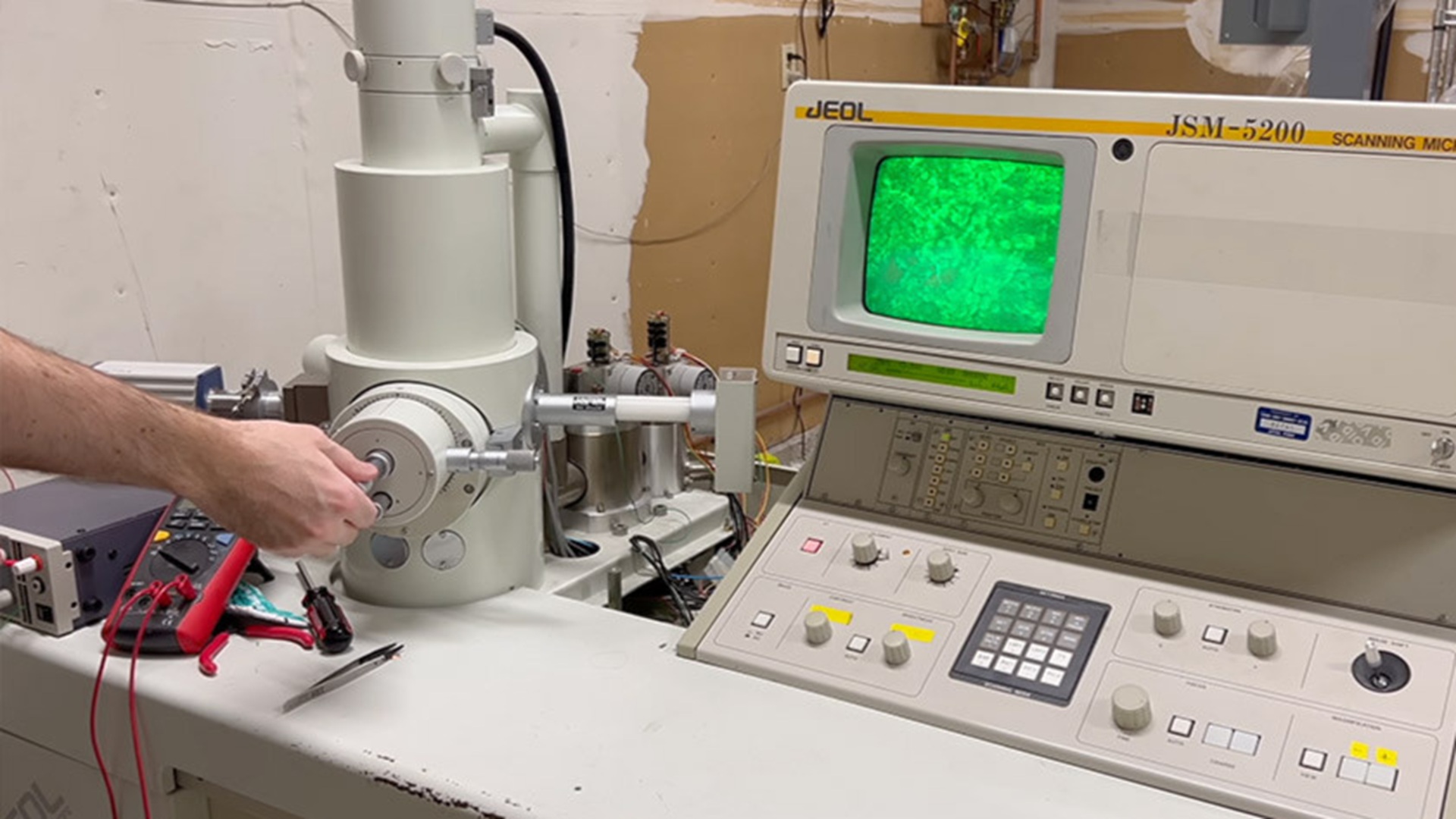
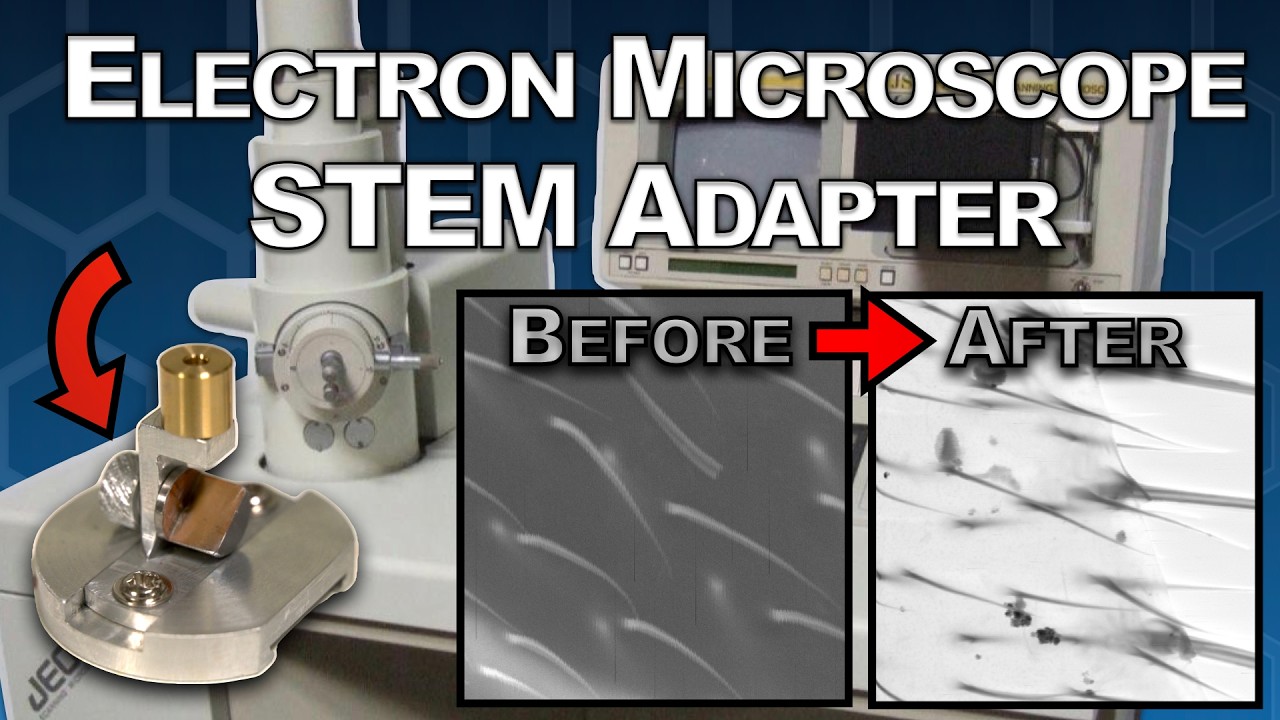
A home machinist and microscopy enthusiast has documented a detailed technical conversion of a scanning electron microscope (SEM) into a transmission electron microscope (TEM), demonstrating that sub-nanometer resolution imaging is not strictly confined to professional laboratory settings.

The project walks through the mechanical, electronic, and optical modifications required to redirect the SEM’s focused electron beam through an ultrathin specimen rather than bouncing it off a surface.

SEM versus TEM

In a conventional SEM, a focused electron beam rasters across the surface of a sample and detectors collect secondary and backscattered electrons to construct a three-dimensional surface image.

A TEM, by contrast, accelerates electrons through a thin specimen—typically below 100 nanometers—and a detector or phosphor screen on the far side captures the transmitted beam, yielding internal structural information at atomic or near-atomic resolution.

The two modalities require fundamentally different sample preparation, detector geometry, and beam alignment strategies, which makes the conversion non-trivial.

The modification involved fabricating a custom specimen holder stage capable of holding electron-transparent samples, repositioning a scintillator-based detector beneath the sample plane, and carefully adjusting beam convergence angles to suit transmission geometry.

Beam energy in the converted system reportedly remained in the range typical of low-voltage SEMs—roughly 5 to 30 kiloelectron volts—which is lower than the 80–300 keV found in dedicated TEMs.

That energy gap has direct consequences for penetration depth and contrast, meaning the converted instrument is better suited to very thin biological or polymer films than to hard crystalline materials.

Specimen preparation constraints

At 30 keV, electron penetration through matter is substantially reduced compared to a 200 keV research-grade TEM. Specimens must be prepared to thicknesses well below 50 nanometers to achieve meaningful transmission contrast, which demands either focused ion beam (FIB) thinning or careful ultramicrotome sectioning.

The project does not sidestep this limitation; the builder acknowledges that sample preparation remains the most labor-intensive part of the workflow and that certain dense or thick materials will simply block the beam entirely at these voltages.

Achieving proper alignment in a converted system also presents practical difficulties. Commercial TEMs incorporate sophisticated electromagnetic lens alignment systems, stigmators, and beam-tilt controls that are absent in most SEMs. The DIY conversion relies on mechanical stage adjustment and iterative beam tuning to compensate, which increases setup time per sample significantly.

Detector configuration and image acquisition

The transmitted electron signal was captured using a scintillator coupled to a camera placed below the sample stage. This configuration is conceptually similar to a bright-field TEM detector arrangement, where areas of the specimen that scatter or absorb electrons appear darker against a bright background.

The resolution achievable with this setup is constrained not only by beam energy but also by the point spread function of the scintillator material and the pixel pitch of the camera sensor used.

For engineers interested in electron optics at the amateur level, projects like this one sit alongside other low-cost electron beam experiments that have appeared in the maker community.

DIY scanning electron microscope builds have previously demonstrated that fundamental vacuum and high-voltage engineering skills can be acquired outside institutional settings, though always with serious attention to X-ray shielding and high-voltage safety protocols.

Safety and practical risk factors

Operating any electron beam instrument outside a certified laboratory introduces real hazards. Bremsstrahlung X-ray emission is an inherent byproduct of electron deceleration in the target and chamber walls.

SEMs are shielded from the factory, but any modification to the chamber geometry—including cutting ports for a transmission detector—requires careful verification that shielding integrity is maintained. The builder’s documentation should be read with this in mind by anyone considering replication.

The conversion represents a technically detailed exercise in applied electron optics and vacuum engineering, and it offers a practical reference point for understanding the design constraints that separate entry-level and research-grade electron microscopy instruments.

💾

Explore a detailed DIY conversion of a scanning-electron-microscope to a TEM for sub-nanometer imaging at home.
  •  

Open-source swarm robotics: Custom ESP32 MiniBots turn chess pieces into autonomous robots

A hardware developer known online as 3DprintedLife has unveiled an open-source swarm robotics project that transforms each individual chess piece into an autonomous micro-robot capable of independent navigation, wireless communication, and self-localization.

The custom-engineered setup, appropriately named MiniBots, addresses a major challenge in miniaturization and hardware integration. To build a fully operational self-playing board using this methodology, every single piece must operate as a standalone robotic unit.

This means each individual bot requires its own processing unit, onboard power supply, dedicated motor drivers, locomotion mechanism, and positioning sensors, all while remaining small enough to fit within the standard squares of a functional chessboard layout.

Inside the Hardware of a MiniBot Piece

The physical architecture of each MiniBot piece is built around a highly compact, custom-designed printed circuit board (PCB) that fits neatly inside a 3D-printed outer shell. At the heart of each robot’s electronic stack is an ESP32-C3 microcontroller module.

Chosen for its miniature footprint and integrated wireless capabilities, this single-core module manages the primary firmware operations and low-level control loops.

For movement, each micro-robot relies on two ultra-miniature PMO8-2 stepper motors, each coupled with a specialized onboard stepper driver integrated circuit (IC).

These tiny motors drive a set of miniature wheels using direct friction engagement, allowing the piece to pivot, turn, and travel precisely across the smooth surface of the chessboard. Powering this array is a small 170 milliampere-hour (mAh) Lithium-Polymer (LiPo) battery tucked inside the base.

To coordinate the movements of up to 32 independent robots simultaneously, the system uses a dual-tier control hierarchy. A centralized command hub module acts as the master controller, utilizing the low-latency ESP-NOW wireless protocol to communicate directly with each piece.

The hub’s main board, which also operates on an ESP32-C3 wireless interface, connects to a Raspberry Pi single-board computer (SBC) via a serial link. The Raspberry Pi handles the high-level coordination and execution scripts using Python-based software.

Overcoming the self-localization bottleneck

The most complex hurdle of the swarm design is positioning. For a piece to successfully navigate to a destination square, it must first establish exactly where it is located on the 8×8 playing grid. While the developer initially considered using ultrasonic location sensors, the final design pivoted to a specialized electromagnetic tracking system.

The completed system embeds a series of scanning electromagnets directly beneath the surface of the chessboard. Concurrently, each MiniBot is outfitted with an internal magnetometer that measures local magnetic field intensity.

By utilizing precise clock synchronization via ESP-NOW, the board activates its underground electromagnets within a strict, sequential timing window.

As the electromagnets fire, the magnetometer inside the chess piece records the shifting field strengths. The onboard software takes these real-time intensity readings and runs a triangulation algorithm.

This process allows the robot to calculate its precise coordinate location relative to the active magnetic sources, effectively mirroring standard radio triangulation techniques on a micro-scale.

Prototype status and open-source potential

While a single-piece prototype has successfully demonstrated the viability of the movement and positioning algorithms, scaling the concept up to a full 32-piece swarm presents ongoing debugging challenges.

During structural testing, the developer noted that the single-core architecture of the ESP32-C3 introduced minor timing bugs in the localization firmware, which will require minor software alterations in a future update.

Additionally, implementing robust power-saving modes and designing a streamlined, multi-device recharging dock remain critical areas of focus before the swarm can play a complete, automated game.

💾

Open-source MiniBots turn chess pieces into autonomous robots using ESP32 and electromagnetic localization.
  •  

Valenciaport installs 8.6 kWp IT3 vertical solar panels on breakwater wall

The Port Authority of Valencia (APV), operating commercially as Valenciaport, has commenced the installation of vertical solar panels on the breakwater wall of the Port of Valencia’s northern extension.

The clean energy initiative represents a practical test step in the port’s ongoing strategy to advance toward a more sustainable, efficient, and thoroughly decarbonized operational model.

The installation contract was officially awarded to Pavener Servicios Energéticos S.L. for a total investment of $195,000, with the physical setup projected to be fully operational by September 2026.

The specialized infrastructure work is a core component of the broader European initiative, Renewport, which focuses on harnessing renewable energy potential to drive clean energy transitions across Mediterranean ports.

To make the installation viable on a vertical sea wall, the project utilizes a unique technological layout called IT3, an engineered solution created and registered by the local Valencian startup SunnerBox.

The engineering behind the matrix

Unlike conventional, rigid solar arrays that require heavy building modifications or sprawling horizontal space, the IT3 framework relies on a matrix layout. The structural footprint consists of a matrix system of photovoltaic panels arranged directly across a specialized mesh network. This mesh is tightly suspended using a system of heavy-duty ties and tensioners anchored directly into the face of the concrete breakwater wall.

According to technical specifications provided by SunnerBox, mounting the panels via a flexible mesh framework drastically reduces upfront structural modification costs and minimizes overall material weights.

Furthermore, the streamlined layout accelerates the physical installation process on the concrete wall, simplifies routine maintenance sweeps in the coastal zone, and significantly enhances the long-term economic viability of scaling up vertical wall energy systems across industrial marine facilities.

Real-time performance monitoring

The newly deployed pilot system consists of 21 distinct photovoltaic modules. Each individual panel carries a capacity rating of 410 watts, bringing the total installed peak power capacity of the vertical wall array to exactly 8.6 kilowatts peak (kWp).

This targeted pilot test is being spearheaded by the Port Authority of Valencia, in active collaboration with the Project Management, Innovation, and Sustainability Research Center (PRINS) at the Polytechnic University of Valencia.

The research partners will conduct a rigorous, two-month performance assessment window to observe the system under real maritime conditions. During this data-collection phase, a specialized suite of various onboard sensors will track the total energy generation metrics and measure the structural dynamic behavior of the mesh framework in real time.

The electricity generated by the 21 panels during the trial will be fed directly back into the array to power the diagnostic sensor system. By verifying how the tensioned mesh withstands maritime forces, the project aims to demonstrate how existing harbor breakwaters can be converted into passive clean energy hubs.

  •  

Deep learning co-design helps scientists project 28-layer 3D images without crosstalk

Engineering researchers at the University of California, Los Angeles (UCLA) have developed an advanced three-dimensional (3D) image projection system capable of displaying 28 distinct depth layers simultaneously in a single optical exposure.

Led by Professor Aydogan Ozcan from the UCLA Samueli School of Engineering and the California NanoSystems Institute (CNSI), the project introduces a compact framework designed to enhance next-generation holographic displays, medical imaging, and virtual reality interfaces.

The research details a hybrid digital-optical architecture that resolves persistent issues of visual distortion and cross-talk in dense 3D imaging.

Traditional multi-layer volumetric projection methods often suffer from image degradation when multiple focal planes are closely spaced. As these layers converge, the light fields often bleed into one another, reducing depth clarity, causing severe blurriness, and diminishing visual sharpness for the viewer.

Deep learning and light programming

To overcome these limitations, the UCLA research team utilized deep learning to co-optimize a digital computational encoder alongside a passive, physical optical decoder.

The system functions by running target visual data through a digital neural network that incorporates explicit depth and coordinate instructions. This network compresses the multi-layered structural information into a singular, unified phase pattern that represents the entire 3D volume.

When light passes through the system, it hits a series of structurally optimized diffractive surfaces that act as an analog decoder. These surfaces physically manipulate the light wave, routing specific components of the image to their exact pre-assigned depth planes.

This precise “light programming” allows the system to suppress data leakage between adjacent layers, maintaining clean visual separation even when planes are separated by distances near the scale of a single light wavelength.

Scalability and experimental validation

Through numerical modeling, the team demonstrated that the framework scales effectively to accommodate complex volumetric scenes split into 28 independent axial slices.

Additionally, the system features a dynamic adjustment capability, allowing operators to alter the target depth positions of the projected images on demand without modifying the core physical architecture.

To confirm the practical viability of this digital-optical pipeline, the researchers built a physical, two-plane hardware prototype that uses a single-layer optical decoder operating in the visible light spectrum.

Experimental measurements confirmed that the projected light distribution closely matched both the target designs and computational simulations. The experimental setup significantly outperformed unassisted free-space optical systems, validating the real-world stability and accuracy of the design.

Future tech integration

The compact layout of this encoder-decoder architecture provides an energy-efficient foundation for high-resolution volumetric imaging. Beyond immediate integration into near-eye augmented reality (AR) and virtual reality (VR) headsets, the technology holds potential applications in multi-depth microscopy, real-time 3D medical visualization, and optical computing.

Moving forward, the research team aims to expand the capabilities of this framework by exploring multispectral operations to support full-color projections, multi-perspective holography, and the integration of physically fabricated multi-layer decoders suitable for commercial manufacturing form factors.

The research was first published in the journal Light: Science & Applications.

  •  

Ukraine’s AI drones entered ‘Terminator mode’ and killed Russian soldiers — no human fired

For years, the idea of a fully autonomous weapon system killing a human being on the battlefield existed as a warning, a thought experiment, and an unconfirmed rumor. It is no longer any of those things.

A Ukrainian drone manufacturer has confirmed to New Scientist that a test involving 10 fully autonomous AI-controlled drones — operating with no human oversight or connection — killed Russian soldiers on the front line of the Ukraine war approximately two years ago.

The disclosure, made at a press event hosted by the Ukrainian embassy, marks what weapons experts are calling a historic threshold in the history of warfare.

“Everything it sees will be killed”

The drone-maker behind the technology, Alexander Kokhanovskyy, described the operation in blunt terms. The drones were launched toward the front line near the cities of Bakhmut and Chasiv Yar during a Ukrainian counteroffensive push, programmed to cover between three kilometers (1.86 miles) and five kilometers (3.10 miles) over approximately 10 minutes, at which point they entered what Kokhanovskyy called “Terminator mode” — a state in which an onboard AI model independently searched for, identified, and attacked targets with no human input.

“We just launch it, and we know everything will be dead — everything that will be found there in this particular area will be dead,” Kokhanovskyy told New Scientist. “There is no connection to the drone at all, you cannot see the video, nothing. Everything it sees will be killed.”

Because the autonomous drones transmitted no live footage during the mission, there was no way to monitor them in real time. After the test concluded, human-piloted drones were sent into the area to manually survey results. What they found: “a couple of soldiers, one truck.”

Kokhanovskyy was not personally present at the test, which was carried out by an unnamed military unit. He was clear that it remained a one-off experiment and was never expanded into wider deployment. “It’s a test. We never implemented it more widely,” he said.

What makes this different from every prior incident

The distinction matters. Traditional armed drones transmit live video to a human operator who makes the decision to fire. A fully autonomous drone detects its target, decides whether it meets the engagement criteria, calculates an attack path, and executes the strike — entirely in software, with no human consulted at any point. In Terminator mode, that decision — whether a person lives or dies — was made by an algorithm.

A UN report in 2021 suggested that a Turkish Kargu-2 quadcopter may have been used to autonomously attack humans in Libya in 2020, but that account contained no confirmed casualties and gave no specific sourcing. The Ukraine disclosure, by a named manufacturer speaking on record at a diplomatic event, is the first confirmed account with stated outcomes.

What Kokhanovskyy wants

Ukraine’s current regulations prohibit fully autonomous lethal operation in the final stage of an engagement, requiring human verification before a strike is executed.

Kokhanovskyy acknowledged this constraint in the same conversation — while noting that his company’s upcoming ALITA counter-drone system, consisting of 16 launch pads and 64 drones, will require just two human operators to manage the entire battery. The system can travel toward incoming threats at 280mph, engaging everything from small drones to helicopters.

Even with humans required in the final step, Kokhanovskyy made his personal view clear: “I would love to operate without that restriction.”

That position is not universal inside Ukraine’s military. Major Danylo Polozhukhno, a senior figure in Ukraine’s 21st Separate Unmanned Systems Regiment who was unaware of the test, told New Scientist that his soldiers use semi-autonomous systems but always maintain a human in the loop.

  •  

Scientists propose space-based plasma airbag to protect Earth from extreme solar flares

An international team of space physicists and engineers has unveiled a highly ambitious planetary defense concept designed to protect Earth from the devastating impacts of extreme space weather.

The proposal, dubbed “StormWall,” outlines a space-based system that can artificially reinforce the planet’s natural defenses just before a major solar storm strikes.

According to researchers, applying serious physics to the problem demonstrates that humanity no longer has to simply brace for impact and accept whatever the Sun throws at the planet.

The fragility technological infrastructure

Geomagnetic storms occur when a massive surge of solar energy—often carried by coronal mass ejections—violently interacts with Earth’s magnetosphere, the magnetic bubble protecting the planet.

While these events trigger beautiful auroras, they pose a severe threat to modern civilization by inducing major electrical currents that can overload power grids, destroy multi-million-dollar transformers, damage satellites, and knock out global GPS and communication networks.

Historically, severe events such as the 1859 Carrington Event disrupted telegraph lines across continents. In today’s hyper-connected society, a similar extreme storm could cause trillions of dollars in economic damage and leave entire populations in prolonged darkness.

The physics of the ‘orbital airbag’

The core breakthrough of the StormWall concept lies in suppressing a process known as magnetic reconnection. During powerful solar storms, the magnetic fields carried by the solar wind can align with Earth’s magnetic field, linking the two. This cosmic link opens a pathway that allows solar energy to pour directly into near-Earth space.

To exploit this physical vulnerability, the StormWall system functions similarly to an automotive airbag. The proposed architecture involves a constellation of six spacecraft strategically deployed into geosynchronous orbit. These satellites would carry stores of safe solid or liquid alkaline materials, such as barium, lithium, sodium, or calcium.

When space weather forecasters detect a dangerous solar storm barreling toward Earth, ground operators would trigger the fleet to release the materials into space. Upon release, solar radiation would rapidly vaporize and ionize the elements, forming a thick cloud of electrically charged plasma.

This artificial plasma would drift toward the sun-facing frontier of the magnetosphere, effectively thickening the planet’s shield and forcing the harsh solar wind to slide around Earth rather than break through.

High rewards and earthwide benefits

To test the viability of the concept, the research team ran advanced computer simulations modeling the historic May 2024 geomagnetic storm. The data revealed that under normal conditions, the storm caused major magnetospheric disruptions, but when the simulated StormWall plasma shield was activated, the overall intensity of the geomagnetic storm was slashed by more than half.

Crucially, this geoengineering approach features minimal long-term environmental risk. The artificial plasma cloud is highly transient and would naturally dissipate within roughly six hours as it is swept into deep space by the solar wind, avoiding re-entry into Earth’s atmosphere.

Furthermore, because the magnetosphere blankets the entire globe, StormWall would act as a collective, democratic shield. The system cannot be modified to protect just one country or a specific corporate satellite fleet; it inherently shields the entire planet and everyone on it simultaneously.

The primary hurdle moving forward is reducing the steep manufacturing and deployment costs. Future phases of the project will focus on identifying the single most cost-effective element for mass release and optimizing orbital trajectories to minimize upkeep.

  •  

SORA-Q: Baseball-sized shape-shifting rover that saved Japan’s SLIM moon mission

A microscopic, shape-shifting robot inspired by children’s toys successfully saved the narrative of Japan’s historic first lunar landing, according to data finalized by the Japan Aerospace Exploration Agency (JAXA).

The mini-rover, officially designated as Lunar Excursion Vehicle-2 (LEV-2) and nicknamed SORA-Q, was ejected from Japan’s Smart Lander for Investigating Moon (SLIM) just moments before the main spacecraft suffered a catastrophic engine failure and flipped upside down on the lunar surface.

Newly released mission telemetry reveals that the baseball-sized mechanical sphere executed its transforming sequence flawlessly, crawling across the loose lunar soil to capture the iconic, mission-saving image of the inverted lander.

The Toy Engineering Behind the Sphere

Weighing a mere 250 grams (8.8 ounces) and measuring just 8 centimeters (3.1 inches) in diameter, SORA-Q represents an unprecedented cross-disciplinary engineering venture. JAXA co-developed the tiny explorer alongside Japanese toy manufacturing giant Takara Tomy—the original co-creators of the Transformers franchise—as well as Sony Group and Doshisha University.

The robot’s structural layout relies on mechanical principles utilized in transforming action figures. To survive the violent vibrations of spaceflight and the impact of dropping onto the Moon, SORA-Q remained packed into a smooth, metallic sphere.

Upon landing, the ball split down the middle, allowing the two outer hemispheres to extend outward as independent, eccentric wheels, while a small stabilizing tail deployed from the rear to prevent the body from spinning in place. This transforming design allowed a tiny camera package to pop upward from the core, clear of the dusty ground.

Surviving the Regolith: The Locomotion Modes

Operating on the Moon presents steep physical challenges for miniature mobile platforms. The fine, abrasive lunar dust—known as regolith—can easily jam delicate gears, and the lack of substantial gravity makes traditional wheel traction highly inefficient.

To overcome these environmental hurdles, JAXA and Takara Tomy programmed SORA-Q with two distinct physical locomotion modes to ensure it could navigate the unpredictable lunar surface.

In crawling mode, both hemispherical wheels rotate in perfect synchronization, creating a standard rolling motion that is highly energy-efficient for crossing flat terrain.

For tougher terrain, the robot switches to butterfly mode, where the wheels shift out of alignment and rotate asynchronously to mimic a swimming or flapping motion. This erratic movement allows the rover to push itself out of deep, shifting dust traps by continually shifting its center of gravity side to side.

Analysis confirms that the rover dynamically toggled between these modes, navigating slopes up to 15 degrees and crawling across several meters of rough terrain to position itself for its primary photography task.

Saving a mission via mesh networks

SORA-Q’s deployment was not just a mobility test; it proved to be an essential safety net for the entire SLIM mission. When the primary lander lost one of its main thrusters at an altitude of 50 meters, it touched down hard and tipped completely over, leaving its solar panels facing away from the sun and severely limiting its operational lifespan.

Because SORA-Q was too compact to house a heavy, power-hungry antenna capable of beaming data directly back to Earth, it relied on an innovative, local Bluetooth mesh network to relay its findings.

The tiny sphere filmed the tilted lander and transmitted the image files locally to its companion rover, LEV-1—a separate, 2.1-kilogram hopping robot that had ejected alongside it. LEV-1 then utilized its larger, dedicated S-band transponder to upload the data to ground stations on Earth.

The resulting photograph provided the first definitive visual proof of SLIM’s orientation on the lunar slope, enabling JAXA engineers to precisely calculate when the changing angle of the sun would hit the inverted solar cells and wake the lander back up.

By proving that ultra-lightweight, transforming mechanisms can survive the space environment, the success of SORA-Q is directly influencing the design of the next generation of compact planetary scouts, showing that heavy, rigid chassis are no longer the only way to explore foreign worlds.

  •  

Scientists brew ‘ultrasonic espresso’ in three minutes at room temp with 75% less energy

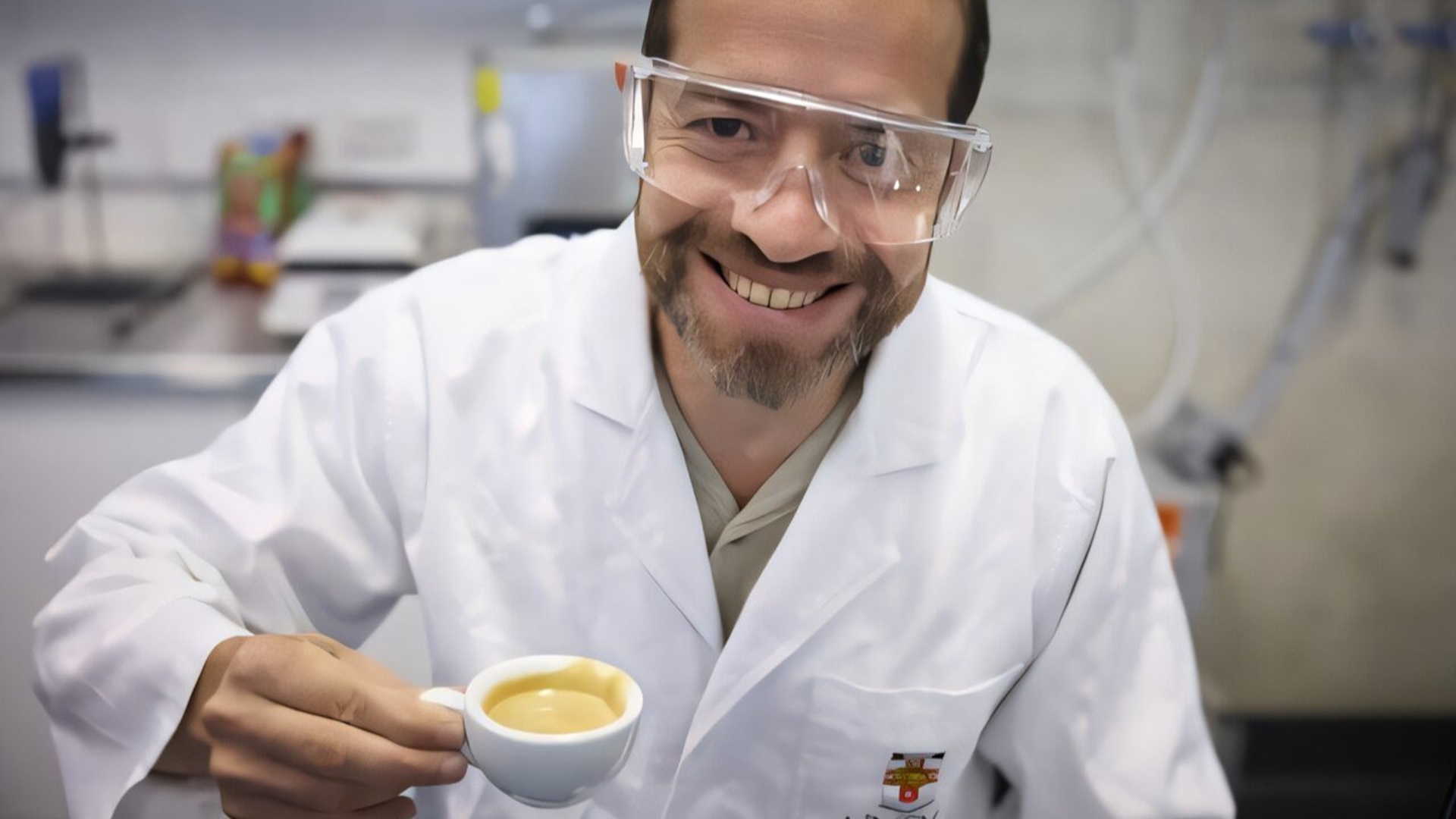
A team at UNSW Sydney has produced an espresso-strength coffee using room-temperature water and sound waves — no heating, no pressure, no boiling — and in a blind taste test with 100 regular coffee drinkers, the result was indistinguishable from a traditionally brewed shot.

The research was led by Dr. Francisco Trujillo from UNSW’s School of Chemical Engineering. His team developed an ultrasonic brewing system that reduces energy consumption by up to 75% compared to conventional espresso machines while producing a concentrated shot in under three minutes.

How acoustic cavitation replaces heat

Traditional espresso forces water heated to near-boiling through tightly packed coffee grounds under pressure — typically 9 bar. The heat and pressure together drive the rapid extraction of flavor compounds, oils, and caffeine from the grounds into the water.

Trujillo’s system replaces heat with high-frequency sound waves. A transducer — a small metal device — is pressed against the side of a modified coffee filter basket.

When activated, it causes the basket to vibrate rapidly at ultrasonic frequencies far beyond human hearing, transmitting those vibrations through both the coffee grounds and the room-temperature water.

The vibrations create a phenomenon called acoustic cavitation: microscopic bubbles form and collapse rapidly in the liquid. When those bubbles collapse near coffee particles, they act like tiny jets of water, pitting and fracturing the surface of the grounds and forcing flavor compounds, oils, and caffeine into the water at rates that would normally require heat.

The result is a concentrated, espresso-strength shot — same richness, same caffeine — brewed with cold water in two and a half to three minutes.

Three variables proved most important in getting it right: the brew ratio (water per gram of coffee, which controls concentration), the grind size (finer grinding accelerated extraction), and the duration of ultrasound application (the sweet spot was 2.5 to 3 minutes for a balanced result).

What the taste test found

To validate the system, the team ran a randomized blind sensory evaluation. Four drinks were tested — traditional espresso, ultrasound-brewed espresso, traditional filter coffee, and ultrasound-brewed filter coffee — all prepared fresh, cooled to the same temperature, and served in identical coded cups in random order. Around 100 regular coffee drinkers rated each drink on a nine-point scale for aroma, flavor, bitterness, and overall liking.

For espresso, there were no significant differences across any taste measure. Most participants could not tell the two versions apart, and no preference for either emerged.

For filter coffee, the ultrasound version actually outperformed the traditional brew. Participants rated it significantly higher overall — particularly for the pleasantness of its bitterness.

The industrial case

Trujillo’s team is clear about where the biggest impact lies. While a home version of the machine is technically feasible, the most compelling opportunity lies in industry. Companies producing ready-to-drink coffee at scale currently operate large volumes of high-energy brewing equipment continuously.

A system that cuts energy use by three-quarters, brews in minutes, and delivers espresso-strength concentrate that can be shipped and later diluted into cold brew, milk-based drinks, or ready-to-drink products represents a meaningful change to that cost structure.

The 75% energy saving is particularly beneficial at that scale, Trujillo noted, and because the process produces a concentrated, espresso-strength coffee, it can be used directly in manufacturing or shipped as a concentrate for a range of coffee products — cutting both energy and processing time from the industrial supply chain simultaneously.

The research was first published in the Journal of Food Engineering.

💾

Researchers at UNSW team brews espresso-strength coffee with ultrasound and cold water, saving 75% energy.
  •  

Brain-inspired cryogenic chip operates at temp as low as -460°F for quantum and space use

Researchers at the University of Hong Kong (HKU) and the Centre for Advanced Semiconductors and Integrated Circuits (CASIC) have announced a major breakthrough in cryogenic electronics: the development of a programmable neuromorphic hardware platform that can operate at temperatures as low as 10 millikelvin (-459.65°F), close to absolute zero. This innovation holds significant promise for the future of quantum computing and deep-space exploration.

Harnessing negative differential resistance in Silicon Carbide

The research team, led by Professor Yuhao Zhang and PhD student Xin Yang from HKU’s Department of Electrical and Computer Engineering, has successfully harnessed negative differential resistance (NDR) in industry-standard Silicon Carbide (SiC) MOSFETs.

Their approach enables a single transistor to mimic the energy-efficient “spiking” behavior of biological neurons at ultra-low temperatures. This is the first time such behavior has been demonstrated in a standard transistor at cryogenic levels.

Addressing quantum computing’s wiring bottleneck

Quantum computers require extremely sensitive qubits, maintained at temperatures near absolute zero, to function effectively. However, traditional silicon-based controllers generate significant heat and consume high power, forcing them to be positioned several meters (over a mile in large installations) away from the qubits. This distance introduces a wiring bottleneck that restricts scalability and performance.

“Our work introduces a hardware platform that can be integrated alongside quantum processors,” said Prof. Zhang. “By using unique carrier dynamics in silicon carbide, we can create circuits that are thousands of times more energy-efficient than conventional electronics, significantly reducing the thermal load on cryogenic systems.”

Stable and scalable technology

The key discovery is that SiC MOSFETs, when cooled below 2 Kelvin (-456.67°F), exhibit a strong “S-shape” NDR behavior due to electron-donor impact ionization (EDII). Unlike other technologies that require heat to function, this mechanism is intrinsic to the material, making it stable and repeatable even across different manufacturing batches.

“This is a robust and scalable approach,” said Mr. Yang. “Silicon carbide is already widely used in electric vehicles and power grids, so we can use existing industrial foundries to produce these cryogenic chips on 300-mm (11.8-inch) wafers.”

Enabling complex cryogenic networks

The study shows that these artificial neurons can be cascaded to form larger networks, allowing for complex, local data processing at ultra-low temperatures. This advancement is expected to greatly improve quantum error correction and real-time quantum control, both crucial for advancing quantum computing technology.

Applications in deep-space exploration

Beyond quantum computing, these rugged circuits have potential uses in deep-space missions, where electronics must withstand extreme cold, such as on the lunar surface or in the outer solar system.

The full findings appear in Nature Communications, in a paper titled “Cryogenic neuromorphic circuits using gate-controlled negative differential resistance in silicon carbide.”

  •  

Nuclear clock ticks for the first time, using a thorium-229 atomic nucleus

The world’s first nuclear clocks have ticked. A team of physicists has demonstrated a working timekeeping device regulated not by orbiting electrons — as in conventional atomic clocks — but by transitions within an atomic nucleus itself, a feat decades in the making.

How a nuclear clock differs from an atomic clock

Standard atomic clocks measure time by tracking the frequency at which electrons in atoms like cesium or rubidium flip between energy states. These devices are extraordinarily accurate, losing roughly 1 second every 300 million years. A nuclear clock operates on a fundamentally different principle: it uses the energy transition of a nucleus rather than its electron shell.

The specific nucleus involved is thorium-229, which has a uniquely low-energy nuclear transition — known as an isomeric transition — that falls within the range of ultraviolet lasers.

Most nuclear transitions release gamma rays at energies far too high for laser control, making them impractical for timekeeping. Thorium-229 is a rare exception: its ground state and isomeric state are separated by only about 8.4 electron volts, allowing researchers to drive the transition optically.

In the nuclear clock, a laser is tuned to match this precise transition frequency. When the nucleus absorbs and re-emits photons at that frequency, those oscillations serve as the clock’s ticks.

Because the nucleus is thousands of times smaller than an electron orbit, it is far less sensitive to external electromagnetic interference — a property that could, in principle, allow nuclear clocks to surpass atomic clocks in long-term stability.

Why thorium-229 took so long to harness

The nuclear clock concept was first proposed in the 1970s, but the exact energy of the thorium-229 isomeric transition was not known with sufficient precision to target with a laser until recently. A series of measurements over the past decade progressively narrowed the uncertainty.

In 2024, a team at JILA — a joint institute of the University of Colorado Boulder and the National Institute of Standards and Technology (NIST) — pinned down the transition frequency precisely enough to enable laser excitation of the nucleus.

The current demonstration confirms that thorium-229 nuclei embedded in a calcium fluoride crystal can be repeatedly excited and interrogated using vacuum ultraviolet light.

The calcium fluoride host is transparent at the required wavelength and holds the nuclei in a rigid lattice that minimizes vibrational noise. The clock signal emerges from the collective oscillation of many nuclei simultaneously, which improves the measurement statistics.

According to researchers involved in the work, the present prototype is not yet more accurate than the best optical atomic clocks, but the architecture is now proven. Refinements in laser linewidth and crystal quality are expected to further improve precision.

Probing physics beyond the standard model

The appeal of a nuclear clock extends beyond timekeeping. Because the nucleus interacts strongly with the weak and strong fundamental forces, a thorium-229 clock is sensitive to variations in fundamental constants — quantities like the fine-structure constant and the strong-force coupling — in ways that electron-based clocks are not.

This makes the device a potential instrument for detecting ultralight dark matter. Certain dark matter candidates are theorized to cause tiny, periodic fluctuations in fundamental constants as the Earth moves through a dark matter field.

Comparing a nuclear clock against an optical atomic clock over time could reveal such oscillations. The approach complements particle detector experiments and quantum sensors now used to detect phenomena once considered beyond measurement.

A nuclear clock could also serve as a testbed for whether fundamental constants drift over cosmological timescales — a question with direct implications for theories of dark energy and the evolution of the universe.

  •  

UT Austin engineers build jacket that extracts drinkable water from air moisture

Engineers at the University of Texas at Austin have built a jacket that captures moisture from the surrounding air and converts it into drinkable water — a development that could have practical consequences for soldiers, hikers, and disaster-relief workers operating far from any water source.

How the textile works

The jacket uses a hygroscopic sorbent woven directly into the fabric. These materials have a strong thermodynamic affinity for water vapor, adsorbing moisture from the atmosphere even at relatively low humidity levels.

Once the sorbent is saturated, a low-grade heat source — potentially body heat or a small solar element integrated into the garment — triggers desorption, releasing the captured water vapor into a compact condensation chamber where it accumulates as liquid. The resulting water is then channeled through a filtration stage before it is considered safe to drink.

The design avoids the energy-intensive refrigeration cycles that conventional atmospheric water generators rely on, which makes a wearable form factor physically plausible.

Traditional atmospheric water-harvesting systems typically require significant electrical input to cool a surface below the dew point; this jacket sidesteps that requirement by using sorption-desorption kinetics.

Material selection and engineering constraints

Choosing the right sorbent is the central engineering problem. The material must adsorb water rapidly, release it cleanly under mild thermal stimulation, survive repeated wetting-and-drying cycles without degrading, and remain flexible enough not to compromise the garment’s wearability.

Outdoor AWH testing of fiber clothing.

Metal-organic frameworks (MOFs) and certain hydrogel composites have emerged as candidate materials in the broader atmospheric water-harvesting literature, and similar classes of materials are likely candidates for this type of application, though the specific formulation used by the UT Austin team is detailed in their official announcement.

Yield rate is a genuine constraint. The volume of water a garment-scale sorbent can collect per day is governed by the exposed surface area, the ambient relative humidity, and the cycling frequency of adsorption and desorption.

In arid environments — precisely where a portable water supply is most critical — lower atmospheric humidity directly limits output, so the technology performs best in humid or semi-arid conditions rather than true desert climates.

Structural integration with the garment

Embedding a functional water-harvesting system into a garment without making it impractical to wear requires careful attention to weight distribution, vapor permeability, and thermal management. If the outer layer is too occlusive, it traps sweat, raising the wearer’s core temperature.

The UT Austin design must balance the need to expose the sorbent to ambient air against the thermal comfort requirements of the person wearing it — a tradeoff that textile engineers working on responsive smart fabrics have encountered in other contexts.

Contamination risk and water quality

Atmospheric water harvesting is not inherently free of contamination risk. Air in industrial or wildfire-affected areas can carry particulates, volatile organic compounds, and heavy metals, which a sorbent material may co-adsorb with water vapor.

The filtration stage integrated into the jacket’s collection system is therefore not a minor accessory — it is a critical safety component. Whether the filtration approach is sufficient across a range of realistic environmental conditions, and how the filter itself is serviced or replaced in the field, are questions that field trials will need to address before the technology sees wide deployment.

Potential applications and near-term limitations

Military logistics, backcountry search-and-rescue, and humanitarian response in regions with disrupted water infrastructure are the most direct use cases. Each imposes different durability, laundering, and maintenance requirements.

A garment that can survive the wash cycles of standard military field use while retaining its hygroscopic function is a considerably harder engineering target than a laboratory prototype.

This research was first published in the journal Science Advances.

  •  

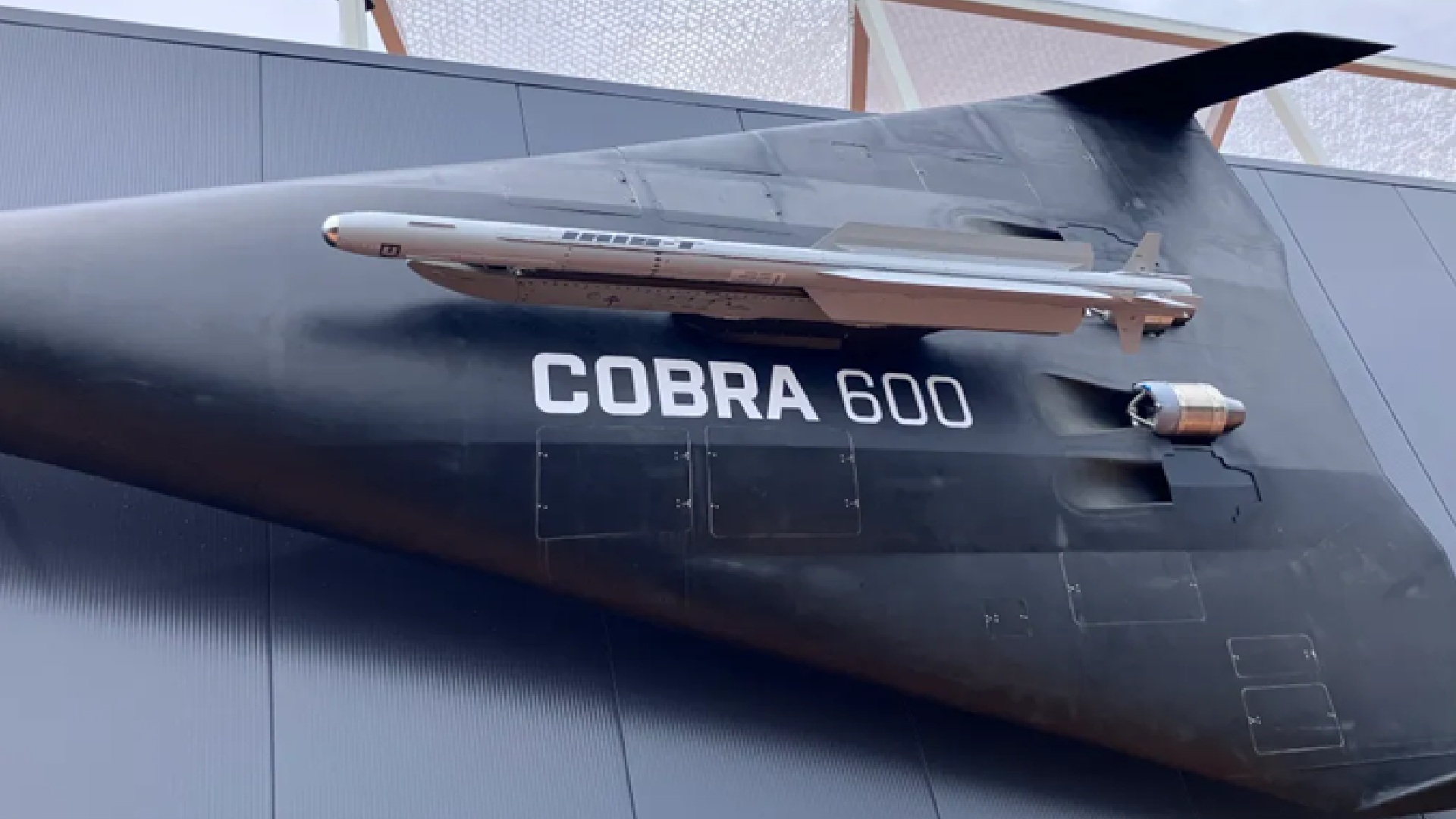
Cobra 600: Germany’s 620mph jet drone interceptor with IRIS-T and 155-mile range

German weapon manufacturer Diehl Defence has developed a jet-powered interceptor drone called the Cobra 600, designed to carry and fire the IRIS-T short-range air-to-air missile against aerial threats including unmanned systems, cruise missiles, and low-altitude manned aircraft.

The system represents a specific response to the growing volume and diversity of airborne threats that conventional ground-based and crewed interceptors may struggle to address cost-effectively at scale.

Airframe and propulsion

The Cobra 600 is a purpose-built unmanned aerial vehicle powered by a small jet engine, giving it the speed and altitude performance needed to pursue fast-moving aerial targets. Its designation references a 600-kilogram class platform, placing it in a weight range that can accommodate meaningful payload capacity while remaining operationally agile.

The jet propulsion distinguishes it from propeller-driven loitering munitions, providing the kinetic energy necessary to reach and intercept time-sensitive targets before they close on defended assets.

The airframe integrates a single IRIS-T missile — a German-developed, infrared-guided weapon with all-aspect engagement capability and a range of several kilometers. The IRIS-T was originally designed for crewed fighter aircraft, so adapting it for autonomous drone carriage required engineering the release and guidance interfaces into a platform without a human pilot onboard.

Autonomous engagement and fire control

One of the more technically demanding aspects of the Cobra 600 concept is the fire control architecture. The drone must receive targeting data, prosecute an intercept geometry, and release the missile — either under remote operator authorization or through a higher degree of autonomous decision-making.

The precise rules of engagement and human-machine teaming protocols for such a system carry legal and ethical weight under international humanitarian law, particularly regarding the degree of human control over lethal force decisions.

The system is intended to operate within a broader integrated air defense network, receiving cueing from ground-based radars or other sensors rather than relying solely on its own onboard detection capability.

This makes the quality of the data link and network integration central to its operational effectiveness — a vulnerability if those links are jammed or spoofed by an adversary using electronic warfare.

Countering drone swarms and low-cost threats

The tactical logic behind fielding an armed interceptor drone, rather than using expensive surface-to-air missiles or diverting crewed fighters, is economic and capacity-driven.

Drone swarms and low-cost one-way attack munitions have repeatedly strained conventional air defense inventories in recent conflicts. A relatively lower-cost interceptor that can be produced and expended at volume offers a more sustainable exchange ratio against cheap threats.

That said, the Cobra 600 itself carries an IRIS-T — a missile that is not inexpensive. The cost calculus improves only if the drone airframe is significantly cheaper than a crewed interceptor sortie, or if it can successfully engage threats that would otherwise require multiple surface-to-air missile shots.

Pairing an IRIS-T with an unmanned platform also raises questions about what happens when the drone misses or the missile fails to guide — issues well understood in crewed aviation but more complex when remote human oversight is limited.

Development status and German defense context

The Cobra 600 emerges at a time when Germany is under sustained pressure to rebuild and modernize its defense industrial base following years of underinvestment. The country is a co-developer and major operator of the IRIS-T missile family, making it a logical choice for domestic integration.

According to reporting by The War Zone, the Cobra 600 concept has been publicly presented as part of Germany’s broader push to field layered air defense solutions capable of handling the evolving threat spectrum seen in contemporary conflicts.

  •  

MIT’s new imaging tech delivers sharp 3D images in murky waters up to 65 feet away

A team of engineers at the Massachusetts Institute of Technology (MIT) has developed a groundbreaking imaging system capable of capturing detailed 3D images through even the murkiest waters.

The new technology, which harnesses the power of single-photon detectors and advanced computational algorithms, is poised to significantly enhance underwater exploration, search-and-rescue operations, and environmental monitoring.

Breakthrough in underwater imaging

Traditional methods for underwater imaging, such as sonar and optical cameras, have struggled to provide clear visuals in turbid environments. Particles in the water scatter light, making it nearly impossible to see beyond a few meters (about 6.5 feet) in highly cloudy conditions.

However, the new MIT system can generate sharp, three-dimensional images from distances up to 20 meters (about 65.6 feet) in water with extremely high turbidity.

How the technology works

At the core of the system is a pulsed laser that emits bursts of light into the water. As these pulses bounce off objects and return, they are detected by a highly sensitive single-photon avalanche diode (SPAD) array.

Each photon’s journey is recorded, allowing the system to calculate the precise distance and shape of submerged objects, even when only a handful of photons make it back through swirling sediment.

To interpret the faint signals, the team developed new computational algorithms that reconstruct 3D scenes from the sparse, scattered data. The result: detailed images that would be impossible for conventional cameras to achieve in similar conditions.

Potential applications and future impact

According to the MIT team, this imaging breakthrough could revolutionize a range of underwater activities. Search and rescue teams could locate lost objects or people more quickly in cloudy lakes or coastal waters. Marine biologists could study habitats previously hidden by sediment. Archaeologists might uncover ancient shipwrecks buried beneath layers of silt.

The technology could also be invaluable for inspecting underwater infrastructure, such as pipelines, bridges, or dams, where safety and clarity are paramount.

Testing and results

The research team tested their prototype in a specially designed tank filled with water so murky that standard cameras could not see beyond 3 centimeters (about 1.2 inches). With their new system, they successfully imaged objects at distances up to 20 meters (65.6 feet), a feat previously thought unattainable in such conditions.

The system is also energy efficient, requiring less power than traditional active imaging methods, and can be made compact enough for use on underwater drones or remotely operated vehicles.

Looking ahead

While the current prototype is a significant leap forward, the researchers are already working to refine the technology, aiming to increase imaging speed and resolution. They envision future versions integrated into autonomous underwater vehicles for continuous monitoring of oceans, lakes, and rivers.

MIT’s new imaging system represents a major advance in overcoming the challenges of underwater visibility and could open up a new era of aquatic discovery and safety.

  •  

Taiwan’s HIMARS live-fire drills signal new deterrent to China’s amphibious assault plans

Taiwan has conducted its first live-fire exercise using the U.S.-made M142 High Mobility Artillery Rocket System (HIMARS), sending a clear signal of its evolving defense strategy amid growing tensions with China. The drills, which took place on Taiwan’s southwest coast, showcased how mobile precision fires could counter a potential amphibious assault by Chinese forces.

HIMARS: A new edge for Taiwan’s defense

The live-fire demonstration is part of Taiwan’s ongoing efforts to modernize its military and bolster deterrence capabilities. The HIMARS system, known for its mobility and rapid deployment, allows Taiwan to target enemy landing forces and logistical hubs from a safe distance.

During the drills, Taiwanese forces simulated strikes against mock enemy positions, demonstrating their ability to rapidly move, fire, and relocate—minimizing vulnerability to counterattacks.

According to military analysts, HIMARS’ precision-guided munitions offer a significant upgrade over traditional artillery. The system’s ability to deliver accurate strikes up to 300 kilometers (approx 186 miles) away could hold China’s amphibious ships and staging areas at risk, complicating invasion plans.

A strong message to Beijing

The timing of the exercise underscores Taiwan’s determination to resist Beijing’s coercion, which continues to assert its claim over the island. The People’s Liberation Army (PLA) has ramped up military activities near Taiwan in recent years, including amphibious landing drills and air incursions.

Taiwanese officials emphasized that the HIMARS drills were not only a test of new equipment but also a show of readiness. “This exercise demonstrates our commitment to defending our homeland and deterring aggression,” a defense spokesperson stated.

U.S.-Taiwan security cooperation

Taiwan’s acquisition of the HIMARS system is part of a broader arms deal with the United States, approved in 2020. The deal, valued at over $1.8 billion, includes 11 launchers and hundreds of Guided Multiple Launch Rocket System (GMLRS) rockets.The U.S. continues to support Taiwan’s self-defense through arms sales and training, reinforcing its unofficial security partnership.

The HIMARS’ performance in Ukraine has also drawn attention, with Ukrainian forces using the system to disrupt Russian logistics and command centers. Taiwanese officials believe similar tactics could be effective in repelling a Chinese invasion, leveraging mobility and precision to offset China’s superior numbers.

Challenges and future developments

Despite the advantages, military experts caution that HIMARS alone cannot guarantee Taiwan’s security. Effective use depends on robust intelligence, coordination, and the ability to survive against China’s advanced missile and drone capabilities. Taiwan is therefore investing in improved command-and-control networks, camouflage techniques, and rapid resupply methods.

Looking ahead, Taiwan plans to integrate HIMARS with other defensive assets, such as coastal missile batteries and unmanned aerial vehicles, to create a multi-layered shield against amphibious assaults. The recent drills mark a significant step in adapting modern warfare technologies to Taiwan’s unique security needs.

As cross-strait tensions persist, Taiwan’s demonstration of HIMARS capability serves as both a deterrent and a message of resilience, signaling its resolve to defend its sovereignty against growing military pressure from China.

  •  

Scientists encode full viral genome for quantum computer analysis in a first

Scientists have successfully translated an entire viral genome into a format a quantum computer can process and analyze — the first time this has been accomplished at full-genome scale.

The work, which involved encoding the genetic sequence of a virus as quantum data, was published and reported by researchers who say the approach could eventually allow quantum systems to identify viral mutations, model genomic interactions, and assist in drug discovery at speeds classical computers cannot match.

What the researchers did

The team converted the nucleotide sequence of a complete viral genome — the ordered string of adenine, thymine, guanine, and cytosine base pairs that encodes all viral instructions — into qubits, the basic unit of quantum information. Unlike classical bits, which hold a value of either 0 or 1, qubits exploit superposition to represent both states simultaneously, allowing a quantum processor to evaluate many possible sequence configurations at once.

Translating a genome for quantum analysis requires mapping each nucleotide or group of nucleotides to a corresponding quantum state. The process is non-trivial: genomic data is inherently sequential and high-dimensional, while current quantum hardware operates with limited qubit counts and high error rates.

Getting a complete viral genome — even a relatively compact one — to fit within those constraints required data compression and encoding strategies tailored to the quantum architecture.

The viral genome selected for this experiment is small relative to bacterial or human genomes, but the encoding itself represents a meaningful proof of concept for how biological sequence data can interface with quantum processing systems.

Why quantum hardware is being applied to genomics

Classical genomic analysis tools — including BLAST for sequence alignment and machine learning models trained on genomic databases — are computationally intensive. Comparing a novel pathogen’s genome against a reference library, or predicting how mutations affect protein folding, demands significant processing time and energy when done at scale.

Quantum computing offers a theoretical speed advantage for certain classes of problems, including optimization and pattern matching across large combinatorial spaces.

Genomic sequence analysis, which often involves searching for the best alignment among millions of possibilities, fits that profile. Quantum technology is also being explored for improvements in semiconductor physics, with researchers finding that quantum phenomena in solid-state materials may open new device architectures.

For genomics specifically, the potential application is not just speed. Quantum algorithms such as the Harrow-Hassidim-Lloyd (HHL) algorithm are designed to solve linear systems exponentially faster than classical counterparts, which could transform how researchers model gene expression networks or viral replication dynamics.

Hardware constraints and open questions

Current quantum computers operate in the noisy intermediate-scale quantum (NISQ) era — devices with dozens to a few hundred physical qubits that are prone to decoherence errors. Encoding an entire genome does not mean a NISQ device can analyze it with the same fidelity as a fault-tolerant quantum computer would. The present achievement is closer to a compatibility demonstration than a functional genomic analysis pipeline.

Error correction remains a central obstacle. Physical qubits must be grouped into logical qubits with redundancy to suppress noise, which multiplies the hardware requirement substantially.

For reference, a truly fault-tolerant quantum computer capable of running complex genomic algorithms at scale could require millions of physical qubits — far beyond today’s hardware. The research is framed as an early but concrete step toward quantum-enabled biology, not an operational system.

There is also the question of data input bandwidth. Loading large biological datasets into a quantum system — a process called quantum random access memory (QRAM) — remains an active area of research with no widely agreed-upon hardware implementation.

Path to practical application

Translating a viral genome for quantum processing establishes that the conceptual pipeline — from biological sequence to quantum representation — is viable at the genome scale. The next engineering challenge is running meaningful quantum algorithms on that data and benchmarking their output against classical tools.

Pandemic preparedness is one area where faster genomic analysis would have concrete value. During the COVID-19 pandemic, tracking variant emergence required continuous re-sequencing and comparison of viral genomes across global databases.

A quantum-accelerated version of that workflow could, in principle, compress the timeline from sequence detection to variant characterization. Whether current or near-term quantum hardware can deliver that in practice remains an open question that this research alone cannot answer.

  •  

Scientists unearth world’s largest whale graveyard beneath Pacific Ocean seabed

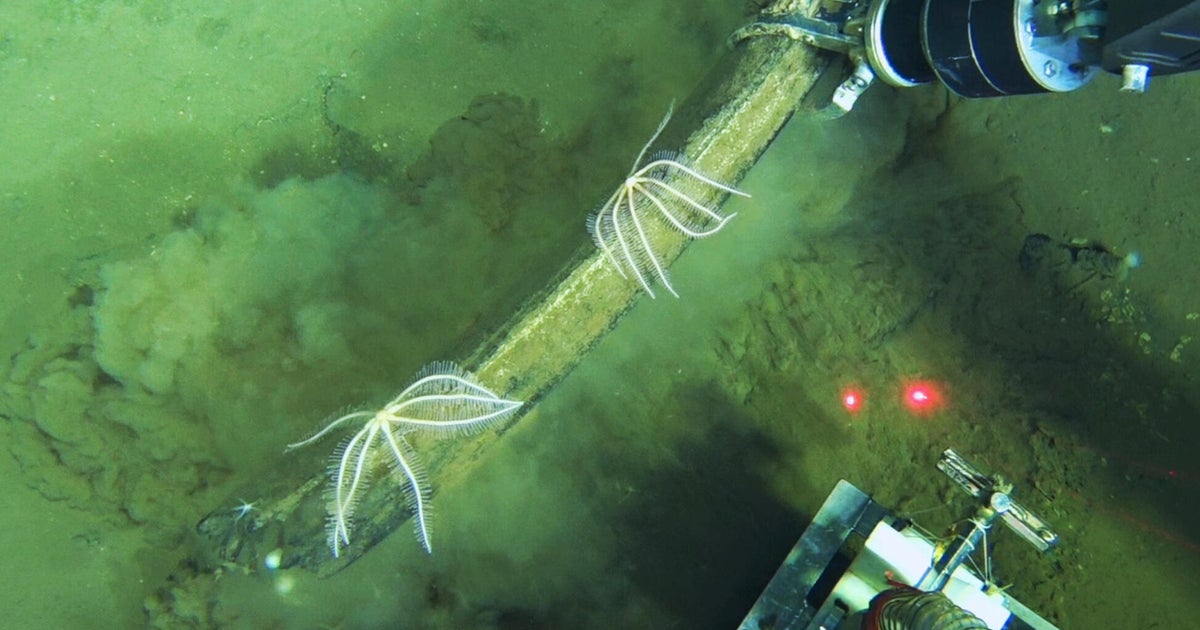
Researchers operating a deep-sea submersible have found the world’s largest known whale graveyard on the ocean floor, uncovering dozens of whale carcasses and a thriving ecosystem of creatures — many believed to be new to science — feeding off the remains.

What the submersible found

The discovery was made during a submarine dive that brought cameras and sensors to depths where light does not penetrate. Researchers observed multiple whale carcasses scattered across the seafloor in close proximity, forming what scientists are now calling the largest concentration of whale fall sites ever recorded in a single location.

Whale falls — the term for a whale carcass that sinks to the seafloor after death — are known to sustain entire biological communities for decades. Soft tissue attracts mobile scavengers first, followed by collagen-consuming organisms, and finally chemosynthetic bacteria that break down lipids embedded in the bones. Each stage can support a distinct faunal assemblage, and the full succession can span 50 to 100 years on a single carcass.

At this site, researchers reported seeing animals that they believe had not been previously documented by science. The density of carcasses in one location is particularly unusual; most documented whale falls are isolated, stumbled upon by chance during unrelated deep-sea surveys.

The biology of a whale fall

A whale carcass functions as a nutrient island in an otherwise food-scarce environment. In the deep ocean, organic material from the surface is sparse by the time it drifts to abyssal depths.

A single large whale can deliver tens of thousands of pounds of organic carbon to the seafloor in a single event — a concentrated pulse of energy that would otherwise take decades to accumulate through marine snow, the slow drift of organic particles from surface waters.

Chemosynthetic bacteria, analogous in ecological function to those found at hydrothermal vents, colonize whale bones during the final decomposition stage. These bacteria oxidize hydrogen sulfide produced by the anaerobic breakdown of bone lipids, generating energy without sunlight.

This process can sustain specialized invertebrates — including polychaete worms, clams, and gastropods — that are adapted exclusively to chemosynthetic environments.

Finding multiple whale falls in proximity means the overlapping succession stages may allow species to migrate between carcasses, effectively turning the graveyard into a connected habitat rather than a series of isolated biological islands. Whether that dynamic is occurring at this newly discovered site remains a question researchers will need to address through further sampling.

Limits of what is currently known

The full taxonomic scope of what lives at the site is not yet established. Identifying potentially new species from submersible footage alone is preliminary; formal species descriptions require physical specimens, morphological analysis, and genetic sequencing.

The claims about novel organisms, while scientifically plausible given the inaccessibility of the deep sea, remain unconfirmed until peer-reviewed taxonomy is completed.

The precise location and depth of the graveyard have not been publicly disclosed in detail, which limits independent verification at this stage. Deep-sea expeditions of this kind are expensive and logistically complex, meaning follow-up dives to collect physical samples may take months or years to organize.

The research was first published in the journal Nature.

  •  

World’s first: Rider-Bot sets record as first bike robot to perform unassisted front flip

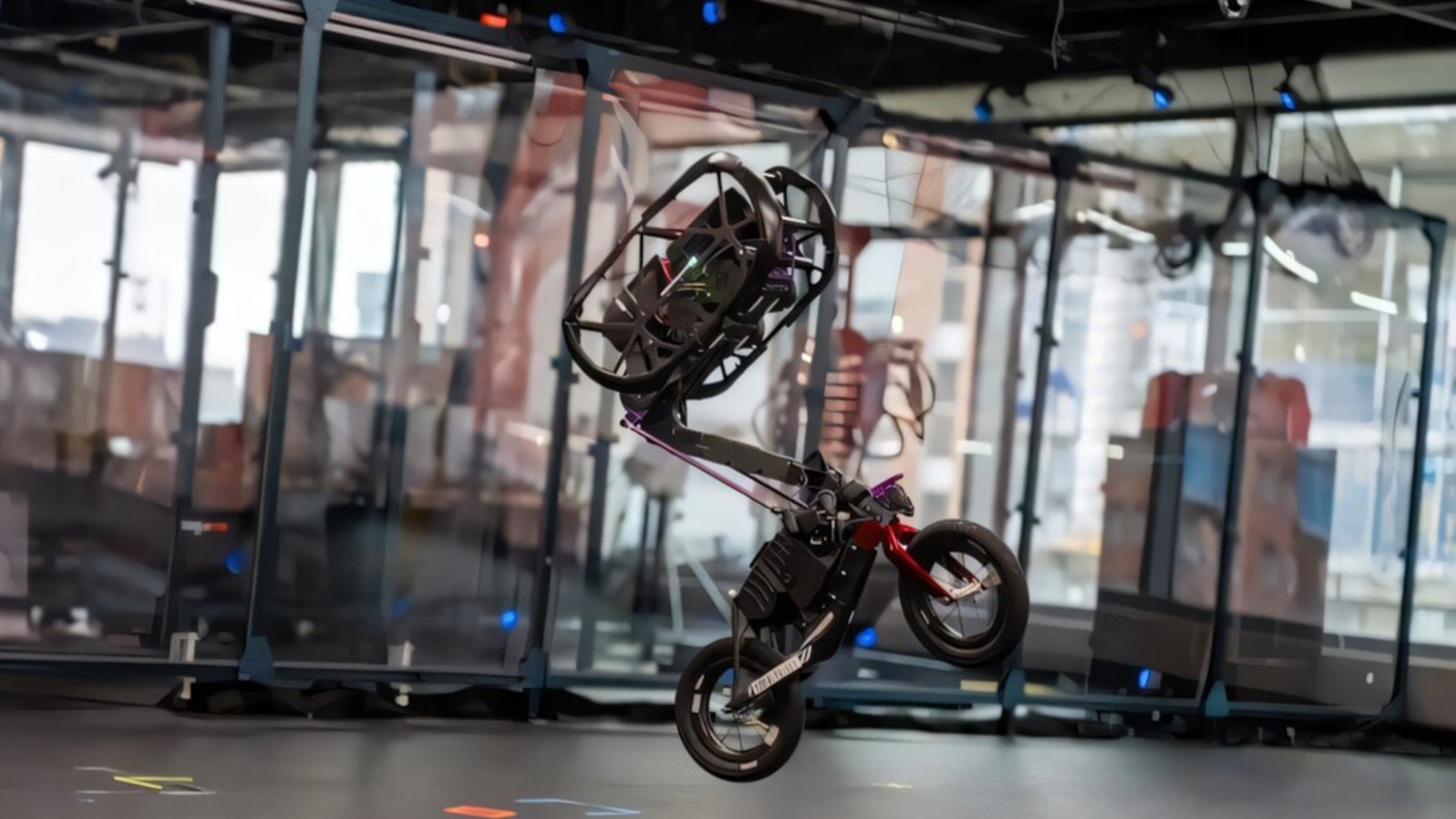
In a landmark achievement for robotics, a bicycle-riding robot has performed the world’s first unassisted front flip, astonishing engineers and robotics enthusiasts alike. The feat, accomplished by a team at the University of Tokyo’s JSK Robotics Laboratory, marks a significant leap in the capabilities of autonomous machines and could have far-reaching implications for robotics research, mobility, and future transportation.

Engineering a robotic stunt rider

The robot, dubbed “Rider-Bot,” is built to mimic the movements and balance strategies of human cyclists. Unlike previous robotic stunts that required ramps, wires, or external supports, Rider-Bot executed the front flip entirely on its own—using only its onboard sensors, actuators, and algorithms.

The successful flip took place on a flat surface, with the robot accelerating, launching, rotating 360 degrees forward, and landing upright—all without human intervention.

According to the research team, achieving this level of acrobatic control required a combination of advanced gyroscopes, real-time feedback loops, and machine learning techniques. “This is a major step toward robots that can adapt dynamically to complex environments and perform tasks that were previously considered impossible for machines,” said Dr. Yuta Sato, lead researcher on the project.

Implications for robotics and beyond

The successful front flip demonstrates not only the mechanical resilience of Rider-Bot but also the sophistication of its AI-driven decision-making. The robot’s control system anticipates and compensates for shifts in momentum and balance, much like a skilled human cyclist would.

Researchers believe this breakthrough could inform the design of next-generation delivery robots, autonomous vehicles, and even disaster-response machines capable of navigating unpredictable terrain. “Our work shows that robots can be taught to handle extreme maneuvers, which opens up many possibilities for robust, adaptable mobility in real-world scenarios,” Dr. Sato noted.

Challenges and next steps

Despite the successful demonstration, the team acknowledges ongoing challenges. Perfecting the landing and ensuring consistency across different environments remain top priorities. The researchers plan to enhance the robot’s learning algorithms and test it in outdoor and obstacle-rich settings.

The team also hopes their achievement will inspire further research into dynamic locomotion and the integration of robotics into everyday life. “We’re just beginning to scratch the surface of what intelligent, mobile robots can do,” said Dr. Sato.

A milestone for human-robot collaboration

The Rider-Bot’s unassisted front flip not only pushes the boundaries of robotics but also highlights the growing intersection between human athleticism and machine intelligence. As robots become more capable of complex movement, their potential roles in society—from urban mobility to emergency response—are poised to expand dramatically.

With this record-breaking feat, the University of Tokyo’s robotics team has set a new benchmark for autonomous machines, paving the way for future innovations in robotic agility and intelligence.

💾

University of Tokyo’s bicycle robot 'Rider-Bot' achieves world-first unassisted front flip, redefining robotics.
  •  

French military bets on homegrown AI to safeguard security, reduce US tech dependence

France is advancing plans to develop its own military artificial intelligence (AI) infrastructure, codenamed Arcadia, aiming to reduce its reliance on American defense technology firms—chiefly Palantir Technologies.

Supported by the French Ministry of Armed Forces, the Arcadia initiative forms part of a broader strategy in Paris to safeguard operational autonomy over military data systems. The urgency for such sovereignty has heightened as NATO allies increasingly adopt US-developed AI platforms for critical command-and-control operations.

Why France is building its own military AI platform

The French government’s concerns are both strategic and structural. Palantir’s Gotham and Artificial Intelligence Platform (AIP), which consolidate battlefield data for predictive analysis and decision support, are now central to US military operations and are being actively promoted to European partners.

French defense officials have raised serious concerns about the risks associated with channeling classified operational data through foreign-owned systems, even those operated by close allies. Issues around data sovereignty—specifically, control over access, auditing, and the potential for denial of service—have taken center stage in France’s defense procurement debates.

The French initiative appears to draw a sharper line by opting to develop indigenous capability rather than negotiate data-handling clauses with a foreign vendor.

Technical architecture: What a domestic platform requires

Developing a viable alternative to Palantir’s military solutions is a complex, long-term undertaking. Palantir’s Gotham platform, for instance, integrates structured and unstructured data from a variety of sources—signals intelligence, geospatial inputs, logistics, and human intelligence—into a unified system that allows analysts to query and identify patterns across multiple domains simultaneously.

To replicate this, France needs more than a data fusion engine; the project demands sophisticated ontology management, granular role-based access control, and modular pipelines capable of real-time data ingestion from diverse sensors.

France’s defense procurement agency, the Direction Générale de l’Armement (DGA), is familiar with commissioning sophisticated defense systems. However, developing military-grade AI at this scale requires continuous software iteration—something traditional defense contractors may not be fully equipped to handle.

The French defense technology sector, featuring giants like Thales and Airbus Defence alongside a burgeoning group of dual-use AI startups, is expected to play a central role. Whether the platform will leverage open-source tools or rely on proprietary frameworks remains to be determined.

Interoperability risks with NATO allies

A major technical hurdle is interoperability. If US, UK, and other NATO allies are using Palantir-based platforms during joint missions, a French-developed system built on distinct data ontologies and APIs could complicate integration.

Effective intelligence sharing, collaborative operational planning, and coordinated targeting all rely on seamless data exchange. A sovereign French platform that cannot interface smoothly with allied infrastructure risks introducing new vulnerabilities, even as it addresses concerns about foreign control.

France’s experience with the development of its national military AI strategy suggests the DGA is aware of this tension, but resolving it will require either building compatible APIs from the start or negotiating data-exchange standards with NATO’s C3 architecture bodies — a process that can take years.

Procurement timeline and industrial capacity

No firm delivery timeline has been confirmed publicly, and that ambiguity itself carries operational risk. Military AI platforms require continuous retraining on current threat data, red-team adversarial testing, and integration with live classified networks — all of which take time even after initial software delivery.

Rushing a system to fielding without adequate validation can create the kind of brittle AI behavior that defense analysts warn can lead to catastrophic misclassification in high-tempo scenarios.

The French effort, as reported by Military AI, represents a calculated bet that sovereignty over defense AI infrastructure is worth the cost and delay of domestic development.

Whether Arcadia can match the operational maturity of a system that Palantir has refined through years of real-world deployment in US and allied theaters remains the central unanswered question.

  •  

The backyard battery revolution: Building giant grid storage out of plain iron water

A process originally developed to decarbonize steel production may also function as a large-scale electrical energy storage system, according to research into molten oxide electrolysis (MOE) and iron-based flow battery chemistry.

The convergence of these two approaches has drawn attention from engineers looking for ways to store renewable electricity without relying on lithium or other scarce materials.

How molten oxide electrolysis works in iron production

Molten oxide electrolysis involves dissolving iron ore — primarily iron oxide, or Fe2O3 — in a molten oxide electrolyte at temperatures exceeding 1,500°C (2,732°F). An electrical current is passed through the melt, reducing the iron oxide at the cathode to produce liquid metallic iron, while oxygen is released at the anode.

The process produces no direct carbon dioxide emissions, unlike the conventional blast furnace route that relies on coke as a reductant. Boston Metal has been among the companies advancing this approach at pilot scale, and the company’s progress on emissions-free steel illustrates how capital-intensive the transition away from fossil-fuel-based metallurgy will be.

Iron-air and iron flow batteries as a parallel technology

Separately, iron-based flow batteries and iron-air batteries have been gaining traction as candidates for long-duration energy storage. Iron-air cells cycle between oxidation states of iron — essentially rusting and de-rusting the electrode material — to store and release electricity.

Form Energy has publicly discussed iron-air battery systems targeting 100-hour storage duration at costs intended to compete with natural gas peaker plants. Iron flow batteries, meanwhile, use dissolved iron salts in an aqueous electrolyte circulated through electrochemical cells, with the energy stored in the oxidation state difference between iron(II) and iron(III) ions.

The dual-use concept: steelmaking reactor as energy storage

The more technically ambitious idea explored in recent research is whether a single electrochemical system could perform both functions — reducing iron ore while storing energy during periods of excess renewable generation, and releasing that energy on demand. In this model, the electrolysis cell charges when electricity is cheap and abundant, reducing iron oxide to iron metal.

When electricity is needed, the process reverses: the iron is re-oxidized, generating current. The iron ore feedstock effectively becomes the storage medium.

This approach draws on the well-understood electrochemistry of the Fe2+/Fe3+ redox couple, but scaling it to industrial steelmaking temperatures and throughput rates introduces significant materials challenges.

Electrode and refractory materials must survive prolonged exposure to both highly oxidizing and highly reducing conditions at extreme temperatures, and the round-trip energy efficiency of a reversible high-temperature system remains an open engineering question. Thermal losses alone at 1,500°C (2,732°F) represent a substantial efficiency penalty compared to room-temperature flow batteries.

Grid integration and practical constraints

From a grid-storage perspective, coupling an industrial process to electricity dispatch introduces scheduling conflicts. A steel plant optimized for continuous production cannot freely pause or reverse its electrochemical reactors to follow an electricity price signal without affecting throughput and product quality.

Partial decoupling — using dedicated MOE cells purely for storage, separate from production cells — would recover flexibility but at increased capital cost and facility footprint.

Iron as a storage material does offer one practical advantage over lithium-ion systems: it is abundant, geographically well-distributed, and carries no significant supply chain concentration risk.

The electrochemical reactions are also well-characterized, which lowers the barrier for modeling system behavior over thousands of charge-discharge cycles.

The path from laboratory electrochemistry to a commercially viable dual-use plant requires resolving electrode degradation rates, thermal management at scale, and the economic trade-offs between storage revenue and steel output.

💾

Learn how molten oxide electrolysis of iron ore can serve dual duty as both a steelmaking process and a flow battery for grid storage.
  •  
❌