 Login

US Directive Forces Anthropic to Disable Fable 5 Worldwide
Anthropic disabled Fable 5 and Mythos 5 after a US export-control directive, raising new questions about AI access and governance.


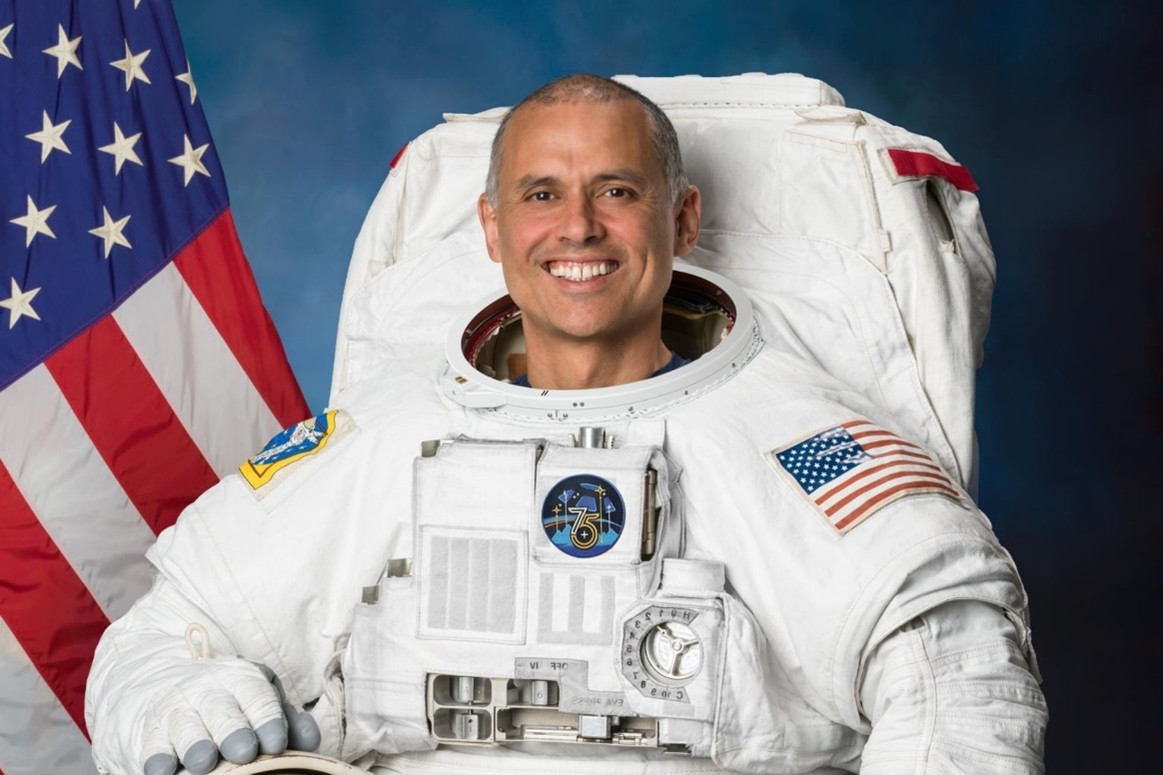
NASA astronaut Anil Menon will be available for limited media interviews beginning at 9 a.m. EDT Monday, June 22, to discuss his upcoming mission to the International Space Station as part of Expeditions 74/75.
The virtual interviews will take place from the Gagarin Cosmonaut Training Center in Star City, Russia, and will stream live on the agency’s YouTube channel.
Media interested in participating must submit a request to the newsroom at NASA’s Johnson Space Center in Houston no later than 5 p.m. Wednesday, June 17, by emailing jsccommu@mail.nasa.gov. A copy of NASA’s media accreditation policy is online.
Menon is scheduled to launch to the space station Tuesday, July 14, from the Baikonur Cosmodrome in Kazakhstan aboard the Roscosmos Soyuz MS-29 spacecraft with Roscosmos cosmonauts Pyotr Dubrov and Anna Kikina. The trio will spend about eight months aboard the orbiting laboratory before returning to Earth in spring 2027.
During his expedition, Menon will conduct scientific investigations and technology demonstrations to help humans prepare for future exploration missions to the Moon and Mars, and to provide benefits on Earth. Among the hundreds of experiments planned during his mission, he will participate in studies to better understand astronaut vein structure, blood flow, and blood composition in microgravity. He also will test producing intravenous fluids using the space station’s potable water.
The Soyuz MS-29 mission will be his first spaceflight after he was selected as part of NASA’s 2021 astronaut class. A native of Minneapolis, Menon is an emergency medicine physician, mechanical engineer, and colonel in the United States Space Force. He also has served as an expedition flight surgeon supporting the agency’s crew members aboard the space station.
For more than 25 years, people have lived and worked continuously aboard the International Space Station, advancing scientific knowledge and making research breakthroughs not possible on Earth. The space station helps NASA understand and overcome the challenges of human spaceflight, expand commercial opportunities in low Earth orbit, and build on the foundation for long-duration missions to the Moon, as part of the Artemis program, and to Mars.
To learn more about International Space Station research, operations, and its crews, visit:
-end-
Jimi Russell
Headquarters, Washington
202-358-1100
james.j.russell@nasa.gov
Anna Schneider / Mary Pfister
Johnson Space Center, Houston
281-483-5111
anna.c.schneider@nasa.gov / mary.m.pfister@nasa.gov
The post NASA Astronaut Anil Menon Available for Prelaunch Virtual Interviews appeared first on NASA Science.
NASA astronaut Anil Menon will be available for limited media interviews beginning at 9 a.m. EDT Monday, June 22, to discuss his upcoming mission to the International Space Station as part of Expeditions 74/75.
The virtual interviews will take place from the Gagarin Cosmonaut Training Center in Star City, Russia, and will stream live on the agency’s YouTube channel.
Media interested in participating must submit a request to the newsroom at NASA’s Johnson Space Center in Houston no later than 5 p.m. Wednesday, June 17, by emailing jsccommu@mail.nasa.gov. A copy of NASA’s media accreditation policy is online.
Menon is scheduled to launch to the space station Tuesday, July 14, from the Baikonur Cosmodrome in Kazakhstan aboard the Roscosmos Soyuz MS-29 spacecraft with Roscosmos cosmonauts Pyotr Dubrov and Anna Kikina. The trio will spend about eight months aboard the orbiting laboratory before returning to Earth in spring 2027.
During his expedition, Menon will conduct scientific investigations and technology demonstrations to help humans prepare for future exploration missions to the Moon and Mars, and to provide benefits on Earth. Among the hundreds of experiments planned during his mission, he will participate in studies to better understand astronaut vein structure, blood flow, and blood composition in microgravity. He also will test producing intravenous fluids using the space station’s potable water.
The Soyuz MS-29 mission will be his first spaceflight after he was selected as part of NASA’s 2021 astronaut class. A native of Minneapolis, Menon is an emergency medicine physician, mechanical engineer, and colonel in the United States Space Force. He also has served as an expedition flight surgeon supporting the agency’s crew members aboard the space station.
For more than 25 years, people have lived and worked continuously aboard the International Space Station, advancing scientific knowledge and making research breakthroughs not possible on Earth. The space station helps NASA understand and overcome the challenges of human spaceflight, expand commercial opportunities in low Earth orbit, and build on the foundation for long-duration missions to the Moon, as part of the Artemis program, and to Mars.
To learn more about International Space Station research, operations, and its crews, visit:
-end-
Jimi Russell
Headquarters, Washington
202-358-1100
james.j.russell@nasa.gov
Anna Schneider / Mary Pfister
Johnson Space Center, Houston
281-483-5111
anna.c.schneider@nasa.gov / mary.m.pfister@nasa.gov

© Reuters

Across the stories today, a common thread emerges around the gap between scientific urgency and practical action — from coral reefs that might survive climate change to political systems struggling to keep pace with environmental reality.
The day’s coverage points to growing momentum around citizen-led conservation, revealing how communities are stepping in where institutions fall short. In Britain, volunteers are using remote cameras to protect red squirrels while citizen scientists help restore bog insect populations through coordinated community efforts. Meanwhile, American homeowners are banding together in group buying programs, saving thousands of dollars on heat pumps while collectively advancing climate solutions one neighborhood at a time.
Yet this grassroots energy exists alongside troubling institutional retreats. The UK government appears ready to scale back electric vehicle targets after industry pushback, while critical monitoring systems for Atlantic ocean currents — which could collapse ten times faster than previously predicted — may lose funding just when we need them most. It’s a reminder that progress and pressure often arrive together, creating political tensions that can undermine long-term environmental goals.
The human cost of these delays becomes starkly visible in places like Delhi, where thermal imaging revealed that 43.5°C air temperatures translated into furnace-like conditions on urban surfaces, or in the Marshall Islands, where researchers race to identify “super reefs” that might survive rising ocean temperatures. Behind the numbers are real communities adapting in real time, from Thai rubber farmers navigating new EU deforestation rules to climate-displaced people facing growing barriers to safety as extreme weather events multiply.
Perhaps most striking is how wildlife serves as both victim and indicator of these broader pressures. Little terns face their most challenging breeding season yet due to dog disturbances, while a single black-headed gull spotted in Australia sends bird enthusiasts flying across the continent — a reminder of how rare the unexpected has become. Meanwhile, Mexican long-tongued bats continue their nightly dance through agave flowers, unknowingly keeping the tequila industry alive through pollination, even as global wildlife trade creates what scientists call “pandemic roulette” by moving billions of animals across unnatural boundaries.
The most promising thread runs through stories of restoration and discovery. A former banker is bringing back Australia’s lost Big Scrub rainforest, while Amazon deforestation drops to nearly decade-low levels, showing environmental progress is possible when political will aligns with practical action. Century-old Antarctic research voyages are revealing early clues to El Niño patterns, and scientists have identified hidden pollutants driving 15 percent of global warming — knowledge that could reshape climate policy.
Indigenous scholar Tyson Yunkaporta’s argument that “false narratives drive environmental destruction” feels particularly relevant amid today’s stories. From conservation groups rejecting shark culling calls in favor of drone technology to the controversy over displaying an African elephant at a political convention, the battle over environmental stories — which ones we tell, which ones we fund, which ones we act upon — shapes outcomes as much as any scientific discovery.
As the week unfolds, all eyes will be on whether these citizen-led conservation efforts can scale fast enough to compensate for institutional hesitation, and whether the gap between scientific understanding and political action will narrow or continue to widen in the face of accelerating environmental change.
The post Delhi Hits 43.5°C as Urban Heat Islands Intensify, Thames Microplastics Study Launched While Dog Disturbances Threaten Record Little Tern Breeding Season — Today’s Environmental Briefing for Mon, Jun 15 2026 first appeared on EnviroLink Network.
As our world is rapidly reshaped by climate change, glaciers have retreated and revealed new swaths of bare land. Throughout the coming decades to centuries, this rocky ground will become dappled with lichens and scrub, eventually giving rise to newborn forests in a process known as ecological succession.
Ecologists have mapped out the stages of ecological succession for plant communities, observing which species are the first to colonize land and how these pioneer species promote secondary growth. Yet before any plants sink their roots into the soil, it is populated by thriving communities of single-celled microbes that prepare it for further habitation. Scientists study how these microbial communities arise to understand how healthy ecosystems develop.
Newly exposed land is nutrient-poor and subject to large temperature fluctuations, so the first species to settle there must overcome these challenges. Pioneer plant species are often habitat generalists, meaning they can thrive under a variety of environmental conditions. However, all plants convert water and sunlight into carbon and energy. Microbes can use many different energy sources, and often contain genes for multiple metabolisms in their genomes. Therefore, researchers wondered whether pioneer microbes could also be defined by their metabolic flexibility.
A team of scientists based at Monash University in Australia tested this hypothesis by studying land left in the wake of 2 retreating glaciers: one on an island off the coast of Antarctica and one in the Swiss Alps. The researchers sampled soils along a path from the tip of the glacier outward, which had been exposed to the air for different amounts of time. By comparing the microbial communities within these soils, the researchers could track the different stages of ecological succession after glacial retreat.
The researchers extracted DNA from the soils and analyzed it using 2 sequencing methods. First, they sequenced a gene called 16S rRNA, which is like a microbial fingerprint for the different species present. They used this method to understand the diversity of these communities and track their species overlap, helping them to identify habitat generalists that thrived under different soil conditions.
To understand the metabolic flexibility of these microbes, the researchers used a second method, known as metagenomics, which sequences all of the DNA in a sample rather than just a single gene. They used these data to reconstruct the entire genomes of microbes present in the soils, providing information on what kinds of metabolic activities they were capable of. The team also measured chemicals like ammonium and sulfide in the soils, as well as atmospheric gases like methane and carbon monoxide, to assess how the microbes used these compounds for growth.
The researchers found microbes inhabiting even the youngest soils, demonstrating the speed at which life takes hold in new environments. The abundance of microbes increased by approximately 8-fold in older soils, alongside a similar rise in species diversity, indicating that complex communities persisted over time. They also found the metabolic capabilities of microbes inhabiting Antarctic and Swiss glacial soils to be remarkably similar, suggesting common selective pressures drove the establishment of these new ecosystems.
They were surprised to discover that the most abundant microbes in younger soils were habitat specialists that were rare in older soils. These pioneer microbes, while still metabolically flexible, had adapted to utilize meager energy sources like atmospheric trace gases, including hydrogen, methane, and carbon monoxide. Many of these microbes could also derive energy from chemicals that dissolved out of rocks, like inorganic sulfur compounds. The researchers proposed that pioneer microbes could quickly take advantage of newly opened ecological niches, like soils exposed during a glacier’s retreat, because of their efficiency at using scant resources.
They found that habitat generalists, on the other hand, tended to dominate older soils. This result suggested that the habitat specialists were eventually outcompeted by the slow and steady growth of the habitat generalists in a real-life turtle-and-hare race.
The team concluded that using multiple growth strategies helps microbes adapt to new environments. However, they acknowledged that ecological succession could occur differently in other landscapes, such as in the aftermath of volcanic eruptions, meteorite impacts, or forest fires. They suggested that future researchers work to uncover how microbial communities lay the groundwork across these diverse ecosystems.
The post When glaciers retreat, microbes take over appeared first on Sciworthy.

The United Kingdom appears ready to soften its ambitious electric vehicle transition goals following sustained pressure from automotive manufacturers and labor unions. Prime Minister Keir Starmer is reportedly prepared to override Environment Secretary Ed Miliband’s stance on maintaining the current 2030 timeline for electric vehicle adoption.
The government is now planning to launch a public consultation on revised, less stringent targets for the shift to battery-powered vehicles throughout the remainder of this decade. This potential policy reversal comes after car manufacturers and union representatives raised serious concerns about the economic impact of the current mandates.
Industry leaders have argued that the existing 2030 targets could result in financial penalties for manufacturers who struggle to meet the aggressive sales quotas. They warn that such penalties could force companies to reduce operations or relocate production facilities, potentially leading to significant job losses across the automotive sector.
The debate highlights the ongoing tension between environmental policy goals and economic realities in the transition to cleaner transportation. While electric vehicle adoption has been steadily increasing, manufacturers contend that consumer demand and charging infrastructure development have not kept pace with government expectations. The automotive industry employs hundreds of thousands of workers across the UK, making job security a critical consideration in policy decisions.
This development represents a significant test for the government’s climate commitments, as transportation accounts for a substantial portion of the country’s carbon emissions. The final decision on whether to adjust these targets will likely influence the UK’s broader environmental strategy and its ability to meet international climate pledges.
The post UK Government Considers Scaling Back Electric Vehicle Sales Targets After Industry Pushback first appeared on EnviroLink Network.
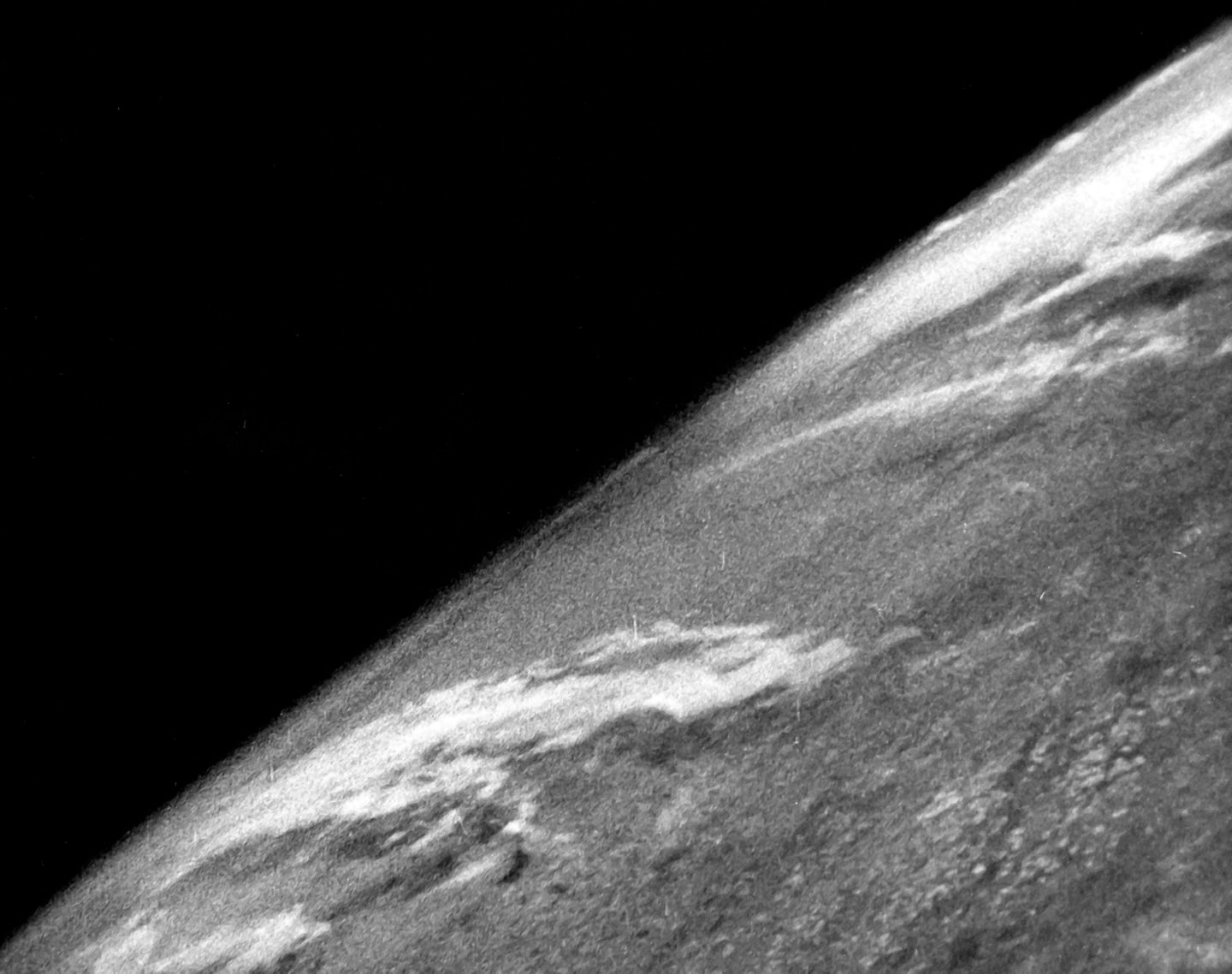
Every photograph of Earth ever taken from space, from Apollo 8’s Earthrise to Apollo 17’s Blue Marble to Voyager 1’s Pale Blue Dot, descends from a strip of 35-millimetre film pulled from the wreckage of a captured German V-2 rocket in the New Mexico desert in October 1946.
The camera that exposed it was a DeVry motion-picture camera modified by Clyde Holliday at the Johns Hopkins Applied Physics Laboratory. It was not launched on a spacecraft, because no spacecraft existed. It was bolted into a weapon.
On October 24, 1946, V-2 No. 13 rose from White Sands Proving Ground carrying Holliday’s camera above the line now commonly treated as the edge of space. At about 105 kilometres up, it photographed Earth as a curved surface against black sky, one frame every second and a half.
The rocket did not land gently. It came back down on the desert range and was destroyed on impact, but the film cassette survived. When the frames were recovered and developed, the result was the first successful photograph of Earth taken from space.
The date matters because it is often blurred with the better-known V-2 camera flights that followed in 1947 and 1948. The first successful sequence came on October 24, 1946, more than a decade before Sputnik, and long before any human being had seen Earth from orbit.
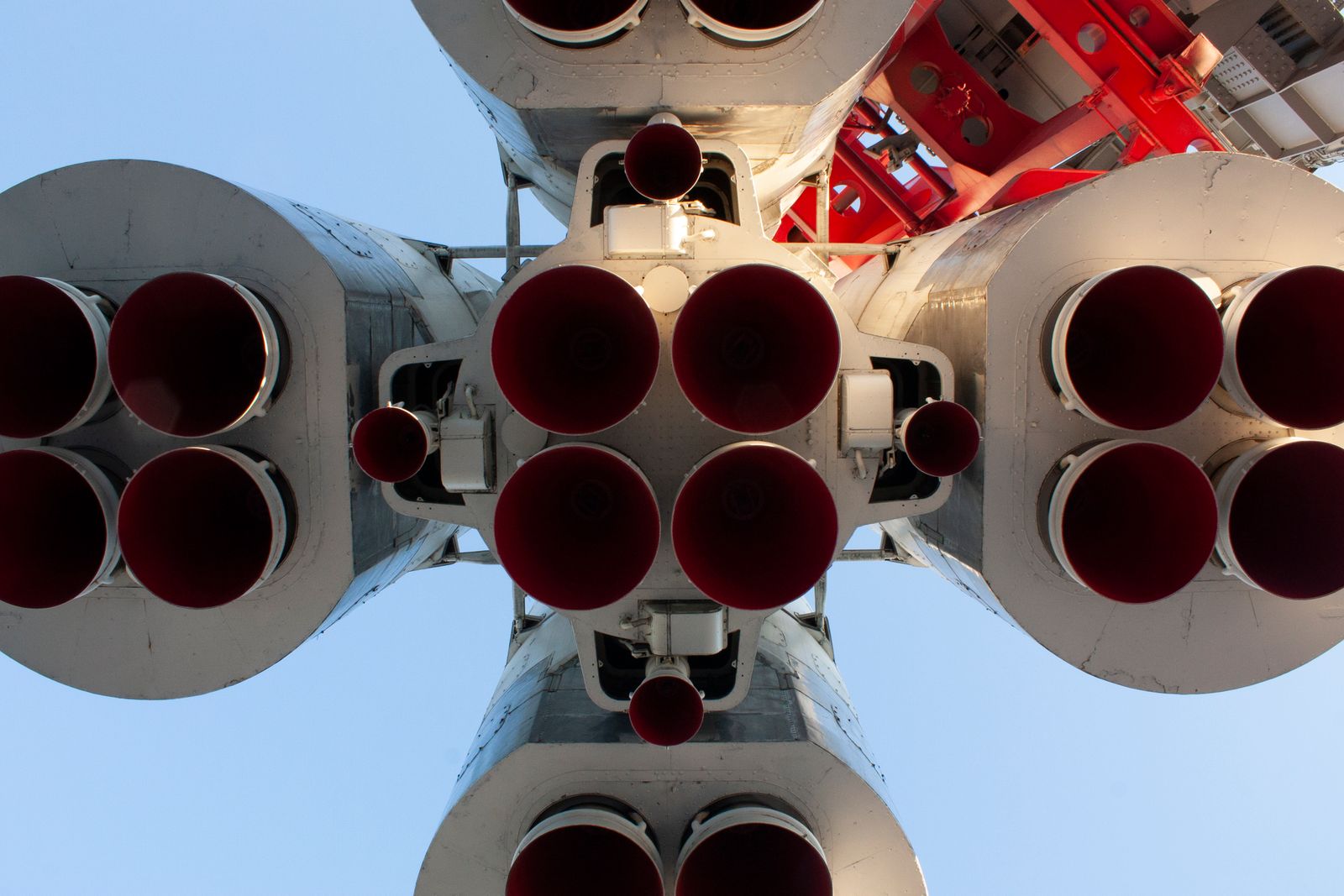
The V-2 was designed to kill. Wernher von Braun’s team at Peenemünde built it as a long-range ballistic missile, and the Smithsonian National Air and Space Museum describes the weapon as having a range of about 320 kilometres and a one-ton warhead.
More than 3,000 V-2s were fired at Allied targets during the war. The program also consumed forced labour on a horrific scale, with the Smithsonian’s Air and Space Museum noting that at least 10,000 people died in the Mittelwerk production system, more than were killed by the weapon’s deployment.
After Germany’s defeat, American forces shipped captured V-2 parts to New Mexico. White Sands became one of the places where the United States learned how high-altitude rockets behaved, how instruments survived launch, and how useful the upper atmosphere could be as a laboratory.
The U.S. Army’s own history of White Sands places the range at the centre of early American rocket testing, beginning with captured German V-2 technology in 1946. That same test culture opened the nose cones to scientists from the Naval Research Laboratory, the Applied Physics Laboratory, the University of Michigan and other institutions.
Most instruments were there to measure radiation, cosmic rays, solar ultraviolet light or the upper atmosphere. Holliday’s camera did something simpler and stranger. It turned the rocket around, in effect, and made Earth itself the subject.
The October 24 flight carried a 35-millimetre DeVry cine camera, set to expose one frame every 1.5 seconds. Contemporary accounts identify the launch as V-2 No. 13, fired from White Sands and reaching about 104.6 to 105 kilometres above the desert.
That altitude put the camera just above the 100-kilometre Kármán line, the conventional boundary often used to mark the start of space. Balloons had photographed curvature from high altitude before. Holliday’s camera crossed into a different category.
The flight itself was rough. After engine cutoff, the rocket tumbled, and its spent body eventually struck the range downrange from the launch site. One detailed reconstruction places the impact speed at about 150 metres per second, far below the 500 to 800 metres per second sometimes repeated in loose retellings.
The camera was not simply vaporised. Accounts of the recovery describe Holliday’s camera as found in usable condition except for damage such as the missing lens, while the film cassette preserved the exposed frames. The rocket was gone; the pictures remained.
The images were grainy and severe. They showed a bright, curved horizon, black sky above it, and the American Southwest flattened into pale geometry below.
Nothing in the frame looks like the blue planet photographs that later became famous. There are no oceans shining blue, no cloud swirls at global scale, no Moon in the foreground. The power of the image is that it is barely an image at all, just enough evidence to prove that Earth could be photographed from outside itself.
Smithsonian’s account of the flight notes that Holliday stitched the movie frames together into broader views, and that the V-2 photographs revealed the planet against the darkness of space. The Johns Hopkins Applied Physics Laboratory also credits its researchers in 1946 with bolting a 35-millimetre motion-picture camera onto a captured German V-2 and taking the first pictures of Earth’s curvature from space.
Holliday understood the shift almost immediately. In a 1950 National Geographic article, he wrote that the V-2 photographs showed “how our Earth would look to visitors from another planet coming in on a space ship.”
That sentence was written seven years before Sputnik, twelve years before John Glenn orbited Earth, and eighteen years before Apollo 8 carried human eyes around the Moon. The idea of Earth as a planet among planets was already present in a strip of film recovered from military wreckage.
The camera program did not stop with one rocket. Holliday and other teams refined the mounts, lenses and recovery systems, and later V-2 flights produced clearer panoramic images from still higher altitudes, including views that covered enormous stretches of the southwestern United States and northern Mexico.
Those flights helped teach engineers how to design instruments for violent ascent, cold upper air, vibration, spin and impact. The information flowed into the wider American sounding-rocket program, including Aerobee, a smaller and cheaper research rocket that APL developed when V-2s became scarce.
The line from V-2 photography to later space images is not only emotional. It is technical. The recovery procedures, camera housings, telemetry habits and high-altitude test culture belonged to the same early chain that eventually led from sounding rockets to satellites, crewed capsules and planetary probes.
A little more than two decades later, Apollo 8 astronaut Bill Anders photographed Earthrise from lunar orbit. In 1972, the Apollo 17 crew took The Blue Marble while travelling toward the Moon.
In 1990, Voyager 1 turned back toward home and made Pale Blue Dot, photographing Earth from about 6 billion kilometres away. Space Daily has covered that image separately in its account of Carl Sagan’s long push for Voyager’s final look back.
Every one of those later images is more beautiful than Holliday’s first frames. They are richer, cleaner, more legible and more famous. But none of them came first.
The first view was black and white, scratched by motion, recovered after impact, and born from a rocket designed for war. Somewhere in that damaged sequence, the desert falls away and Earth curves into darkness for the first time a camera ever proved it could.
The post In 1946, a captured German V-2 rocket launched from White Sands carried Clyde Holliday’s 35-millimetre DeVry motion-picture camera above the Kármán line and returned the first photographs of Earth from space on film recovered after the rocket crashed in the New Mexico desert appeared first on Space Daily.
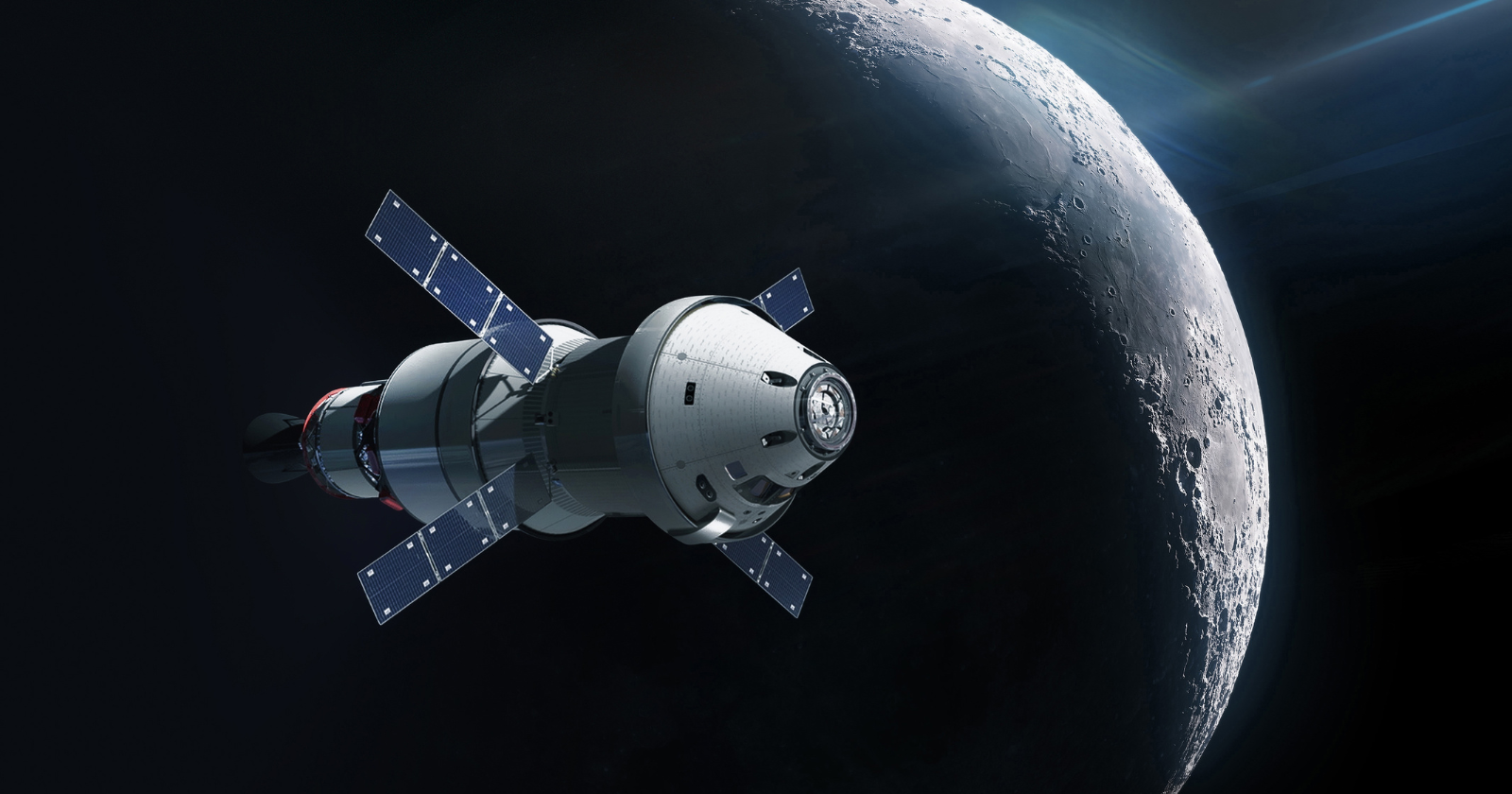
On 9 June 2026, inside a room at NASA’s Johnson Space Center in Houston, the agency named the four people who will fly Artemis 3 — and one of them was not American. Italian astronaut Luca Parmitano was introduced as the mission’s pilot, the first European Space Agency astronaut ever assigned to an Artemis crew. He will sit in the right-hand seat of an Orion spacecraft partly built in Europe, on a flight that will not, in fact, land on the Moon.
Parmitano is not a symbolic pick. He has logged 366 days in orbit across two long-duration stays on the International Space Station, performed six spacewalks totalling more than 30 hours, and commanded Expedition 61 in 2019, the first Italian to do so. During a 2013 spacewalk, water from a failed cooling system flooded his helmet and nearly drowned him before he groped his way back to the airlock blind. NASA put a near-fatality survivor and a former station commander in the pilot’s seat.
That detail is the tell. A seat this visible is never just a seat.
Within hours of the announcement, ESA Director General Josef Aschbacher made the subtext explicit. Parmitano’s assignment, he told reporters, was the first step in a wider negotiation — one aimed squarely at getting a European astronaut onto the lunar surface, not merely into Earth orbit. He noted the seat had not been settled even a couple of weeks before the announcement, a sign of how live the bargaining still is. The full exchange was reported by SpaceNews.
ESA’s exploration chief, Daniel Neuenschwander, framed it as Europe playing two roles at once: supplying both a senior astronaut and the propulsion module that drives Orion. For Europe, the crew slot matters less for what Parmitano does in orbit than for what it establishes. Once a European has flown an Artemis mission, excluding Europeans from the next ones gets politically expensive. The ESA announcement made the partnership framing official.
The real prize sits further down the manifest. ESA wants boots on the regolith, and it is treating Artemis 3 as the down payment.
The bargaining became urgent because the structure Europe had built its lunar plan around stopped existing. On 24 March 2026, NASA acting administrator Jared Isaacman announced the agency would pause the Lunar Gateway “in its current form” and redirect effort toward infrastructure on the Moon’s surface. The decision, delivered at NASA’s Ignition event and reported by The Register, sidelined the small lunar-orbit station that had anchored the program’s international architecture.
That broke a carefully negotiated European position. At its November 2025 ministerial conference, ESA had announced three guaranteed Gateway seats, assigning them to astronauts from Germany, France and Italy, with Germany flying first. Gateway was the vehicle — politically and literally — for putting Europeans into deep space on a recurring schedule.
When NASA shelved it, those three seats lost their destination. Canada’s contribution took a hit too: the Canadarm3 robotic arm had been built for a station that was no longer the centerpiece.
NASA had already reshuffled the flight plan in February, demoting Artemis 3 from the first landing to a 2027 test flight in low Earth orbit. The Orion crew will rendezvous and dock with prototype landers from Blue Origin and SpaceX, rehearsing the choreography for Artemis 4, now the first crewed South Pole landing, targeted for 2028.
So Europe arrived at the table with new currency to spend and a shorter clock to spend it on.
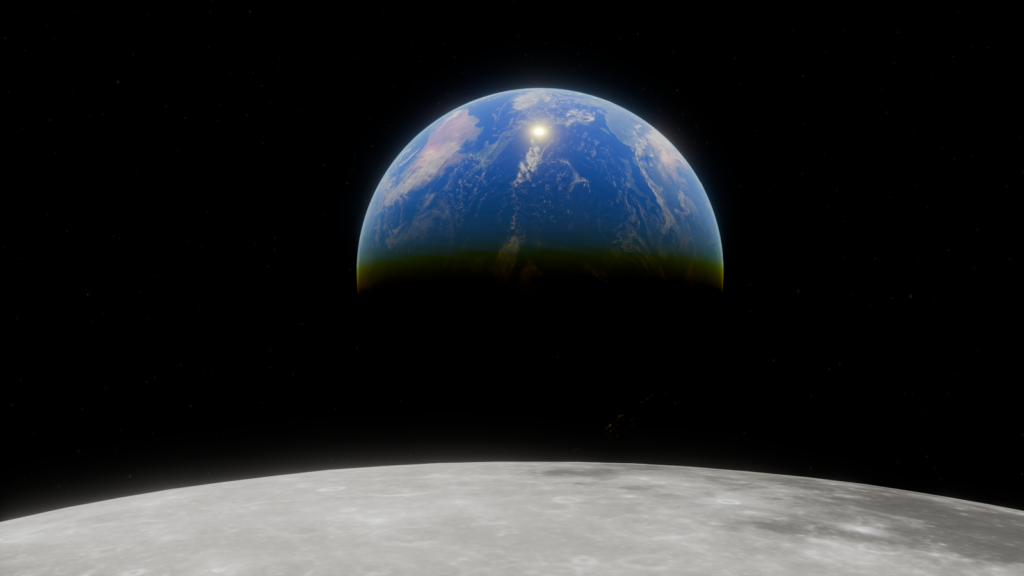
Europe’s strongest card is one it already holds. The European Service Module, built by Airbus with Thales Alenia Space, supplies Orion’s main propulsion, power, water, oxygen and thermal control. Without it, the capsule does not fly. Artemis 3 will use ESA’s third such module — a dependency described on Airbus’s own program page. That is leverage that needs no negotiating; it is simply true.
The newer offers are surface-oriented. Aschbacher named several chips ESA is willing to play: cargo delivery via the Argonaut lunar lander, which can put up to 1,500 kg on the surface from the early 2030s; communications and navigation from the Moonlight satellite constellation; plus rovers, surface robotics, and the option of returning cargo from the Moon.
Argonaut and Moonlight are the kind of infrastructure NASA does not currently fund itself. That is precisely why ESA is dangling them.
The pitch is to bundle existing dependency and future capability into a package that is awkward to refuse.
Europe is negotiating with a program whose timeline keeps moving. The two landers that Artemis 3 will practice docking with are both behind. SpaceX has not yet demonstrated orbital propellant transfer, a prerequisite for the Starship lunar variant to reach the Moon with enough fuel to land. Blue Origin is still working through development on its Blue Moon lander.
Neither company has published a firm date for clearing those hurdles.
The Gateway decision was itself partly a response to ballooning costs and slipping schedules across Artemis. Some critics of the program argued the restructure was overdue. The paradox for NASA is that simplifying the architecture left it with fewer assets to trade, at the same moment it needs partners more.
That asymmetry is what gives a mid-sized agency room to push.
Three concrete markers will show whether ESA’s play is working before the year is out. Whether NASA commits to additional European Service Modules for later flights. Whether Argonaut wins a formal role in the revised surface-logistics plan. And whether any European astronaut is named to an actual landing mission rather than an orbital test.
The calendar is filling in already. France is hosting an international space summit in Paris in September, and ESA holds its next ministerial conference in December — the meeting where money and commitments get fixed. Aschbacher has flagged both as moments where the lunar question gets pressed.
For now, the fact on the manifest is fixed. A man who once felt water rising over his eyes inside a sealed helmet, 400 kilometres above the planet, will ride the next Orion into orbit as its pilot. He will not step onto the Moon on this flight. But the chair he occupies is the one Europe intends to keep occupying — and somewhere in a meeting room in Paris this autumn, that is the argument his name is already making for him.
The post On June 9, 2026, NASA named Italian astronaut Luca Parmitano as pilot of Artemis 3, making him the first European ever assigned to an Artemis crew — and within hours ESA’s director general framed the seat not as a courtesy but as the opening move in a negotiation to put a European on the surface of the Moon appeared first on Space Daily.
MUNICH — Amid trans-Atlantic political and trade tensions, digital sovereignty — once a relatively niche concern — has jumped to the top of the agenda for European organizations wary of their reliance on US technology suppliers.
For many, including European Union policy makers, increased use of open source software is a key part of the answer, offering an alternative to proprietary platforms from a handful of large US vendors.
That’s the view of Frank Karlitschek, CEO of Nextcloud, the German software vendor that bills itself as an open-source alternative to software suites from the likes of Microsoft and Google.
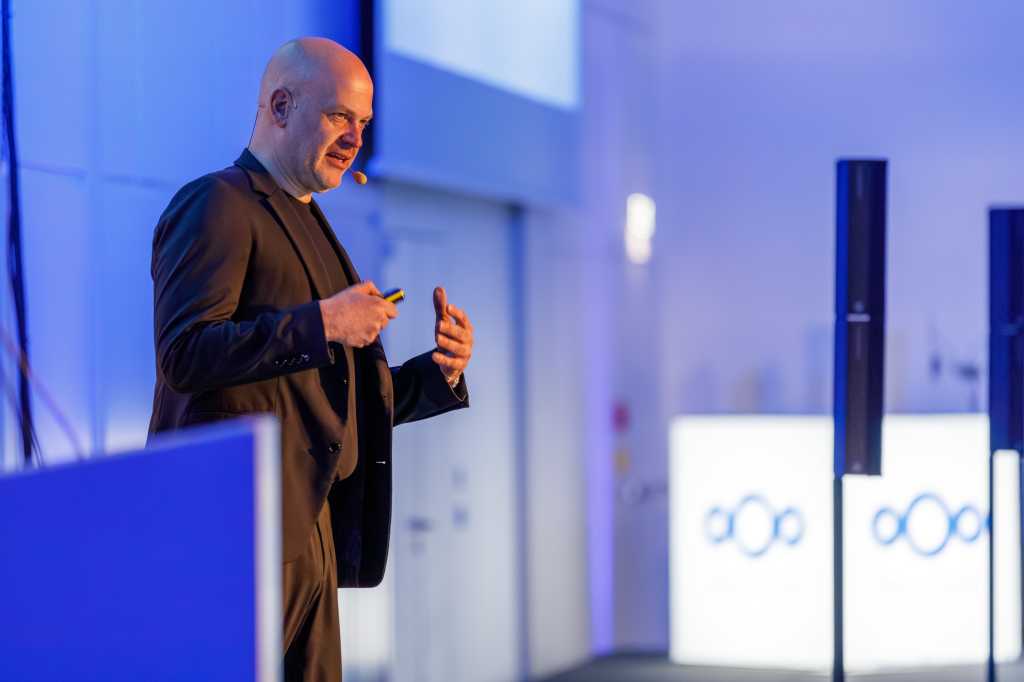
Nextcloud CEO Frank Karlitschek speaking at the German software company’s Nextcloud Summit 2026.
Nextcloud
Karlitschek founded the company in 2016, forking OwnCloud’s open-source file-sharing software. Since then, Nextcloud has expanded its products to include a range of productivity and collaboration tools that organizations can install and run on their own servers or access via cloud providers.
More recently, Nextcloud helped develop the Euro-Office application suite, which launched last week as an open source alternative to Microsoft Office and others, and continues to build out its Nextcloud Hub with AI assistant and agent features. The company now says revenues are growing at between 50% to 100% year over year.
Computerworld spoke to Karlitschek at Nextcloud Summit about momentum around digital sovereignty, the European Commission’s Tech Sovereignty Package proposals, and how Nextcloud hopes to evolve in the coming years.
The following interview was edited for length and clarity.
When Nextcloud launched, there was a big push in Europe away from on-premise software towards US cloud providers. How have attitudes towards open source and awareness of alternatives providers changed since then? “I’ve been doing open source since the ‘90s; at the time it was mostly for a nerdy audience — a very small group of people who really care about software and being in control. The sovereignty part was always there. It’s the core idea behind open source that you can understand what the software is doing, you can deploy it wherever you want, you can study it and change it, and so on.
“At the time, it was very niche, and since then it’s really growing and growing. There are certain points in time that really accelerated the growth; something like the Snowden revelations, for example, or the whole discussion about GDPR and certain legislation. And then, of course, the current geopolitical situation.
“I personally find it interesting that it grew from something that is just interesting for software developers, and now it’s on the geopolitical stage. I have meetings with big politicians who really care about it now, and I personally find it interesting that it’s increasingly understood by — I wouldn’t say the mainstream, but more and more people.
“At the beginning of Nextcloud, we mostly talked with IT managers looking for a solution; they care about how it works, the price and other things. But now we are also talking with the C-level people. It’s part of an overall strategy of a company, to say, ‘Hey, we need to look into the dependencies, we want to have a solution that fits into the strategy of the company.’
“In the past, it was like a commodity – it’s just some software, who cares? Now, it’s really part of the company strategy. That’s really interesting.”
There’s been a lot of interest around digital sovereignty over the past couple of years. To what degree is this translating into action, with organizations migrating away from US cloud providers? “The interest is gigantic. Everybody’s talking about it, we have so many contacts and people coming to us. Not everybody is doing it — a lot of people are just exploring and seeing what the options are.
“Obviously, we hope that this will translate into actions in a few months. At the moment, it’s a lot of talking and exploring the options. As a company, we are also growing a lot in customer base. But the interest in this space is even bigger; we see it as the beginning of a funnel.
‘In defense we see a lot of interest, then also everything around education is very important for us, then other regulated markets like the healthcare, for example. Finance is an interesting one.”
A lot of the conversations around digital sovereignty are tied to the current geopolitical situation and even the US administration. Do you see demand for sovereign technology as a structural change or are some organizations holding back to see how the situation improves in the future? “I see it as a long-term trend. If you look at the IT budgets and projects in the ‘90s, it was some something unimportant. It was, of course, important that the printer works and the fax machine works, but it was not definitely not strategic for the company.
“And then in 2000, the whole cloud trend came up, and there was the big hope that this will save money. It was always the narrative with cloud computing that you can just outsource it and save money and it’s great.
“Nowadays, people realize that it’s not something that you can just ignore. I wouldn’t say that everything comes back on premise, but people care about it now. They understand it’s not just a commodity, like water, or electricity that comes out of the wall and you don’t care what’s behind it. People realize that it’s something that has an impact on the future of an organization, from a vendor lock-in perspective, from a cost perspective, from an industry espionage perspective, and competitiveness. With open source, you’re more flexible. So, I think the trend that this is all more strategic and important for the future, this will go on.”
The European Commission recently published its Tech Sovereignty Package, including its open source strategy. Are these proposals sufficient to address the concern around digital sovereignty and support the open source ecosystem in Europe?
“It’s great, I really like it. I was actually surprised they listened so well. But now the real challenge is to actually do it; this still needs to happen. The description of the problem and a possible solution, this is all very good. I’m surprised, I’m happy about it, but to put this into actually binding law, this still needs happen.”
Would you like to see any changes to the current proposals before they’re gets passed into legislation? “At the moment, they have these four different risk levels, and the most critical one — No. 4 — is one where they accept only open source and European solutions. This is the highest risk level, but this is only for 1% of the market. I hope that it’s better understood that more than 1% should care about this more.
“If you have something which is completely not critical, maybe doesn’t possess any personal data at all — sure, it’s totally fine [to use non-EU suppliers]. But if you have GDPR requirements, espionage protection, no vendor lock-in, and so on, then there should be more of that [the highest requirement level].”
US firms have attempted to address European customers’ concerns in different ways, with sovereign marketed cloud services and joint ventures with European providers. Microsoft 365 Local is designed to run on premise. Where do you draw the line between what’s actually a sovereign solution and what some call ‘sovereignty washing? “Sovereignty has different dimensions, of course. But if you look at the problem of the CLOUD Act alone, which gives foreign agencies full access to the data here, then the whole idea that it’s enough to have European data centers — that’s not enough. It’s clearly written in the CLOUD Act, that even with [European] data centers, or subsidiaries, it still applies.
“Microsoft tries to find a solution there with its Delos idea; a company that is owned by SAP — a German company — and Microsoft delivers only the software. But even then, you have this dependency, because software needs updates and software security updates. And if they’re not available, or if someone puts a backdoor into the software, which is possible, then you still have a problem.
“So, they’re trying really, really hard to find a way around the problem, but it’s not easy for them.”
To look ahead a bit in terms of the product strategy, there were announcements for Nextcloud Hub this week around AI agents, and the program to work with independent software vendors. What do these say about Nextcloud’s future? “The overall product strategy will not change so much; it’s about having state-of-the-art collaboration software — but with a lot more control, security and safety — that’s open source and independent where you host it. So this will always stay, but of course, there’s some additional factors that come into play now, like the AI impact that we see and want to leverage with our agent strategy.
“We’ve had this for one and a half years already, but we are expanding that. In the future, you might still use an interface in a classic way that you open documents and type in text and so on. But there are also a lot of operations that can be automated in the future with AI. And this is something we really invest a lot into.
“Another aspect of AI is how easy it is to build custom software around it. The coding models are getting better all the time, which means there will be more and more custom business software. This is what we want to capture with our ISV program. Software development will become easier, but you don’t want to deploy just random software in your company, you want to have something that is tested, certified and secured, and that somebody’s accountable for it. This can be something we can provide at Nextcloud.”
Editor’s note: NextCloud paid for Matthew Finnegan’s travel and hotel costs for NextCloud Summit 2026, but had no editorial role in the creation of this story.


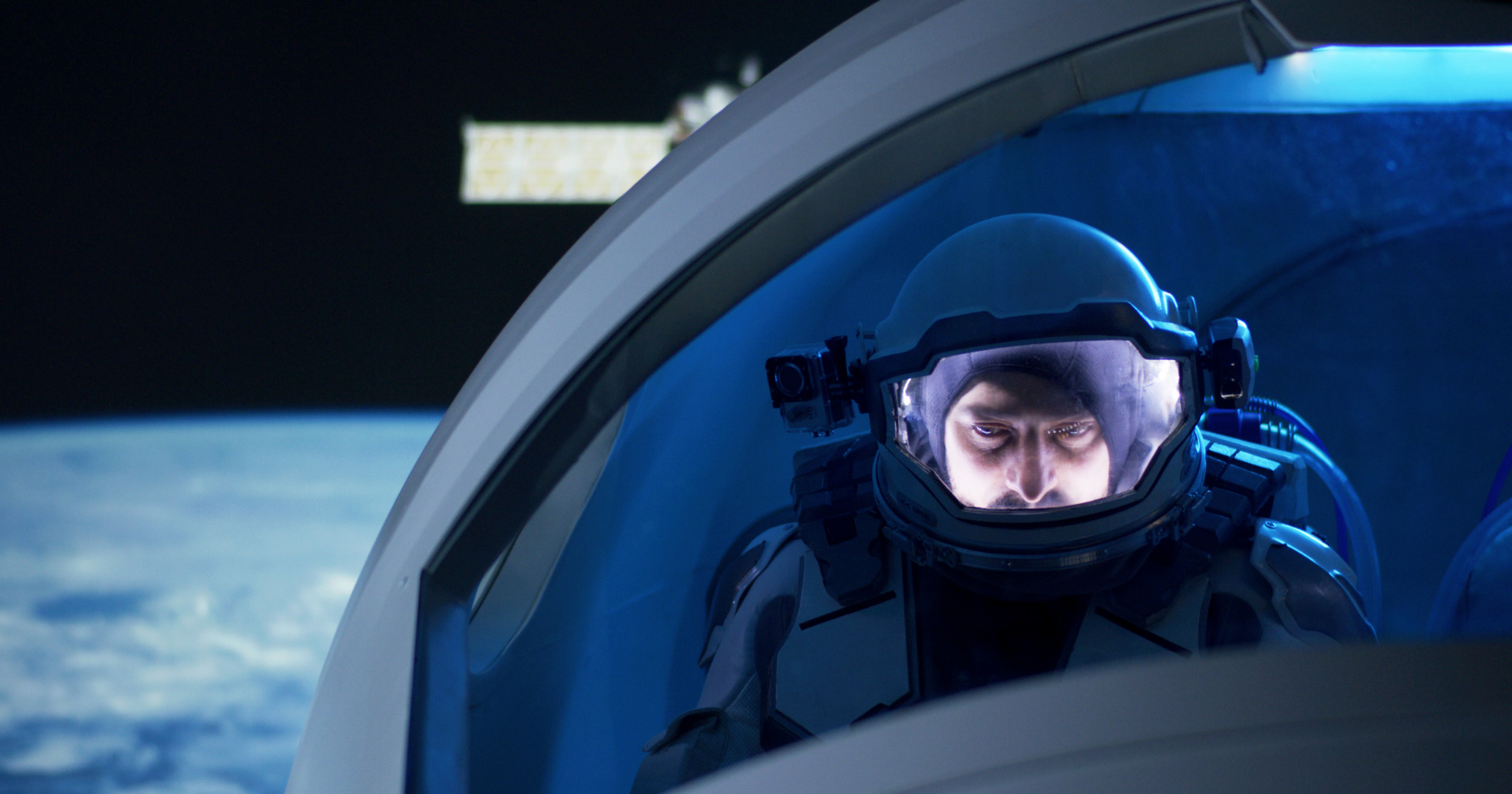
Apollo astronauts trying to rest on the way to the Moon kept noticing the same thing in the dark. With the cabin lights down and their eyes adjusted, they saw brief flashes and streaks of light, dots and lines that no one else could see and that were not there in any ordinary sense. The cause, worked out over the missions that followed, was cosmic rays from deep space passing through the visual system. The broad cause is now well supported, even if the exact biophysics of how a passing particle turns into a flash of light is still not fully pinned down.
The flashes are an example of a phosphene, a sensation of light produced by something other than light entering the eye.
In this case, the something was radiation.
The reports began on Apollo 11. After a period of dark adaptation, with eyes open or closed, crew members saw flashes they described as pinpoints, thin streaks, or small clouds of light. They were almost always colourless. They came at a rate of roughly one-half to two a minute, often enough to be a distraction when someone was trying to sleep.
This was not confined to one crew or one flight. Flashes were reported across the Apollo missions, and later by astronauts on Skylab, on Mir, and on the International Space Station. The phenomenon even had a kind of forecast. As early as 1952, the biophysicist Cornelius Tobias had suggested that people exposed to cosmic radiation in space might see exactly this sort of thing, and the team that investigated the Apollo reports traced them back to that idea.
Suspecting a cause and demonstrating it are different tasks. To test whether the flashes really were caused by particles passing through the head, the Apollo 16 and 17 crews carried a device called the Apollo Light Flash Moving Emulsion Detector, worn on the head during the coast to and from the Moon. It used stacked photographic emulsion to record the tracks of charged particles, so that the path of a particle could be matched against the moment an astronaut reported a flash.
The numbers were small but telling. The detector was worn for about an hour on each of the last two Apollo missions. On Apollo 17, seventeen flashes were reported during the session, and two of them were matched to heavy cosmic-ray nuclei passing through an eye. Combined with the geometry of the eye and statistical modelling, that was enough for the investigators to attribute the flashes to cosmic rays. Ground experiments pointed the same way: when volunteers had their dark-adapted eyes exposed to beams of heavy ions, they saw comparable flashes.
The confirmed part is that cosmic rays cause the flashes. The unconfirmed part is the step in between, the biophysics of how a single fast particle produces a perceived point of light. Several mechanisms have been proposed, and more than one may contribute.
The leading idea is that the particle ionises tissue directly in the retina, stimulating the light-sensing cells or the neurons behind them as it passes through. This fits the ground experiments, where heavy ions produced flashes at intensities too low for any light to have been generated. A second idea is Cherenkov radiation: a particle moving through the clear jelly of the eye faster than light moves through that medium emits a faint glow, real photons generated inside the eye itself. The trouble is that Cherenkov light should look bluish and diffuse, and most astronauts described sharp white dots and streaks, which do not match. A third possibility is that some flashes come from particles striking the optic nerve or the visual centres of the brain, bypassing the eye altogether.
Decades on, reviews of the phenomenon still describe the specific mechanism as undefined, and note that the effects on the different parts of the visual system have not been fully separated.
The cause is well established; the wiring is not.
On Earth’s surface, we are mostly shielded from this by the atmosphere and the magnetic field. In low Earth orbit the shielding is reduced but not gone, which is why astronauts on stations such as Mir and the ISS have also reported the effect. The Apollo crews saw the flashes more strongly still because they left that protection behind, travelling beyond the magnetosphere. The flashes were, in effect, the radiation environment of deep space made briefly visible inside a human head.
That is why they are treated as more than a curiosity. They are a perceptible sign that high-energy particles are passing through the body, the brain included, and the same radiation is a serious concern for long missions beyond Earth. On the International Space Station, experiments have used the visual system as a way to study how cosmic radiation affects the central nervous system. For a crew bound for Mars, who would spend months outside the magnetosphere, the dose to the brain over that time is one of the open problems of the trip.
The people who travel back to lunar distance under Artemis and later missions will almost certainly see the flashes again. They will also carry better instruments and a sharper reason to use them. Pinning down how the flashes are produced would be a small result. Understanding what months of that radiation does to the brain behind the eye is the one that matters.
The post Apollo astronauts trying to sleep on the way to the Moon kept seeing flashes and streaks in the dark, and the cause turned out to be cosmic rays from deep space passing straight through their eyes. appeared first on Space Daily.
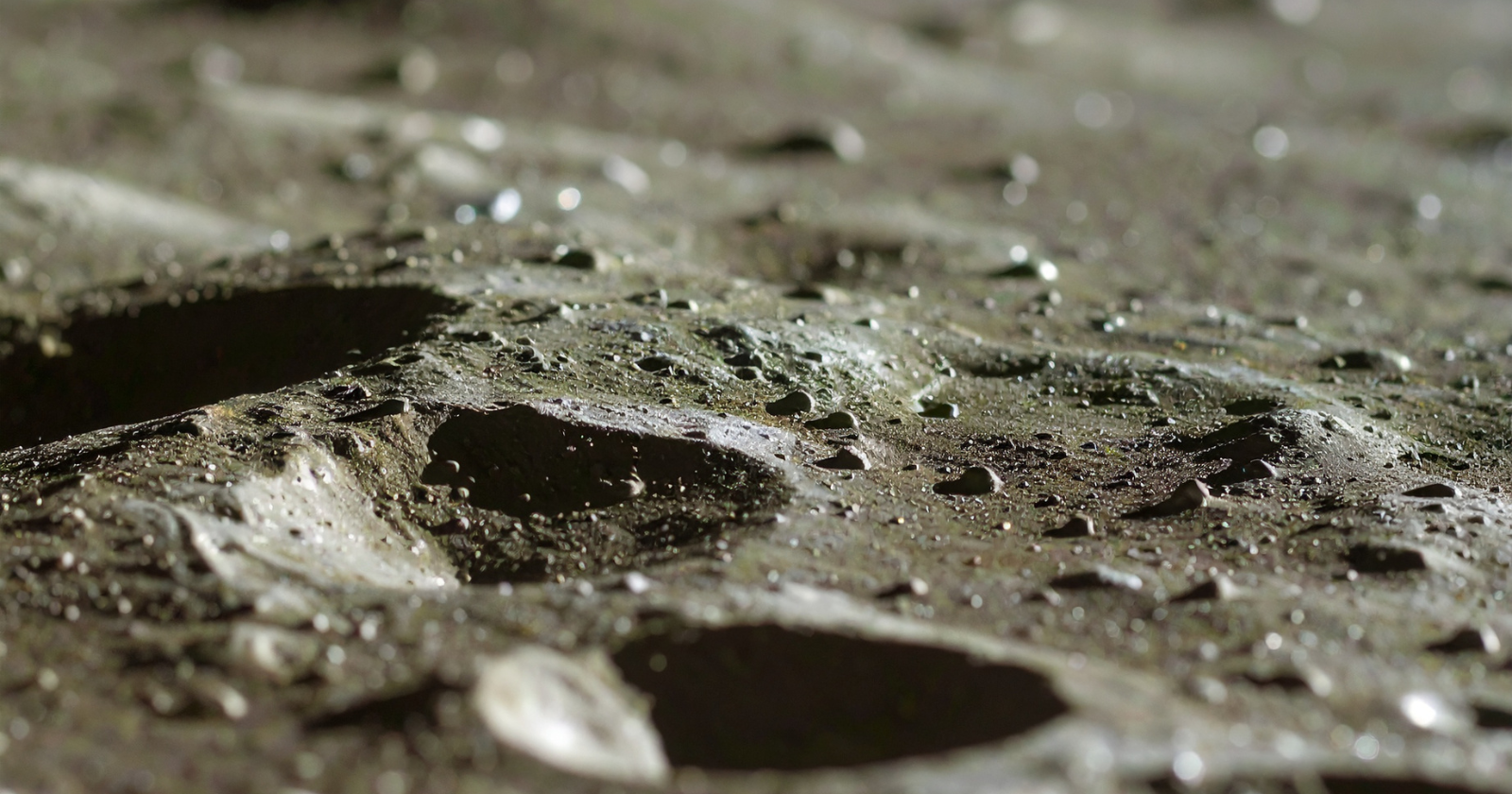
The Apollo astronauts who tracked Moon dust back into their cabin kept filing the same odd report. Fresh lunar dust, they said, smelled like spent gunpowder. The impression was immediate, and it was reported by multiple crews. Yet the smell never survived the trip home. By the time the samples were opened in laboratories on Earth, they no longer smelled like gunpowder, and more than fifty years later there is still no settled account of what the astronauts were smelling up there.
The puzzle is real, but it is narrower than it sounds. A good deal is known about why lunar dust is chemically strange. What is missing is the specific link between that chemistry and the smell.
The descriptions are unusually consistent, and unusually specific. Harrison Schmitt, the geologist on Apollo 17 and the only trained scientist to walk on the Moon, said the instant impression was of spent gunpowder, not something metallic or acrid. He even noted the timing: about seven minutes passed between the start of repressurising the lander and his first remark about the smell.
Gene Cernan, his crewmate, reached for the same comparison. Buzz Aldrin, on Apollo 11, described it a little differently, closer to burnt charcoal, or wet ashes from a fireplace. John Young, on Apollo 16, went further than smelling it and reported that it did not taste half bad.
One detail matters for what follows. The astronauts were careful to say burnt gunpowder, the smell after firing, not the smell of the powder itself. The two are not the same.
The most useful clue is the disappearance. There are hundreds of kilograms of lunar material in the curation lab at NASA’s Johnson Space Center in Houston, and it does not smell of gunpowder. Gary Lofgren, a NASA geologist who has handled the dusty rocks directly, sniffed them and reported plainly that they do not smell like gunpowder.
The astronauts were not imagining it. The accepted reading is that the dust was, in the word researchers use, pacified. Whatever produced the smell was a reaction that happened once, when the dust first met the air inside the cabin, and was finished long before the samples reached Earth. A smell that depends on a one-time reaction cannot be bottled and shipped.
The reason fresh lunar dust reacts at all comes down to where it has been. The surface of the Moon has no air and no weather. For billions of years its dust has been broken down by micrometeorite impacts and bombarded by the solar wind, producing extremely fine grains with fresh, raw surfaces and, in many of them, tiny specks of metallic iron embedded in glassy coatings. Surfaces like that are chemically hungry. They carry what chemists call dangling bonds, unsatisfied bonds left exposed because the dust has never had air to react with.
Bring that dust into a cabin filled with oxygen and a little moisture, and those surfaces oxidise quickly. The reaction is a slow form of burning, too gradual for smoke or flame, and it is the most popular candidate for the smell. Schmitt himself guessed as much at the time, suspecting his nose was responding to unsatisfied bonds of the kind found in both fresh dust and just-fired gunpowder.
This is a hypothesis with broad support, not a proven result. No instrument sampled the cabin air, so the actual molecules responsible were never identified. The gunpowder comparison is an association in the human nose, not a statement about shared chemistry. Other ideas have been raised over the years, including sulphur-bearing minerals in the dust and volatiles implanted by the solar wind. None has been confirmed, because the evidence that would settle it evaporated, in effect, during the flight home.
The smell is a footnote.
The reactivity behind it is not.
The same properties that may have produced the odour, the abrasive shape of the grains and their reactive surfaces, make lunar dust a serious problem for people and equipment. It clings to everything, works its way through seals, and is fine enough to be inhaled deep into the lungs. Dust that got into the Apollo cabins left crews with eye, nose and throat irritation, an effect NASA came to call lunar hay fever, with Schmitt’s reaction the best documented. Reviews of lunar dust as a hazard link its reactive surfaces and iron content to the way it interacts with human tissue.
That has turned an Apollo-era anecdote into a present-day engineering requirement. For NASA’s Artemis programme, and for the commercial missions intending to operate on the surface for more than a few days, dust handling is now a standing line item: cabin filtration, suit design, airlock procedures, and medical monitoring all have to account for a material whose chemistry was barely understood when the first samples came home.
The next people to bring Moon dust into a sealed cabin will arrive with instruments the Apollo crews did not have, and with reason to use them. Whether anyone finally captures the cabin chemistry, and identifies what the astronauts were smelling, is one of the smaller questions Artemis could answer. The larger one, how to live and work in the stuff without it harming lungs and hardware, is the reason the answer would be worth having.
The post The Apollo astronauts who carried lunar dust back into the cabin kept making the same strange report — fresh Moon dust smelled like spent gunpowder — yet the smell never survived the trip home, and more than fifty years later no one has fully explained what they were breathing in up there. appeared first on Space Daily.

**
Across the stories today, a common thread emerges: the tension between revelation and rescue—moments when new understanding drives urgent action, even as time runs short.
Beneath our feet, scientists have mapped fungal networks stretching nearly a billion times the distance to the sun, revealing an underground web of connection that dwarfs anything visible above ground. It’s a reminder that the natural world operates on scales both microscopic and cosmic, with systems we’re only beginning to understand. This same spirit of discovery appears in unexpected places—from the ghostly earthshine illuminating the moon’s dark side to the arrival of a tropical western reef heron in Wales, likely pushed northward by changing climate patterns.
The day’s coverage points to growing momentum around what happens when scientific insight meets conservation urgency. In Mozambique, nine female white rhinos completed their journey to establish the country’s first viable breeding population in generations—a decade-long effort finally bearing fruit. Meanwhile, Australian researchers at PlantBank work like modern-day ark builders, preserving seeds before species disappear forever. On Palau’s Ulong Island, the simple act of removing invasive rats triggered rapid ecological recovery across both land and marine environments, challenging assumptions about how long nature needs to heal.
Yet revelations don’t always bring good news. China’s power sector emissions fell for the first time in a decade, a historic milestone, but a coal surge threatens to reverse that progress. Trees may store less carbon than scientists hoped, according to new research examining growth patterns across 137 forest sites. And Antarctica is missing sea ice equivalent to France’s size, with winter temperatures soaring 20°C above normal—numbers that feel abstract until you consider their global implications.
It’s a reminder that progress and pressure often arrive together. Lake Mead approaches the critical threshold that will slash Hoover Dam’s electricity production, while thousands of marine animals die in fishing nets annually through bycatch. For the 58-year-old Kenyan fisherman Mohamed Mwazigona, returning to shore with just 2 kilograms of fish, these aren’t statistics—they’re the reality of dwindling catches that threaten coastal livelihoods.
Behind the numbers are real communities adapting in real time. Eight volunteers used ropes and pulleys to rescue a 172-pound loggerhead turtle named Bowser from a Florida pier—the kind of hands-on conservation that makes the difference between survival and loss. In Albania, protesters dubbed the “Flamingo Revolution” emerged after bulldozers illegally destroyed protected wetlands for a luxury resort, showing how environmental destruction can galvanize public resistance.
The stories also reveal how legal frameworks struggle to keep pace with environmental challenges. A federal judge ruled the Trump administration’s cancellation of environmental justice grants illegal, while Australia’s climate chief outlined plans to transform the country from fossil fuel exporter to renewable energy leader. Meanwhile, environmental laws were waived to enable border wall construction through Big Bend National Park, illustrating how political priorities can override conservation concerns.
What emerges is a picture of a planet under pressure, but also of human ingenuity rising to meet unprecedented challenges. As commercial satellites threaten the night sky that has guided humanity for millennia, conservationists celebrate osprey chicks hatching in Wales and sengi pups born in captivity. Progress isn’t linear, and solutions often come from unexpected directions—underground fungal networks, community rescue efforts, and the patient work of seed preservation.
As the week unfolds, all eyes will be on how these parallel stories of discovery and rescue continue to intersect, shaping our understanding of what’s possible when knowledge meets action.
The post China’s Coal Surge Threatens Historic Emissions Drop, Hoover Dam Faces Massive Power Cut as Lake Mead Hits Critical Low — Today’s Environmental Briefing for Sat, Jun 13 2026 first appeared on EnviroLink Network.
