 Login

World’s Oldest Water is 1.6 billion Years Old — and This Scientist Tasted It
 Apparently, it tastes 'very salty and bitter'.
 Apparently, it tastes 'very salty and bitter'.


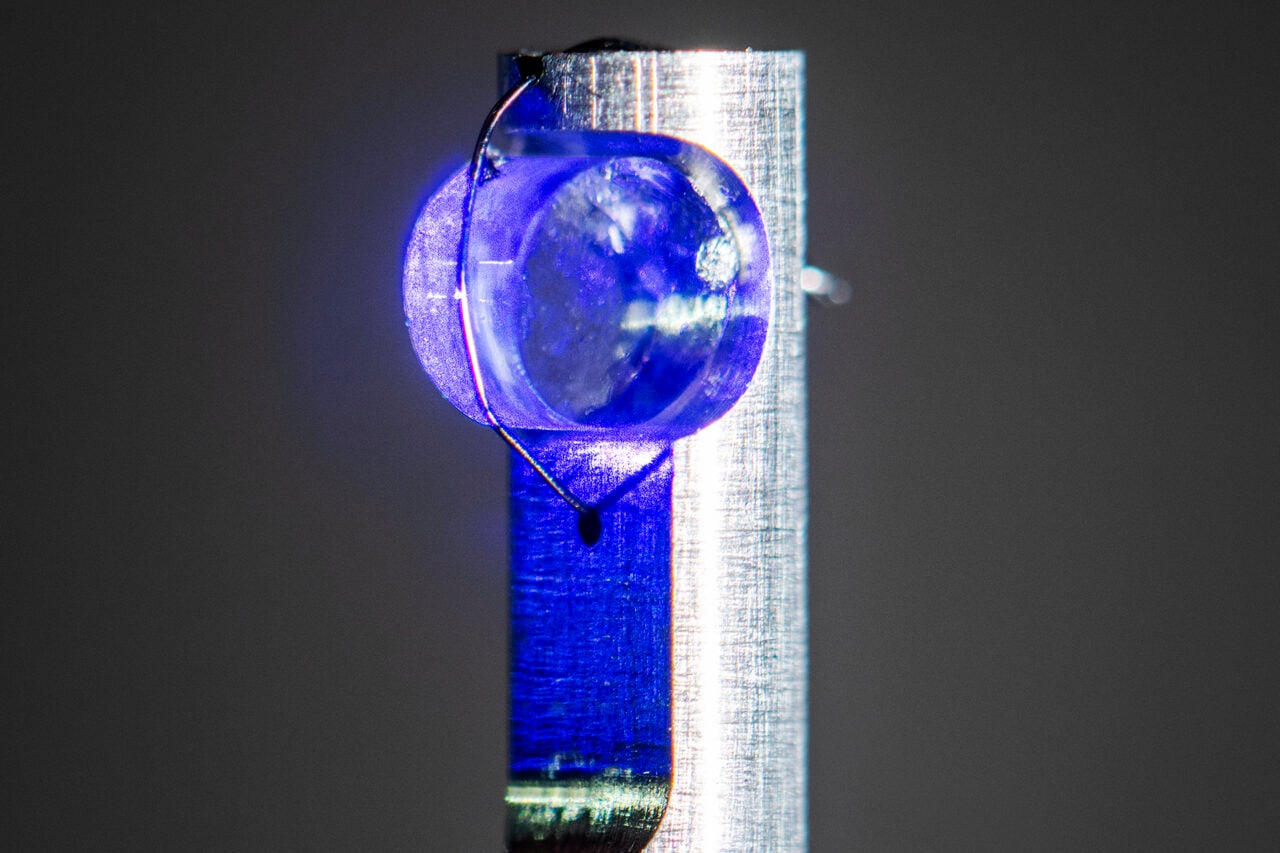
A team of researchers in South Korea has developed a new type of transparent OLED technology that could help improve future augmented reality (AR) glasses, smart windows, vehicle displays, and other advanced electronic devices. The research was led by Professor Yongtaek Hong and his team at the Department of Electrical and Computer Engineering at Seoul […]
The post Transparent OLED advance could power smarter windows, cars, and wearable displays appeared first on Knowridge Science Report.

Scientists at Northwestern University have developed a remarkable new material that can capture energy, store it for months, use it when needed, and then reset itself for reuse. Even more surprisingly, it behaves in a way that resembles living cells. The new material could one day help store renewable energy, power chemical reactions, clean up […]
The post Scientists create a water-based material that stores solar energy like a living system appeared first on Knowridge Science Report.

Scientists in Switzerland have developed an innovative new material made from food industry waste that could help remove carbon dioxide (CO2) directly from the atmosphere more efficiently and at a lower cost. The research, led by scientists at ETH Zurich and published in PNAS, uses proteins extracted from waste products generated during dairy and tofu […]
The post Scientists turn food waste into powerful beads that capture carbon from the air appeared first on Knowridge Science Report.

As demand for electric vehicles, smartphones, and renewable energy storage continues to grow, so does the need for lithium, a key ingredient in modern batteries. Now, researchers at Monash University have developed a new method that could make lithium production more efficient and environmentally friendly. The new technology allows lithium to be extracted from salt […]
The post New lithium extraction method achieves 95% recovery with almost no freshwater appeared first on Knowridge Science Report.

What if a waste product from coal-fired power plants could become a valuable source of materials needed for electric vehicles, smartphones, and renewable energy technologies? Researchers at the Georgia Institute of Technology have developed a new method to recover rare earth elements from coal fly ash, a powdery waste left behind after coal is burned. […]
The post Scientists turn coal ash waste into a valuable source of rare earth elements appeared first on Knowridge Science Report.

A team of researchers in South Korea has developed a new catalyst that can repair itself after damage, potentially solving one of the biggest problems facing hydrogen energy technologies. The breakthrough could help improve the durability of hydrogen fuel cells and water electrolyzers, two technologies that are expected to play an important role in the […]
The post Scientists create a self-healing catalyst that repairs itself like human skin appeared first on Knowridge Science Report.


A team of researchers at Cornell University has developed a new way to restore worn-out lithium-ion batteries, allowing them to recover up to 95% of their original performance. The breakthrough could make battery recycling much cheaper, reduce environmental pollution, and help ease growing shortages of critical battery materials. Lithium-ion batteries power everything from smartphones and […]
The post This simple ‘battery bath’ could bring dead lithium-ion batteries back to life appeared first on Knowridge Science Report.

Water is one of the most common substances on Earth, but scientists have now discovered that it may have a surprising new use: storing electrical energy. Researchers at the Hamburg University of Technology in Germany have developed a new type of energy storage device that uses pure water as its main working ingredient. The technology […]
The post Scientists turn ordinary water into a powerful energy storage material appeared first on Knowridge Science Report.
 Researchers have created a smart wound dressing that can sense when harmful bacteria are present and respond by releasing antibiotics only when needed. Biomedical engineers at Brown University have created a wound dressing that releases antibiotics only when harmful bacteria are detected. In a new study, the team found that the material may quickly eliminate [...]
Gold is weird. It's one of the few metals that doesn’t really oxidize. Even silver and copper—from the same column of the periodic table—form weak oxides. Naively, you might expect that gold would tarnish just like silver. Gold also sits right next to platinum, but it has none of that metal’s catalytic properties.
Then came gold nanoparticles that acted like catalysts, and we were confused by their apparent willingness to take part in chemical reactions.
Now, a pair of scientists has explained that gold’s inertness isn’t inherent to the atom but rather to the surfaces that gold crystals form. Before we get to the results, let’s first take a look at the traditional explanation for gold’s inertness and why an inert material that has no catalytic activity suddenly acts as a catalyst when in its nanoparticle form.


© Kieran Stone
 Tea choice significantly changes kombucha’s chemistry, flavor, and antioxidant potential, with green and oolong teas showing the strongest biological activity. Kombucha has surged in popularity worldwide in recent years, but researchers are looking beyond its flavor to better understand its chemistry and possible health-related properties. A team from the Wrocław University of Environmental and Life [...]
 By recreating a nuclear fireball, scientists uncovered unexpected chemistry that could change how radioactive fallout is understood. In the first fraction of a second after a nuclear explosion or a major reactor accident, an immense surge of energy superheats the surrounding environment. Nearby materials and air are instantly vaporized, creating a rapidly expanding fireball made [...]

Electric vehicles and other clean energy devices rely on batteries that use a metal called lithium. The expanded use of lithium has made lithium mining a rapidly growing industry. Lithium is most often found in volcanic rocks called pegmatites. Researchers have studied how much carbon and water pegmatite mining uses, but they don’t know how it affects local water quality.
Pegmatite mining releases not only lithium but also other metals commonly found in pegmatite, such as rubidium and cesium. These trace metals are under-researched in terms of their environmental effects and possible human toxicity, though the EPA has linked high levels of lithium to adverse health effects in kidney function, neurological development, and thyroid function. As such, there’s currently no established safe level for lithium in drinking water, but the U.S. Geological Survey suggests a preliminary safety level of 10 micrograms per liter (μg/L).
Researchers at Duke University recently tested how much pegmatite mining increased lithium levels in local waters, and how long those effects lingered after mining processes ended. To do so, they measured metal concentrations in waters downstream from 2 lithium mines and adjacent processing plants. They hypothesized that mining activities would increase interactions between rocks and the surrounding surface water and groundwater, impacting their lithium concentrations.
The researchers collected 99 water samples from surface streams and 93 samples from groundwater wells surrounding the Kings Mountain and Hallman Beam lithium mines, in a zone of about 40 kilometers (25 miles) along the border of South Carolina and North Carolina. The researchers took 51 surface water samples upstream of the mines to evaluate natural metal levels, and compared these with 48 downstream samples showing the mining-impacted metal levels.
The researchers measured lithium and other trace elements, like rubidium, cesium, arsenic, and strontium, in the waters using an instrument called an inductively coupled plasma mass spectrometer. They found that lithium concentrations in the surface waters increased from a background of 0.2 to 79 μg/L to concentrations of 785 to 1,249 μg/L within 10 kilometers (6.2 miles) of the mines and processing facilities. The groundwater lithium levels were as high as 4,500 to 47,000 μg/L in the wells at the mines, but were not affected at downstream wells where lithium levels ranged from 0.5 to 890 μg/L.
They suggested that lithium in the groundwater downstream from the mines came from natural interactions of the pegmatite rocks with the water, rather than from the mines themselves. This natural process was confirmed when the researchers noticed that lithium levels in the groundwater rose after rainfall, which caused more water-rock interaction.
The researchers also measured ions like calcium, sulfate, and chloride in the waters using a tool that can analyze compound molecules, called an ion chromatograph. They found that calcium and sulfate concentrations increased in surface waters within 10 kilometers (6.2 miles) downstream of the processing facilities. These downstream waters had 50 to 120 milligrams per liter (mg/L) of calcium and 100 to 300 mg/L of sulfate, compared to 5 to 20 mg/L of calcium and 3 to 10 mg/L of sulfate in the background surface waters. These ions are also byproducts of pegmatite processing, produced from a waste product made up of calcium sulfate, called gypsum.
The team explained that active mining has been discontinued at this site for approximately 3 decades, meaning that the lithium concentrations they measured reflect the long-term release of lithium from inactive mines and mining waste. Drawing from historical data, they estimated that while the mines were active, they likely released 10 to 30 times the amount of trace metals they measured at the same location today.
The researchers concluded that hard-rock processing impacts downstream metal and ion concentrations more than the mining itself. As lithium mining operations expand, the researchers suggested that future researchers examine lithium toxicity as well as the potential effects of its co-occurring metals, like rubidium and cesium. They also emphasized the need to find solutions for removing the trace metals and dissolved gypsum from water systems, or preventing them from leaking into the water systems to begin with.
The post Lithium mining impacts local waters appeared first on Sciworthy.

Editor’s Note: Astrobites is a graduate-student-run organization that digests astrophysical literature for undergraduate students. As part of the partnership between the AAS and astrobites, we occasionally repost astrobites content here at AAS Nova. We hope you enjoy this post from astrobites; the original can be viewed at astrobites.org.
Title: Protostars at Subsolar Metallicity: First Detection of Large Solid-State Complex Organic Molecules in the Large Magellanic Cloud
Authors: Marta Sewiło et al.
First Author’s Institution: NASA Goddard Space Flight Center
Status: Published in ApJL
Stars and planets form when clouds of molecules collapse in on themselves due to the overwhelming force of gravity (which, relatable). This process is quite mysterious, as these clouds will only live for a couple million years before collapsing, and the newly forming protostars only live for about half a million years before becoming main-sequence stars.
But we are able to find some protostars in the Milky Way and in the Small and Large Magellanic Clouds near us, and observing the molecules around these protostars can help us understand how protostars form.
To look for molecules around protostars, astronomers take spectra of the protostars in the infrared, which is a wavelength region where molecules emit a lot of light. As better instruments are being built, astronomers are more often able to look for what are called complex organic molecules, which are carbon-bearing molecules with at least six atoms.
These complex organic molecules can be detected in different states: most detections have been of gaseous molecules in and around protostars or planet-forming disks, but they can also be found in a solid state on the surfaces of dust grains in the interstellar medium in a galaxy. In this state, they are called complex organic molecule “ices.” These “ices” were rarely found pre-JWST, but since its launch, detections have been more numerous, mainly in the Milky Way. Observing these complex molecules on the surfaces of dust grains tells us more about protostellar dust chemistry, which is an important but still mysterious aspect of star formation.
In this study, researchers look outside of our own galaxy to explore the complex organic molecules in the Large Magellanic Cloud (LMC). The LMC is an interesting place to look for these molecules because it has lower metal content (i.e., elements heavier than hydrogen and helium) than the Milky Way, as well as a harder radiation field. This means photons flying around in the LMC generally have higher energies than photons flying around in the Milky Way, and elements like carbon, oxygen, and nitrogen are less abundant. This is important because these conditions are more similar to what typical galaxies were like in the early universe. Thus the LMC is a better test bed to look at protostars than the Milky Way if we want to understand how stars formed in the early universe.
The authors of this study have found signatures of complex organic molecules in protostars forming in the LMC. They focus on the protostar ST6 in the LMC, shown in the right image in Figure 1. They used JWST’s Mid-Infrared Instrument to take spectra of the region around ST6.

Figure 1: The LMC (left) and a zoomed-in view of region N158 (right) containing protostar ST6, the focus of this study. In the inset panel of the right picture, contours of carbon monoxide emission are shown. [Sewiło et al. 2025]
The researchers used the Python tool called dEcompositioN of Infrared Ice features using Genetic Modelling Algorithms (ENIIGMA) to fit the spectroscopy. This code compares the spectra to laboratory data of these complex organic molecules at the temperatures we see in the LMC. The authors fit for complex organic molecules they might expect to see, and they detect methanol (CH3OH), acetaldehyde (CH3CHO), ethanol (CH3CH2OH), methyl formate (HCOOCH3), and acetic acid (CH3COOH); of these, acetaldehyde, ethanol, and methyl formate have never before been detected outside of the Milky Way. Interestingly, this is the first time acetic acid has been definitively detected in any astrophysical environment. The spectral contribution from each molecule is shown in Figure 2; all the individual contributions added together make up the observed spectrum.

Figure 2: Model fits to the spectrum of the protostar ST6 using the code ENIIGMA. Molecules and their fitted emission are given in the legend. [Sewiło et al. 2025]
When the authors compared the abundances of these ices to other protostars in the Milky Way galaxy, they found that the abundances are slightly lower around the LMC protostar. This may happen because the dust temperatures are generally higher in the LMC due to the higher-energy photons, which affect the chemistry happening on the dust. Some species they found, however, do have similar abundances to the Milky Way protostars, indicating that the harder radiation field of the LMC does not affect how these species form. Finding more complex organic molecules in the Magellanic Clouds will help us understand further how these compounds form on dust grains and how the galactic environment may affect their formation.
Original astrobite edited by Shalini Kurinchi-Vendhan.
About the author, Caroline von Raesfeld:
I’m a third-year PhD student at Northwestern University. My research explores how we can better understand high-redshift galaxy spectra using observations and modeling. In my free time, I love to read, write, and learn about history.
The post Detecting New Icy Molecules Around a Newly Forming Star with JWST appeared first on AAS Nova.
