 Login

This Mushroom Makes You See Little People. It Gets Even Weirder: Scientists Can’t Find the Hallucinogen
 Researchers may have stumbled on a completely unknown pathway.
 Researchers may have stumbled on a completely unknown pathway.
 Stuck between life and death, this foot consumes nutrients, heals itself, and grows, but doesn’t turn into a whole new organism.
It’s a bit worrying when a scientific paper begins, “How long will life on Earth survive?” But in this case—a study by Jacob Haqq‐Misra of Blue Marble Space and Eric Wolf at the University of Colorado Boulder—the billion-plus-year timeline under consideration shouldn’t cause you too much existential panic.
The context for this question is that we understand the Sun will brighten as it eventually matures into a red giant that swallows the Earth in a solar furnace. So, where along that 5 billion-year path will life on Earth, in fact, be cooked?
This isn’t just a question of incoming radiation. Among the thermostat-like stabilizing feedback loops in Earth’s climate, the cycling of CO2 through the solid Earth is a major factor over timescales this long. The weathering of silicate rocks at the surface converts atmospheric CO2 into carbonate that ends up on the seafloor, where it can be subducted into the mantle with tectonic plates. (And eventually, it can cycle back out to the atmosphere through volcanoes.)


© NASA/GSFC/SDO
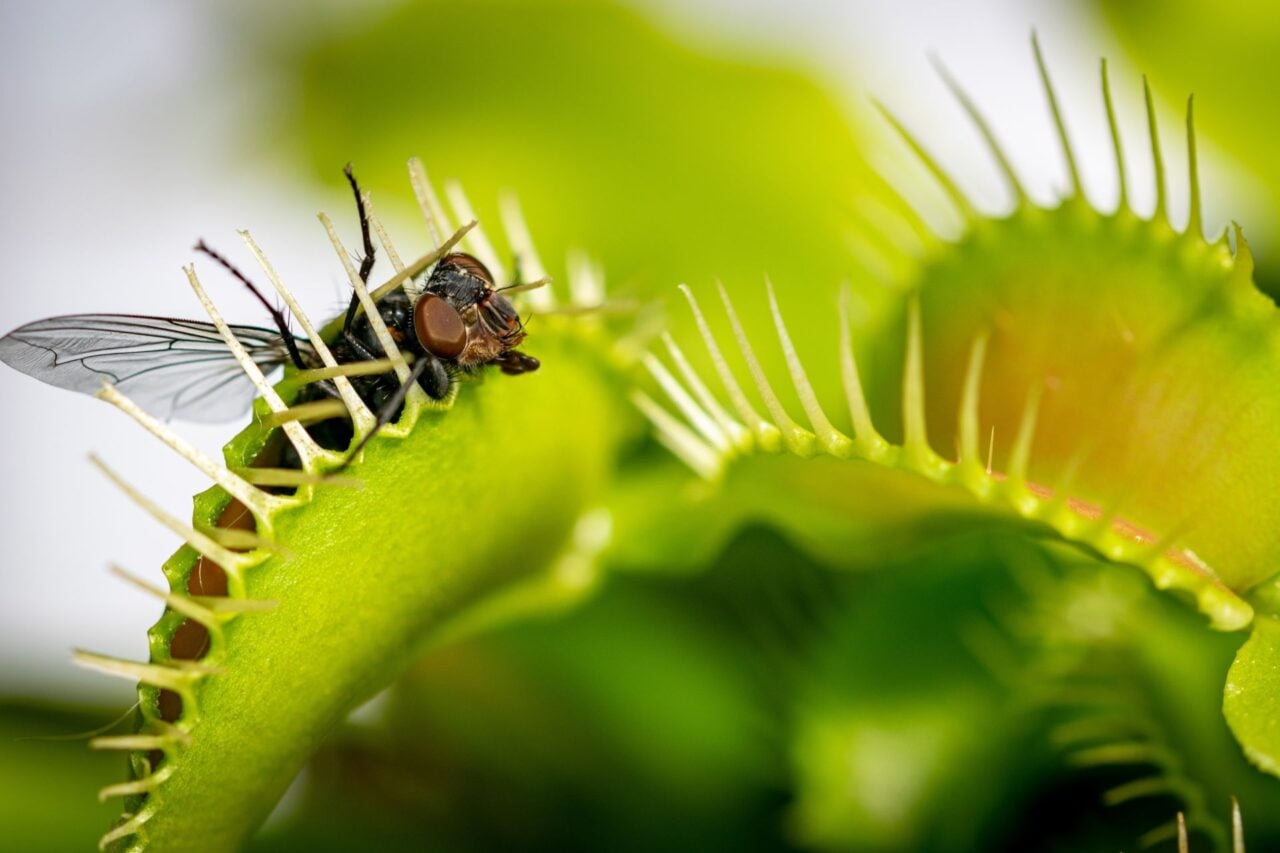
One of nature’s most mysterious predators isn’t a mammal stalking remote forests or jungles, nor any large, finned creature lurking in the ocean depths: it is a bizarre little plant that grows only in certain wetland areas along the East Coast of the United States.
With the distinctive hinged leaves that it uses to capture insects, the Venus flytrap is one of nature’s most curious offerings. The small bog-dwelling plant owes its success to the way it can generate an inviting aroma with the nectar it produces, which lures insects. Then, with the help of tiny follicles that act as triggers, the insects become trapped within the flytrap’s leaves as they close like jaws around its prey.
Scientists have long been perplexed by exactly how these plants can react quickly enough to capture even some of the fastest flying insects. Even Charles Darwin seemed baffled by these curious examples of carnivorous flora, describing them as “a plant [that] should secrete, when properly excited, a fluid containing an acid and ferment, closely analogous to the digestive fluid of an animal.”
While the exact mechanism that allows the mysterious Venus flytrap to carry out its distinctive method of feeding has long remained unknown, new research is finally shedding light on the mystery.
According to recent experiments detailed in a new study, when the hair-trigger mechanism is activated on these plants, cells on the jaw-like leaves soften, which initiates the closing movement within fractions of a second, trapping any insects unlucky enough to have landed searching for nectar.

Dr Yoël Forterre, a physicist at the French National Centre for Scientific Research (CNRS) and Aix-Marseille University, says that this movement had been so mysterious to Darwin that “he was convinced that the plant had a muscle inside, but plants do not have muscles and they do not have nerves.”
“For more than a century there have been many hypotheses,” Forterre, senior author of the recent study, said. “It’s very surprising that plant cell walls can tune their mechanical properties so fast.”
One of the primary issues with resolving the plant’s curious mechanism involved overcoming challenges associated with measuring such a remarkably fast system of movement, let alone one in a plant, which possesses none of the usual mechanisms nature relies on for such activities.
Equally perplexing is that the Venus flytrap seemingly recognizes when an accidental trigger has been initiated, rather than a successful capture of an insect.
“If you close it accidentally with a drop of water, it will close and then reopen the next day,” Forterre says. “If it catches an insect, it has to digest it and dissolve the skeleton, which will take several weeks.”
In experiments Forterre and his colleagues performed, dental glue was used to secure the plant’s leaves, which allowed for the normal trigger mechanisms to be engaged, but left the plant’s leaves open throughout the process.
Past research had already shown that electrical signals had been detected coinciding with the manipulation of the trigger hairs present on the plant’s leaves, in which this sudden surge of electricity “activates” the plant’s closing mechanism within a fraction of a second.
Applying a new approach, Forterre and colleagues used the metallic tip of a nanoindenter, devices used to make very small mechanical measurements. Applying the device to the outer leaves revealed that its normal stiffness appeared to soften significantly once the hair mechanisms were triggered.
The reason this occurs, according to Forterre, is that the cells themselves temporarily become more flexible. Past theories suggested that the movement was initiated by the movement of water contained within the leaf.
The newly-identified mechanism reveals a process very similar to the function of a plunger, which, if inverted, will flip back to its normal position when pressure is applied.
Forterre says he is unaware of any similar plant in nature that displays such unusual mechanical properties, which he says allows the Venus flytrap to initiate a “very rapid change of mechanical properties of the cells.”
“I’ve been obsessed by this for 20 years,” Forterre recently told The Guardian, noting that “as a physicist, I thought we should understand the motor, the forces.”
Now, thanks to his team’s findings, one of the plant kingdom’s strangest inhabitants has finally revealed its secrets.
The team’s new study, “Fast cell wall softening causes Venus flytrap closure,” appeared in Science on June 11, 2026.
Micah Hanks is the Editor-in-Chief and Co-Founder of The Debrief. A longtime reporter on science, defense, and technology with a focus on space and astronomy, he can be reached at micah@thedebrief.org. Follow him on X @MicahHanks, and at micahhanks.com.
As our world is rapidly reshaped by climate change, glaciers have retreated and revealed new swaths of bare land. Throughout the coming decades to centuries, this rocky ground will become dappled with lichens and scrub, eventually giving rise to newborn forests in a process known as ecological succession.
Ecologists have mapped out the stages of ecological succession for plant communities, observing which species are the first to colonize land and how these pioneer species promote secondary growth. Yet before any plants sink their roots into the soil, it is populated by thriving communities of single-celled microbes that prepare it for further habitation. Scientists study how these microbial communities arise to understand how healthy ecosystems develop.
Newly exposed land is nutrient-poor and subject to large temperature fluctuations, so the first species to settle there must overcome these challenges. Pioneer plant species are often habitat generalists, meaning they can thrive under a variety of environmental conditions. However, all plants convert water and sunlight into carbon and energy. Microbes can use many different energy sources, and often contain genes for multiple metabolisms in their genomes. Therefore, researchers wondered whether pioneer microbes could also be defined by their metabolic flexibility.
A team of scientists based at Monash University in Australia tested this hypothesis by studying land left in the wake of 2 retreating glaciers: one on an island off the coast of Antarctica and one in the Swiss Alps. The researchers sampled soils along a path from the tip of the glacier outward, which had been exposed to the air for different amounts of time. By comparing the microbial communities within these soils, the researchers could track the different stages of ecological succession after glacial retreat.
The researchers extracted DNA from the soils and analyzed it using 2 sequencing methods. First, they sequenced a gene called 16S rRNA, which is like a microbial fingerprint for the different species present. They used this method to understand the diversity of these communities and track their species overlap, helping them to identify habitat generalists that thrived under different soil conditions.
To understand the metabolic flexibility of these microbes, the researchers used a second method, known as metagenomics, which sequences all of the DNA in a sample rather than just a single gene. They used these data to reconstruct the entire genomes of microbes present in the soils, providing information on what kinds of metabolic activities they were capable of. The team also measured chemicals like ammonium and sulfide in the soils, as well as atmospheric gases like methane and carbon monoxide, to assess how the microbes used these compounds for growth.
The researchers found microbes inhabiting even the youngest soils, demonstrating the speed at which life takes hold in new environments. The abundance of microbes increased by approximately 8-fold in older soils, alongside a similar rise in species diversity, indicating that complex communities persisted over time. They also found the metabolic capabilities of microbes inhabiting Antarctic and Swiss glacial soils to be remarkably similar, suggesting common selective pressures drove the establishment of these new ecosystems.
They were surprised to discover that the most abundant microbes in younger soils were habitat specialists that were rare in older soils. These pioneer microbes, while still metabolically flexible, had adapted to utilize meager energy sources like atmospheric trace gases, including hydrogen, methane, and carbon monoxide. Many of these microbes could also derive energy from chemicals that dissolved out of rocks, like inorganic sulfur compounds. The researchers proposed that pioneer microbes could quickly take advantage of newly opened ecological niches, like soils exposed during a glacier’s retreat, because of their efficiency at using scant resources.
They found that habitat generalists, on the other hand, tended to dominate older soils. This result suggested that the habitat specialists were eventually outcompeted by the slow and steady growth of the habitat generalists in a real-life turtle-and-hare race.
The team concluded that using multiple growth strategies helps microbes adapt to new environments. However, they acknowledged that ecological succession could occur differently in other landscapes, such as in the aftermath of volcanic eruptions, meteorite impacts, or forest fires. They suggested that future researchers work to uncover how microbial communities lay the groundwork across these diverse ecosystems.
The post When glaciers retreat, microbes take over appeared first on Sciworthy.

Collagen is often described as the body’s natural scaffolding. It gives strength and structure to skin, bones, tendons, organs, and many other tissues. For decades, biology textbooks have shown collagen as a long, stiff, rod-shaped molecule. But a surprising new study suggests that picture is only part of the story. Researchers at the Center for […]
The post Our body’s most abundant protein behaves like a liquid inside cells appeared first on Knowridge Science Report.
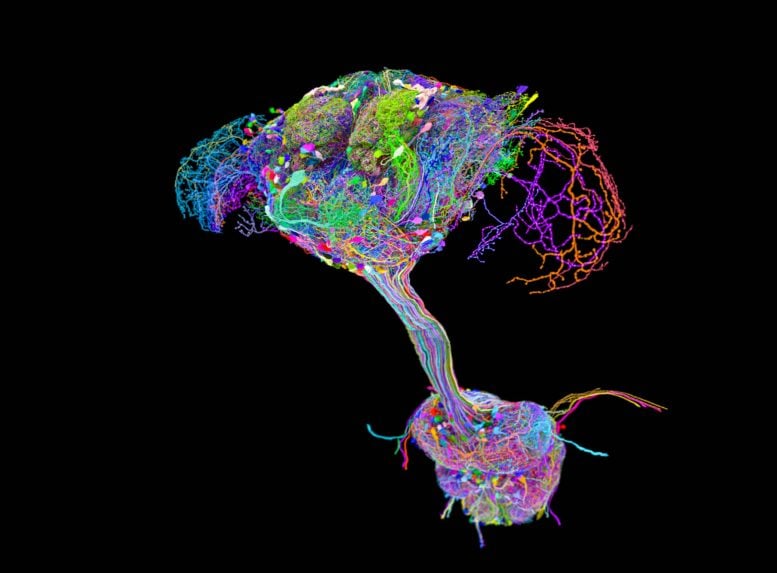 Scientists have created the first complete brain-to-body wiring map of a fruit fly, revealing that complex behavior may arise from distributed neural teamwork rather than a central controller. A large international research team led by labs at Harvard Medical School and Princeton University has reached a major neuroscience milestone: a complete wiring diagram of every [...]
 Scientists studying the remarkable regenerative abilities of planarian flatworms have uncovered a previously unknown type of immune cell with an unusually destructive defense strategy. What if an immune cell could wipe out nearby threats by detonating itself? That is exactly what Stanford researchers have discovered in one of nature’s most unlikely creatures: the planarian flatworm. [...]
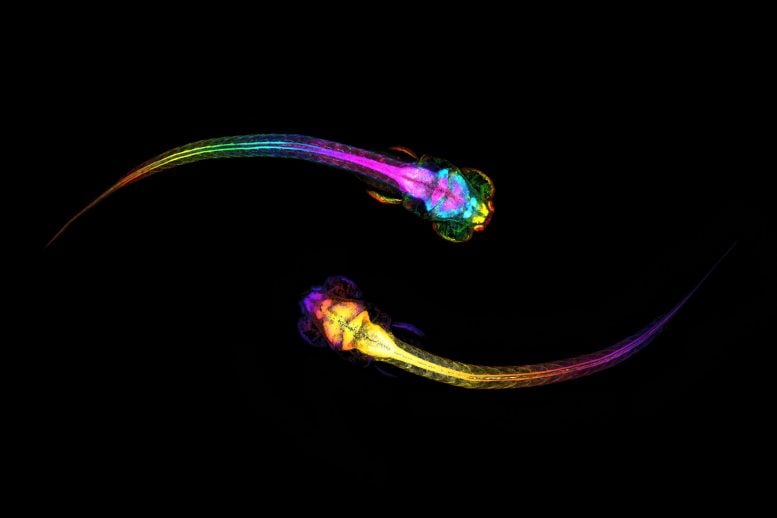 Scientists discovered that the brain begins preparing for social connection before we even make the first move. Why do we decide to approach other people? According to new research, the answer may start unfolding in the brain several seconds before any movement takes place. A team of scientists from the Hebrew University of Jerusalem has [...]

Could consciousness exist in alien life forms that look nothing like us? Could it even appear in machines? According to a new paper by philosophers Eric Schwitzgebel of the University of California, Riverside, and Jeremy Pober of the University of Lisbon, the answer may be yes. The researchers argue that consciousness is probably not limited […]
The post Consciousness may exist beyond humans, animals, and even Earth appeared first on Knowridge Science Report.
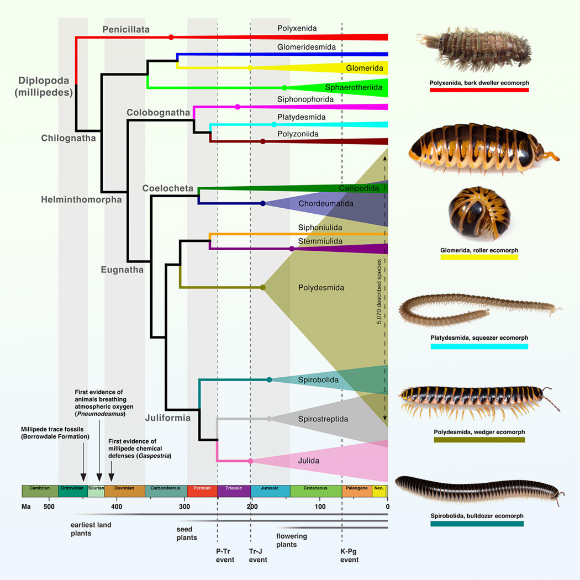
Two elusive groups of millipedes, Siphoniulida and Siphonocryptida, were the last missing pieces in the evolutionary history of Earth’s oldest land animals, according to a team of entomologists led by Virginia Tech.
The post Entomologists Reconstruct Evolutionary History of Millipedes appeared first on Sci.News: Breaking Science News.

For millions of years, some of Earth’s earliest animals barely changed. They lived, grew, and spread across the seafloor, but evolution seemed stuck in slow motion. Now, a new study suggests that the reason may have been surprisingly simple: these ancient creatures were reproducing without sex. Researchers from the University of Cambridge have found evidence […]
The post A lack of sex may have delayed the explosion of life, study finds appeared first on Knowridge Science Report.
 A newly discovered genetic clock acts as the body’s developmental timekeeper, coordinating the bursts of gene activity needed for growth. Scientists found that when this clock breaks down, development comes to a halt. Think about a train sitting at a station. Passengers have boarded, conductors are checking tickets, and everything is ready to go. But [...]
 Detached sea cucumber tissue survived, healed, and grew for years in natural seawater, revealing a remarkable new model for regeneration and biomedical research. A chance observation has led scientists to a discovery that challenges one of biology’s most basic assumptions: that detached animal tissue eventually dies. Instead, researchers found that tissue removed from a sea [...]
 A new study suggests that reproducing a crucial sleep-like brain pattern in awake animals may help preserve memory and learning abilities. What if part of the brain could get some of the benefits of sleep without the rest of the brain ever going offline? A new NIH-funded study suggests that may be possible. Researchers found [...]
 A newly identified vitamin K-dependent signaling pathway appears to help coordinate communication between key bone cells. Bones may seem like lifeless structures, but they are constantly being torn down and rebuilt. Every day, specialized cells remove old bone while others replace it with new material, a process that keeps the skeleton strong and adaptable throughout [...]
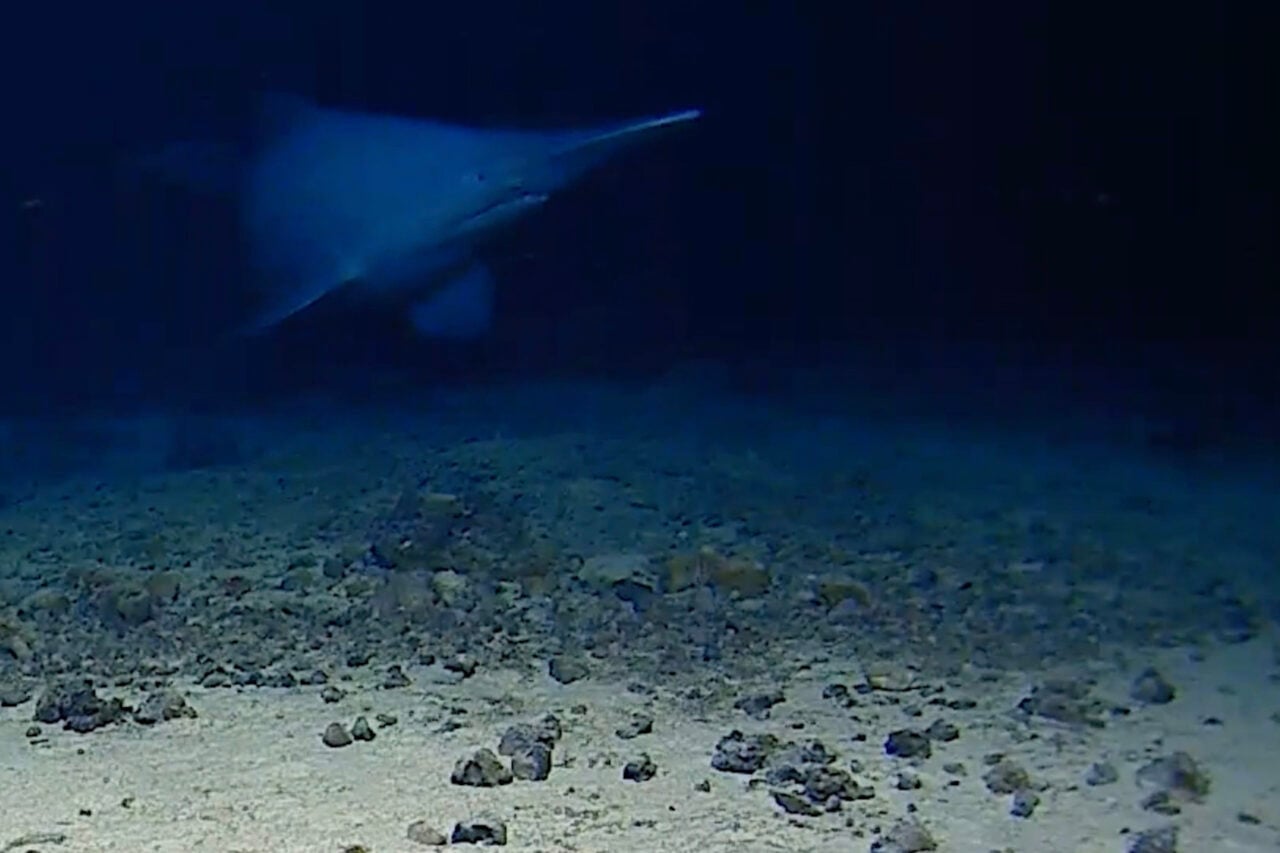
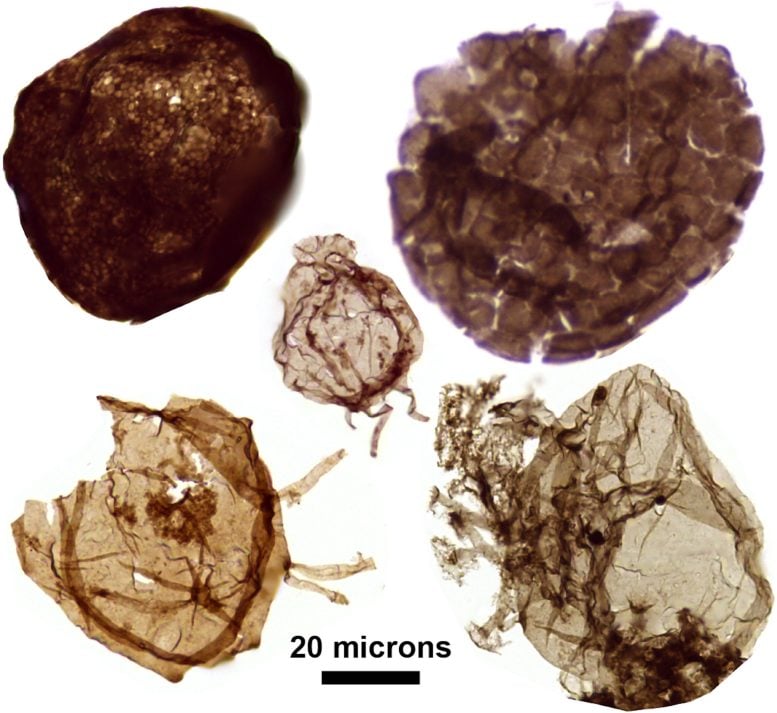 Ancient Australian fossils indicate that the earliest eukaryotes depended on oxygen, providing new evidence that oxygen helped enable the evolution of complex life. Stored in an open-air warehouse in tropical Darwin, Australia, are dozens of trays containing cylindrical cores of rock. They are from drill holes bored hundreds of meters below the surface by mineral [...]
 New research shows that wildlife reacts differently to human presence than to human-made landscapes. For centuries, people have transformed landscapes, forcing wildlife to adjust to a rapidly changing world. New research suggests that animals are not only responding to altered habitats, but also to the direct presence of humans. Researchers from UC Santa Barbara, the [...]
