Sateliot pressed the benefits of satellite connectivity for agriculture in a test with Brazilian innovation centre CPQD which it stated showcased the advantages of non-terrestrial IoT.
Standard NB-IoT devices were connected in a remote area out-with the reach of land-based mobile networks as part of a Sateliot initiative to boost use of low Earth orbit (LEO) satellites in Brazil.
The company explained the “performance and commercial viability” of satellite-enabled IoT was verified, proving the “feasibility of seamless roaming” between land- and space-based networks.
Sateliot and CPQD put the technology to work tracking cattle.
The Spanish company’s Conecte o Brasil LEO NTN push involves device validation and interoperability testing. The initiative is intended to help Sateliot unlock a nation it stated is “one of the largest untapped IoT markets in the world”.
Sateliot highlighted large portions of Brazil are still not in range of mobile networks, potentially hampering the nation’s ability to capitalise on growth in cellular IoT services.
Elitelma Souza, CPQD solution manager for Automation, IoT and Hybrid Computing, said extending the “reach of IoT” services could “enable new operating models for various sectors of the economy”.
Sateliot CCO Gianluca Redolfi highlighted the test was the company’s first “commercial demonstration in Brazil”, making it “a crucial milestone” in its push there and beyond.
The European Union (EU) signed a digital partnership with Brazil, strengthening ties on shared technology priorities, including data governance, AI, digital infrastructure, connectivity and online platforms.
The EU’s Digital Partnerships initiative is described by the body as a “core instrument” of its external digital policy, enabling cooperation with like-minded countries on shared priorities.
The agreement was signed in Brazil by Henna Virkkunen, EVP at the European Commission and Brazil’s Secretary for Technology, Alex Giacomelli da Silva.
According to comments cited by Reuters, Virkkunen said the bloc’s push to secure more digital cooperation deals is centred on a desire to reduce reliance on US technology.
“Brazil is a country which shares very much the same value[s] as the EU. So Brazil is committed to open markets, to secure technologies, also to a rules-based order.”
She added the EU is looking to build partnerships because it cannot stay competitive alone, while working to reduce dependence on other nations for services including chip manufacturing and cloud.
Brazil becomes the fifth country to partner with the EU on digital initiatives, joining Canada, Japan, South Korea and Singapore.
Data exchange Through the partnership. The EU and Brazil pledged to step-up joint efforts to promote resilient global supply chains, contributing to an inclusive, rules-based system of global digital governance.
It builds on an agreement struck in January to collaborate on data sharing after finding their protection levels were similar. This agreement allowed businesses, public authorities and researchers to freely exchange data between Brazil and the EU without additional requirements.
The Digital Partnership will now be implemented through dedicated technical workstreams and “high-level exchanges”. A meeting of the Digital Partnership Council will be held in the next 12 months, providing a strategic direction and joint roadmap for the partnership to move forward.
Anthropic was directed by the Trump administration to immediately suspend all access to its two most advanced AI models, Fable 5 and Mythos 5, citing national security concerns.
The directive issued on 12 June ordered the AI lab to disable both models for all customers globally, including foreign national Anthropic employees, whether inside or outside the US.
The Trump administration’s letter to Anthropic targeted foreign nationals, but because ensuring compliance would require verifying the nationality of every user, it shut both models down entirely for all customers, Anthropic stated in a blog.
The letter did not specify the nature of its national security concern, but Anthropic said its understanding is goverment officials believe a method of bypassing the model’s safeguards through jailbreaking has been identified.
The AI player stated it reviewed a demonstration of the technique and found it exposed only a small number of previously known minor vulnerabilities, all of which can be replicated using other publicly available AI models without any bypass required.
Anthropic pushed back on the administration’s justification for the suspension. The company noted in the weeks building up to Fable 5’s launch, it worked extensively with the US government, the UK AI Safety Institute and multiple private organisations.
Those tests, Anthropic said, showed Fable 5’s protections were substantially stronger than any previously deployed model. No tester has yet found a universal jailbreak capable of broadly bypassing the model’s defences, according to Anthropic.
It did acknowledge perfect jailbreak resistance is not currently achievable for any AI model provider and stated it disclosed this limitation publicly at launch.
Anthropic adopted what it describes as a defence in depth strategy, combining narrow jailbreak resistance with thorough monitoring and a 30-day customer data retention policy specifically designed to detect and shut down successful attacks.
Amazon angle The Wall Street Journal (WSJ) reported the directive followed conversations between Amazon CEO Andy Jassy and US officials including Treasury Secretary Scott Bessent, after the retail giant’s researchers used a series of prompts to extract information from Fable 5 which were restricted.
Anthropic said it is complying with the legal order but disagrees the narrow potential jailbreak warrants recalling a model deployed to hundreds of millions of users. The company warned that applying this standard across the industry would effectively halt all new frontier model deployments.
Forbes reported some customers are seeking refunds from Anthropic for the disabling of Fable 5, citing a post on Reddit from the company which offers a prorated refund.
Anthropic apologised for the disruption, describing the situation as a misunderstanding, and said it is working to restore access as soon as possible.
AI policy shifts Kevin Frazier, adjunct research fellow at the Cato Institute, said the episode exposes a deeper structural problem. The decision, he said, based on questionable justifications and made by actors subject to few effective constraints, strengthens the case for Congress to pass a transparent and technically grounded AI governance framework.
“Transparency, fairness, clarity, and evidence-driven enforcement should be core components of AI governance,” he said. “So long as AI policy decisions are driven by a few actors taking action behind closed doors in response to non-public reports, we will be far short of that standard.”
The Trump administration previously took a hands-off approach to AI regulations to spur development and stay ahead of China.
Earlier this month, Trump signed an executive order directing pre-deployment testing of frontier AI models, but the order was voluntary and did not create a licensing requirement.
In March 2026, the administration released its national AI legislative framework, a move aimed to create uniform security and safety guardrails while also attempting to pre-empt states from enacting their own rules.
Anthropic is currently on a Department of War blacklist designating the company as supply chain risk and barring it from government use. A federal judge blocked the order for the federal government to cut all contracts with Anthropic. The legal battle is ongoing.
Archaeologists have discovered an unusual artifact they say could represent the earliest known use of written numbers ever discovered in Mesoamerica.
The curious clay figurine features eleven small dots carved into its surface, appearing in three columns. Although its exact purpose remains unclear, researchers who report the discovery in Latin American Antiquity believe it could be one of the oldest examples of graphic notation that may have been used for rudimentary calculation or some similar purpose, dating to as far back as around 750 B.C.
Significantly, the researchers behind the recent study argue that this earliest known evidence of numerical writing could offer clues to “the relationship between numeration, bodies, and identity in ancient Mesoamerican worldviews.”
The Enigma of the Tab Figurines
The figurine, roughly the size and shape of a small television remote, was unearthed at an ancient Mesoamerican site located along Guatemala’s Pacific coast, known as La Blanca. It is among a group of similar artifacts archaeologists call tab figurines, and hundreds of these mysterious relics are known from past discoveries at the site.
Named for their unusual slab-like appearance, these figurines also bear anthropomorphic qualities, which include depictions of jewelry and other ornamentation, although the tab figurines do not directly resemble human heads beyond the presence of such ornaments.
A Remarkable Discovery at Ancient La Blanca
While similar past discoveries recognized as tab figurines have been made at La Blanca, the presence of dots appearing in columns makes this one very unique and presents a novel possibility: that the impressions on the statuette may not have been purely decorative.
“The ordered dots on the La Blanca tab figurine’s headdress, of course, raise more questions than they answer,” write authors Julia Guernsey, Stephanie M. Strauss, and Michael Love in their recent study. “This is often the case with unique examples such as this, which cannot be better contextualized within a larger grouping of like objects from La Blanca or elsewhere.”
The ceramic “tab” figurine with headdress band and potential dot numeration from the Joyas Group at the archaeological site of La Blanca, Guatemala, alongside an artistic rendering of the artifact by Julia Guernsey (Image Credit: J. Guernsey/South American Antiquity)
“Although one might be inclined to dismiss the La Blanca figurine as a curiosity or an isolated addendum to the complicated history of first writing in Mesoamerica,” the authors go on to note, “we believe that it merits this thorough discussion.”
Clues to Unraveling a Mesoamerican Mystery
A clue to the artifact’s purpose may arise from the association between tab figurines and the human head, a region of the body that is traditionally associated with individual identity. This is significant, since archaeologists recognize a potential link between numbers and individual identity in the world of ancient Mesoamerica.
Based on existing archaeological knowledge from the region, it is known that experimentation with numbers had already begun around the time the artifact is believed to have been made. One well-characterized numerical system is known as the dot-and-bar system, which, as the name implies, relies on dots and bars to convey figures of one and five units, respectively.
“In the Mixtec and Aztec codices, one easily becomes accustomed to reading even long strings of single dots and quickly approximating their quantity, a visuo-summation process known as subitizing,” the authors write.
“And no matter what form Mesoamerican numerals took, the vigesimal system was rooted in metaphors/mnemonics of the body: specifically, 10 fingers and 10 toes and concepts of personhood anchored to the number 20,” they add.
Also of significance is the K’iche’ word for person, winik, which is the same word used for the number 20, and for a simple reason: it refers to the ten fingers and ten toes of the human body.
Connections to Mesoamerican Personhood Concepts
Although the connections between the unique figurine unearthed at La Blanca and existing knowledge of Mesoamerican number systems are compelling, the researchers caution against interpreting the artifact solely through the lens of later Mesoamerican writing systems. One main reason why is that scholars think there probably wasn’t ever any single method for recording numbers across the region.
Still, the artifact nonetheless joins a growing body of evidence that could point to the fact that the inhabitants of La Blanca were experimenting with symbolic communication, and at a time centuries before fully developed writing systems emerged in the region.
While the exact meaning of the dots on the statuette remains unknown, the researchers behind the study make a compelling case for why the markings may have represented a name, a date, or another personal identifier. If correct, the placement of the dots may hint at an early connection between numeration, identity, and social expression during a period when some of Mesoamerica’s first urban communities were taking shape.
“Yet a question remains as to whether the identity expressed by the La Blanca tab figurine with its 11 dots was human, supernatural, or a combination thereof,” the authors concede, although concluding that their assessment of the artifact strongly points to the known associations between time, numbers, and the concept of personhood as envisioned in the minds of ancient Mesoamericans.
“Early Mesoamerican conceptualizations of time and the nature of being, perhaps, were not so very different from those of Aristotle for whom Paul Ricoeur noted, ‘Being in time [meant] more than existing when time exists. It [meant] ‘being in number.’”
Micah Hanks is the Editor-in-Chief and Co-Founder of The Debrief. A longtime reporter on science, defense, and technology with a focus on space and astronomy, he can be reached atmicah@thedebrief.org. Follow him on X @MicahHanks, and at micahhanks.com.
The government of Taiwan reportedly plans to deepen its diplomatic relationship with Paraguay through a planned $200 million data centre investment, in a rare technology investment designed to strengthen the pair’s diplomatic relationship.
Bloomberg reported the date centre partnership, which is backed by the Trump administration, is targeting 10-megawatts of computing capacity. It is expected to be operational by the end of 2027.
The data centre will be built on government land near the capital of Asuncion.
The news site noted Taiwan will supply Nvidia chips and supporting equipment, while Paraguay brings cheap hydropower and basic infrastructure to the partnership.
Both sides are in discussions with the US International Development Finance Corporation over financing arrangements.
Sources told Bloomberg Taiwan’s International Cooperation and Development Fund has separately approached Google, Microsoft and Amazon about potentially investing in the project or taking up capacity.
Paraguay is one of only a handful of countries worldwide which still maintains formal ties with Taiwan rather than China, but pressure is growing domestically for a reassessment of the position as neighbouring countries have attracted substantial Chinese investment.
NTT Global Data Centres (GDC) is reportedly seeking at least $1 billion in fresh capital to fund new development projects in the US, working with Citigroup to raise funds.
Bloomberg reported the company, which is a subsidiary of NTT Group, is selling stakes with the investment bank2sedxzsz`Ω in a development vehicle for new US data centre projects.
The size of the equity offering could increase depending on investor demand, and the company may also raise a credit facility alongside it.
The news site stated NTT GDC, which is the world’s third-largest data centre provider outside of China, has started sending marketing materials to prospective long-term investors including pension and infrastructure funds, with a formal sale process expected to launch in the coming weeks.
Bloomberg explained the establishment of a development company which owns and manages pre-revenue early-stage assets, gives data centre builders the flexibility to target a broader pool of long-term investors, who in turn can demand higher returns for taking on early-stage project risk.
The news site stated the talks are at an early stage, with details including timing and the final size of the fundraising subject to change.
In May 2025, NTT Data announced it bought land across North America, Europe and Asia to support nearly a gigawatt of planned data centre capacity, including new sites in the US states of Oregon and Arizona.
NTT GDC CEO Doug Adams told Bloomberg in March 2026 the company is working on 34 projects which will double its capacity within two years, with total capacity set to reach over five gigawatts within five years.
Also in March, NTT Data announced a multi-year plan to invest more than $10 billion by 2027 to deliver infrastructure capable of supporting dense AI workloads.
The US Federal Communications Commission (FCC) teamed with federal, state and local agencies to ensure secure communications across host cities as the FIFA World Cup 2026 football tournament kicked off.
FCC chair Brendan Carr welcomed the start of matches yesterday (11 June), stating the commission’s public safety, enforcement and radio engineering experts collaborated with the White House Task Force, private sector communications providers and stadium operators to support robust networks throughout the tournament.
“This event will be an incredible showcase of America’s strength and spirit as we celebrate the nation’s 250th birthday,” Carr said, also thanking Task Force Executive Director Andrew Giuliani and the FCC’s own staff for their work on the effort.
On the public safety front, the FCC has been preparing for rapid interference detection and response during matches, helping ensure first responders and emergency communications systems operate without disruption.
The commission has also been working with federal, state and local partners to support lawful counter-drone operations under the Safer Skie Act and has issued 10 Special Temporary Authorizations for wireless devices and broadcast operations to aid global media coverage.
Wireless interference has been a central focus given the extraordinary demand placed on networks when large crowds converge in concentrated areas.
The FCC collaborated with industry partners to support high-capacity wireless and 5G connectivity in and around host venues, ensuring reliable operations for broadcasters, wireless carriers and media organisations.
To monitor the radio spectrum in real time, the FCC deployed a networked constellation of advanced spectrum sensors across all US venues, to enable remote monitoring and rapid identification of harmful interference.
The FCC is ensuring spectrum requirements for broadcast operations, public safety communications, event security and national security preparations are fully supported at the tournament locations.
It also conducted advance planning, testing and coordination activities with host cities ahead of the tournament.
The FCC noted these efforts lay the groundwork beyond the World Cup itself, strengthening national communications coordination frameworks in preparation for the 2028 Olympics and other future major events.
Paleontologists have identified a previously unknown species of amphicyonid -- the extinct family of carnivorous mammals popularly known as bear-dogs -- from two specimens unearthed at a rich fossil site in the Vallès-Penedès Basin near Barcelona, Spain.
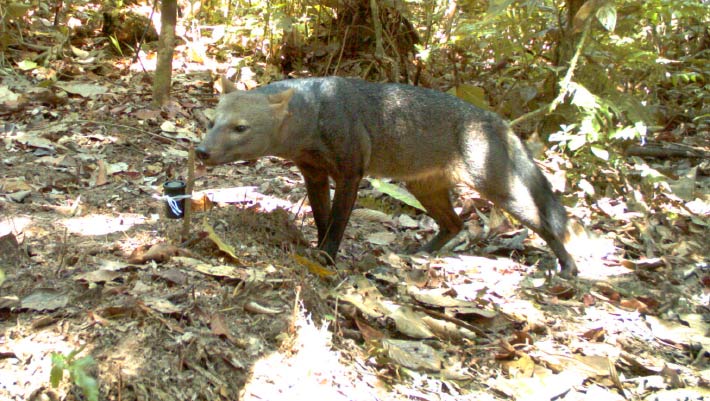
Hundreds of camera-trap records from Bolivia and Peru suggest the short-eared dog (Atelocynus microtis), one of the world’s least-known canids and one of Latin America’s least-known carnivores, may be thriving in intact upland forests.
AT&T unveiled a 24-hour unlimited wireless data service for iPad users in the US, available to any customer regardless of their existing operator for a flat daily rate of $3.
The company claimed to be the first major US wireless provider to offer on-demand connectivity for iPad users on a pay-as-you-go basis. The service is for models with mobile and Wi-Fi connectivity capabilities, with the 24-hour data window beginning shortly after purchase.
AT&T explained it is targeting consumers who do not activate mobile connectivity on compatible iPads, pitching the benefit of short-term network access for periods where users are not in Wi-Fi range.
It highlighted ease of use, stating the service is activated in device settings without the need for a dedicated app.
The first day pass is complimentary, with subsequent purchases charged to a credit or debit card.
Josh Goodell, VP of consumer product management, said the goal is to make connectivity simple across the devices people use most.
The operator positioned the launch as part of a broader effort to simplify connectivity and provide flexible options without long-term commitments.
Model compatibility ranges from seventh-generation iPads to the latest Pro and Air models with M3 chips.
AT&T ultimately plans to expand the service to other 5G-enabled devices including Android tablets, smartwatches, laptops and drones.
Multi-day options are also planned.
AT&T noted data rates may be temporarily reduced during periods of network congestion.
Managed services provider MetTel completed a rapid network capacity upgrade for the US General Services Administration (GSA), equipping 11 federal offices across the country with connectivity infrastructure to support the Trump administration’s return-to-office mandate.
The project, delivered under the GSA’s Enterprise Infrastructure Solutions contract, involved the installation of 22 high-capacity network circuits alongside SD-WAN technology and VoIP services, enabling hundreds of federal employees to return to fully connected work locations.
Among the most demanding elements was a 10-gigabit circuit requiring entirely new carrier infrastructure, which was completed in under 60 days to meet the expedited timeline of a Telecommunications Service Priority order.
Don Parente, vice president of public sector at MetTel, said the mandate created an urgent, real-world test of the company’s capabilities.
“Our operations team delivered fast, reliable network modernisation, meeting the Administration’s Executive Order to return to work,” he said.
The SD-WAN architecture, which MetTel had previously deployed for the GSA, was a key enabler of the fast turnaround. The technology provides intelligent traffic management, enhanced resiliency and centralised network visibility, while high-capacity circuits were tailored to the specific needs of each site.
Bandwidth was sized for future growth, building in capacity to support evolving workforce and digital requirements without requiring additional infrastructure overhauls.
The Enterprise Infrastructure Solutions (EIS) programme under which the work was delivered, is a 15-year, $50 billion government-wide vehicle designed to help federal agencies modernise their telecommunications and network infrastructure.
US-based MetTel has held EIS contract authority since January 2020, delivering network modernisation, managed services and communications transformation projects throughout that period.
The upgrade underscores the broader infrastructure pressures facing federal agencies as the return-to-office push accelerates demand for reliable, high-capacity government networks.
The extinct Eurasian cave lion (Panthera spelaea) and today’s African and Asian lions (Panthera leo) belong to separate evolutionary lineages that diverged roughly 1.7 million years ago -- far earlier than previously thought, according to an analysis of 12 cave lion genomes spanning more than 100,000 years.
Axon Networks acquired Greenwave Systems, combining two companies with shared roots to create a more unified, AI-powered network orchestration platform.
The US-based company stated the deal strengthens its cloud-agnostic Axon Maestro platform, purpose-built for telecom operators, institutions and enterprise service providers.
Greenwave’s software-defined mobile network services, including its network-as-a-service orchestration portfolio, will be added to Axon Maestro.
Greenwave’s technology will be folded into the Maestro platform as dedicated modules, with its engineering team shifting focus to OSS/BSS product development with expanded support for mobile connectivity.
Financial terms are not available.
At the heart of the integration is Axon’s real-time digital twin technology, which the company said will serve as the foundation for next-generation network inventory management.
Axon CEO Martin Manniche, who co-founded Greenwave in 2008 alongside other current Axon executives, stated operators are too often constrained by legacy operational support systems which require heavy customisation and slow down innovation.
“This limits their agility and effectiveness, delaying innovation and time-to-market for new services,” he said.
The deal also positions Axon to capitalise on growing operator interest in fixed wireless access and low earth orbit satellite connectivity.
As those technologies gain traction in access networks, the company argues end-to-end orchestration from the mobile core to in-home devices will become increasingly critical for delivering a consistent subscriber experience.
Paleontologists have identified a new species of meiolaniform turtle from northern Patagonia, Argentina, that lived during the Maastrichtian age, just before the asteroid-triggered mass extinction that wiped out all non-avian dinosaurs.
OpenAI confidentially filed paperwork for a US IPO, becoming the latest company to move towards a listing as heavyweights in the AI sector race to raise fresh funds.
The ChatGPT-maker stated it had submitted a draft registration statement to the US Securities and Exchange Commission (SEC), adding, “we expect it to leak so we’re just announcing it”.
The AI player did not disclose the size, price or timing of the listing and cautioned a debut may not be imminent. “We have not decided on timing yet; it may be a while because there are things we want to do that are likely easier as a private company,” it stated.
OpenAI added the decision involves “a complicated set of trade-offs”, but that the filing gives it “the option to go public sooner if that ends up being best”.
Reuters reported OpenAI is targeting a valuation of up to $1 trillion, with a debut possible as early as September. The value would put it alongside AI rival Anthropic, which confidentially filed for its own US IPO last week. SpaceX. meanwhile, is expected to launch its IPO this week, at a reported $1.75 trillion valuation.
The three firms all have a “vast need for cash”, Aviva Investors’ head of multi-asset Sunil Krishnan told the BBC, adding “no-one wants to be last” in the race to go public. He explained the companies’ hefty investments in AI infrastructure, including chips and training models, come at significant cost.
OpenAI’s filing follows a period of rapid growth. Last week, research company Sensor Tower estimated ChatGPT crossed 1 billion monthly active users on its app, becoming the fastest in history to reach the milestone.
The company’s route to market was also complicated by its nonprofit origins and efforts to restructure. In May, a US jury ruled against Elon Musk in a lawsuit accusing OpenAI of departing from its founding mission, removing a key legal barrier for the ChatGPT-maker ahead of any listing.
AT&T deepened its partnership with EV maker Rivian, confirming its 5G network will power connectivity inside its R2 model, which is slated for availability from 9 June.
The collaboration builds on a relationship dating to 2023, when AT&T became the connectivity provider for Rivian vehicles across the US and Canada.
With the R2 coming to market, the arrangement expands to cover the automaker’s next-generation platform, ensuring its more affordable mass-market model arrives with the same always-on network backbone as its predecessors.
The operator stated its 5G infrastructure will support faster over-the-air software updates, richer infotainment and real-time services which enable the R2 to improve performance and personalisation over time.
“Connectivity is increasingly central to how vehicles are designed, delivered, and improved,” stated Matt Harden, VP of connected solutions at AT&T.
At an automaker technology conference in the US state of Michigan, AT&T also revealed an expansion of its connected car platform in collaboration with Cisco and LiveOne, the parent of Slacker Radio.
The three-way arrangement is designed to simplify how automakers integrate premium entertainment into connected vehicles. AT&T’s wireless network provides the backbone, Cisco contributes multi-party billing infrastructure through its SIM management platform, and LiveOne will be supplying personalised audio content ranging from curated playlists to live programming.
Rather than requiring each automaker to negotiate separate connectivity deals with individual content providers, AT&T noted its platform acts as a single integration layer.
LiveOne joins existing AT&T partners including iM Media Labs and SiriusXM as part of a content ecosystem now reaching more than 60 of the world’s top automotive brands.
Verizon finalised the purchase of spectrum licences from the infrastructure company comprised of the remnants of UScellular not included in the sale of the bulk of its wireless assets to T-Mobile US.
The buy from Array Digital Infrastructure signs-off a deal struck back in October 2024. It was cleared by the US Federal Communications Commission on 14 May 2026.
Approving the deal the regulator endorsed Verizon’s view the buy would help the operator provide “a better overall experience to its customers” including by enhancing rural and indoor coverage in the parts of the country the assets cover.
In addition to the sale to Verizon, Array divested $168 million of assets to T-Mobile last month and completed a $1 billion deal with AT&T for other spectrum licences in January 2026.
Array noted the latest moves “further the objective” announced in May 2024 “to opportunistically monetise remaining spectrum following the sale of the T-Mobile wireless operation”.
Its president and CEO Anthony Carlson said the company had made “significant progress in our spectrum monetisation efforts and are pleased with the value realised in this sale”.
Array owns and operates shared wireless communications infrastructure in the US, including more 4,400 cell towers across the country.
In December, the company inked a partnership with Verizon which saw the latter sign-up to use its towers to strengthen its 5G network.

 Login