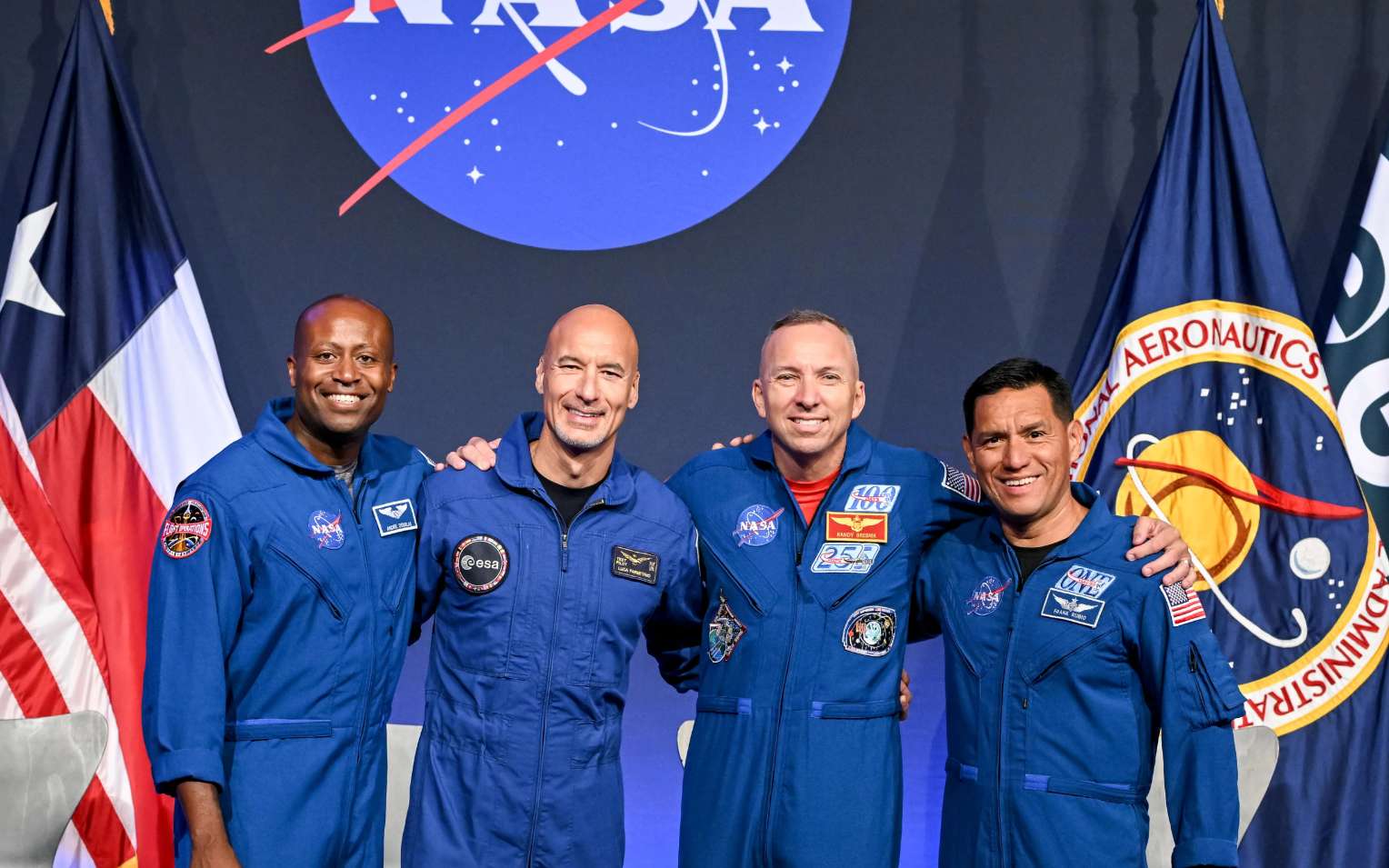
La Nasa et l'ESA ont annoncé hier soir la composition de l'équipage d'Artemis III : l'astronaute italien Luca Parmitano en sera le pilote. Une première européenne saluée des deux côtés de l'Atlantique. Il y a ce que le communiqué dit… et ce qu'il tait. Notre analyse.
NASA unveiled plans in March to develop a lunar base as part of its “Ignition” event that outlined the agency’s new direction in human spaceflight. The plans, though, were rather […]
These are heady days for NASA and the space industry. The Artemis 2 crew flew around the moon, traveling farther into space than any humans previously had; NASA announced an […]
NASA officials announced contract awards for the initial elements of a lunar base on Tuesday, including two rovers that will provide mobility to astronauts.
With the series of announcements, NASA Administrator Jared Isaacman sought to maintain momentum around a Moon Base initiative revealed two months ago as part of the space agency's return to the Moon. "For those waiting patiently, the grand return is close at hand, and we will not slow down," he said.
The manager for the lunar base, Carlos Garcia-Galan, said the space agency had selected two companies, Astrolab and Lunar Outpost, to build approximately 1-ton rovers that would be ready for delivery to the Moon in 2028. Astrolab will receive $219 million for its "CLV-1" rover, and Lunar Outpost $220 million for its "Pegasus" rover, building upon initial contracts awarded two years ago. Each rover is expected to have a range of 200 km and be capable of driving autonomously, with guidance from operators on Earth, in addition to being driven by astronauts.

 Login