The hunt for Planet Nine continues as new discoveries make the Solar System’s biggest mystery even harder to solve. Is there a massive undiscovered planet on the outer reaches of the Solar System? The idea has been around since before the discovery of Pluto in the 1930s. Labeled as planet X, prominent astronomers had put [...]
AI could accelerate the hunt for new physics, but sometimes it knows too much to see what’s right in front of it. Artificial intelligence could make it much cheaper and faster to search for new laws of physics, according to a new study published in the Journal of Cosmology and Astroparticle Physics (JCAP). But the [...]
As NASA prepares for humanity’s return to the Moon, researchers at Texas A&M University are exploring how the same material could become a key building block for the first permanent settlements beyond Earth.
The Moon’s surface is surprisingly unlike anything we would consider soil on Earth. Instead, it is covered by a fine powder of pulverized rock and jagged glass that slips into every gap, grinds through seals and gaskets, and exists in a vacuum exposed to intense radiation and extreme temperature swings capable of bending steel. Yet researchers at Texas A&M University see opportunity rather than obstacles in this harsh environment.
Scientists refer to this material as lunar regolith, and it is considered one of the greatest challenges to long-term human habitation beyond Earth.
As NASA advances plans for a permanent human presence on the Moon through its Lunar Innovation Park initiative, Texas A&M researchers are developing technologies designed to transform the lunar surface into a foundation for future settlements.
“We are moving past the era of ‘flags and footprints,’” said Dr. Patrick Suermann, professor of construction science and retired U.S. Air Force lieutenant colonel in a statement. “We have to stop thinking like explorers and start thinking like settlers.”
Money as a Hurdle
Arguably, the greatest challenge facing lunar construction may not be engineering, but cost. Transporting materials from Earth remains extraordinarily expensive, with estimates ranging from roughly $1 million to $1.3 million per kilogram delivered to the Moon. As a result, researchers are increasingly focused on utilizing resources already available on the lunar surface rather than transporting materials from Earth.
“The future depends on building infrastructure from resources already on the moon,” explained Suermann.
“The high cost of shipping to the moon is the million-dollar problem,” Suermann said. “Every time you can cut the mass of a payload, you save a fortune. That’s why the future depends on building infrastructure from resources already on the moon.”
Helping advance that vision is Dr. Robert Ambrose of the Texas A&M Space Institute, located near NASA’s Johnson Space Center in Houston. The institute has received $200 million in support from the Texas Legislature.
“One of the most exciting features of the 240-acre facility is it’s two-and-a-half acre testing areas: one replicating the surface of the moon, the other Mars,” says Suermann.
These facilities allow researchers to evaluate robotic systems, autonomous vehicles, and construction technologies under conditions similar to those expected during future lunar and Martian missions.
Meanwhile, the university’s Construction Automation, Safety and Education (CASE) Lab is exploring how humans and machines can collaborate in extreme environments. Led by Dr. Gilles Albeaino, the lab focuses on mixed-reality technologies and semi-autonomous robotic systems capable of performing construction tasks on the Moon.
“On the moon, construction operations will depend on semi-autonomous robotic systems,” Suermann said. “The CASE lab is leading research into how humans and machines can work together in environments where humans can’t safely do everything themselves.”
“Every tool matters. Every ounce of material you ship matters,” added Suermann. “So, the question becomes: how do you use the environment itself as your supply chain, and how can you augment machines to become your partner in austere environments?”
Arctic to Afghanistan
Suermann’s experience combines two worlds: military service and construction science. Before joining Texas A&M in 2017, he served in the U.S. Air Force, deploying to remote locations that included Afghanistan, Guam, and Greenland.
Those experiences operating in challenging and isolated environments continue to inform his thinking about future lunar settlements.
“My experiences in serving the U.S. Air Force were formative and transformative,” Suermann said. “It taught me a great deal about construction, and that what can go wrong will go wrong.”
It shows, to me, that lunar regolith isn’t too dissimilar from the terrain we have here on Earth,” Suermann adds. “At the end of the day, construction is construction.”
Should We Develop on the Moon?
The broader question remains whether humanity should be expanding its footprint beyond Earth at all. While plans for lunar settlements continue to advance, critics point out that many environmental, political, and social challenges remain unresolved here at home.
As governments and private companies invest billions into space infrastructure, some argue that humanity must carefully consider how development beyond Earth aligns with priorities on our own planet. Others contend that technologies developed for lunar habitation could ultimately provide benefits back on Earth, helping address challenges ranging from resource management to sustainability.
America’s Government Accountability Office (GAO) watchdog has warned that the US may struggle to sustain a long-term conflict with China should hostilities break out. The issue is not about technical capability (the US military is arguably the world’s most powerful), but rather a matter of logistics.
For combat operations thousands of miles from home, as would be the case in the Indo-Pacific, the GAO argues that the US may struggle to refuel and resupply assets, notably its considerable aircraft fleet.
The issue mainly centers around aging refueling aircraft and issues with spare parts. If tensions over Taiwan were to go hot, these could both conspire to make American efforts in the region trickier than expected.
“The percentage of aerial refuelling tankers that are available and mission capable has remained persistently below the standards that the [US] Air Force established for the fleet,” the report said.
To give you some idea of the problem, imagine an F-35 running a sortie from Hawaii to Taiwan, say. These aircraft have a combat radius of around 700 miles (1,127 km), and the distance between these two islands is about 5,000 miles.
An army marches on its stomach
The fighter wouldn’t be able to make it on its own and would need several midair refueling operations to safely get there and back. After the mission, it may also need repairs, which require a sufficient stock of spare parts lying around.
If enough tankers aren’t available, the fighters couldn’t arrive in meaningful numbers. A bit of a quandary.
Of course, travel distances for fighters can be dramatically reduced by deploying carrier groups closer to Taiwan, but that puts them at risk of being attacked by long-range missiles (including hypersonics), submarines, or Chinese aircraft.
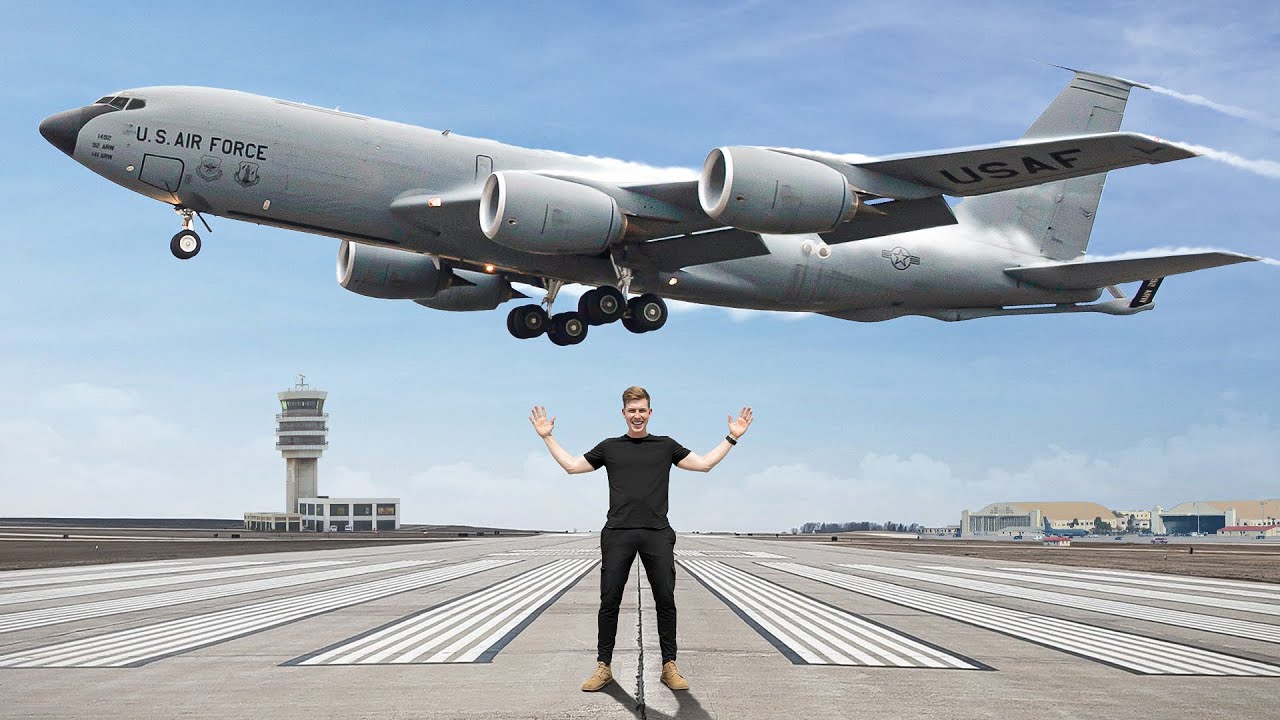
The main weakness, the report argues, is the US reliance on aging aircraft like Boeing KC-135 Stratotankers. Many of the current airframes entered service in the 1950s and 1960s, and are still going strong.
The airframes have been upgraded repeatedly, but old aircraft require more maintenance and suffer more breakdowns. And that leads to the second main issue: a lack of spare parts.
The US military increasingly struggles to obtain parts for older systems. Some suppliers no longer exist, and some components must be specially manufactured. Any break in supply means that assets, like aircraft, can sit grounded while waiting for parts.
Not how much you make, it’s how much you keep
So, even if you have 400 tankers on paper, perhaps only 250 are actually flyable on a given day. Other issues cited include a shortage of skilled personnel and delays in replacement hardware for older tech, like the planned Boeing KC-46 Pegasus.
But the KC-46 program has experienced years of technical problems and delays. The Air Force expected newer tankers to reduce pressure on older aircraft.
When factoring in the fact that China reportedly possesses long-range missiles specifically designed to target US bases and support aircraft, any direct conflict could prove very expensive for the US.
China’s military planners, the South China Morning Post (SCMP) reports, understand that destroying tankers may be more effective than trying to shoot down stealth fighters.
So, would such a conflict mean China could win? Not necessarily, since China has its own issues (like a lack of combat experience), but a “home advantage” would certainly tip the odds in its favor unless the US can cure its growing logistical bottlenecks.
Could consciousness exist in alien life forms that look nothing like us? Could it even appear in machines? According to a new paper by philosophers Eric Schwitzgebel of the University of California, Riverside, and Jeremy Pober of the University of Lisbon, the answer may be yes. The researchers argue that consciousness is probably not limited […]
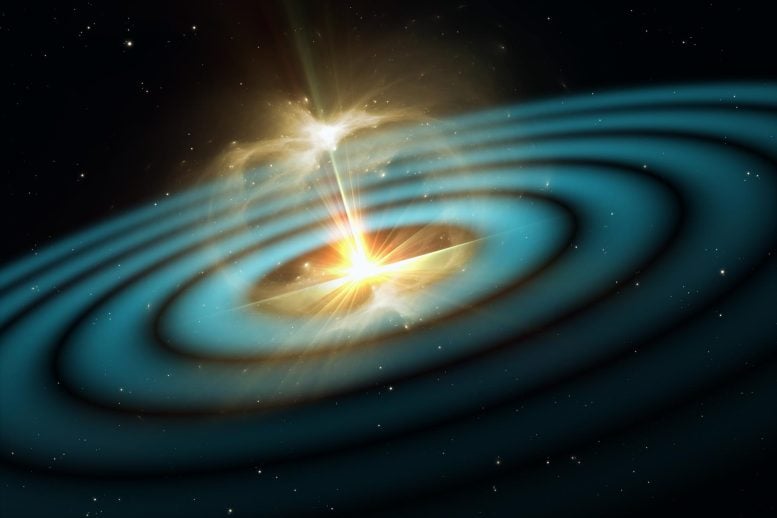
Astronomers have discovered a powerful “galaxy-killing wind” in the early universe that may help solve one of the biggest mysteries in modern astronomy: why so many massive galaxies stopped forming stars much earlier than scientists expected. The discovery suggests that some young galaxies grew rapidly and then died just as quickly, not because of exotic […]
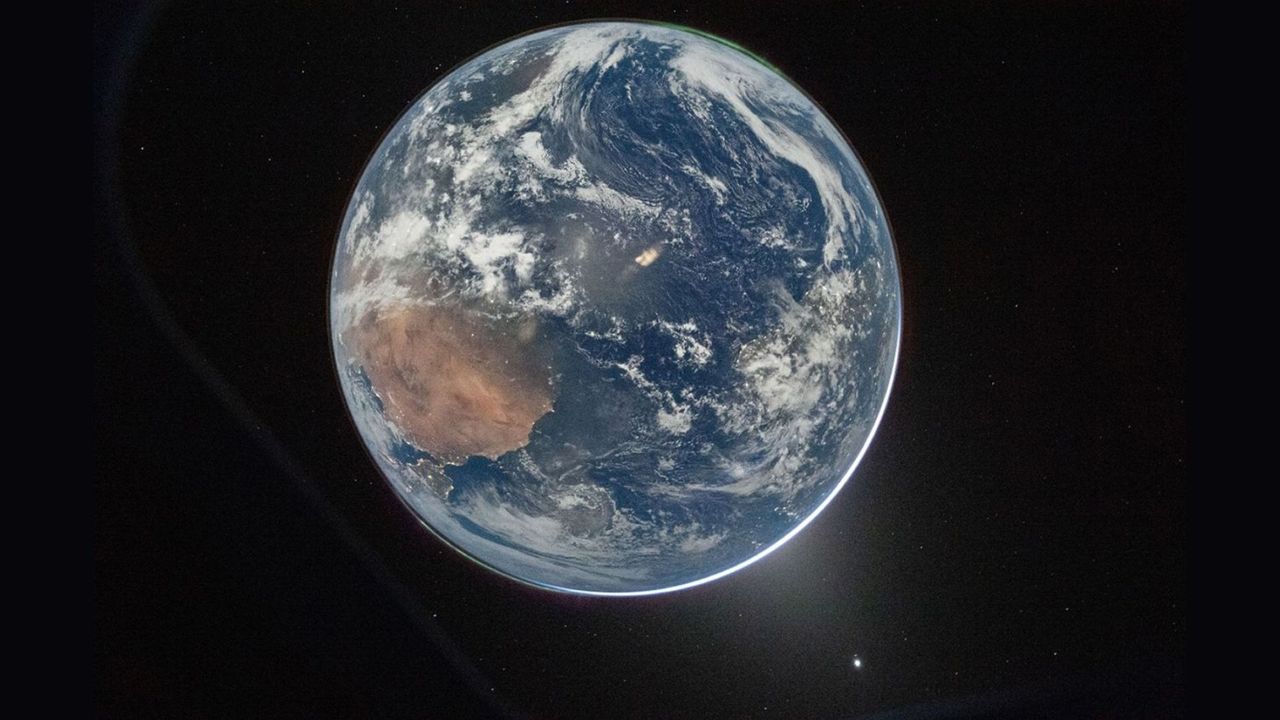
The four astronauts on NASA’s Artemis II mission captured more than they bargained for when they photographed the nightside of Earth, right after starting their historic journey to the moon.
An international team of space physicists and engineers has unveiled a highly ambitious planetary defense concept designed to protect Earth from the devastating impacts of extreme space weather.
The proposal, dubbed “StormWall,” outlines a space-based system that can artificially reinforce the planet’s natural defenses just before a major solar storm strikes.
According to researchers, applying serious physics to the problem demonstrates that humanity no longer has to simply brace for impact and accept whatever the Sun throws at the planet.
The fragility technological infrastructure
Geomagnetic storms occur when a massive surge of solar energy—often carried by coronal mass ejections—violently interacts with Earth’s magnetosphere, the magnetic bubble protecting the planet.
While these events trigger beautiful auroras, they pose a severe threat to modern civilization by inducing major electrical currents that can overload power grids, destroy multi-million-dollar transformers, damage satellites, and knock out global GPS and communication networks.
Historically, severe events such as the 1859 Carrington Event disrupted telegraph lines across continents. In today’s hyper-connected society, a similar extreme storm could cause trillions of dollars in economic damage and leave entire populations in prolonged darkness.
The physics of the ‘orbital airbag’
The core breakthrough of the StormWall concept lies in suppressing a process known as magnetic reconnection. During powerful solar storms, the magnetic fields carried by the solar wind can align with Earth’s magnetic field, linking the two. This cosmic link opens a pathway that allows solar energy to pour directly into near-Earth space.
To exploit this physical vulnerability, the StormWall system functions similarly to an automotive airbag. The proposed architecture involves a constellation of six spacecraft strategically deployed into geosynchronous orbit. These satellites would carry stores of safe solid or liquid alkaline materials, such as barium, lithium, sodium, or calcium.
When space weather forecasters detect a dangerous solar storm barreling toward Earth, ground operators would trigger the fleet to release the materials into space. Upon release, solar radiation would rapidly vaporize and ionize the elements, forming a thick cloud of electrically charged plasma.
This artificial plasma would drift toward the sun-facing frontier of the magnetosphere, effectively thickening the planet’s shield and forcing the harsh solar wind to slide around Earth rather than break through.
High rewards and earthwide benefits
To test the viability of the concept, the research team ran advanced computer simulations modeling the historic May 2024 geomagnetic storm. The data revealed that under normal conditions, the storm caused major magnetospheric disruptions, but when the simulated StormWall plasma shield was activated, the overall intensity of the geomagnetic storm was slashed by more than half.
Crucially, this geoengineering approach features minimal long-term environmental risk. The artificial plasma cloud is highly transient and would naturally dissipate within roughly six hours as it is swept into deep space by the solar wind, avoiding re-entry into Earth’s atmosphere.
Furthermore, because the magnetosphere blankets the entire globe, StormWall would act as a collective, democratic shield. The system cannot be modified to protect just one country or a specific corporate satellite fleet; it inherently shields the entire planet and everyone on it simultaneously.
The primary hurdle moving forward is reducing the steep manufacturing and deployment costs. Future phases of the project will focus on identifying the single most cost-effective element for mass release and optimizing orbital trajectories to minimize upkeep.
The design philosophy behind the American lunar architecture depends heavily on a single high-performance main engine responsible for critical mission phases. During descent, that engine governs the entire journey from lunar orbit down to the Moon’s surface.
On ascent, the same single-point system becomes the only means of returning astronauts to lunar orbit. The lack of redundancy means that a malfunction would eliminate any backup option, a concern highlighted in a peer-reviewed study published in Chinese Space Science and Technology in March, which argues the system “contains some glaring weaknesses.”
By contrast, China’s proposed lunar lander adopts a multi-engine approach. Developed by a Shanghai-based national laboratory team, it uses four variable-thrust engines producing over 30 kilonewtons collectively. Even if one engine fails entirely, the remaining three would still deliver thrust comparable to the main engine of NASA’s Orion spacecraft.
Lunar ascent safety debate centers on redundancy versus mass constraints
Beyond the primary propulsion system, the design includes an additional safeguard layer intended to improve mission resilience. If the main engines were to become inoperative, six smaller orbit-control thrusters can still be activated on the lunar surface, providing an alternative pathway for a rapid ascent. This redundancy raises a broader engineering question: if multiple engines offer greater safety than a single one, why are they not universally adopted, the South China Morning Postwrites.
The constraint is mass, as additional engines typically increase overall vehicle weight, reducing efficiency and payload capacity. The Chinese engineering team addressed this trade-off through a structural optimization known as a common bulkhead tank, which integrates fuel storage more efficiently and reduces excess mass while still enabling a multi-engine configuration.
China introduced a new tank design in a crewed deep-space vehicle that uses a pressure-fed system, where fuel and oxidiser are separated by a shared wall, often called a “common bottom.” In earlier lunar lander designs, the two propellants were stored in completely separate tanks, which added extra structural weight and took up more space inside the vehicle.
By combining them into a single structure with a shared barrier, the system reduces unnecessary duplication in the tank framework. According to the researchers, this change cuts weight at the “hundred-kilogram level,” making the overall design more efficient without sacrificing capacity or performance.
Hot-fire tests validate new lightweight tank architecture for space missions
The reduction in mass created by this design enables the use of four engines instead of a single main unit, increasing redundancy without exceeding launch constraints. Built from composite materials, the tank achieves more than a 20 per cent weight reduction compared to traditional metal alternatives.
Beyond storing propellant, the structure also serves a dual purpose as a load-bearing component of the spacecraft, effectively becoming part of the vehicle’s frame and improving overall mass efficiency. The approach is backed by experimental validation, with the paper drawing on results from full-system hot-fire tests. These tests provide real-world performance data under operating conditions, confirming the feasibility of the integrated structural and propulsion design.
Test results indicate that the four variable-thrust engines can be closely coordinated, keeping thrust variation within less than 100 Newtons. This level of precision is crucial for preventing unstable motion that could cause the lander to tumble during critical flight phases. The experiments also suggest that pressure challenges within the common bulkhead tank can be effectively managed.
Replicating this kind of system would be difficult for any other space programme. It requires highly precise autonomous control of pressure inside a shared-tank structure operating with very narrow safety margins. In addition, it demands tightly synchronised performance across multiple throttling engines, a task that becomes significantly more complex as each additional engine is introduced.
It’s 2134, and humanity has finally embraced green technologies while ridding the Earth of harmful fossil-burning technologies, most notably gasoline, wood, coal, and oil. As a result, soot has been rendered obsolete, and all commercial products from soot, including shoes, wires, computer products, and eye products, are now produced from eco-friendly technologies. However, the uber-rich […]
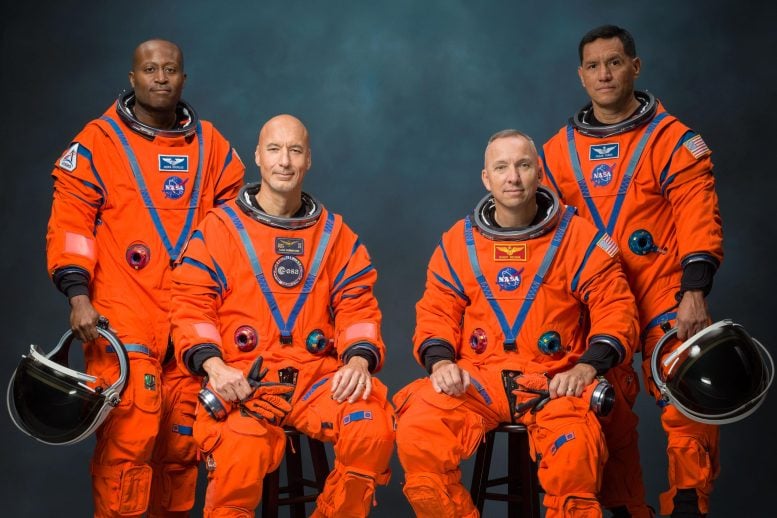
NASA’s newly announced Artemis III crew is preparing for one of the most complex space missions ever attempted on the road back to the Moon. NASA has unveiled the crew for Artemis III and shared new details about what could become one of the most challenging human spaceflight missions ever attempted. Scheduled for 2027, the [...]
A new detector-based method clarifies how gravitational waves should be measured in an evolving universe. Imagine trying to measure a ripple on the surface of a pond while the pond itself is slowly changing shape. That is the challenge scientists face when they study gravitational waves not as isolated signals from colliding black holes, but [...]
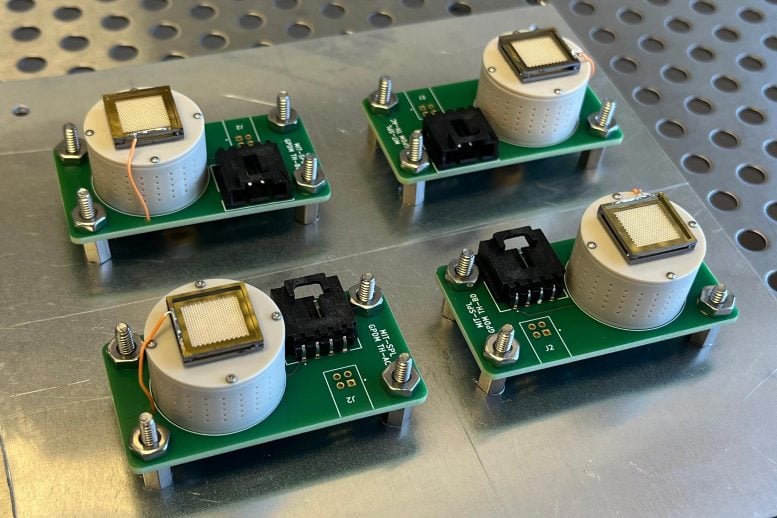
MIT’s new two-in-one space engine could turn tiny satellites into surprisingly capable deep-space explorers. Researchers at MIT are testing a new propulsion technology that could give small satellites a major boost in capability. The system combines two very different forms of spacecraft propulsion in a single package, allowing satellites to perform both rapid maneuvers and [...]
Over two years after Japan’s Smart Lander for Investigating Moon (SLIM) mission deployed a tiny, shape-shiftingrover on the Moon, the country’s space agency JAXA has finally revealed previously unreleased details about the first-of-its-kind autonomous robotic lunar exploration.
According to a statement announcing the recently published mission account, the SLIM team deployed the rover on the Moon’s surface, “after which the rover transformed from a tiny sphere into a wheeled robot that took images of the lander and its environment.” A second rover transmitted the data back to Earth, with all steps occurring autonomously.
The team behind the historic mission said their success could pave the way for swarms of small, transformable robots capable of exploring high-scientific value areas that larger spacecraft and robots cannot reach, including caves, tunnels, lava tubes, vents, and deep extraterrestrial craters.
The Benefits of Tiny Robots and Autonomous Shape-Shifting Rovers
In the published study, the JAXA team explains that robotic technologies like SLIM “are expected to drive substantial advancements in planetary exploration and resource prospecting” by performing tasks in extraterrestrial environments that are inaccessible to other platforms, including human astronauts. For example, the team noted that miniature robots offer tremendous weight savings over bulkier platforms, especially when added to missions with “strict payload limitations.”
“Miniature robots have the potential to reduce payloads and to reach cramped spaces such as small vents and craters that are inaccessible to larger, conventional robots,” they explain.
Still, the SLIM team notes that building tiny, shape-shifting rovers capable of exploring a variety of complex environments presents its own set of challenges. The most limiting constraints involve computational power and battery capacity. The team also observed that smaller robotics platforms inherently suffer from “reduced locomotion performance” due to their small size.
Now, when revealing the details of the SLIM mission, the researchers note that advancements in miniaturization and computational performance spurred by the Internet of Things “have catalyzed the emergence of smaller, lighter, and more intelligent rovers at lower costs.”
Introducing the ‘Hopping’ Lev-1 and the ‘Transforming’ Lev-2
To build a tiny, shapeshifting robot capable of exploring the lunar surface autonomously, team leader Daichi Hirano and colleagues designed the Lunar Excursion Vehicle (LEV) system, which comprises LEV-1 and LEV-2. According to the team’s statement, LEV-1 can communicate directly with mission planners back on Earth. For locomotion, the robot moves via what the team termed “a controlled hopping mechanism.”
The second robot, LEV-2, starts out as a compact sphere 8 inches in diameter. However, once on the Moon, the mission controllers said that the tiny robot can transform into a “two-wheeled rover with cameras and a tail stabilizer.”
“Here, we introduce a two-wheeled centimeter-scale rover, designated Lunar Excursion Vehicle 2 (LEV-2), also known as SORA-Q (named after the Japanese words for space and sphere), which transforms into a wheeled configuration from a compact spherical form, enabling efficient traversal of soft lunar terrains,” they write.
Transformers Make Autonomous Robotic Exploration History
According to the new mission details, the SLIM lander deployed LEV-2 “immediately before its landing on the lunar surface.” In the mission details, the team explained that upon deployment, the rover autonomously extended its wheels, tail stabilizer, and cameras, “thereby enhancing its mobility and stability on soft lunar terrain.”
Overview of the motion sequence on the lunar surface. (A) Deployment of LEV-1 and LEV-2 from the SLIM lander prior to landing on the lunar surface. (B) Data transmission from LEV-2 through LEV-1 to the Earth. (C) Mode transition and motion sequence on the lunar surface. Image Credit: D. Hirano.
After deployment, LEV-2 navigated the lunar surface in the immediate area around the lander. According to the published study, “the palm-sized rover accomplished autonomous lunar exploration by navigating around the SLIM lander, capturing images of both the SLIM lander and its environment.” Critically, the rover’s exploration was autonomous and “without reliance on ground-based teleoperation,” marking a historic first in lunar exploration.
After finishing its exploration, the tiny robot transmitted images of its adventures to LEV-1. The hopping rover then transmitted the data to Earth. The team notes that all these steps were also accomplished autonomously.
The team notes that the LEV-2 shape-shifting rover operated for “more than 100 minutes: before losing communication with LEV-1. Although determining the exact cause may require direct examination of the two robots, Hirano’s team suspects that issues caused by LEV-1’s hopping motions or battery depletion “may have contributed to connectivity issues.”
When discussing the implication of an autonomous, shape-shifting rover successfully navigating the lunar surface and completing its mission directives, the team concedes that the capabilities of a single, small rover like LEV-2 “are inherently limited.” However, they also note that their mission success highlights the potential of this category of robotic platform “as independent explorers, capable of accessing environments beyond the reach of a primary large spacecraft.”
“Swarm-controlled small robots are poised to be deployed in high-risk yet scientifically valuable environments, such as vents, caves, and steep slope craters, that are inaccessible to larger, conventional rovers,” the researchers conclude. “This approach promises to enhance both the efficiency and safety of future planetary surface exploration.”
Christopher Plain is a Science Fiction and Fantasy novelist and Head Science Writer at The Debrief. Follow and connect with him on X, learn about his books at plainfiction.com, or email him directly at christopher@thedebrief.org.
The unveiling of the new garment by Prada and Axiom Space took place at Prada’s SoHo location in Manhattan just days before the announcement of the Artemis III crew, according to the New York Timesfashion desk. With black-clad waiters circulating champagne and healthy juices through the Rem Koolhaas-designed venue, the intersection of fashion and space exploration was once again on full display.
“The future of space exploration will not be built by any one entity alone, and our partnership with Prada is proof of that,” said Dr. Jonathan Cirtain, Axiom Space CEO and President, in a statement.
“By bringing together the best in both aerospace engineering as well as luxury craftmanship and advanced product development, we have developed a garment that neither company could have created independently, and that is exactly the kind of cross-industry thinking that will define the next era of human spaceflight,” Cirtain added.
Some might be surprised to learn this is not the first time NASA has collaborated with a fashion house. The first modern spacesuit was designed and crafted by a group of international designers at the Latex Corporation (ILC). In the 1960s, this company was best known for manufacturing bras and girdles.
Notably, a version of its A7L spacesuit was worn by Neil Armstrong during the Apollo 11 mission. Designers developed the A7L to protect astronauts from the harsh conditions of space and the lunar surface.
The suit was constructed using materials such as neoprene, Beta cloth—which helped protect astronauts from extreme temperatures—and aluminized Mylar. Overall, it was a highly complex, multilayered design.
The new LCVG collaboration draws on Prada’s expertise in knitting, craftsmanship, and advanced design. The resulting garment is a next-generation system developed using sophisticated 3D modeling techniques.
The suit is designed to maintain cooling and ventilation while remaining comfortable during spacewalks lasting up to eight hours. Thanks to its high-performance materials, it can also be worn repeatedly during long-duration missions.
“When we unveiled the AxEMU, we announced that the collaboration between Prada and Axiom Space would continue beyond that first milestone,” said Lorenzo Bertelli, Prada Group Chief Marketing Officer and Head of Sustainability, in a statement.
“Today, we are proud to present a new achievement born from the unique combination of Axiom Space’s pioneering expertise and Prada’s know-how in design, patternmaking, and advanced materials, ahead of humanity’s return to the lunar surface,” Bertelli added.
In 2024, Axiom Space and Prada unveiled the AxEMU’s outer layer, designed to withstand the harsh conditions of the lunar South Pole. Their latest collaboration on the Liquid Cooling and Ventilation Garment builds on that partnership, focusing on astronaut comfort, thermal regulation, and reliability inside the spacesuit.
“We look forward to continuing this collaboration with Axiom Space, pushing boundaries and exploring new frontiers together,” adds Bertelli.
The LCVG keeps astronauts cool during spacewalks by circulating chilled water through tubes woven into the garment, removing body heat and venting it through the spacesuit. It also delivers fresh oxygen and removes carbon dioxide, helping astronauts remain safe and comfortable in the harsh environment of space.
“Every minute astronauts spend outside their vehicle, the LCVG is working to keep them safe,” said Russell Ralston, Axiom Space Senior Vice President of Spacecraft Development.
“It manages their thermal environment, supports their breathing, and does it all while they’re pushing their bodies to the limit,” Ralson added. “The work we have done with Prada has taken that capability to a level we could not have achieved alone.”
Chrissy Newton is a PR professional and the founder of VOCAB Communications. She currently appears on The Discovery Channel and Max and hosts the Rebelliously Curious podcast, which can be found on YouTube and on all audio podcast streaming platforms. Follow her on X: @ChrissyNewton, Instagram: @BeingChrissyNewton, and chrissynewton.com. To contact Chrissy with a story, please email chrissy @ thedebrief.org.
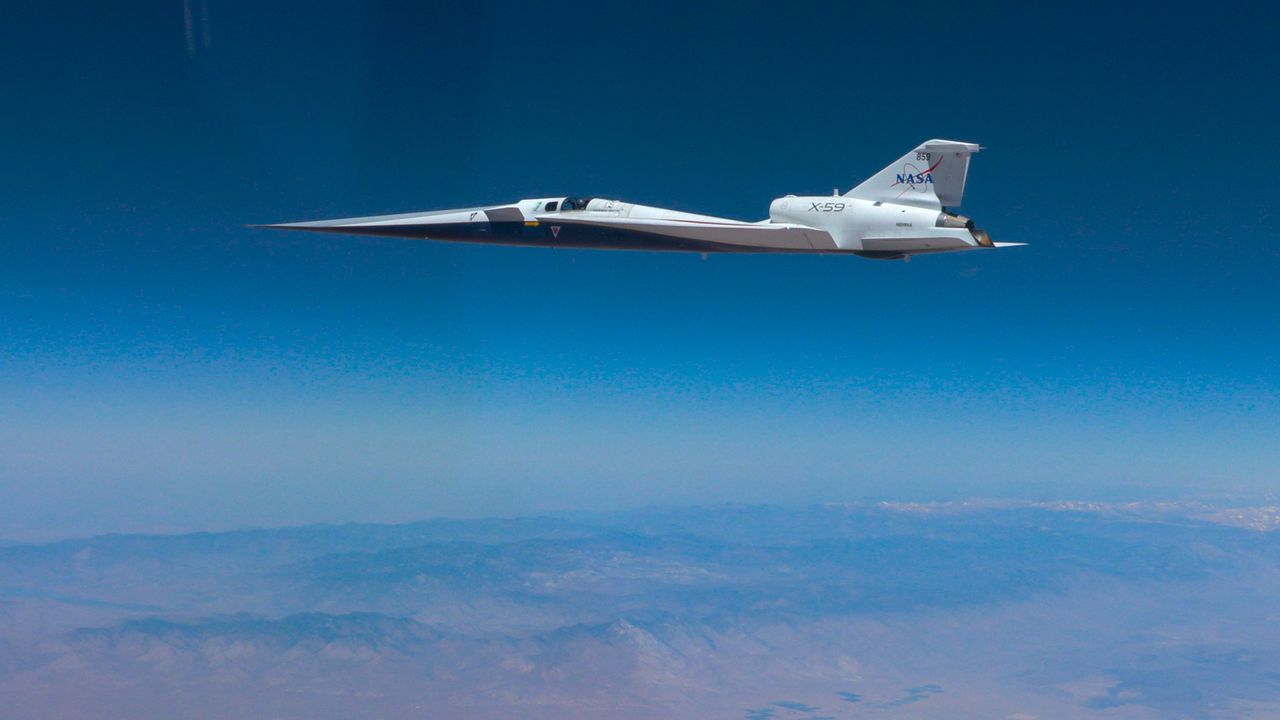
NASA and Lockheed Martin's experimental X-59 aircraft has broken the sound barrier twice, achieving a top speed of Mach 1.4. The feat could set the stage for "quiet" supersonic flight.
Here’s one of the most unsettling facts in all of science. The universe is not just expanding, it’s expanding faster and faster. Every galaxy is moving away from every other galaxy, and the further away it is, the faster it goes and worse still, that acceleration is speeding up. Whatever is driving it, and we […]
Dark matter remains one of the biggest mysteries in science. Scientists cannot see it directly, yet they believe it makes up most of the matter in the universe. Now, a new study suggests that dark matter may gather around supermassive black holes, forming large invisible clouds that influence their surroundings. Researchers from Virginia Tech have […]

 Login

 The hunt for Planet Nine continues as new discoveries make the Solar System’s biggest mystery even harder to solve. Is there a massive undiscovered planet on the outer reaches of the Solar System? The idea has been around since before the discovery of Pluto in the 1930s. Labeled as planet X, prominent astronomers had put [...]
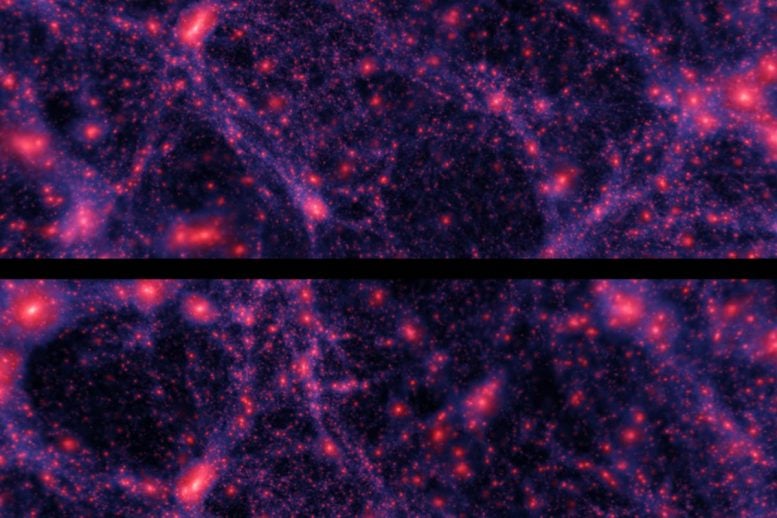

 One of the most violent events the Solar System has ever witnessed.