❌

Reading view

Avanti trims GEO exposure with Hylas-3 sale

TAMPA, Fla. — Avanti Communications is moving to close a chapter on the debt-fueled geostationary expansion that once defined the British satellite operator, with plans to sell the youngest payload […]

The post Avanti trims GEO exposure with Hylas-3 sale appeared first on SpaceNews.

  •  
  •  

A ‘Memory Switchboard’ in the Hippocampus May Help Explain How the Brain Learns Without Overwriting Old Memories


Scientists have often wondered how the brain can take in new experiences without erasing stored memories. However, a new study in Nature now identifies a circuit-level mechanism that may help answer this question—and it may also offer clues for improving artificial intelligence.

Researchers at NYU Langone Health recorded the activity of hundreds of neurons simultaneously across several brain regions in mice. By tracking how signals move from the hippocampus to the neocortex, where long-term memories are kept, they found that a subset of hippocampal neurons appears to participate in routing information between regions in distinct patterns. These cells participate in both incoming and outgoing signaling, but do so using distinct patterns of activity.

Separate Channels Through the Same Cells

The study focused on a series of interconnected brain regions: CA3, which processes rapidly changing information; CA1, which serves as a central hub; and the retrosplenial cortex, which is important for navigation and spatial memory. About one in four CA1 neurons receives most of the signals from CA3. When these same neurons send signals to the retrosplenial cortex, they fire in a different pattern, creating a separate outgoing channel using the same cells.

Rather than using new neurons, the brain separates these channels by changing how the same neurons fire together. The researchers suggest this arrangement may help reduce interference between new learning and more stable cortical memories.

“Our findings help explain how memory can be both moldable and enduring,” said co-lead author Joaquín Gonzalez, PhD, a postdoctoral fellow in the Department of Psychiatry at NYU Grossman School of Medicine. “By changing how the same cells fire together instead of turning on new cells, the brain can keep information organized and protect older memories.”

What Happens During Sleep

The CA1 neurons involved in learning during the day also stay active at night. The researchers found that these cells remain busy during sleep events called sharp-wave ripples, which are bursts of activity the hippocampus uses to replay and strengthen memories from the day.

Since overlapping neurons are recruited during both waking activity and sleep replay, the same circuit elements appear to participate in both learning and consolidation. This theoretically allows the brain to use a single system for both learning and storing memories, without the two processes interfering with each other.

“Our study shows how learning and memory consolidation can coexist in the same network,” said co-lead author Mihály Vöröslakos, MD, PhD. “Our discovery was made possible because for the first time, we were able to record hundreds of individual neurons across all the key regions simultaneously in animals that were moving around naturally.”

Implications for Disease and AI

The system identified in this research may help explain how memory disorders begin. In Alzheimer’s disease, for example, the hippocampal circuits examined here are some of the earliest to deteriorate. These networks are essential for sorting and organizing new experiences.

“Our discovery of a ‘memory switchboard’ deep in the hippocampus may provide clues as to how memory circuits fail in Alzheimer’s disease,” said co-senior author Zhe S. Chen, PhD, a professor in the Departments of Psychiatry and Neuroscience at NYU Grossman School of Medicine.

Artificial intelligence systems have a hard time holding onto what they’ve already learned when faced with new tasks, a problem researchers call catastrophic forgetting. The human brain appears able to update memories without catastrophic forgetting by altering the use of existing neural circuits. By studying how our brains pull this off, scientists hope to design AI that can keep learning new things without forgetting the old.

“By showing how the mammalian brain can safeguard memories during learning, our research may offer a biological blueprint for designing next-generation AI technology that can update itself continuously without overwriting what it has already acquired,” said co-senior author György Buzsáki, MD, PhD, the Biggs Professor of Neuroscience at NYU Grossman School of Medicine.

The researchers plan to investigate whether similar switchboard-like channels exist in other memory circuits. The authors caution that their findings in mice under controlled conditions do not yet allow conclusions about the human brain.

Austin Burgess is a writer and researcher with a background in sales, marketing, and data analytics. He holds an MBA, a Bachelor of Science in Business Administration, and a data analytics certification. His work focuses on breaking scientific developments, with an emphasis on emerging biology, cognitive neuroscience, and archaeological discoveries.

  •  

Voici les 6 signes qui devraient vous alerter sur un possible excès de cholestérol selon les médecins

Le cholestérol, essentiel à notre organisme, peut devenir un ennemi silencieux lorsqu'il est en excès. Quels sont les signes qui trahissent des taux trop élevés ? Comment prévenir les risques cardiovasculaires associés ? Découvrez les six symptômes révélateurs d'un cholestérol excessif et les...

  •  

Amazon’s Elusive Short-Eared Dog May Be More Common than Researchers Once Thought

The short-eared dog (Atelocynus microtis) from a trap camera in Bolivia. Image credit: G. Ayala & M.E Viscarra.

Hundreds of camera-trap records from Bolivia and Peru suggest the short-eared dog (Atelocynus microtis), one of the world’s least-known canids and one of Latin America’s least-known carnivores, may be thriving in intact upland forests.

The post Amazon’s Elusive Short-Eared Dog May Be More Common than Researchers Once Thought appeared first on Sci.News: Breaking Science News.

  •  

Scientists Capture First-Ever Images of Cozumel Dwarf Fox

This image of a dwarf gray fox (Urocyon sp.) was captured on the island of Cozumel, Mexico: an adult male is shown partially concealed behind foliage before capture by the Fundación de Parques y Museos de Cozumel on September 14, 2023; this represents the first photograph ever taken of the species on the island and the first reported sighting since 2001. Image credit: Rafael Chacón.

Researchers have obtained the first-ever photographs of the Cozumel dwarf fox (Urocyon sp.), an elusive dwarf fox living on the Caribbean island of Cozumel, off Mexico’s Yucatán Peninsula. Captured in September 2023, the images provide the first confirmed evidence since 2001 that the elusive animal still survives on the island.

The post Scientists Capture First-Ever Images of Cozumel Dwarf Fox appeared first on Sci.News: Breaking Science News.

  •  

ESA awards contract for next-generation radar imaging satellites

Sentinel-1 NG

Thales Alenia Space and Airbus Defence and Space won contracts to build the next generation of radar imaging satellites for Europe’s Copernicus Earth observation program.

The post ESA awards contract for next-generation radar imaging satellites appeared first on SpaceNews.

  •  

Earth’s Earliest Animals May Have Thrived Too Easily to Evolve

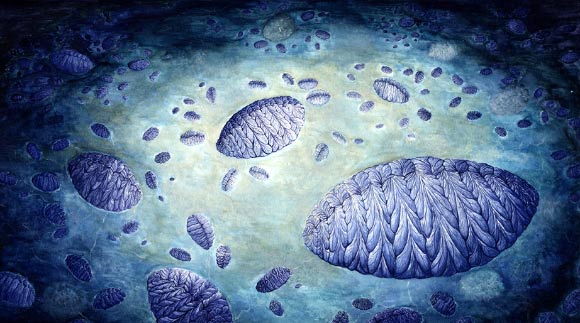
Artist’s reconstruction of the Fractofusus community: the bottom right features a large Fractofusus around which there are 5 to 8 medium specimens clustered; each of the medium specimens also has small specimens clustered around them; the small specimens therefore form an independent double cluster pattern, namely clusters of clusters. Image credit: C.G. Kenchington.

Fossils from some of the oldest-known animals on Earth, dating from 574 million years ago (Ediacaran period), suggest that cloning, not competition, dominated the Ediacaran seas, slowing evolution until environmental stress helped drive the rise of sexual reproduction and a burst of biodiversity.

The post Earth’s Earliest Animals May Have Thrived Too Easily to Evolve appeared first on Sci.News: Breaking Science News.

  •  

Ces mystérieuses « ceintures de trous » au Danmark vieilles de 2 500 ans refusent toujours de livrer leur secret

Depuis des décennies, des centaines de fosses alignées découvertes au Danemark défient les interprétations des chercheurs. Grâce à un projet d'archéologie expérimentale, de nouvelles pistes émergent sur la fonction de ces mystérieux aménagements datant de l'âge du fer.

  •  
  •  

Airbus dévoile un drone de combat : ses capacités en disent long sur les guerres de demain

Dévoilé au salon ILA Berlin 2026, le U760 Ravenstorm représente le pari d'Airbus sur un drone de combat européen. Une réponse directe à l'effondrement du programme Scaf et à la montée des tensions géopolitiques.

  •  

Maio de 2026 foi o segundo mais quente de sempre com Portugal a registar calor recorde

O mês de maio foi o segundo mais quente de sempre à escala global, tanto em terra como nos oceanos. A temperatura média do planeta atingiu 15,81 graus Celsius, ficando apenas atrás de maio de 2024. Portugal está entre os países da Europa que tiveram verão antecipado.

The post Maio de 2026 foi o segundo mais quente de sempre com Portugal a registar calor recorde appeared first on Tek Notícias.

  •  

Fossil Discovery in Patagonia Reveals New Species of Horned Turtle

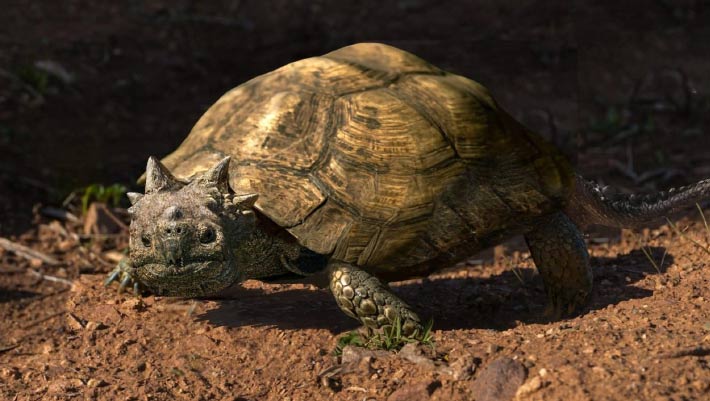
An artist’s impression of Patagoniaemys aeschyli. Image credit: Nawel Vazquez / Museo Argentino de Ciencias Naturales ‘Bernardino Rivadavia’ / CONICET.

Paleontologists have identified a new species of meiolaniform turtle from northern Patagonia, Argentina, that lived during the Maastrichtian age, just before the asteroid-triggered mass extinction that wiped out all non-avian dinosaurs.

The post Fossil Discovery in Patagonia Reveals New Species of Horned Turtle appeared first on Sci.News: Breaking Science News.

  •  

L'humanité pourrait-elle faire disparaître les moustiques ? Voici ce que disent les scientifiques

760 000 morts par an. L'animal le plus meurtrier de la planète ne rugit pas, ne mord pas et tient dans le creux d'une main. Il bourdonne. Face à l'explosion de la dengue et du paludisme, des scientifiques étudient aujourd'hui des pistes radicales pour neutraliser les moustiques les plus...

  •  
❌