❌

Reading view

Scientists Uncover Why Walking Gets Slower and More Exhausting As We Age

Senior Man Holding Walking CaneA new study reveals that aging changes the body’s walking strategy, prioritizing balance and safety over efficiency. Walking may seem automatic, but every step requires a complex balance between stability, muscle coordination, and forward propulsion. As people age, that balance begins to shift. New research from Australia suggests the body gradually adopts a more cautious [...]
  •  

Hidden Phase of Matter Finally Captured After Decades of Predictions

Silver Nanoparticle Sphere Quantum Physics State Matter PhaseScientists have finally captured a hidden state of matter, revealing a long-predicted phase with intriguing quantum potential. Researchers from Brown University and the University of Michigan College of Engineering have succeeded in stabilizing a previously elusive state of matter that had existed only in theoretical models. Using carefully engineered nanoparticles as building blocks, the team [...]
  •  
  •  

“When We Build the ARC Fusion Power Plant, It Will Work”: Company Claims Nuclear Fusion Reactor Design Will Produce More Energy Than It Consumes


Researchers from the private nuclear fusion energy company Commonwealth Fusion Systems have published a series of papers that they claim confirm that their flagship ARC reactor will produce more usable energy than it consumes if built as designed.

Although the company projects it will deliver the first commercial fusion plants by the early 2030s, other researchers say there are remaining challenges to overcome, and won’t declare the ARC reactor successful until an operational version is constructed to validate the research team’s theoretical predictions.

ARC Fusion Reactor ‘Will Work’ When Built

Scientists have long dreamed of capturing the nuclear fusion reaction that fuels our Sun and using it to generate clean, renewable power. Private fusion firms like CFS have received nearly $10 billion in funding over the last decade alone.

The first laboratory “net-energy” controlled fusion reaction, which fusion scientists call “ignition,” didn’t occur until 2022, when physicists at the US National Ignition Facility in Livermore, California, successfully produced more energy than was used to generate the reaction. Although brief, that moment has fueled speculation that practical fusion energy generation may be right around the corner.

Now, the Commonwealth team, which includes 58 researchers from the company and partner institutes, has published scientific papers outlining the physics of their ARC reactor, including new models that they say account for the “expected behavior” of the superhot plasma at the heart of the design.

Brandon Sorbom, the company’s chief science officer, said that the published works  “confirm that when we build the ARC fusion power plant, it will work”.

Company Claims ARC Will Produce 400 Megawatts of Net Electricity

After nearly a decade of research, CFS, founded in 2018, is currently preparing its prototype for a 2027 demonstration it calls ‘SPARC.’ The company said they expect that trial run, which will demonstrate their technology’s ability to generate more energy than it needs to heat the plasma, will help them fine-tune ARC’s final design.

ARC fusion reactor
A peek inside the Commonwealth Fusion Systems magnet production facility. Image Credit: CFS.

According to the Commonwealth-led team, ARC will generate more energy than is required to operate the entire facility, including plasma heating, resulting in a true net-positive power-generation facility. This includes producing approximately 400 megawatts of net electricity, which the team noted is enough to power 280,000 average US homes. For comparison, recent census data indicates that Boston, Massachusetts, near the company’s headquarters in Cambridge, has around 271,000 U.S. homes.

Like SPARC, the ARC reactor uses high-temperature superconducting magnets to compress the plasma, which remains suspended by the magnetic fields, preventing it from damaging the chamber walls and terminating any potential fusion reaction. Under this extreme pressure, the nuclei of heavy hydrogen trapped inside the chamber fuse to form helium, the same reaction that takes place inside the Sun.

This fusion reaction results in the release of energy, primarily high-speed neutrons. At its hottest, the donut-shaped ring of plasma reaches seven times the temperature of the Sun.

Critics Applaud Publication While Highlighting Unproven Concepts and Systems

Tony Roulstone, a nuclear engineer at the University of Cambridge, UK, conceded that the CFS team and its collaborating authors are “some of the best in the fusion business” and noted the company’s ARC reactor concept is the result of “good work over many years.” However, Roulstone also warned of the pressure on researchers in privately funded companies to “claim things before the evidence is fully in place.”

David Hammer, a nuclear engineer at Cornell University in Ithaca, New York, said it is a good sign that the team is publishing at a high volume, but also warned that published papers will not guarantee that the built device will work as intended.

Their modeling “has to be proven correct by a fusion reactor that works as designed”, he adds. If the firm can get SPARC operating successfully next year, “it will be an important step forward”, he says.

Hamner also noted that several of the design’s subsystems require further development before it can be declared complete. This includes addressing how plasma will behave in the real world when it becomes unstable versus its modeled behavior, proving out the process for extracting usable energy from the generated heat, and demonstrating that the reactor is robust enough to operate for long periods.

The scientists also noted the challenges in sourcing tritium, the isotopic fuel the reactor requires to operate. Although CFS has outlined its tritium generation process, Hamner noted that the series of published papers neither details the process nor demonstrates its viability.

“There are candidate blanket materials and blanket designs, but there are many engineering person-years needed” to bring a functional ARC-style plant to fruition, he explained.

“We certainly have to build more on top of that foundation laid out in these papers,” a company spokesperson said, adding that they will “be able to produce tritium for operations and for future power plants.”

The following articles were published by the CFS-led team: “Overview of the physics basis for the ARC fusion power plant“; “ARC disruption physics and strategy“; “Performance and Transport in the ARC Tokamak“; “Power and particle exhaust for the ARC fusion power plant“; “ARC Physics Basis-Magnetohydrodynamics.”

Editor’s Note: This article was updated to correct a previous version that described neutrinos, rather than fast-neutrons, in the context of the reporting, and to clarify that the first achievement of a “net-energy” controlled fusion reaction (ignition) occurred in 2022. 

Christopher Plain is a Science Fiction and Fantasy novelist and Head Science Writer at The Debrief. Follow and connect with him on X, learn about his books at plainfiction.com, or email him directly at christopher@thedebrief.org.

  •  

New Analysis Confirms the Universe is Still Expanding, Refuting Controversial 2025 Claims and Prompting Immediate Response


A new study has taken a fresh look at a late 2025 Yonsei University study claiming the universe’s expansion is stalling out and instead has found that the universe is still expanding as previously believed.

Led by researchers from the University of Southampton, the team behind the new analysis acknowledged the scientific value of the 2025 team’s work, noting that their calculations were not wrong but lacked the additional data needed to confirm the universe’s expansion rather than refute it.

The lead author of the 2025 study, Dr. Chul Chung, told The Debrief that he and his colleagues “have already submitted our response to Wiseman, Riess et al. 2026 on May 14,” adding that the paper, “Still accelerating: age bias correction in supernova cosmology is robust to host-progenitor age mapping,” has also been posted on arXiv.

“The abstract summarizes the two main issues we identify in Wiseman et al., so I think it provides a concise overview of our position,” Chung told The Debrief.

Challenging Universal Expansion

According to a statement announcing the findings, scientists first confirmed the universe’s expansion was accelerating in 2011, a discovery that won astrophysicists Professor Adam Riess and Professor Brian Schmidt the Nobel Prize in Physics. Since that discovery, cosmological models have incorporated this accelerating expansion, with experiments on dark matter and dark energy attempting to explain it.

Then last year, a separate team of astronomers announced that a new analysis of stellar phenomena indicated that the universe was no longer expanding. Adding to the controversy was the team’s claim that dark energy may not exist, citing the lack of concrete evidence for a universe undergoing accelerating expansion.

According to the Southampton-led team behind the new study, the 2025 study suggested that previous methods used to measure the universe’s expansion, such as measuring supernovae, “were fundamentally flawed.”

“This points to a time-varying dark energy and a universe that is no longer accelerating, representing a potential paradigm shift in cosmology if confirmed,” explained Professor Chul Chung, co-lead author on the study, in a 2025 email to The Debrief.

The claims sent shockwaves through the scientific community, a result that the researchers note could have dismantled the Nobel Prize-winning team’s historic findings, and “nearly three decades of astronomical progress.”

When discussing the 2025 team’s work, the lead author of the new study, Dr Phil Wiseman, said the team’s findings and the resulting debate were not necessarily incorrect. Instead, the Southampton researcher said it was primarily a result of a scientific understanding.

“The previous and well-accepted measurements were, in fact, fine and our current understanding of the fate of the universe remains robust.”

Recalculating Galaxy Masses and White Dwarf Star Ages Reestablishes Expansion

In their reanalysis, the Southampton-led team recalibrated the original data to account for variables not in the original study. According to Wiseman, these included “different host environments and populations.”

For example, the research team looked at Type 1a supernovae, which are violet, extremely bright explosions of white dwarf stars. The authors of the 2025 study claimed that this class of supernova had “different maximum brightness,” which had tricked astronomers into thinking the cosmos was accelerating, when their analysis said it was actually slowing down.

When they took a fresh look at the data, the Southampton team found that they had incorrectly estimated the age of these stars. The new study also says the 2025 team didn’t account for the mass of the galaxies hosting these cosmological phenomena, which they described as “a standard correction used in modern cosmology to prove accuracy.”

When his team factored those data points in, Wiseman said the evidence for a stalling expansion was not supported. Instead, the researcher observed that “the evidence for cosmic acceleration remains remarkably consistent.”

In their reply on ArXiv, the Yonsei University team said the new research failed to factor in two variables of their own, adding that “when these two effects are consistently combined in computing the redshift-dependent magnitude correction, the final correction, and hence the resulting cosmological impact, remain largely unchanged,” from the original 2025 calculations.

“Extraordinary Claims Require Especially Careful Testing”

When discussing the new study’s findings, Southampton Professor Mark Sullivan highlighted the benefits of scientific review, noting that “this is how progress is made.”

“Although this idea did not turn out correct, it has opened up new ways of thinking about how supernovae explode and how we can measure dark energy more accurately,” the researcher added.

Paper co-author, Dr Brodie Popovic agreed, noting that the 2025 study provided astronomers a good opportunity to “go back over all of our assumptions,” adding that “it turns out, yes, we do understand this stuff, and we’re accounting for it in our cosmology measurement.”

In a salute to the Sagan Standard established by astronomer Carl Sagan, which says “extraordinary claims require extraordinary evidence,” Reiss seemed to celebrate the new findings that reestablish his original work by quipping that “extraordinary claims require especially careful testing.”

With the accelerating expansion of the universe seemingly reestablished, at least for now, Dr Wiseman said: “we can get back to trying to understand what dark energy actually is, rather than wondering if it exists at all.”

“Thankfully we have averted this crisis, but the mystery about why the universe is still accelerating in size remains,” he added. 

The study “Still Accelerating: Type Ia supernova cosmology is robust to host galaxy age evolution” was published in Monthly Notices of the Royal Astronomical Society.

Christopher Plain is a Science Fiction and Fantasy novelist and Head Science Writer at The Debrief. Follow and connect with him on X, learn about his books at plainfiction.com, or email him directly at christopher@thedebrief.org.

  •  

Vast Hidden Structure Discovered Under Miles of Ice in East Antarctica

EAFBP East AntarcticaScientists have discovered a colossal hidden structure beneath Antarctica that could reshape our understanding of the continent’s past and present. Scientists have identified a massive hidden geological formation beneath East Antarctica, revealing a continent-scale structure buried under some of the thickest ice on Earth. The discovery was made by an international team of researchers that [...]
  •  

Yale Discovery Overturns Long-Held “Evolutionary Dead End” Theory

DNA Genetics Evolution Concept ArtThe discovery of Typhlichthys styx shows that cave-adapted species can continue evolving and splitting into new species, with underground aquifers playing a crucial role in that process. Researchers at Yale have identified a previously unknown species of eyeless cavefish, a finding that challenges the long-standing view that caves and other underground habitats are evolutionary dead [...]
  •  

Scientists Create “Intelligent” Bandage That Targets Harmful Bacteria

Female Doctor Bandaging HandResearchers have created a smart wound dressing that can sense when harmful bacteria are present and respond by releasing antibiotics only when needed. Biomedical engineers at Brown University have created a wound dressing that releases antibiotics only when harmful bacteria are detected. In a new study, the team found that the material may quickly eliminate [...]
  •  

Hidden Solar Storms May Be Lighting Japan’s Skies With Massive Red Auroras

Low Latitude AuroraUnusually tall red auroras over Japan may be revealing that some solar storms are stronger than scientists realize. A study published in the Journal of Space Weather and Space Climate reports that red auroras observed over Japan extended to altitudes of roughly 500-800 kilometers above Earth. The discovery was made by researchers from Hokkaido University [...]
  •  

Decades of NASA Satellite Data Reveals the Elusive, Enigmatic ‘Urban Pulse” of Six Major Cities


A multi-institutional team of researchers led by University of Connecticut Professor Zhe Zhu has developed a method for measuring the dynamic, real-time activity of urban environments from space, which they are calling an “Urban Pulse.”

The research team behind the novel urban activity metric said that monitoring a city’s Urban Pulse could help mitigate uncontrolled urban sprawl or decay and enable environmentalists and urban planners to intervene before disasters become unavoidable.

Measuring an Urban Pulse Could Reveal Neighborhoods ‘Not Doing Well”

Although environmentalists and urban planners have a wide range of tools to measure the activities within a city, Zhu notes that scientists have spent decades merely capturing the “outcome of urbanization,” such as a finished road or a newly completed home. However, the researcher and lead author of a study detailing the Urban Pulse methodology added that, even with all the current tools, “you don’t really see the dynamics within an urban area.”

According to a statement detailing the new approach, a city’s pulse is determined by all construction activity within it. Along with new construction, the metric includes repairs, infrastructure improvements, or expansion into previously undeveloped green spaces. When used correctly, the researchers said that it can help determine “if and where their city is not doing well.”

“This would allow (authorities) to be proactive rather than conducting a metaphorical autopsy after the decay of an area is evident,” the team explained.

Bridging the Gap Between Abstract Urban Theories and Measurable, Real-World Data

To test their approach, the team evaluated the Urban Pulse of six cities: Seattle, Shenzhen, Lagos, Mumbai, Dubai, and Mexico City. This involved a deep examination of what the team termed “decades of dense time-series data” collected by NASA’s Harmonized Landsat and Sentinel-2 (HLS)  satellites for physical transformations in an urban environment, such as new construction, measurable infrastructure improvements, and demolition.

Instead of analyzing each city’s changes manually, the team evaluated the above changes on what they called “the neighborhood level” using a deep-learning and time-series-analysis approach called CAPES, developed by former UConn postdoctoral researcher Ji Won Suh. The team said that, by observing these “high-frequency rhythms of development” from a broad ‘outer space’ perspective, their approach “bridges the gap between abstract urban theories and measurable, real-world data.”

Urban Pulse
This figure visualizes Dubai’s rapid expansion as a glowing “urban pulse.” Mapping monthly construction data from the city’s top 65 most active locations, the ridge plot reveals how distinct neighborhoods grow through spiky, cyclical, and asynchronous bursts. Rather than a steady wave, urbanization unfolds as dynamic, localized heartbeats, exposing the complex rhythms driving a modern metropolis. Image Credit: Zhe Zhu/GERS Lab.

After examining CAPES’ results, the team found several key markers within the Urban Pulse. For example, the view from space revealed that growth within cities is not smooth and steady. Instead, Zhu and colleagues said that development happens in “abrupt, intense, and episodic bursts of construction.”

CAPES also revealed that the rhythms of an urban environment are cyclical. For example, while a city may show relatively steady growth on a broader level, individual neighborhoods go through “dramatic boom-and-rest cycles” of expansion and dormancy that don’t appear to follow predictable annual seasons.

The third pattern revealed by measuring the six cities’ Urban Pulse from space was that cities are “asynchronous,” meaning a single city does not ‘beat’ in unison. The team noted that neighborhoods “pulse at completely different times.” When it functions properly, this “uncoordinated rhythm” helps prevent the city’s infrastructure and labor markets from “overheating.”

Unlike previous methods for tracking a city’s evolution, the team noted that their Urban Pulse approach can help researchers “visualize a city’s reaction to global shocks.” For example, the team said that their analysis captured “the exact moment the COVID-19 pandemic triggered a widespread, synchronized ‘cardiac arrest’ in urban development worldwide.”

However, their new tool also revealed what the researchers termed “profound inequalities” in how individual cities recovered from the dramatic halt to urban growth. For example, the team said that the Urban Pulse of Shenzhen revealed synchronized ‘dips’ in activity, followed almost immediately by “rapid, policy-driven rebounds.” However, the same Orban Pulse analysis showed that the reactions in Mumbai and Mexico City were much more “muted.”

“It’s like in human beings,” Zhu explained. “When you get a disease, it’s not going to show up exactly the same in different people.”

A ‘Very Impactful Tool’ for Navigating Cities

Although the Urban Pulse metric offers a tantalizing tool for academics, the team noted real-world benefits for global policymakers, urban planners, and environmentalists, adding that “it serves as an early warning system.”

“By monitoring the rhythm, rate, and amplitude of neighborhood pulses, governments can identify early signs of urban decay or unsustainable sprawl and intervene before crises become entrenched,” they explained.

The team also suggested that making Urban Pulse data publicly available could “revolutionize how everyday people interact with their cities.” For example, an urban family considering a move to a new city or a new part of their current city could track a target neighborhood’s pulse to spot early warning signs of decay or early indicators of positive-trending growth. The same data could help business owners plan new locations or expanded service routes, depending on the business profile and the local Urban Pulse trends.

“This is going to be a very impactful tool influencing not only top-down policy decisions from governments but also bottom-up decisions from everyday people navigating their cities,” Zhu explained.

In a recent study, “The Urban Pulse: Diagnosing the urbanization process as spiky, cyclical, and asynchronous” was published in the Proceedings of the National Academy of Sciences.

Christopher Plain is a Science Fiction and Fantasy novelist and Head Science Writer at The Debrief. Follow and connect with him on X, learn about his books at plainfiction.com, or email him directly at christopher@thedebrief.org.

  •  

Ten Expensive and Woke Studies Funded by the Government’s UKRI Future Leaders Fellowships

The first thing a future anti-woke UK government should cut is the billions spent on useless Left-wing research, says Charlotte Gill. For starters, here are 10 studies funded by UKRI's Future Leaders Fellowships.

The post Ten Expensive and Woke Studies Funded by the Government’s UKRI Future Leaders Fellowships appeared first on The Daily Sceptic.

  •  

Humpback Whale Stuns Scientists With 15,000 Kilometer Journey Across Oceans

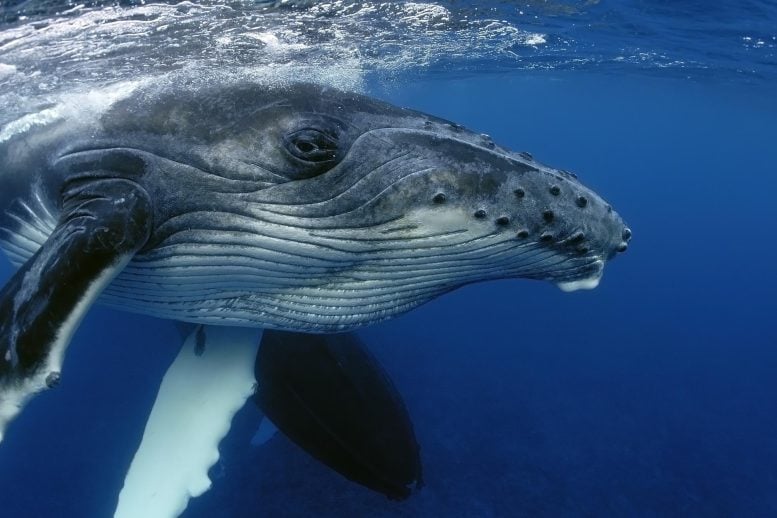
Humpback Whale Head Close UpTwo humpback whales crossed entire oceans between Australia and Brazil, setting migration records and surprising scientists. Scientists have documented an extraordinary feat of long-distance travel by humpback whales, confirming for the first time that individual animals have moved between breeding areas off eastern Australia and Brazil. The discovery reveals ocean crossings of more than 14,000 [...]
  •  

Cancer’s “Undruggable” Protein Has a Dangerous New Superpower

Malignant Cancer CellCancer’s most notorious growth protein may also be helping tumors survive chemotherapy. A protein already known for fueling cancer growth may have another troubling ability: helping damaged tumor cells repair their DNA and survive treatments designed to destroy them. Researchers at Oregon Health & Science University (OHSU) report that MYC, a protein that is overactive [...]
  •  

“SpiderCam, SpiderCam, Does Whatever a Spider Can?” 3D Camera Inspired by Jumping Spider is First to Operate Below One Watt


Northwestern University engineers have unveiled an extremely energy-efficient 3D camera, called SpiderCam, inspired by how jumping spiders judge depth before making a calculated leap.

The research team behind the novel device said their technology could help engineers build wearable technologies, assistive devices, robots, drones, and other futuristic technologies that benefit from quickly and efficiently gauging their surroundings.

How Jumping Spiders Inspired Energy-Efficient SpiderCam

According to a statement announcing SpiderCam, 3D cameras typically estimate image depth in two ways. The first approach involves captured images from multiple viewpoints and comparing them, and the second involves projecting a light source, often an infrared (IR) laser, and then measuring the reflection.

Although both methods can produce realistic three-dimensional images, they can require significant computing power, additional operational energy, and often expensive hardware such as lasers.

Fortunately, millions of years of evolution have resulted in a creature that possesses a hyper-efficient way of estimating depth: the jumping spider.

“Jumping spiders jump to catch prey, to avoid predators and to get around, and that requires excellent vision,” said Northwestern’s Emma Alexander, the study’s corresponding author and an expert in bio-inspired computer vision. However, the researcher notes that their brains are extremely small, requiring the ability to calculate distances in an energy- and computationally efficient way.

According to Alexander, jumping spider eyes have multiple layers of retinas in each eye, rather than just one as in human eyes. When measuring distance, each retina focuses on an image at a slightly different distance, resulting in some images being blurrier than others.

“They see multiple levels of focus at all times,” Alexander explained. “So, they are always collecting pairs of images.”

After collecting these images in real time, the fly’s poppyseed-sized brain compares their sharpness, yielding a surprisingly accurate depth estimate, as evidenced by the creature’s ability to jump with precision.

Prototype Captures Images at Two Distances and Compares Their Blurriness

Inspired by nature’s hyper-efficient, extremely accurate depth estimation method, Alexander’s team decided to build a 3D camera using the same basic approach.

“We wanted to understand whether we could borrow some of the same principles to create an extremely energy-efficient depth sensor that could be used in resource-constrained situations where users don’t have unlimited access to power,” Alexander explained.

SpiderCam camera jumping spiders
Called SpiderCam, the new device senses depth the same way that jumping spiders judge distances before making a high-precision hop. The camera produces real-time 3D maps while consuming less than a watt of power. That’s less energy than used by a standard nightlight. Image Credit: Emma Alexander/Northwestern University.

Instead of capturing images at multiple distances, as the jumping spider’s eye does, the Northwestern team’s initial design captures two images of the same scene at different focal lengths. Next, the system uses a custom algorithm to analyze the sharpness of the edges and textures captured in each image. The team said this analysis acts as a “translator between blur and distance” in the fly’s brain, resulting in “depth measurements in real time.”

To best approximate the naturally evolved energy efficiency of a jumping spider’s eye, Alexander’s team built the algorithm directly into a customizable computer chip specifically optimized for energy efficiency called a field-programmable gate array (FPGA).

The final prototype integrating the team’s dual-lens system generates depth maps at 32.5 frames per second. Critically, it generates this level of accurate 3D maps while consuming 624 milliwatts of power. For comparison, the team notes that 624 milliwatts is “less energy than used by a standard nightlight.”

Future Versions Could be Even More Energy Efficient

Although the team said that the current version of the SpiderCam is the “first passive FPGA-based 3D camera system to operate below one watt,” they hope to improve its optics and expand its field of view. Once they have a commercial-grade version, the team hopes to integrate SpiderCam into wearable devices and small robots.

Beyond proposed applications, the Northwestern team said that they “envision” a future, ultra-energy-efficient version  of the chip capable of “bringing 3D vision to applications where conventional depth sensors are impractical.”

“I’m very interested in settings where you’re very resource constrained and can’t just plug a camera into a wall,” Alexander explained. “For example, it could be deployed in field settings with limited power.”

“Separately, I also think it’s particularly exciting for applications like augmented reality where you’re interfacing with the physical world and need to know the locations of objects around you,” the researcher added.

The study’s co-first authors, Marcos Ferreira and Tianao Li, presented this work at the Computer Vision Foundation’s Conference on Computer Vision and Pattern Recognition (CVPR) in Denver. Complimentary registration is available for members of the media.

Christopher Plain is a Science Fiction and Fantasy novelist and Head Science Writer at The Debrief. Follow and connect with him on X, learn about his books at plainfiction.com, or email him directly at christopher@thedebrief.org.

  •  

Ancient Europeans Ate Some Pretty Gross Things, but The Ickiest One Was Probably by Accident


An analysis of dental tartar containing traces of human diets dating back over 33,000 years has revealed that ancient Europeans and many early Asian populations likely only ate insects by accident, perhaps as larvae in the carcasses of dead animals.

Conversely, the new study found that intentional insect consumption, called entomophagy, was more common in tropical regions and among Neanderthal populations.

Although the difference has some cultural and religious roots, the team found evidence that the abundance of insects in the tropics and the decreasing ability of humans migrating away from the tropics to digest insects likely led to the modern-day separation over thousands of years.

The Institute of Evolutionary Biology (IBE), a joint center of the Spanish National Research Council (CSIC) and Pompeu Fabra University (UPF), research team behind the new findings suggests their research could help explain why some modern populations still consume insects as food while other parts of the world consider it gross or taboo, especially given the increasing food demands of a rising world population.

Insect Consumption in Ancient Northern Europeans Likely Accidental

According to a statement announcing the new research, hundreds of millions of people currently include insects in their diet. However, they also note that most of the Western world continues to “show an aversion” to including any of the more than 1,611 insect species designated as edible by the Food and Agriculture Organization of the United Nations (FAO) in theirs. Although some theories suggest the difference is almost purely cultural, the team concedes that “its origin remains unknown.”

To explore the origins of human entomophagy, the IBE analyzed 745 samples of ancient human dental tartar dating back to 33,000 before present. According to the team’s results published in the journal Science Advances, dental tartar (sometimes called dental ‘calculus’) is a critical archaeological tool because it preserves the DNA of the species these human ancestors consumed during their lifetimes.

Although the analysis found evidence for entomophagy amongst virtually all ancient populations sampled in the study, the levels varied dramatically. Notably, the evidence suggested that ancient humans in northern Eurasia did not routinely eat insects in measurable quantities. Instead, any consumption was likely incidental, including consumption of insect larvae in rotting food.

Curious whether the lack of entomophagy in ancient European and Central and Northern Asian populations was purely cultural or whether genetic and geographic factors were involved, the team studied human genes involved in chitin digestion. Chitin, which can be found in some marine animal shells, is also part of an insect’s hard exoskeleton.

According to the study authors, the analysis revealed that the ‘chitinase’ genes in North Eurasian human populations “carry mutations that confer a reduced capacity to digest insect exoskeletons.” Their analysis revealed that this reduced capacity to digest insect exoskeletons has persisted in the genomes of modern Eurasian populations “for the last 9,000 years,” which would coincide with the widely accepted date for the origin of agriculture.

Pablo Librado, study leader and a principal investigator at the IBE, said the “scarce presence of insects in the diet of northern Eurasians” suggests that the cause may not lie solely in more recent cultural factors but also in ecological and evolutionary components dating back several millennia. 

Neanderthals and Denisovans Probably Ate Insect Larvae in Rotting Meat

When the team compared data from ancient human tartar with that of ancient Neanderthals, they found that Neanderthals engaged in much higher levels of entomophagy than humans living in the same regions. According to the study authors, Neanderthal insect consumption levels were similar to those found in western chimpanzee populations, which the researchers note “rely on entomophagy to supplement their diet on the savanna, especially during periods of drought.”

Further analysis of the extracted insect DNA showed that the group most commonly consumed by the Neanderthal specimens included flies and mosquitoes. Although the team only analyzed the DNA, they noted that a recent hypothesis suggests Neanderthals ate carcasses laden with mosquito larvae.

“The abundance of mosquito remains reinforces the possibility that the carcasses of their prey were kept in ponds and marshy areas, where mosquitoes lay their eggs,” the team’s statement explained.

An analysis of the Neanderthal DNA and the DNA from the lone Denisovan study subject revealed that both ancient hominid populations could digest chitin. This result reinforced the genetic basis for increased or reduced entomophagy beyond cultural factors. 

Humans Ate Fewer Bugs When They Moved Away from Tropical Regions

One geographic component identified by the chitinase DNA analysis showed higher levels of digestive enzyme expression among humans living in or near the tropics. However, the expression of these enzymes gradually decreased as populations moved away from tropical regions. The team said this variation, which has been maintained for at least the last 9,000 years, “reflects the abandonment of entomophagy in European populations.”

Manuel Piñero, a predoctoral researcher at the IBE and first author of the study, noted that large numbers of insects must be consumed to offset the “high caloric cost” of collecting them, which might explain the higher levels of entomophagy in this region.

“In the tropics, there is a greater availability of social insects, such as termites and locusts,”  Piñero  explained, adding that the biomass and diversity of tropical edible insects enable “sustainable exploitation throughout the year.” The researcher also noted that insect consumption “adds to pest control.”

When discussing the implications of their findings, Librado highlighted the DNA and geographic factors the IBE team uncovered.

“Beyond cultural or religious factors, our results suggest that the reduced availability of insects in non-tropical areas may have been a key factor in the abandonment of entomophagy, leading to a reduced capacity to digest insect exoskeletons,” the researcher explained.

Christopher Plain is a Science Fiction and Fantasy novelist and Head Science Writer at The Debrief. Follow and connect with him on X, learn about his books at plainfiction.com, or email him directly at christopher@thedebrief.org.

  •  

Tiny Genetic Change Turns Female Mice Into Males, Scientists Discover

X Chromosome DNA StrandA new study reveals that an extremely small change in a non-coding region of DNA can dramatically alter how sex develops in mice. How much can a single letter of DNA matter? According to new research from Bar-Ilan University, one misplaced genetic “letter” can completely change the course of sexual development. In a study published [...]
  •  

This Simple Drink Could Help Calm the Inflammation Behind Many Diseases

Fresh Tomato Juice With Basil GlassesScientists found that a tomato-soy juice rich in plant-derived compounds altered inflammation-related signals in healthy adults with obesity. A new study found that drinking tomato-soy juice rich in health-promoting plant compounds reduced levels of inflammatory proteins in healthy adults with obesity after four weeks. The results suggest the beverage could serve as a functional food [...]
  •  

According to Scientists, This Simple Dietary Change Is Linked to Lower Depression Scores

Young Happy Woman Drinking Orange JuiceResearchers found that a simple addition to a 5-a-day diet was associated with improved mental well-being in adults with low fruit and vegetable intake. New research from Newcastle University suggests that drinking a daily glass of 100% fruit juice or a smoothie as part of the country’s 5-a-day nutrition recommendation may help improve mental well-being. [...]
  •  

Researchers Discover a Hidden Vitamin D Problem That Persists Year-Round

Holding Vitamin D SunlightA new study suggests that some groups may not experience the expected seasonal boost in vitamin D levels, even during the sunniest months of the year. Many people assume that spending more time outdoors during summer naturally restores vitamin D levels after the darker winter months. But new research suggests that for some groups, that [...]
  •  

Record-Breaking Black Hole Wind Blasts Through Space at 30% the Speed of Light

Quasar Black HoleA distant quasar has revealed one of the most extreme ultraviolet outflows ever observed, providing new clues about the powerful interactions between supermassive black holes and their host galaxies. A supermassive black hole more than a billion times the mass of the Sun is blasting gas through space at such extraordinary speeds that astronomers are [...]
  •  
❌