 Login

Are Barcelona’s Climate Shelters the Solution for the Upcoming Deadly Urban Heat?
 Cooling cities is now a public health fight. Barcelona has some lessons.
 Cooling cities is now a public health fight. Barcelona has some lessons.
A small Greek island on the eastern edge of the Mediterranean has revealed a new species inside a man-made tunnel carved into a hillside.
During a survey of Kastellorizo in the Dodecanese, researchers found a previously unknown cave cricket inhabiting an artificial underground passage on Mount Vigla. The species, described in the Journal of Orthoptera Research, is part of the genus Dolichopoda. These cave-dwelling crickets occur throughout southern Europe and the eastern Mediterranean, and often form distinct species when populations become isolated in separate underground habitats.
These cave-dwelling crickets throughout southern Europe and the eastern Mediterranean and often form distinct species when populations become isolated in separate underground habitats.
The team named the species Dolichopoda balrogi after the Balrog, the ancient fire-demon who resided beneath the mountains in the Mines of Moria in J.R.R. Tolkien’s The Lord of the Rings. In Tolkien’s story, the Balrog remained hidden underground until disturbed by the Dwarves.
Kastellorizo covers about nine square kilometers, making it one of the smallest inhabited islands in Greece. The island is actually located closer to the Turkish coast than to the Greek mainland. The landscape also lacks any accessible natural caves. The only underground environment available for survey was a single man-made tunnel, which explains why the cricket remained undiscovered until now.
Morphological analysis of both male and female specimens showed that D. balrogi has a unique combination of physical features. The structure of the male epiphallus, the shape of the tenth tergite, and the form of the female ovipositor set it apart from other Dolichopoda species.
Molecular analysis confirmed this. DNA barcoding showed that the Kastellorizo population belongs to an evolutionary lineage alongside southwestern Anatolian Dolichopoda species, especially D. sbordonii and D. lycia. However, this is the first time an Anatolian Dolichopoda lineage has been documented within European territory.
Kastellorizo’s location already makes it a unique case in the eastern Mediterranean. Although it is officially part of Greece, the island sits just a few kilometers from the Turkish mainland, and its plants and animals reflect this proximity. The discovery of D. balrogi fits this pattern since its closest relatives are not found on other Greek islands but along the coast of Anatolia.
This finding also adds to the evidence that Kastellorizo acts as a biogeographic bridge, hosting species with roots and connections that set them apart from the rest of the Aegean islands.
“These findings remind us that biodiversity discoveries are not limited to remote tropical forests or deep oceans,” added lead researcher Konstantinos Kalaentzis. “Even familiar landscapes and human-made structures can harbour species that have remained unnoticed.”
Cave-adapted organisms such as Dolichopoda crickets are particularly vulnerable. Their entire known range may extend only to a single tunnel, cave, or hillside. D. balrogi appears to only exist in this single man-made passage. Construction, flooding, or other disturbances to that habitat could eliminate the species before researchers fully understand it.
The authors note that documenting hidden subterranean fauna is a necessary first step toward protection, and that artificial underground environments should receive more attention as possible refuges for specialized cave-dwelling species.
The Greek islands are among the least studied archipelagos in the Mediterranean in terms of biodiversity. The discovery of a new species with Anatolian evolutionary roots in a single tunnel on a nine-square-kilometer island suggests that the region’s unexplored caves and crevices may harbor many more undiscovered species.
Austin Burgess is a writer and researcher with a background in sales, marketing, and data analytics. He holds an MBA, a Bachelor of Science in Business Administration, and a data analytics certification. His work focuses on breaking scientific developments, with an emphasis on emerging biology, cognitive neuroscience, and archaeological discoveries.
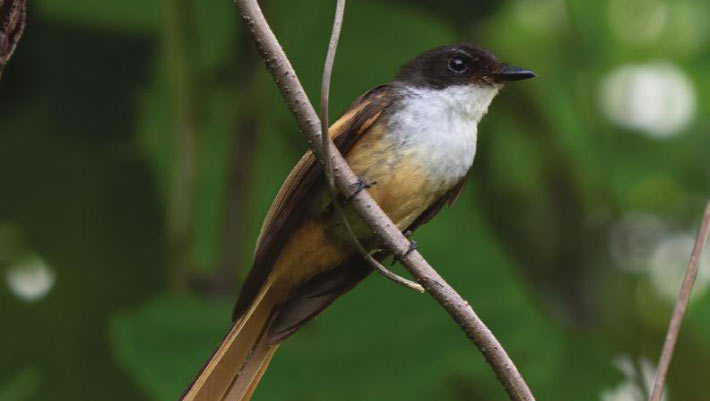
A small songbird inhabiting the Babar Islands, in the Banda Sea, Indonesia, has been identified as a new species after a duo of researchers discovered that its distinctive song sets it apart from its closest relative.
The post Ornithologists Describe New Bird Species from Remote Indonesian Islands appeared first on Sci.News: Breaking Science News.
John Swinney has finally admitted SNP funds raised for independence were spent on something else. This is fraud and the people of Scotland cannot shrug and move on – the reckoning must begin now.
The post The SNP Must Be Held to Account Over the Embezzlement Scandal appeared first on The Daily Sceptic.

 Changing weather patterns are forcing an early restoration of England’s medieval chalk giant.

Neolithic people, not glaciers, moved the Altar Stone -- the six-ton central sandstone megalith at Stonehenge -- from northeast Scotland to Salisbury Plain, according to a new study led by archaeologists from Curtin University and Sheffield Hallam University.
The post Neolithic People May Have Hauled Stonehenge’s Giant Altar Stone across Britain appeared first on Sci.News: Breaking Science News.
 The pilot turns unused railway space into a small but closely watched solar test.







While Westminster’s attention is focused on Andy Burnham and Makerfield, another pivotal byelection is taking place in Scotland’s north-east
The coming byelection in Makerfield, from where Andy Burnham aspires to make rapid progress towards Downing Street, is perhaps the most consequential in British political history. But the decision by the Scottish National party’s former Westminster leader, Stephen Flynn, to relocate to Holyrood means that another pivotal contest is taking place more than 350 miles to the north. If Makerfield is a test case for Mr Burnham and Labour’s ability to see off Reform UK, Mr Flynn’s old constituency of Aberdeen South is on the frontline of the increasingly fraught politics of North Sea oil.
Labour, despite finishing second in the 2024 general election thanks largely to anti-Tory tactical voting, will not be expecting much this time round. The ramifications of Donald Trump’s reckless war in Iran have exposed Britain’s ongoing vulnerability to fossil-fuel-related energy shocks, highlighting the practical benefits of moving to a green economy. But the knock-on effects of the closure of the strait of Hormuz have also been a gift for the Scottish Conservatives and Reform, who are framing the byelection as a local referendum on reviving oil and gas production beyond Westminster-imposed limits.
Continue reading...
© Photograph: Iain Masterton/Alamy

© Photograph: Iain Masterton/Alamy

© Photograph: Iain Masterton/Alamy
Datacentres used 22% of country’s electricity last year, pushing up household bills, study suggests
Energy demand by datacentres in Ireland has added hundreds of euros to household electricity bills in a pattern that could be replicated across Europe, according to a report.
Ireland’s growing number of datacentres last year used 22% of the country’s electricity, more than all urban homes combined, according to the Central Statistics Office. The equivalent figure in the US and UK is 6%.
Continue reading...
© Photograph: Sergio Azenha/Alamy

© Photograph: Sergio Azenha/Alamy

© Photograph: Sergio Azenha/Alamy
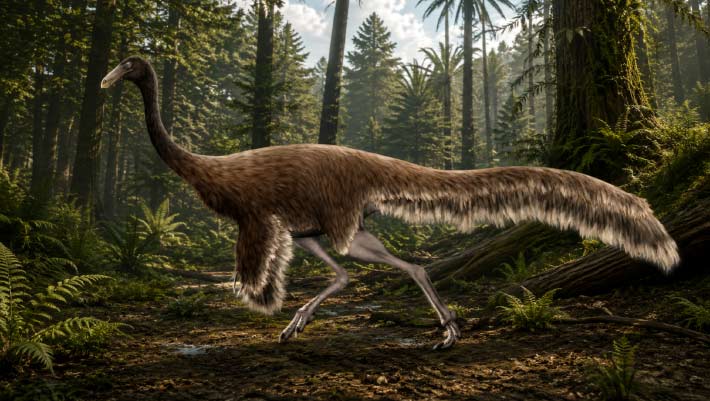
Paleontologists in Canada say they have recovered a dinosaur tail vertebra from 75- to 80-million-year-old marine rocks on a small island off the coast of British Columbia, providing the clearest evidence yet that bird-like ornithomimosaurs once roamed the ancient Pacific coastline of North America.
The post Rare Ostrich-Like Dinosaur Fossil Found on Canadian Island appeared first on Sci.News: Breaking Science News.
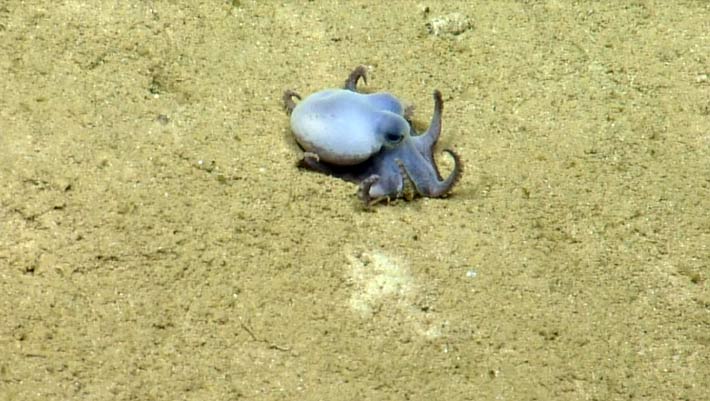
A single female specimen, collected 1,773 m below the surface near Darwin Island, has been described as a new species of deep-sea octopus, and it doesn’t fit neatly into the Megaleledonidae family it belongs to, forcing a revision of the textbook definition.
The post New Species of Octopus Discovered in Deep Waters near Galapagos Islands appeared first on Sci.News: Breaking Science News.

