Login

Best Free AI Tools for Work in 2026: ChatGPT, Claude, and More
A senior Android security leader is leaving Google after criticizing its Pentagon AI work, environmental commitments, and internal transparency.

A Apple confirmou na WWDC 2026 todos os modelos compatíveis com o iOS 27, e a boa notícia é que nenhum iPhone ficou para trás face à versão anterior. Já a nova Siri com IA só chega aos modelos mais recentes, mas apresenta uma justificação para tal.
The post iOS 27: Há 31 modelos de iPhone compatíveis com o novo sistema operativo da Apple. Veja se o seu está na lista appeared first on Tek Notícias.

Using NASA’s Chandra X-ray Observatory and ESA’s XMM-Newton satellite, astronomers identified a possible remnant of ancient stellar explosion just a few dozen light-years from Sagittarius A*, a supermassive black hole at the center of our Milky Way Galaxy.
The post Astronomers May Have Found Supernova Remnant near Milky Way’s Central Black Hole appeared first on Sci.News: Breaking Science News.
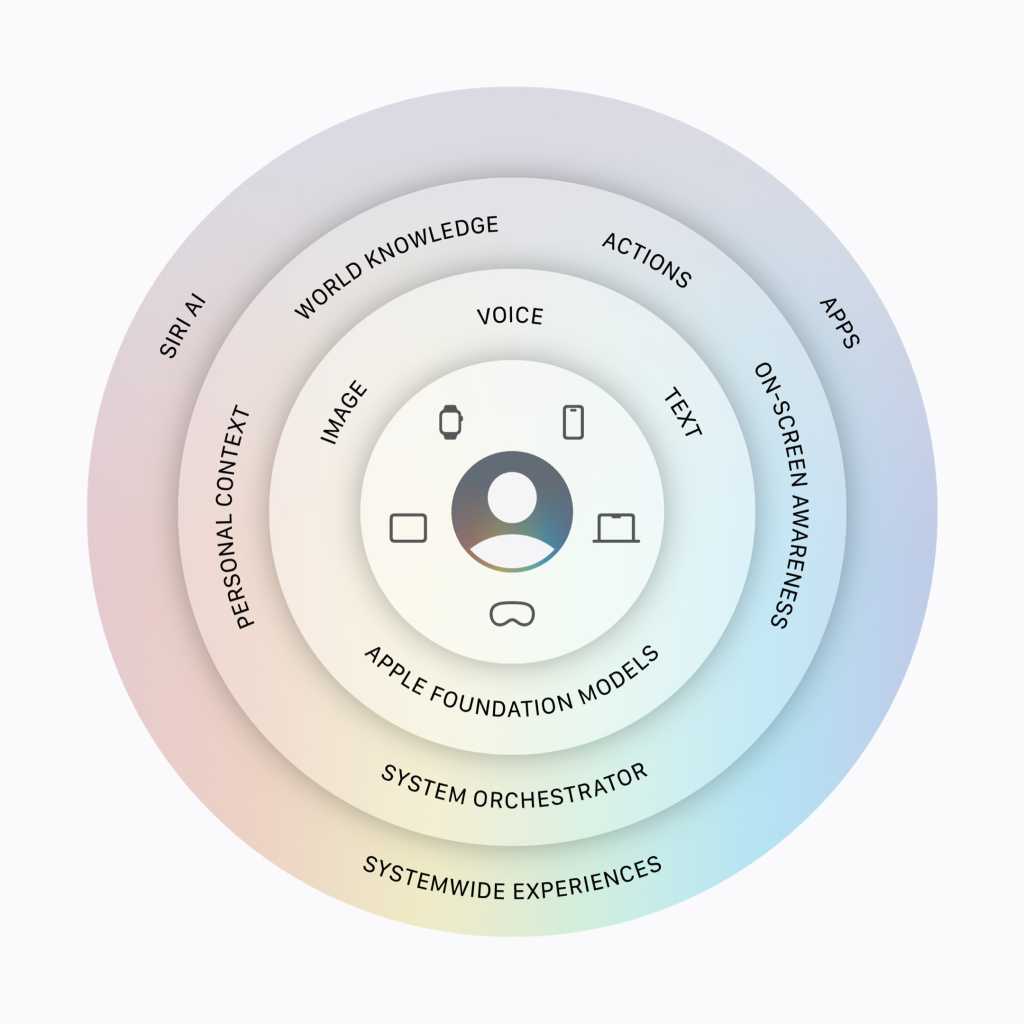
Apple’s executives have been taking questions, hosting seminars, seemingly working around the clock to stress one very important thing: Apple is not using a white label version of Google Gemini to make Siri AI happen. They just pooled resources to get there.
The new Siri AI is faster, more accurate, offers powerful contextual capabilities and shows how Apple has leap-frogged into a good peer position in an AI race critics felt it had already lost. Its market scale — even without the EU — is huge. For most consumers, Apple Intelligence and Siri will continue to be their primary/first engagement with artificial intelligence on a device.
Getting there took a lot of work, and Apple needed Google to get it done. Though there is still some confusion about what that means, Apple’s software chief tried to explain it this week. “We use none of the models that Google deploys to their customers, nor do we use the infrastructure and means by which they employ models to their customers,” Craig Federighi said in a presentation at WWDC.
Apple is not even using Google Search as the foundation of its system, he said. “This is the amount of Google Assistant we use,” Federighi said, pointing at an empty chart. “Nothing.”
What makes this hard to understand is that we all know Apple partnered with Google to build Siri AI; back in January, we were told the next generation of Apple Foundation Models would be based on Gemini models and cloud technology. So, how can we have moved from partnership hero to usage zero?
The answer is, we didn’t. What happened is that Apple built its new Apple Frontier Models (AFMs) (the AI inside Siri AI) by training them using proprietary Apple data and reinforcement learning and then refined those models using “outputs from Google’s Gemini Frontier models.”
In other words, Apple used Google Gemini to help improve its own models, which means the models themselves, the AI in Siri AI, are Apple’s — but they were trained with help from Gemini. They are not white label iterations of those Google models.
Apple also hit a second snag. Its very best model (AFM 3 Cloud Pro) requires more processor power to run than Apple could deliver using its own cloud-hosted Private Cloud Compute servers. Now, we know Apple doesn’t like using other people’s stuff. But it’s a realistic company that understands it sometimes must, and just as it uses AWS to support some of its services, it moved to adopt Google cloud services and Nvidia processors to drive the most demanding requests.
Apple also developed a technological solution that means it can claim the interaction remains just as private as if it were run on your device. Apple has made it possible for independent security experts to confirm this and says it is the only company that can deploy software on those servers, with strong security to ensure your device only interacts with those servers when you want it to. So far, no one has broken this protection.
I came across an interesting report in which Tekonyx Founder and Chief Research Officer Sid Nag explained the significance of Apple finding a way to expand its Private cloud Compute infrastructure beyond its own data centers.
“Apple is effectively arguing that trust in AI systems should come from cryptographic and architectural guarantees rather than trust in the cloud provider itself,” he told Fierce. Where enterprises have faced a choice between access to powerful AI or privacy, Apple has introduced a new solution he called “portable trust.” This could conceivably become a new IaaS offering from the companies involved over time.
So, while Apple’s models were built with Google’s help, and while its most advanced models run with support from Google and Nvidia, the models are Apple’s alone.
It’s good for Google, of course. Apple is paying for this use, which helps the search giant claw back some of the value of its massive, muti-billion-dollar AI infrastructure investment. It’s not clear how much Apple is paying; earlier this year, the $1 billion figure was bandied around. But Apple’s decision to tie usage to iCloud subscriptions in some hitherto undisclosed way hints that the deal may also see some token-based usage charges on top of the basic Apple fee. I’ve not come across any details, but that’s what I surmise based on the size of Apple’s ecosystem and the growing realization of how quickly users can consume AI capacity.
AFM 3 Cloud Pro is one of five Apple Frontier Models driving Siri AI. Here’s how Apple describes those five models:
AFM Core Advanced is impressive in its own right, because Apple has managed to cram a 20-billion-parameter model onto a smartphone. It has done this by using a sparse architecture, which means it activates just 1 to 4 billion parameters at a time depending on the request. It is, however, only available to Apple’s most powerful systems — iPhone 17 Pro, iPhone 17 Pro Max, iPhone Air, M4 or later iPad, M3 or later Mac with 12GB+ memory.
All five were built using the same common foundation, which was then specialized to reflect the proposed use of that model. It’s interesting to look at the human evaluation tests Apple ran to test how well these models performed; they demonstrate impressive improvement on the company’s original models, effectively justifying the decision to work with Gemini.
You can follow me on social media! Join me on BlueSky, LinkedIn, Mastodon and subscribe to The Core.

The US Federal Communications Commission (FCC) teamed with federal, state and local agencies to ensure secure communications across host cities as the FIFA World Cup 2026 football tournament kicked off.
FCC chair Brendan Carr welcomed the start of matches yesterday (11 June), stating the commission’s public safety, enforcement and radio engineering experts collaborated with the White House Task Force, private sector communications providers and stadium operators to support robust networks throughout the tournament.
“This event will be an incredible showcase of America’s strength and spirit as we celebrate the nation’s 250th birthday,” Carr said, also thanking Task Force Executive Director Andrew Giuliani and the FCC’s own staff for their work on the effort.
On the public safety front, the FCC has been preparing for rapid interference detection and response during matches, helping ensure first responders and emergency communications systems operate without disruption.
The commission has also been working with federal, state and local partners to support lawful counter-drone operations under the Safer Skie Act and has issued 10 Special Temporary Authorizations for wireless devices and broadcast operations to aid global media coverage.
Wireless interference has been a central focus given the extraordinary demand placed on networks when large crowds converge in concentrated areas.
The FCC collaborated with industry partners to support high-capacity wireless and 5G connectivity in and around host venues, ensuring reliable operations for broadcasters, wireless carriers and media organisations.
To monitor the radio spectrum in real time, the FCC deployed a networked constellation of advanced spectrum sensors across all US venues, to enable remote monitoring and rapid identification of harmful interference.
The FCC is ensuring spectrum requirements for broadcast operations, public safety communications, event security and national security preparations are fully supported at the tournament locations.
It also conducted advance planning, testing and coordination activities with host cities ahead of the tournament.
The FCC noted these efforts lay the groundwork beyond the World Cup itself, strengthening national communications coordination frameworks in preparation for the 2028 Olympics and other future major events.
The post FCC bolsters networks for FIFA World Cup 2026 appeared first on Mobile World Live.

In Episode 82 of the Sceptic: The Free Speech Union's Dr Ben Jones on the causes of rising civil unrest, and Prof Gwythian Prins on how green zealotry leaves Britain exposed to its enemies.
The post The Sceptic | Episode 82: How Britain Became an ‘Island of Strangers’ and the Security Risks of Net Zero appeared first on The Daily Sceptic.
Under-the-hood AI changes and efficiency improvements at the OS layer across Apple’s platforms are certainly the highlights at WWDC 2026. But there have also been significant changes IT admins will need to prepare for, particularly around Declarative Device Management (DDM).
Apple warned us this was coming, but macOS 27 will not support Intel at all. The company will deliver three more years of security updates for those devices, and you will still be able to use Rosetta to get Intel app binaries to run legacy apps on Apple Silicon. But if you still rely on any Intel apps or Macs, it really is time to plan your upgrade.
It was the future once, but when it comes to Declarative Device Management (DDM) that future is now. Apple is removing all its legacy MDM mechanisms to replace them with DDM. “For IT admins, WWDC 2026 is a migration year,” wrote Fleet. “Apple is removing legacy MDM mechanisms and replacing them with Declarative Device Management (DDM). Some of it is urgent. Some of it just needs a plan.”
It’s a great step, though IT admins will need to ensure they aren’t relying on legacy MDM to handle any of their device fleets. That’s a particular issue around software and security update management. In most cases, your MDM provider has probably already introduced DDM support. But if you aren’t certain, now is the time to find out before your systems fail.
Apple has also added new DDM tools across various systems, apps, identities and more. Some of the highlights include:
“One of the new features I’m most excited about is the ability to set permission defaults for managed apps and websites viewed in Safari,” said Adam Henry, senior product manager at Iru. “While the user is still prompted to allow these permissions, we can now present those requests as a unified prompt immediately upon app launch, along with a custom explanation as to why those permissions are important — think a teleconferencing app or website that always needs access to camera and microphone.
“Overall, I think this is a much more user-friendly solution that will likely increase permission compliance.”
Although, Apple has introduced new management tools for AI, it’s important to remember some advice from Joel Rennich, senior vice president for product management at JumpCloud: “Traditional IAM models assume users directly interact with applications, but agentic systems change that assumption. AI intermediaries can now retrieve data, execute workflows, and make decisions across systems. Enterprises will need identity frameworks that govern both human and non-human actors consistently.”
He also noted: “The separation between where data lives and where it is used becomes increasingly invisible to the user. Intent becomes the primary input, not app selection.”
At the same time, the evolution of AI on Apple’s devices promises a lot for enterprise users. Matt Vlasach, Jamf senior vice president, enterprise products and solutions engineering, told me: “Most notable for me was Siri AI and the push towards on-device and more capable models that can do more with user context. While obvious for consumer use cases as illustrated in the keynote, the opportunity to evolve this to the work context using a more advanced Apple Intelligence framework is an exciting evolution.”
Apple has finally eradicated Apple Filing Protocol (AFP) in macOS. This will be an issue for any business that uses legacy Time Capsule or NAS storage devices, though in most cases those products are already obsolete and should be replaced. This is unlikely to be a huge challenge for most, given that Apple began using SMB as its primary file sharing protocol back in 2013 and support for AFP server disappeared in 2020. (Time Capsule fans might want to take a look at the TimeCapsuleSMB open-source project.)
Apple will introduce a new remote log collection capability that integrates directly with the company’s support infrastructure. So, when AppleCare support engages with an organization’s IT team, they can provide an enhanced logging token which can be shared to get the device to collect diagnostic logs to upload to AppleCare. You just know this will expedite remedy.
As I noted here, there are some significant Single Sign-On (SSO) updates; two that caught my eye include:
Another change affects the system processes used in device management at a network level. Apple now requires that you use TLS 1.2 or later. If you or your MDM systems are not doing so, get ready for things to break. (Apple has published a support article to help IT test their network environments in preparation for this change.)
Apple also announced that IT admins will be able to purchase and manage app subscriptions directly in Apple School Manager and Apple Business Manager. And it introduced a managed migration feature that should help migrate data, while preserving device management enrollment and settings.
I’ve really only offered a flavor of some of the IT improvements introduced at WWDC. To find out more, watch the Apple sessions on “What’s new in managing Apple devices” and take a look at the Apple Platform Deployment guide; it should be updated before the new operating systems ship this fall
You can follow me on social media! Join me on BlueSky, LinkedIn, Mastodon and subscribe to The Core.

O próximo processador de IA da Google terá uma arquitetura de fabrico dividida. A TSMC deverá produzir o núcleo computacional, cabendo à Samsung o fabrico do componente de interligação à memória. A Intel poderá também entrar na equação com a produção da TPU.
The post Google quer reduzir dependência da TSMC e negoceia a produção de um novo chip de IA com a Samsung e Intel appeared first on Tek Notícias.