New research shows that wildlife reacts differently to human presence than to human-made landscapes. For centuries, people have transformed landscapes, forcing wildlife to adjust to a rapidly changing world. New research suggests that animals are not only responding to altered habitats, but also to the direct presence of humans. Researchers from UC Santa Barbara, the [...]
Hundreds of camera-trap records from Bolivia and Peru suggest the short-eared dog (Atelocynus microtis), one of the world’s least-known canids and one of Latin America’s least-known carnivores, may be thriving in intact upland forests.
Scientists discovered a surprising gut-heart connection that may help prevent sleep apnea from causing serious cardiovascular damage. Sleep apnea affects millions of people worldwide and is known to raise the risk of serious cardiovascular problems. Now, researchers have identified a potential new treatment target that could help reduce some of the condition’s harmful effects. Findings [...]
Researchers have obtained the first-ever photographs of the Cozumel dwarf fox (Urocyon sp.), an elusive dwarf fox living on the Caribbean island of Cozumel, off Mexico’s Yucatán Peninsula. Captured in September 2023, the images provide the first confirmed evidence since 2001 that the elusive animal still survives on the island.
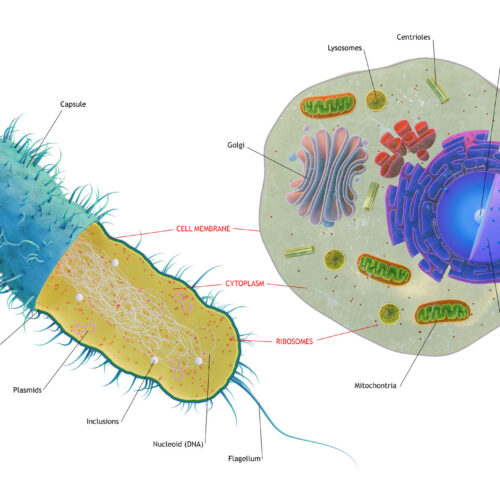
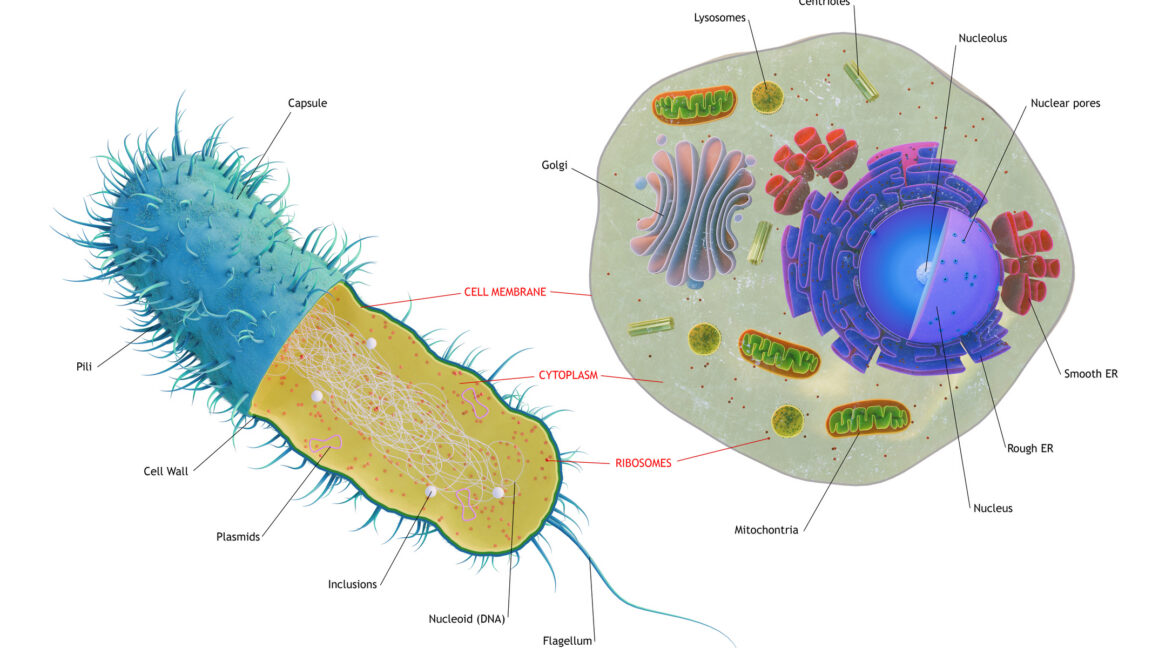
We tend to view ourselves and the complex cells that build us as a distinct branch of the tree of life from the compact, seemingly featureless cells of bacteria and archaea. But we've found that our genome is actually a hybrid, a mish-mash of genes from bacteria and archaea, along with some that have evolved in our own lineage.
Scientists gradually settled on a simple explanation for this: the first complex cells were the product of a fusion between archaeal cells and bacteria, with the bacteria ultimately evolving into the mitochondria, a chemical-power-generating structure that still retains a bit of its own genome. Over time, many of the other bacterial genes were transferred to the nucleus of what was becoming what we now call a eukaryote, intermingling with the archaeal genes there.
But a new study has taken a careful look at some of the genes shared by all eukaryotes and comes to the conclusion that the reality is a little more complicated and that there were several waves of gene transfers from bacteria. The big picture of a merger between bacteria and archaea is still right, but it was only part of a picture where gene transfers among species were commonplace.
The Cozumel dwarf fox, a rare species previously known only from secondhand reports and fossil records, has been discovered alive on Cozumel, a small Caribbean island off the eastern coast of the Yucatán Peninsula.
Researchers published the announcement in Neotropical Biology and Conservation, describing the rescue and identification of the rare dwarf fox before it was released back into the wild. They caution that this rare species, previously believed extinct, faces extreme danger from a host of threats.
The Cozumel Dwarf Fox
As one of the rarest canids on the planet, the species had never before been documented alive by scientists. The Cozumel dwarf fox (Urocyon sp.) is a close relative of the gray fox (Urocyon cinereoargenteus), which is found on the Mexican mainland. After several millennia of isolation on the island—possibly predating Maya settlement—the Cozumel fox underwent insular dwarfism, evolving to only 60–80% the size of its mainland relatives.
Evidence for the animal has been remarkably scarce, and while subfossil remains provided conclusive proof that the species once existed, there had not even been a secondhand report since 2001, leading many researchers to assume it was extinct.
That changed on September 14, 2023, when members of the public reported a disoriented fox along a coastal highway near kilometer marker 29.
Responders from the Fundación de Parques y Museos de Cozumel recovered the animal and cared for it for three days while monitoring its health. On September 17, 2023, the fox was released into the Laguna Columbia State Reserve, where it would be protected from traffic and other hazards.
The sighting marks the first time the Cozumel fox has been formally documented by scientists and recognized as taxonomically distinct.
The Cozumel dwarf fox, believed long extinct, was finally recorded by scientists. Credit: Rafael Chacón
Cozumel Fox Habitat
Although the sparse evidence of these creatures may not be enough to conclusively map their habitat, the researchers have some idea where the Cozumel fox typically resides.
“Historical sightings have been concentrated around the community of El Cedral and near the entrance of Punta Sur Ecological Park, which is where this photographic record also took place,” lead author Travis Bayer of Pathos Wildlife told The Debrief. “No sightings have ever been observed further north than El Cedral, which leads us to believe that may be the extent of their range on the island, which would also be very concerning due to the already limited space on an island.”
“If their home ranges are restricted to the Southern end of the island, they may have home ranges around 100 km2,” Bayer continued. “If they associate with only wetland/mangrove habitats, the size gets considerably smaller and more concerning for their conservation, as those habitats mainly only occur along the coastline and are at high risk for development for restaurants and resorts.”
Staying Hidden
Given that Cozumel is a popular tourist destination known for its beaches and resorts, it may seem surprising that an animal the size of a fox could remain undetected for so long. Bayer says part of the explanation lies in the island’s difficult terrain and the species’ elusive behavior.
“Cozumel is home to many different terrestrial ecosystems, many of which are not easily accessible either,” Bayer explained. “Habitats like the mangrove forests and wetlands are almost impenetrable to us, but to a fox, easily traversable.”
Image Credit: Rafael Chacón
“Also, not that many people are out there looking for this animal, as the public awareness of it was extremely low, and the scientific investment was limited to one primary publication and a few brief mentions in others,” he added.
Additionally, the combination of grey foxes’ typical elusiveness, their nocturnal habits, and the highway cutting through their habitat being closed at night all combine to make the species easy to miss.
Preserving the Cozumel Fox
“In collaboration with a team of local biologists, led by Rafael Chacón, we have begun developing an emergency conservation action plan for the Cozumel fox aimed at locating remaining individuals, estimating population size, identifying critical habitat, and determining immediate threats,” Bayer said.
Ensuring that the species does not disappear again is now a top priority. Researchers consider the fox critically endangered, with its limited habitat threatened by development, invasive species, and natural disasters.
Several introduced animals also pose significant risks. These include invasive boas released during a 1971 film production that have since spread across the island. Domestic dogs and cats may also threaten the fox through competition, predation, or disease transmission. In addition, predators such as ocelots and margays were introduced as exotic pets before eventually being released into the wild.
“Using thermal drone surveys, large-scale camera trap networks, and other advanced monitoring technologies, we aim to rapidly generate the data needed to guide immediate conservation intervention,” Bayer said. “Simultaneously, we are collecting the evidence necessary to formally describe the animal as a new and distinct species deserving of critically endangered recognition and legal protections.”
“One of the most important takeaways from this research is that species can quietly disappear without the world even realizing they are gone,” Bayer concluded.
“We often think extinction is something dramatic and obvious, but in reality, it can happen gradually and silently, especially for rare species living in remote or understudied habitats.”
Ryan Whalen covers science and technology for The Debrief. He holds an MA in History and a Master of Library and Information Science with a certificate in Data Science. He can be contacted at ryan@thedebrief.org, and follow him on Twitter @mdntwvlf.
Fog is a living ecosystem for bacteria, rather than just a sterile cloud of mist, and may provide an unexpected buffer against harmful pollution.
In a recent paper published in mBio, an Arizona State University team led by then PhD candidate Phi Thuong Thuong Cao, now a graduate, revealed that bacteria are present in fog that cleans the air at a surprising rate, but also poses a possible risk to drinking water collection.
While scientists have long known that bacteria exist in fog, the researchers were surprised to find that the bacteria are not merely present but form an active, if short-lived, ecosystem.
Investigating the Mysteries of Fog Bacteria
“There’s very limited knowledge about what kinds of bacteria are present in fogs, which are like clouds at the ground level,” Cao said.
To probe the mystery of fog bacteria further, Cao focused on two questions: what kinds of bacteria are present, and whether they are active. Discovering growing bacteria within fog droplets elevates fog from a simple atmospheric phenomenon to a biological habitat, a major shift in how researchers have traditionally viewed it.
Fog is composed of tiny droplets of water, each less than a tenth the width of a human hair and too small to fall to the ground. These minuscule droplets form around particles, which can occasionally be living microbes. Although fewer than 1% of droplets contain bacteria, that still represents a substantial population, with bacterial concentrations roughly comparable to those found in the ocean. About 10 million individual bacteria inhabit just a thimbleful of fog water.
A major challenge in studying fog is the wind. Sampling the same location before, during, and after a fog event can produce misleading results because airborne particles are constantly being transported and mixed. For this reason, Cao focused on radiation fog, which forms in still air near the ground as temperatures cool. This allowed the team to minimize complications associated with sample collection.
Standout Bacteria
In Cao’s investigation, one particular type of bacteria, methylobacteria, predominated within the fog droplets. Intriguingly, samples collected during fog events contained far more bacteria than samples of dry air gathered beforehand, suggesting that these microbes thrive in foggy conditions. Among the compounds methylobacteria consume are simple carbon-based molecules, including pollutants such as formaldehyde. In a laboratory setting, Cao was able to observe and experiment on samples collected in the field.
“We observed them under the microscope to see that, yes, the bacteria are getting bigger, and they’re dividing, so there is growth,” Cao explained. “We also found that they’re using the formaldehyde as food to support their growth.”
Even more surprising was the rate at which methylobacteria were breaking down formaldehyde—far faster than they could consume it. This led the team to conclude that because formaldehyde is toxic to the bacteria, they were converting much of it into carbon dioxide to make their environment safer, doing so even faster than they could use it as a food source.
Potential Hazards
The team’s research suggests that fog may play a more important role in Earth’s ecosystems than previously understood, serving as both a temporary aquatic habitat and a natural filter for harmful pollutants.
The implications of the findings are varied. Harvesting fog for drinking water and crop irrigation is already practiced in some regions of the world. This study suggests that such water may contain more bacteria than previously recognized, potentially requiring additional filtration. The risk to most people appears minimal; researchers say only a slight risk may exist for individuals with severely compromised immune systems who are exposed to fog. However, more work is needed to determine the potential benefits and drawbacks of consuming water collected from fog.
Harvesting fog for drinking water and crop sustenance is an ongoing practice. This work shows that water may be full of bacteria, requiring more filtering than previously understood.The risk to most people is very minimal; only a minor risk exists to people with heavily compromised immune systems from breathing in fog. However, the researchers say that more work is needed to determine the benefits and harms of drinking fog water.
“It’s relatively new that people are starting to look at biological activities in clouds, so there’s still a lot which we don’t understand,” said co-author Pierre Herckes. “At nighttime, for example, there isn’t that much atmospheric chemistry going on. Chemistry is largely driven by the sun and by light. But if the bacteria are still doing their thing even during the nighttime, they can be important.”
Many questions remain unanswered in the wake of this discovery. Cao’s team focused on a single type of fog, leaving open which bacteria thrive in other kinds of fog in other locations, what they eat, and how they impact air quality, all of which will require further study.
“The sky’s the limit,” co-author Ferran Garcia-Pichel says. “No pun intended.”
Ryan Whalen covers science and technology for The Debrief. He holds an MA in History and a Master of Library and Information Science with a certificate in Data Science. He can be contacted at ryan@thedebrief.org, and follow him on Twitter @mdntwvlf.
One of the most surprising and remarkable discoveries in recent scientific history has been CRISPR. Short for Clustered Regularly Interspaced Short Palindromic Repeats, CRISPR is a form of immune system that evolved in bacteria more than a billion years ago to defend against persistent viral threats. Under attack, bacteria can snip a small fragment of a virus’s DNA, store it in the CRISPR region…
Ancient asteroid impacts may have done more than reshape Earth’s surface. For decades, asteroid impacts have been viewed mainly as agents of destruction. But on the young Earth, they may have done something far more surprising: helped create some of the planet’s first habitable environments. A new study from Southwest Research Institute (SwRI) suggests that [...]
The asteroid impact that wiped out the dinosaurs 66 million years ago is often remembered as one of the most destructive events in Earth’s history. However, new research suggests that the same catastrophe may also have created an underground environment where life could thrive for millions of years. An international team of scientists has found […]
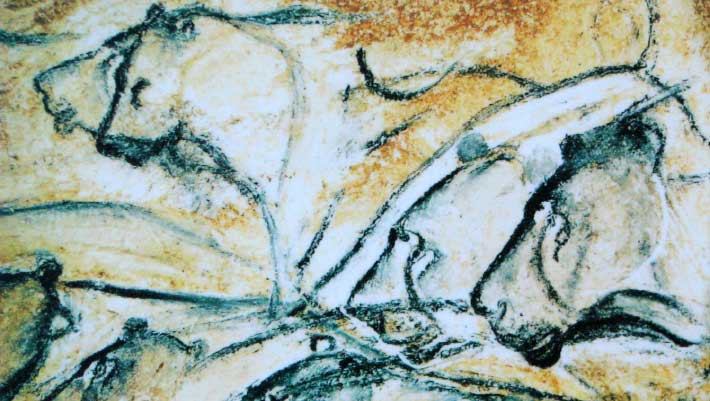
The extinct Eurasian cave lion (Panthera spelaea) and today’s African and Asian lions (Panthera leo) belong to separate evolutionary lineages that diverged roughly 1.7 million years ago -- far earlier than previously thought, according to an analysis of 12 cave lion genomes spanning more than 100,000 years.
Brain scans have uncovered two biologically distinct forms of autism hidden within the spectrum. An international team of researchers has identified at least two biologically distinct forms of autism by examining how different regions of the brain communicate with one another. The findings could help advance more precise and personalized approaches to autism care and [...]
In new research, scientists sequenced and analyzed chromosome-level genomes of the Linnaeus’s two-toed sloth (Choloepus didactylus) and the southern anteater (Tamandua tetradactyla).
Researchers have uncovered a previously underappreciated mechanism involved in Alzheimer’s disease and developed a compound that interrupts it. For decades, Alzheimer’s research has largely focused on amyloid plaques and tau tangles, the protein abnormalities that accumulate in the brain as the disease progresses. Yet despite billions of dollars in research and numerous drug development efforts, [...]
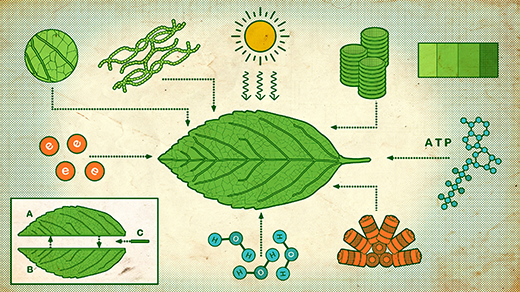
Every second, trillions of watts of solar energy — more than 10,000 times the energy used by modern humans — blast the Earth’s surface. Around 2.4 billion years ago, life took an evolutionary leap when bacteria learned to harness these photons to break apart water molecules and stitch carbon atoms into sugars. Along the way, they flooded Earth’s atmosphere with oxygen and rewrote the rules of life.
Rice is one of the world’s most important foods, providing a daily source of calories for nearly half of the global population. It is also an important source of magnesium, a mineral that helps support healthy muscles, nerves, bones, and energy production in the human body. Scientists have long known that magnesium plays an important […]
The discovery of Typhlichthys styx shows that cave-adapted species can continue evolving and splitting into new species, with underground aquifers playing a crucial role in that process. Researchers at Yale have identified a previously unknown species of eyeless cavefish, a finding that challenges the long-standing view that caves and other underground habitats are evolutionary dead [...]

 Login

 New research shows that wildlife reacts differently to human presence than to human-made landscapes. For centuries, people have transformed landscapes, forcing wildlife to adjust to a rapidly changing world. New research suggests that animals are not only responding to altered habitats, but also to the direct presence of humans. Researchers from UC Santa Barbara, the [...]