Login

Ukrainians Turned a Soviet-era BRDM-2 Into a Combat Robot
Ukraine is still using a lot of Soviet military equipment, and this is not going to change any

A shelter-in-place order issued at the Pentagon on Thursday has now been lifted, officials have confirmed, following what was characterized as a “hazardous materials incident”.
Earlier on Thursday, firefighters arrived at the building, which serves as the headquarters of the United States Department of War, in response to concerns involving air quality at the facility.
“Earlier this morning, Pentagon occupants were notified of a potential air quality issue, prompting immediate precautionary safety measures and evaluation,” said Pentagon spokesman Sean Parnell in a posting on X.
“Subsequent testing confirmed no hazard exists, and normal operations have resumed,” Parnell said. “We express our sincere appreciation to the first responders for their swift actions to ensure the safety of all personnel.”
In an earlier post, Parnell said that the Pentagon houses “sophisticated systems to ensure the safety of the building and its occupants,” which had reportedly detected “an air quality issue necessitating precautionary measures until we determine its significance.”
In response to the unspecified air quality issue, the Department of War observed what Parnell characterized as “standard protection protocols, including a shelter-in-place order for the affected area.”
“Response teams are in place and ready to support building occupants,” the early statement read.
Separate postings on social media from Arlington County Fire and Rescue indicated that its personnel were on the scene supporting hazmat teams while the incident was under investigation.
Presently, it remains unclear what the issue was that prompted the concerns at the Pentagon, where close to 30,000 U.S. military and civilian personnel are employed.
This is a developing story, which may be updated as new information is made available.
Micah Hanks is the Editor-in-Chief and Co-Founder of The Debrief. A longtime reporter on science, defense, and technology with a focus on space and astronomy, he can be reached at micah@thedebrief.org. Follow him on X @MicahHanks, and at micahhanks.com.

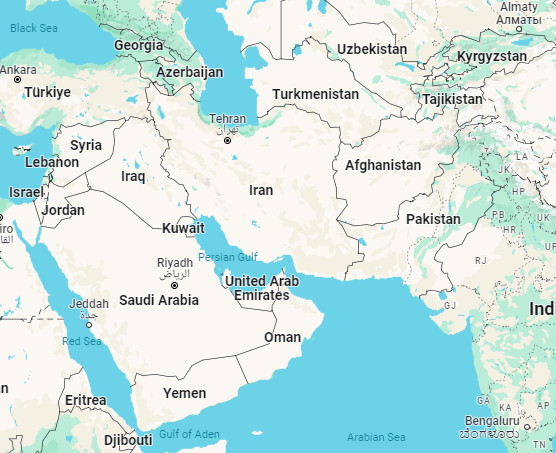
Welcome to this edition of The Intelligence Brief… This week, the ongoing conflict between the United States and Iran appears to be edging closer to a broader regional crisis, as both nations exchange new rounds of military strikes amid fading hopes for diplomacy. In our analysis, we’ll be looking at 1) the latest U.S. and Iranian attacks near the Strait of Hormuz and across the Gulf region, 2) President Trump’s escalating rhetoric and warnings of additional military action targeting Iran’s oil infrastructure, 3) the growing humanitarian and economic consequences of the conflict, including disruptions to shipping and concerns over civilian infrastructure, and 4) why analysts increasingly fear that continued escalation could draw the region closer to a wider war with global repercussions.
“The strikes are in response to Iran’s unwarranted and continued aggression. U.S. forces remain vigilant, lethal, and ready.”
If you enjoy the news and perspectives offered by The Debrief, make sure that you aren’t missing our stories by making us one of your “preferred sources” on Google News. You can simply follow this link to add The Debrief to your list of favorites, and you can read more about Google’s preferred sources in our article here.
This week, a clear end to the ongoing U.S. conflict with Iran still seems remote, as the United States and Iran engaged in another round of military strikes.
Early this morning, strikes exchanged between the nations’ military forces signaled the potential that a dangerous new phase of the conflict may be approaching, after an initial several months of efforts aiming to avoid escalation to a broader regional war.
Among the most recent attacks, several locations near the Strait of Hormuz were targeted, as ongoing warnings by President Trump urged Iranian officials to heed U.S. warnings and bring the conflict to an end.
In response to the attacks, Iran also launched several strikes on targets linked to U.S. assets that include military facilities in Kuwait and Bahrain. The Iranian strikes prompted air-defense activity throughout the region, along with airspace restrictions that have been temporarily elevated in the Gulf.
Amid the strikes, Iranian officials claimed that all maritime traffic had been closed off from passage through the Strait of Hormuz. However, U.S. officials disputed the claims on Thursday.
The renewed violence follows several strikes confirmed by U.S. Central Command late on Wednesday.
“CENTCOM forces launched strikes on Iranian military surveillance capabilities, communication systems, and air defense sites across Iran. U.S. Marine Corps, Air Force, and Navy assets fired precision munitions on Iranian targets that posed a threat to U.S. forces and international commercial ships transiting regional waters,” read a posting on the official U.S. Central Command X account.
Early on Thursday, President Trump also warned about further military action by the United States against Iran.
“The United States will be hitting Iran (Whose Navy, Air Force, Radar, Anti Aircraft, and all other forms of Defense, together with most of its offensive capability, are GONE!), VERY HARD TONIGHT,” President Trump wrote in one of his characteristically bombastic social media postings on Thursday.
Trump also claimed that in “the not too distant future” the U.S. would be capturing Kharg Island, along with other locations that play a key role in the oil infrastructure of the region, with the broader plan to “assume total control of their Oil and Gas Markets, much like we have with Venezuela, which is working out brilliantly for both Venezuela and the United States of America.”
Beyond the typical hyperbolic phrasing, the President’s post on Thursday appeared to indicate locations that could become future targets, although similar ongoing threats have repeatedly been made by Mr. Trump in recent weeks, in an effort to encourage Iranian officials to agree to U.S. demands that aim to curb the country’s nuclear ambitions—a significant goalpost the U.S. has maintained in efforts to end the war.
Efforts to bring about a cease-fire agreement have been in the works since April, although Iran’s foreign ministry now says such efforts have been rendered “meaningless” by the continued American strikes.
Firing back, U.S. officials, including Secretary of War Pete Hegseth, have characterized the attacks as being “part of an effort to pressure Tehran into accepting negotiations over its nuclear program” amid broader security concerns the U.S. is attempting to reconcile.
However, more broadly, the conflict is also having a far wider economic and humanitarian impact. Recent U.S. military operations that have targeted vessels suspected of transporting Iranian oil have reportedly struck multiple commercial ships in recent days, with India confirming that three of its citizens were killed aboard one tanker.
“CENTCOM forces have disabled nine non-compliant vessels, redirected 135 ships that complied, and allowed 42 vessels supporting humanitarian aid to pass since initiating the blockade on April 13,” U.S. Central Command wrote in an update on Thursday.
“The blockade is being enforced impartially against vessels of all nations entering or departing Iranian ports and coastal areas, including all Iranian ports on the Arabian Gulf and Gulf of Oman,” the posting added.
Based on satellite imagery reviewed by analysts, the potential that some of the recent strikes may have damaged drinking-water infrastructure in southern Iran has also been raised, increasing humanitarian concerns.
Financial markets are also reacting to the growing instability. The European Central Bank cited war-related inflation pressures as it raised interest rates, while the World Bank warned that rising energy costs linked to the conflict are slowing global economic growth to its weakest pace since the COVID-19 pandemic.
Overall, as the ongoing military operations by both nations continue, and with few signs of diplomacy on the immediate horizon, concerns continue to mount over whether a broader regional crisis—one the U.S. has hoped to avoid—could now loom nearer than at any time before.
That concludes this week’s installment of The Intelligence Brief. You can read past editions of our newsletter at our website, or if you found this installment online, don’t forget to subscribe and get future email editions from us here. Also, if you have a tip or other information you’d like to send along directly to me, you can email me at micah [@] thedebrief [dot] org, or reach me on X: @MicahHanks.

Here are the top stories we’re covering right now…
John Healey has resigned as defence secretary over Sir Keir Starmer’s defence investment plan, accusing the Prime Minister of failing to "meet the moment" over his long-delayed proposals to boost military spending.
The post John Healey Quits as Defence Secretary Over Starmer Military Funding Failure appeared first on The Daily Sceptic.
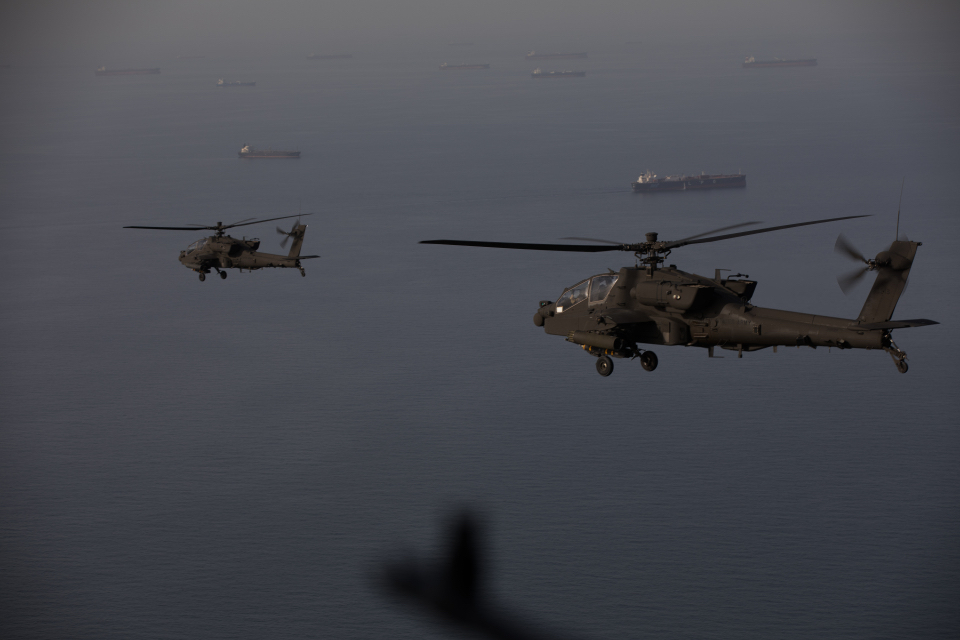
A US Army helicopter gunship was apparently struck by an Iranian Shahed drone before going down near the Strait of Hormuz—but it's unclear whether the one-way attack drone was deliberately aimed or achieved more of a lucky accidental strike.
Axios correspondent Barak Ravid first reported an unnamed US government official’s comments that an Iranian drone had hit the US Army AH-64 Apache helicopter before the latter went down on June 8. The New York Times later confirmed that reporting through more anonymous US officials, including one official who said US military investigators were still evaluating whether the Iranian drone strike on the helicopter was intentional or accidental.
Iran has fired thousands of such Shahed drones against a wide range of military and civilian targets in the Gulf region since February 28, 2026, when the United States and Israel began the war by jointly attacking Iran with a barrage of bombs and missiles. But Shahed drones have mainly struck stationary targets such as Amazon data centers and energy facilities, sometimes hitting slow-moving commercial ships in the Strait of Hormuz.
© US Central Command
Maybe it's the midlife crisis talking, but the racist purge of straight white men from arts and entertainment has degraded all books and films, says Nick Dixon, and left behind only meaningless, endless culture war.
The post Why Books and Movies and Life All Suck Now appeared first on The Daily Sceptic.
The foundation of global space law that has governed human activity outside Earth for nearly six decades may be approaching a breaking point, according to a new analysis by two astronomers who argue that the legal framework created during the Cold War is inadequate for an era of commercial spaceflight, global political instability, and growing militarization of orbit.
The study, published in Frontiers in Space Technologies, argues that the 1967 Outer Space Treaty (OST), long regarded as the foundation of peaceful space exploration, confronts mounting challenges from transforming global power shifts, increasing orbital competition, and the emergence of private companies as dominant players in space activities.
Dr. John Barentine of the Center for Space Environmentalism and Dark Sky Consulting, along with Dr. Aparna Venkatesan, a physicist and astronomer at the University of San Francisco, contend that while the treaty remains valuable, it may not be able to address the realities of the modern space age.
Rather than emphasizing legal reforms alone, the paper raises a wider question about humanity’s relationship with space itself. Researchers suggest that future governance of outer space may require a fundamental shift away from viewing space as a resource to be exploited and toward treating it as an environment that deserves stewardship and protection in its own right.
Although neither author specializes in international relations or military affairs, they argue that astronomers are uniquely positioned to witness how changes in space policy increasingly affect scientific research and humanity’s future in orbit.
“We are living through a time in which Earth and near-Earth space are facing unprecedented levels of potentially irreversible change,” researchers write. “The modern history of our discipline is inseparable from the technological developments brought on by those who sought to make a warfighting domain of outer space.”
The Outer Space Treaty emerged during one of the most tense periods of the Cold War. Negotiated primarily by the United States and the Soviet Union, the agreement established several basic principles that still govern space activities today.
Among them are prohibitions on national sovereignty claims over celestial bodies, restrictions on the placement of weapons of mass destruction in space, and commitments to use outer space for peaceful purposes.
For decades, the treaty has been credited with helping prevent an outright orbital arms race. Yet, Dr. Barentine and Dr. Venkatesan argue that the document was written for a vastly different world. One in which only a handful of nations possessed launch capabilities and private space companies were virtually nonexistent.
Today, dozens of countries operate satellites, commercial firms launch rockets at unprecedented rates, and ambitious plans for lunar bases, asteroid mining, and cislunar infrastructure are rapidly moving from science fiction to reality.
Researchers argue that the treaty’s framers could not have anticipated many of these developments, leaving major legal and moral questions unresolved. They note that the treaty lacks robust enforcement mechanisms and provides no definitive mechanism for resolving disputes between member states.
A central theme of the paper is that warfare and space exploration have been intertwined from the beginning.
The authors trace the history of military activity in space back to the V-2 rockets of World War II and the launch of Sputnik in 1957, which demonstrated Soviet intercontinental missile capabilities as much as scientific achievement.
They also recount historical examples such as Soviet space weapons experiments, anti-satellite weapon testing by multiple nations, and the Strategic Defense Initiative of the 1980s, often remembered by its popular nickname, “Star Wars.”
In recent years, nations including the United States, China, India, and Russia have invested heavily in military space capabilities. Meanwhile, proposals such as advanced missile-defense architectures and growing concerns about anti-satellite weapons have renewed fears that space could become an increasingly contested military environment.
The researchers warn that global disputes on Earth are increasingly likely to spill into orbit, where the consequences could be especially severe. In contrast to terrestrial battlefields, debris generated by destructive actions in space can persist for years or even decades, threatening spacecraft belonging to many nations.
The study additionally highlights the rapid rise of private space companies as a challenge that the Space Treaty never fully anticipated.
Under Article VI of the Space Treaty, governments are responsible for overseeing activities conducted by non-governmental entities within their jurisdictions. However, the researchers argue that the explosive growth of commercial spaceflight is creating uncertainty concerning regulatory oversight and responsibility.
This issue is especially important for the United States, which currently accounts for more than half of all low-Earth-orbit launches and operates the majority of active satellites.
As commercial firms assume larger roles in launch services, communications infrastructure, and moon missions, questions about who bears responsibility for environmental impacts and operational decisions become increasingly important.
The researchers suggest that future governance systems must address not only nation-state behavior but also the increasing influence of private actors whose interests may not always coincide with long-term environmental management.
One of the study’s most important observations concerns the Moon.
Dr. Barentine and Dr. Venkatesan describe moon missions as an early glimpse of future space geopolitics. Five nations have already successfully landed spacecraft on the Moon, and plans for permanent infrastructure continue to accelerate.
Because the Space Treaty prevents claims of sovereignty but does not completely resolve questions about resource use and operational exclusion zones, the researchers warn that countries arriving first could effectively secure the most valuable locations for science, resource extraction, or future settlements.
That dynamic, they argue, risks creating new forms of competition despite the treaty’s intent to promote cooperation.
The same concerns extend to orbital congestion and space debris. Researchers note that nations with little or no involvement in space activities may nevertheless bear the consequences of falling rocket stages and orbital debris generated by major space powers.
Rather than advocating abandoning the Outer Space Treaty, the researchers ultimately argue that it remains the best framework currently available. However, they contend that future agreements must move past traditional geopolitical thinking.
The paper proposes drawing inspiration from the growing global “Rights of Nature” movement, which argues that ecosystems possess intrinsic value and deserve legal protections independent of human economic interests. Applied to space, such an approach would emphasize environmental health, reciprocity, and long-term stewardship over competition and exploitation.
Dr. Barentine and Dr. Venkatesan point to examples such as the peaceful management of Antarctica, international cooperation aboard the International Space Station, and partnerships among scientific institutions and Indigenous communities as models that could help shape future space governance.
Ultimately, they argue that the greatest threat to the space environment may not be legal loopholes nor technological restrictions, but humanity’s own willingness to abandon cooperation when competition becomes tempting.
“As our title reveals, the fundamental challenge lies in defending the space environment from failure of human goodwill and trust, rather than defending the space environment from the blind spots of current treaties,” researchers write. “The story of humanity in space is still being written, requiring innovation and determination from institutions and communities alike.”
Tim McMillan is a retired law enforcement executive, investigative reporter and co-founder of The Debrief. His writing typically focuses on defense, national security, the Intelligence Community and topics related to psychology. You can follow Tim on Twitter: @LtTimMcMillan. Tim can be reached by email: tim@thedebrief.org or through encrypted email: LtTimMcMillan@protonmail.com
 Built to track enemy submarines, the Navy’s underwater listening network inadvertently revealed that whales may be singing across entire oceans.