❌

Reading view

Près du détroit d’Ormuz, le crash de l’hélicoptère Apache américain a déclenché une opération inédite dans l’histoire

Pour la première fois dans l'histoire, deux membres d'équipage américains d'un hélicoptère AH-64 Apache tombé en mer près des côtes d'Oman ont été secourus par un drone naval de la marine américaine. Une manœuvre qui pourrait bien changer la donne lors d’une opération de combat.

  •  

HyImpulse signs letter of intent with Oman’s spaceport

The maiden flight of the HyImpulse SR75 from the Koonibba Test Range in South Australia in May 2024. Credit: HyImpulse

MILAN — Etlaq Spaceport, Oman’s commercial spaceport, and German-based small launch provider HyImpulse have signed a letter of intent to explore future launch-related activities and a potential operational presence in […]

The post HyImpulse signs letter of intent with Oman’s spaceport appeared first on SpaceNews.

  •  

Trump Muses About Government Taking a Piece of A.I. Companies

President Trump touched on what is an increasingly hot topic in Washington: how average Americans can get a piece of the tech industry’s A.I. windfall.
  •  

DMT Users Have Described Encounters with Non-Human Intelligences for Decades—A New Mathematical Framework Could Test Such Claims


In the literature related to the powerful entheogen dimethyltriptamine (DMT), it is often reported that individuals claim to have had encounters with what they perceived as non-human entities during their DMT experiences. Descriptions related to these powerful visionary experiences range from what some describe as insect-like forms and machine-like intelligences, to what some describe as conscious entities associated with intricate geometries.

For years, many researchers have regarded these reports purely as hallucinations generated by the human brain while under the influence of the psychedelic compound. However, past studies have never directly tested whether these reported entities could represent something other than internally generated hallucinations.

Now, a recent preprint paper outlines a path toward testing this assumption experimentally.

A collaborative team from the Trace Institute and the nonprofit Noonautics has released a preprint titled Traces of the Other –Are DMT Entities Real? DMT Phenomenology in the Framework of Conscious Realism. The study presents a mathematical framework for understanding the human psychedelic experience and outlines experiments designed to test its primary hypothesis.

The research was led by Professor Emeritus Donald Hoffman, founder of the Trace Institute, and Dr. Andrew Gallimore, a neurobiologist and pharmacologist at the Okinawa Institute of Science and Technology and head of Noonautics. The preprint is currently awaiting peer review.

A Problem With a Default Answer

According to some figures, as many as 45% of the individuals who take a sufficient dose of DMT report experiences involving non-human beings. People describe these entities as intelligent and autonomous, and report similar experiences across different cultures and backgrounds.

Typical hallucinations tend to draw on material from memory, such as familiar faces, animals, or places. By contrast, encounters with other humans appear in less than 5% of DMT encounters.

The authors of the new preprint study argue that these reports are difficult to reconcile with conventional accounts of pure hallucination and that the consistency of reports regardless of culture, location, belief systems, and other factors warrants deeper investigation. 

A Framework Built on Conscious Realism

The project draws on Hoffman’s theory of conscious realism, which proposes that interacting conscious agents fundamentally constitute reality. In this framework, the physical world as humans perceive it functions more like a user interface than a direct view of objective reality. According to this theory, conscious agents of varying levels of complexity may exist beyond what humans normally perceive and go unnoticed in everyday life.

The researchers propose that DMT changes the perceptual interface, allowing consciousness to access regions where normal perceptual constraints are absent. In these regions, it may be possible to detect traces of other conscious agents. Hoffman says the project “will provide a new framework for exploring the effects of psychoactive substances such as DMT on the structure and function of spacetime.”

The Protocol That Makes Testing Possible

Testing these ideas has become possible due to past work involving technical development by Gallimore and researcher Rick Strassman. Typically, a DMT experience lasts only three to five minutes, which is not long enough for structured experiments. The extended-state DMT protocol, called DMTx, uses a controlled intravenous infusion to maintain a stable experience for up to an hour, allowing researchers to adjust the dosage as required.

That controllable window makes experimentation possible. “With a theoretical foundation for the highly unusual state of consciousness induced by DMT, we can test these theories experimentally,” Gallimore says.

Experiments Built to Fail

The proposed experiments are designed so that if the external-agent hypothesis is incorrect, the results will be negative. In one protocol, a computer in a sealed room randomly displays either blue or yellow, and a subject under DMTx attempts to learn the hidden color by interacting with an entity. Another experiment involves two isolated subjects under DMTx who try to transmit a random word to each other through a shared entity, a process that would be difficult to explain solely in terms of internal brain mechanisms.

The researchers acknowledge several limitations. Cooperation from entities cannot be guaranteed, results depend on subjective reports, and expectation bias is difficult to rule out. The preprint continues to treat the hallucination model as the default explanation for these entities. What distinguishes this work is that the hypothesis is now formulated in a way that allows for experimental testing.

“This collaboration is a first step to a mathematics of altered states of consciousness and, ultimately, for engineering our perceptual interface to expand our view of reality,” Gallimore says.

Hoffman and Gallimore will discuss the research publicly on Saturday, June 13, 2026, at the Lighthouse Campus at the historic Venice Beach Post Office in Los Angeles, with video to follow on YouTube.

Austin Burgess is a writer and researcher with a background in sales, marketing, and data analytics. He holds an MBA, a Bachelor of Science in Business Administration, and a data analytics certification. His work focuses on breaking scientific developments, with an emphasis on emerging biology, cognitive neuroscience, and archaeological discoveries.

  •  

Airbus dévoile un drone de combat : ses capacités en disent long sur les guerres de demain

Dévoilé au salon ILA Berlin 2026, le U760 Ravenstorm représente le pari d'Airbus sur un drone de combat européen. Une réponse directe à l'effondrement du programme Scaf et à la montée des tensions géopolitiques.

  •  

OpenAI entrega documentação oficial e junta-se à Anthropic na corrida à bolsa. Perplexity mantém os planos para 2028

Numa semana histórica para o setor da inteligência artificial, a OpenAI submeteu o seu prospeto confidencial à SEC dias depois da Anthropic ter feito o mesmo. A SpaceX prepara-se para começar a negociar na bolsa ainda esta semana. E a Perplexity, imperturbável, mantém o seu plano para 2028.

The post OpenAI entrega documentação oficial e junta-se à Anthropic na corrida à bolsa. Perplexity mantém os planos para 2028 appeared first on Tek Notícias.

  •  

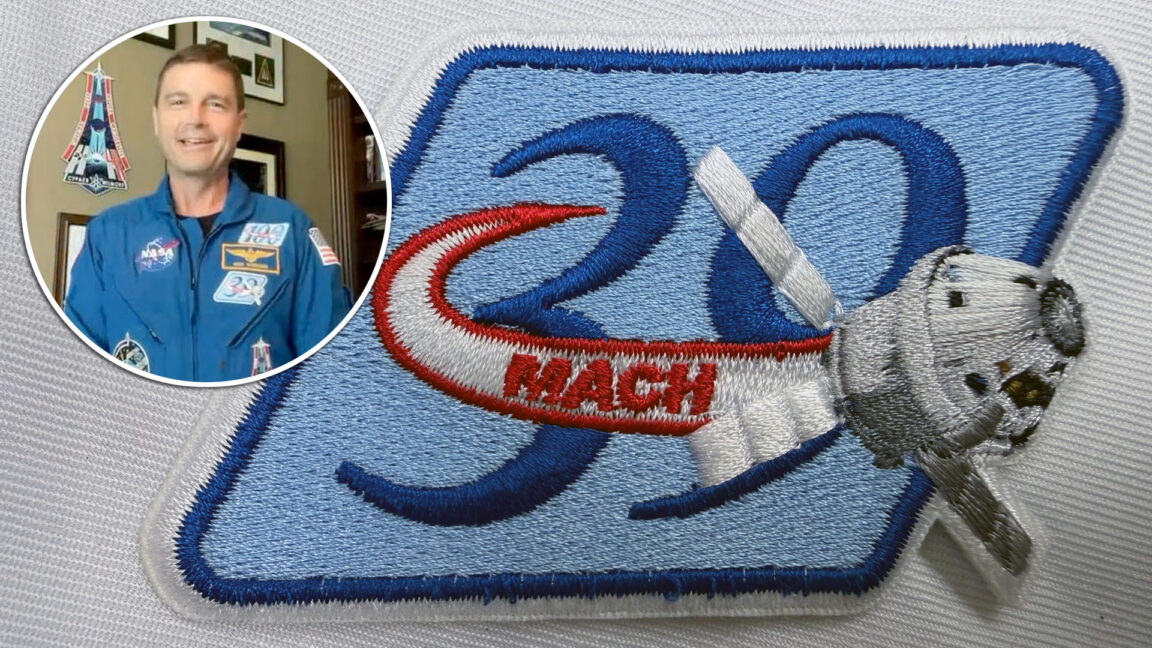
The fastest humans in the galaxy just got a spiffy patch to prove it

NASA's Artemis II crew are the fastest people alive, and now they have the patch to prove it.

Mission Commander Reid Wiseman, pilot Victor Glover, and mission specialists Christina Koch and Jeremy Hansen (the latter with the Canadian Space Agency) spent 10 days in early April flying by the Moon. Their journey took them farther away from Earth than any humans have gone (52,756 miles [406,771 km]) and then, on the way back on board their Orion spacecraft Integrity, they sped up to about 24,664 miles per hour (39,693 k/ph) reentering the atmosphere.

Only three other people in history have traveled faster. NASA's Apollo 10 astronauts Thomas Stafford, John Young, and Eugene Cernan set the record for the highest speed attained by a crewed vehicle relative to the Earth's surface: 24,791 mph (39,897 kph) on May 26, 1969.

Read full article

Comments

© Reid Wiseman/A-B Emblem/collectSPACE

  •  

Acheulean Toolmakers Chose Their Stone with Surprising Precision

A reconstruction of Homo longi in his habitat. Image credit: Chuang Zhao.

Geochemical analysis of 780,000-year-old stone tools from Israel suggests Acheulean (or Acheulian) hominins repeatedly sought specific basalt sources, revealing sophisticated planning and deep knowledge of their landscape.

The post Acheulean Toolmakers Chose Their Stone with Surprising Precision appeared first on Sci.News: Breaking Science News.

  •  

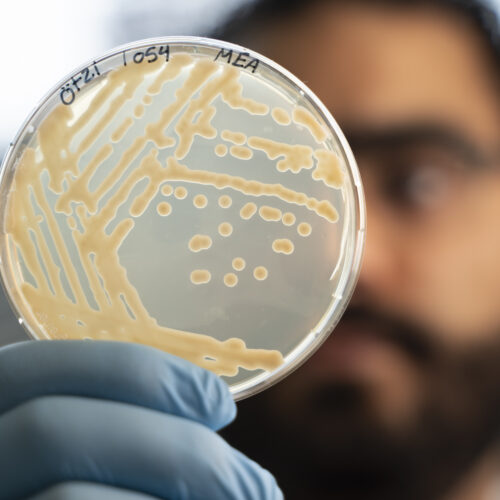
Some ancient microbes frozen with Ötzi the Iceman are still growing

Ötzi the Iceman, Europe’s most famous mummy, is crawling with microbes, some long dead, some still eking out a living after thousands of years, and some very modern.

After he died in the Ötztal Alps, the Copper Age man now known as Ötzi lay alone and forgotten for 5,300 years, until a group of hikers stumbled on his freeze-dried remains in 1991. Since then, he’s received a lot of attention from scientists, who have sequenced his DNA, pored over his last meal and the remains of his gut microbes, and examined his clothes and his broken tools. Today, Ötzi lies in a high-tech resting place at the South Tyrol Museum of Archaeology in Italy, where, it turns out, his body is still home to a handful of cold-adapted yeast species that have probably been with him since just after he died.

Slightly morbid souvenirs from the Alps

Microbiologist Mohamed S. Sarhan (of the Institute of Mummy Studies at the private Eurac Research center) and his colleagues recently sampled material from Ötzi’s stomach and meltwater from inside his body, swabbed his skin, and even sampled airborne microbes from his frozen storage room and the lab outside it. They also took samples from a block of frozen alpine soil taken from next to Ötzi’s body back in 1991.

Read full article

Comments

© Sarhan et al. 2026

  •  

Neolithic People May Have Hauled Stonehenge’s Giant Altar Stone across Britain

Stonehenge. Image credit: Sally Wilson.

Neolithic people, not glaciers, moved the Altar Stone -- the six-ton central sandstone megalith at Stonehenge -- from northeast Scotland to Salisbury Plain, according to a new study led by archaeologists from Curtin University and Sheffield Hallam University.

The post Neolithic People May Have Hauled Stonehenge’s Giant Altar Stone across Britain appeared first on Sci.News: Breaking Science News.

  •  

Flórida é o primeiro estado norte-americano a processar a OpenAI por riscos à segurança infantil

Ação inédita acusa a OpenAI de ocultar os perigos do ChatGPT para os menores em prol do lucro. O processo surge numa vaga de litígios nos EUA que já resultou em multas milionárias para gigantes como a Meta e a Google.

The post Flórida é o primeiro estado norte-americano a processar a OpenAI por riscos à segurança infantil appeared first on Tek Notícias.

  •  

Florida Sues OpenAI Over Chatbot Safety Concerns

The state became the first to sue the ChatGPT maker over claims that its technology posed a risk to children and that the company had failed to warn the public of dangers.
  •  

Daily Glass of Fruit Juice May Lift Your Mood: Study

People who drink a glass of 100% fruit juice or a smoothie each day as part of the UK’s 5-a-day healthy eating guidance see improvements in their mental wellbeing. Image credit: Joseph Mucira.

In a small randomized trial in the United Kingdom, adults who added a serving of 100% fruit juice or a smoothie to a healthier diet reported lower depression scores after four weeks.

The post Daily Glass of Fruit Juice May Lift Your Mood: Study appeared first on Sci.News: Breaking Science News.

  •  

Tomato-Soy Drink May Help Fight Chronic Inflammation in Adults with Obesity

Tomato-soy juice contains high levels of lycopene and soy isoflavones.

In a small clinical trial, researchers at the Ohio State University found that a tomato juice rich in lycopene and soy isoflavones lowered several proteins linked to chronic inflammation, raising hopes for food-based therapies.

The post Tomato-Soy Drink May Help Fight Chronic Inflammation in Adults with Obesity appeared first on Sci.News: Breaking Science News.

  •  
❌