 Login

Fresh off bond sale, Amazon borrows $17.5B from banks as AI spending continues
Companies are burning through exorbitant sums of money to keep pace in the AI arms race. Debt is climbing.




Amazon has launched a new feature for its Echo and Echo Kids smart speakers called Sleep Studio that's designed to make the daily transition to bedtime more enticing for kids and less stressful for parents and caregivers. The feature uses a combination of bedtime stories, relaxing sounds, and guided meditations along with scheduling and customization options accessible only to adults.
Sleep Studio is now available to those with a $5.99 per month Amazon Kids Plus subscription at no extra cost. Amazon offers a free one month trial of the service, but purchasing an Echo Kids device will also get you a complementary six or 12-month subscription …
In 1925, while exploring the remote jungles of the Amazon on a quest to uncover a fabled lost city, British explorer Percy Fawcett and his small expedition party vanished without a trace.
Fawcett, a noted geographer, artillery officer, cartographer, surveyor, and archaeologist, set off into the rainforest accompanied only by his son, Jack Fawcett, and Jack’s best friend, Raleigh Rimell. Their goal was to locate an ancient lost city rumored to exist in the heart of the Amazon that Fawcett and others called “The Lost City of Z.”
While Fawcett and his expedition crew’s fate remains unknown, new advancements in modern archaeological science, propelled by technologies that include unmanned aerial vehicles and LiDAR, are now revealing what could be the archaeological reality behind part of what the ill-fated British explorer sought.
“The reward is that we’re finally finding the ‘lost civilisation’ that explorers like Percy Fawcett were searching for a century ago,” says José Iriarte, a professor of archaeology at the University of Exeter, writing in a piece featured at The Conversation, though adding that such discoveries are now being made “by cajoling a drone rather than battering through jungle.”
For a time, archaeologists presumed that the Amazon rainforest was a vast wilderness that, while abundant in resources, would have been capable of supporting only small, scattered communities.
With the aid of modern technologies, those past ideas have gradually changed as new archaeological evidence continues to push researchers toward rethinking past assumptions. Among these technologies is advanced laser-mapping technology known as LiDAR (light detection and ranging), which archaeologists have put to great use in the last several decades to aid in uncovering evidence of surface features that were once either inaccessible or otherwise invisible during ground-based surveys.
Something else that LiDAR excels at is penetrating the dense forest of areas like the Amazon, enabling researchers to get unprecedented aerial views of the surface below the canopy, along with any structures that may have been left there by humans from long ago. The result has been evidence of sprawling ancient societies hidden beneath the cover of thick jungle, revealing the Amazon as a region that once supported large populations that existed in sophisticated, interconnected landscapes.

A particularly striking example of such discoveries involves the Llanos de Moxos region of northern Bolivia, where recent LiDAR surveys have revealed the presence of a sprawling archaeological site long hidden by dense jungle. Archaeologists believe the ancient settlement is linked to what is called the Casarabe culture, which would have thrived in the area sometime between A.D. 500 and 1400.
“The Casarabe organized into a hierarchy of four different sizes of settlements,” writes Professor Iriarte in his recent piece at The Conversation. “The biggest ones—the primary settlements—were as large as 3km² or 300 hectares.”
“That’s enough space for over 400 football pitches,” Iriarte notes, “suggesting that they could have accommodated substantial numbers of people.”
Viewed from the ground, an observer who braved this dense region of Bolivian jungle might only see thick patches of forest separated by grassland savannahs.
That all changes when viewing LiDAR imagery obtained during aerial surveys, however. Through the sensitive detection capabilities afforded by laser pulses that can easily penetrate the dense vegetation, a lost world emerges—one the likes of which Percy Fawcett and other early explorers once only dreamed of rediscovering.
Researchers have now successfully identified a vast network of settlements at Llanos de Moxos, connected by raised causeways, canals, reservoirs, and engineered agricultural systems that cover an area of close to 20,000 square kilometers.
These complexes upend past thinking about the presence of isolated settlements in the region, and instead appear to show sites covering areas as large as three square kilometers, featuring monumental civic and ceremonial architecture, towering conical pyramids that ascend to heights of 20 meters, and the presence of massive U-shaped structures, which archaeologists believe had likely served as ceremonial structures that once hosted gatherings.
Another surprising feature is the scale of the structures archaeologists have uncovered, which they say rivals some of the most well-known monuments like those of the ancient Tiwanaku civilization in the Andes.
Yet, unlike many densely packed ancient cities, the Casarabe landscape also differs in several ways: the unique variety of urbanism it reflects is suggestive of dispersed populations whose connected infrastructure also brought them together through ancient shared water management systems.
“It was clearly all planned and coordinated,” Iriarte explains, adding that the ancient builders at Llanos de Moxos engaged in precocious designs that were intended “not only as living spaces but for integrating the population across the region.” Similar architectural planning has been observed at other ancient sites around the world, which include those assembled by the ancient Maya of Central America, as well as the builders of Angkor across the world in Cambodia.
Beyond just architecture and clues to the way of life of these ancient societies, researchers are also gaining new insights into the agricultural practices of the early Amazonian world.
For many decades, scientists presumed that a major limiting factor on the region’s ability to sustain larger populations hinged on the presence of factors that included poor soils, seasonal flooding, droughts, and tropical diseases. However, mounting evidence suggests that the indigenous societies of the region were far from hindered by the landscape, and instead managed to transform and manage farmland at scales previously unimagined.
Along with sophisticated agricultural systems, ancient Amazonians were also capable of engineering remarkably fertile soils, known as Amazonian Dark Earths, which Iriarte says “combined charcoal, bone and waste materials with the existing poor-quality soil to make it fertile enough for widespread farming.”
“Amazonia had reclaimed vast expanses of seasonally flooded savannahs over several thousand years to create raised and drained field systems,” he adds, also noting the construction of extensive drainage networks and the cultivation of diverse crops such as maize. Rather than merely adapting to the rainforest, the ancient inhabitants of the Amazon actively reshaped it.
Thanks to similar LiDAR surveys that have recently been undertaken in nearby countries, including Ecuador’s Upano Valley, where thousands of structures linked by roads and organized according to highly structured settlement plans have been detected, the recent findings at Llanos de Moxos are one of the latest additions to a broader revolution in archaeology made possible through such exciting Amazonian discoveries.
In addition to Bolivia and Ecuador, researchers have also documented ceremonial earthworks, geometric enclosures, and sprawling ancient settlements in Colombia, Peru, and Brazil in recent years, all of which are challenging decades of past assumptions about ancient life in the Amazon.
Despite the recent advancements in our understanding, many questions remain unanswered. Among the questions archaeologists have are those related to how these ancient societies were governed, as well as what factors led to their decline, a fall which was precipitated by unknown factors that occurred before European arrival.
Possible contributing factors may include shifts in ancient climates, as well as environmental pressures. It is also possible that political changes or conflicts that emerged between neighboring societies may have played a role, which could have contributed to disruptions in trade networks that may have further weakened these once thriving societies.
Despite the remaining mysteries about these enigmatic cultures, one thing is becoming increasingly clear: the Amazon was far from being the unclaimed tropical wilderness many long believed it to be. In many ways, the fascination with lost cities and ancient civilizations that drove explorers like Percy Fawcett—and which led to his untimely fate—had more basis in reality than many historians, archaeologists, and explorers probably guessed.
As ongoing LiDAR surveys continue to expand across previously unexplored regions, archaeologists believe thousands more structures may still await discovery, suggesting that some of the Amazon’s greatest archaeological secrets remain hidden, but no longer kept entirely from view.
“What lies beneath the Amazon is not just a hidden past,” Iriarte says. “It is a reminder that even the most seemingly untouched landscapes can carry deep histories, waiting—sometimes just beneath our feet—to be revealed.”
Professor José Iriarte’s complete article appeared at The Conversation on June 8, 2026.
Micah Hanks is the Editor-in-Chief and Co-Founder of The Debrief. A longtime reporter on science, defense, and technology with a focus on space and astronomy, he can be reached at micah@thedebrief.org. Follow him on X @MicahHanks, and at micahhanks.com.
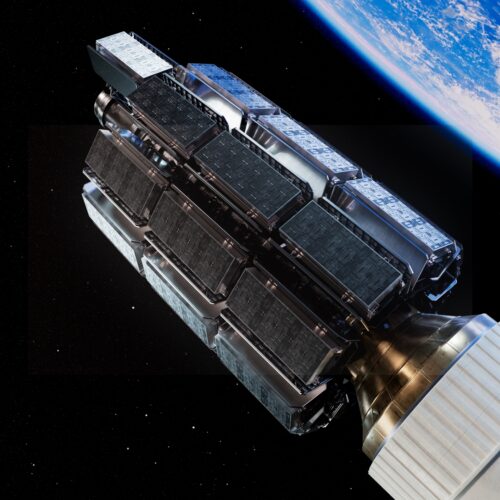
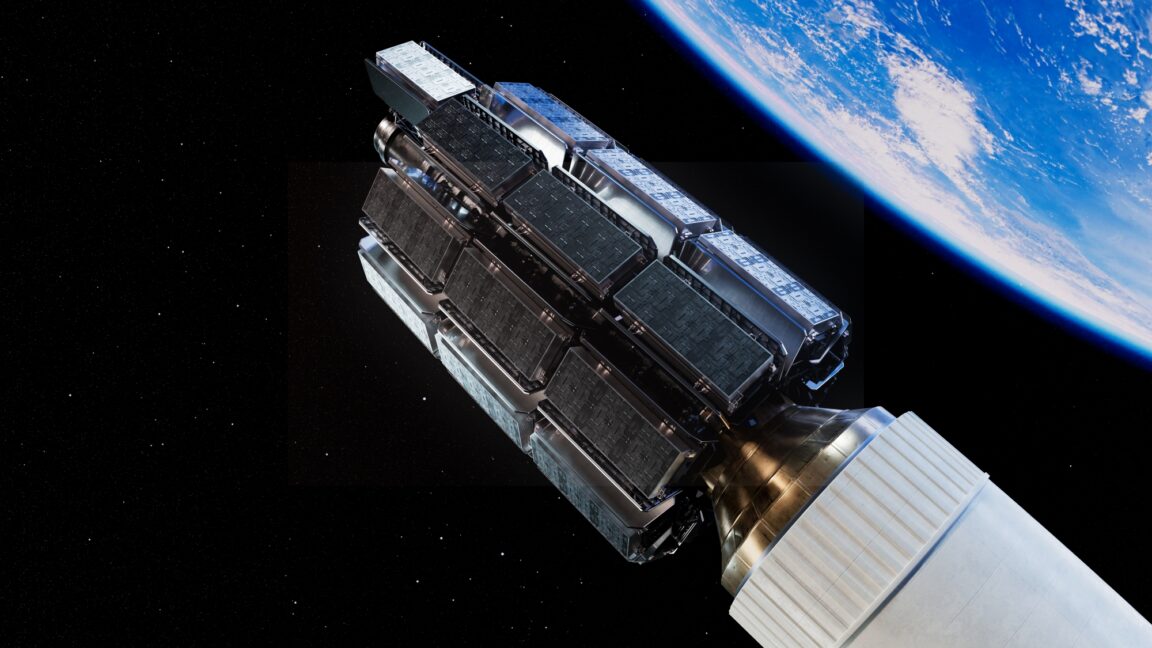
The Federal Communications Commission has waived a requirement for Amazon to launch half of its satellite broadband constellation by the end of July, a key regulatory reprieve that buys the tech giant time to get more of its spacecraft into orbit.
Amazon won regulatory approval for the Amazon Leo network in July 2020. The FCC's authorization came with two deadlines. First, Amazon had to launch half of its 3,232 satellites by July 30, 2026, in order to maintain authorization to launch the rest of the network. The regulator gave Amazon a deadline of July 30, 2029, to have all of its first-generation satellites in orbit.
It has been apparent for some time that Amazon would not meet the FCC's requirement to launch half of its satellites—1,616 spacecraft—by the end of next month. Amazon filed an application in January requesting the FCC extend the deadline to July 2028 or waive it altogether. The commission decided on the latter option, removing any time limit for the 50 percent deployment milestone, but keeping the July 2029 deadline in place for the entire constellation.
© Amazon
The Federal Communications Commission has waived a requirement for Amazon to launch half of its satellite broadband constellation by the end of July, a key regulatory reprieve that buys the tech giant time to get more of its spacecraft into orbit.
Amazon won regulatory approval for the Amazon Leo network in July 2020. The FCC's authorization came with two deadlines. First, Amazon had to launch half of its 3,232 satellites by July 30, 2026, in order to maintain authorization to launch the rest of the network. The regulator gave Amazon a deadline of July 30, 2029, to have all of its first-generation satellites in orbit.
It has been apparent for some time that Amazon would not meet the FCC's requirement to launch half of its satellites—1,616 spacecraft—by the end of next month. Amazon filed an application in January requesting the FCC extend the deadline to July 2028 or waive it altogether. The commission decided on the latter option, removing any time limit for the 50 percent deployment milestone, but keeping the July 2029 deadline in place for the entire constellation.
© Amazon


No evento "Delivering the Future" em Londres, a Amazon revelou a nova geração do robot Proteus, um investimento de mais de dez mil milhões de euros na Europa, entregas ultra-rápidas a expandir para mais cidades e um programa de formação global sem precedentes.
The post Amazon investe mais de 10 mil milhões de euros em robótica e IA para se modernizar e expandir na Europa appeared first on Tek Notícias.
Integrada no Cloud and AI Development Act, que deverá ser apresentado esta quarta-feira, uma nova proposta da Comissão Europeia prevê um conjunto de critérios obrigatórios para a seleção de fornecedores de serviços na nuvem em contratos públicos considerados críticos.
The post Comissão Europeia prepara-se para “apertar” regras na Cloud e pode limitar gigantes como a Amazon, Google e Microsoft appeared first on Tek Notícias.
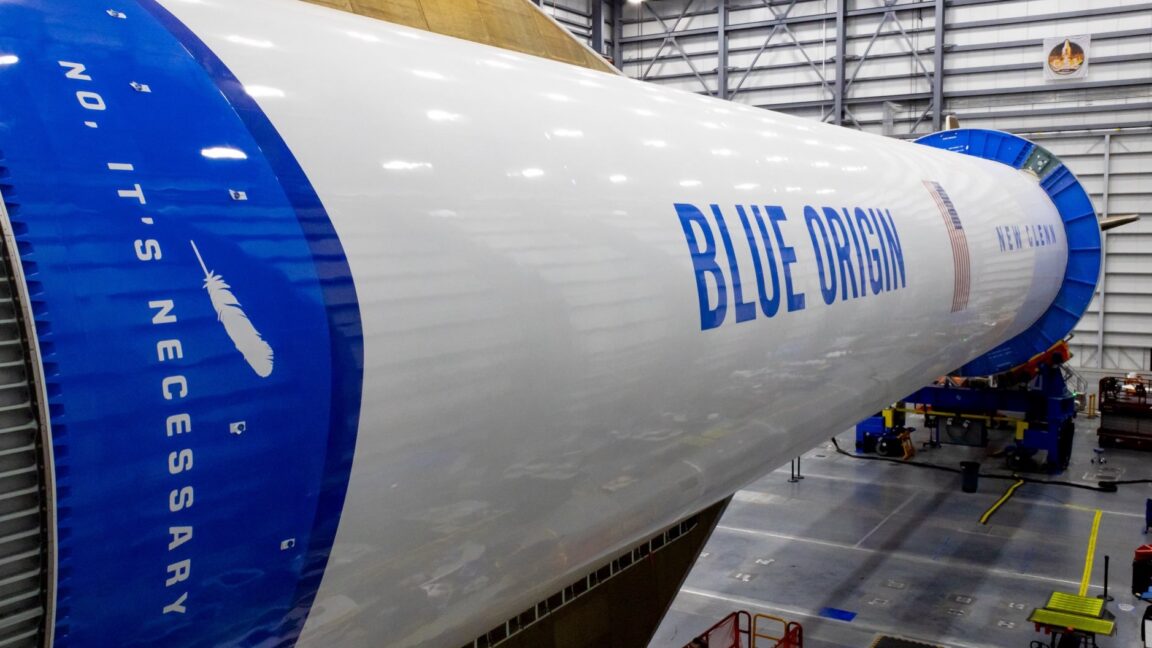
It was less than two months ago that the third flight of Blue Origin's heavy-lift New Glenn rocket left a customer's payload in an unusable orbit. Investigators have now identified the cause of the failure, and Blue Origin is preparing to launch the next New Glenn mission as soon as next week.
The Federal Aviation Administration and Blue Origin announced the closure of the failure investigation May 22. Yesterday, officials confirmed Blue Origin's next launch will loft a payload of 48 commercial satellites for Amazon's broadband network in low-Earth orbit. This will be the most satellites Amazon has launched on a single rocket, surpassing previous flights on United Launch Alliance's Atlas V, SpaceX's Falcon 9, and Europe's Ariane 6.
Blue Origin and Amazon, each founded by Jeff Bezos, have not officially revealed a target launch date, but public notices of airspace and maritime closures suggest the mission is set to lift off from Cape Canaveral Space Force Station, Florida, as soon as next Thursday, June 4. Blue Origin is expected to roll the New Glenn rocket to its launch pad in the coming days for a test-firing of its seven main engines, fueled by liquified natural gas and liquid oxygen.

© Blue Origin
It was less than two months ago that the third flight of Blue Origin's heavy-lift New Glenn rocket left a customer's payload in an unusable orbit. Investigators have now identified the cause of the failure, and Blue Origin is preparing to launch the next New Glenn mission as soon as next week.
The Federal Aviation Administration and Blue Origin announced the closure of the failure investigation May 22. Yesterday, officials confirmed Blue Origin's next launch will loft a payload of 48 commercial satellites for Amazon's broadband network in low-Earth orbit. This will be the most satellites Amazon has launched on a single rocket, surpassing previous flights on United Launch Alliance's Atlas V, SpaceX's Falcon 9, and Europe's Ariane 6.
Blue Origin and Amazon, each founded by Jeff Bezos, have not officially revealed a target launch date, but public notices of airspace and maritime closures suggest the mission is set to lift off from Cape Canaveral Space Force Station, Florida, as soon as next Thursday, June 4. Blue Origin is expected to roll the New Glenn rocket to its launch pad in the coming days for a test-firing of its seven main engines, fueled by liquified natural gas and liquid oxygen.
© Blue Origin
