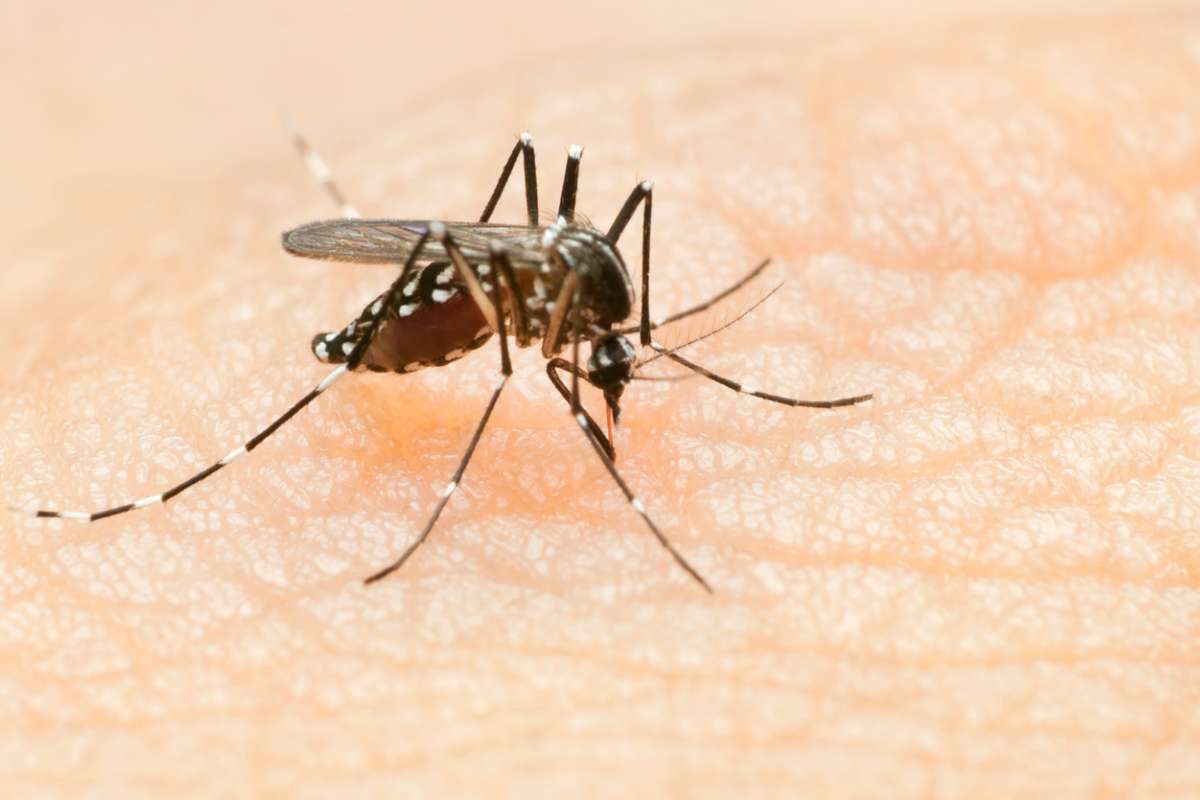
L'humanité pourrait-elle faire disparaître les moustiques ? Voici ce que disent les scientifiques


For years, people around the world have reported being disturbed by a low, persistent droning sound of unknown origin.
Often described as more of a vibration than a specific tone, this sound has become widely known as “The Hum,” a phenomenon that is more frequently reported in certain cities and specific areas than others.
Over time, possible explanations have included industrial ventilation systems, military sonar experiments, and, in some online discussions, extraterrestrial signals, although none of these theories are supported by evidence.
However, in a recent study from the Norwegian University of Science and Technology (NTNU), published in PLOS ONE, researchers now offer evidence that, for most people who experience this phenomenon, the source is probably not external, but instead may actually originate within their own auditory system.
Residents of Bristol, England, first widely reported The Hum in the mid-1970s, when the Bristol Evening Post received several reports from people who claimed they experienced hearing a strange, low sound. People initially thought the industrial fans in an area warehouse were responsible, but the hum persisted after the warehouse shut down.
By the 1990s, reports of a similar phenomenon began surfacing in Taos, New Mexico, where residents described a persistent, diesel engine-like rumble. Both state and federal authorities investigated the sound but could not explain it. The Taos Hum became one of the most studied and widely recognized examples of this phenomenon. Since then, similar reports have come from Canada, Australia, New Zealand, South Africa, and several European countries.
As reports grew, people proposed explanations ranging from ocean-generated infrasound to military sonar and CIA transmitters. Some online discussions have even suggested alien technology as a possible cause. In 2012, Canadian teacher Glen MacPherson, who first experienced The Hum on the west coast of British Columbia, created the World Hum Map and Database Project to document cases worldwide. The project has since collected thousands of entries.
To investigate the phenomenon, Professor Markus Drexl at NTNU recruited 28 people in Germany who all reported hearing a persistent, unexplained humming sound. Clinicians refer to this as a low-frequency sound percept, or LFSP. Most participants described the sound as having a frequency around 50 Hz, about the same as a deep mechanical rumble.
The research team tested two main explanations: whether participants had unusually acute sensitivity to low-frequency sound, or whether some were perceiving sounds generated by their own inner ears.
“We know that there are people who hear low-frequency sounds that can actually be measured, even if other people don’t hear them,” Drexl said. “But it’s not so easy to find the source of these sound waves, because it’s a struggle to localize low-frequency sounds.”
The cochlea, a spiral-shaped structure in the inner ear that converts sound waves into neural signals, also actively amplifies incoming sounds. This amplification produces faint sounds emitted from the ear, known as spontaneous otoacoustic emissions (SOAEs).
Most people are not aware of these emissions. In rare cases, people perceive SOAEs as tinnitus. Drexl’s team investigated whether people who hear the Hum might be detecting a low-frequency version of this phenomenon.
The results did not support this idea. The team found no low-frequency SOAEs in any participant. The hypothesis of unusually acute low-frequency hearing was also not supported; while a few participants had slightly better low-frequency hearing than average, most did not.
“Even though the group we tested was small, it still means that the hypothesis of having especially good hearing for low-frequency sounds does not hold for most people,” Drexl said.
This left a third group: participants who reported hearing something that no external instrument could detect. “Then there are people who hear something that cannot be measured objectively. We believe people in this category have a form of low-frequency tinnitus,” Drexl said.
The Hum differs from typical tinnitus because most people who experience it first believe the sound comes from an external source, sometimes spending years searching for its origin before realizing it is internal. The researchers still have not ruled out external causes completely. In some cases, near industrial sites or coastlines, genuine low-frequency sources may exist. However, researchers identified no external source for most participants in the study.
“Based on our results, although we haven’t ruled out cases of physical external sound sources, we suggest that subjective tinnitus in the low-frequency range is often the cause of hearing pulsations of low-frequency sound perceptions,” Drexl said.
The study also highlights that the low-frequency range of the auditory system remains poorly understood in hearing science.
“What we know about the hearing system is mainly based on how we capture and process sound with higher frequencies. We know less about how the auditory system handles and processes low-frequency sound, or infrasound,” Drexl said.
Although the cause of well-known cases like the Taos Hum remains unresolved, the new findings suggest that many reports of unexplained low-frequency sounds may actually originate from within the auditory system rather than from an external source.
Austin Burgess is a writer and researcher with a background in sales, marketing, and data analytics. He holds an MBA, a Bachelor of Science in Business Administration, and a data analytics certification. His work focuses on breaking scientific developments, with an emphasis on emerging biology, cognitive neuroscience, and archaeological discoveries.

Geochemical analysis of 780,000-year-old stone tools from Israel suggests Acheulean (or Acheulian) hominins repeatedly sought specific basalt sources, revealing sophisticated planning and deep knowledge of their landscape.
The post Acheulean Toolmakers Chose Their Stone with Surprising Precision appeared first on Sci.News: Breaking Science News.

Airbus Helicopters has officially unveiled the U145 unmanned helicopter, developed on the basis of the widely used civilian and military Airbus Helicopters H145. A full-scale mock-up of the new platform was presented ahead of the ILA 2026 international aerospace exhibition in Berlin, scheduled to begin on June 10, 2026. The use of the proven airframe […]
The post Airbus converts the Airbus Helicopters H145 into an unmanned platform for operations in high-intensity environments appeared first on AERONAUT.media.
For patients with disorders of consciousness such as coma, vegetative states, or unresponsive wakefulness, clinicians face a longstanding challenge of determining whether any awareness remains. While surface brain recordings can measure general electrical activity, they do not reveal what is happening deep within the brain.
Now, a new study from Ludwig-Maximilians-Universität München may bring clinicians closer to a measurable indicator of brain states in these conditions.
Researchers at LMU have found a new type of electrical rhythm in the central thalamus, a small area deep inside the brain. Published in Nature Human Behaviour, the study suggests that this rhythm could serve as a biological indicator of conscious states.
The signal does more than just appear with consciousness. It also changes as the brain moves between different states. For example, the rhythm becomes stronger during REM sleep, which lets researchers see small shifts in awareness even within the same stage of sleep.
“Our results show that the central thalamus plays an important role in regulating brain states,” said Dr. Aditya Chowdhury, lead author of the study. “In the context of existing research, our results show that this small deep-lying brain structure could actively influence our states of consciousness.”
Professor Tobias Staudigl, who led the research team, argues the signal’s consistency makes it more than just an interesting discovery. “These characteristic rhythm patterns can be reliably attributed to specific states and thus have the potential to serve as a measurable biological signature of states of consciousness,” Staudigl said.
Recording electrical activity from deep brain structures is one of neuroscience’s most persistent technical problems. Standard surface EEG can detect general patterns from the brain’s outer layers, but it misses details from deeper areas. Since the thalamus sits at the center of the brain, it has remained largely inaccessible through non-invasive methods.
The LMU team had a rare chance to study this. Their research involved patients already undergoing deep-brain stimulation therapy for epilepsy, which uses electrodes in the thalamus to help control seizures. These electrodes let the researchers record signals directly from inside the thalamus, something that is almost never possible otherwise.
The team combined these recordings with surface EEG, eye-tracking, and detailed sleep-stage analysis. This approach allowed them to see how thalamic activity changes as patients transition between wakefulness and different sleep stages. Their findings offer the most detailed picture yet of what the thalamus actually does as consciousness changes.
Disorders of consciousness, like coma, vegetative state, and minimally conscious state, are some of the hardest problems in neurology. One reason is that doctors have lacked reliable biological markers to assess patients’ awareness. The thalamic rhythm found in this study could help solve that problem.
If this signal truly tracks brain states linked to consciousness, it could help doctors evaluate awareness in patients who cannot communicate, guide treatment choices, and monitor how patients respond to care over time. The researchers believe it could also be used to improve deep brain stimulation therapy by allowing doctors to adjust treatment based on real-time thalamic activity rather than general clinical signs.
Staudigl was recently awarded funding by the European Research Council to explore the clinical potential of this discovery and to develop applications for treating neurological disease.
Understanding consciousness has always been one of science’s most difficult challenges. While the study does not answer the fundamental question of what consciousness is, these findings provide a consistent, measurable signal that indicates how the brain moves between conscious and unconscious states.
Austin Burgess is a writer and researcher with a background in sales, marketing, and data analytics. He holds an MBA, a Bachelor of Science in Business Administration, and a data analytics certification. His work focuses on breaking scientific developments, with an emphasis on emerging biology, cognitive neuroscience, and archaeological discoveries.
An analysis of dental tartar containing traces of human diets dating back over 33,000 years has revealed that ancient Europeans and many early Asian populations likely only ate insects by accident, perhaps as larvae in the carcasses of dead animals.
Conversely, the new study found that intentional insect consumption, called entomophagy, was more common in tropical regions and among Neanderthal populations.
Although the difference has some cultural and religious roots, the team found evidence that the abundance of insects in the tropics and the decreasing ability of humans migrating away from the tropics to digest insects likely led to the modern-day separation over thousands of years.
The Institute of Evolutionary Biology (IBE), a joint center of the Spanish National Research Council (CSIC) and Pompeu Fabra University (UPF), research team behind the new findings suggests their research could help explain why some modern populations still consume insects as food while other parts of the world consider it gross or taboo, especially given the increasing food demands of a rising world population.
According to a statement announcing the new research, hundreds of millions of people currently include insects in their diet. However, they also note that most of the Western world continues to “show an aversion” to including any of the more than 1,611 insect species designated as edible by the Food and Agriculture Organization of the United Nations (FAO) in theirs. Although some theories suggest the difference is almost purely cultural, the team concedes that “its origin remains unknown.”
To explore the origins of human entomophagy, the IBE analyzed 745 samples of ancient human dental tartar dating back to 33,000 before present. According to the team’s results published in the journal Science Advances, dental tartar (sometimes called dental ‘calculus’) is a critical archaeological tool because it preserves the DNA of the species these human ancestors consumed during their lifetimes.
Although the analysis found evidence for entomophagy amongst virtually all ancient populations sampled in the study, the levels varied dramatically. Notably, the evidence suggested that ancient humans in northern Eurasia did not routinely eat insects in measurable quantities. Instead, any consumption was likely incidental, including consumption of insect larvae in rotting food.
Curious whether the lack of entomophagy in ancient European and Central and Northern Asian populations was purely cultural or whether genetic and geographic factors were involved, the team studied human genes involved in chitin digestion. Chitin, which can be found in some marine animal shells, is also part of an insect’s hard exoskeleton.
According to the study authors, the analysis revealed that the ‘chitinase’ genes in North Eurasian human populations “carry mutations that confer a reduced capacity to digest insect exoskeletons.” Their analysis revealed that this reduced capacity to digest insect exoskeletons has persisted in the genomes of modern Eurasian populations “for the last 9,000 years,” which would coincide with the widely accepted date for the origin of agriculture.
Pablo Librado, study leader and a principal investigator at the IBE, said the “scarce presence of insects in the diet of northern Eurasians” suggests that the cause may not lie solely in more recent cultural factors but also in ecological and evolutionary components dating back several millennia.
When the team compared data from ancient human tartar with that of ancient Neanderthals, they found that Neanderthals engaged in much higher levels of entomophagy than humans living in the same regions. According to the study authors, Neanderthal insect consumption levels were similar to those found in western chimpanzee populations, which the researchers note “rely on entomophagy to supplement their diet on the savanna, especially during periods of drought.”
Further analysis of the extracted insect DNA showed that the group most commonly consumed by the Neanderthal specimens included flies and mosquitoes. Although the team only analyzed the DNA, they noted that a recent hypothesis suggests Neanderthals ate carcasses laden with mosquito larvae.
“The abundance of mosquito remains reinforces the possibility that the carcasses of their prey were kept in ponds and marshy areas, where mosquitoes lay their eggs,” the team’s statement explained.
An analysis of the Neanderthal DNA and the DNA from the lone Denisovan study subject revealed that both ancient hominid populations could digest chitin. This result reinforced the genetic basis for increased or reduced entomophagy beyond cultural factors.
One geographic component identified by the chitinase DNA analysis showed higher levels of digestive enzyme expression among humans living in or near the tropics. However, the expression of these enzymes gradually decreased as populations moved away from tropical regions. The team said this variation, which has been maintained for at least the last 9,000 years, “reflects the abandonment of entomophagy in European populations.”
Manuel Piñero, a predoctoral researcher at the IBE and first author of the study, noted that large numbers of insects must be consumed to offset the “high caloric cost” of collecting them, which might explain the higher levels of entomophagy in this region.
“In the tropics, there is a greater availability of social insects, such as termites and locusts,” Piñero explained, adding that the biomass and diversity of tropical edible insects enable “sustainable exploitation throughout the year.” The researcher also noted that insect consumption “adds to pest control.”
When discussing the implications of their findings, Librado highlighted the DNA and geographic factors the IBE team uncovered.
“Beyond cultural or religious factors, our results suggest that the reduced availability of insects in non-tropical areas may have been a key factor in the abandonment of entomophagy, leading to a reduced capacity to digest insect exoskeletons,” the researcher explained.
Christopher Plain is a Science Fiction and Fantasy novelist and Head Science Writer at The Debrief. Follow and connect with him on X, learn about his books at plainfiction.com, or email him directly at christopher@thedebrief.org.


Author(s): Mark Buchanan
Sound wave scattering can be increased in one frequency range only by reducing scattering in another range, according to experiments—a discovery relevant for acoustic engineering.
[Physics 19, 80] Published Fri Jun 05, 2026

Paleontologists have described an assemblage of marine fish fossils from the 62.2-million-year-old site of Qreiya 3 in the Eastern Desert of Egypt, providing a window into this transition.
The post Fish Fossils from Early Paleocene Fill 10-Million-Year Gap after Dinosaur Extinction appeared first on Sci.News: Breaking Science News.
Days after successfully flying its Quarterhorse unmanned aircraft at supersonic speeds, an industry-first defense aviation company, Hermeus, has received the largest-ever contract awarded by the Defense Innovation Unit (DIU) to demonstrate high-Mach flight combined with high-Mach payload release.
The new $ 159 million award, which increases the original contract to a total of $219 million, will allow Hermeus’ engineers to expand on previous high-Mach test flight milestones in direct partnership with the U.S. Air Force and the U.S. Navy, with the goal of providing the American warfighter with the most advanced arsenal capable of delivering munitions and payloads around the world at record-setting speeds.
“By delivering flight-ready aircraft and demonstrating payload release at speed, we will prove this technology can create a decisive military advantage on a timeline that matters,” explained Hermeus CEO and co-founder, AJ Piplica. “Our focus is on providing the Air Force and Navy with the validated data they need to transition these platforms into the future force.”
When announcing the new DIU award, Hermeus executives noted that the program will include a series of “intensive flight tests.” The first is expected later this year, while the final flights are expected sometime in 2027.
Although few specifics were provided, the company said the flights will “prove the aircraft can maintain high speeds and expand its performance limits” while also demonstrating the successful carry and release of payloads at high velocity. The company also noted that all flight data gathered during the development and testing phases “will directly inform service experimentation and future acquisition decisions.”

Although the U.S. Military has several aircraft capable of exceeding the speed of sound, and several more hypersonic (exceeding five times the speed of sound) aircraft and missile prototypes, delivering payloads from high-Mach aircraft has remained a challenge. However, some military experts argue that the U.S. would benefit greatly from the capability.
When discussing the need for high-speed payload release, DIU Military Deputy Major General Joe “Solo” Kunkel said that the largest problems the military is facing in the future are “generally around time and distance,” and the associated challenges with getting to distant locations “in a timeframe that matters.”
“I care about the warfighting capability, providing advantage to our partners and us in the fight, and making sure that we can walk into every fight with swagger,” General Kunkel said, adding that mass producing the technology developed by Hermeus could move it from a test platform to a “game-changing warfighting capability.”
“I think we found a significant number of use cases where it can be used as a weapon,” the General added.
When discussing the company’s approach that convinced the DIU to offer its largest award in the organization’s history, including what they describe as “reclaiming the lost art of rapid iterative prototyping to build the fastest aircraft in the world today,” Hermeus noted that directly partnering with the USAF and USN allows their engineers to align tests with future mission needs and shorten the path from testing to deployment.
“By prioritizing relentless hardware iteration, we deliver high-speed systems at the pace of the modern battlefield,” the company’s statement explained. “We work with the Department of War to provide the high-speed capabilities our nation and its allies need to maintain a durable, asymmetric advantage.”

When discussing the significance of the upcoming tests and the overall need for high-Mach flight payload deployment, including the benefit of the performance data, the company CEO heralded the DIU’s award, noting that the financing will help them move their successful demonstrations into real-world high-Mach platforms.
“This program is about moving high-Mach capability out of the lab and into an operationally relevant environment,” Piplica said.
Christopher Plain is a Science Fiction and Fantasy novelist and Head Science Writer at The Debrief. Follow and connect with him on X, learn about his books at plainfiction.com, or email him directly at christopher@thedebrief.org.
No evento "Delivering the Future" em Londres, a Amazon revelou a nova geração do robot Proteus, um investimento de mais de dez mil milhões de euros na Europa, entregas ultra-rápidas a expandir para mais cidades e um programa de formação global sem precedentes.
The post Amazon investe mais de 10 mil milhões de euros em robótica e IA para se modernizar e expandir na Europa appeared first on Tek Notícias.
Real-world testing of an aircraft designed for ultra-long-haul operations has begun in France. Airbus has completed the maiden flight of the A350-1000ULR, a variant selected by Australian carrier Qantas for its Project Sunrise initiative. The aircraft features a modified fuel tank configuration, extended range capabilities, and the ability to remain airborne for close to 24 […]
The post Airbus Tests Aircraft Capable of Nearly 24 Hours of Continuous Flight, Marking a Potential Shift in Civil Aviation appeared first on AERONAUT.media.