Hackers compromised 19 packages on the PyPI, collectively downloaded hundreds of thousands of times, in a new Shai-Hulud supply-chain attack that delivered malware designed to steal developer secrets. [...]
From high-speed battering rams to gravity tractors, the technology exists to protect the planet. The question is whether humanity will act in time — and in concert.
By recreating a nuclear fireball, scientists uncovered unexpected chemistry that could change how radioactive fallout is understood. In the first fraction of a second after a nuclear explosion or a major reactor accident, an immense surge of energy superheats the surrounding environment. Nearby materials and air are instantly vaporized, creating a rapidly expanding fireball made [...]
Deep in Taiwan’s misty mountains, researchers have confirmed the tallest tree in the country: a thousand-year-old fir tree higher than a 20-story building, which they’ve named “the heaven sword of the Da’an River.” Climbers scaled the tree and dropped a measuring tape from the top to the forest floor during the Lunar New Year holiday in January 2023. The tree measured 84.1-meters (276-feet). The findings have been published in Frontiers in Forests and Global Change. A team of ecologists, geologists, remote-sensing specialists, professional climbers and Indigenous people that calls itself the “Taiwan tree seekers” began the search in 2014. “The common characteristics [of the team] are probably that we are all tree lovers and like adventures,” Rebecca Chia-Chun Hsu, lead author from Division of Forest Ecology, Institute of Taiwan Forestry Research, told CNN. ‘The Heaven Sword’, Taiwan’s tallest tree, measures 84.1 meters. Photo courtesy of Steven Pearce. Taiwan is one of the few places on Earth where trees can grow this tall. The island sits where the tropics meet the subtropics, and its mountains host several giant conifer species. The species behind the new record, Taiwania cryptomerioides, is known to the Indigenous Rukai people as “the tree that hits the moon.” Although nearly 60% of Taiwan is covered in forest, loggers cleared much of the island’s old-growth forest between 1912 and 1991. However, its steep slopes were too dangerous to reach, and pockets of ancient forest survived. Still, finding the tallest tree amid the rugged terrain was a task. Taiwan…This article was originally published on Mongabay
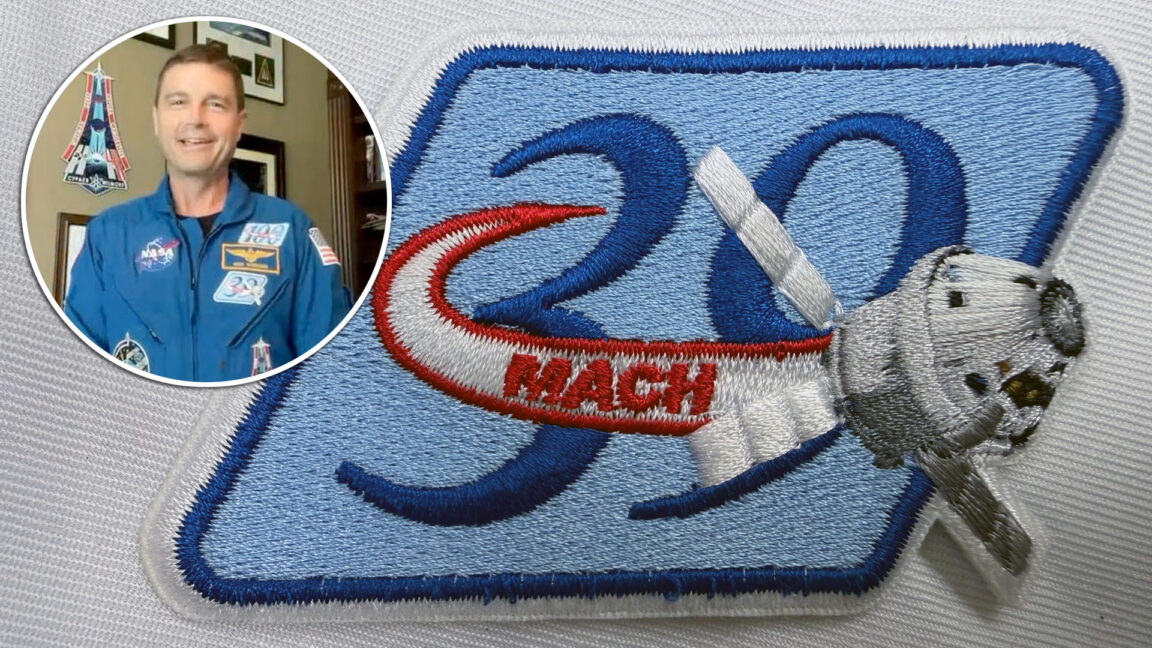
NASA's Artemis II crew are the fastest people alive, and now they have the patch to prove it.
Mission Commander Reid Wiseman, pilot Victor Glover, and mission specialists Christina Koch and Jeremy Hansen (the latter with the Canadian Space Agency) spent 10 days in early April flying by the Moon. Their journey took them farther away from Earth than any humans have gone (52,756 miles [406,771 km]) and then, on the way back on board their Orion spacecraft Integrity, they sped up to about 24,664 miles per hour (39,693 k/ph) reentering the atmosphere.
Only three other people in history have traveled faster. NASA's Apollo 10 astronauts Thomas Stafford, John Young, and Eugene Cernan set the record for the highest speed attained by a crewed vehicle relative to the Earth's surface: 24,791 mph (39,897 kph) on May 26, 1969.
A comprehensive investigation by battery researcher Ziroth, involving over 20 independent battery experts, has produced what amounts to definitive proof that Donut Lab’s “miracle” solid-state battery is actually a lithium-ion cell. The company raised approximately $25 million from over 1,300 mostly small investors based on claims that now appear to be false.
The investigation traces the battery technology back to a German company called CT Coatings, reveals a web of companies hiding behind aggressive NDAs, and presents electrochemical evidence — including voltage curves and cell expansion data — that conclusively identifies the tested cell as lithium-ion, not the revolutionary sodium-ion solid-state chemistry Donut Lab promised.
WhatsApp has detected and stopped spear-phishing campaigns allegedly conducted by the NSO Group after investigating user reports of social engineering attacks. [...]
Amazon no longer faces a July 30 cutoff for deploying half its planned 3,232 broadband satellites, but the reprieve comes with a temporary loss of spectrum priority that could give SpaceX and other rivals more leverage in orbit.
Rocket launches this week According to tracking from Next SpaceFlight, Chinese aerospace firm Landspace’s ZhuQue-2E Block 2 is scheduled to lift off from the Jiuquan Satellite Launch Center in China at 4:20 a.m. EST on Tuesday, June 9. The ZhuQue-2E is a medium-lift rocket powered by liquid oxygen and methane — the first methane-fueled vehicleContinue reading "SpaceX and Rocket Lab set for liftoff this week"
O DNA nunca é criado do zero. Ele é como uma receita, passada de pais para filhos ao longo de incontáveis gerações, remontando a cerca de 4 bilhões de anos, até as formas de vida mais antigas da Terra. Ao longo do caminho, ajustes e mudanças se acumularam, mas sempre a partir da cópia de algo que já existia.
Leia mais (06/08/2026 - 14h41)
Artificial intelligence is mastering the kinds of projects that have long helped to build the careers of young mathematicians. What does that mean for their future?

 Login