A small songbird inhabiting the Babar Islands, in the Banda Sea, Indonesia, has been identified as a new species after a duo of researchers discovered that its distinctive song sets it apart from its closest relative.
Northwestern University engineers have unveiled an extremely energy-efficient 3D camera, called SpiderCam, inspired by how jumping spiders judge depth before making a calculated leap.
The research team behind the novel device said their technology could help engineers build wearable technologies, assistive devices, robots, drones, and other futuristic technologies that benefit from quickly and efficiently gauging their surroundings.
How Jumping Spiders Inspired Energy-Efficient SpiderCam
According to a statement announcing SpiderCam, 3D cameras typically estimate image depth in two ways. The first approach involves captured images from multiple viewpoints and comparing them, and the second involves projecting a light source, often an infrared (IR) laser, and then measuring the reflection.
Although both methods can produce realistic three-dimensional images, they can require significant computing power, additional operational energy, and often expensive hardware such as lasers.
Fortunately, millions of years of evolution have resulted in a creature that possesses a hyper-efficient way of estimating depth: the jumping spider.
“Jumping spiders jump to catch prey, to avoid predators and to get around, and that requires excellent vision,” said Northwestern’s Emma Alexander, the study’s corresponding author and an expert in bio-inspired computer vision. However, the researcher notes that their brains are extremely small, requiring the ability to calculate distances in an energy- and computationally efficient way.
According to Alexander, jumping spider eyes have multiple layers of retinas in each eye, rather than just one as in human eyes. When measuring distance, each retina focuses on an image at a slightly different distance, resulting in some images being blurrier than others.
“They see multiple levels of focus at all times,” Alexander explained. “So, they are always collecting pairs of images.”
After collecting these images in real time, the fly’s poppyseed-sized brain compares their sharpness, yielding a surprisingly accurate depth estimate, as evidenced by the creature’s ability to jump with precision.
Prototype Captures Images at Two Distances and Compares Their Blurriness
Inspired by nature’s hyper-efficient, extremely accurate depth estimation method, Alexander’s team decided to build a 3D camera using the same basic approach.
“We wanted to understand whether we could borrow some of the same principles to create an extremely energy-efficient depth sensor that could be used in resource-constrained situations where users don’t have unlimited access to power,” Alexander explained.
Called SpiderCam, the new device senses depth the same way that jumping spiders judge distances before making a high-precision hop. The camera produces real-time 3D maps while consuming less than a watt of power. That’s less energy than used by a standard nightlight. Image Credit: Emma Alexander/Northwestern University.
Instead of capturing images at multiple distances, as the jumping spider’s eye does, the Northwestern team’s initial design captures two images of the same scene at different focal lengths. Next, the system uses a custom algorithm to analyze the sharpness of the edges and textures captured in each image. The team said this analysis acts as a “translator between blur and distance” in the fly’s brain, resulting in “depth measurements in real time.”
To best approximate the naturally evolved energy efficiency of a jumping spider’s eye, Alexander’s team built the algorithm directly into a customizable computer chip specifically optimized for energy efficiency called a field-programmable gate array (FPGA).
The final prototype integrating the team’s dual-lens system generates depth maps at 32.5 frames per second. Critically, it generates this level of accurate 3D maps while consuming 624 milliwatts of power. For comparison, the team notes that 624 milliwatts is “less energy than used by a standard nightlight.”
Future Versions Could be Even More Energy Efficient
Although the team said that the current version of the SpiderCam is the “first passive FPGA-based 3D camera system to operate below one watt,” they hope to improve its optics and expand its field of view. Once they have a commercial-grade version, the team hopes to integrate SpiderCam into wearable devices and small robots.
Beyond proposed applications, the Northwestern team said that they “envision” a future, ultra-energy-efficient version of the chip capable of “bringing 3D vision to applications where conventional depth sensors are impractical.”
“I’m very interested in settings where you’re very resource constrained and can’t just plug a camera into a wall,” Alexander explained. “For example, it could be deployed in field settings with limited power.”
“Separately, I also think it’s particularly exciting for applications like augmented reality where you’re interfacing with the physical world and need to know the locations of objects around you,” the researcher added.
Christopher Plain is a Science Fiction and Fantasy novelist and Head Science Writer at The Debrief. Follow and connect with him on X, learn about his books at plainfiction.com, or email him directly at christopher@thedebrief.org.
An analysis of dental tartar containing traces of human diets dating back over 33,000 years has revealed that ancient Europeans and many early Asian populations likely only ate insects by accident, perhaps as larvae in the carcasses of dead animals.
Conversely, the new study found that intentional insect consumption, called entomophagy, was more common in tropical regions and among Neanderthal populations.
Although the difference has some cultural and religious roots, the team found evidence that the abundance of insects in the tropics and the decreasing ability of humans migrating away from the tropics to digest insects likely led to the modern-day separation over thousands of years.
The Institute of Evolutionary Biology (IBE), a joint center of the Spanish National Research Council (CSIC) and Pompeu Fabra University (UPF), research team behind the new findings suggests their research could help explain why some modern populations still consume insects as food while other parts of the world consider it gross or taboo, especially given the increasing food demands of a rising world population.
Insect Consumption in Ancient Northern Europeans Likely Accidental
According to a statement announcing the new research, hundreds of millions of people currently include insects in their diet. However, they also note that most of the Western world continues to “show an aversion” to including any of the more than 1,611 insect species designated as edible by the Food and Agriculture Organization of the United Nations (FAO) in theirs. Although some theories suggest the difference is almost purely cultural, the team concedes that “its origin remains unknown.”
To explore the origins of human entomophagy, the IBE analyzed 745 samples of ancient human dental tartar dating back to 33,000 before present. According to the team’s results published in the journal Science Advances, dental tartar (sometimes called dental ‘calculus’) is a critical archaeological tool because it preserves the DNA of the species these human ancestors consumed during their lifetimes.
Although the analysis found evidence for entomophagy amongst virtually all ancient populations sampled in the study, the levels varied dramatically. Notably, the evidence suggested that ancient humans in northern Eurasia did not routinely eat insects in measurable quantities. Instead, any consumption was likely incidental, including consumption of insect larvae in rotting food.
Curious whether the lack of entomophagy in ancient European and Central and Northern Asian populations was purely cultural or whether genetic and geographic factors were involved, the team studied human genes involved in chitin digestion. Chitin, which can be found in some marine animal shells, is also part of an insect’s hard exoskeleton.
According to the study authors, the analysis revealed that the ‘chitinase’ genes in North Eurasian human populations “carry mutations that confer a reduced capacity to digest insect exoskeletons.” Their analysis revealed that this reduced capacity to digest insect exoskeletons has persisted in the genomes of modern Eurasian populations “for the last 9,000 years,” which would coincide with the widely accepted date for the origin of agriculture.
Pablo Librado, study leader and a principal investigator at the IBE, said the “scarce presence of insects in the diet of northern Eurasians” suggests that the cause may not lie solely in more recent cultural factors but also in ecological and evolutionary components dating back several millennia.
Neanderthals and Denisovans Probably Ate Insect Larvae in Rotting Meat
When the team compared data from ancient human tartar with that of ancient Neanderthals, they found that Neanderthals engaged in much higher levels of entomophagy than humans living in the same regions. According to the study authors, Neanderthal insect consumption levels were similar to those found in western chimpanzee populations, which the researchers note “rely on entomophagy to supplement their diet on the savanna, especially during periods of drought.”
Further analysis of the extracted insect DNA showed that the group most commonly consumed by the Neanderthal specimens included flies and mosquitoes. Although the team only analyzed the DNA, they noted that a recent hypothesis suggests Neanderthals ate carcasses laden with mosquito larvae.
“The abundance of mosquito remains reinforces the possibility that the carcasses of their prey were kept in ponds and marshy areas, where mosquitoes lay their eggs,” the team’s statement explained.
An analysis of the Neanderthal DNA and the DNA from the lone Denisovan study subject revealed that both ancient hominid populations could digest chitin. This result reinforced the genetic basis for increased or reduced entomophagy beyond cultural factors.
Humans Ate Fewer Bugs When They Moved Away from Tropical Regions
One geographic component identified by the chitinase DNA analysis showed higher levels of digestive enzyme expression among humans living in or near the tropics. However, the expression of these enzymes gradually decreased as populations moved away from tropical regions. The team said this variation, which has been maintained for at least the last 9,000 years, “reflects the abandonment of entomophagy in European populations.”
Manuel Piñero, a predoctoral researcher at the IBE and first author of the study, noted that large numbers of insects must be consumed to offset the “high caloric cost” of collecting them, which might explain the higher levels of entomophagy in this region.
“In the tropics, there is a greater availability of social insects, such as termites and locusts,” Piñero explained, adding that the biomass and diversity of tropical edible insects enable “sustainable exploitation throughout the year.” The researcher also noted that insect consumption “adds to pest control.”
When discussing the implications of their findings, Librado highlighted the DNA and geographic factors the IBE team uncovered.
“Beyond cultural or religious factors, our results suggest that the reduced availability of insects in non-tropical areas may have been a key factor in the abandonment of entomophagy, leading to a reduced capacity to digest insect exoskeletons,” the researcher explained.
Christopher Plain is a Science Fiction and Fantasy novelist and Head Science Writer at The Debrief. Follow and connect with him on X, learn about his books at plainfiction.com, or email him directly at christopher@thedebrief.org.
A new study reveals that an extremely small change in a non-coding region of DNA can dramatically alter how sex develops in mice. How much can a single letter of DNA matter? According to new research from Bar-Ilan University, one misplaced genetic “letter” can completely change the course of sexual development. In a study published [...]
Scientists have discovered a new spider species in Ecuador’s Amazon rainforest that uses an unprecedented form of mimicry. Deep in Ecuador’s Amazon rainforest, researchers encountered what appeared to be an ordinary mushroom clinging to the underside of a leaf. On closer inspection, however, the strange growth revealed itself to be something far more unexpected: a [...]
Scientists from ETH Zurich in Switzerland have announced a series of successful experiments involving the repair of injured spinal cords in zebrafish and mice after being injected with magnetically controlled microrobots containing pluripotent stem cells.
According to a statement announcing the ETH team’s work, both the zebrafish and mice injected with the microrobots showed improved movement and normalized exploratory behavior within just a few days after treatment.
Although the initial studies were confined to lab animals, the team hopes their magnetically controlled microrobot approach to the precision delivery of pluripotent stem cells could eventually be adapted for humans with spinal cord injuries.
Spinal Cord Repair Microrobots Treat Nerve Cells That Resist Regeneration
Unlike some cells in the human body, nerve cells within the spinal cord rarely regenerate on their own. If the spinal cord is injured, scarring can further reduce the ability of the nerve fibers within the cord to regrow. For people living with spinal cord injuries, this scenario can offer a bleak prognosis for recovery.
In recent decades, scientists have turned to the natural regenerative properties of pluripotent stem cells. Although the use of stem cells was initially controversial due to the need to extract neonatal stem cells, scientists ultimately learned to convert ordinary stem cells into pluripotent stem cells capable of becoming any cell type in the human body.
The most promising approach involves implanting stem cells at the site of the injury and then using electrical stimulation to promote the growth of new cells. However, according to the ETH team behind the new approach, the current method has several drawbacks.
First, stimulating the cells requires the use of implanted electrodes. Second, the team notes that after transplantation, many of the stem cells “do not always survive or integrate properly into the existing tissue.”
To improve healing and increase the chance of restoring spinal cord nerve cell function, they said their new approach combines therapeutic stem cells with magnetoelectric nanoparticles and uses magnetic fields to guide them to the “precise site of an injury” and “stimulate the stem cells to accelerate repair.”
NPCbots Combine Stem Cells and Magnetically Controlled Nanoparticles
To construct their magnetically guided spinal cord repairing robot, the team built what they termed a “biohybrid microrobot.”
First, the team creates pluripotent stem cells from adult cells by genetically manipulating them in the lab. The result is what researchers call an “induced” pluripotent stem cell (iPS). According to the study authors, these newly pluripotent iPS cells are used to derive living neural progenitor cells (NPCs), meaning “they have the potential to differentiate into various types of nervous system cells.”
Next, the team creates customized magnetic nanoparticles consisting of two layers. The inner layer responds to the “commands” from the magnetic fields used to control them, and an outer layer that converts this response into an electrical signal.
According to Professor Salvador Pané i Vidal of the Multi-Scale Robotics Lab at ETH Zurich, each tiny robot has a reservoir near the center “where we trap the cells.” The professor said the best way to accomplish this is to inject the nanoparticles into a solution with the NPC, “and wait for the two components to bind.”
After 30 minutes, the process is complete, and the team is left with a batch of nanobots, each around 6 micrometers in size. Since the new robots combine a magnetic bot and a reservoir of NPCs, the team named them ‘NPCbots.’
In preparatory cellular experiments, the researchers used hundreds of thousands of NPCbots. However, several million were required for animal trials.
Zebrafish and Mice Regain Movement After Injections
To test the efficacy of their new NPCbots, the ETH team injected millions of them into the spinal cord of zebrafish larvae with spinal cord injuries. To improve the chances of nerve regeneration, the NPCbots were injected directly into the site of the injury.
After injecting the microrobots, the injury site was subjected to electromagnetic fields. Although the repair was not immediately evident, the team noted that after three days, the zebrafish with the injured spinal cords “exhibited nearly normal swimming and exploratory behaviour.”
At the start and after three days: the top images show the uninjured spinal cord of a zebrafish; those in the middle show the injured spinal cord; and those at the bottom illustrate how the nerve cells grow thanks to the microrobots. Image Credit: ETH Zurich.
Next, the team injected millions of NPCbots into mice with completely separated spinal cords. According to the team, the results were “very promising.”
“After 28 days, the animals’ nerve cells had reconnected at the site of the injury,” they explained.
The team said further observation of the treated mice revealed “increasingly normal movement patterns,” including improvements in gait, stride length, and coordination. The ETH team also noted that the mice’s exploratory behavior “improved significantly.”
Schematic illustration of nerve cell recovery in zebrafish and mice. Image Credit: ETH Zurich.
When discussing the mouse experiments, the team described the result as “particularly significant” because zebrafish spinal cords regenerate, whereas mouse spinal cords do not. They also noted that the treatment was “well tolerated by the animals,” with no reported immune reactions or adverse effects.
Minimally Invasive and More Precise Treatments with Microbots
Unlike science fiction movies, where tiny robots repair tissue mechanically, the research team said that the stem cells carried by the NPCbots are exposed to electrical stimulation, “greatly enhancing their differentiation after transplantation.” This means the nanoparticles convert the electric signals from the EM field into electrical impulses, stimulating healing.
Unlike more complicated stem cell procedures that use implanted electrodes and cables, the team said they only needed to apply external magnetic fields around the spinal cord injury site. The team said this simplification was “crucial,” since the spinal cord is considered extremely sensitive. They also note that the ability to manipulate the frequency and field strength of magnetic fields, combined with their ability to penetrate deeply into tissue, makes the entire process safe and easy to control.
“Microrobotic guidance makes the treatment more precise and minimally invasive,” Hao explained.
After the NPC bots have delivered and stimulated the stem cells, the team said they “essentially dissolve” within the tissue. Because the bots contain a barium titanate coating, the researchers also believe that they will be “stable and minimally reactive” with surrounding tissue. Still, they concede that “further studies will determine whether and how the particles are degraded or excreted over the long term.”
Expanding NPCbot Therapies to Increase the Effectiveness of Other Targeted Therapies
Although the team described the animal trials of their NPCbots as “promising,” they noted that further research is needed before the process can be attempted on human patients with spinal cord injuries. For example, Hao noted that in addition to ‘clinical aspects’ that require more exploration, the team needs to start by determining which magnetic fields “work best in humans” and determining the “optimal stimulation duration” for human NPCs. Nevertheless, the team noted, they are “already considering further applications.”
“The reproducible and scalable production of microrobots using our lab-on-a-chip system demonstrates that the platform’s application potential extends beyond basic research,” Professor Vidal explained.
Some potential biomedical applications mentioned by the RETH team include cardiology, oncology, wound healing, “and other targeted therapies,” adding that their process could make such treatments “safer, more controllable and more effective.”
Christopher Plain is a Science Fiction and Fantasy novelist and Head Science Writer at The Debrief. Follow and connect with him on X, learn about his books at plainfiction.com, or email him directly at christopher@thedebrief.org.
Editor’s Note:Astrobites is a graduate-student-run organization that digests astrophysical literature for undergraduate students. As part of the partnership between the AAS and astrobites, we occasionally repost astrobites content here at AAS Nova. We hope you enjoy this post from astrobites; the original can be viewed at astrobites.org.
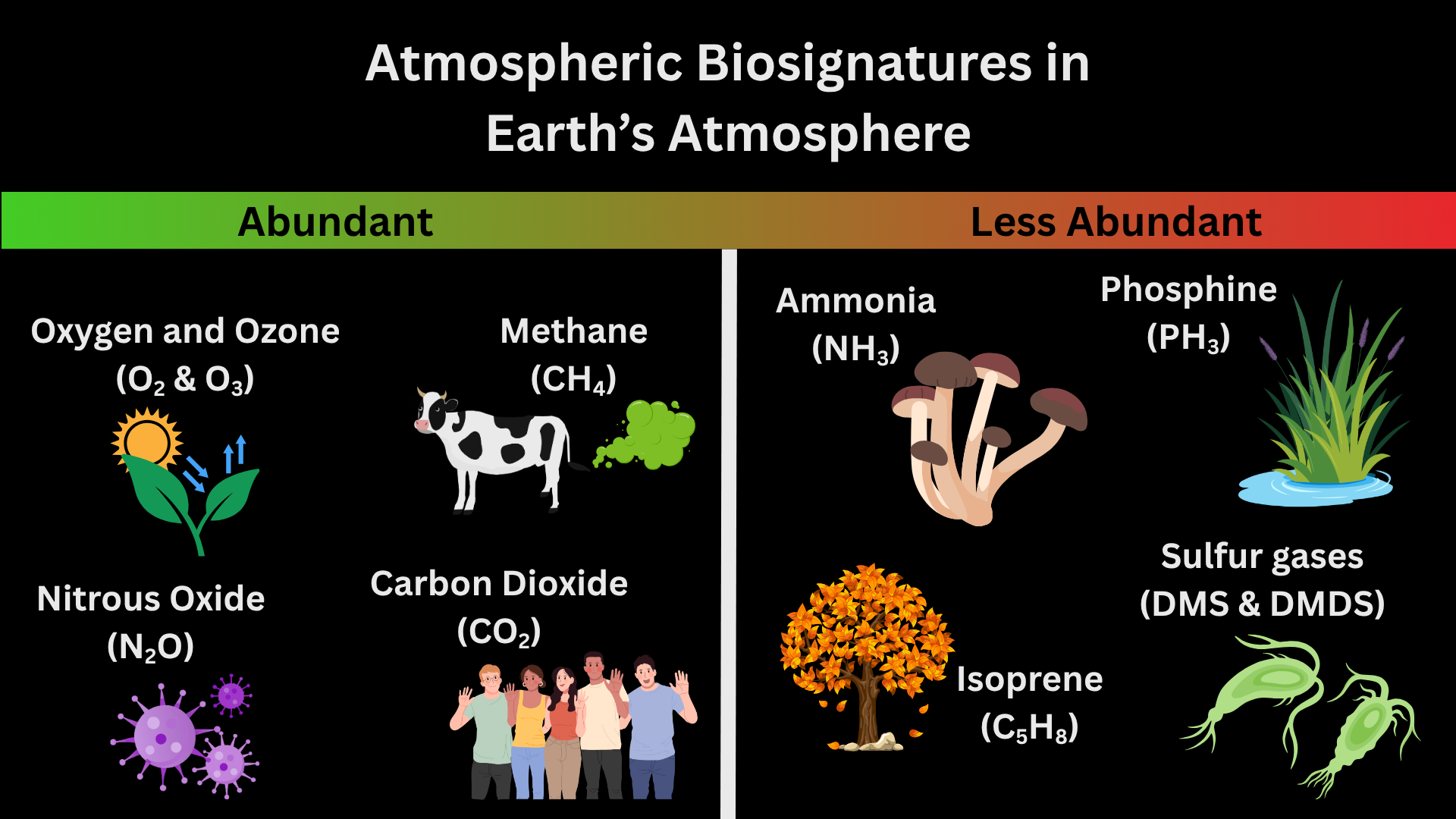
In the next 25 years, astronomers could find signs of life on other planets with the launch of the Habitable Worlds Observatory. Atmospheric signs of life, known as atmospheric biosignatures, are how astronomers currently search for life on other planets. Figure 1 shows examples of atmospheric biosignatures with pictures of each chemical’s origin on Earth. Before E.T. can phone home, though, we have to understand what chemicals make up a planet’s atmosphere. To do this, astronomers can use spectroscopy to observe a planet’s atmosphere in different wavelengths and measure the types and quantities of chemicals present.
Figure 1: Atmospheric biosignatures present in Earth’s atmosphere. More abundant biosignatures include oxygen and ozone (byproducts of photosynthesis in plants and bacteria) and nitrous oxide (byproduct of bacteria that don’t need oxygen to survive). Less abundant biosignatures include isoprene (released from the breakdown of leaves that have fallen from trees) and sulfur gases (byproducts of cyanobacteria). [Kaz Gary]
There are many ways to observe the spectrum of a planet, but the one you’re probably most familiar with is transmission spectroscopy. You can learn more about transmission spectroscopy of exoplanet atmospheres and how to model transmission spectra with these bites: 1, 2, 3. However, all of the current techniques for exoplanet spectroscopy (including transmission spectroscopy) measure the star’s light and how the planet affects the star’s light. This means it’s heavily dependent on how we model the star’s light to indirectly observe the planet’s light. The only way to take the spectrum of a planet directly is with direct imaging: the technique that the future Habitable Worlds Observatory will use to find signs of life in planetary spectra.
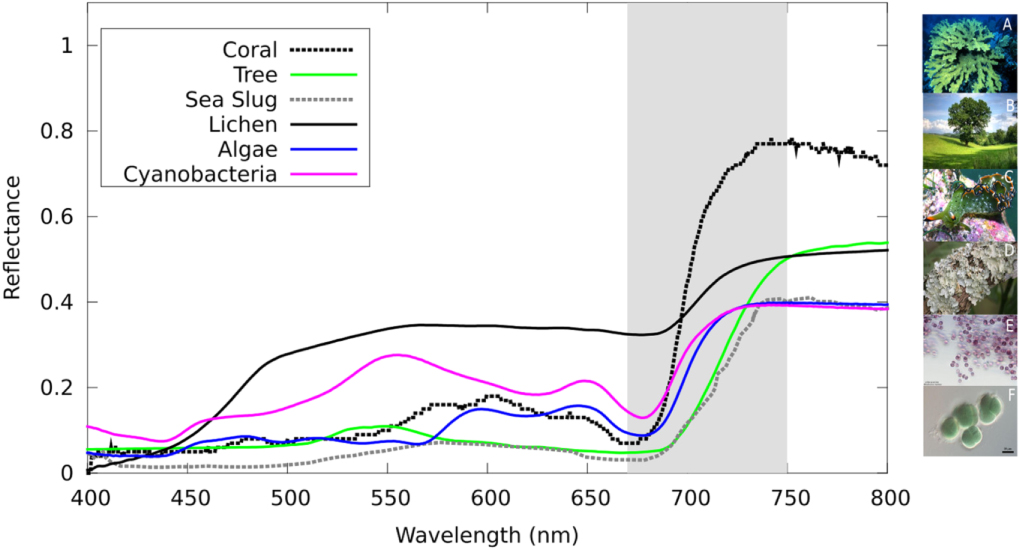
But are atmospheric biosignatures the only way to tell if life exists on other planets? Short answer: absolutely not. Let’s take Earth as an example. If we imagine Earth as a directly imaged exoplanet and take spectra of the light it reflects, you’ll find that around near-infrared wavelengths (~700 nanometers or just past the red part of the visible light spectrum), the light reflected off of Earth increases sharply. This sharp increase is called the vegetation red edge and is caused by plant and ocean life on Earth’s surface as shown in Figure 2. This is made possible because chlorophyll (the thing that makes plants green) absorbs nearly all visible light but reflects near-infrared light. The vegetation red edge is an example of a surface biosignature. In today’s article, the authors determine if the vegetation red edge will be visible in spectra of Earth-like exoplanets!
Figure 2: Spectra of different sources of the vegetation red edge on Earth. The vegetation red edge is highlighted in gray where the spectra rapidly increase and then level off beyond the visible light part of the spectrum. Each color represents a different source with pictures of each source on the right-hand side of the plot. [O’Malley-James and Kaltenegger 2019]
Snapshots
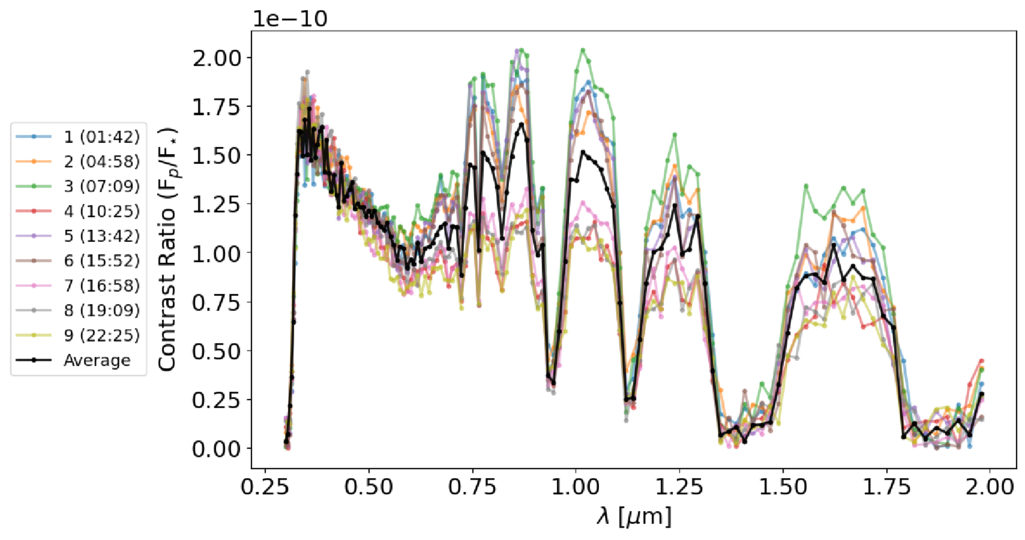
Planets rotate; that’s how we have morning, noon, and night in 24 hours guaranteed. This means that different parts of the surface will be visible at different times when we take spectra. Sometimes, we may see more ocean than land, other times not. To determine if the vegetation red edge would be visible at all points in Earth’s day, the authors simulated nine different spectra of modern-day Earth representing nine snapshots of Earth’s rotation. Additionally, they also simulated a time-averaged spectrum that shows an entire Earth day in one snapshot without the time variability. These spectra are shown in Figure 3.
Figure 3: Spectra of a directly imaged modern-day Earth at nine different times in its rotation. The y-axis is the ratio of the planet’s signal to the star’s signal and the x-axis is wavelength in microns. Each color represents a time in UTC and the black curve represents the time-averaged spectrum. [Burr et al. 2026]
The authors then run retrieval models on all nine spectra to see if the vegetation red edge would be detectable in each spectrum, including the time-averaged one. Retrieval models take into account characteristics of the planet that would affect how light moves through its atmosphere, such as the atmospheric chemicals present and the surface gravity. They then use this information to generate possible spectral models that could fit the data. The best-fit model allows astronomers to infer what the atmosphere is made of and properties of the planet such as surface gravity. Because we are looking at Earth in visible light, much of the light from the planet is reflected. Typically, models of Earth-like planets in visible wavelengths only include atmospheric albedo: the measure of how reflective a planet’s atmosphere is. However, surface biosignatures can also be reflective as shown by the vegetation red edge. The authors use this to their advantage and introduce a surface albedo into their model that changes with the amount of desert, vegetation, and ocean visible on Earth’s surface at that time. They then further divide the nine spectra into three different types based upon the visible surface: majority land; 50% land, 50% ocean; and majority ocean. Check out the article online to see a cool animation of the Earth rotating and how the spectrum looks different at each time!
Arr! There Be… Vegetables?
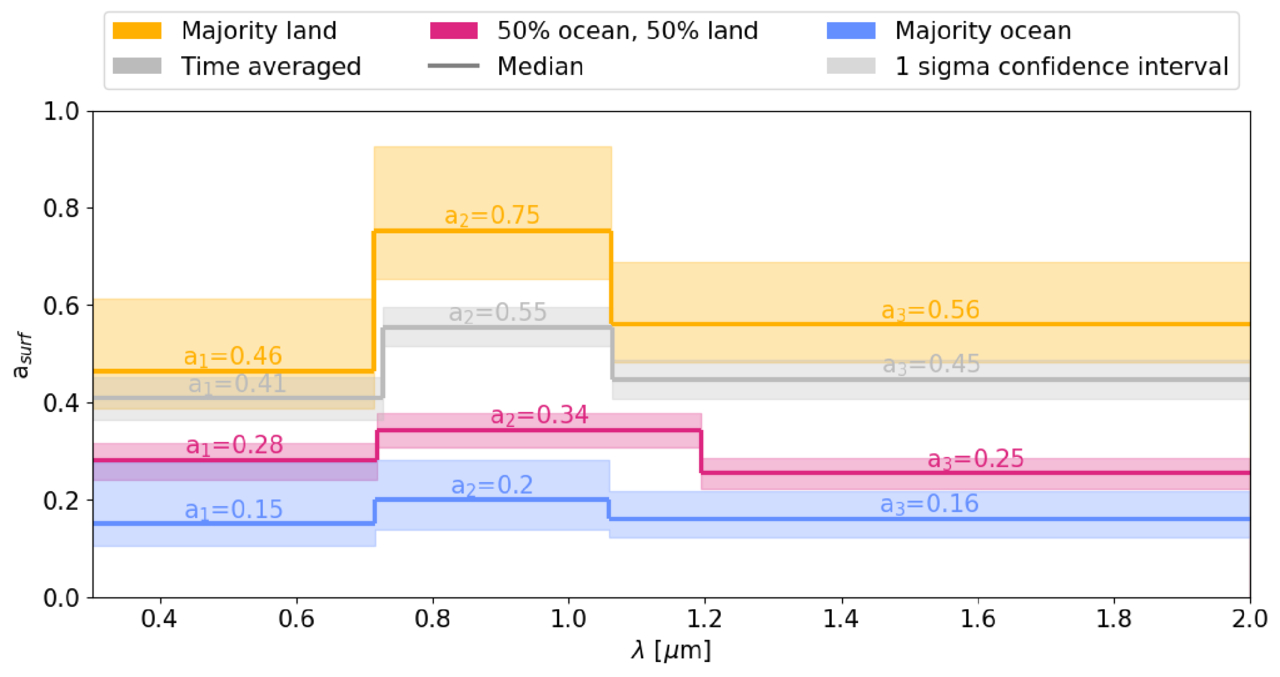
After running the models, the authors were able to detect a sharp increase in the surface albedo value in every spectrum, including the time-averaged one. This result is shown in Figure 4. The authors take this result one step further in order to validate that the vegetation red edge is actually a result of surface variation of vegetation. They re-run models on each of their spectra but instead include a constant surface albedo instead of a time-varying one. This resulted in incorrectly measured radii, chemicals, and surface gravity in nearly all of the models. Without the vegetation red edge and surface features, the models could not accurately determine if life was present on Earth.
Figure 4: Retrieved surface albedos for the nine time-varying spectra. The surface albedo is broken down into three different values (a₁, a₂, a₃). Each of these values represents a change in the surface albedo at different wavelengths (i.e., how reflective the surface is at three different wavelengths). The nine spectra were broken down by the amount of surface that was visible at that time and color-coded for each category. The time-averaged spectrum is shown in gray. Each category of spectra was able to retrieve an increase in reflected light from the surface at vegetation red edge wavelengths. The spectra that had the majority land visible have the biggest increase in the surface albedo. This makes sense since the amount of visible vegetation is the largest with majority-land planets. [Burr et al. 2026]
For the first time (to the author’s knowledge), the vegetation red edge has been shown to be a promising and observable biosignature in Earth-like atmospheres. This study has also laid the groundwork for future work on other surface biosignatures and their potential impact on spectra of habitable planets. Confirming signs of life in multiple different ways, both on the surface and in the atmosphere, will finally allow astronomers to say we are not alone in the universe. In fact, life likes to live on the (red) edge!
Original astrobite edited by Madison VanWyngarden.
About the author, Kaz Gary:
I am a fourth-year PhD candidate at The Ohio State University with a passion for planets. My current work focuses on modeling exoplanet observations for the Habitable Worlds Observatory and understanding planetary atmospheres. Outside of research, I help develop planetarium shows and love all forms of science communication. In my free time, I enjoy playing tabletop RPGs, painting, watching terrible reality TV, and hanging out with my pet hedgehog.
Editor’s Note:Astrobites is a graduate-student-run organization that digests astrophysical literature for undergraduate students. As part of the partnership between the AAS and astrobites, we occasionally repost astrobites content here at AAS Nova. We hope you enjoy this post from astrobites; the original can be viewed at astrobites.org.
In the hunt for life beyond Earth, studying exoplanet atmospheres is one of our most powerful tools. The atmosphere of an exoplanet acts as a window into its environment and allows astronomers to take a guess at what processes are shaping the planet’s climate, chemistry, and thus, its potential for habitability. The gases present in the planet’s atmosphere impart a unique spectral fingerprint on the light that passes through the atmosphere and allows us to identify what gases might be present and look for possible signs of life.
However, JWST is mostly limited to observing the atmospheres of transiting exoplanets. That means planets that orbit close to their host star and are more or less directly edge-on, as viewed from us, so that they transit across the face of the star. The only planets that the telescope is able to observe directly are big, young, and hot planets farther from their host star, at distances more resembling those of the outer planets in our solar system, like Saturn or Uranus. If only we had a telescope powerful enough to image a potentially habitable planet directly and analyse the light reflected from it.
The Habitable Worlds Observatory
This is where the Habitable Worlds Observatory (HWO) will come in. Now, I know what you are thinking. Why must astronomers always look towards greener pastures bigger telescopes when we already have perfectly functional space telescopes in orbit or practically on the launch pad? Well, it is true that the next flagship space telescope from NASA, the Nancy Grace Roman Space Telescope, is designed to directly image exoplanets and analyse their atmospheres. But space telescopes can take decades to plan and are often built on lessons learned from previous missions. Roman, with its 2.4-meter primary mirror and coronagraph, will be able to observe planets similar in size and orbital distance to Jupiter and will get us some of the way, for sure, but not all the way. At three times the mirror size, HWO, NASA’s proposed successor to Roman that is planned for the 2040s, will carry the torch even further and be able to directly image Earth-like planets in the habitable zone, where liquid water can exist on the planet’s surface.
But It Might Be Cloudy Tomorrow
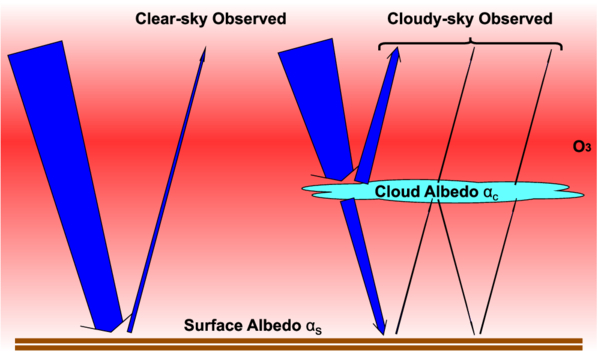
This brings us to today’s article. If the HWO is going to potentially observe Earth analogues, we might expect it to run into the same issue that plagues everyone living in the UK for most of the year — clouds. Clouds in the atmosphere of an exoplanet can sometimes cause trouble when trying to analyse the light. Cloud particles scatter different wavelengths of light differently, and cloud variability creates dynamic changes in the observed brightness that can make it hard to know what exactly you are looking at. Clouds can also mean varying levels of opacity to look through depending on cloud composition, and they can hide underlying atmospheric properties such as water content beneath a thick cloud layer. For transmission spectroscopy, even a thin layer of clouds can disrupt the measurements as the light has to travel a long distance through the atmosphere. However, for direct imaging, the effect of clouds is perhaps more nuanced. While a thick cloud deck will block the signal from whatever gas lies beneath it, it will also increase the overall albedo of the planet and make it easier to detect the gas above. This means that cloud height and type are both critical variables in understanding atmospheric properties of exoplanets, which is what the authors of today’s article set out to investigate.
To understand how clouds affect the ability to detect signs of life on distant Earth-like planets, the authors used computer simulations. They focused on two gases, molecular oxygen (O2) and ozone (O3). Both gases are often regarded as biosignatures, although their astrobiological significance has been debated. The authors first used a tool that simulates how a telescope like the HWO might observe an Earth-like planet around a star 15 parsecs away. This tool predicts how light bounces off a planet’s surface and atmosphere, and whether the two gases would show up clearly in the reflected light. Next, they created realistic cloud conditions using a cloud microphysics model. This model calculates how clouds might form and behave depending on factors like surface pressure or how much sunlight the planet gets. With this they were able to change things like cloud height and particle size. They then combined the two tools by adding the simulated clouds into the observations model and building a mathematical model to help explain what they saw in the simulations. The sketch for their model can be seen in Figure 1.
Figure 1: Clouds can affect the amount of reflected light (albedo) from the imaged planet. Depending on the cloud height and particle size, this can have a big impact on the observability of different species of gas in the atmosphere. Here the blue arrows indicate the amount of light entering the atmosphere and being reflected. The arrows get thinner from tail to head, representing absorption in the atmosphere. Depending on the presence of clouds, a varying amount is reflected back. The red colour indicates the assumed distribution of ozone, O3, which is concentrated at a high altitude. [Yang et al. 2025]
A Cloudy Sky Can Actually Be a Good Thing
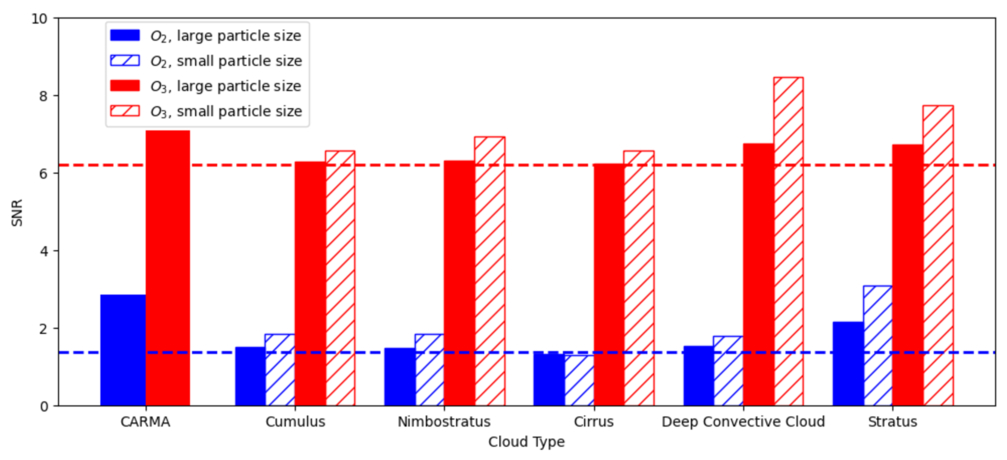
The researchers discovered that low clouds can actually make gases like oxygen and ozone easier to detect, because these clouds reflect more light without blocking the gases above them. On the other hand, high clouds can make it harder since they can hide the gases from view. They tested different cloud types using real data from Earth as seen in Figure 2. They looked at five common cloud types, like stratus (flat and low), cirrus (high and wispy), and deep convective clouds (tall, thunderstorm-like), and compared them to their model clouds (labelled as CARMA in the figure).
Figure 2: The figure shows how different types of clouds affect our ability to detect oxygen (blue) and ozone (red) on an Earth-like planet. The dashed lines show the results without clouds, while the bars show what happens when clouds are present. Solid bars represent larger cloud droplets, and striped bars represent smaller ones, which reflect more light. The figure shows that most cloud types — especially low clouds like stratus and thick storm clouds — actually make it easier to detect these gases, particularly when droplets are small. Only high, thin clouds (cirrus) slightly reduce oxygen detection, and even then, the effect is small. This is the article’s main finding: while clouds can block light in some observation methods, for direct imaging of reflected light, they often help us see signs of life better. The cloud types are based on real Earth data while the authors’ simulated cloud model is labelled as CARMA. [Yang et al. 2025]
They found that most clouds improved detection, especially if the cloud droplets were small (as they reflect more light). Stratus clouds and deep convective clouds gave the strongest boost to detection, because they have a lot of water and are either low (stratus) or extend through many layers (deep convective). Ozone saw the biggest bump in detectability as it is concentrated higher in the atmosphere, which means that it is in the region above most clouds where the increased reflection from the cloud layer below makes it easier to spot. This means that unlike the case for transit spectroscopy where clouds interfere with the detection of gases, for direct observations of the reflected light, clouds may actually be a good thing. This insight into the role of clouds in exoplanet atmospheres not only refines our current understanding but also helps guide the design of future telescopes, like the HWO, and our search for life on these remote worlds.
Original astrobite edited by Maria Vincent.
About the author, Kasper Zoellner:
I have a Master of Science in astronomy and I am currently working towards a PhD in physics and educational science. My greatest passion is the search for exoplanets and how stellar variability may influence the possibility of life. I am also interested in science outreach, education, and discussing what sci-fi novel to read next!
Editor’s Note:Astrobites is a graduate-student-run organization that digests astrophysical literature for undergraduate students. As part of the partnership between the AAS and astrobites, we occasionally repost astrobites content here at AAS Nova. We hope you enjoy this post from astrobites; the original can be viewed at astrobites.org.
Asteroids and meteorites are usually associated with doom and destruction (rest easy, dinosaurs), but they may have also been essential for the emergence of life on Earth. It is popularly theorized that some of the base building blocks of life, like volatiles and organics, were delivered here by meteorites and that the energy of these impacts synthesized even more, like HCN and amino acids. Expectedly, the same should be true for other planets. Today’s article explores this possibility using nearby analogies for potentially habitable exoplanets: our solar system’s ocean worlds.
Why Do Meteorites Carry Organics?
The solar system formed from one massive cloud of gas and dust, so the composition everywhere is approximately the same. However, early Earth was an extremely hot ball of magma that destroyed its organic matter. Luckily, organics were able to survive in objects like meteorites in the cold outskirts of the solar system.
Ocean Worlds in Our Neighborhood
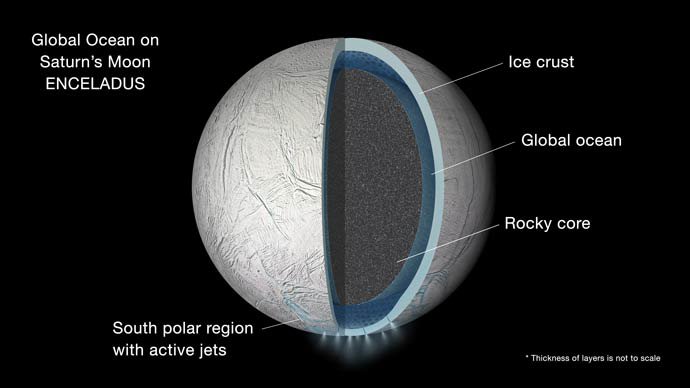
In the search for extraterrestrial life, we start by looking for the basic necessities — and water is a big one. Though Earth is the only planet in our solar system with liquid water, several moons of Jupiter and Saturn have it as well. These moons are beyond the balmy habitable zone, so their surfaces are covered in icy crusts, but beneath those crusts are subsurface oceans of liquid water, making these moons “ocean worlds” (see Figure 1). On their own, the presence of water makes these moons astrobiologically interesting, and they will also elucidate ocean worlds that are further away.
Figure 1: Saturn’s moon Enceladus with a liquid water ocean beneath the icy crust. Jets on the surface are strong indicators of hydrothermal vents on the ocean floor. [JPL]
Today’s authors studied typical impact events on Jupiter’s moon Europa and Saturn’s moons Enceladus and Titan to determine 1) if organics could survive the impacts, and 2) what processes could occur in the resulting melted material in the impact craters before it refreezes.
Surviving the Impact
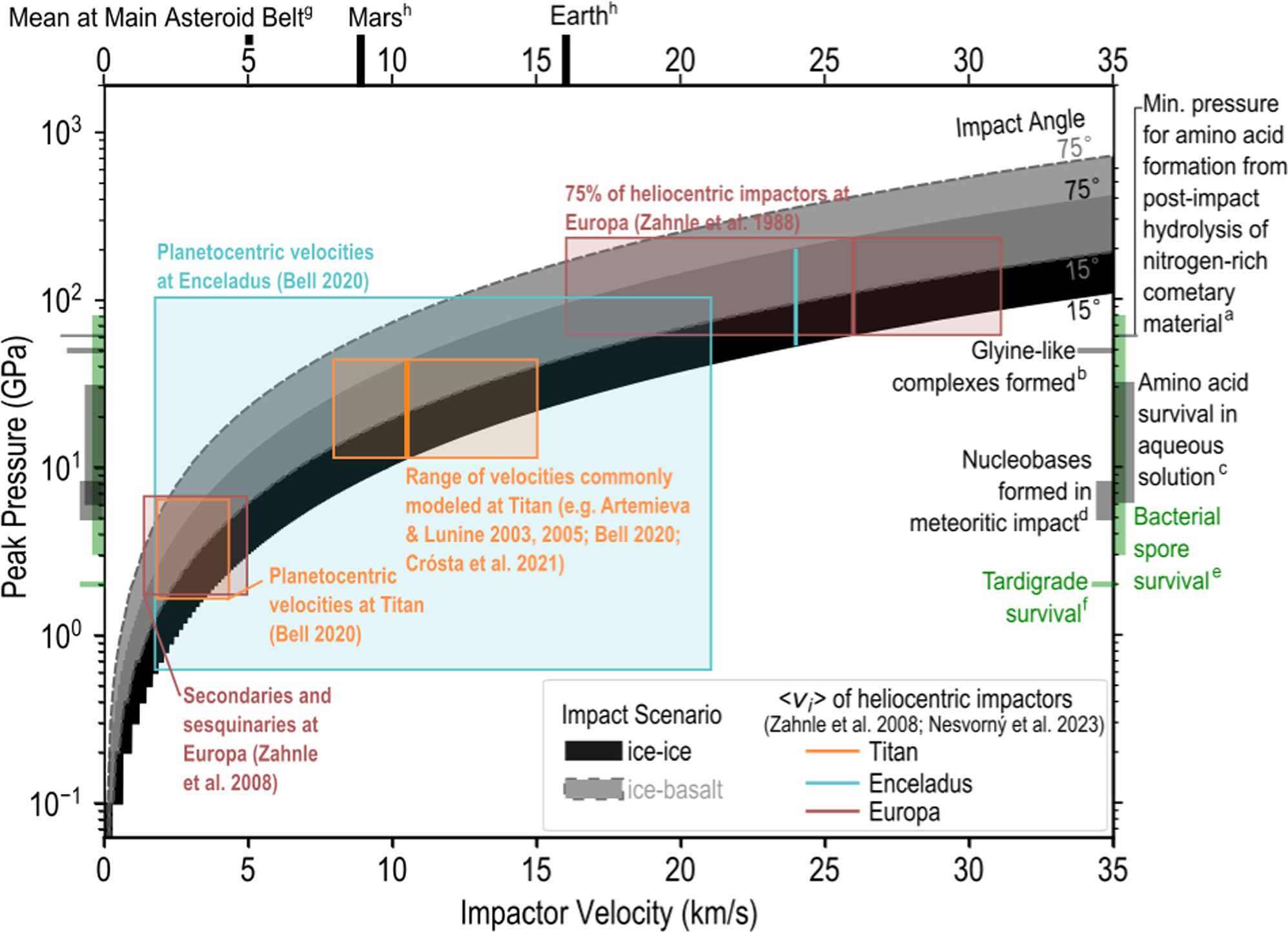
To evaluate survivability, the authors modeled the maximum pressure of an impact on an ocean world’s ice crust for a range of impact velocities and angles. Around Jupiter and Saturn, most impactors are either icy or rocky objects that originate from the Kuiper Belt or Oort cloud, so the authors modeled both types of impactors. Rocky impactors create higher pressures (shown in gray in Figure 2) than icy impactors (shown in black in Figure 2). From the sizes of observed craters on the ocean world moons, previous works determined the velocities and pressures of impacts, which are shown by the colored boxes in Figure 2. Finally, a number of other works have estimated the ranges of survivable pressures for biota and biologically important molecules, which are shown by the green and black bars on the right of Figure 2. Impressively, the survivable pressure ranges are within the observed and modeled pressures of impacts! So these life building blocks can be, and likely have been, deposited on the ocean world moons.
Figure 2: The modeled impact velocities and maximum pressures for icy (black) and rocky (gray) impactors. Survivable pressures of various organics (green and gray colored bars on the y-axis) are within the range of observed velocities and pressures from craters on each ocean world moon (colored boxes). [MacKenzie et al. 2024]
Crater Melt Pools
When an impactor hits the icy crust, some of the ice will melt. The deposited organics will end up in a pool of liquid water in the crater, which is an ample environment for prebiotic chemistry until the pool freezes. From the observed crater sizes and modeled velocities, the authors estimated how much liquid water could remain in a crater and how long it would take to freeze. Freeze times ranged from a few Earth years for the smallest craters (<4 kilometers in diameter) to thousands of years for the largest craters (hundreds of kilometers). In labs on Earth mimicking the crater conditions, amino acids have been synthesized in as short as a few months to a few years, so synthesis is possible in the melt pools.
The pools eventually freeze, trapping any deposited or synthesized material on the icy surface. Other processes, like future impacts, are required to break through the icy crust and transport material to the subsurface oceans where theorized hydrothermal vents could allow more complex development.
Tangible Evidence
In summary, survivable impacts on the ocean world moons are common, and each provides an opportunity for prebiotic chemistry to arise. Unlike most objects astronomers study, the proximity of these ocean worlds means that we can thoroughly understand them through physical samples. NASA’s Cassini detected organic compounds in the plumes that burst off the surface of Enceladus, and the Dragonfly mission is set to head for Titan in 2028 to collect and analyze samples once it arrives in 2034. In the coming decades, we may witness the discovery of more precursors to life or microbial life itself in the subsurface oceans of moons in our solar system, and gain radical insight into the ocean worlds beyond.
Original astrobite edited by Sonja Panjkov.
About the author, Annelia Anderson:
I’m an Astrophysics PhD candidate at the University of Alabama, using simulations to study the circumgalactic medium. Beyond research, I’m interested in historical astronomy, and hope to someday write astronomy children’s books. Beyond astronomy, I enjoy making music, cooking, and my cat.
Scientists have uncovered the genetic secrets behind a novel energy-use strategy that allows a deep-sea “giant” to survive without food for over five years, in one of nature’s most stunning survival stories.
Supergiant bathynomids, also known as giant isopods, present a bizarre biological paradox: they exhibit pronounced body gigantism as megafaunal species yet inhabit a deep-sea habitat with extremely sparse nutrient availability.
In a recent paper in Cell, researchers from the Institute of Oceanology of the Chinese Academy of Sciences (IOCAS) revealed how these large deep-sea creatures subsist on such limited food, using a novel genetic strategy unique to bathynomids.
A Complex Genetic Approach
The IOCAS team employed a multi-omic strategy to address the problem, combining genomics with other disciplines, such as morphology, physiology, behaviorology, and metagenomics. Doing so led to a novel discovery: that supergiant bathynomids don’t have just one, but two techniques to manage their limited access to nutrients.
One of the large species of Bathynomus seen in the Gulf of Mexico (Image Credit: NOAA)
First, isopods have a massive stomach that can store vast amounts of nutrients for later use. Second, they have an exceptionally low basal metabolic rate (BMR), which is genetically driven.
To diversify their research, the team focused on two species that occupy different depths. At around 300 meters, the Bathynomus doederleini is the shallower of the two, while the Bathynomus jamesi is found at 898 meters. Despite the difference in depth, both are technically considered “deep-sea” inhabitants, as the boundary is defined at 200 meters.
A Powerful Stomach
Roughly two-thirds of a bathynomid’s body is stomach—a figure far beyond that of related intertidal and shallow water species. The contents of those enormous stomachs are also unusual, filled with a mud-like mixture of highly digested food. This finely ground nutrient sludge has a low proportion of digestive bacteria, but a high amount of lipid-storing Chlamydiae.
With a bacterial ratio leaning toward preservation rather than just digestion, this creates a food reserve that can be slowly digested and utilized as the creatures lower their BMR to endure long periods between feedings.
Genetic Findings
Another major finding was that bathynomids benefit not only from vertically transferred genes between parents and offspring, but from the horizontally transferred ND1 gene they acquired from an exogenous symbiotic bacterium. Intriguingly, the transfer defied typical horizontal transfer limitations, achieving an ultra-high level of expression in the bathynomid genome.
These isopods use epigenetic histone modifications to regulate energy-related gene expression, thereby improving efficiency, conservation, and control. An example of this is histone acetylation regulating ND1 expression at an ultra-high level, which the team investigated in a laboratory test. Researchers suspected this gene was essential to energy metabolism, as it is a component of Complex I in the electron transport chain.
ND1 Genetic Tests
Using zebrafish, nematodes, and human 293T cells, the IOCAS team tested the gene’s impact on energy usage. At normal temperatures, the team found that ND1 actually decreased starvation tolerance by increasing energy metabolism. Yet when the team lowered temperatures to reflect those found in a typical deep sea environment, they found the opposite effect, with ND1 decreasing mitochondrial activity and energy metabolism rates, to improve zebrafish starvation tolerance an astounding 37%.
The IOCAS team concluded that ND1 provides a solution to the long-standing paradox of bathynomid gigantism in the context of their nutrient-poor environment. By fine-tuning the degree of metabolic depression, the gene can adjust the mitochondrial metabolic network to preserve energy during extended periods without sustenance.
Never before has such a strategy for energy efficiency, combining horizontal gene transfer and epigenetic optimization, been identified in a deep-sea megafaunal species.
“Our work not only deciphers the mystery of ultra-long starvation tolerance in deep-sea isopods,” said lead author Yuan Jianbo, “but also provides an important paradigm for understanding how life balances growth and survival in extreme environments.”
Ryan Whalen covers science and technology for The Debrief. He holds an MA in History and a Master of Library and Information Science with a certificate in Data Science. He can be contacted at ryan@thedebrief.org, and follow him on Twitter @mdntwvlf.
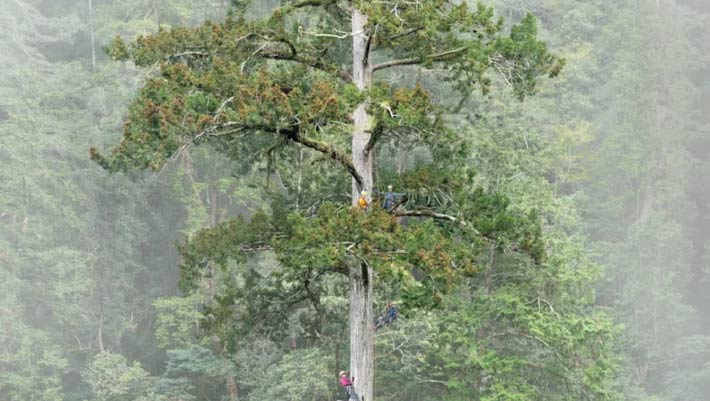
Deep in the mountains of northern Taiwan, a towering Taiwania cryptomerioides -- a large coniferous tree in the cypress family Cupressaceae whose ancestors date back 100 million years -- has been confirmed as the tallest known tree in East Asia.
Scientists found that aging may begin with a hidden cellular remodel that could help drive disease later in life. Thanks to advances in public health, people are living longer than ever before. However, many of those extra years are accompanied by chronic illnesses rather than good health. Aging is a normal part of life, but [...]
Scientists discovered a hidden gut-brain network that can change cravings when the body needs more protein. The body has a remarkable ability to recognize when it is missing important nutrients and adjust behavior accordingly. New research shows that the gut plays a much larger role in this process than previously understood, actively detecting protein shortages [...]
A gene normally responsible for repairing DNA may have a darker side when produced in excess. Cancer treatment is increasingly moving beyond where a tumor forms and focusing instead on the genetic flaws that drive it. Now, researchers at Penn State College of Medicine have identified an unexpected DNA repair gene that could help expand [...]
I t was the dead of winter in Boston. The surface of the Charles River was frozen solid. But Zachary Kelso braved the biting cold to finally put to rest a mystery that has haunted neuroscience labs for over half a century. To do that, Kelso, a research assistant in the Harvard lab of the neuroscientist Sam Gershman, needed some worms. Specifically, planarians: arrow-headed flatworms…
Scientists have uncovered evidence that tiny microbes living inside fish may be helping shape the chemistry of the world’s oceans. The new study, led by former graduate student Anthony Bonacolta at the University of Miami Rosenstiel School of Marine, Atmospheric, and Earth Science, suggests that bacteria in fish intestines may work together with their hosts [...]
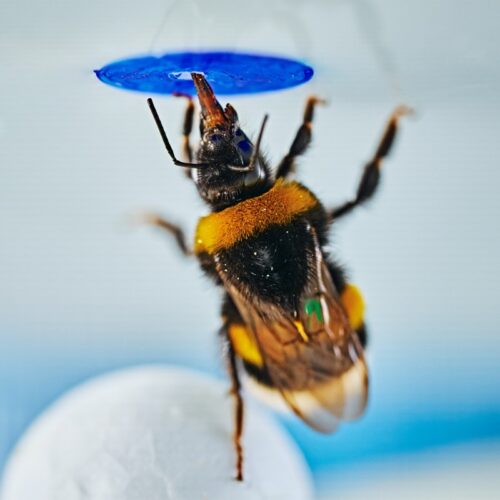
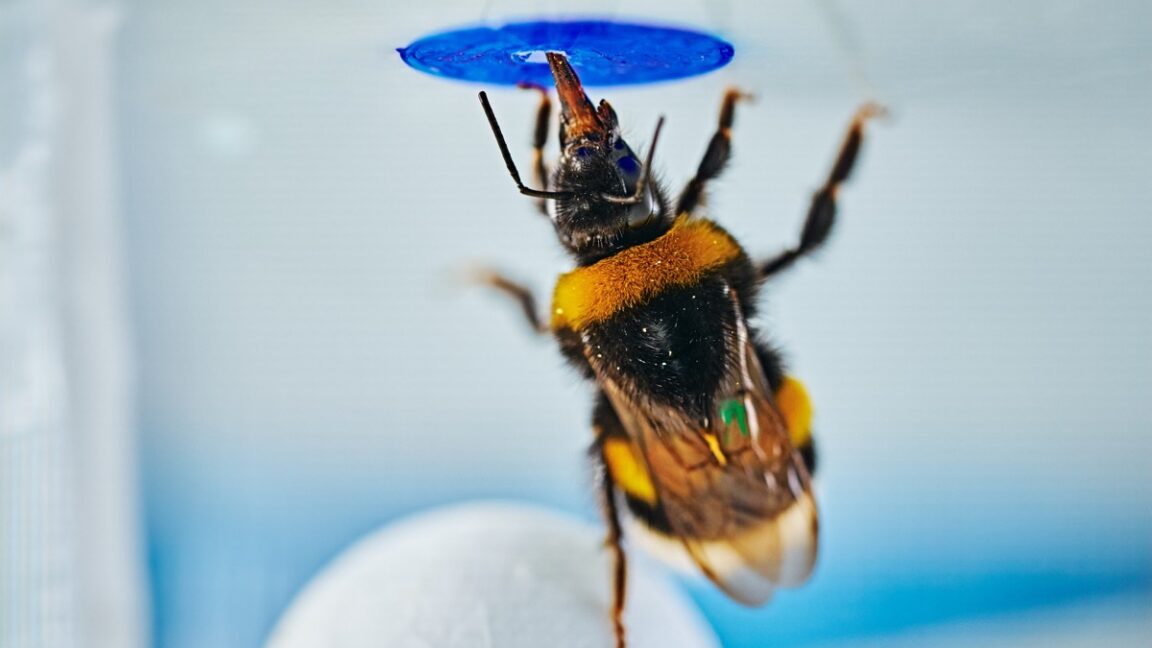
Despite having tiny brains, bumblebees have demonstrated a remarkable ability to socially learn how to use tools, solve simple puzzles, and cooperate to achieve a goal. It seems they can also solve object-manipulation tasks without any previous training, according to a new paper published in the journal Science. According to the authors, it's the first time this kind of spontaneous problem-solving has been demonstrated in an insect.
In 2024, Olli Loukola of the University of Finland co-authored a study demonstrating that bumblebees could cooperate to solve complex challenges. It's the kind of cognitive task scientists had previously only observed in large-brained mammals like humans and chimpanzees. Loukola et al. trained pairs of bees to push a Lego block to the middle of a mini-arena or push against a door at the end of a tunnel to get a reward.
The team noticed that the bees were more likely to engage in the tasks if their partners also participated, compared to untrained control groups. They concluded that bees can learn to solve novel cooperative tasks outside the hive and may even be intentionally working together, although the researchers cautioned that more detailed monitoring of the behavior was needed to fully understand the partners' roles.
PFDA, a PFAS “forever chemical,” can cause craniofacial birth defects by disrupting retinoic acid regulation during fetal development, revealing the first clear molecular mechanism behind the link. Researchers have long linked perfluoroalkyl and polyfluoroalkyl substances (PFAS), often called “forever chemicals,” to serious birth defects. However, scientists have struggled to explain exactly how these pollutants affect [...]

 Login