❌

Reading view

Things to Consider Before Filing a Personal Injury Claim

If you’ve been injured through someone else’s negligence, filing a personal injury claim is your legal right. But having the right to file and being ready to file are two different things. Rushing into a claim without preparation is almost as costly as waiting too long to file one. Here are some of the things […]

The post Things to Consider Before Filing a Personal Injury Claim appeared first on Strange Sounds.

  •  

How BigBunny Casino and GameZone Differ in Online Entertainment

Online entertainment platforms come in many shapes and target varied audiences with distinct objectives. Some aim to deliver a traditional international casino atmosphere, while others develop multifaceted ecosystems highlighting local player interests. BigBunny Casino and GameZone serve as prime examples, each providing digital gaming but offering divergent experiences. Recognizing their differences offers players guidance in […]

The post How BigBunny Casino and GameZone Differ in Online Entertainment appeared first on Strange Sounds.

  •  

Mystery Solved: The Decades-Old Secret Lurking Beneath North Carolina’s Blueberry Farms

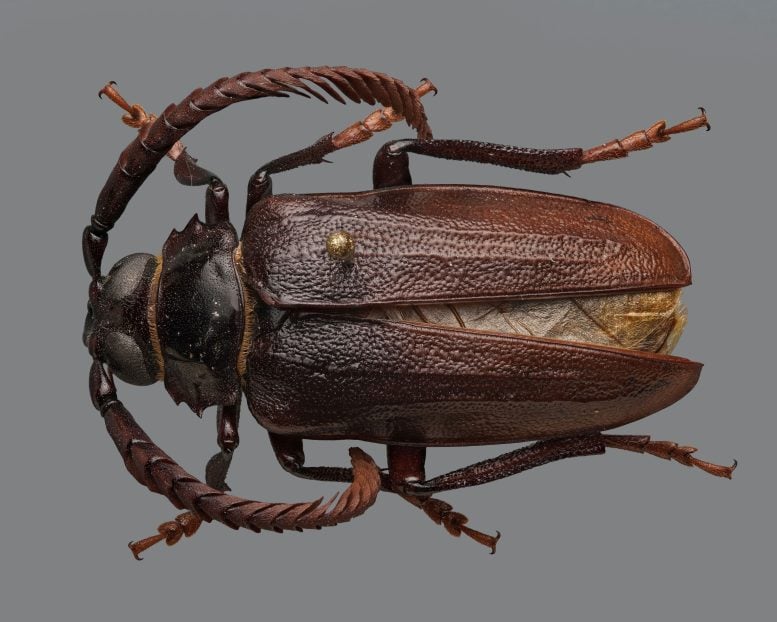
Prionus imbricornisA newly identified pest is raising concerns for North Carolina’s blueberry industry. What began as a mystery beneath North Carolina’s blueberry fields has now been traced to a surprising culprit: a giant root-feeding beetle never before confirmed attacking blueberries anywhere else in the United States. Researchers at North Carolina State University have identified the insect [...]
  •  

Using bacteria to fight fungal brown rot

Brown rot is a common fungal disease in the Southeastern United States that affects stone fruits like peaches, cherries, and plums. Monilinia fructicola is a tan, fuzzy fungus that grows on tree flowers, twigs, and fruit, and is the most common cause of brown rot. Once brown rot infects a tree, the damage is irreversible, causing significant crop losses in commercial orchards. Farmers try to control the spread of M. fructicola by applying chemical sprays, called fungicides, to fruit trees in the spring.

In M. fructicola, a biosynthesis gene named MfCYP51 encodes a major protein critical to the fungi’s survival. Certain fungicides, called demethylation inhibitor (DMI) fungicides, stop M. fructicola from growing by targeting this protein. Over the last 20 years, DMI fungicides have become less effective against brown rot as M. fructicola becomes more resistant. 

Living microorganisms and their metabolites can control fungal diseases as an alternative to chemical fungicides, known as biofungicides. Many bacteria produce compounds like hydrogen cyanide and pyrrolnitrin that damage fungal cells. However, scientists have not found a biofungicide suitable for commercial production.​ A group of researchers at Clemson University in the USA and Huazhong Agricultural University in China set out to test whether the soil bacteria Pseudomonas chlororaphis and Bacillus subtilis could be effective biofungicides against brown rot. 

The researchers performed an incubation experiment to analyze how the fungal cells make their critical protein from the MfCYP51 gene, a process called gene expression, under different fungicide treatments. They used 3 M. fructicola strains sensitive to traditional DMI fungicides and 3 resistant strains. They tested these with 5 different fungicide treatments: a DMI fungicide, a mixture of P. chlororaphis metabolites, a mixture of living B. subtilis cells, a DMI fungicide + P. chlororaphis metabolites, and a DMI fungicide +  B. subtilis cells. They also set up a control treatment with sterile water instead of fungicide.  

After 6 hours, the researchers extracted the molecule that measures gene expression, called RNA, from the fungi. They found that both the P. chlororaphis treatment and the DMI fungicide + P. chlororaphis treatment substantially reduced MfCYP51 expression in both the sensitive and resistant isolates compared to the controls. In contrast, the DMI fungicide, B. subtilis, and DMI fungicide + B. subtilis treatments increased MfCYP51 expression in the resistant isolates. The researchers concluded that P. chlororaphis has a unique ability to reduce gene expression, unlike other biofungicides.

​To further investigate how the biofungicide treatments work, the team tested whether P. chlororaphis and B. subtilis produced the anti-fungal metabolite pyrrolnitrin. They added 1 milliliter of each treatment to a machine that separates and identifies liquid compounds using high pressure, called a high-performance liquid chromatograph. They found that the P. chlororaphis treatment contained pyrrolnitrin, so they hypothesized that it was responsible for reducing gene expression.

Additionally, the researchers tested their 5 treatments on brown rot in fruit. For each treatment, they took 10 Gala apples, washed and sterilized their surfaces, and sprayed them with the fungicides. After 24 hours, they poked holes in the apples with toothpicks and added 20 microliters of liquid containing M. fructicola cells to the poked holes. They placed the apples in a humid chamber for 5 days and measured the number and size of brown rot spots that developed on their surfaces. 

Despite decreasing MfCYP51 expression, ​the researchers found that P. chlororaphis treatment alone didn’t reduce brown rot disease compared to the control, but the DMI fungicide and B. subtilis treatments did. The mixed treatments of DMI fungicide + P. chlororaphis and DMI fungicide + B. subtilis both reduced brown rot disease compared to the control, but only the DMI fungicide + P. chlororaphis treatment prevented it. 

​The researchers concluded that although biofungicides may not be fully effective on their own, commercializing them could allow farmers to use less DMI fungicide. They explained that scaling back the use of DMI fungicides would slow M. fructicola resistance. Finally, they proposed that future researchers test biofungicide mixtures containing pyrrolnitrin in the field to observe real-world effects on stone fruit trees.

The post Using bacteria to fight fungal brown rot appeared first on Sciworthy.

  •  

‘Happiness is not just about GDP’: ambitious plan or utopia?

Some will question its credibility – but the alternative future to the one imagined in the Global Justice Report is far more bleak

In our increasingly dystopian world, who wouldn’t want to at least be open to a utopian antidote? The Global Justice Report, published on Thursday, outlines how to build a prosperous, equitable world within safe planetary boundaries. It’s a push from the modern eco-socialist left in a global battle for ideas that will shape the future.

Based on past social achievements and future energy transformation, it indicates that the overwhelming majority of people on the planet could, by the end of the century, work less and earn more – while keeping temperatures down and avoiding much of the current destruction of nature. It is an ambitious, comprehensive and upbeat plan, and a stronger argument around which to build a political campaign than abstract goals of net zero or decarbonisation.

Continue reading...

© Photograph: Emmanuel Croset/AFP/Getty Images

© Photograph: Emmanuel Croset/AFP/Getty Images

© Photograph: Emmanuel Croset/AFP/Getty Images

  •  

World’s Most-Used Weedkiller Found To Disrupt Honeybee Brains

Farmer Spraying Herbicides Pesticides InsecticidesNew research suggests a widely used herbicide may have subtle but significant effects on honeybees. Growing flowering plants for pollinator gardens, farms, and home landscapes often requires herbicides to control weeds. Honeybees are naturally drawn to these areas and are essential for pollination. But researchers wanted to know what happens when bees are exposed to [...]
  •  

Obras icónicas de Matisse ganham vida numa nova experiência interativa com IA da Google

A mais recente experiência do Google Arts & Culture usa o modelo de geração de vídeo Veo para ir além dos limites da tela e animar quatro das mais famosas pinturas de Henri Matisse.

The post Obras icónicas de Matisse ganham vida numa nova experiência interativa com IA da Google appeared first on Tek Notícias.

  •  

The Sound Factor: Why Certain Casino Games Feel More Intense than Others

Technology • Audio Engineering • Digital Entertainment The Sound Factor: Why Certain Casino Games Feel More Intense than Others Modern casino games use advanced sound engineering, frequency mapping, dynamic audio systems, and low-latency synchronization to create immersive digital experiences that feel emotionally intense and highly responsive. May 12, 2026 • 6 min read Sound design, […]

The post The Sound Factor: Why Certain Casino Games Feel More Intense than Others appeared first on Strange Sounds.

  •  

Online Casino Themes That Borrow From Ancient Myths, Lost Civilizations, and End Times Imagery

There is a reason so many online casino games reach backward before they move forward. For all the talk around speed, interface design, and mobile play, a huge part of the experience still comes down to atmosphere. Before a player notices mechanics, bonus features, or payout structures, they notice the world the game is trying […]

The post Online Casino Themes That Borrow From Ancient Myths, Lost Civilizations, and End Times Imagery appeared first on Strange Sounds.

  •  

Level Up Your Tongits Skills: Tongits Go APK Guide & GameZone

Tongits remains one of the most competitive and skillful card games, particularly popular among Filipino players. This game, rooted in strategy, memory, and decision-making, has extended its reach into the world of digital platforms like Tongits Go APK and GameZone (also referred to as GZone). These platforms allow players to improve their gameplay, sharpen their […]

The post Level Up Your Tongits Skills: Tongits Go APK Guide & GameZone appeared first on Strange Sounds.

  •  

On its 40th anniversary, we reassess 1986's SpaceCamp

Forty years ago, the future seemed just around the corner—and the vehicle that was going to take us there was NASA's Space Shuttle. Originally envisioned as part of a larger integrated space transportation system, the shuttle was billed as a fully reusable vehicle, totally unlike the one-and-done capsules of the fading Apollo era, capable of making monthly (and perhaps even weekly) ferry flights to low Earth orbit.

The shuttle, it was hoped, would transform human space flight from extraordinary to mundane. Brands like Coke and Pepsi were quick to hop aboard and expand the Cola Wars into space, and there were even plans to blast Sesame Street's Big Bird into orbit.

The loss of Challenger in January 1986—carrying educator Christa McAuliffe, who would have been the first private citizen in space—put the kibosh on all of that. The shuttle, while fantastically advanced, would never be the vehicle to help humankind slip all of our surly bonds, so to speak. Even operating at its most frantic peak in 1985 just before Challenger's loss, the shuttle hardware managed a maximum of nine flights in one calendar year; for most of the 1990s, it performed at five or six flights per year. Civilians in space—to say nothing of Big Bird—would have to wait.

Read full article

Comments

© 20th Century Fox

  •  
❌