❌

Reading view

Using bacteria to fight fungal brown rot

Brown rot is a common fungal disease in the Southeastern United States that affects stone fruits like peaches, cherries, and plums. Monilinia fructicola is a tan, fuzzy fungus that grows on tree flowers, twigs, and fruit, and is the most common cause of brown rot. Once brown rot infects a tree, the damage is irreversible, causing significant crop losses in commercial orchards. Farmers try to control the spread of M. fructicola by applying chemical sprays, called fungicides, to fruit trees in the spring.

In M. fructicola, a biosynthesis gene named MfCYP51 encodes a major protein critical to the fungi’s survival. Certain fungicides, called demethylation inhibitor (DMI) fungicides, stop M. fructicola from growing by targeting this protein. Over the last 20 years, DMI fungicides have become less effective against brown rot as M. fructicola becomes more resistant.Β 

Living microorganisms and their metabolites can control fungal diseases as an alternative to chemical fungicides, known as biofungicides. Many bacteria produce compounds like hydrogen cyanide and pyrrolnitrin that damage fungal cells. However, scientists have not found a biofungicide suitable for commercial production.​ A group of researchers at Clemson University in the USA and Huazhong Agricultural University in China set out to test whether the soil bacteria Pseudomonas chlororaphis and Bacillus subtilis could be effective biofungicides against brown rot.Β 

The researchers performed an incubation experiment to analyze how the fungal cells make their critical protein from the MfCYP51 gene, a process called gene expression, under different fungicide treatments. They used 3 M. fructicola strains sensitive to traditional DMI fungicides and 3 resistant strains. They tested these with 5 different fungicide treatments: a DMI fungicide, a mixture of P. chlororaphis metabolites, a mixture of living B. subtilis cells, a DMI fungicide + P. chlororaphis metabolites, and a DMI fungicide +Β  B. subtilis cells. They also set up a control treatment with sterile water instead of fungicide.Β Β 

After 6 hours, the researchers extracted the molecule that measures gene expression, called RNA, from the fungi. They found that both the P. chlororaphis treatment and the DMI fungicide + P. chlororaphis treatment substantially reduced MfCYP51 expression in both the sensitive and resistant isolates compared to the controls. In contrast, the DMI fungicide, B. subtilis, and DMI fungicide + B. subtilis treatments increased MfCYP51 expression in the resistant isolates. The researchers concluded that P. chlororaphis has a unique ability to reduce gene expression, unlike other biofungicides.

​To further investigate how the biofungicide treatments work, the team tested whether P. chlororaphis and B. subtilis produced the anti-fungal metabolite pyrrolnitrin. They added 1 milliliter of each treatment to a machine that separates and identifies liquid compounds using high pressure, called a high-performance liquid chromatograph. They found that the P. chlororaphis treatment contained pyrrolnitrin, so they hypothesized that it was responsible for reducing gene expression.

Additionally, the researchers tested their 5 treatments on brown rot in fruit. For each treatment, they took 10 Gala apples, washed and sterilized their surfaces, and sprayed them with the fungicides. After 24 hours, they poked holes in the apples with toothpicks and added 20 microliters of liquid containing M. fructicola cells to the poked holes. They placed the apples in a humid chamber for 5 days and measured the number and size of brown rot spots that developed on their surfaces.Β 

Despite decreasing MfCYP51 expression, ​the researchers found that P. chlororaphis treatment alone didn’t reduce brown rot disease compared to the control, but the DMI fungicide and B. subtilis treatments did. The mixed treatments of DMI fungicide + P. chlororaphis and DMI fungicide + B. subtilis both reduced brown rot disease compared to the control, but only the DMI fungicide + P. chlororaphis treatment prevented it.Β 

​The researchers concluded that although biofungicides may not be fully effective on their own, commercializing them could allow farmers to use less DMI fungicide. They explained that scaling back the use of DMI fungicides would slow M. fructicola resistance. Finally, they proposed that future researchers test biofungicide mixtures containing pyrrolnitrin in the field to observe real-world effects on stone fruit trees.

The post Using bacteria to fight fungal brown rot appeared first on Sciworthy.

  •  

The importance of determining an equilibrium state for space traffic management

The rapid expansion of human and robotic activity in low Earth orbit makes critically important the need to implement effective space traffic management (STM). This will be one of the […]

The post The importance of determining an equilibrium state for space traffic management appeared first on SpaceNews.

  •  

Scientists Create β€œLiving Plastic” That Self-Destructs in Just Six Days

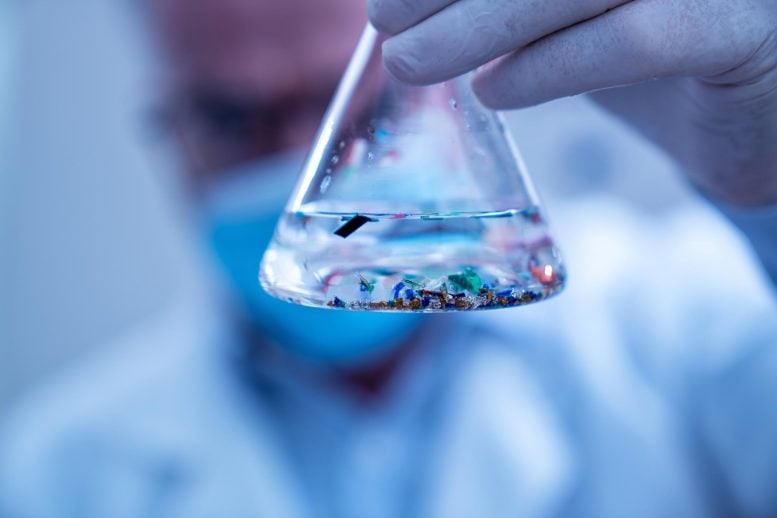
Scientist Examining Small Plastic Particles Laboratory FlaskScientists have developed β€œliving plastics” that can be programmed to break themselves down when triggered. Many plastic items are made for one-time use, but the materials can remain in the environment for years. Researchers are exploring a different approach: living plastics, materials built with microbes that can be activated to break down the polymer when [...]
  •  

Upcycling polystyrene with sunlight and sulfur

Over 20 million tons of polystyrene plastic are produced annually, yet only a small fraction is recycled worldwide. Current recycling methods consume large amounts of energy and often rely on harsh and toxic chemicals to break the strong molecular chains that make up polystyrene. One possible solution is the use of sulfur, which is an inexpensive byproduct formed when refining crude oil. Its unique chemical structure allows it to break up strong chemical chains in long plastic molecules. Despite its abundance, sulfur has very limited applications, and converting it into more usable forms tends to require a lot of heat, rendering it unused for long periods of time.Β 

Researchers at the Dalian Institute of Chemical Physics hypothesized that sulfur could help break down polystyrene waste to form more valuable chemicals. To power this reaction, they converted sunlight into heat energy through a process called photothermal conversion. They used this heat to transform polystyrene and sulfur into valuable chemicals like 2,4-diphenylthiophene, or chemical D, and 1,3,5-triphenylbenzene, or chemical T, which are used to make semiconductors and chemical sensors.Β 

To test this, the team mixed ground polystyrene and sulfur at a molar ratio of 1:0.5 in a glass test tube. They sealed the tube with a balloon and secured it onto an iron stand. Then, they focused sunlight onto the bottom of the tube using a curved mirror. As the mixture heated up, the yellow-white solids gradually melted and transformed into a reddish-black liquid after 2 minutes. After heating, the researchers removed the mirror and allowed the system to cool before collecting the gaseous products from the balloon and dissolving the remaining solids for further purification and analysis.Β 

The researchers then adjusted the reaction conditions to understand what factors influenced their results. They tested the reaction without sulfur, varied the sulfur ratios from 0.2 to 0.8, and replaced elemental sulfur with other sulfur-containing compounds. They also explored adding known photothermal agents, specifically metal oxide additives, to the mixture.Β 

To compare the difference between sunlight and artificial light, the researchers repeated the experiment indoors using a 100 Watt LED bulb and monitored temperature changes with a thermal camera. They also ran a control experiment using only polystyrene to check how sulfur affected the yield under LED light. They also tested exposure times from 1 to 6 minutes in 1-minute increments to determine how long it took to achieve the highest yields under LED. The researchers used these tests to identify which conditions were necessary for the reaction to occur and how different factors influenced its outcome.

They found that without sulfur or with alternative sulfur-containing compounds, the reaction did not produce chemical D or T under sunlight. In contrast, reactions that included sulfur successfully produced these target products, with the highest yields of 34% for D and 16% for T at a sulfur ratio of 0.5. When they added metal oxides, the chemical yields decreased to 22% and 12%, respectively, suggesting that these additives interfered with the desired reactions. In addition, when the researchers switched from sunlight to LED, the reaction yields dropped to 26% for D and 13% for T.Β 

Next, they examined how reaction time influenced product formation. They found that yields increased gradually before reaching the maximum at 4 minutes and leveling off. They also noted that mixtures containing sulfur heated up from room temperature to 320Β°C (608Β°F), while the control setup only showed a slight temperature increase. The researchers interpreted these results as confirmation of sulfur’s dual role as a reactant and a light-to-heat converter that enables the conversion of polystyrene to useful chemicals.

Taking it a step further, the researchers tested their method on real-world polystyrene wastes, including food packaging, cup lids, and foamed plastics. They successfully produced chemicals D and T from these materials, demonstrating that their process works beyond laboratory samples.

The team concluded that their study presents a simple, fast, and solvent-free approach to converting 2 abundant waste materials into valuable chemicals using sunlight. By combining polystyrene waste and excess sulfur, the researchers offer a new pathway for sustainable polymer upcycling that uses clean energy and is broadly applicable to everyday plastics.

The post Upcycling polystyrene with sunlight and sulfur appeared first on Sciworthy.

  •  
❌