❌

Reading view

NASA’sΒ X-59Β AircraftΒ Flies Supersonic for First Time

4 min read

NASA’sΒ X-59Β AircraftΒ Flies Supersonic for First Time

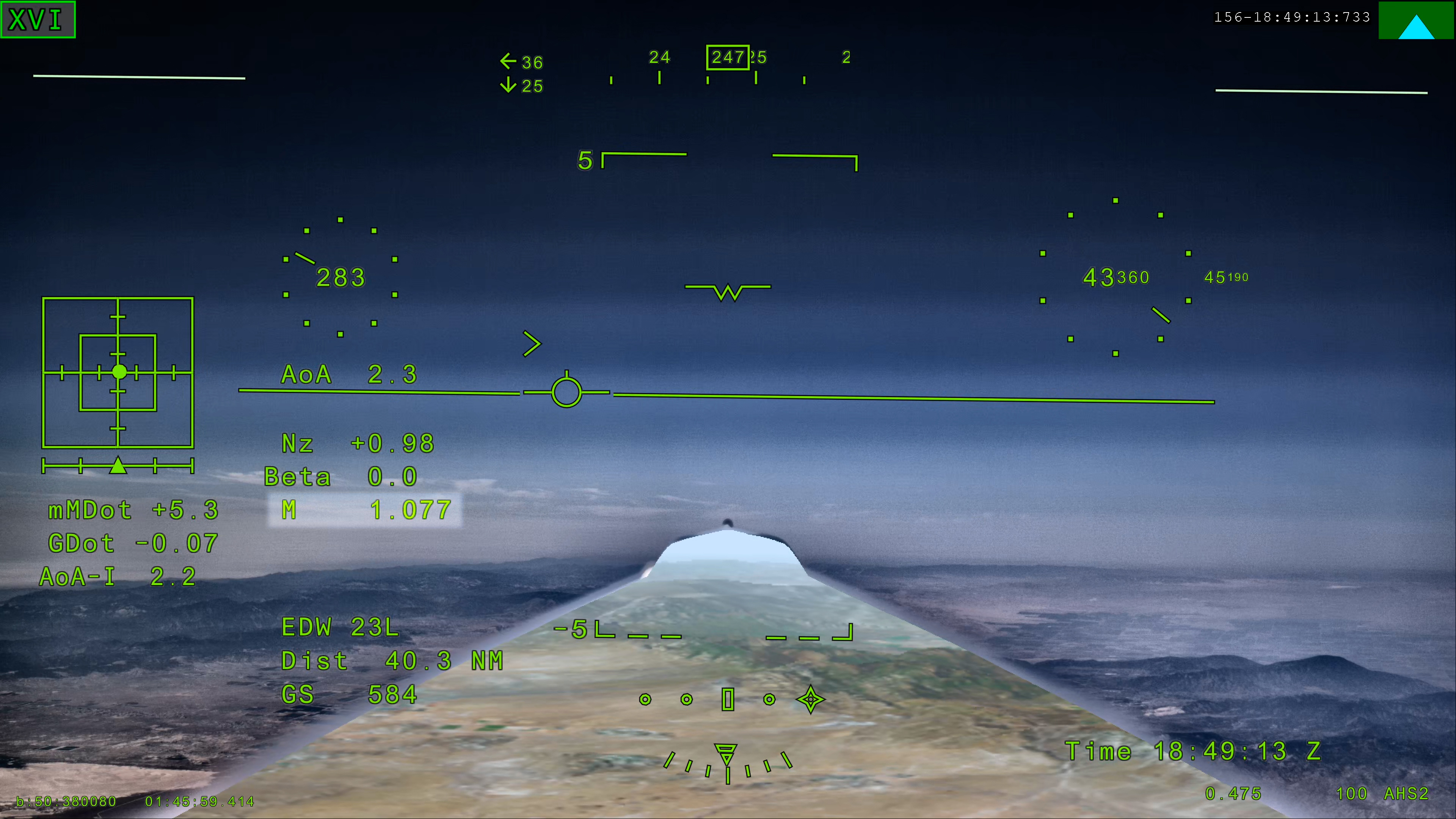
NASA’s X 59 eXternal Vision System digital display shows green flight data overlaid on the forward scenery as the aircraft flies supersonic. Numerical indicators, horizon references, and a Mach number readout are visible on the screen.
NASA’s X 59 eXternal Vision System shows Machβ€―1.077 on Friday, June 5,β€―2026, marking the aircraft’s first time reaching supersonic speed in support of NASA’s Quesst mission. The moment represents a milestone for the aircraft as it transitions to include test flights faster than the speed of sound.
NASA

NASA’sΒ experimentalΒ X-59Β aircraftΒ markedΒ a major milestoneΒ Friday,Β JuneΒ 5,Β when itΒ flew faster than the speed of sound for the first time,Β setting the stage forΒ demonstratingΒ its quiet supersonic capabilitiesΒ later this year.Β 

NASA test pilot Jim β€œClue” LessΒ took offΒ and landedΒ at Edwards Air Force BaseΒ in California, reaching a top speed ofΒ approximatelyΒ MachΒ 1.1Β (713Β mph)Β and altitude ofΒ 43,400 feet.Β TheΒ X-59’sΒ flight began atΒ 11:08Β a.m.Β PDTΒ and lasted 81Β minutes,Β withΒ the team focusing on flying qualitiesΒ atΒ both subsonic and then supersonic speeds.Β Β 

In the coming days, we expect to take the next step and push to Mach 1.4

jared isaacman

jared isaacman

NASA Administrator

”X-59 is getting ready for its quiet supersonic debut. Since the aircraft’s first flight on Oct. 28, 2025, the team has made tremendous progress,Β flyingΒ 16Β timesΒ in the last 90 days and getting into a steady test rhythm. In the coming days, we expect to take the next step and push to Mach 1.4,” said NASA Administrator Jared Isaacman β€œI’m grateful to the NASA team and Lockheed Martin Skunk Works for their help getting us to this point, and I hope this is the first of many collaborations as we rebuild NASA’s X-plane portfolio.” 

The X-59 is designed to flyΒ atΒ supersonicΒ speedsΒ while creating only a quiet thump instead of a loud sonic boom.Β For this flight, aΒ NASA F‑15 chase plane flew nearby toΒ monitorΒ the X‑59.Β TheΒ loud sonic booms fromΒ the F-15Β obscuredΒ any sound made by the X-59.Β Β 

β€œThe X-59’s first supersonic flight is a testament to America’s enduring leadership in science, engineering, and aerospace innovation,” said Michael Kratsios,Β Assistant to the President for Science and Technology and Director of the Office of Science and Technology Policy.Β β€œThis achievement comes as the Trump Administration continues work to unleash supersonic flight and enable American ingenuity.” 

ThisΒ first supersonicΒ flight isΒ aΒ significantΒ milestone, butΒ anΒ eventΒ evenΒ more critical toΒ the mission is upcoming. In just days, theΒ aircraftΒ is expected to makeΒ its firstΒ β€œmission conditions” flight, reaching aΒ cruising speed of Mach 1.4 (925 mph) and altitude of approximately 55,000 feet. The X-59Β alsoΒ will beΒ accompanied by a chase planeΒ for this flight.Β Β 

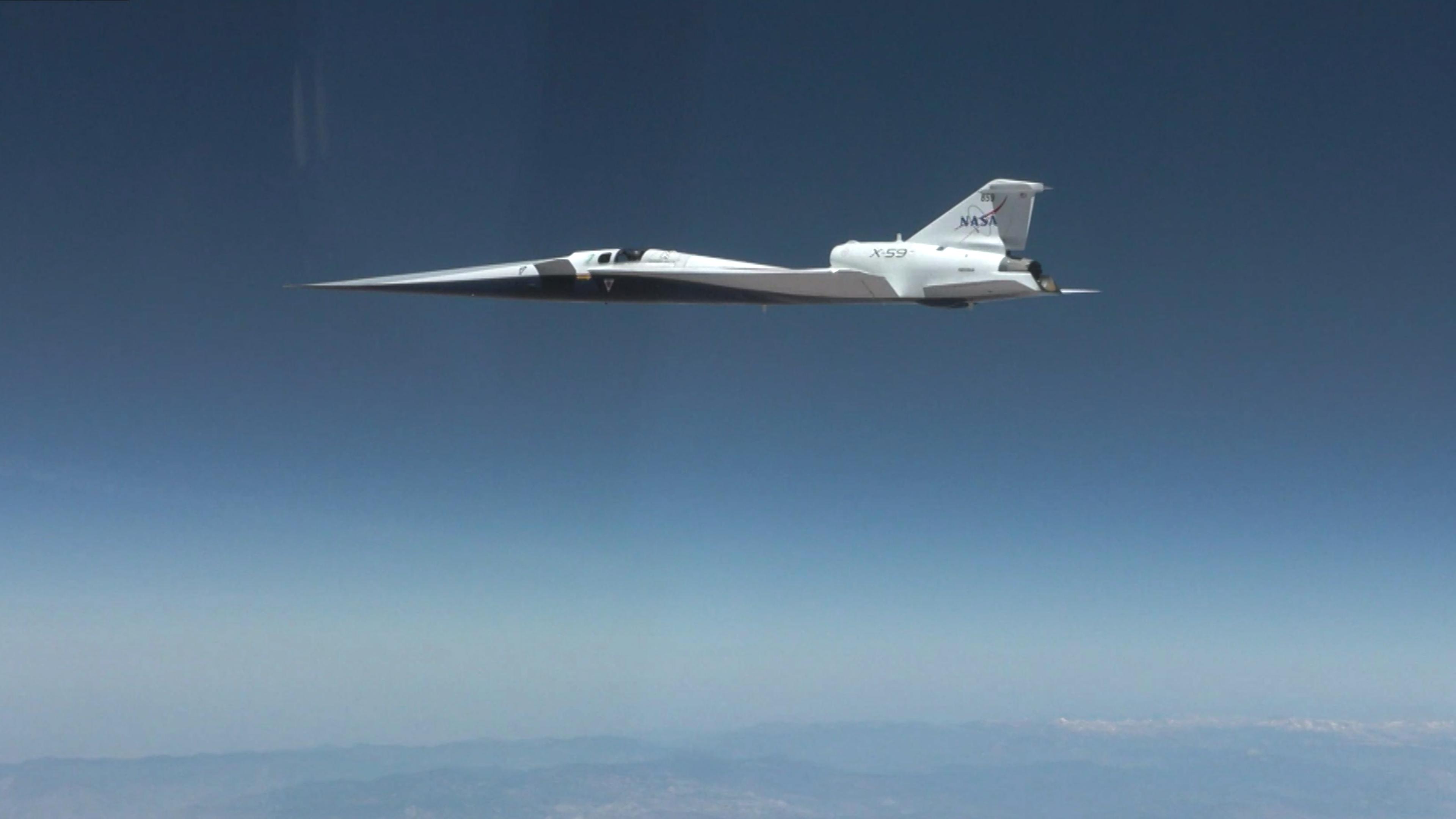
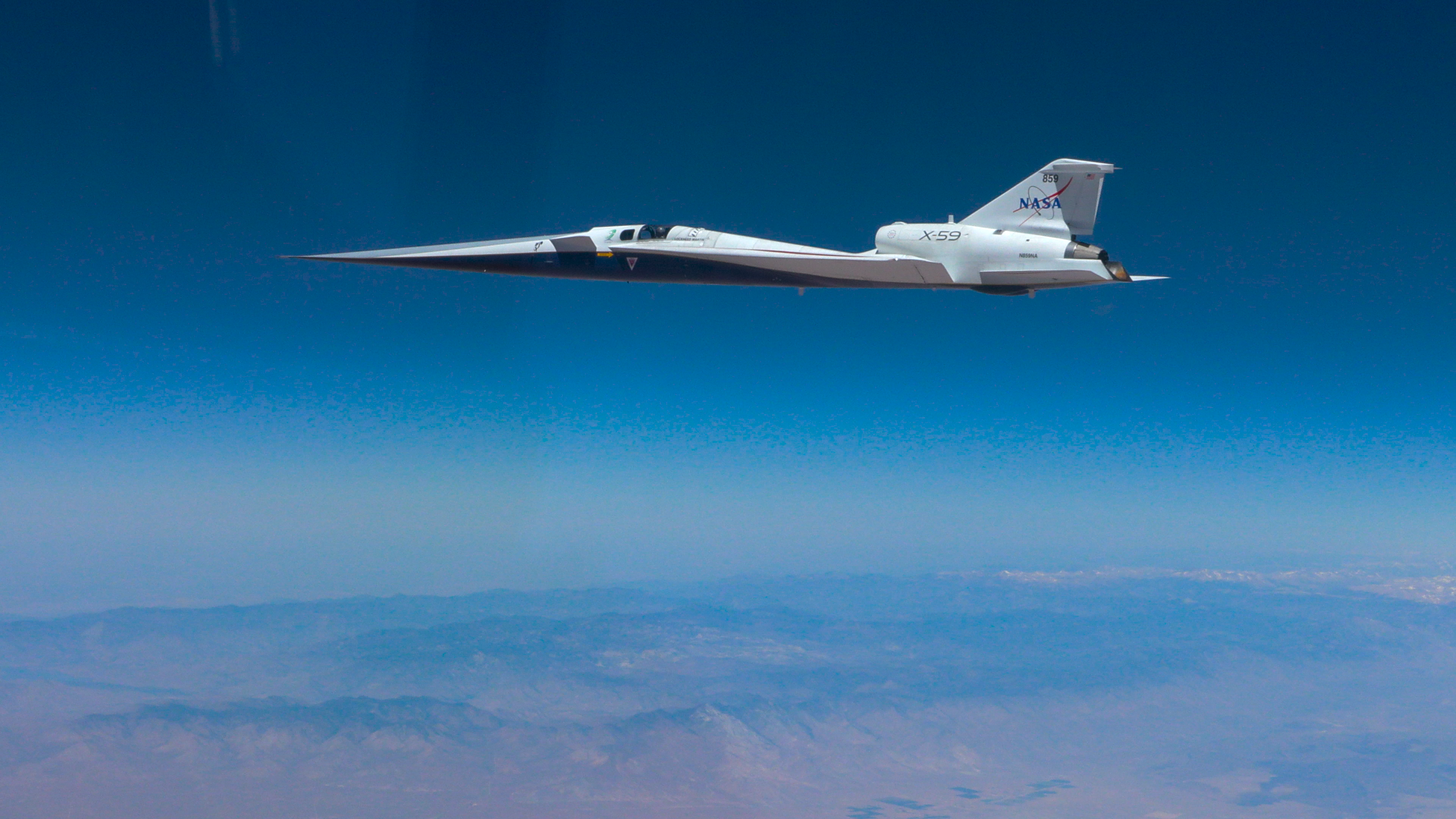
NASA’s X-59 quiet supersonic research aircraft flies above the clouds during its first supersonic flight. The aircraft is shown in side profile during level flight with desert and mountain terrain visible below.
NASA’s X-59 quiet supersonic research aircraft completed its first supersonic flight Friday, June 5,β€―2026, marking the first time the aircraft exceeded the speed of sound in support of NASA’s Quesst mission. The milestone represents a major step in flight testing as the aircraft expands into the supersonic portion of its flight envelope.
NASA / Lori Losey

ThisΒ speed andΒ altitudeΒ areΒ theΒ baseΒ conditions for the X-59 when it will eventually fly over several U.S. communities enabling NASA to gather data about how peopleΒ mayΒ perceive itsΒ quiet thump.Β NASA will share this dataΒ with U.S. and international regulators to helpΒ establishΒ newΒ data-driven noise standardsΒ toΒ enable a futureΒ viableΒ market forΒ supersonic commercial flight over land.Β 

For the last several months, theΒ X-59Β has beenΒ participatingΒ in an ongoing series of flights where the plane has beenΒ flying at a wide range of speeds and altitudes – a process known as envelope expansion.Β These tests are the firstΒ phase of the X-59’s flight testing. They areΒ focused on performanceΒ and involve chase plane monitoring.Β WhenΒ theΒ aircraftΒ completes thisΒ phaseΒ it will enter another,Β focused on its sound profileΒ in orderΒ toΒ verifyΒ its quietΒ thump capability.Β Β 

The X-59 is the centerpiece of NASA’sΒ Quesst mission, which aims toΒ demonstrateΒ quiet supersonic flightΒ and help enable commercial supersonic flight over land worldwide.Β These advancements will helpΒ travelersΒ reach their preferred destinations faster,Β spending less time in the air.Β 

ThroughΒ Quesst’sΒ development of the X-59, NASAΒ alsoΒ willΒ deliver design tools and technology for quiet supersonic airliners that will achieve the high speedsΒ desiredΒ by commercial operators withoutΒ disturbingΒ people on the ground. NASA willΒ validateΒ design tools through ground and flight testing,Β providingΒ U.S.Β aircraftΒ manufacturers the ability to explore new quiet supersonic concepts,Β andΒ provide them withΒ confidence that their resultingΒ designsΒ will meetΒ quiet flightΒ requirements.Β Β 

quesst-logo-horizontal-051826sm

Read more about NASA’s Quesst mission and the X-59.

The post NASA’sΒ X-59Β AircraftΒ Flies Supersonic for First Time appeared first on NASA Science.
  •  

NASA’sΒ X-59Β AircraftΒ Flies Supersonic for First Time

4 min read

Preparations for Next Moonwalk Simulations Underway (and Underwater)

NASA’s X 59 eXternal Vision System digital display shows green flight data overlaid on the forward scenery as the aircraft flies supersonic. Numerical indicators, horizon references, and a Mach number readout are visible on the screen.
NASA’s X-59 eXternal Vision System shows Machβ€―1.077 on Friday, June 5,β€―2026, marking the aircraft’s first time reaching supersonic speed in support of NASA’s Quesst mission. The moment represents a milestone for the aircraft as it transitions to include test flights faster than the speed of sound.

NASA

NASA’sΒ experimentalΒ X-59Β aircraftΒ markedΒ a major milestoneΒ Friday,Β JuneΒ 5,Β when itΒ flew faster than the speed of sound for the first time,Β setting the stage forΒ demonstratingΒ its quiet supersonic capabilitiesΒ later this year.Β 

NASA test pilot Jim β€œClue” LessΒ took offΒ and landedΒ at Edwards Air Force BaseΒ in California, reaching a top speed ofΒ approximatelyΒ MachΒ 1.1Β (713Β mph)Β and altitude ofΒ 43,400 feet.Β TheΒ X-59’sΒ flight began atΒ 11:08Β a.m.Β PDTΒ and lasted 81Β minutes,Β withΒ the team focusing on flying qualitiesΒ atΒ both subsonic and then supersonic speeds.Β Β 

In the coming days, we expect to take the next step and push to Mach 1.4

jared isaacman

jared isaacman

NASA Administrator

”X-59 is getting ready for its quiet supersonic debut. Since the aircraft’s first flight on Oct. 28, 2025, the team has made tremendous progress,Β flyingΒ 16Β timesΒ in the last 90 days and getting into a steady test rhythm. In the coming days, we expect to take the next step and push to Mach 1.4,” said NASA Administrator Jared Isaacman β€œI’m grateful to the NASA team and Lockheed Martin Skunk Works for their help getting us to this point, and I hope this is the first of many collaborations as we rebuild NASA’s X-plane portfolio.” 

The X-59 is designed to flyΒ atΒ supersonicΒ speedsΒ while creating only a quiet thump instead of a loud sonic boom.Β For this flight, aΒ NASA F‑15 chase plane flew nearby toΒ monitorΒ the X‑59.Β TheΒ loud sonic booms fromΒ the F-15Β obscuredΒ any sound made by the X-59.Β Β 

β€œThe X-59’s first supersonic flight is a testament to America’s enduring leadership in science, engineering, and aerospace innovation,” said Michael Kratsios,Β Assistant to the President for Science and Technology and Director of the Office of Science and Technology Policy.Β β€œThis achievement comes as the Trump Administration continues work to unleash supersonic flight and enable American ingenuity.” 

ThisΒ first supersonicΒ flight isΒ aΒ significantΒ milestone, butΒ anΒ eventΒ evenΒ more critical toΒ the mission is upcoming. In just days, theΒ aircraftΒ is expected to makeΒ its firstΒ β€œmission conditions” flight, reaching aΒ cruising speed of Mach 1.4 (925 mph) and altitude of approximately 55,000 feet. The X-59Β alsoΒ will beΒ accompanied by a chase planeΒ for this flight.Β Β 

NASA’s X-59 quiet supersonic research aircraft flies above the clouds during its first supersonic flight. The aircraft is shown in side profile during level flight with desert and mountain terrain visible below.
NASA’s X-59 quiet supersonic research aircraft completed its first supersonic flight Friday, June 5,β€―2026, marking the first time the aircraft exceeded the speed of sound in support of NASA’s Quesst mission. The milestone represents a major step in flight testing as the aircraft expands into the supersonic portion of its flight envelope.
NASA / Lori Losey

ThisΒ speed andΒ altitudeΒ areΒ theΒ baseΒ conditions for the X-59 when it will eventually fly over several U.S. communities enabling NASA to gather data about how peopleΒ mayΒ perceive itsΒ quiet thump.Β NASA will share this dataΒ with U.S. and international regulators to helpΒ establishΒ newΒ data-driven noise standardsΒ toΒ enable a futureΒ viableΒ market forΒ supersonic commercial flight over land.Β 

For the last several months, theΒ X-59Β has beenΒ participatingΒ in an ongoing series of flights where the plane has beenΒ flying at a wide range of speeds and altitudes – a process known as envelope expansion.Β These tests are the firstΒ phase of the X-59’s flight testing. They areΒ focused on performanceΒ and involve chase plane monitoring.Β WhenΒ theΒ aircraftΒ completes thisΒ phaseΒ it will enter another,Β focused on its sound profileΒ in orderΒ toΒ verifyΒ its quietΒ thump capability.Β Β 

The X-59 is the centerpiece of NASA’sΒ Quesst mission, which aims toΒ demonstrateΒ quiet supersonic flightΒ and help enable commercial supersonic flight over land worldwide.Β These advancements will helpΒ travelersΒ reach their preferred destinations faster,Β spending less time in the air.Β 

ThroughΒ Quesst’sΒ development of the X-59, NASAΒ alsoΒ willΒ deliver design tools and technology for quiet supersonic airliners that will achieve the high speedsΒ desiredΒ by commercial operators withoutΒ disturbingΒ people on the ground. NASA willΒ validateΒ design tools through ground and flight testing,Β providingΒ U.S.Β aircraftΒ manufacturers the ability to explore new quiet supersonic concepts,Β andΒ provide them withΒ confidence that their resultingΒ designsΒ will meetΒ quiet flightΒ requirements.Β Β 

quesst-logo-horizontal-051826sm

Read more about NASA’s Quesst mission and the X-59.

πŸ’Ύ

NASA’s X-59 quiet supersonic research aircraft completed its first supersonic flight Friday, June 5,β€―2026, marking the first time the aircraft exceeded the s...
  •  

End of an Era: The Retirement of the American AV-8B Harrier II

On June 3, 2026, a notable event took place at Marine Corps Air Station Cherry Point, as the United States Marine Corps officially retired its last AV-8B Harrier II attack aircraft from active service. This provides an opportunity to revisit the history of the AV-8B Harrier II program. A British-American Project In 1972, the American […]

The post End of an Era: The Retirement of the American AV-8B Harrier II appeared first on AERONAUT.media.

  •  

Alien Spacecraft or Interstellar Comet?

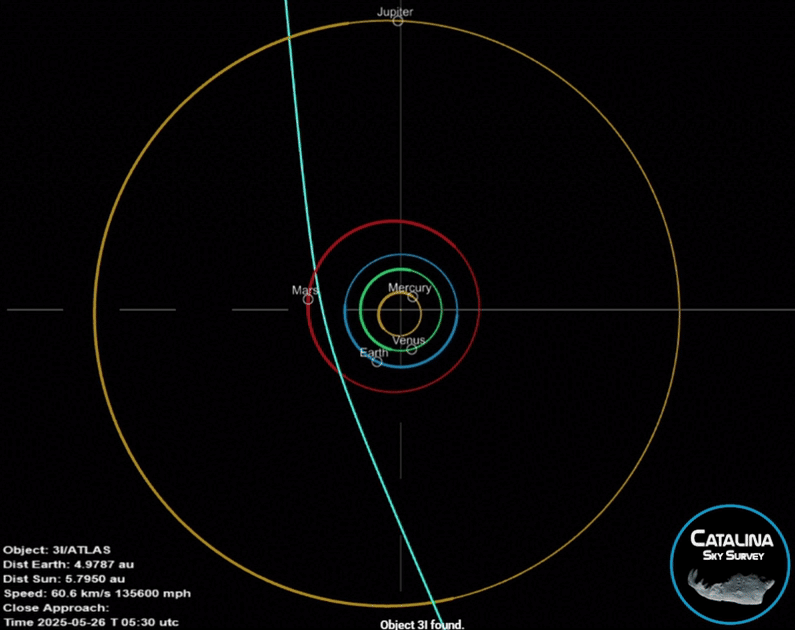
The discovery of interstellar object 3I/ATLAS raises speculation about its nature, with some suggesting it could be an alien spacecraft. However, most astronomers believe it is a comet. The question highlights differing belief systems regarding the origins of life, with critics emphasizing the necessity of extraordinary evidence for such claims.

  •  

Orbs Orbit Aircraft | Faked Imagery, Alien Spacecraft or Covert Military Tech?

The video clip of orbs circling a passenger plane prompts speculation about its origins, including faked footage, extraterrestrial craft, or military technology. After analysis, I dismiss the latter two due to physical impossibilities, instead propose that these are interdimensional craft linked to the spiritual realm.

  •  

Ezekiel’s Vision: Heavenly Chariot or UFO?

Ezekiel's vision is discussed, questioning whether it depicts a divine encounter or ancient astronauts. I critique Erich von DΓ€niken's theories on UFOs, emphasize that advanced propulsion technologies have military origins, and confirm that true anti-gravity remains unattainable within known physics, dismissing claims of reverse-engineered alien technology.

  •  

Understanding UFOs: Military, Interstellar, and Interdimensional Insights

There are many sightings of multiple UFOs around important military sites. Also that the US government has covered up the truth of visiting aliens / UFOs for decades. It all adds to the mystique which might be used to get the masses to comply with authoritarian diktats.

  •  
❌