 Login

U.S. Forest Service to Open Millions of Acres to Off-Road Vehicles
The forthcoming order echoes President Trump’s decision to repeal executive orders that have protected other public lands from vehicles for decades.

Experts say increased use of crops for fuel is ‘dangerous game’ that could send food price inflation soaring
Demand for biofuels is likely to leap by nearly a third this year, which could send food price inflation soaring further and push the world closer to a global food crisis.
More countries are opting to increase biofuel use as the price of oil has jumped to nearly $100 a barrel after the US-Israeli attacks on Iran and the closure of the strait of Hormuz.
Continue reading...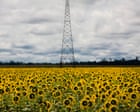
© Photograph: Brazil Photos/LightRocket/Getty Images

© Photograph: Brazil Photos/LightRocket/Getty Images

© Photograph: Brazil Photos/LightRocket/Getty Images

 Google's making a move in the mosquito business.
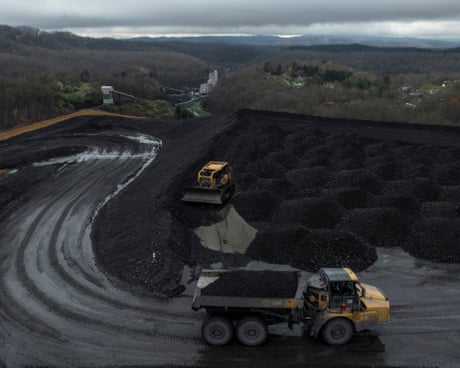
US president announces plans for two new coal plants, in Alaska and West Virginia, using Defense Production Act
Donald Trump is using wartime presidential authority to hand $700m to coal-fired power plants in the US, the latest move by the president to bolster what he called “clean, beautiful coal”, despite it being the dirtiest of fossil fuels.
“Today, we’re taking historic action to bring down the price of energy and the cost of living for all Americans with the power of clean, beautiful coal,” he said at a press conference on Thursday.
Continue reading...
© Photograph: Adrees Latif/Reuters
© Photograph: Adrees Latif/Reuters

© Photograph: Adrees Latif/Reuters
 Climate change doesn't really care what you think.
Brown rot is a common fungal disease in the Southeastern United States that affects stone fruits like peaches, cherries, and plums. Monilinia fructicola is a tan, fuzzy fungus that grows on tree flowers, twigs, and fruit, and is the most common cause of brown rot. Once brown rot infects a tree, the damage is irreversible, causing significant crop losses in commercial orchards. Farmers try to control the spread of M. fructicola by applying chemical sprays, called fungicides, to fruit trees in the spring.
In M. fructicola, a biosynthesis gene named MfCYP51 encodes a major protein critical to the fungi’s survival. Certain fungicides, called demethylation inhibitor (DMI) fungicides, stop M. fructicola from growing by targeting this protein. Over the last 20 years, DMI fungicides have become less effective against brown rot as M. fructicola becomes more resistant.
Living microorganisms and their metabolites can control fungal diseases as an alternative to chemical fungicides, known as biofungicides. Many bacteria produce compounds like hydrogen cyanide and pyrrolnitrin that damage fungal cells. However, scientists have not found a biofungicide suitable for commercial production. A group of researchers at Clemson University in the USA and Huazhong Agricultural University in China set out to test whether the soil bacteria Pseudomonas chlororaphis and Bacillus subtilis could be effective biofungicides against brown rot.
The researchers performed an incubation experiment to analyze how the fungal cells make their critical protein from the MfCYP51 gene, a process called gene expression, under different fungicide treatments. They used 3 M. fructicola strains sensitive to traditional DMI fungicides and 3 resistant strains. They tested these with 5 different fungicide treatments: a DMI fungicide, a mixture of P. chlororaphis metabolites, a mixture of living B. subtilis cells, a DMI fungicide + P. chlororaphis metabolites, and a DMI fungicide + B. subtilis cells. They also set up a control treatment with sterile water instead of fungicide.
After 6 hours, the researchers extracted the molecule that measures gene expression, called RNA, from the fungi. They found that both the P. chlororaphis treatment and the DMI fungicide + P. chlororaphis treatment substantially reduced MfCYP51 expression in both the sensitive and resistant isolates compared to the controls. In contrast, the DMI fungicide, B. subtilis, and DMI fungicide + B. subtilis treatments increased MfCYP51 expression in the resistant isolates. The researchers concluded that P. chlororaphis has a unique ability to reduce gene expression, unlike other biofungicides.
To further investigate how the biofungicide treatments work, the team tested whether P. chlororaphis and B. subtilis produced the anti-fungal metabolite pyrrolnitrin. They added 1 milliliter of each treatment to a machine that separates and identifies liquid compounds using high pressure, called a high-performance liquid chromatograph. They found that the P. chlororaphis treatment contained pyrrolnitrin, so they hypothesized that it was responsible for reducing gene expression.
Additionally, the researchers tested their 5 treatments on brown rot in fruit. For each treatment, they took 10 Gala apples, washed and sterilized their surfaces, and sprayed them with the fungicides. After 24 hours, they poked holes in the apples with toothpicks and added 20 microliters of liquid containing M. fructicola cells to the poked holes. They placed the apples in a humid chamber for 5 days and measured the number and size of brown rot spots that developed on their surfaces.
Despite decreasing MfCYP51 expression, the researchers found that P. chlororaphis treatment alone didn’t reduce brown rot disease compared to the control, but the DMI fungicide and B. subtilis treatments did. The mixed treatments of DMI fungicide + P. chlororaphis and DMI fungicide + B. subtilis both reduced brown rot disease compared to the control, but only the DMI fungicide + P. chlororaphis treatment prevented it.
The researchers concluded that although biofungicides may not be fully effective on their own, commercializing them could allow farmers to use less DMI fungicide. They explained that scaling back the use of DMI fungicides would slow M. fructicola resistance. Finally, they proposed that future researchers test biofungicide mixtures containing pyrrolnitrin in the field to observe real-world effects on stone fruit trees.
The post Using bacteria to fight fungal brown rot appeared first on Sciworthy.

© Amir Hamja for The New York Times
Some will question its credibility – but the alternative future to the one imagined in the Global Justice Report is far more bleak
‘An equal and habitable world is possible’: academics set out sweeping vision for planetary survival
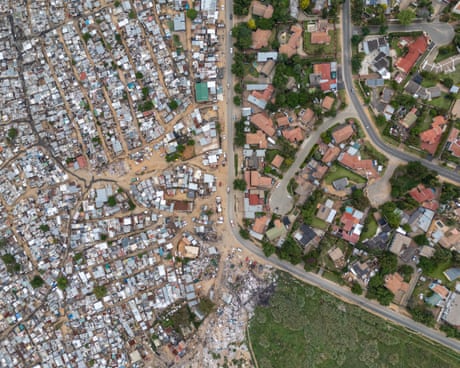
In our increasingly dystopian world, who wouldn’t want to at least be open to a utopian antidote? The Global Justice Report, published on Thursday, outlines how to build a prosperous, equitable world within safe planetary boundaries. It’s a push from the modern eco-socialist left in a global battle for ideas that will shape the future.
Based on past social achievements and future energy transformation, it indicates that the overwhelming majority of people on the planet could, by the end of the century, work less and earn more – while keeping temperatures down and avoiding much of the current destruction of nature. It is an ambitious, comprehensive and upbeat plan, and a stronger argument around which to build a political campaign than abstract goals of net zero or decarbonisation.
Continue reading...
© Photograph: Emmanuel Croset/AFP/Getty Images
© Photograph: Emmanuel Croset/AFP/Getty Images

© Photograph: Emmanuel Croset/AFP/Getty Images
Government rejects offshore rubbish being shipped to Fiji and burned after opposition from traditional landowners and tourism operators
The Fijian government has rejected a plan by an Australian billionaire to burn rubbish for energy in Fiji after backlash from traditional landowners and tourism operators.
The plan to ship non-recyclable rubbish from across the region to Fiji, popular with tourists for its pristine beaches, and build an incinerator to consume 900,000 tonnes of waste a year had been labelled “waste colonialism” by villagers.
Continue reading...
© Photograph: BigBlueFun/Getty Images/500px

© Photograph: BigBlueFun/Getty Images/500px

© Photograph: BigBlueFun/Getty Images/500px
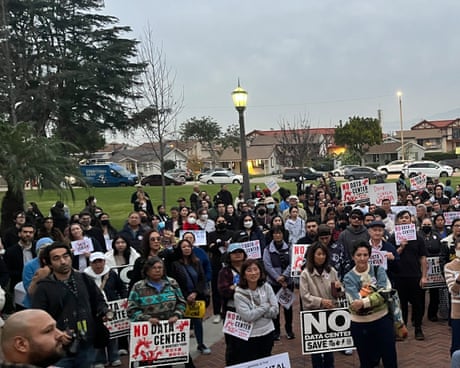
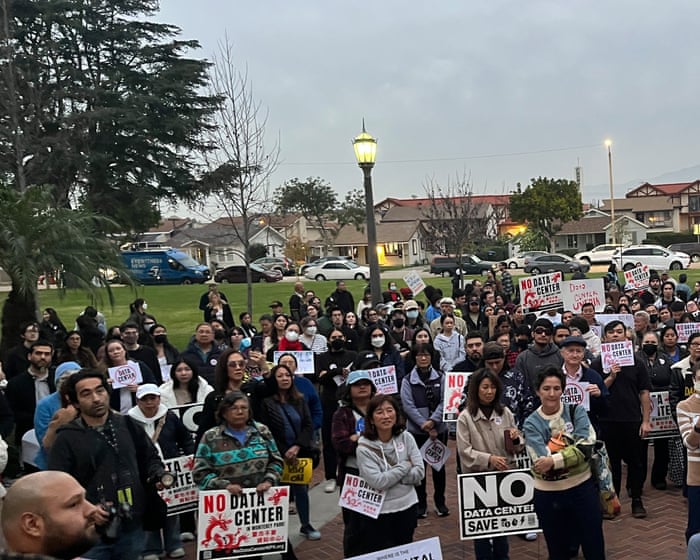
While many US city councils have passed moratoriums, Monterey Park is first where residents have voted on a ban
Residents in Monterey Park, California, became the first in the US to vote on a permanent ban on datacenters on Tuesday, and early results indicate a resounding victory for the prohibition.
While many cities and counties have already passed temporary or indefinite moratoriums via their local governments, Monterey Park would be the first to do so through a ballot initiative.
Continue reading...
© Photograph: Steven Kung
© Photograph: Steven Kung
© Photograph: Steven Kung

© Alyssa Schukar for The New York Times
 New research suggests dusty leaves can feed plants in nutrient-poor ecosystems.
 A new study shows that atmospheric rivers may be responsible for up to 90% of Antarctica’s annual precipitation.
 A new study reveals that if left unchecked, unaccounted-for emissions of ozone-harming substances could delay the layer’s full recovery by almost a decade.
 "The world must treat it as the urgent climate warning it is."

 What's an RCP, anyway?