Sweden’s celebrated wolverine recovery program is losing momentum, raising concerns about the future of one of the world’s most famous conservation success stories. A conservation program once praised as a global model for helping people and wildlife coexist may be losing its effectiveness because of decades of inadequate government support, according to new research. In [...]
BANGKOK — Seven hundred days after activists from the environmental group Mother Nature Cambodia were imprisoned on charges widely regarded as retaliatory for their activism, 73 international and Cambodian civil society organizations have renewed calls for their unconditional release. After a trial lasting just over a month, 10 activists from Mother Nature Cambodia were sentenced on July 2, 2024, to between six and eight years in prison. Only five of the defendants attended the hearings, which saw Long Kuntha, 28, Ly Chandaravuth, 26, Phuon Keoraksmey, 25, and Thun Ratha, 34, each sentenced to six years behind bars for plotting against the government; fellow activist Yim Leanghy, 36, received an eight-year sentence for both plotting against the government and insulting the king. The five activists who did not attend the trial were sentenced in absentia. The appeals hearing for all 10 convicted activists was slated to take place on June 2, but has been postponed indefinitely by the Phnom Penh Court of Appeals. “The MNC5 are incarcerated in prisons in overcrowded and harsh living conditions, separated from each other and spread out all across Cambodia, hundreds of kilometers away from their families and legal counsel,” wrote the 73 NGOs in an open letter addressed to Prime Minister Hun Manet. “The … NGOs who have signed this letter sincerely request you take immediate action to ensure the unjust convictions of these five activists are reversed either prior to or at their upcoming appeals court hearing in Phnom Penh, and that their freedom…This article was originally published on Mongabay
As offshore wind farms expand rapidly in the global renewable energy transition, scientists are studying how these large marine infrastructure projects affect ecosystems beneath the waves. Research from Wageningen University & Research in the Netherlands suggests that offshore wind may bring both risks and benefits for sharks and rays, known collectively as Elasmobranchii, which are highly sensitive to electromagnetic fields (EMFs). A six-year project called “Elasmopower” examined how EMFs from subsea power cables in offshore wind farms affect bottom-dwelling sharks and rays. These species depend on natural electric and magnetic fields for key behaviors such as navigation, prey detection, habitat use and long-distance movement, particularly in low-visibility environments. The studies conducted as part of the Elasmopower project have been published in four papers, with three additional papers currently undergoing peer review. Sharks and rays have specialized electroreceptors called ampullae of Lorenzini. The jelly-filled sensory canals around the head and snout can detect even extremely weak EMFs from prey and predators, water movement, and the Earth’s geomagnetic field, Erwin Winter, a scientist at Wageningen, told Mongabay. This system is central to hunting and orientation, making Elasmobranchii especially relevant for studying EMF exposure from offshore energy infrastructure, Winter added. Erwin Winter, a researcher with the Elasmopower project, presented findings on offshore wind, electromagnetic fields and bottom-dwelling sharks and rays at the Sharks International 2026 conference in Colombo, Sri Lanka, in May. Image by Malaka Rodrigo for Mongabay. During a presentation on a summary of the Elasmopower research at the Sharks International 2026…This article was originally published on Mongabay
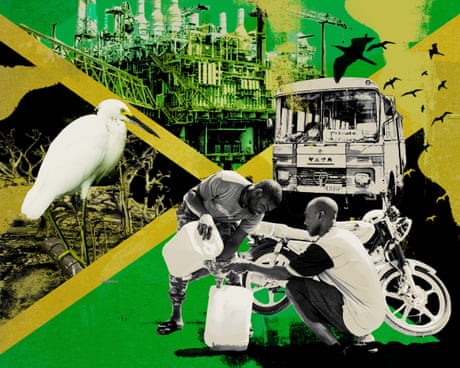
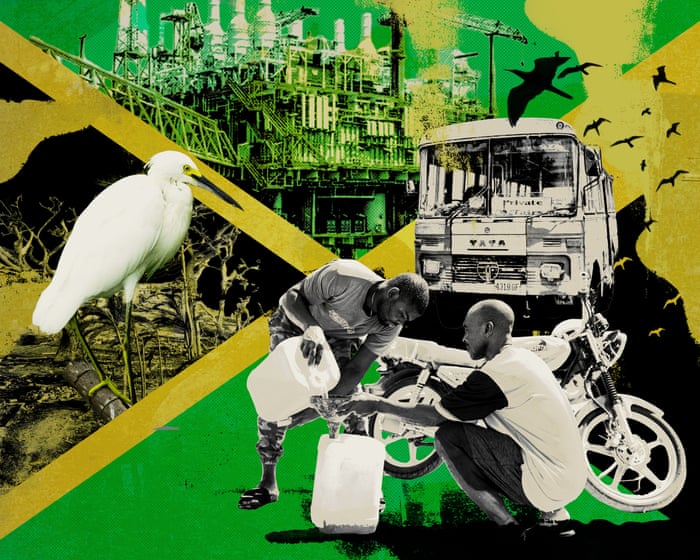
With early tests suggesting the presence of crude oil, the Caribbean island has begun to debate whether it could justify becoming a producer
Jamaica is closer than ever to drilling for oil. Tests on samples from the seabed off the Caribbean island’s south coast earlier this year identified hydrocarbons, which suggest the presence of crude oil below ground.
Wake-up call, and a call to arms The spectacular feature-length documentary ‘Ocean with David Attenborough’ is his very first partnership with National Geographic, now showing on Disney+ channel in Australia. With the great...
While kangaroos are a very social species, there has until recently been no evidence that they form long-term relationships between individuals. But a new study by researchers from UNSW Sydney indicates that this...

 Login

 Sweden’s celebrated wolverine recovery program is losing momentum, raising concerns about the future of one of the world’s most famous conservation success stories. A conservation program once praised as a global model for helping people and wildlife coexist may be losing its effectiveness because of decades of inadequate government support, according to new research. In [...]