❌

Reading view

Audi reveals 1,001-hp Nuvolari hybrid supercar — so much for going all-electric

Audi unveiled the Nuvolari today, a 1,001-hp hybrid supercar powered by a 4.0-liter V8 biturbo and three electric motors. Limited to 499 units at roughly $700,000 each, it is the most powerful and fastest production vehicle in the brand’s history.

The reveal is notable for what it represents beyond raw performance. Audi pledged in 2021 to launch only electric vehicles starting in 2026 — and instead, it just unveiled a V8-powered supercar as its flagship.

  •  

Jackery HomePower 3600 Plus power station exclusives from $1,399, EGO Select Cut Touch Drive mower $543 low, Segway, more

Leading our Thursday Green Deals is a pair of exclusive deals on Jackery’s 3,584Wh HomePower 3600 Plus Portable Power Station with or without a 500W solar panel at their second-lowest prices starting from $1,399. Right behind that, we spotted the advanced EGO Power+ 21-inch Select Cut Touch Drive Cordless Electric Lawn Mower with 2x 4.0Ah batteries and a rapid charger hitting a new $543 low. We also have two Segway deals, the first being on the new Navimow X430 Robot Lawn Mower coming with a FREE Garage X attachment at $2,499, while the brand’s 1,024Wh Cube 1000 and 2,048Wh Cube 2000 power stations are starting from $330 – plus, more deals waiting for you below. We also have all the hangover deals collected down at the bottom of the page, like yesterday’s Bluetti RV Season Sale lineup with two exclusive bonus savings codes for our readers, and more.

Head below for other New Green Deals we’ve found today and, of course, Electrek’s best EV buying and leasing deals. Also, check out the new Electrek Tesla Shop for the best deals on Tesla accessories.

  •  

Trump uses wartime powers to dole out $700m to ‘clean, beautiful’ coal

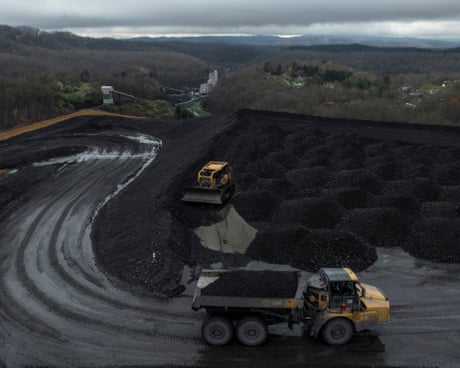
US president announces plans for two new coal plants, in Alaska and West Virginia, using Defense Production Act

Donald Trump is using wartime presidential authority to hand $700m to coal-fired power plants in the US, the latest move by the president to bolster what he called “clean, beautiful coal”, despite it being the dirtiest of fossil fuels.

“Today, we’re taking historic action to bring down the price of energy and the cost of living for all Americans with the power of clean, beautiful coal,” he said at a press conference on Thursday.

Continue reading...

© Photograph: Adrees Latif/Reuters

© Photograph: Adrees Latif/Reuters

© Photograph: Adrees Latif/Reuters

  •  

I asked AI for help with DIY. It told me to build a subfloor on rotting stumps, but also taught me valuable lessons | Myke Bartlett

Nothing does more for your ego than realising you can make a better decision than a bot with all of human knowledge at its digital fingertips

I am not, by nature, an early adopter. There comes a point in our lives where change becomes more irritating than exciting and, I suspect, I reached it sooner than most. But when a workplace recently tasked me with exploring practical applications for AI, I spotted an opportunity to cast off my luddite inclinations.

It turned out AI was very good at mimicking most of the things I could already do. Irrespective of quality, it could churn out articles, reports, presentations, fiction, even podcasts with stammering hosts. That was no use to me. What I wanted help with was all the stuff I was useless at. There was an obvious target: DIY.

Continue reading...

© Photograph: Neustockimages/Getty Images

© Photograph: Neustockimages/Getty Images

© Photograph: Neustockimages/Getty Images

  •  

New e-bike law could help legalize those 30 and 40+ MPH ‘grey-zone’ bikes

Illinois is on the verge of adopting a major update to its e-bike laws, and unlike many recent proposals around the country, this one doesn’t simply focus on traditional electric bicycles. In addition to the traditional 3-class electric bicycle system, it also sets in place a path forward for out-of-class models that are too fast or powerful to qualify as true electric bicycles.

  •  

SpaceX’s xAI just bought another $269M of Tesla Megapacks

SpaceX’s amended S-1 IPO filing, published yesterday, reveals that xAI purchased another $269 million worth of Tesla Megapack products in April 2026 alone. That single month exceeds what xAI spent on Tesla Megapacks in all of 2024.

The purchase brings total Megapack spending by xAI to roughly $1 billion since 2024 — a staggering figure that underscores both how power-hungry AI data centers have become and how deeply intertwined Elon Musk’s companies are.

  •  

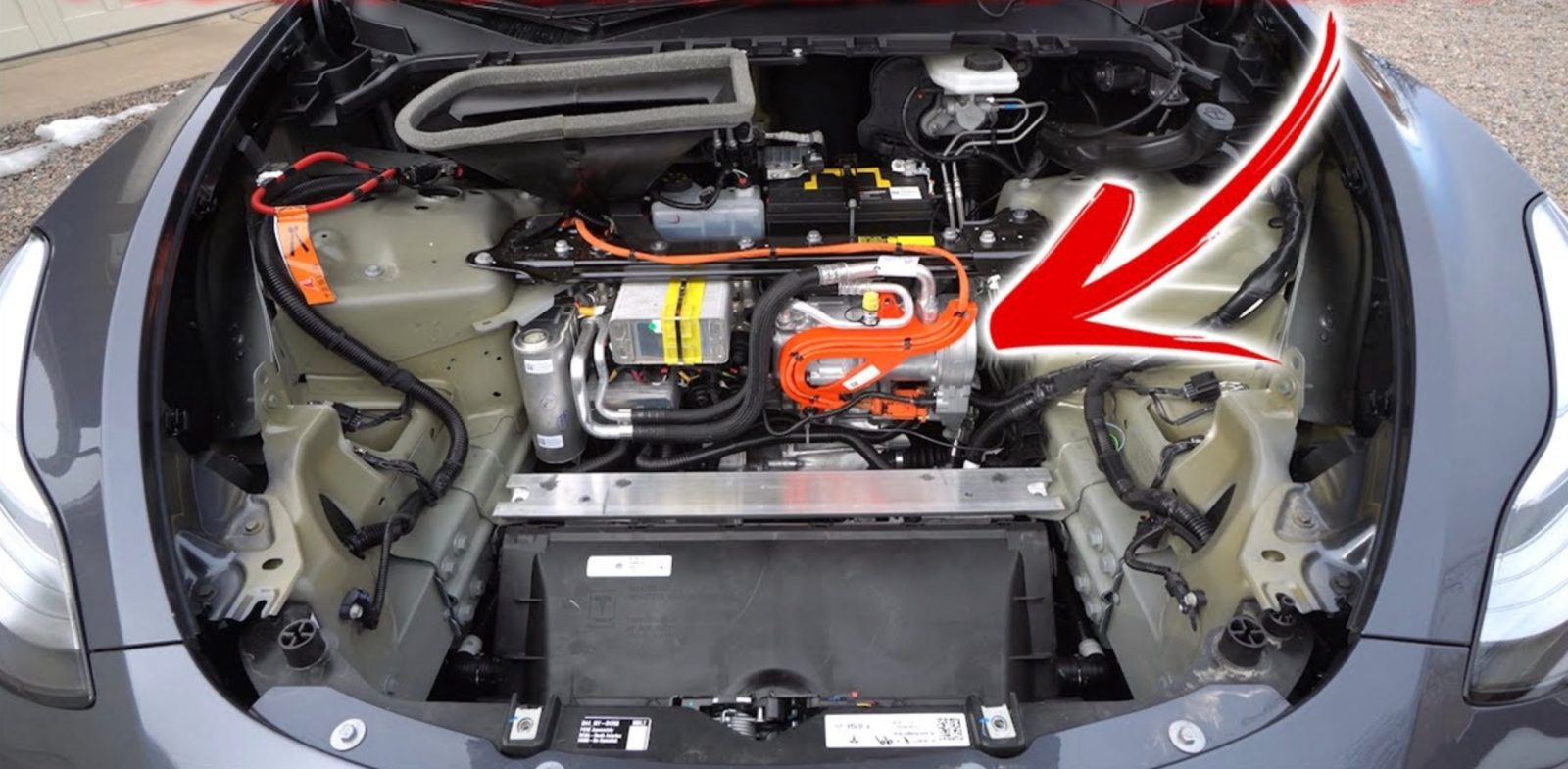
Tesla hit with class action in Quebec over up to $400m in heat pump failures

A Quebec Tesla owner has filed a class action request against Tesla over heat pump failures, seeking damages for all Tesla owners in the province after being stuck with a $4,477 repair bill when her Model 3’s heat pump died after just six years.

The lawsuit covers every Tesla model equipped with a heat pump — Model S, Model 3, Model X, Model Y, and Cybertruck — and alleges the automaker has been hiding a known defect from buyers.

  •  

Using bacteria to fight fungal brown rot

Brown rot is a common fungal disease in the Southeastern United States that affects stone fruits like peaches, cherries, and plums. Monilinia fructicola is a tan, fuzzy fungus that grows on tree flowers, twigs, and fruit, and is the most common cause of brown rot. Once brown rot infects a tree, the damage is irreversible, causing significant crop losses in commercial orchards. Farmers try to control the spread of M. fructicola by applying chemical sprays, called fungicides, to fruit trees in the spring.

In M. fructicola, a biosynthesis gene named MfCYP51 encodes a major protein critical to the fungi’s survival. Certain fungicides, called demethylation inhibitor (DMI) fungicides, stop M. fructicola from growing by targeting this protein. Over the last 20 years, DMI fungicides have become less effective against brown rot as M. fructicola becomes more resistant. 

Living microorganisms and their metabolites can control fungal diseases as an alternative to chemical fungicides, known as biofungicides. Many bacteria produce compounds like hydrogen cyanide and pyrrolnitrin that damage fungal cells. However, scientists have not found a biofungicide suitable for commercial production.​ A group of researchers at Clemson University in the USA and Huazhong Agricultural University in China set out to test whether the soil bacteria Pseudomonas chlororaphis and Bacillus subtilis could be effective biofungicides against brown rot. 

The researchers performed an incubation experiment to analyze how the fungal cells make their critical protein from the MfCYP51 gene, a process called gene expression, under different fungicide treatments. They used 3 M. fructicola strains sensitive to traditional DMI fungicides and 3 resistant strains. They tested these with 5 different fungicide treatments: a DMI fungicide, a mixture of P. chlororaphis metabolites, a mixture of living B. subtilis cells, a DMI fungicide + P. chlororaphis metabolites, and a DMI fungicide +  B. subtilis cells. They also set up a control treatment with sterile water instead of fungicide.  

After 6 hours, the researchers extracted the molecule that measures gene expression, called RNA, from the fungi. They found that both the P. chlororaphis treatment and the DMI fungicide + P. chlororaphis treatment substantially reduced MfCYP51 expression in both the sensitive and resistant isolates compared to the controls. In contrast, the DMI fungicide, B. subtilis, and DMI fungicide + B. subtilis treatments increased MfCYP51 expression in the resistant isolates. The researchers concluded that P. chlororaphis has a unique ability to reduce gene expression, unlike other biofungicides.

​To further investigate how the biofungicide treatments work, the team tested whether P. chlororaphis and B. subtilis produced the anti-fungal metabolite pyrrolnitrin. They added 1 milliliter of each treatment to a machine that separates and identifies liquid compounds using high pressure, called a high-performance liquid chromatograph. They found that the P. chlororaphis treatment contained pyrrolnitrin, so they hypothesized that it was responsible for reducing gene expression.

Additionally, the researchers tested their 5 treatments on brown rot in fruit. For each treatment, they took 10 Gala apples, washed and sterilized their surfaces, and sprayed them with the fungicides. After 24 hours, they poked holes in the apples with toothpicks and added 20 microliters of liquid containing M. fructicola cells to the poked holes. They placed the apples in a humid chamber for 5 days and measured the number and size of brown rot spots that developed on their surfaces. 

Despite decreasing MfCYP51 expression, ​the researchers found that P. chlororaphis treatment alone didn’t reduce brown rot disease compared to the control, but the DMI fungicide and B. subtilis treatments did. The mixed treatments of DMI fungicide + P. chlororaphis and DMI fungicide + B. subtilis both reduced brown rot disease compared to the control, but only the DMI fungicide + P. chlororaphis treatment prevented it. 

​The researchers concluded that although biofungicides may not be fully effective on their own, commercializing them could allow farmers to use less DMI fungicide. They explained that scaling back the use of DMI fungicides would slow M. fructicola resistance. Finally, they proposed that future researchers test biofungicide mixtures containing pyrrolnitrin in the field to observe real-world effects on stone fruit trees.

The post Using bacteria to fight fungal brown rot appeared first on Sciworthy.

  •  
❌