❌

Reading view

Why Some Cancers Turn Deadly: Researchers Uncover a Hidden Trigger

Cancer Cell Spread Abnormal GrowthA closer look at cancer cells with extra chromosomes uncovered surprising traits linked to faster-growing, more dangerous tumors, pointing to potential new indicators of disease severity. Cancer cells are notorious for breaking the rules of biology. One of the most dramatic violations occurs when a cell suddenly doubles its entire genetic library, creating a chromosome-packed [...]
  •  

Feature: Wirtgen Group paves the way for autonomous road building

Wirtgen Group is actively developing automated road construction vehicles as stepping stones for full autonomy using some of the same technology stack as parent company John Deere.

During a recent demonstration of its roadbuilding machinery at the company’s North American headquarters in the US state of Tennessee, company executives outlined the benefits of its specialised heavy machinery for road building.

Demand for roads and infrastructure keeps rising while contractors juggle labour shortages, climbing material costs, tighter project timelines and shorter paving seasons.

In the US alone, the construction industry is expected to need nearly 700,000 additional workers by 2031 just to keep pace with demand.

About 40% of the four million miles of roadways across the US are currently rated in poor or mediocre condition.

“As we talked with our customers, we learned a few things about some of their business challenges, which is simply to do more with less,” said Craig Lamarque, VP and head of digital products at Wirtgen America. “Every day our customers are responsible to ensure the safety of every person on absolutely every job site”.

“And they have to do that with increasingly less skilled and less experienced personnel.”

Lamarque explained customers must complete a greater number of projects on tighter timelines to stay profitable while coping with issues with materials, sustainability pressures, labour shortages, and the need to stay on budget and on schedule.

Wirtgen Group responded by introducing digital tools to help address those challenges.

He said Wirtgen’s digital strategy centres on three pillars: connected support to maximize uptime, job site intelligence to expose inefficiencies and improve decision-making, and smart automation to boost machine performance.

Those capabilities are embedded across its road construction equipment lineup and are supported by hardware and software in collaboration with John Deere.

A legacy built on family names

The Wirtgen Group was a privately held German company before it was acquired by John Deere in 2017.

Earlier in its history, the Wirtgen Group bought asphalt paving company Vogele (in 1996) ahead of purchasing soil and asphalt compaction company Hamm three years later. Vogele was established in 1836, one year prior to John Deere.

Kleemann was acquired in 2006, which expanded Wirtgen’s reach into mineral processing with mobile crushing and screening plants.

The Wirtgen Group bought a 70% stake in Benninghoven in 2014, adding asphalt mixing plants to the ecosystem and enabling Wirtgen to offer the entire cycle of road construction equipment from mixing and paving to milling and recycling.

Wirtgen America was established in 1984 and now includes 300 employees across the Tennessee campus.

“Every one of those names of the brands is a family name, much the same as Deere,” said Wirtgen America president and CEO Jim McEvoy. “From that standpoint, we have a long legacy of being early in these markets, being leaders in these markets and being very innovative in these product spaces.”

Here’s a look at three of the roadbuilding machines and technologies showcased in Tennessee across asphalt milling, paving and compaction.

Wirtgen milling machine
The milling machine removes old asphalt or concrete surfaces while using automation and digital guidance technologies to improve precision, efficiency and performance tracking. It is designed for high-output work on freeways, highways, airports and other major infrastructure projects.

The W210XF is equipped with a 2.5 metre-wide cutter drum which removes asphalt and concrete prior to loading the material into a truck. It uses automation and digital guidance technologies across eight cameras to improve precision, efficiency and machine performance tracking.

“Simple diagnostics, intuitive instructions on the display and backup components built into the machine make it easy to keep going,” Lamarque said.

WPT Milling documents job and machine data for billing and emissions tracking. Smart Level Pro is a fully integrated differential milling system which scans the surface about to be milled.

The process begins with a high-speed survey scan of the existing road surface, either by the customer or a third-party surveyor, without closing the road. The resulting digital model is then georeferenced and logged using GNSS.

After scanning, the road profile is refined to meet specifications, then uploaded to the John Deere Operations Centre and Work Planner, where cutting depths can be checked in advance which saves time compared with milling first and verifying later.

Utilising two John Deere StarFire receivers connected by cellular service, Lamarque said the mill goes to work, “precisely milling the design depth and slope, leaving the best possible surface”.

StarFire GNSS Guidance is Deere’s satellite technology which helps machines maintain highly accurate positioning, alignment and paving guidance throughout the roadbuilding process.

Mill Assist is an automated system on the milling machine that uses real-time machine data to optimise performance, improve efficiency, and reduce fuel consumption and emissions.

Vogele asphalt paver
The asphalt pavers are packed with highly specialised automation, levelling and material handling technologies.

Smart Pave is an advanced digital control and automation system developed by Vogele for its asphalt road pavers. AutoTrac technology helps the paver hold its direction of travel and paving width with precision.  

RoadScan is Vogele’s proprietary, non-contact thermal imaging and temperature measurement system mounted directly to the asphalt paver.

Hamm asphalt roller
The double-drum asphalt roller machine compacts fresh asphalt to the target density required for long term durability, using real-time density monitoring and intelligent compaction technology to hit the mark.

It focuses on preventing over-compaction, maximising operator efficiency and providing proof of compaction quality to contractors, state and federal authorities.

The roller uses a combination of vibration and oscillation to compact material to the desired density. Smart Compact Pro and Track Assist help road crews compact more efficiently, cost-effectively and safely while also meeting intelligent compaction specifications.

Intelligent compaction is data collection of the roller using GPS compact mapping, temperature sensors which map and report asphalt surface temperature and an accelerometer sensor that reports stiffness.

From automation to autonomy
Jason Ambroson, VP and managing director of Wirtgen International, explained running the same technologies, connectivity and data sensors across the various roadbuilding machines enables customers to be more productive using fewer employees and fewer resources.

“We are moving from automation to autonomy,” he said.

That trajectory of connecting machines, data and operators into a single intelligent system was what the Tennessee demonstration was ultimately built to show.

The post Feature: Wirtgen Group paves the way for autonomous road building appeared first on Mobile World Live.

  •  

Nature-inspired rocket-nozzle redesign stands by for liftoff

When it comes to rockets, bell-shaped engines are the norm. But they’re not the most efficient shape. Engineers have relied on this design only because it avoids a known overheating risk faced by a more efficient engine. Now, though, three 17-year-olds have redesigned the nozzle of the more efficient aerospike engine to better manage heat.

They’re hoping that one day their new tech might literally shoot for the stars.

Devin Wanchoo, Michael Obeng and Mazon Ben Chouikha attend Governor’s School at Innovation Park in Manassas, Va. Their new work began as a way to satisfy a class assignment. “We wanted to do something in aerospace. We wanted to do something involving biomimicry. And then we wanted to do something that no one has done before,” says Michael.

Those motivations led them to refine a better rocket system.

three smiling young black men hold their new aerospike nozzle at ISEF
Michael Obeng (left), Mazon Ben Chouikha (middle) and Devin Wanchoo (right) hold a model of their new aerospike nozzle. They’ve improved the heat tolerance of the aerospike design using a novel machine-learning algorithm and some inspiration from Mother Nature. K.G. Carpenter

During their research, the young engineers learned that bell-shaped rocket engines become less powerful the higher they ascend. For decades, engineers have experimented with an alternative that would avoid this limitation: the aerospike engine.

Unfortunately, this design has its own big limitation: It shoots super-hot exhaust gases from the engine right up against its spike structure. Eventually, that heat can “cause the spike body to melt and crack under thermal stress,” Devin says.

Their work won these teens a spot here at the 2026 Regeneron International Science and Engineering Fair, or ISEF. The event is a program of the Society for Science (which also publishes this magazine). The young aerospike researchers were among 1,725 students — from 65 nations or territories — who competed at the 76th annual ISEF. These participants shared nearly $7 million in prizes.

A guiding spike

Imagine a rocket launch. Flames burst downward from the engines and propel the rocket upward. Initially, the flames form a column.

If you were to fly alongside the rocket as it ascends, you’d eventually see the shape of that exhaust change. The column of gases would start to balloon outward.

This 60-second video illustrates why aerospike engines would be so much more efficient than today’s bell-shaped alternatives — if you could get aerospikes to manage the heat of the exhaust gases moving through them.

During liftoff, high atmospheric pressure initially forces the gases into that column shape. But as the rocket climbs, the air pressure weakens — and so does control of the exhaust gases. Now they spread out, reducing lift.

The thrust must go down for the rocket to go up. But higher up, as the gases balloon out, bell-shaped engines “can lose up to 30 percent of their efficiency,” says Devin.

Engineers have been looking to overcome that. And the aerospike engine is one possible solution.

“Unlike a bell nozzle — which needs that giant encasing structure — the aerospike just has its central spike,” Devin explains. It will deliver a strong, reliable upward thrust as long as you have some way “to force gases [down] along the spike wall.”

Those gases flow along the spike’s surface. The spike acts as a guide to direct the gases down so they can’t spread out. But that guiding spike introduces its own problem.

Coming from the engine, exhaust gases “are extremely hot,” notes Michael. The spike’s tip takes a pummeling from those gases. Their heat is “essentially attacking it, attacking it, attacking it,” he says.

What’s more, those gases tend to recirculate along the spike. This helps counter the air pressure’s attempt to weaken the downward flow of the gases, Michael says. Unfortunately, he adds, it also increases the heat.

So what makes this engine so good at maintaining a strong downward flow of exhaust gases, Devin points out, “is the same thing that causes that very aggressive heating of the spike body.”

Typical cooling methods just haven’t been good enough to spare the spike.

Do you have a science question? We can help!

Submit your question here, and we might answer it an upcoming issue of Science News Explores

Nature-inspired

To counter that, the trio looked for inspiration in nature. Living things have evolved different ways to cool themselves. The team considered plant veins, insect exoskeletons, shark tissues and more. Then the trio created ICARUS, a machine-learning algorithm, and used it to test bio-based cooling strategies.

ICARUS, says Devin, is “probably the most novel part” of their project. It’s a simpler, heat-driven version of tools used by the aerospace industry. And it does more than just test ideas. “We built it on a machine-learning layer that was able to suggest [spike shapes] to try,” Devin says.

The young engineers started with shapes suggested by nature. Then they used ICARUS to optimize those designs. For instance, says Mazon, his team might suggest a certain surface pattern or feature. Then ICARUS “might change the width of it [or] the depth of it” to optimize the spike’s heat resistance.

The approach worked. Heat flux refers to how fast heat moves through a material. “We were able to reduce temperatures and heat flux by up to 40 percent,” Devin says.

Human skin inspired their most successful design, Devin says. Pores in our skin release sweat. As it evaporates, it wicks away heat. Mimicking this trick helped “bleed propellant to fight back against that heat creep,” says Devin.

Validating ICARUS

Using what they learned from ICARUS, the team members 3-D printed models of the six most promising designs. Then they put the models under a heat gun and measured how long each took to reach 90° and 110° Celsius (194° and 230° Fahrenheit), says Devin. They also tracked at what temps the models began to warp.

Then they built a copper prototype of their best-performing model. In the final stage of testing, Michael says, they became the first high school students to ever do a cold-flow test on such an engine. A cold-flow test, explains Devin, is “just testing that your engine can pressurize properly and that propellants are flowing.”

This test was “pretty cool,” he says. “We got to verify our ICARUS predictions.”

two young men are getting their engine nozzle aparatus ready for a test, they're in a field
Devin Wanchoo and Michael Obeng prepare to conduct a cold-flow test of their new engine nozzle. They believe they are the first high schoolers to do so with a linear nitrogen oxide/ethanol aerospike system.M. Obeng, M.B. Chouikha and D. Wanchoo

ICARUS can also offer design tips beyond rocketry, Mazon says. For instance, the surface patterns designed to manage heat could even be applied to homes. “If you were to put [these patterns] on wood and you built the house, then it’s very likely to be safer” in terms of withstanding wildfires, he says.

For their work, Devin, Michael and Mazon took home fourth place — and $600 — in ISEF’s Engineering Technology: Statics and Dynamics division.

  •  

Microsoft plans Linux tools and an RTX Spark desktop for Windows developers

Microsoft's Build developer conference kicked off today, and as with almost everything the company has done in the last few years, Microsoft's opening keynote focused overwhelmingly on AI and other closely related technologies. There's Microsoft Scout, an OpenClaw-based "Autopilot" agent that can hook into Microsoft 365 data to perform tasks for users; several new AI models; an expanded preview of "Codename MDASH," which is a "multi-model agentic scanning system" meant to detect and fix software vulnerabilities.

A few of those announcements stood out to us as particularly interesting, either for esoteric technical reasons or because they seem like they may have some utility for those who aren't spending their every waking moment using generative AI tools. (Microsoft's recent efforts to make its flagship operating system faster, more reliable, more useful, and less annoying didn't really come up, but there have been plenty of other announcements on that front lately.)

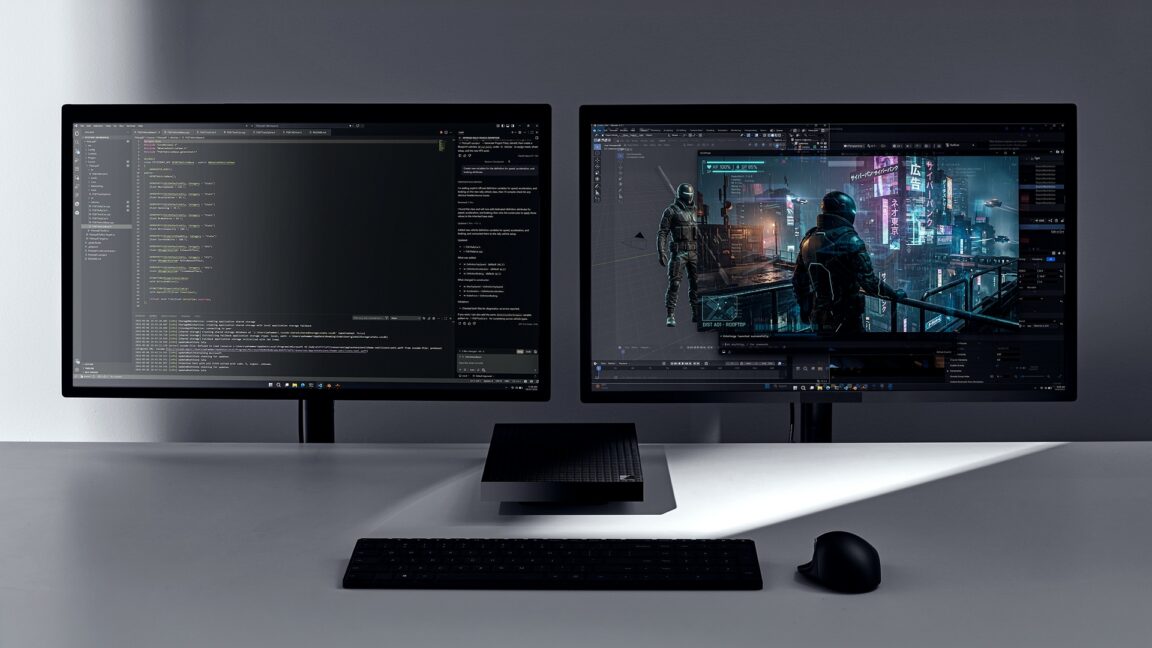
On the hardware front, we didn't get any updates for existing Surface devices (not counting yesterday's Surface Laptop Ultra announcement), but we did get something new: the Surface RTX Spark Dev Box is "a compact developer PC" built around Nvidia's new RTX Spark chip with up to 128GB of built-in memory.

Read full article

Comments

© Microsoft

  •  

Microsoft's Project Solara is an Android OS designed for agents instead of apps

Microsoft has been deeply committed to the growth of generative AI technology in recent years through its now-fragmented partnership with OpenAI. At Build 2026, the company remains all-in on AI, and it's looking toward the future with a new software platform. The new Android-based OS is called Project Solara, and Microsoft says Solara is designed to run agents instead of apps.

Project Solara is not something you'll have to worry about killing your apps anytime soon. It's limited to a few pieces of concept hardware and software that are awaiting the magical agents of the future. The vision is for Solara to run on myriad specialized devices with interfaces generated on the spot, and it's all powered by the explosive intelligence of models that Microsoft and others insist will soon exist.

According to Microsoft, Solara is a chip-to-cloud platform intended to free agents from reliance on single interfaces. Much of Microsoft's messaging around AI is speculative and self-serving, but the company rightly points out that new computing form factors have always required specialization, and that process is complex and expensive. The shift to mobile computing, for example, tripped Microsoft up multiple times as it fell behind on app availability, security, and long-term support.

Read full article

Comments

© Microsoft

  •  

Android phones will soon be able to detect spoofed calls and impersonation scams

We're expecting Android 17 to begin rolling out later this month, but first, Google has a batch of updates for the wider Android device ecosystem. As usual, some of the new features are limited to specific devices, and others require using Google's apps. But if you don't mind the latter, you can get automated protection from the growing threat of deepfake phone scams.

According to Google, "impersonation fraud" is one of the most common types of financial scams. The FTC tracked almost $3 billion in losses from such scams during 2024, and the improvements in AI voice cloning tools more recently are making the schemes easier to pull off. The voice models are becoming so capable that it can be difficult to identify a fake caller even when an AI is imitating someone you talk to every day.

Google's solution is an expansion of the system it debuted last month for verified financial calls. Now, a similar feature will work with anyone in your contacts. Many of the most effective deepfake scams involve spoofing a contact's number, which makes the call look more legitimate when your phone lights up. Victims of these scams are then greeted by an accurate re-creation of the person's voice spinning a yarn that involves an urgent need for cash.

Read full article

Comments

© Ryan Whitwam

  •  

Orange Travel takes eSIM push to Trip.com

Orange deepened its push into the travel eSIM market through a global distribution deal with online travel agency Trip.com, offering mobile connectivity at the point of travel booking as demand for roaming services grows.

Orange Travel, an Orange Group subsidiary, stated the partnership will enable Trip.com users to buy Orange Travel eSIM packages directly on the agency platform, allowing customers to arrange connectivity before departure, pay in local currency and activate the eSIM upon arrival.

Trip.com customers will be able to buy packages covering France, Italy, Spain, the UK and Switzerland, with the partners aiming to target key European tourist markets. The pair noted the region accounts for more than 50 per cent of global tourist arrivals, led by France and Spain.

The packages on offer include calls, texts and data across 20GB, 50GB and 100GB options, with validity periods of ranging from a week to 30 days. Prices start at €8.99.

Orange Travel highlighted its eSIM services are supported by the Orange Group’s network reach, including connectivity in more than 200 destinations and 700 roaming agreements worldwide.

Orange Travel CEO Frederic Blehaut said the agreement demonstrates its “commitment to accelerating our growth in Asia and internationally through strategic partnerships”, adding the subsidiary offers “European eSIMs with a recognised quality of service backed by the Orange Group’s know-how”.

Chase Liu, general manager of international attractions and tours business at Trip.com Group, added: “With tailor-made offers and packages easily accessible on our platform, our customers can enjoy enhanced connectivity and greater convenience when they travel in this region.”

The post Orange Travel takes eSIM push to Trip.com appeared first on Mobile World Live.

  •  

Comissão Europeia prepara-se para “apertar” regras na Cloud e pode limitar gigantes como a Amazon, Google e Microsoft

Integrada no Cloud and AI Development Act, que deverá ser apresentado esta quarta-feira, uma nova proposta da Comissão Europeia prevê um conjunto de critérios obrigatórios para a seleção de fornecedores de serviços na nuvem em contratos públicos considerados críticos.

The post Comissão Europeia prepara-se para “apertar” regras na Cloud e pode limitar gigantes como a Amazon, Google e Microsoft appeared first on Tek Notícias.

  •  

World’s Most-Used Weedkiller Found To Disrupt Honeybee Brains

Farmer Spraying Herbicides Pesticides InsecticidesNew research suggests a widely used herbicide may have subtle but significant effects on honeybees. Growing flowering plants for pollinator gardens, farms, and home landscapes often requires herbicides to control weeds. Honeybees are naturally drawn to these areas and are essential for pollination. But researchers wanted to know what happens when bees are exposed to [...]
  •  

Microsoft's Surface Laptop Ultra looks like its first true MacBook Pro competitor

Dell, Asus, Lenovo, HP, MSI, Acer, and Gigabyte are among the PC makers that are designing systems around Nvidia's RTX Spark, Nvidia's new Arm-based chip for Windows PCs. But the flagship RTX Spark PC may be from the same company that makes Windows: the new Microsoft Surface Laptop Ultra is a high-end RTX Spark system that will offer up to 128GB of unified memory for "creators, developers, and AI builders."

Microsoft says the Laptop Ultra will be available "later this year" but didn't discuss any specific pricing or configuration options.

The Laptop Ultra will slot in above the regular Qualcomm Snapdragon-based Surface Laptops in Microsoft's lineup. Microsoft has made high-end Surface devices with more powerful CPUs and GPUs before, but to date, they've also come with convertible designs that may have limited their appeal. The first was the old Surface Book, with its fully detachable screen and bendy-straw hinge that didn't close all the way; the second was the Surface Laptop Studio, with its chunky design and sliding screen. The Laptop Ultra is Microsoft's first attempt to follow the MacBook Pro formula: it's like the other Surface Laptops, just with more power.

Read full article

Comments

© Microsoft

  •  

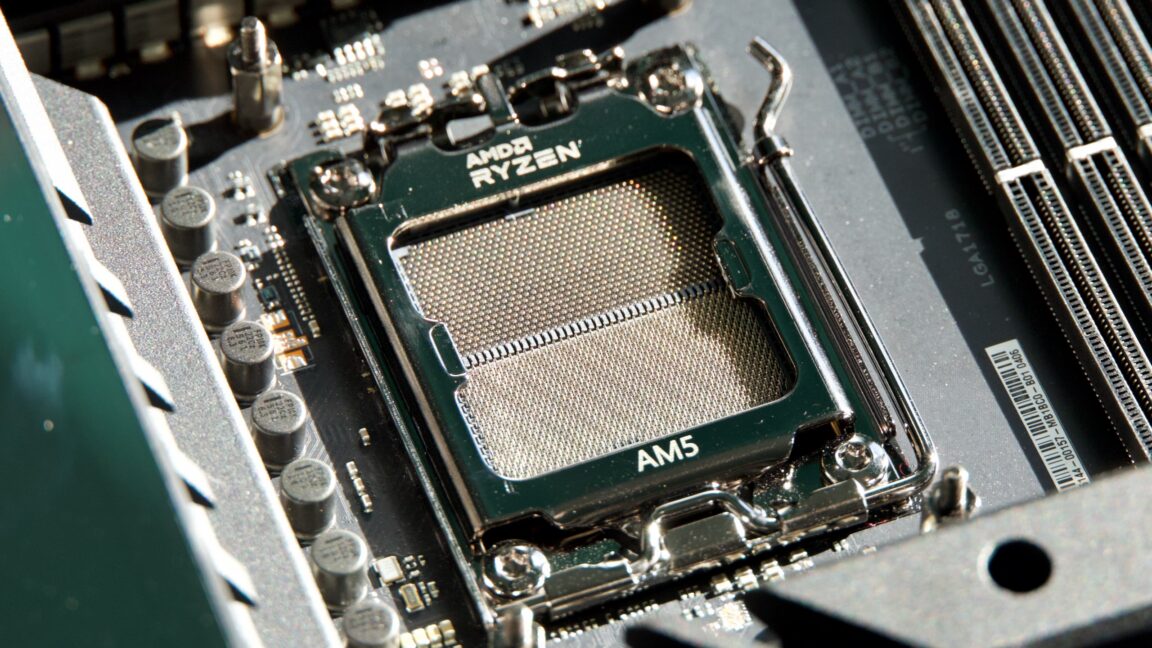
AMD extends Socket AM5 support through at least 2029; AM4 refuses to die

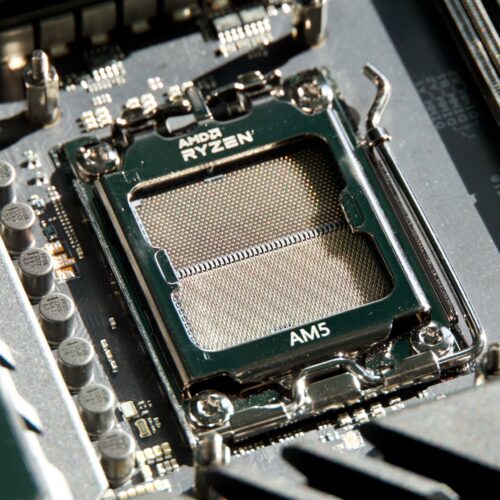
One of the benefits of building an AMD PC is that the company has historically supported its processor sockets for longer than Intel does, allowing the same motherboard (and RAM kit, if you want) to power your PC through multiple CPU upgrades. Today at Computex, AMD announced chips for the current AM5 socket and the improbably-still-around AM4 socket that will help extend their lives a little further, a nod to just how expensive it has become to build a new PC or perform a major upgrade these days.

The first of these announcements is something we knew about already: the relaunch of 2022's Ryzen 7 5800X3D, the first of AMD's commercially available 3D V-Cache processors. Dubbed a "10th Anniversary Edition" in reference to how long Socket AM4 has been around, the re-released chip is slower than regular 8-core Ryzen 5000-series CPUs in general productivity tasks but comes with 64MB of extra L3 cache that disproportionately benefits games. If you're trying to use a high-end GPU with an AM4 motherboard, it could help keep your CPU from being a performance bottleneck. The 5800X3D (re-)releases on June 25 for a suggested retail price of $349, which is less than it currently costs to buy secondhand.

As for the current AM5 socket, AMD officially announced that it was extending its support to at least 2029—it was originally planned to last until 2025, then until "2027+," so that means between two and four years of additional support, depending on how you're counting.

Read full article

Comments

© Andrew Cunningham

  •  

Nvidia RTX Spark comes to Windows PCs with Arm CPU, RTX GPU, and unified memory

These days, Nvidia primarily sells AI data center products, and its traditional consumer devices feel like more of a side project. But the company occasionally still releases something designed for consumers. After a couple of years of rumors, Nvidia has announced an Arm-based chip designed to power Windows PCs. Dubbed RTX Spark, the new chip combines a 20-core Nvidia Grace CPU co-developed with MediaTek, up to 6,144 Blackwell-based GPU cores (the same architecture as the RTX 50-series GPUs), and support for up to 128GB of unified LPDDR5x memory.

Nvidia and its partners offered nothing about expected pricing, but both "slim Windows laptops with all-day battery life and premium displays" and "compact desktop PCs" are slated to be "available this fall" from partners including Asus, Dell, HP, Lenovo, Microsoft, MSI, Acer, and Gigabyte.

This isn't Nvidia's first chip for Windows PCs; earlier chips in the Tegra series powered several of the short-lived Windows RT tablets. But Tegra chips largely stopped appearing in consumer devices following the Tegra X1 in the late 2010s (variants power the original Nintendo Switch and the apparently unkillable Nvidia Shield TV box). Modern Arm-based PCs in the Windows 10 and Windows 11 eras have all used processors from Qualcomm.

Read full article

Comments

© Nvidia

  •  

Mystery GPS jammer in Iran becomes test for NASA satellites’ capabilities

NASA satellites designed to observe cyclone wind speeds and collapsing ice sheets have also proven capable of identifying the approximate locations of GPS jammers. That could help monitor high-risk areas for aircraft and ships navigating the growing prevalence of GPS interference worldwide.

Two different NASA satellite systems showed how they could locate a known but mysterious GPS jammer within several kilometers of its position in Iran, according to an experiment by Sean Gorman, CEO and cofounder of the location-based technology company Zephr.xyz that was detailed in the magazine GPS World. Such jammers use strong signals to overpower the weaker radio signals coming from US-operated GPS satellites and other global navigation satellite systems.

Such NASA satellites cannot perform “near-real time monitoring” or pinpoint the exact location of GPS jammers, said Clara Chew, principal scientist and lead of the GNSS systems and data team at the California-based satellite manufacturer Muon Space, who was not involved in the study. But Chew told Ars that identifying the approximate locations of GPS jammers “could potentially be helpful for flight planning” or for “indicating high risk areas for maritime shipping.”

Read full article

Comments

© NASA/JPL-Caltech

  •  

Intel makes a bid for handheld gaming PCs with new Arc G3 processors

Most of the Steam Deck imitators on the market right now use AMD silicon, specifically the Ryzen Z-series chips. These are the same chips AMD makes for regular laptops, but with different power settings better suited to a compact handheld system. There are handhelds based on Intel silicon (MSI’s Claw is the main one), but Intel hasn’t yet tried making silicon marketed specifically for that purpose.

Today, the company is throwing its hat in the ring with two Intel Arc G-series processors, which will allow gaming handhelds to leverage the company's genuinely quite good Arc B-series integrated GPUs. Intel says that several Arc G-series handhelds will arrive "starting in June 2026, with broader availability throughout the year." These systems will include a new MSI Claw model, a Predator Atlas 8 from Acer, and a device from OneXPlayer.

Intel normally uses its "Arc" branding for integrated and dedicated GPUs, but in this case, the "Arc" brand encompasses the entire chip, including the CPU, GPU, NPU, and other components.

Read full article

Comments

© Intel

  •  

Mystery GPS jammer in Iran becomes test for NASA satellites’ capabilities

NASA satellites designed to observe cyclone wind speeds and collapsing ice sheets have also proven capable of identifying the approximate locations of GPS jammers. That could help monitor high-risk areas for aircraft and ships navigating the growing prevalence of GPS interference worldwide.

Two different NASA satellite systems showed how they could locate a known but mysterious GPS jammer within several kilometers of its position in Iran, according to an experiment by Sean Gorman, CEO and cofounder of the location-based technology company Zephr.xyz that was detailed in the magazine GPS World. Such jammers use strong signals to overpower the weaker radio signals coming from US-operated GPS satellites and other global navigation satellite systems.

Such NASA satellites cannot perform “near-real time monitoring” or pinpoint the exact location of GPS jammers, said Clara Chew, principal scientist and lead of the GNSS systems and data team at the California-based satellite manufacturer Muon Space, who was not involved in the study. But Chew told Ars that identifying the approximate locations of GPS jammers “could potentially be helpful for flight planning” or for “indicating high risk areas for maritime shipping.”

Read full article

Comments

© NASA/JPL-Caltech

  •  

Roku OS’s home screen now features a large, permanent ad

Roku just unveiled the biggest overhaul to its smart TV operating system (OS) in 10 years. One of the most noticeable differences is that ad space now takes up a large chunk of the screen’s landing page.

Before the update, loading up a Roku OS-powered smart TV or streaming device would yield a menu on the left side with sections including “What to Watch,” “Live,” and “Search.” The right side had a row of tiles for “Recommended” content above several rows of tiles representing downloaded apps. Once a user started started navigating the home screen, the menu would collapse, and they'd see a large ad on the right side of the screen.

The old Roku OS landing page before the ad is visible.  Credit: Roku

 

Read full article

Comments

  •  

Valve's Steam Deck is back in stock after months, but you won't like it

Valve's Steam Deck handheld has been largely unavailable to buy since mid-February, a victim of the RAM and storage shortages that have been driving up prices for most consumer tech since the fall of 2025. The good news is that the Deck is back in stock on Valve's site and ready to ship in three to five days; the bad news is that it appears to have returned because somebody wished for it on a monkey's paw.

The 512GB version of the OLED Steam Deck now sells for a whopping $789, $240 more than its previous $549 price. The 1TB version (which also includes an anti-glare screen coating, a slightly nicer case, and an "exclusive startup movie and keyboard theme") will now run you $949, a $300 increase from its old $649 price. The old $399 base model with 256GB of storage and the older LCD screen has been discontinued, though this had been announced well before these price increases took effect.

These prices are particularly hard to swallow for a nearly 3-year-old revision of an over-4-year-old handheld PC. If there's a saving grace for Valve, it's that most competing handhelds from the likes of Asus and Lenovo are also pushing or exceeding that $1,000 mark. Of the Deck's major competitors, only the $600 Asus ROG Xbox Ally (and its AMD Ryzen Z2 A processor, which is very similar to the Deck's semi-custom AMD chip) is significantly cheaper than the Steam Deck.

Read full article

Comments

© Valve

  •  
❌